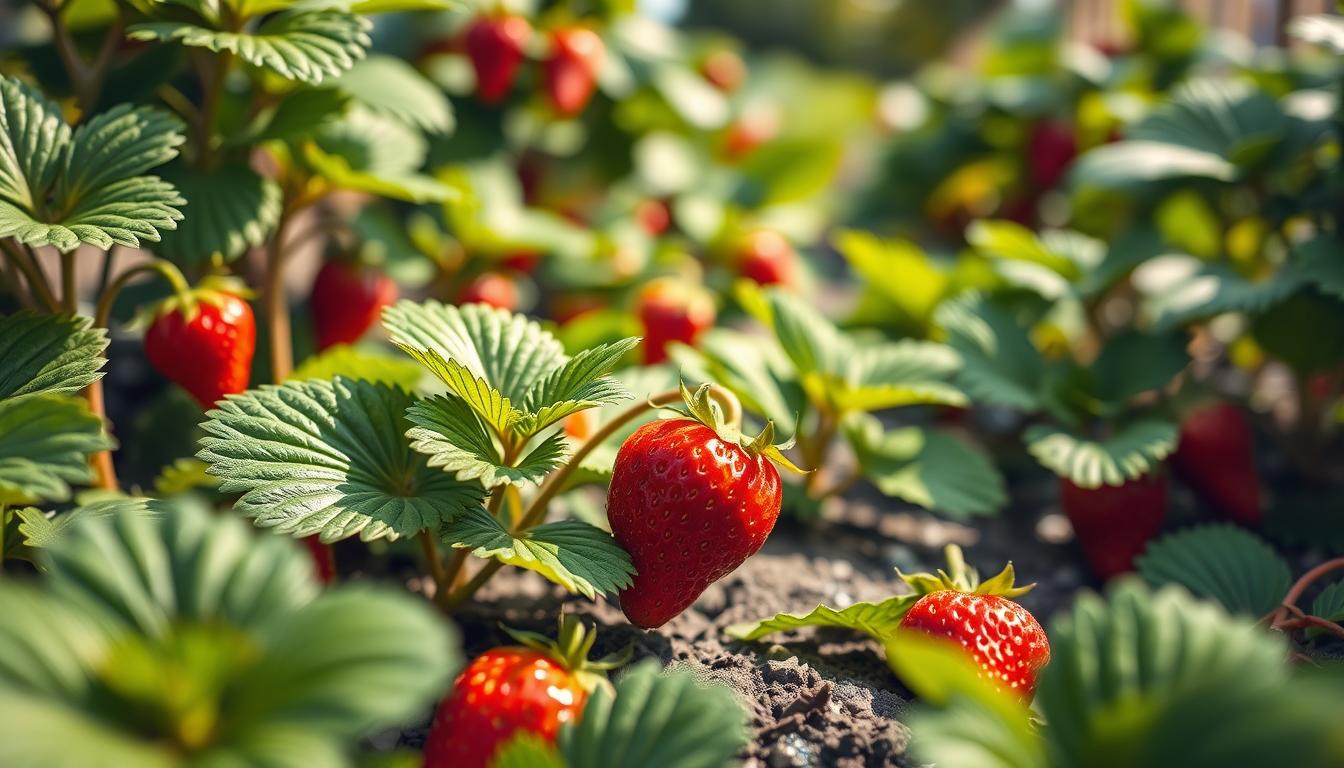
Growing Honeoye strawberry plants is a rewarding way to enjoy fresh, juicy strawberries from your own garden. This popular June-bearing cultivar produces an early, concentrated crop, making it a practical choice for home gardeners who enjoy fresh berries, freezing, and homemade preserves.
However, a successful harvest depends on more than planting strawberries in a sunny location. Healthy roots, proper crown depth, good spacing, consistent moisture, and seasonal care all influence the quality and quantity of your fruit.
Whether you are establishing a backyard strawberry patch, planting a raised bed, or growing strawberries in containers, this guide explains 11 essential tips for keeping Honeoye strawberry plants healthy and productive.
Summary: How to Grow Honeoye Strawberry Plants Successfully
Honeoye is a June-bearing strawberry cultivar that typically produces its main harvest in late spring or early summer, depending on your growing region. For reliable results, plant healthy stock in well-drained soil with at least six hours of direct sunlight, preferably more.
Position each crown at the soil surface, give plants enough room for airflow and runner growth, and maintain even moisture during flowering and fruit development. Follow local soil-test recommendations for fertilizer, protect blossoms from late frost, and renovate established June-bearing beds after harvest.
In colder climates, winter mulch helps protect strawberry crowns from freezing temperatures and repeated freeze-thaw cycles.
Key Takeaways
- Honeoye strawberry plants are June-bearing and produce a concentrated seasonal harvest rather than continuous fruit throughout summer.
- Choose a sunny planting site with well-drained, fertile soil.
- Plant crowns at the proper depth to prevent drying or crown rot.
- Use spacing appropriate for a matted-row or closely managed raised-bed system.
- Provide consistent moisture, especially during flowering and berry development.
- Use clean straw mulch to reduce soil splash, suppress weeds, and keep ripening fruit off the ground.
- Manage fertilizer carefully; excessive nitrogen can encourage foliage growth at the expense of fruit quality.
- Protect flowers from late frost and monitor for gray mold, insects, and birds.
- Harvest berries when fully colored and refrigerate promptly.
- Renovate established June-bearing strawberry beds after harvest when appropriate.
- Adjust winter protection and planting schedules to your region.
Honeoye Strawberry Plants at a Glance
| Growing Factor | Recommended Approach |
|---|---|
| Botanical name | Fragaria × ananassa ‘Honeoye’ |
| Strawberry type | June-bearing |
| Harvest season | Late spring to early summer, depending on climate |
| Sunlight | Full sun; aim for at least 6–8 hours daily |
| Soil | Fertile, well-drained soil with adequate organic matter |
| Soil pH | Generally around 5.5–6.8; follow local soil testing guidance |
| Plant spacing | Commonly 18–24 inches for matted rows; adapt to the growing system |
| Watering | Keep moisture reasonably consistent without waterlogging |
| Growth habit | Perennial plants that produce runners |
| Best uses | Fresh eating, freezing, desserts, and preserves |
| Winter care | Straw mulch in regions where winter crown injury is a concern |
What Makes Honeoye Strawberries Special?
Honeoye is an established June-bearing strawberry cultivar valued for its early harvest and productive growth under suitable conditions.
June-bearing varieties concentrate their fruit production into one main seasonal crop. Despite the name, the exact harvest period does not always fall in June. Gardeners in warmer areas may pick berries earlier, while those in cooler northern regions may harvest later.
Honeoye strawberries are commonly grown for fresh consumption and processing. Their flavor and sweetness depend partly on ripeness, sunlight, weather, and growing conditions.
Honeoye vs. Everbearing and Day-Neutral Strawberries
| Strawberry Type | Typical Harvest Pattern | Best Suited For |
|---|---|---|
| Honeoye (June-bearing) | One concentrated seasonal crop | Large harvests, preserving, freezing |
| Everbearing | Often two principal crops in suitable conditions | Gardeners seeking harvests at different times |
| Day-neutral | Repeated flowering and fruiting when conditions are favorable | Extended fresh-fruit harvests |
Choose a strawberry type according to your climate, available garden space, and preferred harvest schedule.
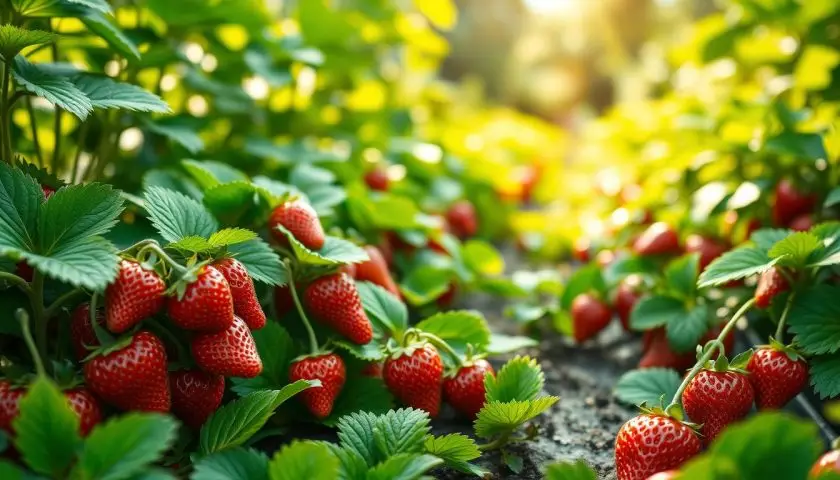
11 Essential Tips for Growing Honeoye Strawberry Plants
Tip 1: Choose a Sunny, Well-Drained Planting Location
The location of your strawberry bed affects plant establishment, flowering, disease pressure, and fruit quality.
Honeoye strawberry plants perform best where they receive full sun. Aim for at least six hours of direct sunlight each day, with six to eight or more hours often preferable for fruit production.
Why Full Sun Matters
Sunlight supports photosynthesis, allowing plants to produce the energy needed for roots, leaves, flowers, and developing berries.
Plants grown in insufficient light may produce weaker growth and fewer high-quality fruits.
Check Drainage Before Planting
Strawberry roots can be damaged when soil remains saturated for extended periods. Avoid low areas where water collects after rainfall.
If your garden contains heavy clay or drains poorly, consider raised beds or another suitable drainage improvement.
Consider Previous Crops
Where possible, avoid planting strawberries in soil with a recent history of serious root diseases or crops affected by Verticillium wilt.
Tomatoes, peppers, potatoes, and eggplants can be hosts for certain soilborne diseases that may also affect strawberries.
Crop history is therefore worth considering before establishing a long-term strawberry bed.
For general seasonal gardening help, read our guide to keeping outdoor plants healthy.
Tip 2: Test and Improve the Soil Before Planting
Good soil preparation gives strawberry plants a stronger foundation.
Strawberries generally grow well in fertile, well-drained soil that contains sufficient organic matter.
Honeoye plants often perform in slightly acidic soil. A pH near 5.5–6.8 is a useful general range, although the best recommendation depends on regional growing conditions and local soil-testing guidance.
Why a Soil Test Helps
A soil test can reveal pH and nutrient levels, allowing you to correct deficiencies without adding unnecessary fertilizer.
Contact your local Cooperative Extension service for sampling guidance and recommendations appropriate to your state.
How to Improve Garden Soil
- Remove persistent weeds and unwanted plant debris.
- Check the site’s drainage after rainfall or irrigation.
- Obtain a soil test when practical.
- Incorporate suitable, well-finished compost if organic matter needs improvement.
- Apply lime or other amendments only when supported by soil-test recommendations.
- Prepare an even planting surface without compacting the soil.
Too much nitrogen may promote excessive leafy growth and unfavorable fruiting conditions.
For new raised beds, you can also use our Soil Calculator to estimate the amount of growing medium required.
Tip 3: Buy Healthy Honeoye Strawberry Plants From a Reputable Nursery
Healthy planting stock reduces the risk of introducing pests and diseases into a new strawberry bed.
Choose a reputable nursery or specialist supplier that can provide correctly identified Honeoye plants and information about plant health.
Bare-Root Strawberry Plants
Bare-root plants are usually supplied during dormancy and may be a practical option for planting larger beds.
They should arrive in good condition, with healthy crowns and roots that have not dried out excessively.
Potted Plants and Plugs
Potted transplants or plugs are useful for smaller gardens and containers. They have established growing media around their roots and can be convenient for beginners.
Inspect leaves, crowns, and root systems for visible pest or disease symptoms before planting.
What About Organic Strawberry Plants?
If organic production matters to you, ask suppliers about their growing practices and certification, rather than assuming a plant is organic because it is sold as naturally grown.
| Planting Stock | Main Advantage | Consideration |
|---|---|---|
| Bare-root plants | Convenient for planting multiple plants | Require prompt, careful handling |
| Plug plants | Established root systems in growing media | May cost more per plant |
| Potted plants | Convenient for containers and small beds | Check for root crowding and pests |
Buy from a supplier able to ship or provide plants at an appropriate time for your region.
Tip 4: Plant Honeoye Strawberries at the Right Time
Planting time varies by climate and production system.
In many northern and temperate parts of the United States, dormant bare-root strawberries are commonly planted in early spring when soil can be worked.
In some warmer regions, fall planting or different annual production systems may be more appropriate.
How to Determine Your Local Planting Window
Use regional Cooperative Extension recommendations rather than relying on one nationwide planting date.
Consider soil conditions, the type of transplant, and the likelihood of damaging weather.
Dormant plants and established green transplants may have different planting requirements.
Protect Young Plants From Weather Stress
Handle exposed roots carefully and avoid leaving them in direct sun or drying wind during planting.
Water newly planted strawberries appropriately and monitor conditions as they establish.
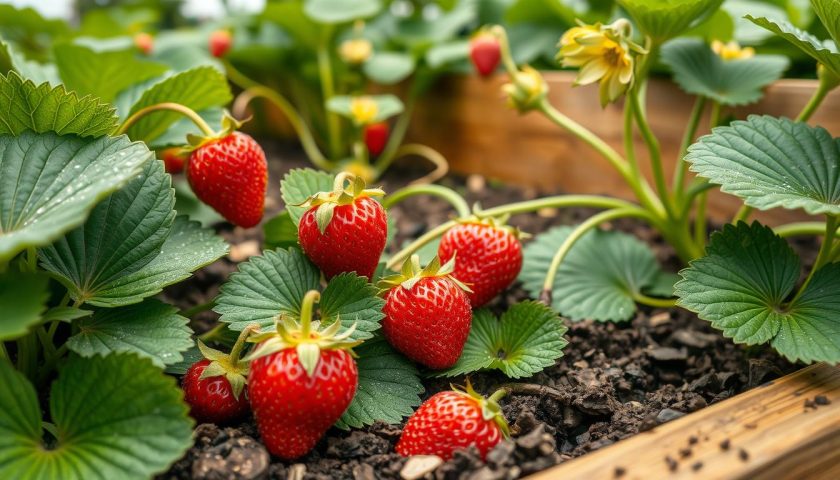
Tip 5: Set Strawberry Crowns at the Correct Depth and Spacing
Planting depth is one of the most important details when establishing Honeoye strawberry plants.
A strawberry crown is the short growing structure between the roots and leaves.
When planting, position the crown approximately level with the soil surface. Burying it too deeply may encourage decay, while leaving roots exposed can cause drying.
How to Plant a Bare-Root Strawberry Crown
- Dig a hole deep enough to accommodate the root system without bending it sharply.
- Arrange the roots downward and outward.
- Position the crown at the proper planting level.
- Backfill with soil and settle it gently around the roots.
- Water to improve contact between the roots and surrounding soil.
- Check that the crown has not become buried after watering.
How Far Apart Should Honeoye Strawberries Be Planted?
Spacing depends on the production system.
For a traditional matted-row system, the University of Minnesota Extension recommends starting plants approximately 18–24 inches apart, with rows spaced roughly 3–4 feet apart.
This provides space for runners to establish daughter plants and fill the row.
Closer arrangements may work in intensively managed beds, but they require more active runner control and attention to airflow.
Matted Row vs. Spaced Planting
| System | How It Works | Best For |
|---|---|---|
| Matted row | Selected runners establish new plants within the row | Traditional June-bearing strawberry patches |
| Spaced plants | Excess runners are removed to maintain separation | Small raised beds and controlled layouts |
| Containers | Plants grow individually or in suitable large planters | Patios and limited garden space |
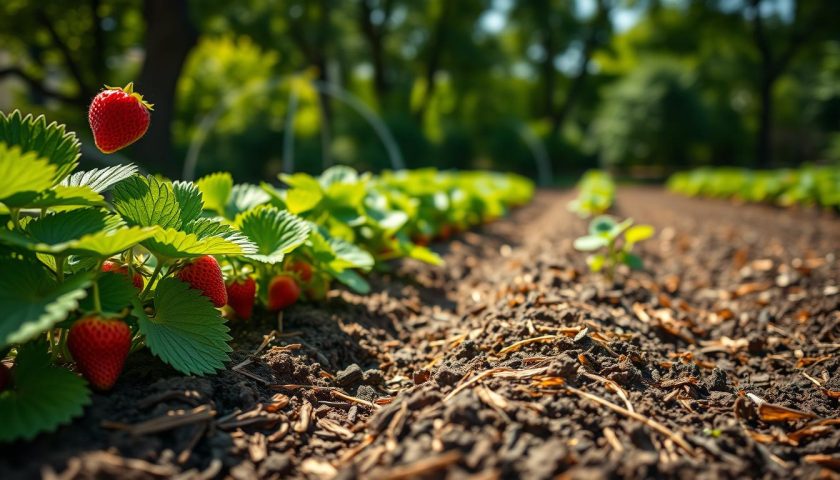
Tip 6: Apply Mulch Without Burying Strawberry Crowns
Mulching helps manage weeds, moisture, and fruit cleanliness.
Clean straw is widely used for strawberry production because it separates developing berries from direct soil contact.
Benefits of Strawberry Mulch
- Helps keep ripening berries off bare soil.
- Reduces soil splash during rain or watering.
- Moderates fluctuations in soil temperature.
- Reduces weed competition.
- Helps conserve soil moisture.
How to Apply Mulch Correctly
Place clean straw around established plants while avoiding heavy accumulation directly over actively growing crowns.
Maintain access to the crown and monitor the bed for excess moisture and decaying organic material.
Remember that summer mulch and winter protective mulch serve different purposes. Winter mulch may temporarily cover dormant plants in cold climates.
Tip 7: Maintain Consistent Watering During Flowering and Fruiting
Water management strongly influences the performance of Honeoye strawberry plants.
During flowering and fruit development, inadequate moisture can affect plant vigor and berry size.
However, waterlogged roots are also harmful, so the aim is consistent but well-drained moisture.
How Much Water Do Strawberry Plants Need?
Strawberries are often managed around an approximate weekly total of one inch of water from rainfall and irrigation, although actual needs vary with soil, weather, plant development, and local recommendations.
Check moisture in the root zone rather than applying the same quantity regardless of conditions.
Best Watering Method
Drip irrigation or a soaker hose can deliver moisture near the roots while reducing prolonged wetness on the leaves and fruit.
If overhead watering is necessary, watering early enough for foliage to dry can help reduce conditions favorable to some diseases.
Signs of Underwatering
- Wilting during moisture stress.
- Dry soil around the roots.
- Reduced plant vigor.
- Smaller fruit where drought occurs during development.
Signs of Excess Water
- Standing water around the planting area.
- Persistently saturated soil.
- Yellowing or declining foliage.
- Poor root health and weak growth.
Watering needs change with weather. Avoid relying on a fixed calendar without inspecting the soil.
Tip 8: Fertilize According to Soil Tests and Growth Stage
Honeoye strawberries need essential nutrients, but fertilization should support balanced plant development rather than excessive leaf production.
A soil test is the best starting point for deciding whether additional nutrients are needed.
Why Too Much Nitrogen Can Be a Problem
Excessive nitrogen can produce lush vegetative growth, increase canopy density, and create conditions that favor certain fruit diseases.
More leaves do not automatically translate into better fruit production.
When Should June-Bearing Strawberries Be Fertilized?
The optimal schedule depends on regional recommendations and soil fertility.
For established June-bearing beds, fertilizer is often applied after harvest and renovation to support the growth that contributes to the following year’s crop.
Additional fertilizer may be appropriate at other times when supported by local soil testing and plant performance.
Do not assume early spring fertilization is always necessary.
Using Compost
Well-finished compost can help improve soil structure and supply some nutrients, but its composition varies.
Use reasonable amounts and account for other fertilizer sources.
Tip 9: Manage Flowers and Runners for Strong Plants
Strawberry flowers develop into fruit, while runners produce daughter plants that can expand the bed.
Managing both is especially important for June-bearing cultivars such as Honeoye.
Should You Remove Flowers From Newly Planted Strawberries?
For newly planted June-bearing strawberries, removing blossoms during establishment is commonly recommended in northern perennial production systems.
This encourages new plants to establish roots and vegetative growth rather than investing heavily in fruit during their first season.
Regional production practices vary, so use local guidance when deciding whether to allow a first-year crop.
How to Manage Runners
In a matted-row system, allow a suitable number of healthy runners to root within the planned row.
Remove or redirect runners that extend outside the intended planting area or create excessive crowding.
In containers or tightly spaced beds, removing surplus runners can help maintain the layout and limit competition.
Why Runner Management Matters
An overcrowded strawberry bed can reduce airflow, complicate harvesting, and increase favorable conditions for some diseases.
Maintaining a manageable row width helps protect productivity over time.
Tip 10: Protect Your Strawberry Crop From Frost, Pests, and Diseases
Even vigorous Honeoye plants can lose fruit when flowers are damaged by late frost or berries become infected or eaten by pests.
Protect Flowers From Late Frost
Open strawberry flowers are more vulnerable to freezing injury than dormant plants.
Monitor local forecasts during bloom. Suitable row covers or other locally recommended frost-protection methods may help protect flowers.
Remove or manage protective coverings appropriately during pollination periods unless the covering system is designed to provide pollinator access.
Gray Mold and Fruit Rot
Gray mold, caused by Botrytis cinerea, is a common strawberry fruit disease, especially during prolonged cool, wet conditions.
University of Minnesota Extension identifies Honeoye as showing some partial resistance to gray mold among strawberry varieties recommended for Minnesota, but resistance does not mean immunity.
To reduce fruit disease pressure:
- Maintain appropriate plant spacing.
- Control weeds and excessive runners.
- Keep ripening fruit off bare soil with clean mulch.
- Use watering methods that reduce prolonged foliage wetness.
- Remove diseased or rotting berries promptly.
- Harvest ripe fruit frequently.
Common Strawberry Pests
| Problem | Possible Signs | Management Approach |
|---|---|---|
| Slugs | Irregular damage to ripe fruit | Reduce hiding places and use appropriate controls |
| Aphids | Small colonies on growing foliage | Inspect and manage infestations early |
| Spider mites | Fine stippling and declining leaves | Inspect leaf undersides and identify the pest |
| Birds | Pecked or missing ripe berries | Use secure wildlife-safe exclusion netting |
| Gray mold | Soft fruit with gray fuzzy growth | Improve sanitation and reduce favorable moisture conditions |
Use only pest-control products labeled for strawberries and follow local regulations, application directions, and preharvest intervals.
Tip 11: Protect Honeoye Strawberry Plants During Winter
Winter protection is important for perennial strawberries in climates where crowns may experience damaging temperatures or repeated freezing and thawing.
Honeoye is used in northern strawberry production systems, but its winter performance still depends on local conditions and suitable protection.
When to Apply Winter Mulch
In cold-winter regions, apply clean straw after plants have entered dormancy and sufficiently cold weather has arrived.
University of Minnesota Extension recommends winter straw protection after dormancy when temperatures remain consistently cold.
Applying thick protective mulch too early can create unfavorable conditions, so follow your local extension recommendations.
How Much Winter Mulch Is Needed?
The appropriate depth depends on regional conditions. In particularly cold growing regions, several inches of loose straw may be used to provide crown insulation.
Do not apply one universal mulch depth to every climate or planting system.
When to Remove Winter Mulch
As spring growth resumes, gradually remove or pull back excess winter mulch so plants receive light and developing crowns are not smothered.
Some clean straw may remain between plants as summer mulch.
Winter Protection for Strawberry Containers
Containers are more exposed to freezing around the roots than plants growing in the ground.
In cold regions, gardeners may need to move containers to a suitable sheltered location or use locally appropriate insulation.
A container’s winter survival depends on its size, the planting medium, and the severity of local conditions.
How to Harvest Honeoye Strawberries for the Best Flavor
The harvest is the most enjoyable part of growing Honeoye strawberry plants.
These June-bearing plants generally produce their berries over a relatively concentrated period.
When Are Honeoye Strawberries Ready to Pick?
Pick strawberries when the berries have developed full ripe color appropriate to the cultivar, without pale or green sections near the stem.
Strawberries do not become substantially sweeter after harvest, so picking fully ripe fruit is important for flavor.
How to Harvest Without Bruising Berries
- Harvest during cooler conditions when practical.
- Handle berries gently.
- Pinch or cut the stem rather than pulling directly on the fruit.
- Place berries in shallow, clean containers.
- Separate damaged or diseased fruit from healthy berries.
- Refrigerate promptly to maintain quality.
How Often Should You Pick Strawberries?
During peak ripening, inspect the bed frequently and harvest ripe berries promptly.
Frequent picking helps prevent berries from becoming overripe and reduces the amount of decaying fruit left in the planting area.
Growing Honeoye Strawberry Plants in Raised Beds and Containers
While traditional garden rows are common, Honeoye strawberries can also be grown in raised beds and suitably sized outdoor containers.
Growing in Raised Beds
Raised beds can be useful when natural soil drainage is poor or garden space is limited.
Provide adequate depth for root development and enough width for maintenance and harvesting.
Use spacing suited to the bed design and remove excess runners before plants become overcrowded.
Growing in Containers
Choose containers with drainage holes and enough space for the root system.
Use a suitable container growing medium rather than dense garden soil.
Containers generally dry faster than in-ground beds and may require more frequent moisture checks during hot weather.
Can Honeoye Strawberries Grow Indoors?
Honeoye is primarily suited to outdoor cultivation. Indoor growing is possible only when plants receive sufficient light, suitable growing conditions, and effective flower pollination.
A typical dim windowsill is unlikely to produce the same results as a sunny outdoor bed.
For most home gardeners, outdoor containers or raised beds are the more practical option.
Common Honeoye Strawberry Growing Problems and Solutions
Diagnosing strawberry problems requires examining the fruit, leaves, soil moisture, and recent weather conditions.
| Problem | Possible Causes | First Step |
|---|---|---|
| Small strawberries | Drought, plant stress, crowding, cultivar characteristics | Review watering, spacing, and plant vigor |
| Misshapen berries | Incomplete pollination, frost injury, insect damage | Inspect blossoms and recent weather |
| Soft or moldy fruit | Gray mold or other fruit diseases | Remove affected fruit and improve sanitation |
| Weak flowering | Plant age, poor establishment, light or nutrient problems | Assess plant health and seasonal conditions |
| Yellow leaves | Water stress, nutrient problems, root damage, disease | Inspect soil and roots |
| Poor flavor | Fruit picked early, weather, insufficient sunlight | Harvest fully ripe fruit and review growing conditions |
| Crown deterioration | Planting depth, excessive moisture, disease | Inspect crown position and drainage |
Why Are My Honeoye Strawberries Small?
Small fruit can develop when plants experience drought, insufficient resources, poor establishment, or excessive competition.
Evaluate sunlight, plant spacing, soil moisture, and the overall health of the planting.
Remember that fruit size also varies naturally between berries and across the harvest period.
Why Are My Strawberries Misshapen?
Strawberry shape can be affected by incomplete pollination, late frost injury, and certain insect problems.
Examine the flowers and recent weather before assuming that fertilizer or watering is responsible.
Why Are My Strawberries Rotting Before Harvest?
Fruit rot may develop during humid, wet weather, especially in dense planting areas.
Keep berries away from direct soil contact and remove diseased fruit.
If the problem repeats, review sanitation, spacing, irrigation, and local disease-management advice.
Why Are My Strawberry Plants Producing Leaves but Few Berries?
Possible reasons include excessive nitrogen, insufficient sunlight, poor flower development, frost injury, or seasonal characteristics of June-bearing varieties.
Honeoye produces one main annual crop, so a lack of fruit later in summer is not necessarily a sign of poor health.
How to Renovate Honeoye Strawberry Beds After Harvest
Renovation is an important part of managing established June-bearing strawberry beds in many perennial production systems.
After the main harvest, plants continue developing foliage, roots, and runners that influence future productivity.
What Does Strawberry Bed Renovation Include?
Depending on the local production method and plant health, renovation may involve:
- Removing old or diseased foliage.
- Thinning overcrowded rows.
- Reducing excessive runner growth.
- Removing weeds and infected plant debris.
- Applying fertilizer when appropriate.
- Watering adequately to support regrowth.
In traditional June-bearing matted rows, University of Minnesota Extension recommends renovation shortly after harvest so plants have time to regrow before winter.
Do not cut into or damage strawberry crowns while removing foliage.
When Should You Renovate the Bed?
Renovation is generally performed promptly after the harvest ends rather than late in the growing season.
However, the exact timing and methods depend on the climate and production system.
Do not apply intensive renovation techniques intended for established matted rows automatically to young transplants, hanging baskets, or annual production systems.
Seasonal Honeoye Strawberry Plant Care Calendar
| Season or Stage | Main Tasks |
|---|---|
| Early spring | Manage winter mulch, inspect plants, prepare new beds, plant when suitable |
| Flowering | Monitor frost forecasts, irrigation, pollination, and pests |
| Fruit development | Maintain consistent moisture, manage weeds, monitor fruit diseases |
| Harvest | Pick ripe berries frequently, refrigerate promptly, remove damaged fruit |
| After harvest | Renovate established beds where appropriate, manage runners and nutrients |
| Autumn | Maintain plant health, control weeds, prepare for winter |
| Winter | Protect dormant plants according to local conditions |
This calendar represents a general growing cycle. Exact months vary substantially across the United States.
Common Mistakes When Growing Honeoye Strawberry Plants
Planting Crowns Too Deeply
Buried crowns are vulnerable to damage and decay. Keep the crown at the proper soil level while covering the roots.
Choosing a Waterlogged Growing Site
Standing water reduces root health and can favor certain diseases. Improve drainage before planting.
Overcrowding the Strawberry Bed
Allowing too many runners to establish creates competition and poor airflow.
Keep rows and beds at manageable widths.
Applying Excessive Nitrogen Fertilizer
More fertilizer does not automatically mean more berries. Use soil-test guidance and follow regional recommendations.
Ignoring Frost During Flowering
Strawberry flowers may be damaged by freezing temperatures even when the established plants survive.
Monitor forecasts during bloom and protect blossoms when needed.
Leaving Diseased Berries in the Bed
Rotting fruit can contribute to disease pressure. Remove affected berries and keep harvest containers clean.
Neglecting Postharvest Care
June-bearing plants continue growing after harvest. Appropriate runner control, water management, and renovation can support the following season.
Following the Same Winter Routine in Every State
Winter protection must reflect local temperatures, snowfall, growing systems, and cultivar performance.
Use recommendations from your local Cooperative Extension service rather than relying on one nationwide method.
Frequently Asked Questions About Honeoye Strawberry Plants
1. Are Honeoye strawberry plants June-bearing or everbearing?
Honeoye is a June-bearing strawberry cultivar. It normally produces one concentrated main crop each year, with the exact harvest dates depending on local climate.
2. How much sunlight do Honeoye strawberry plants need?
Honeoye strawberry plants grow best in full sun. Aim for at least six hours of direct sunlight daily, preferably six to eight or more hours where possible.
3. How far apart should Honeoye strawberry plants be planted?
In a traditional matted-row system, mother plants are commonly spaced approximately 18–24 inches apart, with rows roughly 3–4 feet apart. Other growing systems may use different spacing and require more runner management.
4. When is the best time to plant Honeoye strawberries?
In many northern areas, early spring planting is common when the ground can be worked. Warmer regions may have different recommended planting windows. Follow local extension guidance and your supplier’s instructions for the type of transplant.
5. Should I remove flowers from first-year Honeoye strawberry plants?
Removing flowers from newly planted June-bearing strawberries is commonly recommended in northern perennial growing systems to help plants establish. Practices vary by region and production method, so check local recommendations.
6. Can Honeoye strawberries grow in containers or raised beds?
Yes. Use well-drained growing media, sufficient container space, full sun, and consistent moisture. Containers require more frequent monitoring and may need additional winter root protection in cold areas.
7. How do I protect Honeoye strawberry plants in winter?
In cold climates, apply clean protective straw mulch after plants enter dormancy and temperatures become consistently cold. Remove or pull back excess mulch as spring growth resumes. The correct timing and depth vary by region.
Conclusion: Grow Healthier Honeoye Strawberry Plants and Better Fruit
Healthy Honeoye strawberry plants begin with a suitable planting location, well-prepared soil, quality nursery stock, and correct crown placement.
Once established, consistent moisture, balanced fertility, clean mulch, and sensible runner control can improve plant performance and harvest quality.
Protect blossoms during late frosts, monitor fruit diseases and pests, and harvest berries once they reach full ripe color. In perennial growing systems, do not neglect bed renovation and winter protection after the main crop ends.
Above all, adjust these practices to your local climate. Strawberry growing conditions vary across the United States, so recommendations from regional Cooperative Extension services are especially useful.
For detailed research-based guidance, visit the University of Minnesota Extension’s guide to growing strawberries in the home garden.
With proper planning and regular care, Honeoye can become a productive part of your backyard fruit garden for multiple growing seasons.