Beautiful water lilies can transform an ordinary backyard pond into a colorful water garden. However, keeping their floating leaves healthy and encouraging regular flowers requires more than simply placing them in water. Proper water lily maintenance involves providing adequate sunlight, selecting the right planting depth, feeding during active growth, removing decaying foliage, and preparing plants for seasonal temperature changes.
Most established water lilies are relatively easy to care for once their growing conditions are correct. Hardy varieties can survive cold winters in suitable ponds, while tropical water lilies generally require warmer conditions and additional protection in colder climates.
Whether you have a large backyard pond, a small patio water garden, or a container pond, these 11 water lily maintenance tips will help you encourage healthy foliage, beautiful blooms, and long-term plant growth.
Key Takeaways
- Most flowering water lilies perform best with approximately six or more hours of direct sunlight daily.
- Choose a water lily variety suited to your climate, pond size, and available water depth.
- Plant water lilies in appropriate aquatic soil and avoid burying their growing points.
- Use fertilizer labeled for aquatic plants during active growth, following the product’s instructions.
- Remove dead flowers, yellow leaves, and accumulated debris to maintain a healthier pond environment.
- Divide overcrowded plants when their rootstocks outgrow their containers.
- Protect hardy and tropical water lilies differently during winter.
Understanding Water Lily Maintenance Before You Begin
Successful water lily maintenance begins with understanding how these aquatic plants grow. Water lilies belong to the genus Nymphaea and produce leaves that float on the water’s surface. Their roots and underground storage structures grow in submerged soil, while their leaves capture sunlight above the water.
Unlike ordinary houseplants, water lilies need a growing environment that supports submerged roots and floating foliage. Container size, planting depth, sunlight, water quality, and seasonal temperatures all influence their performance.
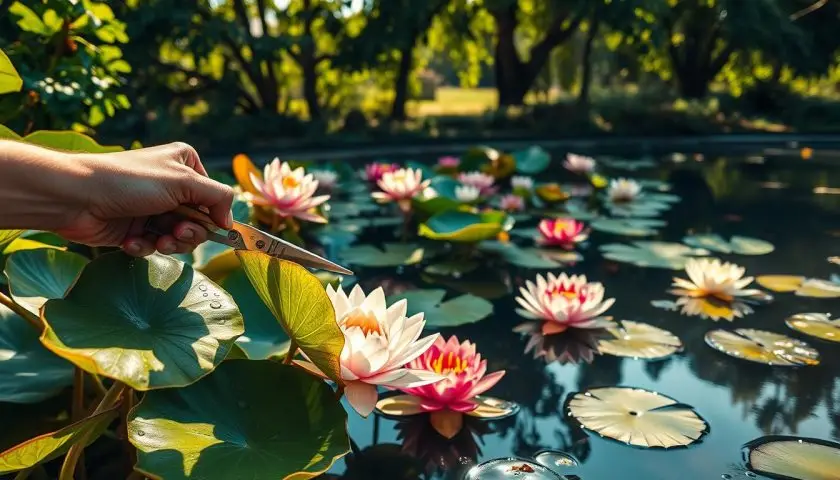
Hardy vs. Tropical Water Lilies
Water lilies are commonly divided into hardy and tropical groups. Understanding the difference helps you select the right plant and develop an appropriate maintenance routine.
| Feature | Hardy Water Lilies | Tropical Water Lilies |
|---|---|---|
| Climate | Suitable for many temperate regions | Prefer consistently warm conditions |
| Winter survival | May survive outdoors if rootstock does not freeze | Usually need protection in freezing climates |
| Flowering | Typically daytime flowering | Day-blooming and night-blooming types |
| Growth habit | Often spreading rhizomes | Frequently tuber-forming growth |
| Maintenance | Seasonal pruning, feeding, and occasional division | Warm-season care and potentially specialized overwintering |
Hardy water lilies are often a practical choice for beginners in cooler parts of the United States. Tropical water lilies can provide striking flowers and unusual colors, but they may require more seasonal attention.
Choose a Water Lily for Your Pond Size
Water lilies vary considerably in mature size. Large-growing cultivars may spread across several feet of water, while miniature or dwarf varieties are better suited to small containers and patio ponds.
Before buying a plant, check its expected surface spread and recommended water depth. A vigorous cultivar planted in a small tub may become overcrowded quickly, making water lily maintenance more demanding.
11 Essential Water Lily Maintenance Tips
1. Choose a Healthy Water Lily and Inspect Its Rootstock
The first step in water lily maintenance is selecting a healthy plant. A strong starting specimen is more likely to establish quickly and produce attractive leaves and flowers.
Before planting, examine the rootstock, rhizome, or tuber. Look for firm tissue and healthy growing points. Avoid plants with extensive soft, mushy, or foul-smelling sections, which may indicate decay.
What to check before planting
- Firm rhizomes or tubers without obvious rotting tissue.
- Healthy growing tips or buds.
- Leaves without extensive damage or unusual discoloration.
- Roots that are structurally sound rather than slimy or collapsing.
- No obvious insect infestation.
Some natural discoloration is normal, so do not judge a plant solely by root color. Texture and overall condition are more useful indicators.
If a recently purchased plant looks weak, review our plant recovery guide for general principles of assessing stressed plants.
2. Plant Water Lilies in Wide Containers With Suitable Aquatic Soil
Proper planting is one of the most important parts of water lily maintenance. Many water lilies develop spreading underground structures, so a wide planting container provides room for healthy growth.
Choose a sturdy aquatic planting basket or pot appropriate to the cultivar. A container that is too small may restrict growth and require frequent repotting.
Use the right planting medium
Water lilies generally perform well in heavy, low-organic-matter aquatic planting media that stay in place underwater. Avoid lightweight indoor potting mixes containing large quantities of peat, bark, or perlite.
These materials can float, cloud pond water, and release organic matter into the surrounding environment.
| Growing Medium | Suitability | Reason |
|---|---|---|
| Heavy aquatic planting soil | Recommended | Supports submerged roots and remains relatively stable |
| Suitable heavy mineral garden soil | Conditional | May work when free from inappropriate amendments and chemicals |
| Lightweight houseplant potting mix | Not recommended | May float and cloud the water |
| Fresh compost | Not recommended as the main medium | May release excess nutrients and decompose underwater |
Position the growing point correctly
For many hardy rhizomatous water lilies, the growing tip should remain exposed near the soil surface rather than being buried deeply. Some tropical and tuber-forming types have different planting requirements.
Follow the planting instructions for your specific cultivar. Covering the soil surface with rinsed gravel can help keep the medium in place, but avoid burying the crown.
3. Maintain the Correct Water Depth
Water depth directly affects how quickly new leaves reach the surface and how well the plant develops.
One common water lily maintenance mistake is placing a young plant immediately at the maximum depth recommended for a mature specimen.
Start shallow when appropriate
Many newly planted water lilies establish more easily when positioned in relatively shallow water. As their leaves grow and reach the surface, the container can be lowered gradually if the cultivar requires greater depth.
For some varieties, this may mean beginning with roughly 6–10 inches of water above the planting area and gradually moving deeper. However, this is not a universal rule.
Check the cultivar’s mature depth range
Some compact water lilies prefer shallow ponds, while vigorous varieties tolerate significantly deeper water.
Measure depth from the water surface to the planting medium or growing point, according to the supplier’s instructions. Do not assume that every water lily should eventually sit 18–24 inches underwater.
Stable placement also matters. Secure containers so they cannot tip, float, or become disturbed by fish.
4. Provide Enough Direct Sunlight for Healthy Blooms
Sunlight is essential for consistent flowering. Most water lilies bloom best with at least six hours of direct sunlight, although some cultivars tolerate partial shade.
When a water lily produces plenty of leaves but very few flowers, insufficient light is one of the first factors to investigate.
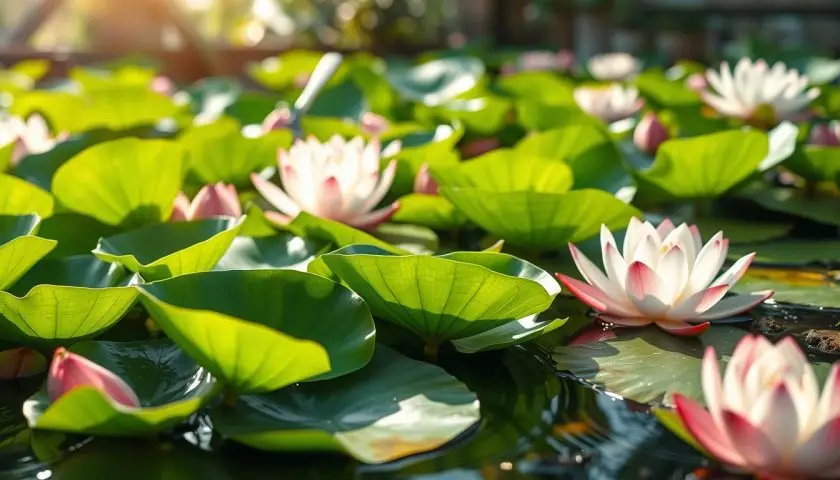
How shade affects flowering
Water lilies use sunlight to produce the energy needed for growth and flower development. Excessive shade may result in fewer blooms, slower growth, and weaker foliage.
Nearby trees, buildings, tall marginal plants, and floating vegetation can all reduce light reaching the lily pads.
Improve sunlight without disturbing the pond
If possible, position container-grown lilies in a sunnier section of the pond. You may also selectively prune overhanging vegetation where appropriate.
Do not remove every source of shade from a pond containing fish or other aquatic life. Consider the needs of the entire pond ecosystem.
For more general advice about seasonal growing conditions, explore our outdoor plant care guide.
5. Fertilize Water Lilies During Active Growth
Regular but controlled feeding can help water lilies develop strong leaves and flowers. Because their roots grow underwater, fertilizer should be applied in a way that supplies nutrients to the plant without unnecessarily enriching the pond water.
Use fertilizer specifically labeled for aquatic plants or water lilies.
How to use aquatic fertilizer tablets
Many aquatic fertilizers come as tablets or spikes designed to be inserted into the planting medium.
- Read the product label and confirm that it is suitable for your pond setup.
- Determine the recommended amount for the plant and container size.
- Insert the fertilizer into the growing medium as directed.
- Avoid leaving fertilizer exposed in the surrounding water.
- Repeat applications only at the intervals specified on the label.
Keeping nutrients within the planting container can help reduce unnecessary fertilizer release into the pond.
When to start and stop feeding
Begin feeding when the plant is actively producing new growth and water temperatures are suitable for the variety.
Reduce or stop feeding as growth slows near the end of the season. Tropical water lilies grown in warm conditions may have different schedules from hardy varieties in temperate climates.
Excess fertilizer does not guarantee more flowers. It can also contribute to unwanted algae growth and water-quality problems.
6. Maintain Stable Water Levels and Good Pond Conditions
Water lily maintenance includes caring for the surrounding water, not just the plant itself.
Water lilies can tolerate naturally changing outdoor conditions, but sudden disturbances, severe water-level drops, and excessive organic waste can interfere with healthy growth.
Monitor water levels regularly
Evaporation can lower water levels during hot weather. Check the pond or container regularly and replenish water when needed.
Use water suitable for the pond’s plants, fish, and other inhabitants. If your municipal water contains disinfectants, follow appropriate pond-water treatment guidance before adding large amounts.
Remove accumulated debris
Fallen leaves, dead plant material, and other organic debris can collect in the water and decompose.
Remove excess debris without unnecessarily disturbing beneficial aquatic organisms or the pond’s established biological balance.
Do not overcorrect water chemistry
Cloudy water does not always mean the entire pond needs to be emptied. Investigate possible causes such as suspended sediment, algae, fertilizer runoff, or decomposing material.
Large, unnecessary water changes may stress aquatic life. Correct the underlying issue rather than repeatedly replacing all the water.
7. Remove Yellow Leaves and Spent Flowers
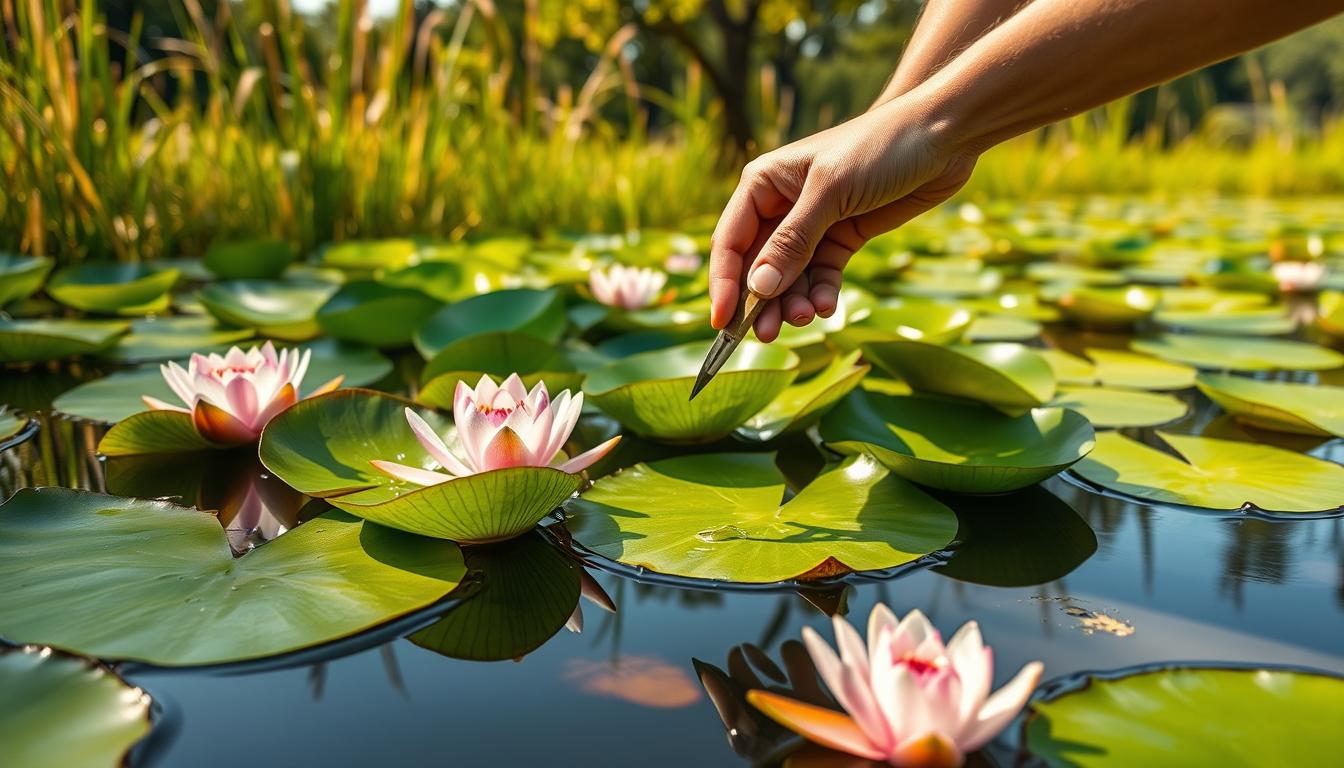
Pruning is one of the simplest water lily maintenance tasks. Removing old flowers and damaged foliage helps keep the pond tidy and reduces decaying material in the water.
Individual water lily leaves naturally age and eventually turn yellow. Flowers also fade after completing their blooming cycle.
How to prune water lilies
- Inspect the floating leaves and flowers.
- Identify leaves that are yellow, brown, severely damaged, or decaying.
- Use clean, sharp aquatic pruning tools.
- Cut unwanted leaf or flower stems near their base when safely accessible.
- Remove the cut material from the water.
Avoid damaging healthy crowns, rhizomes, or emerging growth.
When yellow leaves indicate a problem
A few older yellow leaves are usually normal. Widespread yellowing, unusually small leaves, or sudden decline may indicate crowding, nutrient problems, pests, unsuitable depth, or environmental stress.
Read our guide to yellowing plant leaves for broader troubleshooting principles.
8. Divide and Repot Overcrowded Water Lilies
As water lilies mature, their rhizomes or tubers may fill the planting container. Overcrowding can reduce vigor and flowering.
Dividing established plants is an important part of long-term water lily maintenance, especially for vigorous cultivars.
Signs a water lily needs dividing
- The plant has outgrown its container.
- Rhizomes are pressing against the container edges.
- Leaves are crowded or becoming smaller.
- Flower production has declined despite suitable sunlight.
- The plant has not been divided for several growing seasons.
How to divide a hardy water lily
- Lift the container carefully from the pond.
- Remove enough old soil to examine the rhizome.
- Identify healthy sections with viable growing tips.
- Use a clean knife to divide the rhizome into suitable sections.
- Discard obviously rotten or severely damaged material.
- Replant the healthy divisions in appropriate aquatic soil.
- Return the containers to suitable water depths.
Division techniques differ among hardy rhizomatous and tropical tuber-forming water lilies. Follow cultivar-specific instructions rather than cutting every type in the same way.
When should water lilies be divided?
Spring, as growth resumes, is often a suitable time for dividing hardy water lilies. Depending on the cultivar and growing conditions, repotting may be needed every few years.
For large container projects, our Soil Calculator can estimate the volume of rectangular planting containers, although it does not determine the correct aquatic soil formulation.
9. Inspect Water Lilies for Pests and Diseases
Healthy water lilies may still attract insects or develop leaf problems. Regular inspection allows you to identify damage before it becomes extensive.
Common concerns include aphids, leaf miners, caterpillars, and other insects that feed on floating foliage.
Common water lily pests
| Pest or Problem | Common Signs | First Response |
|---|---|---|
| Aphids | Clusters of small insects on leaves or flower stems | Dislodge with water or remove manually |
| Leaf miners | Trails or tunnels within leaves | Remove badly affected foliage |
| Caterpillars | Chewed edges or holes in leaves | Inspect and remove pests where practical |
| Leaf spots | Discolored or damaged patches | Remove affected tissue and assess conditions |
| Rhizome decay | Soft tissue and declining growth | Inspect rootstock and correct growing conditions |
Choose pond-safe pest management methods
Begin with physical removal and other low-impact controls where possible.
Never assume that an insecticide or fungicide is safe for fish, amphibians, or aquatic invertebrates simply because it is described as natural or organic.
Use chemical products only when they are specifically labeled for the intended aquatic application, and follow all restrictions.
10. Control Algae, Debris, and Plant Competition
Algae and competing vegetation can interfere with the appearance and balance of a water garden.
Some algae are a normal part of aquatic ecosystems. However, excessive growth may indicate high nutrient levels, accumulated organic material, or other imbalances.
Reduce excess nutrients
Overfeeding fish, applying too much fertilizer, and allowing organic waste to accumulate can increase nutrients available to algae.
Review fertilizer use and remove unnecessary debris before considering chemical treatments.
Prevent overcrowding at the surface
Duckweed and other floating plants can spread rapidly, reducing the open surface area available to water lily leaves.
Thin competing vegetation where necessary while maintaining appropriate habitat for aquatic life.
Protect pumps and skimmers
Check that equipment is not pulling in lily pads, flower stems, or loose planting material.
Keep intake screens maintained and position equipment so it does not repeatedly damage plants.
Avoid aggressive algae treatments
Suddenly killing large quantities of algae can create water-quality concerns, especially in ponds containing fish.
Identify the underlying cause of excessive algae and use appropriate pond-management methods rather than applying treatments indiscriminately.
11. Winterize Hardy and Tropical Water Lilies Correctly
Winter protection is an essential part of water lily maintenance in climates with freezing temperatures.
Hardy and tropical water lilies have different cold tolerances, so their overwintering methods should not be treated as interchangeable.
Winter care for hardy water lilies
Established hardy water lilies can often remain outdoors when their crowns and rhizomes stay below the level at which the pond freezes.
In shallow ponds, move containers to a deeper area if the cultivar and pond conditions allow.
Remove decaying foliage as the plant becomes dormant. Avoid disturbing the rootstock unnecessarily during cold weather.
Winter care for tropical water lilies
Tropical water lilies generally cannot tolerate freezing. In colder regions, they may need to be removed from the pond and overwintered under suitable protected conditions.
Depending on the variety, this may involve storing a dormant tuber or maintaining the plant in a heated growing environment.
Storage temperatures and moisture requirements vary. Follow reliable instructions for the specific cultivar, as an excessively cold, dry, or wet storage environment may damage the tuber.
When to return water lilies outdoors
Wait until outdoor water temperatures are suitable for the particular variety and the risk of damaging cold conditions has passed.
Tropical water lilies generally require warmer water than hardy varieties. Do not rely on one universal temperature for every cultivar.
Seasonal Water Lily Maintenance Checklist
Use this seasonal guide to organize essential tasks without overcomplicating your routine.
| Season | Main Tasks | What to Watch |
|---|---|---|
| Spring | Inspect plants, divide if needed, repot, restart feeding during growth | New leaves, water temperature, late frost |
| Summer | Monitor water levels, prune, feed according to label, inspect pests | Flowering, algae, overcrowding |
| Fall | Reduce feeding, remove decaying growth, prepare winter protection | Slowing growth and cooling water |
| Winter | Protect hardy crowns from freezing and store tropical types appropriately | Ice depth, storage conditions, plant dormancy |
Weekly and Monthly Water Lily Maintenance Routine
Regular inspections can prevent small issues from becoming serious problems.
Weekly maintenance tasks
- Check the pond water level.
- Remove spent flowers and dead leaves.
- Inspect floating foliage for pests.
- Remove accumulated debris.
- Look for changes in leaf size, color, and flowering.
- Check pumps, skimmers, and container stability.
Monthly maintenance tasks
- Review the plant’s growth and available surface space.
- Apply aquatic fertilizer if needed and directed by the label.
- Inspect for algae and excessive organic accumulation.
- Check whether containers have become overcrowded.
- Adjust care according to weather and seasonal growth.
These are inspection intervals, not a requirement to fertilize or divide plants every month. Adjust the routine to the plant’s condition.
Water Lily Problems: Causes and Solutions
When a water lily begins declining, look at several possible causes before applying fertilizer or moving the container.
| Symptom | Possible Causes | Recommended Check |
|---|---|---|
| Healthy leaves but few flowers | Insufficient sunlight, immature plant, nutrient limitations | Sun exposure and growth stage |
| Yellowing leaves | Natural aging, crowding, nutrient issues, environmental stress | Age of leaves and overall growth |
| Small leaves | Overcrowding, poor nutrition, unsuitable growing conditions | Container size, fertilizer history, depth |
| Holes in lily pads | Insects or physical damage | Leaf surfaces and pest activity |
| Cloudy pond water | Suspended soil, algae, decomposing material | Recent planting and nutrient sources |
| Soft or decaying rhizome | Rootstock rot or other damage | Planting depth, tissue condition, water conditions |
| Rapid algae growth | Excess nutrients or pond imbalance | Feeding, fish waste, accumulated debris |
Why Is My Water Lily Not Blooming?
A lack of flowers is one of the most common water lily maintenance concerns.
First, determine whether the plant receives enough direct sunlight. Next, consider whether it is mature enough to flower and whether its growing conditions suit the variety.
If light and temperature are appropriate, review the fertilizer schedule, container size, and planting depth.
Do not automatically add more fertilizer. Excess nutrients may encourage algae without correcting the true cause of poor flowering.
Why Are My Water Lily Leaves Turning Yellow?
Individual older leaves naturally yellow as they age. This is part of normal plant growth.
However, widespread yellowing may suggest unsuitable conditions, crowding, pest damage, or nutrient-related problems.
Remove dead leaves and examine the plant’s overall condition before making major changes.
Why Are My Water Lily Leaves So Small?
Small leaves may develop when a plant is newly established, overcrowded, underfed, or growing in unsuitable conditions.
Inspect the rootstock and container. If the plant has outgrown its space, division or repotting may help restore vigorous growth.
Common Water Lily Maintenance Mistakes to Avoid
Using ordinary lightweight potting mix
Houseplant potting mixes often contain materials that float or break apart underwater. Use an appropriate aquatic growing medium.
Planting the crown too deeply
Buried growing points can interfere with healthy development. Follow the planting method recommended for the specific variety.
Assuming every water lily needs the same depth
Different cultivars require different planting depths. A miniature lily in a patio tub may need a very different setup from a vigorous pond variety.
Applying too much fertilizer
Excess fertilizer can contribute to water-quality problems and algae growth. Follow aquatic fertilizer directions rather than increasing doses to force flowering.
Removing healthy foliage unnecessarily
Healthy leaves support photosynthesis. Focus pruning on spent flowers and damaged or declining foliage.
Ignoring overcrowded rhizomes
Plants that outgrow their containers may produce fewer flowers. Inspect mature plants periodically and divide them when necessary.
Using pesticides without checking aquatic safety
Products intended for terrestrial gardens may be harmful in ponds. Always follow aquatic-use labeling and consider fish and wildlife.
Using the same winter care for hardy and tropical lilies
Hardy varieties may overwinter outdoors under suitable conditions, while tropical varieties usually need additional protection where freezing occurs.
Frequently Asked Questions About Water Lily Maintenance
What is the most important part of weekly water lily maintenance?
Inspect the water level, leaves, flowers, and visible pest activity. Remove decaying foliage and floating debris before they accumulate. A short weekly inspection can help you identify changes early.
How much sunlight do water lilies need?
Most flowering water lilies perform best with approximately six or more hours of direct sunlight daily. Some varieties tolerate partial shade, but inadequate sunlight often reduces blooming.
What soil should I use for water lilies?
Use a heavy aquatic planting medium suitable for submerged containers. Avoid lightweight houseplant potting mixes that may float, cloud the water, or release excessive organic matter.
How often should I divide water lilies?
Divide water lilies when their rhizomes become overcrowded or flowering declines because the plant has outgrown its container. Many established plants need division every few years, depending on variety and growth rate.
How often should I fertilize water lilies?
Feed actively growing water lilies according to the instructions on an aquatic fertilizer product. Frequency depends on the formulation, container size, plant growth, and seasonal conditions.
How do I maintain water lilies during winter?
Hardy water lilies can often remain in ponds when their rootstocks stay below the freezing zone. Tropical varieties generally require protection from freezing, with storage methods determined by the specific cultivar.
How can I prevent pests on water lilies?
Inspect leaves regularly, remove badly affected foliage, and use physical pest controls where practical. Avoid applying products not labeled for aquatic environments, especially when fish or wildlife are present.
Conclusion
Successful water lily maintenance depends on a few consistent habits: choosing the right variety, providing adequate sunlight, planting at a suitable depth, feeding carefully, and keeping the pond free from excessive decaying material.
Regular pruning, occasional division, and early pest detection can help water lilies remain attractive throughout the growing season. Seasonal preparation is equally important, particularly when protecting hardy and tropical varieties from cold weather.
By following these 11 water lily maintenance tips and adjusting them to your pond, climate, and cultivar, you can encourage healthy floating foliage and enjoy beautiful blooms year after year.