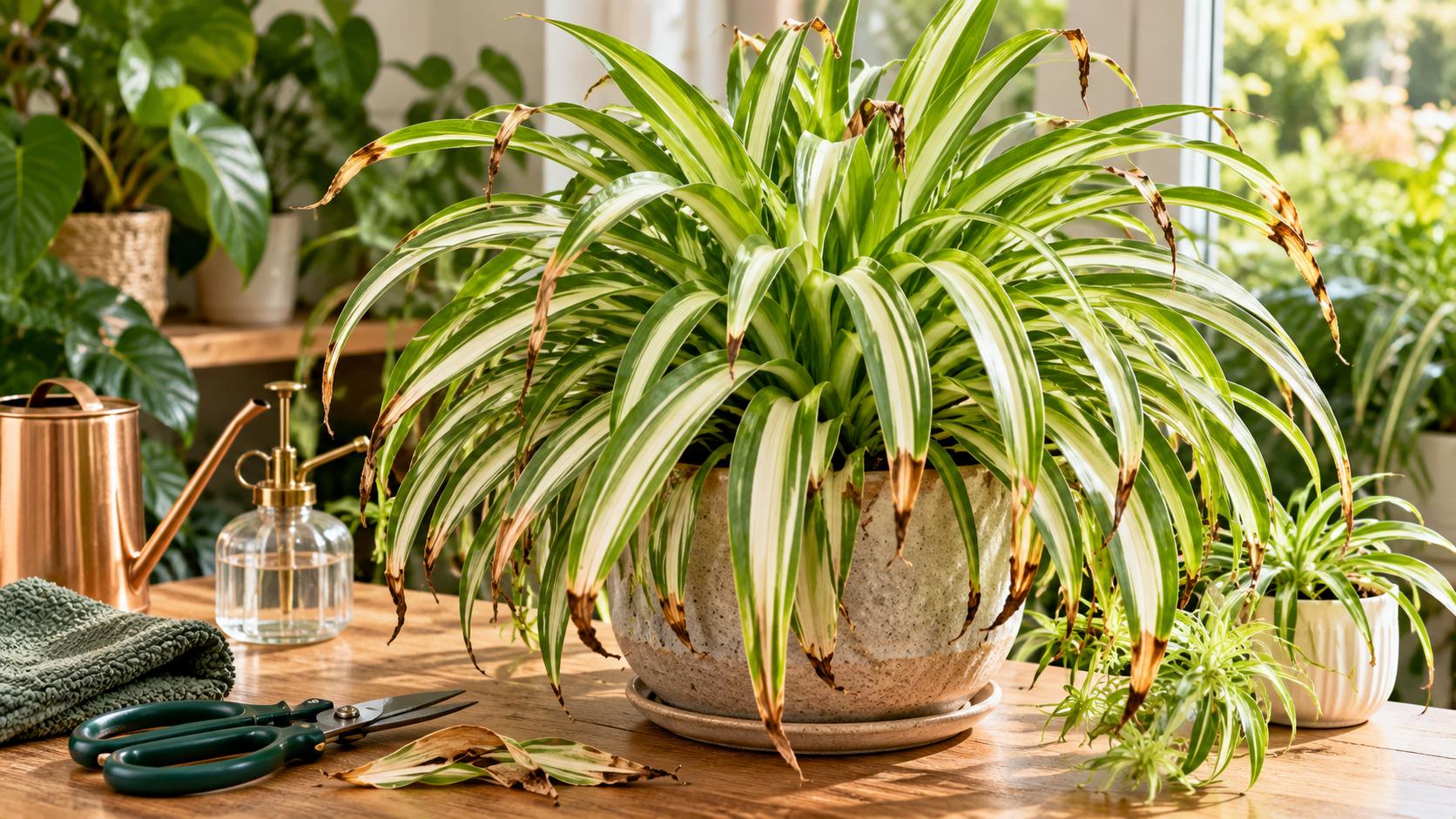
Noticing brown tips on spider plant leaves can be frustrating, especially when the rest of your plant looks healthy. The once-green leaf ends may turn yellow, tan, or crispy brown, making your spider plant (Chlorophytum comosum) appear stressed.
The good news is that brown leaf tips do not necessarily mean your spider plant is dying. They commonly develop because of inconsistent watering, dissolved minerals in tap water, excess fertilizer, dry indoor air, or other growing conditions.
To fix brown tips on spider plant leaves, identify the underlying cause before making changes. Existing brown tissue will not turn green again, but appropriate care can help prevent additional damage and encourage healthier new leaves.
This guide explains nine common causes of spider plant brown tips, how to distinguish them, practical solutions, and the maintenance habits that help keep your plant attractive throughout the year.
Key Takeaways
- Brown tips on spider plant leaves are common and usually indicate environmental stress rather than a single specific disease.
- Inconsistent watering, dissolved salts, fertilizer buildup, and unsuitable water quality can contribute to tip browning.
- Low humidity, strong direct sunlight, and root problems can also damage leaf tips.
- Existing brown tissue cannot recover its green color, but new foliage may grow normally after the cause is corrected.
- Trim dead tips with clean scissors without cutting extensively into healthy green tissue.
- Use a well-draining potting mix and check moisture before watering.
- Investigate several possible causes instead of changing every care factor at once.
Why Does My Spider Plant Have Brown Tips?
Brown tips on spider plant leaves usually develop when the leaf ends experience stress or tissue damage. Spider plants have long, narrow leaves, and damage is often especially noticeable at their pointed ends.
Common contributing factors include irregular soil moisture, soluble salt accumulation, certain chemicals or minerals in irrigation water, dry indoor conditions, and excessive sunlight.
Spider plants are generally adaptable houseplants. They tolerate some imperfect care, but repeated stress may cause the same leaf-tip problem to appear across many leaves.
Are Brown Tips Normal on Spider Plants?
An occasional dry or brown tip is not unusual, particularly on older leaves. Minor cosmetic damage does not necessarily threaten the entire plant.
However, widespread browning, rapidly expanding damage, yellowing leaves, or wilting deserves closer attention.
Observe whether the problem affects only old leaves or is appearing repeatedly on healthy new growth.
Can Brown Spider Plant Tips Turn Green Again?
No. Once leaf tissue becomes fully brown, dry, and dead, it cannot regenerate its original green color.
You can carefully trim damaged ends for appearance, but the most important solution is correcting the conditions that caused them.
If the roots and growing point remain healthy, the spider plant can continue producing attractive new foliage.
9 Causes of Brown Tips on Spider Plant Leaves
1. Inconsistent Watering and Dry Soil
One of the most common reasons for brown tips on spider plant leaves is inconsistent soil moisture.
Spider plants have thick, fleshy roots that store some water. This helps them survive occasional missed waterings, but it does not mean they should remain completely dry for extended periods.
When a plant repeatedly experiences severe drought, its leaves may lose moisture faster than the roots can replace it. The delicate leaf tips can become dry and brown.
Signs of Underwatering
- The pot feels unusually lightweight.
- The potting mix is dry below the surface.
- Leaves appear limp, folded, or less firm.
- Leaf tips become dry and crispy.
- Water runs around a very dry root ball without soaking in evenly.
How to Fix Dry Soil and Brown Tips
- Check the growing medium beneath the surface.
- Water thoroughly when the root zone has dried appropriately.
- Allow excess water to escape through the drainage holes.
- Empty any remaining water from the saucer.
- Adjust future watering based on temperature, light, and pot size.
If potting mix has become extremely dry and water-repellent, gradually rewet it rather than repeatedly splashing only the surface.
For more detailed advice, read our complete indoor plant watering guide.
2. Tap Water Minerals and Fluoride Sensitivity
Water quality is another possible reason for spider plant leaf-tip browning.
Some spider plants are sensitive to particular dissolved substances in irrigation water. University of Wisconsin–Madison Extension identifies fluoride and chlorine-related water issues among the potential causes of tip burn.
Dissolved salts may also accumulate in growing media over time, especially when water evaporates and minerals remain behind.
How to Recognize a Possible Water-Quality Problem
- Brown tips continue appearing despite otherwise suitable care.
- The plant is watered consistently and drains well.
- White mineral deposits develop on the pot or soil surface.
- Several leaves develop similar dry tips over time.
These symptoms are not exclusive to water quality, so also evaluate fertilizer and watering habits.
How to Fix Water-Quality Problems
If other likely causes have been addressed, consider testing a different irrigation water source.
Distilled water or appropriately collected and stored rainwater may help reduce exposure to certain dissolved minerals.
Filtered water varies by filtration system. Ordinary carbon filters do not reliably remove all dissolved salts or fluoride.
Important: Leaving tap water standing overnight may allow some free chlorine to dissipate, but it does not reliably remove fluoride, chloramine, or dissolved mineral salts.
3. Excess Fertilizer and Salt Buildup
Spider plants do not require heavy fertilization. Adding too much fertilizer can contribute to soluble salt accumulation around the roots.
When the growing medium becomes excessively salty, root water uptake may be impaired and leaf tips can suffer damage.
Brown tips on spider plant leaves may therefore appear even when watering and sunlight seem appropriate.
Signs of Fertilizer-Related Stress
- White or pale crust appears on the soil surface or pot rim.
- Browning develops after fertilizer applications.
- Leaf edges become dry or damaged.
- Growth slows despite regular feeding.
- The plant has been receiving stronger or more frequent fertilizer than the product recommends.
How to Fix Fertilizer Salt Buildup
- Pause unnecessary fertilizer applications.
- Review the product label and feeding frequency.
- Check that the pot drains freely.
- If appropriate, flush the growing medium with suitable water to help remove soluble salts.
- Allow the pot to drain completely.
- Replace severely degraded growing media if the problem persists.
Do not flush a pot that already has severe drainage problems without first correcting them.
Resume light feeding only when the plant is growing actively and fertilizer is needed.
Learn more in our indoor versus outdoor plant fertilizing guide.
4. Low Humidity and Dry Indoor Air
Low humidity may contribute to brown spider plant tips, particularly when combined with warm air, heating systems, or irregular watering.
Spider plants generally tolerate ordinary household humidity, but extremely dry indoor environments can increase moisture loss from the leaves.
Signs That Dry Air May Be Contributing
- Leaf tips become crispy during winter heating season.
- The plant is positioned near a heater or forced-air vent.
- Multiple houseplants develop dry leaf margins.
- A hygrometer indicates unusually low indoor humidity.
How to Improve Indoor Humidity
Move the plant away from direct blasts of hot or cold air. If indoor humidity is very low, consider using a properly maintained humidifier.
Grouping compatible houseplants can sometimes create a modest change in their immediate environment, but it is not a reliable substitute for a humidifier in particularly dry conditions.
Avoid keeping foliage constantly wet, as prolonged surface moisture may contribute to other problems.
For additional guidance, read our houseplant humidity guide.
5. Too Much Direct Sunlight
Spider plants generally perform well in medium to bright indoor light. However, prolonged exposure to intense direct sunlight may damage their leaves.
When foliage receives more solar radiation than it can tolerate, tissue may become bleached, yellow, dry, or brown.
This can affect leaf tips, margins, and larger exposed sections of the leaf blade.
How to Identify Sun Damage
- Brown or tan patches appear on the sun-facing side.
- Leaves look bleached or scorched.
- Damage develops after moving the plant into stronger sunlight.
- The plant is positioned directly against hot window glass.
How to Fix Sunburned Spider Plant Leaves
Move the plant to bright indirect light or provide suitable filtering during the strongest sun exposure.
Do not place a previously shaded spider plant directly into intense outdoor sunshine without acclimation.
Older damaged patches will remain, but future growth can develop normally if the light conditions are suitable.
See our Spider Plant Light Requirements guide for detailed placement advice.
6. Overwatering and Root Damage
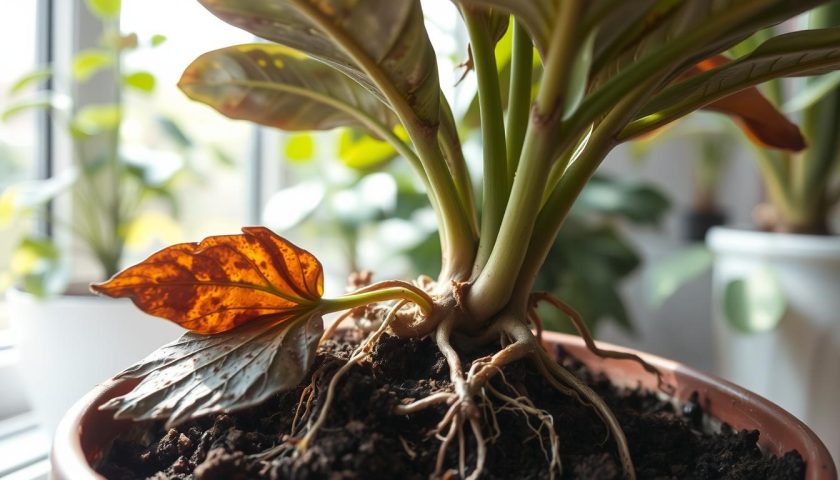
Although underwatering can produce crispy brown tips, excessive moisture can also damage the roots and indirectly affect leaf health.
When a potting medium remains saturated, oxygen availability around the roots decreases. Root damage can interfere with the plant’s ability to take up water and nutrients.
As a result, a spider plant may develop discolored tips, yellow foliage, or wilting even though the soil is wet.
Warning Signs of Excess Moisture
- The potting mix remains wet for an unusually long time.
- Leaves yellow or become limp.
- The container has no drainage holes or remains in standing water.
- The soil smells persistently sour or stagnant.
- Roots become soft or structurally damaged.
How to Correct Overwatering
- Check soil moisture below the surface.
- Empty water from decorative outer pots and saucers.
- Ensure the container has functional drainage holes.
- Review whether the growing medium is overly dense.
- Inspect roots if symptoms suggest serious damage.
- Repot into fresh suitable soil when root decay or severely degraded medium makes it necessary.
Do not remove roots simply because they appear brown. Healthy roots can naturally be tan or dark; softness and loss of structure are more concerning.
Use our root rot identification guide and spider plant soil guide for further help.
7. Temperature Stress and Cold Drafts
Sudden temperature changes can stress houseplants, including spider plants.
Cold air entering through frequently opened doors, winter windows, or air-conditioning vents may damage foliage. Hot air from heating vents may increase moisture loss.
Signs of Temperature-Related Stress
- Leaf damage appears after a sudden temperature change.
- The plant sits next to a frequently opened exterior door.
- Leaves are exposed to hot or cold airflow.
- Discoloration appears alongside wilting or weakened growth.
How to Prevent Temperature Damage
Keep spider plants in stable indoor conditions suitable for normal household growing.
Avoid direct contact with cold window glass during winter and protect foliage from heating and cooling vents.
If you move the plant outdoors seasonally, acclimate it gradually and bring it inside before damaging cold weather.
8. Root Crowding and Old Potting Mix
Spider plants often perform well when slightly pot-bound, but excessive root crowding can make watering difficult.
Their thick roots may eventually fill most of the container, leaving little space for healthy growing medium.
Water can then run around the root ball or the pot may dry unusually quickly after watering.
This can lead to repeated moisture stress and contribute to brown leaf tips.
Signs the Plant Has Outgrown Its Pot
- Thick roots crowd the inside of the container.
- The root mass pushes upward.
- Roots grow extensively from drainage holes.
- The soil dries extremely quickly after thorough watering.
- Growth slows despite otherwise appropriate conditions.
How to Fix Root Crowding
Inspect the root ball if these symptoms appear together.
Move the plant to a slightly larger container with functioning drainage holes and fresh, appropriate growing medium when needed.
Do not move a small plant directly into an oversized pot. Excess growing medium may remain wet for too long.
Our guide to transplanting a spider plant explains the process in detail.
9. Aging Leaves, Physical Damage, and Pest Stress
Not every brown spider plant tip reflects a serious care problem.
Older leaves naturally deteriorate as plants grow. Leaf tips may also become damaged when they rub against furniture, walls, or rough surfaces.
Insects can cause additional discoloration, although pest damage may create spotting, distortion, or patches rather than only uniform brown tips.
How to Recognize Natural Aging
If only a few older leaves have brown ends while the plant produces vigorous green foliage, the issue may be minor.
However, sudden browning across many new leaves is less likely to be explained by ordinary aging alone.
Inspect for Common Pests
Look for mealybugs, scale insects, or other pests around the leaf bases and undersides.
Remove visible pests where practical and use appropriate labeled treatments if needed.
When the rest of the plant is healthy, removing a completely dead leaf or carefully trimming a damaged tip may be sufficient.
Brown Tips on Spider Plant: Causes and Solutions at a Glance
Use this quick comparison table before making changes to your plant’s care routine.
| Possible Cause | Typical Clues | Recommended Action |
|---|---|---|
| Underwatering | Very dry soil, limp leaves, crispy tips | Restore consistent, appropriate watering |
| Water-quality issues | Persistent tip burn despite suitable care | Evaluate water source and try suitable low-mineral water |
| Excess fertilizer salts | Mineral crust, browning after feeding | Reduce feeding and address salt accumulation |
| Dry indoor air | Crispy tips near heating vents | Improve placement and humidity if needed |
| Strong direct sunlight | Bleached or scorched exposed foliage | Move to suitable bright indirect light |
| Overwatering | Wet soil, yellow leaves, declining roots | Check drainage and root condition |
| Temperature stress | Damage following cold drafts or hot airflow | Provide more stable conditions |
| Root crowding | Tightly packed roots and rapid drying | Repot when necessary |
| Aging or physical damage | Only a few older or rubbed leaves affected | Trim cosmetic damage and monitor growth |
How to Diagnose Brown Tips on Spider Plant Leaves Step by Step
Several causes can produce similar symptoms. Follow this diagnostic process to avoid unnecessary repotting or repeated changes.
Step 1: Check the Soil Moisture
Insert your finger or another suitable moisture-checking tool below the surface.
Determine whether the root zone is very dry, slightly moist, or persistently saturated.
Check whether water can drain freely through the pot.
Step 2: Review Your Water Source
Consider whether the plant receives tap water, rainwater, filtered water, or distilled water.
If other care conditions appear suitable but brown tips persist, test a different appropriate water source and monitor future growth.
Step 3: Check Fertilizer Frequency
Review when fertilizer was last applied and whether the concentration matched the product directions.
Look for mineral deposits and consider whether soluble salts may have accumulated.
Step 4: Evaluate Light and Airflow
Check whether direct afternoon sun reaches the leaves or whether the plant is close to heating and air-conditioning vents.
Consider whether conditions changed recently.
Step 5: Inspect the Roots if Necessary
If the plant is wilting in wet soil, losing several leaves, or growing poorly, examine the root system carefully.
Do not unpot an otherwise healthy plant solely because one leaf tip is brown.
Step 6: Monitor New Growth
After correcting an identified problem, monitor newly developing leaves rather than expecting old brown tips to become green.
Improvements may take time because existing damaged tissue cannot recover.
Should You Cut Brown Tips Off a Spider Plant?
Yes. You can trim dry brown tips for cosmetic reasons, provided the plant is otherwise healthy and the scissors are clean.
Trimming improves appearance but does not treat the underlying cause of tip burn.
How to Trim Brown Spider Plant Tips
- Use clean, sharp scissors.
- Identify the fully brown and dry portion of the leaf.
- Follow the natural pointed outline of the leaf when trimming.
- Cut mainly within the dead brown tissue.
- Avoid removing large sections of healthy green foliage.
- Discard the trimmed material and monitor future growth.
If an entire leaf has yellowed or died, remove it near the base without damaging the plant’s crown or healthy surrounding leaves.
Can You Cut Every Brown Tip at Once?
You can remove small amounts of fully dead tissue, but avoid extensive pruning that removes healthy leaves.
When much of the foliage is damaged, correcting the growing environment is more important than trying to remove every imperfect section immediately.
For general trimming principles, read our pruning basics guide.
Best Water for Spider Plants With Brown Tips
Changing irrigation water may help when leaf-tip browning is related to dissolved salts or water-sensitive foliage.
However, do not assume that tap water is always the cause. Many spider plants grow successfully with suitable municipal water.
| Water Type | Potential Advantage | Important Consideration |
|---|---|---|
| Tap water | Convenient and widely available | Mineral and disinfectant content varies by location |
| Distilled water | Very low dissolved mineral content | May be useful when water-related tip burn is suspected |
| Rainwater | Often relatively low in dissolved minerals | Collect and store appropriately; contamination is possible |
| Filtered water | May reduce certain substances depending on filtration system | Not all filters remove fluoride or dissolved salts |
| Reverse-osmosis water | Typically removes many dissolved substances | Requires a suitable filtration system and maintenance |
Does Leaving Tap Water Out Overnight Help?
It may allow some free chlorine to dissipate under appropriate conditions, but it does not reliably remove chloramine, fluoride, or dissolved salts.
If water quality is strongly suspected, changing to a suitable low-mineral source may provide a more meaningful comparison.
Should You Use Distilled Water Forever?
Not necessarily. First determine whether water quality is a likely contributor to the problem.
Appropriate watering, drainage, and fertilizer management may resolve leaf-tip browning without requiring a permanent change in water source.
How to Prevent Brown Tips on Spider Plant Leaves
Preventing spider plant brown tips is often easier than correcting repeated stress after it occurs.
1. Water According to Soil Moisture
Allow the growing medium to dry slightly between thorough waterings, adjusting for pot size, season, and indoor conditions.
2. Keep the Roots Well Aerated
Choose a suitable indoor potting mix and a container with functional drainage.
For detailed soil guidance, see our Spider Plant Soil: Best Mix and Repotting Tips.
3. Fertilize Conservatively
Spider plants generally do not need heavy feeding. Apply fertilizer only as needed and according to its label.
4. Provide Medium to Bright Indirect Light
Avoid prolonged intense direct sunlight, especially when the plant has not been acclimated.
5. Monitor Water Quality
If persistent tip burn remains unexplained, evaluate dissolved minerals, possible fluoride sensitivity, and fertilizer salts.
6. Avoid Temperature Extremes
Keep the plant away from strong heating vents, freezing drafts, and sudden environmental changes.
7. Check Roots and Pot Size Periodically
Repot when the root system becomes severely crowded or the growing medium deteriorates.
8. Inspect New Leaves
New growth provides a better indication of improvement than leaves with existing cosmetic damage.
Weekly Spider Plant Care Checklist
| Task | When to Check | Why It Matters |
|---|---|---|
| Check soil moisture | Before each watering | Prevents prolonged drought or saturation |
| Inspect leaf tips | Weekly | Identifies new browning early |
| Check drainage and saucers | After watering | Prevents standing water |
| Review sunlight | When seasons change | Helps prevent leaf scorch |
| Inspect for pests | Weekly or during routine care | Detects insect activity |
| Review fertilizer use | During active growth | Helps prevent excess salt accumulation |
| Examine root crowding | When watering patterns or growth change | Identifies repotting needs |
When Are Spider Plant Brown Tips a Serious Problem?
Minor brown tips are generally a cosmetic concern when the plant continues producing healthy growth.
However, the problem may deserve more urgent attention if browning occurs alongside:
- Rapid yellowing across several leaves.
- Wilting while the soil remains wet.
- Soft or deteriorating roots.
- A persistently sour smell from the potting mix.
- Extensive discoloration on newly developing foliage.
- Sudden collapse near the plant’s crown.
These symptoms can indicate more significant root or growing-condition problems.
For broader plant-recovery advice, see our step-by-step plant rescue guide.
Common Mistakes When Fixing Spider Plant Brown Tips
Changing Every Care Factor at Once
Moving the plant, changing water sources, adding fertilizer, and repotting simultaneously can make it difficult to understand what caused the original damage.
Identify the most likely cause and make targeted adjustments.
Assuming Brown Tips Always Mean Underwatering
Brown tips can occur when roots are damaged by excessive moisture. Always check soil conditions before watering again.
Applying More Fertilizer to a Stressed Plant
Leaf-tip damage is not necessarily a nutrient deficiency. Excess fertilizer may make salt-related stress worse.
Using an Oversized Pot
Moving a small spider plant into a very large container may increase the amount of growing medium remaining wet around the roots.
Expecting Damaged Tips to Recover
Fully brown leaf tissue will not become green again. Judge the success of corrected care by the condition of future growth.
Trimming Deep Into Healthy Leaves
Excessive trimming removes photosynthetic tissue. Focus on dead tips or fully deteriorated leaves.
Frequently Asked Questions About Spider Plant Brown Tips
1. Why are the tips of my spider plant turning brown?
Brown tips on spider plant leaves can develop because of inconsistent watering, fertilizer salt buildup, unsuitable water quality, low humidity, excessive sunlight, or root problems. Examine soil moisture and overall growing conditions to identify the most likely cause.
2. Should I cut the brown tips off my spider plant?
Yes. You can carefully trim fully dry brown tips using clean scissors. Follow the natural shape of the leaf and avoid removing unnecessary healthy tissue. Trimming improves appearance but does not solve the underlying problem.
3. Can brown tips on a spider plant turn green again?
No. Once the leaf-tip tissue is dead and brown, it cannot return to green. However, correcting the cause can help prevent further damage and support healthier new leaves.
4. Is tap water causing my spider plant’s brown tips?
It is possible. Spider plants can be sensitive to certain water-related substances, including fluoride, and dissolved salts may contribute to tip burn. However, watering habits and fertilizer use should also be evaluated before blaming tap water.
5. How often should I water a spider plant with brown tips?
Water according to the moisture level of the growing medium rather than a fixed schedule. Spider plants generally benefit from thorough watering followed by slight drying between waterings. Temperature, light, pot size, and soil type affect frequency.
6. Does misting prevent brown tips on spider plants?
Misting does not reliably maintain higher humidity for long periods. If very dry air contributes to the problem, a suitable humidifier or improved placement may be more effective. Avoid leaving foliage constantly wet.
7. Do brown tips mean my spider plant is dying?
Not necessarily. Minor tip browning is common and often cosmetic. If the plant has healthy roots and continues producing new leaves, it may remain vigorous. Rapid decline, extensive yellowing, or wilting in wet soil requires closer investigation.
Conclusion: How to Fix Brown Tips on Spider Plant Leaves
Brown tips on spider plant leaves are common, but they do not automatically indicate a dying plant. In many cases, they reflect manageable problems involving watering, dissolved minerals, fertilizer salts, humidity, sunlight, or container conditions.
Start by checking soil moisture and drainage. Next, review your water source, fertilizer use, light exposure, and temperature conditions. If your spider plant is root-bound or showing signs of serious root damage, consider appropriate repotting.
Remember that old brown tips cannot turn green again. Carefully trim dead tissue if you prefer a neater appearance, and focus on preventing future damage through consistent care.
For reliable horticultural guidance, consult the University of Wisconsin–Madison Extension guide to Spider Plant (Chlorophytum comosum), which discusses leaf-tip burn, water quality, fertilizer, and growing conditions.
With suitable light, balanced watering, healthy roots, and careful feeding, your spider plant can continue producing beautiful green foliage and vigorous new plantlets for years to come.
For more growing tips, explore our complete Spider Plant Care Guide.