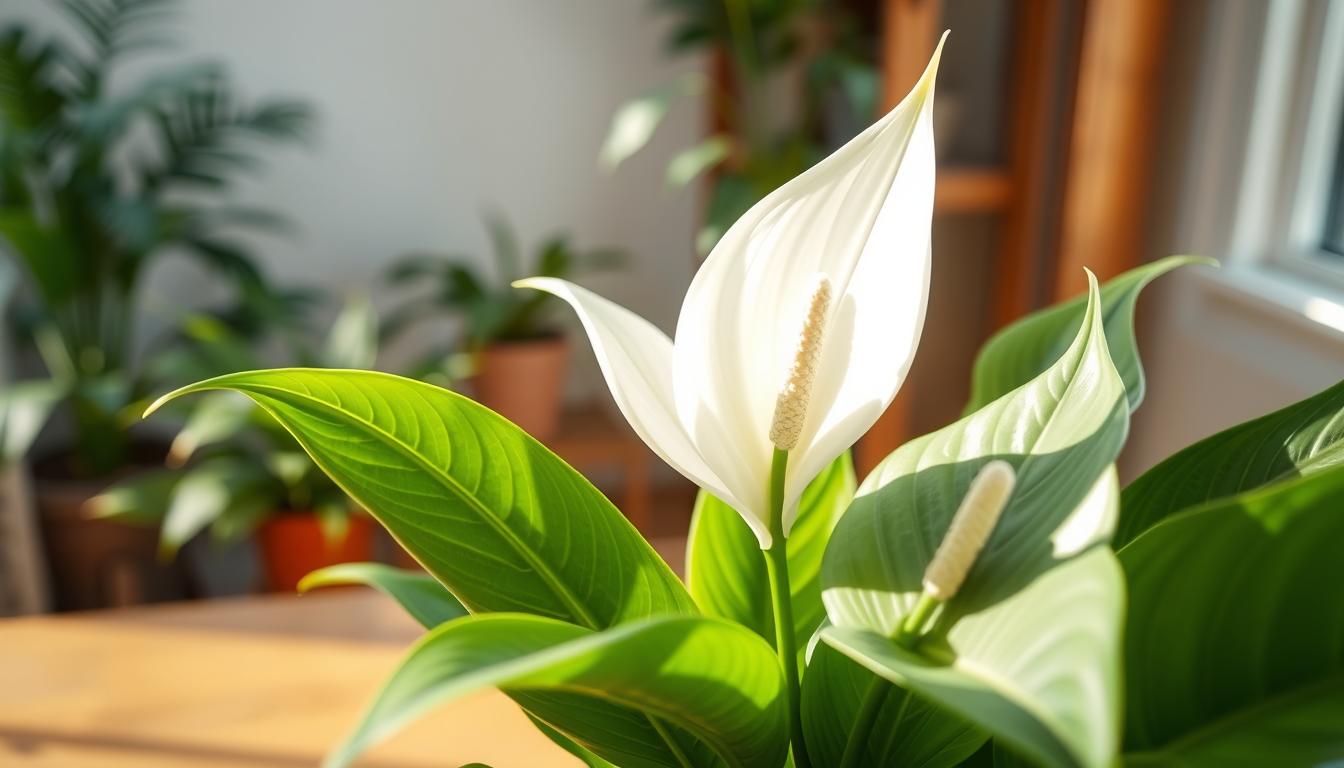
Peace lily light needs are best met with bright, indirect light. Peace lilies can tolerate lower-light indoor spaces, but growth may become slower and flowering may decrease. On the other hand, harsh direct sunlight can damage the foliage. The best location gives your peace lily plenty of soft, filtered light without exposing its leaves to intense sun.
Key Takeaways
- Bright, indirect light is the preferred setting for healthy peace lily growth.
- Peace lilies tolerate lower light, but they may grow more slowly and produce fewer flowers.
- Strong direct sunlight can cause pale, scorched, or crispy areas on the foliage.
- Judge light at the plant’s actual position rather than by how bright the entire room appears.
- East- and north-facing windows can provide useful light, while stronger south- and west-facing exposures may require filtering or greater distance.
- Light conditions change through the year, so placement may need seasonal adjustment.
- Light also affects how quickly the potting mix dries, so reassess watering after changing the plant’s location.
How Much Light Does a Peace Lily Really Need?
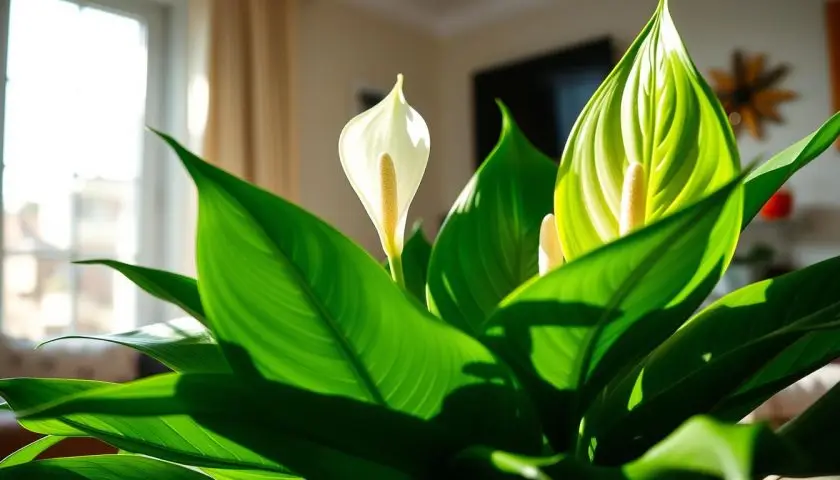
A peace lily performs best where it receives plenty of ambient brightness without harsh sunlight falling directly on its foliage. In practical indoor terms, that usually means bright, indirect light.
Peace lilies are well known for their ability to tolerate lower-light rooms. However, tolerating a condition is different from performing at their best in it. A plant kept in a dim corner may remain alive while producing slower growth and fewer of the characteristic white spathes.
If you are caring for the entire plant rather than light alone, see our complete peace lily care guide.
Bright Indirect Light Is the Preferred Everyday Setting
The goal is to provide enough light to support healthy foliage and flowering without allowing intense direct rays to repeatedly strike the leaves.
This balance makes light quality more important than simply choosing the brightest possible window.
Peace Lilies Can Tolerate Lower Light
Peace lily low light tolerance makes the plant adaptable to many indoor spaces. Lower light, however, can mean slower growth and reduced flowering compared with a brighter indirect location.
Strong Direct Sun Can Damage the Leaves
Harsh direct exposure can stress peace lily foliage. Pale or bleached areas and crispy brown patches may appear when leaves receive more intense sunlight than they can comfortably handle.
Bright Indirect Light vs. Low Light vs. Direct Sun
Understanding the difference between these light levels makes peace lily light needs much easier to manage.
| Light Condition | Typical Plant Response | Main Concern |
|---|---|---|
| Low light | Plant may survive but grow slowly | Reduced growth and flowering |
| Moderate indirect light | Steady indoor growth | Flowering may vary |
| Bright indirect light | Supports healthy foliage and flowering | Preferred indoor target |
| Strong direct sunlight | May cause visible stress | Leaf scorch and drying |

What Does Indirect Light Mean for a Peace Lily?
The phrase “indirect light” can be confusing because indoor brightness changes dramatically depending on window direction, distance from the window, curtains, surrounding buildings, trees, and the season.
For a peace lily, indirect light means that the plant receives useful ambient daylight without being exposed to strong, unfiltered sun for extended periods.
Judge the Light From the Plant’s Position
A room can look bright to you while the plant itself sits in a relatively dim location. Instead of judging from the doorway or center of the room, look at the conditions where the leaves actually sit.
For a deeper explanation of indoor lighting, read our complete guide to indoor light.
Consider Window Direction
The direction a window faces affects both light intensity and the time of day when sunlight may enter the room. However, window direction is only a starting point. Trees, neighboring buildings, curtains, roof overhangs, and your climate can significantly alter the actual light reaching the plant.
Watch the Sun Throughout the Day
A location that receives gentle light in the morning may become much brighter later, while another location may move into shade. Observe the spot at several points during the day before deciding whether it suits your peace lily.
Best Window Placement for a Peace Lily
There is no single distance from a window that works in every home. Instead, use window direction and actual exposure together to find the best position.
North-Facing Window
A north-facing window often provides gentler light. A peace lily may be able to sit relatively close to it if the location remains bright enough and the foliage does not receive problematic direct sun.
East-Facing Window
East-facing windows can provide bright morning light. They are often useful locations for peace lilies because the plant can receive good ambient brightness without the more intense afternoon exposure associated with some other windows.
South-Facing Window
A south-facing window can provide strong light. Depending on your home and location, place the peace lily farther from the glass or use a sheer curtain when direct sunlight reaches the foliage too intensely.
West-Facing Window
West-facing windows may receive strong afternoon light. Monitor the leaves carefully and use distance, blinds, or a sheer curtain when necessary to prevent excessive direct exposure.
Use Curtains and Blinds to Modify Strong Light
A sheer curtain can turn a harsh window exposure into a softer environment. Adjustable blinds can also help control direct rays while maintaining useful room brightness.
Can a Peace Lily Grow in Low Light?
Yes, peace lilies can tolerate relatively low indoor light. This adaptability is one reason they are commonly used in homes and offices.
However, peace lily low light tolerance should not be interpreted as a preference for darkness.
Low Light Can Reduce Growth
A plant receiving less usable light has less energy available for growth. As a result, new foliage may develop more slowly.
Low Light Can Reduce Flowering
Flower production requires energy. The uploaded guide therefore identifies reduced flowering as one possible consequence of insufficient light.
If a mature peace lily appears otherwise healthy but rarely produces flowers, its light level is one factor worth investigating.
Do Not Diagnose No Flowers From Light Alone
A lack of flowers does not prove that the plant needs more light. Plant maturity, general care, root condition, watering, and other environmental factors may also influence flowering.
Evaluate the whole plant before changing its location dramatically.
How Peace Lily Light Affects Flowering
The white structures commonly called peace lily flowers are one of the main reasons people grow these plants indoors. Adequate light helps provide the energy needed for both foliage and flowering.
Healthy Leaves but No Flowers
If your plant produces healthy foliage but does not flower, assess the amount of usable light reaching it.
A peace lily kept deep inside a room may benefit from a brighter indirect position.
More Light Does Not Mean Direct Sun
Moving a plant from a dark corner directly onto a hot sunny windowsill is not the right solution.
Instead, increase light gradually while continuing to protect the foliage from intense direct exposure.
Observe New Growth
Healthy new leaves and continued growth are useful indicators that the current environment is supporting the plant. Flowering can then be considered alongside the plant’s maturity and overall care.
How to Tell If a Peace Lily Needs More Light
Your plant can provide useful clues about whether its current location is working. No single symptom provides a guaranteed diagnosis, but several patterns can justify reassessing the light.
Growth Is Very Slow
Persistent slow growth may occur when the plant receives limited light, although temperature, roots, watering, and nutrition can also influence growth.
The Plant Rarely Flowers
Limited flowering can be associated with insufficient light. If the plant is mature and otherwise healthy, try evaluating whether a brighter indirect position is available.
The Plant Leans Toward the Window
Plants naturally grow toward stronger light. Noticeable leaning or uneven growth can indicate that most usable light is coming from one direction.
Occasional rotation can help maintain more balanced foliage without repeatedly moving the plant between different rooms.
Growth Looks Sparse
Weak or sparse growth can be another reason to examine the available light, but also check the root system and general care before assuming lighting is the only cause.
How to Tell If a Peace Lily Is Getting Too Much Light
Peace lilies can also show stress when sunlight becomes too intense.
Pale or Bleached Patches
Foliage exposed to strong direct sun may develop visibly lighter or bleached areas.
Crispy Brown Areas
Brown, crispy patches can occur after excessive sun exposure, particularly when the plant suddenly moves from a much dimmer location.
Do Not Blame Every Brown Tip on Sunlight
Brown tips and edges can have causes other than light. Moisture problems, root health, humidity, fertilizer buildup, and other environmental stresses should also be considered.
Similarly, yellow leaves on plants can have several causes and should not automatically be diagnosed as a lighting problem.
Peace Lily Lighting Symptoms and Possible Causes
| What You Notice | Light Factor to Check | Other Factors to Investigate |
|---|---|---|
| Few or no flowers | Light may be too low | Maturity, roots, general care |
| Slow growth | Insufficient usable light | Temperature, roots, nutrition |
| Leaning growth | Directional light | Plant position |
| Pale or scorched patches | Excessive direct sunlight | Other physical damage |
| Yellow leaves | Review recent exposure | Watering, roots, aging |
| Crispy edges | Excessive sun or heat | Moisture, humidity, fertilizer buildup |
How Light Changes Peace Lily Watering Needs
Light and watering are closely connected. Moving a peace lily into brighter conditions can change how quickly its potting mix loses moisture.
Brighter Conditions Can Change Moisture Use
A plant receiving more usable light may grow more actively and its growing medium may dry differently than it did in a darker position.
Lower Light Can Keep Potting Mix Wet Longer
In lower light, slower growth and environmental conditions may mean the potting mix remains moist for longer periods.
This is why watering on a fixed calendar can cause problems.
Recheck Moisture After Moving the Plant
Whenever you significantly change light exposure, monitor the potting mix before watering until you understand how the new location affects drying.
Our guide on how often to water a peace lily explains moisture management in more detail.
How to Adjust Peace Lily Light Safely
If your peace lily appears to need a brighter or softer location, make the adjustment carefully rather than suddenly exposing it to dramatically different conditions.
Step 1: Evaluate the Current Position
Look at the plant’s growth, foliage, flowering, and the amount of direct sunlight reaching its leaves.
Step 2: Identify the Main Problem
Decide whether the location appears too dim, excessively sunny, or simply uneven.
Step 3: Change the Position Gradually
If the plant has been living in low light, gradually introduce it to a brighter indirect location rather than moving it immediately into intense exposure.
Step 4: Protect It From Newly Introduced Direct Sun
A sheer curtain or greater distance from the window can help when the new location provides useful brightness but also introduces strong direct rays.
Step 5: Reassess Watering
Check the potting mix because the new environment may change how quickly it dries.
Step 6: Watch New Growth
Allow the plant time to respond before making another major change. New foliage and overall growth can tell you more than expecting an immediate response from older leaves.
If the entire plant is declining rather than simply showing a lighting problem, use our step-by-step guide to reviving a struggling plant.
Do Peace Lilies Need a Grow Light?
A grow light is not essential when a peace lily already receives suitable natural light. However, supplemental lighting can be useful in windowless rooms or spaces where available daylight is consistently inadequate.
Use a Grow Light to Supplement Poor Natural Light
Choose a light designed for plant growth and follow the manufacturer’s guidance for distance and use.
Different fixtures vary significantly in output, so a single universal distance or daily duration is not appropriate for every grow light.
Provide a Regular Day and Night Cycle
Artificial lighting should provide consistent daytime illumination while still allowing a normal dark period rather than running continuously.
Watch the Plant’s Response
If foliage develops unusual bleaching, drying, or crispy patches after adding artificial light, reassess the lamp’s intensity and distance.
How Seasonal Changes Affect Peace Lily Light Needs
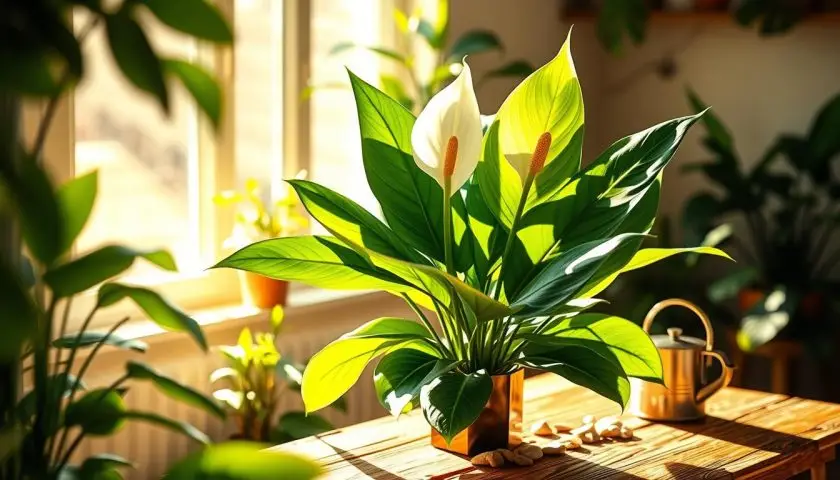
The amount and angle of sunlight entering your home changes throughout the year. A location that works well during one season may provide very different conditions later.
Watch for Lower Seasonal Light
When days become shorter or the sun’s path changes, a previously bright location may become noticeably dimmer.
If growth slows because usable light has dropped significantly, consider moving the plant closer to an appropriate window or supplementing with a grow light.
Watch for Stronger Seasonal Exposure
The opposite can also happen. A window that previously provided indirect light may begin allowing direct rays onto the foliage as the sun’s angle changes.
Adjust curtains or plant placement when necessary.
Can You Put a Peace Lily Outside?
The source draft discusses moving peace lilies outdoors during suitable warm conditions, but outdoor shade can be substantially brighter than a typical indoor location.
Outdoor Shade Is Not the Same as Indoor Low Light
A shaded outdoor location can still expose a plant to much stronger light than it experienced indoors.
Do not move a peace lily directly from a dim room into a much brighter outdoor environment without a gradual transition.
Protect It From Direct Sun
If a peace lily is placed outside, protect its foliage from strong direct sunlight and unsuitable temperature conditions.
Common Peace Lily Lighting Mistakes
Keeping It in a Dark Corner Because It Is a “Low-Light Plant”
Low-light tolerance does not mean darkness is ideal. A peace lily may survive in a dim area while growing slowly and producing fewer flowers.
Assuming the Whole Room Has the Same Light Level
The area near a window can receive substantially more usable light than a position farther inside the same room.
Evaluate the exact location of the foliage.
Putting the Plant in Harsh Afternoon Sun
More light is not always better. Intense direct exposure can damage leaves.
Moving From Deep Shade to Strong Light Too Quickly
Make major light changes gradually to reduce the risk of sudden stress.
Ignoring Watering After Changing Light
A new location can change how quickly the growing medium dries. Continue checking soil moisture rather than using the old watering interval automatically.
Diagnosing Every Leaf Problem as a Light Problem
Yellowing, browning, curling, drooping, and slow growth can also involve roots, moisture, temperature, pests, or other care factors.
Frequently Asked Questions
What are the ideal peace lily light needs?
Peace lilies generally perform best in bright, indirect light. This provides useful energy for foliage and flowering without exposing the leaves to harsh direct sunlight.
Can a peace lily survive in low light?
Yes. Peace lilies tolerate lower light, but the plant may grow more slowly and produce fewer flowers than it would in a brighter indirect location.
Does a peace lily need direct sunlight?
A peace lily does not require strong direct sunlight. The uploaded guide recommends bright, filtered or indirect light and warns that harsh direct exposure can scorch foliage.
Can a peace lily grow in a room with no windows?
If a room does not provide enough natural light, an appropriate grow light can provide supplemental illumination. Follow the specific fixture manufacturer’s guidance because grow-light intensity varies.
Which window is best for a peace lily?
East- and north-facing windows can provide useful light in many homes. South- and west-facing windows can also work when strong direct sunlight is filtered or the plant is positioned appropriately away from intense rays. Actual conditions matter more than window direction alone.
How far should a peace lily be from a window?
There is no universal distance that works in every home. Window direction, glass, curtains, outdoor obstructions, season, and local sunlight all affect intensity. Position the plant where it receives plenty of ambient light without damaging direct exposure.
Why is my peace lily not flowering?
Insufficient light is one possible reason, particularly when a mature plant remains in a dim location. However, plant maturity, root condition, watering, and overall care can also influence flowering.
How can I tell if my peace lily is getting too much sun?
Pale, bleached, or crispy damaged areas after direct exposure can indicate excessive sunlight. Move the plant to softer indirect light and monitor subsequent growth.
Should I rotate my peace lily?
If the plant consistently leans toward one light source, occasional rotation can encourage more balanced growth. There is no need to move it constantly between different locations.
Do peace lily light needs change in winter?
The plant’s basic preference for suitable indirect light remains, but the light available inside your home can change seasonally. Shorter days and changing sun angles may require adjusting its position or using supplemental lighting.
Final Thoughts
Understanding peace lily light needs comes down to finding the balance between too little usable light and too much direct sun. Bright, indirect light is the preferred target for healthy foliage and flowering.
Although peace lilies can tolerate dimmer spaces, low light may mean slower growth and fewer flowers. At the opposite extreme, harsh direct sunlight can damage the foliage.
Pay attention to the light at the plant’s actual location, not simply how bright the room appears. Consider window direction, curtains, nearby obstructions, seasonal changes, and the amount of direct sun reaching the leaves.
Most importantly, use the plant’s response as part of your decision. Healthy new growth suggests that your setup is working, while persistent problems should prompt you to evaluate light alongside watering, roots, temperature, pests, and the rest of your peace lily care routine.