🌿 Key Takeaways
- Fancy kitchen plants transform an ordinary cooking space into a lush, calming, and visually stunning environment
- The best fancy plants for kitchens thrive in humidity, indirect light, and warm temperatures — making kitchens naturally ideal growing spaces
- Pothos, peace lilies, trailing herbs, and monstera are among the top fancy kitchen plant choices for both style and function
- Kitchen plants improve air quality, reduce cooking odors, and have been shown to reduce stress during meal preparation
- Watering kitchen plants correctly is critical — read our guide on worst times to water your plants before starting
- The right pot, placement, and humidity management makes the difference between a thriving kitchen plant and a struggling one
- Browse our full indoor plant care guides to find the perfect plant for every corner of your kitchen
Why Your Kitchen Is Actually the Perfect Room for Fancy Plants
Your kitchen is actually one of the best rooms in your entire home for growing fancy kitchen plants. Here is why. Kitchens generate consistent humidity from cooking, boiling, and washing — humidity that tropical plants absolutely love. Temperatures stay warm and relatively stable. And most kitchens have at least one window that lets in natural light throughout the day.
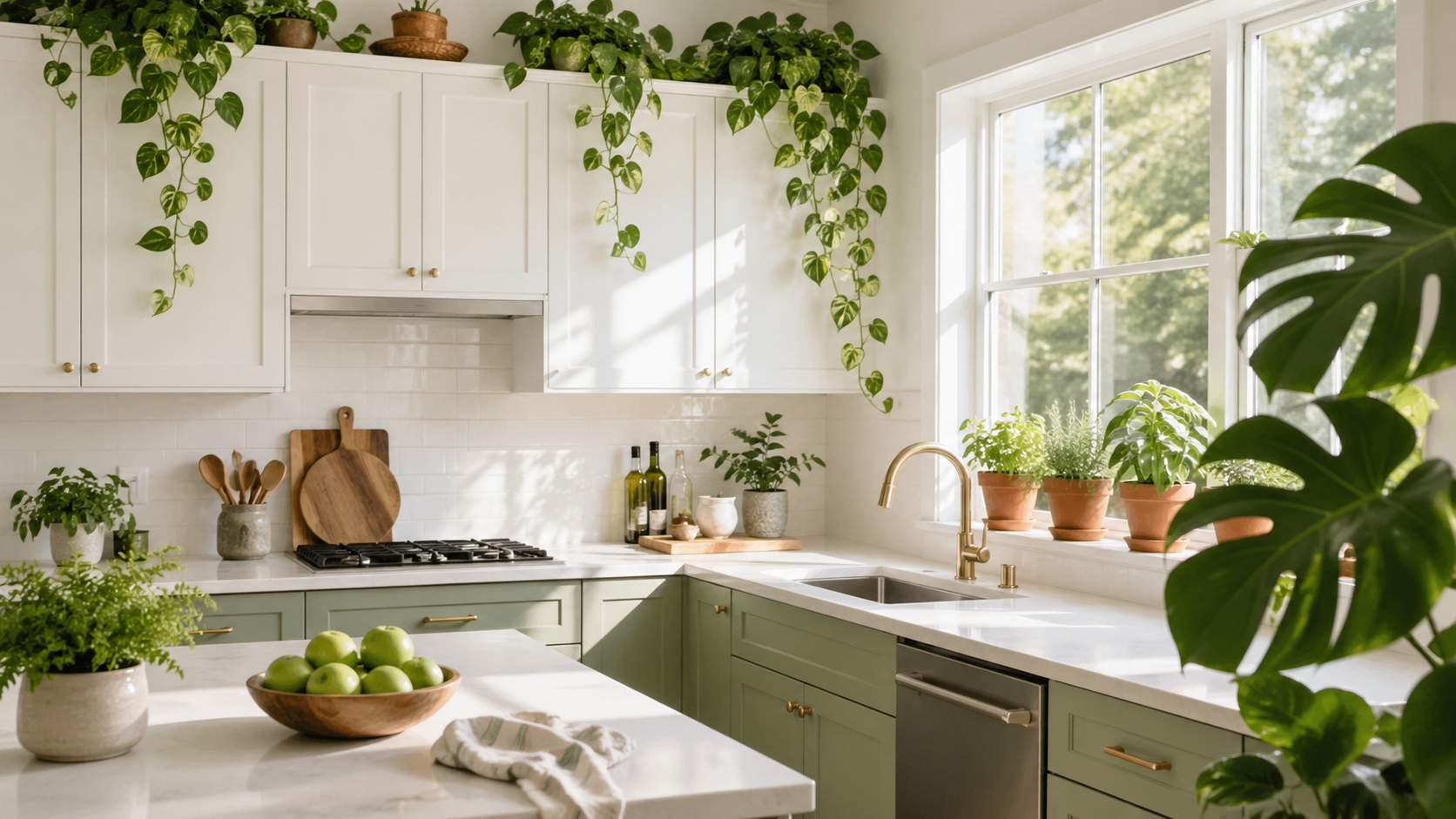
The plants that look the most impressive — the ones that make your kitchen feel like a styled, intentional space rather than just a functional room — are often the ones that happen to thrive best in kitchen conditions. Lush trailing pothos cascading from a shelf. A bold monstera sitting beside the refrigerator. Fresh herbs in terracotta pots along a windowsill. A peace lily beside the sink.
This guide covers the best fancy kitchen plants for every kitchen type — from small apartment kitchens to open-plan cooking spaces — along with everything you need to know to keep them thriving.
What Makes a Plant “Fancy” for a Kitchen?
Before diving into specific plants, it helps to understand what qualities make a kitchen plant genuinely impressive rather than just functional.
Visual impact — The plant should add something striking to the space. Bold leaf shapes, unusual textures, trailing growth patterns, or interesting colors that contrast with kitchen surfaces.
Kitchen compatibility — The plant should tolerate the conditions your kitchen actually produces: variable humidity, heat from cooking, occasional cold drafts from windows, and indirect to moderate light.
Low maintenance — Kitchen plants need to work around your schedule. The best fancy kitchen plants look impressive without demanding daily attention.
Size appropriateness — Kitchen space is limited. The right fancy plant fits the scale of your kitchen without overwhelming counters or blocking natural light.
Air-purifying qualities — A bonus that many kitchen plants offer naturally — absorbing airborne pollutants and cooking fumes while releasing clean oxygen into your cooking environment.
The 10 Best Fancy Kitchen Plants
1. Pothos (Epipremnum aureum) — The Ultimate Kitchen Trailing Plant
Pothos is the single most versatile fancy kitchen plant available. Its heart-shaped leaves in shades of green, golden-yellow, and variegated white trail beautifully from high shelves, cabinet tops, and hanging planters — creating exactly the lush, layered look that makes a kitchen feel designed rather than accidental.
Pothos thrives in the indirect light that most kitchens provide, tolerates the humidity from cooking, and forgives irregular watering better than almost any other houseplant. It is genuinely one of the easiest plants to keep alive — which matters in a kitchen where you have other things to focus on.
Place pothos on top of your refrigerator or highest cabinet and let it trail down naturally. Within a few months it will cascade dramatically across your kitchen wall, creating a living green backdrop that no amount of wall art can replicate.
For maximum visual impact, combine pothos with other trailing plants on shelves and bookcases throughout your kitchen and connected living space.
Light: Low to bright indirect Watering: Every 7–10 days — let top inch dry first Humidity: Tolerates kitchen humidity well Best placement: Top of refrigerator, high shelves, hanging planters
2. Peace Lily (Spathiphyllum wallisii) — Elegant and Air-Purifying
If you want one plant that genuinely looks expensive and high-end in a kitchen, the peace lily is it. Its deep glossy green leaves and pure white flowers create a sophisticated, architectural look that works in modern kitchens, farmhouse kitchens, and everything in between.
Peace lilies are among the most effective air-purifying houseplants available — absorbing formaldehyde, benzene, and ammonia from the air. In a kitchen where cleaning products and cooking fumes are regular presences, this is a genuinely useful quality beyond aesthetics.
They thrive beside sinks where they benefit from ambient moisture, and their drooping habit when thirsty makes them one of the easiest plants to water correctly — they tell you exactly when they need water by gently wilting.
Light: Low to moderate indirect light Watering: Every 7 days — water when leaves just begin to droop Humidity: Loves kitchen humidity near the sink Best placement: Kitchen windowsill beside the sink, countertop corner
3. Monstera Deliciosa — The Statement Kitchen Plant
If your kitchen has enough space, monstera is the single most visually dramatic fancy kitchen plant you can grow. Its large, split leaves — the iconic Swiss cheese pattern — command attention instantly and give any kitchen a tropical, upscale feel that photographs beautifully.
Monstera grows best in bright indirect light and appreciates the warmth that kitchens consistently provide. It does not need to be enormous to make an impact — even a young monstera with 4 to 5 leaves creates a bold focal point beside a kitchen island or in an open corner near a window.
Water every 7 to 10 days, checking 2 inches deep before watering. Avoid placing it directly beside the hob where heat and steam fluctuations are extreme.
Light: Bright indirect light Watering: Every 7–10 days — check 2 inches deep Humidity: Benefits from kitchen humidity Best placement: Kitchen island corner, beside a bright window
4. Fresh Herb Garden — Fancy and Functional
A curated herb garden is one of the most genuinely useful fancy kitchen plant arrangements you can create. A row of terracotta pots containing basil, rosemary, thyme, mint, and chives along a sunny windowsill looks intentional, styled, and beautiful — while also giving you fresh ingredients within arm’s reach while cooking.
The key to making a herb arrangement look fancy rather than random is consistency. Use matching terracotta or ceramic pots in the same size. Label each herb with small slate or copper markers. Keep plants neatly trimmed — a well-maintained herb garden looks far more impressive than a sprawling overgrown one.
For kitchens without much direct sunlight, choose shade-tolerant herbs like mint, parsley, and chives. For sunny south-facing kitchen windows, basil, rosemary, and thyme will thrive.
Light: Full sun (south-facing window) to indirect light (shade-tolerant varieties) Watering: Every 3–5 days — herbs dry out faster than other houseplants Humidity: Moderate — avoid excessive steam directly on herb leaves Best placement: Windowsill with maximum available light
5. Snake Plant (Sansevieria trifasciata) — Architectural and Indestructible
Snake plants bring a completely different energy to a kitchen compared to trailing or flowering plants. Their upright, sword-like leaves in deep green with yellow or silver banding create a clean, graphic, almost sculptural look that suits modern and minimalist kitchen designs perfectly.
Snake plants are virtually indestructible — tolerating low light, irregular watering, and neglect that would kill most other plants. For a busy kitchen where plant care is not always the priority, this resilience is enormously valuable. They also release oxygen at night rather than during the day, making them unusual among kitchen plants.
A tall snake plant in a simple matte ceramic pot beside a kitchen doorway or in a corner makes a dramatic statement without taking up counter space.
Light: Low to bright indirect — highly adaptable Watering: Every 14–21 days — extremely drought tolerant Humidity: Tolerates dry and humid conditions equally Best placement: Kitchen corner, beside doorway, on the floor
6. Spider Plant (Chlorophytum comosum) — Cheerful and Cascading
Spider plants are among the most cheerful-looking fancy kitchen plants available. Their arching green and white striped leaves produce long cascading runners tipped with baby plants — creating a living, growing display that changes over time and never looks static.
They thrive in the bright indirect light of a kitchen window and produce their most dramatic growth when slightly pot-bound — meaning they actively reward you for leaving them in a smaller pot rather than repotting frequently. Hang them in a macrame hanger beside a kitchen window for a boho-meets-botanical look that is genuinely stunning.
Spider plants are also highly effective air purifiers, removing carbon monoxide and formaldehyde — two compounds commonly present in kitchen environments.
Light: Bright indirect to moderate light Watering: Every 7 days Humidity: Loves kitchen humidity Best placement: Hanging planter beside kitchen window
7. ZZ Plant (Zamioculcas zamiifolia) — Dark, Glossy, and Dramatic
ZZ plants have become one of the most sought-after fancy indoor plants in recent years — and for good reason. Their deep, almost lacquered dark green leaves reflect light beautifully and create a lush, tropical aesthetic that looks far more expensive than it actually is.
ZZ plants are exceptional for kitchens with limited natural light. They tolerate low light conditions that would cause most plants to struggle, making them ideal for darker kitchen corners, spaces under overhead cabinets, or kitchens that face north.
They store water in their thick rhizomes underground, meaning they are exceptionally drought tolerant and thrive on neglect — the perfect kitchen plant for people who forget to water regularly. A self-watering pot works particularly well for ZZ plants in busy kitchen environments.
Light: Low to moderate indirect light Watering: Every 14–21 days Humidity: Adaptable to all humidity levels Best placement: Dark kitchen corners, under cabinets, beside appliances
8. String of Pearls (Senecio rowleyanus) — The Ultimate Fancy Trailing Plant
For pure visual drama, nothing in the plant world matches string of pearls cascading from a high kitchen shelf. Its long, bead-like stems draping down in a curtain of perfectly round green pearls is one of the most striking plant displays possible in a kitchen environment.
String of pearls needs bright indirect light and careful watering — it is a succulent that stores water in its pearl-shaped leaves and rots quickly if overwatered. The worst time to water your plants matters especially for this species — never water in the evening and always check that soil is completely dry before watering again.
Place it high where the trailing stems can fall freely — on top of a refrigerator, a high shelf, or in a hanging planter near the brightest kitchen window.
Light: Bright indirect to some direct morning light Watering: Every 14 days — water only when completely dry Humidity: Prefers drier conditions — keep away from steam Best placement: High shelf, top of refrigerator, hanging near bright window
9. Fiddle Leaf Fig (Ficus lyrata) — The Designer Kitchen Statement
The fiddle leaf fig has been the defining fancy indoor plant of the last decade — and in the right kitchen it is absolutely breathtaking. Its large, violin-shaped leaves on a slender upright trunk create a tree-like presence that immediately elevates any space it occupies.
It requires more attention than most kitchen plants — consistent bright indirect light, careful watering (it hates both overwatering and dry soil extremes), and a stable position away from drafts and heat sources. But when its needs are met, it rewards you with one of the most impressive plant displays possible in a home kitchen.
Place it beside a large kitchen window and resist the urge to move it frequently — fiddle leaf figs drop leaves when stressed by repositioning.
Light: Bright indirect light — needs a large kitchen window Watering: Every 7–10 days — never overwater Humidity: Benefits from kitchen humidity Best placement: Beside largest kitchen window, away from hob and drafts
10. Aloe Vera — The Practical Fancy Plant
Aloe vera is the only plant on this list that is genuinely useful in a kitchen beyond aesthetics. Its gel provides immediate relief for minor burns and cuts — common kitchen accidents — making it the most practically valuable fancy kitchen plant you can grow.
Visually, a large mature aloe in a terracotta or concrete pot looks striking on a kitchen counter or windowsill. Its architectural form, fleshy leaves, and natural texture add an organic, honest quality to kitchen spaces that suits both rustic and contemporary design styles.
Light: Bright indirect to some direct light Watering: Every 14–21 days — extremely drought tolerant Humidity: Prefers drier conditions Best placement: Sunny kitchen windowsill, near the hob for practical access
How to Style Fancy Kitchen Plants Like a Designer
Choosing the right plants is only half the challenge — styling them well is what creates the truly impressive kitchen plant displays that make guests stop and take notice.
Use the Rule of Three
Group plants in odd numbers — three is the most visually balanced grouping for kitchen spaces. Combine one tall upright plant (snake plant or fiddle leaf fig), one medium mounding plant (peace lily or ZZ plant), and one trailing plant (pothos or string of pearls) for maximum visual variety in a single corner or shelf display.
Match Pots to Your Kitchen Palette
The pot is as important as the plant for achieving a fancy look. Choose pots in a consistent material — all terracotta, all white ceramic, or all matte black — rather than mixing random styles. A beautiful plant in a mismatched pot looks cluttered. The same plant in a carefully chosen pot looks curated.
Use Height Variation
Nothing looks more designed than plants at different heights. Use plant stands, stacked books, or wall-mounted shelving to place plants at varying levels — floor, counter, shelf, and hanging. This layered approach creates the lush, full-room green effect that high-end kitchen design achieves.
If you enjoy layering plants at multiple heights, our guide on creating an indoor jungle without overcrowding gives you the exact framework for doing this in any room including kitchens.
Consider Color Contrast
Place plants against surfaces where their green will stand out most. Deep green plants like ZZ plants and peace lilies look dramatic against white or light grey kitchen walls. Variegated plants with yellow or white markings like pothos and spider plants pop against dark cabinetry.
For more guidance on using plant color effectively, our guide on color themes for your outdoor garden contains color pairing principles that apply equally well to indoor kitchen plant styling.
Kitchen Plant Care — The Most Important Rules
Watering in a Kitchen Environment
Kitchens present unique watering challenges. The humidity from cooking means your plants may need less frequent watering than the same plant in a living room. Always check the soil before watering rather than following a fixed schedule — the finger test (push one inch into the soil — water only if dry) is even more important in kitchens where ambient moisture varies daily.
Never water your kitchen plants in the evening. Water sitting in soil overnight combined with kitchen humidity creates ideal conditions for root rot and fungal disease. Always water in the morning — full details on why timing matters so much are in our guide on the worst times to water your plants.
Light Management in Kitchens
Most kitchens have one primary light source — a window above the sink or beside the dining area. Position your most light-hungry plants (monstera, fiddle leaf fig, herbs) closest to this window. Shade-tolerant plants (ZZ plant, snake plant, pothos) can go further from the light source without suffering.
For kitchens with very limited natural light, office-friendly plants that survive fluorescent lighting gives you an excellent list of species that thrive under artificial light — many of which work equally well under kitchen ceiling lighting.
Managing Kitchen Humidity
Kitchen humidity is mostly beneficial for tropical plants — but extreme steam bursts from boiling pots can temporarily overwhelm plants positioned directly above or beside the hob. Keep plants at least 60cm away from your cooking area. The ambient kitchen humidity that builds up over time is excellent. The direct steam from a boiling kettle is not.
For plants that specifically need consistent humidity — like peace lilies and monstera — a DIY indoor humidity tray provides steady moisture around the roots and leaves without relying on proximity to cooking steam.
Pot Selection for Kitchens
Always use pots with drainage holes in kitchens. Counter space is limited, so place a saucer beneath each pot to catch drainage water. Never let pots sit in standing water — this causes root rot faster in the warm kitchen environment than anywhere else in the home.
If you find yourself frequently forgetting to water kitchen plants, explore whether self-watering pots are suitable for your chosen species — they work exceptionally well for pothos, spider plants, and peace lilies in kitchen environments.
Fancy Kitchen Plants by Kitchen Type
| Kitchen Type | Best Fancy Plants | Placement Tips |
|---|---|---|
| Small apartment kitchen | Pothos, spider plant, herbs, snake plant | Vertical — high shelves and hanging planters |
| Open plan kitchen-diner | Monstera, fiddle leaf fig, ZZ plant, peace lily | Floor plants in corners, shelf displays |
| Dark kitchen (north-facing) | ZZ plant, snake plant, pothos, peace lily | Choose shade-tolerant species only |
| Bright sunny kitchen | Herbs, aloe, string of pearls, monstera | Window-facing placements for maximum growth |
| Minimalist modern kitchen | Snake plant, ZZ plant, fiddle leaf fig | One or two statement plants in simple pots |
| Rustic/farmhouse kitchen | Herbs in terracotta, trailing pothos, aloe | Natural materials — terracotta, wood, wicker |
Frequently Asked Questions
Q: What are the best fancy kitchen plants for small spaces? Fancy kitchen plants for small spaces include pothos (trails vertically saving counter space), snake plants (tall and narrow), spider plants (hanging planters), and a small herb collection on a windowsill. The key for small kitchens is going vertical — use high shelves, hanging planters, and magnetic wall planters to add plants without sacrificing counter or floor space.
Q: Which fancy kitchen plants are safe for homes with pets? Several popular fancy kitchen plants are toxic to cats and dogs — including pothos, peace lily, and monstera. Pet-safe alternatives for kitchens include spider plants, aloe vera, basil, and rosemary. Always check toxicity before introducing any new plant to a home with pets. Hanging planters placed out of reach are also a practical solution for keeping beautiful but toxic plants safely away from curious animals.
Q: How do I keep kitchen plants alive when I cook a lot? The key is placement — keep plants at least 60cm from your hob and direct steam sources. Choose humidity-tolerant species like pothos, peace lily, and spider plants. Water in the morning only, check soil moisture regularly given kitchen humidity variation, and ensure all pots have drainage holes. Consistent indirect light and avoiding direct heat are the two most important factors for kitchen plant survival in an active cooking environment.
Q: What fancy plants can grow in a kitchen with no window? ZZ plants and snake plants are the two strongest performers in windowless or near-windowless kitchens. Both tolerate very low light, need minimal watering, and maintain their impressive appearance without direct sunlight. Adding a simple grow light on a timer — 12 hours on, 12 hours off — will allow a much wider range of fancy kitchen plants to thrive even in completely windowless spaces.
Q: How many plants should I have in a kitchen? For most kitchens, 3 to 5 plants creates a lush feel without overwhelming the space. Start with one trailing plant (pothos or spider plant), one upright plant (snake plant or ZZ plant), and one statement plant (peace lily or monstera). Add herbs on a windowsill for functional variety. More than 7 plants in a typical kitchen can feel cluttered — quality of placement matters more than quantity for achieving a genuinely fancy kitchen plant display. If you want to scale up into a full plant collection, our guide on how to create an indoor jungle without overcrowding shows you how to expand plant numbers while maintaining a styled, intentional look.
Q: Are fancy kitchen plants good for air quality? Yes significantly. Plants like peace lilies, spider plants, pothos, and snake plants absorb volatile organic compounds (VOCs) including formaldehyde, benzene, and carbon monoxide — compounds that accumulate in kitchens from cooking, cleaning products, and gas appliances. While a few houseplants alone cannot fully purify kitchen air, research consistently shows that rooms with multiple plants have measurably lower airborne toxin levels and higher oxygen content than plant-free spaces.
Related Guides on Patch Plants
- 🌿 Trailing Plants That Look Stunning on Shelves & Bookcases
- 💧 Worst Times to Water Your Plants — Avoid These Mistakes
- 🌸 Peace Lily Care Guide — Complete Indoor Growing Guide
- 🪴 How to Create an Indoor Jungle Without Overcrowding
- 💦 DIY Indoor Humidity Tray — Step by Step Guide
- 🏠 Indoor Plants That Double as Natural Room Dividers
- 🌱 Browse All Indoor Plant Guides
Final Thoughts
Fancy kitchen plants are not just decoration — they are one of the simplest and most effective ways to transform a purely functional room into a space that feels alive, intentional, and genuinely beautiful. Whether you choose a dramatic monstera beside your kitchen island, a trailing pothos cascading from your highest shelf, or a curated row of herbs along your sunniest windowsill, the right plant in the right place changes how your kitchen feels every single day.
Start with one or two plants that suit your kitchen’s light conditions and your honest assessment of how much care you will realistically provide. Master those first. Then expand your kitchen plant collection gradually — guided by what thrives in your specific space rather than what looks impressive in someone else’s.
According to the Royal Horticultural Society, indoor plants in living and cooking spaces consistently improve mood, reduce perceived stress, and increase satisfaction with home environments — making fancy kitchen plants one of the highest-return investments you can make in your home. 🌿