Key Takeaways
- A DIY indoor humidity tray is one of the simplest and cheapest ways to raise local humidity around houseplants without a humidifier
- Pebble trays work by allowing water to evaporate slowly from the stone surface, creating a steady moisture microclimate around your plants
- The pot must always sit above the waterline — pebbles keep the base elevated, preventing root rot while allowing evaporation to rise
- Humidity-loving plants including ferns, calatheas, orchids, peace lilies, and monsteras benefit most from a humidity tray
- A humidity tray is more effective than misting — it provides continuous humidity for days rather than minutes
- Use a tray at least five centimetres wider than your pot base and refill every two to three days in warm rooms
- Grouping multiple plants around one large humidity tray creates a shared microclimate that benefits all plants involved
- Clean the tray and replace pebbles monthly to prevent algae build-up, mineral deposits, and fungus gnat attraction
- A DIY indoor humidity tray works alongside other humidity methods — grouping plants, using a humidifier, and correct room placement all complement the tray
- Building a homemade humidity tray takes under five minutes and costs nothing if you already have a tray and pebbles at home
Introduction
Most houseplants come from tropical or subtropical environments where humidity levels sit comfortably between fifty and eighty percent. The average centrally heated home in winter sits at thirty to forty percent — sometimes lower. This gap between what plants need and what our homes naturally provide is one of the most consistent and overlooked causes of poor indoor plant health.
Brown leaf tips, dropping flower buds, crispy new growth, and persistent pest problems are all classic signs of low humidity. The solution does not need to be expensive or complicated. A DIY indoor humidity tray — a shallow dish filled with pebbles and water — is one of the oldest and most reliable methods for raising local humidity around houseplants, and it costs almost nothing to build.
This guide explains exactly how a humidity tray works, which plants need one, how to build one correctly, and how to get the best results. For a broader overview of all available humidity management methods, our humidity hacks guide covers every approach in detail — the DIY indoor humidity tray is one of the most recommended methods in that guide for good reason.
Why Indoor Plants Struggle with Low Humidity
Understanding why humidity matters helps explain why a humidity tray is worth building. Plants lose water constantly through tiny pores in their leaves called stomata — a process called transpiration. In high-humidity environments, this moisture loss is balanced by the moisture available in the air. In dry air, plants lose moisture faster than they can replace it, even with adequate soil watering.
The result is a plant under constant low-level stress. The visible symptoms of low humidity plant problems include:
- Brown, crispy leaf tips and edges — particularly visible on ferns, calatheas, and peace lilies
- Flower buds that drop before opening — especially common in orchids and gardenias
- Yellowing or drooping foliage despite correct watering
- Slow or distorted new growth
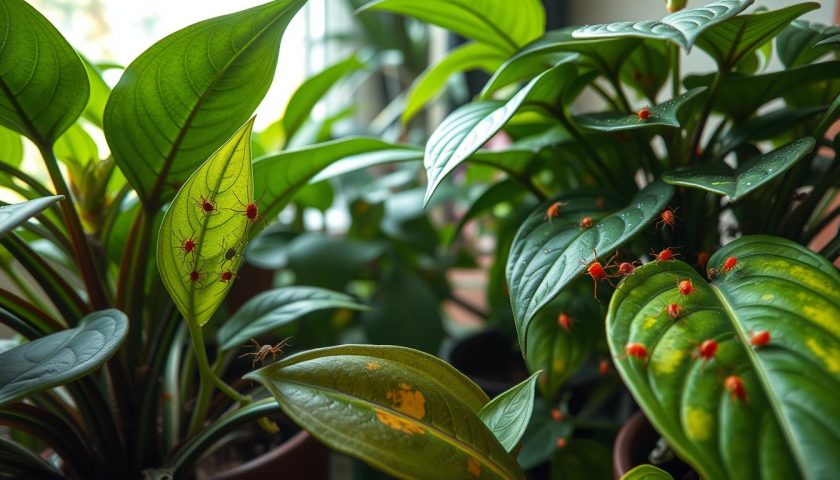
- Increased vulnerability to spider mites — which thrive in hot, dry conditions
- Aerial roots on plants like monsteras drying out and becoming brittle
Even robust plants are affected over time. The peace lily, the calathea, and the Boston fern are among the most visibly affected by dry indoor air — all three are commonly kept plants that consistently underperform in low humidity homes. If your plants show these symptoms despite correct watering and light, humidity is almost certainly a contributing factor.
What Is a DIY Indoor Humidity Tray and How Does It Work
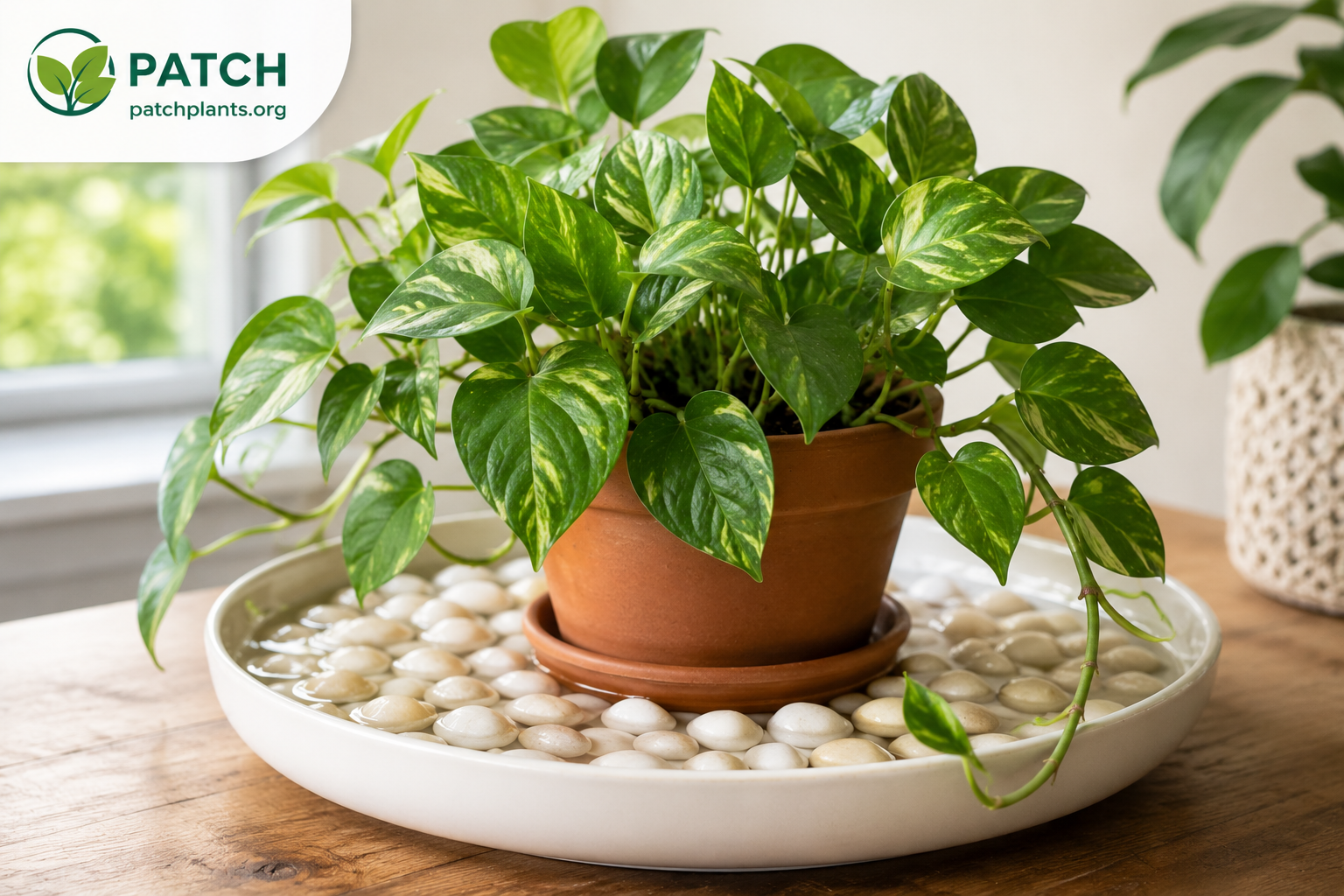
A DIY indoor humidity tray is a shallow dish or tray filled with pebbles or gravel, partially filled with water to just below the top of the pebble layer, with a potted plant placed on top. The pot sits on the pebbles above the waterline — it does not touch the water directly.
As the water in the tray evaporates naturally, it releases moisture into the air immediately surrounding the plant. This creates a localised humidity microclimate around the foliage — not room-wide humidity, but a measurable improvement in the immediate environment of the plant.
The Science Behind the Pebble Tray
The mechanism is straightforward evaporation physics. Water molecules at the surface of the tray water transition from liquid to vapour continuously, adding moisture to the air directly above the tray. Because this is happening directly beneath and around the plant, the leaves benefit from the increased local humidity even when the rest of the room remains dry.
The pebbles serve two functions: they elevate the pot above the waterline, preventing root contact with standing water, and they increase the total surface area of the tray system, allowing for more evaporation than an open water surface alone would provide.
Do pebble trays work for humidity? Yes — research into microclimate management in indoor horticulture consistently supports local evaporative methods as effective for raising immediate plant environment humidity. The effect is modest but real and sustained, which is why professional plant growers and horticulturists have used pebble trays for decades.
How a Humidity Tray Compares to Other Methods
A DIY indoor humidity tray is one of several approaches to increasing indoor plant humidity. Here is how it compares to the alternatives:
Humidity tray vs misting: Misting wets leaf surfaces briefly — the moisture evaporates within minutes and does not meaningfully raise ambient humidity. It also risks leaf spotting, fungal issues, and pest attraction on susceptible plants. A humidity tray provides continuous evaporation for days and carries none of these risks. The humidity tray is consistently more effective for sustained humidity improvement.
Humidity tray vs humidifier: A small humidifier is the most effective method for increasing room-wide humidity and is worth considering for large plant collections or very dry environments. However, it requires electricity, costs significantly more than a tray, and needs regular cleaning. A DIY indoor humidity tray is the better choice for single plants or small groups, for those on a budget, and as a complementary method alongside a humidifier for plants that need particularly high humidity.
Humidity tray vs plant grouping: Grouping plants together allows transpiration from all plants to raise the humidity in the shared space — an effective and free method. Combining plant grouping with a large humidity tray placed beneath or between the group produces significantly better results than either method alone.
For a comprehensive comparison of all available humidity methods including room placement, grouping, and humidifier use, our humidity hacks guide covers the full picture alongside DIY indoor humidity tray use.
How to Build a DIY Indoor Humidity Tray: Step by Step
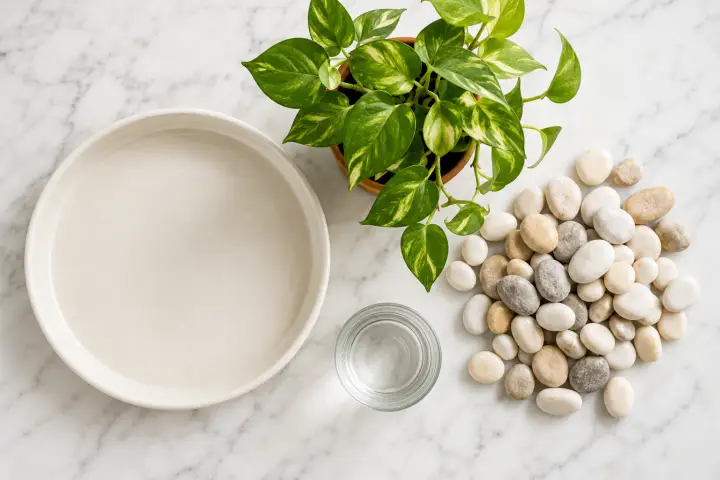
Building a homemade humidity tray takes under five minutes and requires no specialist materials or tools. Everything you need is likely already available at home.
What You Need
- A shallow tray or dish: At least five centimetres wider than the base of your pot. Baking trays, plant saucers, serving dishes, roasting tins, plastic trays, and repurposed containers all work. The wider the tray, the more evaporation surface area and the more effective the humidity tray.
- Pebbles, gravel, or decorative stones: River pebbles, aquarium gravel, horticultural grit, glass pebbles, or decorative stones all work. Aim for a layer three to five centimetres deep. Avoid soil, bark, or any organic material — these break down in water, causing odours, mould, and fungus gnat attraction.
- Fresh water: Tap water works, though rainwater or distilled water reduces mineral deposit build-up on the pebbles over time.
- Your potted plant: In its existing pot with drainage holes.
Step-by-Step Build Instructions
- Wash the tray and pebbles first. Rinse everything thoroughly with clean water before assembling. New pebbles often have dust or debris — starting clean prevents algae from establishing quickly.
- Fill the tray with pebbles. Add a layer of clean pebbles to a depth of three to five centimetres, distributed evenly across the base of the tray.
- Add water carefully. Pour in fresh water until it reaches just below the top of the pebble layer. The uppermost pebbles should remain visible above the waterline — this is the critical detail. The water sits between and beneath the pebbles, not over them.
- Check the water level. Before placing your plant, verify the waterline. The water should be clearly below the top of the pebble layer by at least one centimetre.
- Place your plant on top. Set the potted plant on top of the pebble layer. Check that the base of the pot is resting on dry pebble tops and is not in contact with the water below.
- Position in its usual location. Place the assembled humidity tray with plant in the appropriate light position for that plant. The tray adds no bulk to the plant’s footprint and fits most windowsills and shelves easily.
Your DIY indoor humidity tray is ready. The evaporation begins immediately and continues as long as water remains in the tray.
How to Maintain Your Humidity Tray
- Refill every two to three days in warm or centrally heated rooms. In cooler conditions, every three to five days is sufficient. Never let the tray run completely dry — refill before the water level drops below the bottom of the pebble layer.
- Clean the tray monthly. Remove the plant and pebbles, wash the tray with hot soapy water, and rinse the pebbles thoroughly. This prevents algae build-up, removes mineral deposits from tap water, and eliminates any conditions that might attract fungus gnats.
- Check for algae. Green algae on the pebbles or tray sides indicates adequate light but excessive nutrients in the water. Use rainwater or distilled water if algae becomes a recurring problem, and clean more frequently.
- Replace pebbles seasonally. Pebbles eventually accumulate mineral deposits that are difficult to remove by rinsing. Replacing them every three to four months keeps the tray functioning well and looking clean.
Which Plants Need a Humidity Tray Most
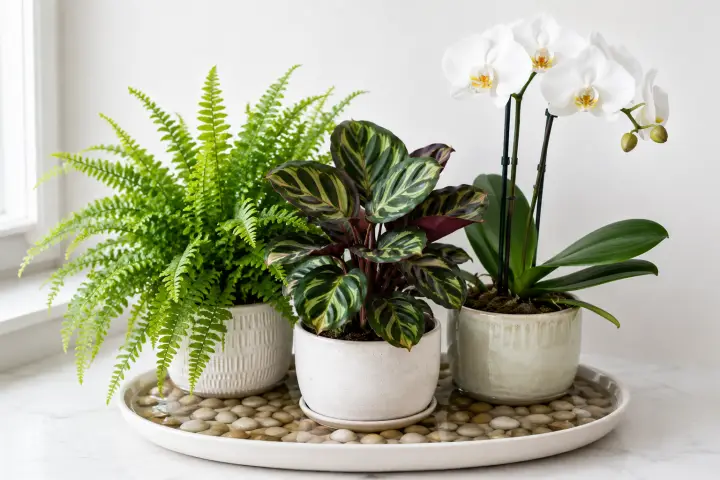
Not all houseplants need additional humidity — succulents, cacti, and many Mediterranean herbs actually prefer dry air. But a wide range of popular tropical and subtropical houseplants benefit significantly from a DIY indoor humidity tray.
High-Priority Humidity Tray Plants
These plants consistently perform better with additional humidity and are excellent candidates for a dedicated humidity tray:
The Boston fern is one of the most humidity-dependent commonly kept houseplants — brown tips are almost always a sign of insufficient air moisture. A large humidity tray is one of the most effective single interventions for Boston fern care indoors. The calathea similarly requires high humidity to maintain its spectacular patterned foliage — leaf curling and browning edges are classic low humidity symptoms in this genus.
The orchid — particularly phalaenopsis varieties — prefers fifty to seventy percent humidity. An orchid humidity tray is one of the most widely recommended care additions for indoor orchid growing, and building a DIY version is exactly as effective as any commercial orchid humidity tray product. The peace lily and monstera both benefit from increased humidity, with the peace lily in particular prone to brown leaf tips in dry air.
Plants That Benefit Moderately
These plants tolerate lower humidity but perform noticeably better with the microclimate improvement a humidity tray provides:
The pothos, philodendron, spider plant, and rubber plant all grow faster and produce healthier foliage with modest humidity increases. The bird of paradise and fiddle leaf fig are both prone to brown leaf edges in dry conditions — a humidity tray helps but may need supplementing with a humidifier in very dry rooms. The snake plant and ZZ plant are tolerant of dry air but still appreciate modest humidity improvements.
Plants That Do Not Need a Humidity Tray
Succulents, cacti, and drought-adapted plants actively prefer dry air and do not benefit from a humidity tray. Our succulent care guide and cactus care guide both emphasise low humidity as a key care requirement for these plants. Mediterranean herbs such as lavender, rosemary, and thyme similarly prefer drier conditions. Do not use humidity trays for these plant types.
Advanced Humidity Tray Techniques
Once you have the basic DIY indoor humidity tray working well, these refinements improve its effectiveness further.
The Group Humidity Tray
Instead of individual small trays under each plant, use one large tray beneath a group of several plants. This approach multiplies the evaporation surface area dramatically and combines the humidity tray’s evaporation with the natural transpiration from all the grouped plants — creating a significantly more effective humidity microclimate than individual trays provide.
A large roasting tin, a shallow storage box, or a purpose-made plant display tray all work well as group humidity trays. Fill with pebbles and water as described, then arrange multiple plants on top. This is particularly effective for plant shelves, windowsill arrangements, and bathroom plant collections. For room-by-room plant arrangement ideas that complement humidity tray placement, our how to style indoor plants by room guide covers grouping principles in detail.
Bathroom and Kitchen Placement
Bathrooms and kitchens naturally have higher ambient humidity than other rooms — steam from showers, cooking, and running water all contribute. Placing humidity-loving plants in these rooms reduces or eliminates the need for a humidity tray in many cases. Our 33 best plants for your bathroom guide covers the best humidity-tolerant plants for bathroom placement specifically.
For bedroom plant placement where humidity is typically lower, our bedroom plants guide discusses which plants suit bedroom environments and how humidity management contributes to plant health in sleeping spaces.
Seasonal Adjustments
Central heating in winter dramatically reduces indoor humidity — this is when a DIY indoor humidity tray earns its keep most visibly. In summer, humidity levels in most homes are naturally higher and the tray becomes less critical for most plants. Adjust refill frequency seasonally — more frequent in winter when evaporation is faster due to heating, less frequent in summer when ambient humidity is naturally higher.
For a complete guide to seasonal plant care adjustments including humidity management through the year, our humidity hacks guide covers every season in detail.
Common Humidity Tray Mistakes and How to Avoid Them
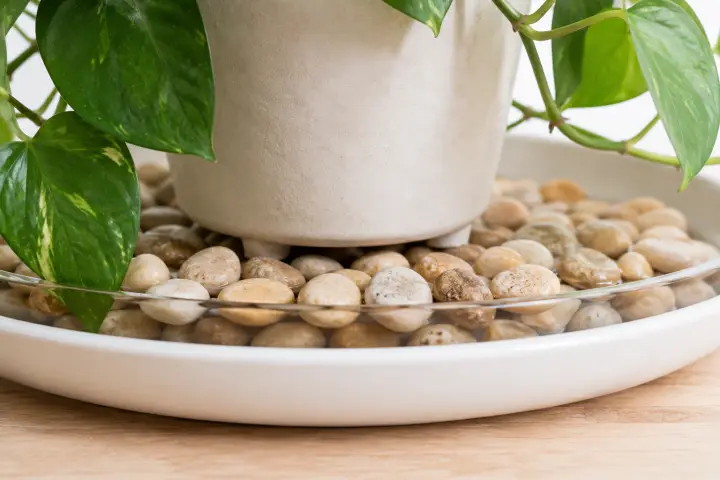
A DIY indoor humidity tray is simple but a few common errors reduce its effectiveness or create new problems.
Water Level Too High
The most common mistake. If water is added to the point where the pot base sits in or touches the water, root rot risk is introduced. The whole point of the pebbles is to keep the pot above the waterline. Check the water level every time you refill and keep it at least one centimetre below the top of the pebble layer. If root rot is a concern, our root rot guide covers identification and treatment in full.
Tray Too Small
A tray barely larger than the pot base has insufficient evaporation surface area to make a meaningful difference. Use a tray at least five centimetres wider than the pot on all sides — wider is always better for evaporation effectiveness.
Organic Material in the Tray
Adding bark, soil, moss, or any organic material to the tray creates ideal conditions for mould, odours, and fungus gnat larvae. Use only clean inorganic pebbles, gravel, or decorative stones. If fungus gnats are already a problem with your plants, our plants that keep bugs away guide covers management strategies.
Never Cleaning the Tray
Algae, mineral deposits from tap water, and debris accumulate over time. A dirty humidity tray becomes less effective and can harbour pests. Clean monthly as described above — this takes five minutes and maintains the tray at full effectiveness indefinitely.
Using It as the Only Humidity Solution in Very Dry Rooms
In rooms where humidity regularly drops below thirty percent — common in very cold climates with aggressive central heating — a single humidity tray may not be sufficient for particularly sensitive plants. Combine with plant grouping and consider a small humidifier for the most demanding humidity-loving species. Our humidity hacks guide explains how to layer multiple approaches effectively.
Humidity Trays for Specific Plant Types
Orchid Humidity Tray
An orchid humidity tray is one of the most recommended additions to orchid care. Phalaenopsis orchids prefer fifty to seventy percent humidity — significantly higher than most homes provide, particularly in winter. The classic orchid humidity tray uses clear glass pebbles or white gravel for aesthetic compatibility with transparent orchid pots. Our orchid care guide covers the full humidity requirements of different orchid varieties.
Fern Humidity Tray
Ferns are among the most humidity-dependent plants in common cultivation. A humidifier for ferns is sometimes recommended for the most demanding varieties, but a large well-maintained humidity tray provides sufficient improvement for Boston ferns and many other species in normal indoor conditions. Our Boston fern care guide covers humidity requirements specifically and recommends a humidity tray as the first intervention for brown tip problems.
Calathea Humidity Tray
Calatheas are famously fussy about humidity — they are native to Brazilian rainforests and expect consistently high air moisture. A humidity tray is the minimum intervention for calathea care in a dry home; a humidifier for indoor plants is often the better solution for a full calathea collection. Our calathea care guide covers the specific humidity ranges different calathea varieties need.
Article Summary
| Topic | Key Points |
|---|---|
| What is a DIY indoor humidity tray | Shallow tray with pebbles and water — pot sits above waterline, evaporation raises local humidity |
| Do pebble trays work for humidity | Yes — creates measurable localised humidity microclimate around plants |
| How to build a humidity tray | Tray + pebbles + water below top of pebbles + pot on top — 5 minutes, no tools needed |
| Best plants for humidity tray | Ferns, calatheas, orchids, peace lily, monstera, pothos, philodendron |
| Plants that do not need a humidity tray | Succulents, cacti, Mediterranean herbs — prefer dry air |
| Humidity tray vs misting | Tray provides continuous humidity for days — misting lasts minutes and risks leaf spotting |
| Humidity tray vs humidifier | Humidifier is more effective room-wide — tray is free, low maintenance, good for single plants |
| How often to refill | Every 2–3 days in warm rooms, 3–5 days in cooler conditions |
| Maintenance | Clean tray and pebbles monthly — prevents algae, mineral deposits, fungus gnats |
| Advanced technique | Group humidity tray — one large tray under multiple plants multiplies effectiveness |
Related Guides
- Humidity Hacks: Keep Plants Happy Without a Humidifier
- Boston Fern Care Guide
- Calathea Care Guide
- Orchid Care Guide
- Peace Lily Care Guide
- Monstera Care Guide
- Complete Guide to Watering Tips
- Signs You Are Overwatering
- What Is Root Rot?
- 33 Best Plants for Your Bathroom
- How to Style Indoor Plants by Room
- How to Decorate Your Bedroom with Plants
Final Thoughts
A DIY indoor humidity tray is one of the most satisfying plant care solutions available — not because it is complex or impressive, but because it is so elegantly simple. A shallow dish, some pebbles, and fresh water create a sustained, effective improvement in the immediate environment of your plants, costing nothing and requiring almost no maintenance.
It will not transform a bone-dry room into a tropical greenhouse. But it will meaningfully improve the conditions for every humidity-loving plant that sits above it, reducing brown tips, supporting healthier new growth, and making orchids, ferns, and calatheas markedly more comfortable in the average home.
According to the Royal Horticultural Society, maintaining adequate humidity around tropical houseplants is one of the most commonly overlooked aspects of indoor plant care in the UK — with dry centrally heated air cited as a leading cause of poor plant health in winter months. A pebble humidity tray is among the RHS-recommended approaches for addressing this problem simply and affordably.
Build one this evening. It takes five minutes. Your plants will show the results within days.
Frequently Asked Questions
Do pebble trays actually work for humidity?
Yes — pebble trays work by allowing water to evaporate slowly from the stone surface, raising local humidity immediately around the plant. The effect is localised rather than room-wide, but it is measurable and consistently beneficial for humidity-loving houseplants. For plants like ferns, orchids, and calatheas, a well-maintained humidity tray makes a visible difference to leaf health and growth quality.
How often should I refill my humidity tray?
Refill your humidity tray every two to three days in warm or centrally heated rooms, and every three to five days in cooler conditions. Always maintain visible water between the pebbles — never let the tray run completely dry. The water level should always be below the top of the pebble layer so the pot base remains above the waterline.
Will a humidity tray cause root rot?
No — a correctly built humidity tray will not cause root rot because the pebbles keep the pot elevated above the waterline. Root rot only develops when roots sit in standing water directly. Keep the water level clearly below the pot base at all times. If you are concerned about root rot in any of your plants, our root rot guide covers identification and treatment in full.
Which plants benefit most from a humidity tray?
Plants that benefit most are those native to tropical or subtropical environments — ferns, calatheas, orchids, peace lilies, monsteras, pothos, and philodendrons all respond well to the microclimate a humidity tray creates. Succulents, cacti, and drought-adapted plants do not need and should not be placed on humidity trays. Our humidity hacks guide has a full breakdown of humidity needs by plant type.
What is the best material to use in a humidity tray?
River pebbles, aquarium gravel, horticultural grit, or decorative stones all work well. Use clean inorganic material only — avoid bark, soil, or organic matter which decompose in water and attract pests. Rinse pebbles thoroughly before first use and clean monthly to prevent algae and mineral build-up.
How is a humidity tray different from misting?
A humidity tray provides continuous, steady humidity through gradual evaporation lasting days between refills. Misting provides a brief surface wetting that evaporates within minutes and does not meaningfully raise ambient humidity. A humidity tray requires less effort, is more effective, and carries no risk of the leaf spotting and fungal problems that misting can cause on susceptible plants like calatheas and orchids.