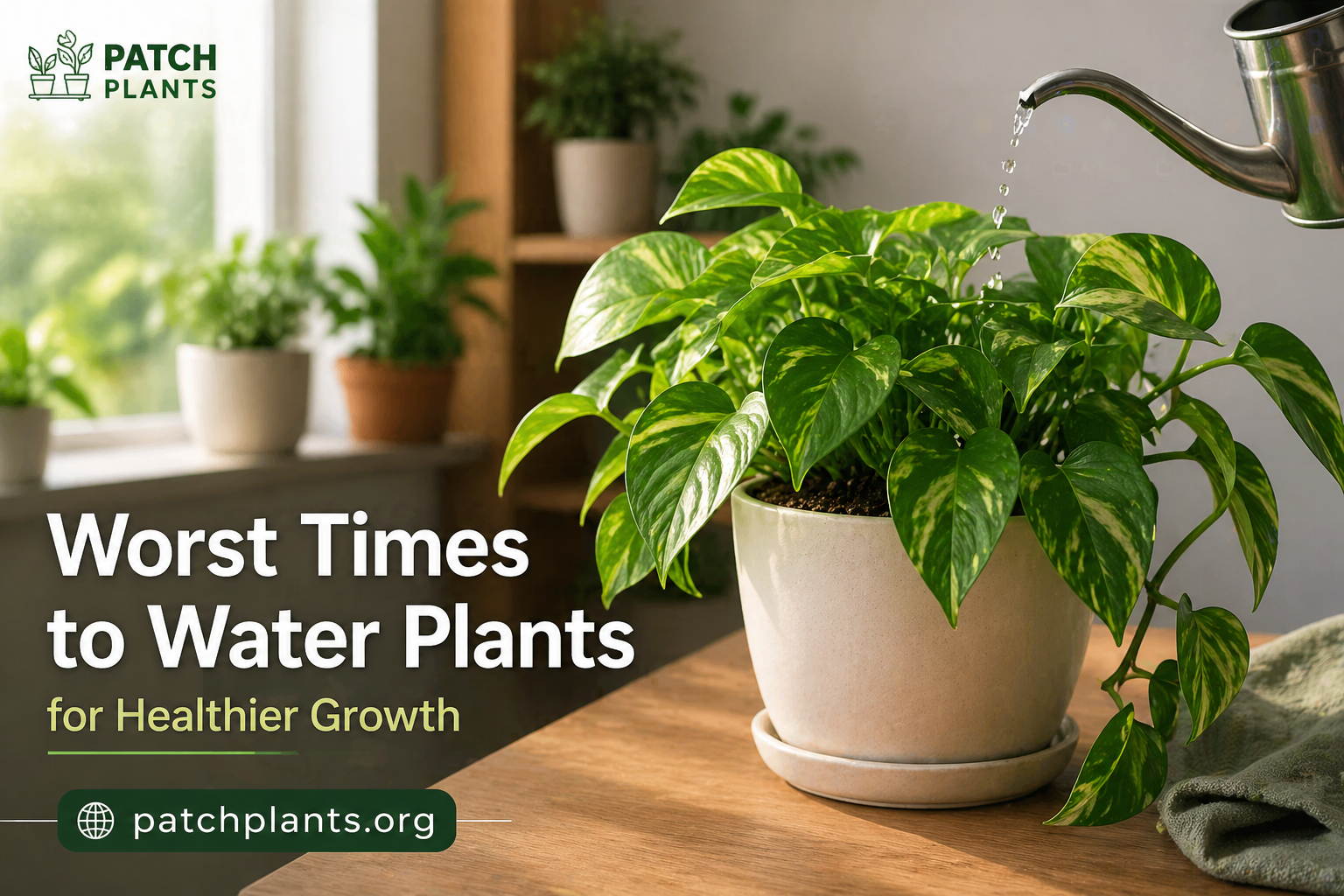
The worst time to water any plant is when its soil is still wet: extra water fills the air spaces roots need and leads to root rot. For outdoor plants, the worst times of day are the middle of a hot, sunny day, when much of the water evaporates before it soaks in, and the evening if you water over the leaves, because foliage that stays wet overnight is more prone to fungal disease. Early morning, watered at the base of the plant, is the best choice.
Indoors, the clock matters less than most people think. A houseplant will not rot because you watered it at 7 pm instead of 7 am. What harms indoor plants is watering soil that has not dried enough, sticking to a fixed weekly schedule, and letting pots stand in water, especially in cool winter rooms where soil dries slowly. This guide explains each of these “worst times”, the plant science behind them, and how to build a simple routine that works.
At Patch Plants, botanist Sawera Shahid checks every watering claim against research and extension advice before it goes into a guide. That is why you will not find myths here such as “water droplets burn leaves in the sun” or “plants cannot absorb water at night”. You can read more about how we research our guides on the About Patch Plants page.
Key Takeaways
- Watering when the soil is still moist is the single most damaging timing mistake, indoors and out.
- Outdoors, early morning is best: less evaporation, and wet leaves dry quickly.
- Midday watering outdoors wastes water to evaporation, but it will not scorch leaves; if a plant is wilting in the heat, water it.
- Evening watering outdoors is fine at the base of the plant, but wetting leaves at night raises fungal disease risk.
- Indoors, time of day matters far less than checking the soil first.
- Fixed schedules cause overwatering in winter, when plants grow slowly and soil dries more slowly.
- After repotting, most plants should be watered in to settle the soil; succulents, cacti and plants with trimmed, rotten roots are the exceptions.
Why Watering Time Matters
Plants move water from roots to leaves through a process called transpiration. During the day, open leaf pores (stomata) release water vapour, which pulls more water up from the roots. At night most plants close their stomata, so they use less water, although roots still absorb it.
Two things follow from this. First, water given in the morning is used when the plant needs it most, and any splashes on leaves dry quickly. Second, soil that stays wet for long periods, especially in cool conditions, starves roots of oxygen. Roots need air as well as water; when every pore in the soil is full of water, roots suffocate and rot organisms take hold. So the real question is not only “What time is it?” but “How wet is the soil, and how quickly will it dry?”
The Worst Times to Water Your Plants
1. When the Soil Is Still Wet
This is the number one watering mistake for both houseplants and container plants. Watering again before the soil has dried enough keeps roots permanently waterlogged, which leads to yellow leaves, soft stems and root rot.
Check before you water:
- Push a finger 2–3 cm (about 1 in) into the soil for most houseplants.
- If it feels damp, wait and check again in a day or two.
- If it feels dry, water thoroughly until water drains from the bottom.
- For succulents, cacti, ZZ plants and snake plants, let the soil dry most of the way down first.
Lifting the pot also helps: a freshly watered pot is noticeably heavier than a dry one. Our guide to the signs of overwatering shows what too much water looks like.
2. Midday in Hot Sun (Outdoor Plants)
Watering garden beds and patio pots in the middle of a hot, sunny day is inefficient. A large share of the water evaporates from the soil surface or blows away before it reaches the roots. Iowa State University Extension recommends early morning, roughly 5–9 am, as the best time to water a garden, noting that midday watering is less efficient because of rapid evaporation.
Midday watering is wasteful, not harmful. The popular idea that water droplets act like magnifying glasses and burn leaves is a myth for most plants. If a pot or bed has dried out and plants are wilting at noon, water them straight away, at the base, rather than waiting until the next morning.
For indoor plants, the time of day makes little practical difference to evaporation. Just use room-temperature water, because very cold water on the roots of tropical plants can cause stress.
3. Evening or Night With Water on the Leaves (Outdoor Plants)
Watering in the evening is fine for the soil, but if you use a sprinkler or hose that soaks the foliage, leaves can stay wet all night. Many leaf diseases, such as fungal leaf spots, blights and downy mildews, need several hours of leaf wetness to infect. Morning watering gives leaves the whole day to dry.
If evening is your only time, water at soil level with a watering can, drip line or soaker hose so the leaves stay dry. Iowa State Extension notes that with drip irrigation or soaker hoses, which do not wet the leaves, morning and evening are both good times.
4. Late Evening in Cold Winter Rooms (Indoor Plants)
In summer, a houseplant watered in the evening will be fine. In winter, the picture changes slightly: rooms near cold windows can drop sharply overnight, growth slows, and soil dries very slowly. Wet, cold roots are more likely to rot than wet, warm ones.
In the cooler months, water in the morning when possible, use room-temperature water, water less often, and keep pots away from cold glass. Our guide to seasonal plant care in autumn explains how to ease plants into winter.
5. On a Fixed Schedule
Watering every Sunday, no matter what, is one of the most common causes of overwatering. How fast soil dries depends on the season, light, temperature, humidity, pot material and plant size. A pothos that needs water every 6–7 days in summer may only need it every 14 days in winter.
Use a schedule as a reminder to check your plants, not as an order to water them. Our complete watering guide explains how to read soil moisture for different plants, and our review of self-watering pots explains when automatic watering helps and when it hurts.
6. Little and Often During a Heatwave
In very hot weather, quick daily sprinkles keep only the top few centimetres of soil damp. Roots stay shallow, and the soil below dries out. It is better to water deeply and less often, so the water soaks well down into the root zone.
During a heatwave:
- Water early in the morning, deeply, at the base of the plant.
- Check containers daily; pots in full sun can dry out within a day and may need a second drink in the late afternoon.
- Add mulch to garden beds to slow evaporation.
- Move pots into light shade during the hottest hours if you can.
Some plants wilt slightly in the afternoon heat and recover by evening without water; this is normal. If they are still limp in the evening or the soil is dry, water them. Our guides on outdoor plants that cope with heatwaves, drought-resistant plants and keeping outdoor plants alive offer more tips.
7. In Winter, as Often as in Summer
Most houseplants slow down in autumn and winter because days are shorter and light is weaker. They use much less water, so the same summer routine leaves the soil wet for too long. Expect to water roughly half as often in winter, and always check the soil first. Cacti and many succulents need very little water at all in winter.
8. Right After Repotting (Plants That Need Dry Roots)
For most leafy houseplants, you should water thoroughly right after repotting. Watering settles fresh potting mix around the roots and removes air pockets. The exceptions are succulents, cacti and any plant whose roots you have just trimmed because of rot. For these, wait a few days before watering so small root wounds can heal and the plant is not sitting in damp mix with injured roots.
Our how to repot a plant guide and repotting mistakes to avoid explain aftercare in more detail.
The Best Time to Water Plants
For outdoor plants, early morning is best. Water soaks in before the heat of the day, less is lost to evaporation, and any wet leaves dry quickly. For houseplants, morning is a good habit too, but checking the soil matters far more than the hour.
| Time of day | Outdoor plants | Indoor plants |
|---|---|---|
| Early morning | Best: low evaporation, leaves dry fast | Good habit; plant uses water through the day |
| Midday | Wasteful in hot sun, but water wilting plants straight away | Fine; use room-temperature water |
| Late afternoon | Good second choice; leaves still have time to dry | Fine |
| Evening / night | Fine at the base; avoid wetting leaves | Fine in warm rooms; avoid in cold winter rooms |
Watering Guide by Plant Type
These are typical intervals for healthy plants in a bright, warm room. Treat them as a starting point and always check the soil first.
| Plant | Water when… | Typical summer interval | Key tip |
|---|---|---|---|
| Pothos | Top 2–3 cm is dry | 7–10 days | Droops slightly when thirsty |
| Monstera | Top 5 cm is dry | 7–10 days | Water deeply, then let it drain |
| Peace lily | Top 2–3 cm is dry | 5–7 days | Wilts visibly when dry; see our peace lily drooping guide |
| Fiddle leaf fig | Top 5 cm is dry | 7–10 days | Hates soggy soil and draughts |
| Spider plant | Top 2–3 cm is dry | 7 days | Tolerates the odd missed watering |
| Snake plant | Soil is almost completely dry | 14–21 days | Very drought tolerant |
| ZZ plant | Soil is completely dry | 14–21 days | Stores water in its rhizomes |
| Succulents and cacti | Soil is completely dry | 14–21 days | Water very little in winter |
For tropical plants in dry rooms, combining good watering with extra humidity helps. Our DIY humidity tray guide shows a simple way to do it.
Signs Your Watering Timing Is Off
Watering too often or while soil is wet:
- Lower leaves turning yellow
- Soft, dark stems at the base
- A musty or sour smell from the soil
- Fungus gnats, which breed in constantly moist soil
- White mould on the soil surface
- Wilting even though the soil is wet
Watering too little or too lightly:
- Leaves curling or drooping, then recovering after a drink
- Brown, crispy leaf edges
- Soil pulling away from the sides of the pot
- Water running straight through a dry root ball
If you suspect rot, check the roots using our guides to healthy roots vs root rot and how to treat root rot.
How to Build a Better Watering Routine in 4 Steps
- Pick a regular check-in time. A few minutes each morning, or every other morning, works well. This is your time to check plants, not automatically water them.
- Check before you water. Use the finger test or lift the pot, and water only the plants that are dry enough.
- Water thoroughly. When a plant needs water, water until it drains from the bottom, then empty the saucer after 15–30 minutes. Deep watering wets the whole root ball and encourages deeper roots.
- Keep simple notes. Jot down the date you watered each plant. After a month or so, you will know each plant’s rhythm, and you can adjust as the seasons change.
Growing a large collection? Our guide to creating an indoor jungle without overcrowding shows how to group plants with similar needs, and our container gardening on patios guide covers watering outdoor pots. You can browse all our plant care guides for more help.
Frequently Asked Questions
What is the worst time to water indoor plants?
The worst time is whenever the soil is still moist, regardless of the hour. Indoors, time of day matters much less than soil moisture. In winter, avoid watering late at night in cold rooms, because wet, cold soil dries slowly and raises the risk of root rot.
Is it bad to water plants at noon?
Not for the plant. Outdoors, more water evaporates in midday heat, so it is less efficient, but water droplets do not burn leaves. If a plant is wilting from dry soil, water it immediately at the base rather than waiting until morning.
Can I water my plants in the evening?
Yes. Indoors, evening watering is fine for most plants in warm rooms. Outdoors, water at soil level and avoid wetting the leaves, because foliage that stays wet overnight is more likely to develop fungal disease.
Should I water plants right after repotting?
For most leafy houseplants, yes: watering settles the new mix around the roots. Wait a few days for succulents, cacti and any plant whose roots you have trimmed because of rot.
Should I water less in winter?
Yes. Most houseplants grow slowly in winter and use far less water, so soil stays wet longer. Check the soil before every watering, water roughly half as often as in summer, and use room-temperature water.
Final Thoughts
The worst time to water is not a time on the clock but a condition: soil that is still wet. For garden plants, add two more rules: avoid the heat of midday where you can, and keep leaves dry if you water in the evening. Check the soil, water deeply when it is needed, and let the seasons guide how often you water. Your plants will show the difference in firmer stems, greener leaves and steadier growth.