Here is how to revive a dying plant: first find the cause, then fix only that cause. Check the soil and roots: if the soil is wet and roots are brown and mushy, cut off the rotten roots and repot in fresh, free-draining mix; if the soil is bone dry, give the plant a thorough soak. Then move it to bright indirect light, trim dead leaves, stop feeding, and keep conditions steady for several weeks. If stems are still firm and some roots are white or pale, the plant can usually be saved.
Most struggling houseplants are not as far gone as they look. The biggest mistakes are doing everything at once, such as watering, feeding, repotting and moving the plant in the same week, or giving up too early. This step-by-step rescue plan shows how to revive a dying plant by explaining how to diagnose the problem, treat the roots and leaves, set up recovery conditions and recognise when it’s time to take cuttings instead.
At Patch Plants, botanist Sawera Shahid’s first rule for any plant emergency is “roots before leaves”: the foliage tells you something is wrong, but only the roots tell you how serious it is. You can learn more about our approach on the About Patch Plants page.
Key Takeaways
- Diagnose before acting: overwatering, underwatering, poor light, pests and root rot need different fixes.
- Check the roots. Firm, pale roots mean good chances; brown, mushy, smelly roots mean rot that must be cut out.
- Overwatered plants with rotten roots rarely recover on their own; they need fresh mix and better drainage.
- Underwatered plants usually perk up within a day of a thorough soak.
- Don’t fertilize a struggling plant; wait until healthy new growth appears.
- Give recovery time: first signs often take 1–3 weeks, and full recovery can take a few months.
- If the plant can’t be saved, propagate any healthy stems or leaves.
Quick Diagnosis: What’s Killing Your Plant?
| Symptoms | Likely cause | First action |
|---|---|---|
| Yellow lower leaves, wet soil, soft stem base, sour smell | Overwatering or root rot | Unpot and check the roots (Steps 3–5) |
| Drooping, crispy edges, very light pot, soil pulling from the sides | Underwatering | Soak thoroughly (Step 6) |
| Pale, small new leaves, long stretched stems, leaning | Too little light | Move to brighter indirect light (Step 7) |
| Bleached or brown scorched patches facing the window | Too much direct sun | Move back or filter the light |
| Webbing, cottony clusters, sticky leaves, tiny flies | Pests | Isolate and treat |
| Brown tips, white crust on soil | Fertilizer salt build-up | Flush the soil; stop feeding |
| Sudden leaf drop after a move or cold snap | Shock or cold damage | Keep warm and stable |
Clemson Cooperative Extension notes that yellowing of a whole plant is most often caused by overwatering, which starves roots of oxygen and favours root diseases, and that low light can also cause general yellowing.
Step-by-Step: How to Revive a Dying Plant
Step 1: Don’t Panic, and Don’t Do Everything at Once
Adding water, fertilizer, a new pot and a new position all in one go stacks new stresses on an already weak plant and makes it impossible to tell what helped. Take a few minutes to look closely at the plant, the soil and the pot first, then work through the steps below in order.
Step 2: Check Whether the Plant Is Still Alive
Plants that look dead often aren’t:
- Woody stems: gently scratch the bark with a fingernail. Green, moist tissue underneath means that part is alive.
- Soft stems: firm stems are alive; stems that are mushy at the base have rotted.
- Bulbs, rhizomes and tubers: firm means alive; soft or hollow means rot.
- Roots: any firm, white or pale roots mean the plant has a chance.
Step 3: Inspect the Roots
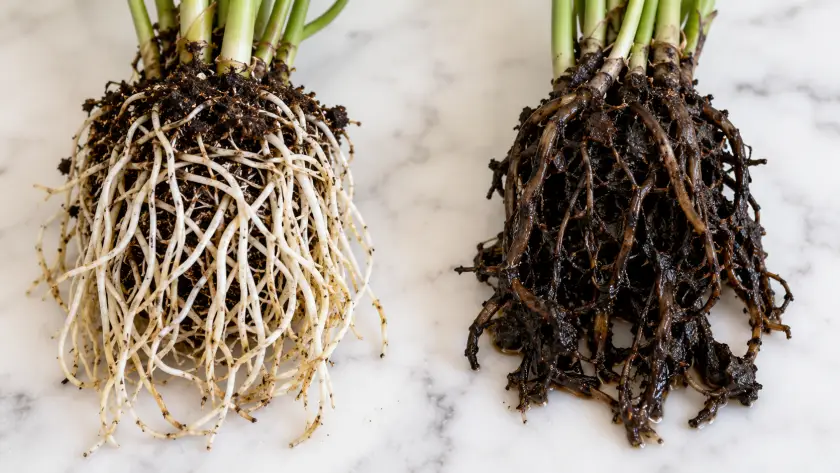
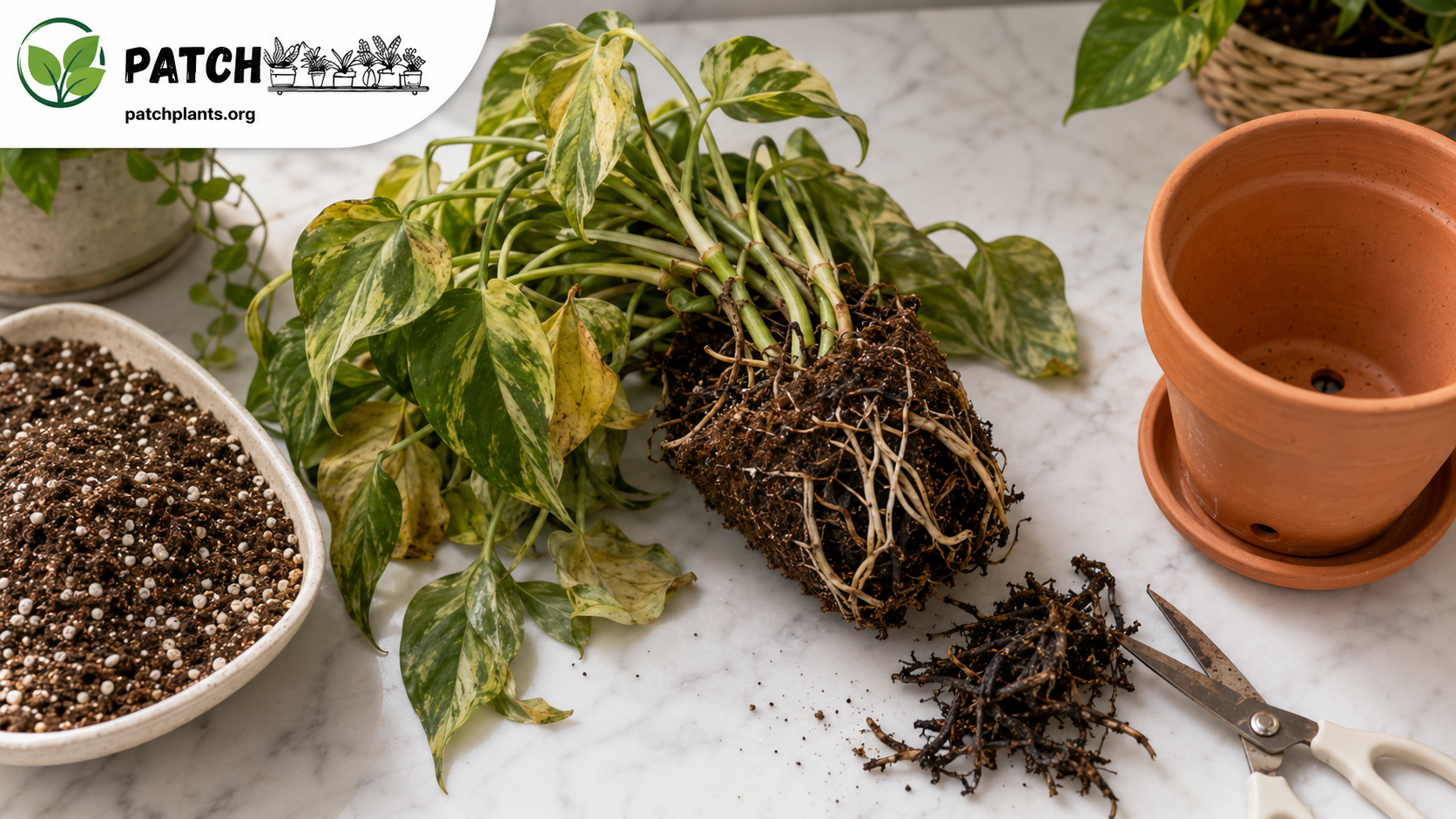
Gently slide the plant out of its pot and loosen some of the soil.
- Healthy roots are firm and white, cream or light tan, with an earthy smell.
- Rotten roots are brown or black, soft or slimy, and often smell sour. The outer layer may slide off, leaving a thin thread.
- Dry, brittle roots in bone-dry soil point to severe underwatering.
- Roots circling tightly with little soil left suggest the plant is badly root-bound.
Clemson Extension advises that if most roots are dark, soft and dead, the plant may not be worth saving, but if only some roots are affected, you can cut them out and repot. Our guides on root rot and healthy roots vs root rot have photos and more detail.
Step 4: Trim Rotten Roots and Dead Foliage
With clean, sharp scissors (wiped with rubbing alcohol), cut away all soft, dark roots back to firm, healthy tissue. If you remove a lot of roots, also remove some of the leaves, so the smaller root system doesn’t have to support as much foliage.
- Remove: leaves that are completely brown or mostly yellow, mushy stems, and diseased or badly infested growth.
- Keep: leaves that are still mostly green, firm stems, and any new growth, however small.
- Don’t overdo it: unless parts are rotting, avoid removing more than about a third of the healthy foliage at once.
For snake plants and ZZ plants, remove damaged leaves or stems at the base. For trailing plants like pothos, cut back to healthy nodes and keep the cuttings to propagate.
Step 5: Repot in Fresh Mix (When Needed)
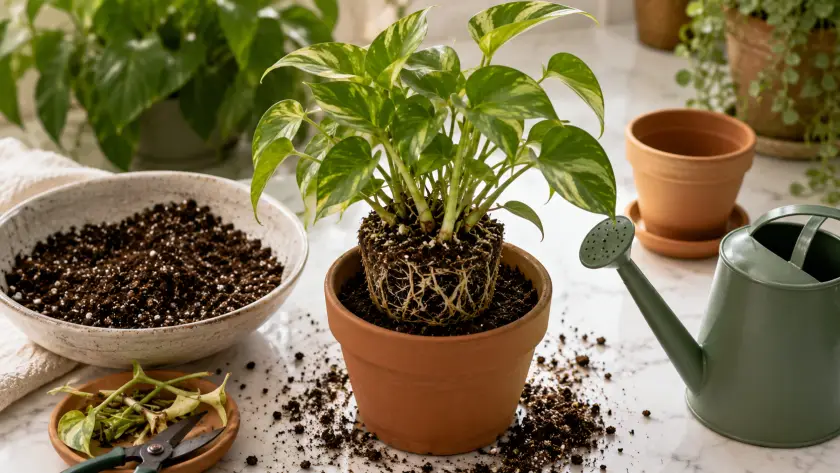
Repot if you found root rot, if the soil smells sour, stays soggy, has compacted or no longer absorbs water. Don’t reuse the old soil.
- Use fresh, free-draining mix suited to the plant: gritty for succulents, airy for tropicals, moisture-holding but open for ferns. See our best soil mix guide.
- Choose a pot with drainage holes, just big enough for the trimmed root ball. A pot that’s too big stays wet and repeats the problem.
- Wash and disinfect the old pot if you reuse it.
If the roots are healthy and the soil is fine, skip repotting; it adds stress. Our guides on how to repot a plant and repotting mistakes cover the details.
Step 6: Water Correctly for the Problem
- After underwatering: water thoroughly until it drains. If the soil is so dry that water runs straight through, stand the pot in a bowl of water for 20–30 minutes, then drain. Most plants perk up within a day.
- After root rot or overwatering: repot into barely moist mix, then water lightly and let the top of the mix dry before watering again. For succulents, snake plants and ZZ plants, wait about a week before the first watering after cutting rotten roots.
- During recovery: always check the soil before watering. Recovering plants with fewer roots use less water than usual.
See our complete watering guide and signs of overwatering.
Step 7: Fix the Light
A plant in poor light can’t make enough energy to recover. Move it to bright indirect light, such as near an east-facing window or a little back from a south- or west-facing one. Avoid harsh direct sun while it’s weak. If you have no bright spot, a simple LED grow light for 12–14 hours a day helps; see our guide to grow lights for indoor plants and our complete guide to indoor light. Give the pot a quarter turn every week or two so it grows evenly.
Step 8: Treat Pests if Present
Isolate infested plants so pests don’t spread. Wipe or rinse off spider mites, mealybugs, aphids and scale, then treat with insecticidal soap, repeating every 5–7 days for a few weeks. For fungus gnats, let the top of the soil dry out between waterings. Our guide to white spots on plant leaves helps identify mealybugs and scale.
Step 9: Stop Feeding and Keep Conditions Stable
Fertilizer can’t fix damaged roots and its salts can burn them. Stop feeding until you see healthy new growth, usually 4–8 weeks, then restart at quarter to half strength. If you see a white crust on the soil, flush it with plenty of water. See our guide to fertilizing indoor vs outdoor plants.
Keep the plant at a steady 18–24°C, away from draughts and heaters, with gentle air movement. Humidity lovers such as calatheas and ferns recover better with a little extra humidity; see our humidity hacks guide. A loose clear bag over a small plant for a week or two can help it recover after heavy root loss; open it daily for fresh air.
Step 10: Watch for Recovery, and Know When to Propagate
Signs your rescue is working:
- limp stems firming up and leaves lifting,
- yellowing slowing down or stopping,
- new leaves or shoots appearing,
- the soil drying at a normal rate again, which shows the roots are working.
Most plants show first signs of recovery within 1–3 weeks; after severe root rot it can take 4–8 weeks before new growth appears, and a few months to look full again. If, after about six weeks of good care, there is no new growth and stems are still soft or shrivelling, take cuttings from any healthy stems or leaves. Pothos, philodendron, tradescantia, succulents and many others root easily. See our step-by-step propagation guide.
Plants That Bounce Back Best
Knowing how to revive a dying plant is easiest with tough species. These houseplants are especially good at recovering:
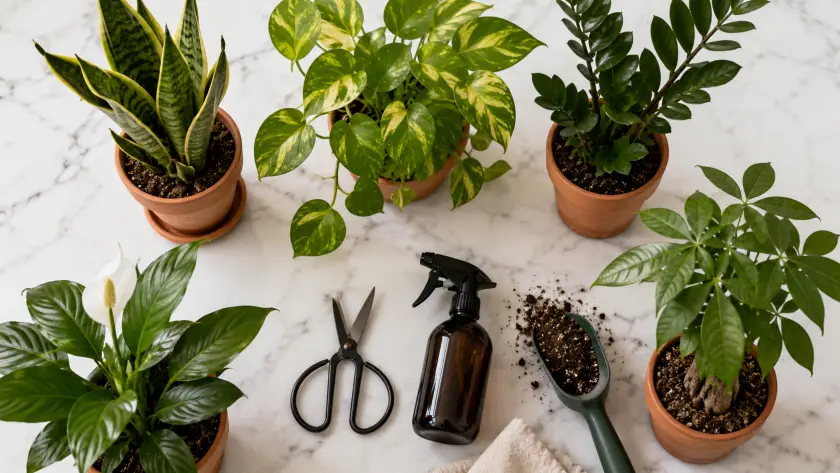
- Pothos: recovers quickly and can be restarted from a single healthy cutting.
- Peace lily: collapses dramatically when thirsty but usually perks up within hours of watering; see why peace lilies droop.
- Snake plant and ZZ plant: survive long dry spells; can regrow from any firm rhizome after rot is removed.
- Spider plant: fleshy roots store water, and its plantlets can be rooted as backups.
- Money tree and rubber plant: often regrow from firm stems after leaf drop, once light and watering are corrected.
Common Mistakes When Reviving a Dying Plant
- Watering more when a plant droops, without checking whether the soil is already wet.
- Skipping the root check, so root rot goes untreated.
- Feeding a sick plant in the hope of a quick boost.
- Repotting into a much bigger pot or the same heavy soil.
- Moving the plant every few days to try new spots.
- Giving up after a week or two, when roots are still recovering out of sight.
To prevent future problems, see our guides to why leaves turn yellow, leaf curl, browning and droop and the best indoor plants for beginners.
Frequently Asked Questions
How do I know if my plant is dead or just dying?
Check the stems and roots. Green tissue under the bark of woody stems, firm soft stems, and firm white or pale roots all mean the plant is alive. If stems are dry and brittle or mushy throughout and every root is brown and soft, it is unlikely to recover.
Can overwatered plants recover on their own?
Mildly overwatered plants can recover if you let the soil dry out and improve drainage. If the roots have started to rot, they rarely recover on their own: remove the plant, cut out the rotten roots and repot it in fresh, free-draining mix.
How long does it take to revive a dying plant?
Underwatered plants often perk up within a day. Plants recovering from poor light or mild overwatering usually show improvement in 1–3 weeks, while plants recovering from serious root rot may take 4–8 weeks to produce new growth and a few months to look full again.
Should I fertilize a dying plant?
No. Fertilizer can burn weakened roots. Wait until the plant produces healthy new growth, then feed at quarter to half strength.
What does it mean if my plant’s soil smells bad?
A sour or rotten smell usually means the soil has stayed waterlogged and roots are rotting. Unpot the plant, remove rotten roots and repot in fresh mix in a pot with drainage holes.
Final Thoughts
Learning how to revive a dying plant is mostly about calm, careful diagnosis. Check the roots, fix the real cause, give the plant good light and steady conditions, and then be patient. Many plants that look finished push out healthy new leaves a few weeks later, and even when a plant can’t be saved, a cutting can give you a fresh start. For more help, browse our plant care guides.