
🌿 Key Takeaways
- Do plants grow better if you talk to them? Research suggests yes — sound vibrations from human voices stimulate biological processes including nutrient flow, stomatal opening, and gene expression
- Do plants respond to talking? Yes — not to the words themselves, but to the sound wave frequencies produced by human voices, which fall in ranges that measurably affect plant cellular activity
- Do plants communicate with each other? Yes — through volatile chemical compounds, root network signals, and mycorrhizal fungal connections that form complex underground communication systems
- Do plants have nervous systems? No traditional nervous system — but they possess electrochemical signalling networks that function analogously, allowing rapid information transmission across the entire plant
- Does talking to plants help in practical terms? Yes — beyond any direct plant response, speaking to plants makes you a more observant, attentive caregiver — the real and reliable benefit
- Speaking to plants positive negative effects: positive effects include increased attentiveness, reduced human stress, and potential growth stimulation — no documented negative effects exist
- Do plants talk to each other in their own way? Yes — through airborne chemical signals, root exudates, and mycorrhizal networks scientists now call the “wood wide web”
- Browse our full indoor plant care guides for science-backed plant care advice across every species
Why the Question “Should You Talk to Your Plants?” Is More Scientific Than You Think
It is a question that makes most people smile — sometimes laugh. Should you talk to your plants? It sounds like the kind of thing only the most eccentric plant enthusiasts would take seriously, a piece of charming gardening folklore with no basis in reality. And yet, the more closely scientists examine plants science and the question of do plants respond to talking, the more interesting the answers become.
Plants do not have ears. They cannot process language. They will not understand whether you are reciting poetry or recapping your day. But the science on plants and sound has been building for decades, and what it reveals is genuinely surprising: speaking to plants exposes them to sound vibrations that can influence biological processes in measurable ways — from nutrient circulation to gene expression to growth rate.
This complete guide covers everything the current study of the plants and sound research tells us — from the science behind talking to plants and how plants communicate both with humans and with each other, to the practical does talking to plants help question every plant owner actually wants answered. Along the way, we will examine plant cells, cell plant functions, and the fascinating question of whether plants have nervous systems — because understanding how plants work internally is the foundation for understanding how they might respond to external stimuli like your voice.
The History of Speaking to Plants — From Folklore to Science
How Long Have Humans Been Talking to Plants?
The practice of speaking to plants is far older than modern science. Across cultures and centuries, farmers, gardeners, herbalists, and philosophers have attributed special significance to the human voice in plant growing:
Ancient traditions: Indian Vedic texts reference the idea that plants respond to human attention and sound. Ancient Egyptian agricultural practices included rituals involving spoken words during planting. Greek philosophers contemplated whether plants possessed a form of soul or sensitivity.
Victorian romanticism: The Victorian era produced a particular flowering of interest in communicating with plants — reflecting both the scientific curiosity of the age and its romantic sensibility. Gardeners of the period spoke to their plants not as eccentrics but as practitioners of what they considered good horticultural sense.
19th century scientific curiosity: Gustav Fechner — the German philosopher and early experimental psychologist — published “Nanna, or the Soul-Life of Plants” in 1848, arguing that plants possessed conscious experience. While his conclusions were not scientifically validated, his questions foreshadowed genuine research directions that emerged a century later.
20th century research: The publication of “The Secret Life of Plants” in 1973 brought mainstream attention to the idea of do plants respond to talking and human interaction — though much of its content was later disputed. What it did successfully was inspire legitimate scientific interest in plant communication and plant responses to environmental stimuli including sound.
The Science Behind Talking to Plants — What Research Actually Shows
Do Plants Respond to Talking? — The Vibration Theory
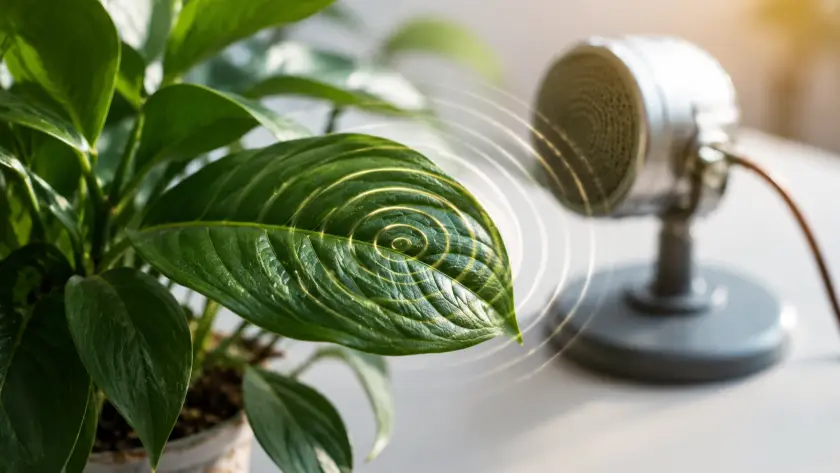
The key to understanding do plants respond to talking is understanding that plants do not respond to the semantic content of speech — they cannot process words, meaning, or intention. What they can respond to is what all sound fundamentally is: vibrations moving through a medium.
Sound as physical force: When you speak, your vocal cords create compression waves in the air — alternating bands of high and low air pressure that travel outward from your mouth. These waves carry physical energy. When they reach a plant, they cause the plant’s physical structures — leaves, stems, cell walls — to vibrate at corresponding frequencies.
Plant cells as vibration-sensitive structures: Plant cells are enclosed in rigid cell walls and filled with fluid under pressure (turgor pressure). These structures are mechanically sensitive — they respond to physical forces including touch, gravity, wind, and potentially sound vibrations. Research into plant and plant cell responses to mechanical stimulation has established that plants cells do respond to physical forces by altering their biological activity.
The frequency connection: Human voices typically produce sound in the range of 85–255 Hz (fundamental frequency) with harmonics extending to several thousand Hz. Research has found that plants show the most significant responses to sound frequencies in the range of 100–1,000 Hz — a range that substantially overlaps with the frequency content of human speech.
Does Talking to Plants Help Them Grow? — Key Research Findings
Does talking to your plants help them grow is the question most plant owners actually want answered. The scientific evidence, while not uniformly conclusive, is consistently suggestive:
The Royal Horticultural Society experiment (2009): One of the most widely referenced studies in plants science on this topic. Ten gardeners recorded themselves reading texts — scientific writing, poetry, Shakespeare. These recordings were played to tomato plants through headphones attached to the pots. Plants exposed to voices — particularly female voices — showed measurably greater growth than the silent control group. While the sample size was small, the results were statistically notable.
South Korean research on sound frequency: Research published by the National Institute of Agricultural Biotechnology in South Korea found that plants exposed to sounds at 125 Hz and 250 Hz showed increased expression of specific genes related to growth regulation. The researchers identified actual molecular mechanisms — not just growth observations — suggesting talking to plants help them grow through genuine biological pathways.
Stefano Mancuso’s research: Italian plant neurobiologist Stefano Mancuso — author of “Brilliant Green” and a leading figure in modern plant science — has documented plant sensitivity to vibrations and proposed that plants process environmental information through distributed sensory networks. His work has significantly advanced the scientific credibility of the study of the plants as sensing organisms.
Plant response to music: Multiple studies examining plant growth and sound have found measurable responses to music. Classical music and certain frequencies of natural sounds (birdsong, flowing water) appear more beneficial than harsh, discordant sounds. The implication is that it is the acoustic properties of sound — frequency, amplitude, pattern — rather than the musical meaning that drives the response.
How Speaking Plants Affects Biology — The Mechanisms
How speaking plants stimulates biological responses involves several proposed mechanisms:
Stomatal regulation: Stomata are the tiny pores on leaf surfaces that regulate gas exchange — taking in CO₂ for photosynthesis and releasing oxygen and water vapor. Research suggests that sound vibrations can influence stomatal opening and closing, potentially affecting photosynthesis rates and water use efficiency.
Auxin production: Auxins are plant hormones that regulate growth direction and rate. Some research suggests that sound stimulation influences auxin distribution — potentially explaining directional growth responses observed in plants exposed to specific sound sources.
Calcium signalling: Calcium ions serve as crucial chemical messengers in plant cells — transmitting information about environmental conditions from the cell membrane to the cell’s interior. Sound vibrations can trigger calcium ion movement across cell membranes — initiating signalling cascades that affect gene expression and cellular activity.
Gene expression changes: Several studies using molecular analysis have identified specific genes that show altered expression levels in plants exposed to sound. These include genes involved in stress response, growth regulation, and nutrient absorption — providing molecular-level evidence that do plants respond to talking is not merely an observational curiosity but a genuine biological phenomenon.
Do Plants Communicate With Each Other? — The Fascinating Science of Plant Communication
How Do Plants Communicate — The Underground Network
Do plants communicate with each other? The answer — established by substantial peer-reviewed research over the past two decades — is definitively yes. How do plants communicate is one of the most exciting questions in modern plants science, and the answers have fundamentally changed our understanding of plant behavior.
Do plants talk to each other in the conventional sense? No — but they exchange information through sophisticated chemical and physical systems that achieve functional equivalents of communication:
Volatile Chemical Signals — Airborne Plant Language
When a plant is attacked by insects, damaged by disease, or stressed by drought, it releases volatile organic compounds (VOCs) — airborne chemical molecules that drift through the air to neighboring plants. These chemical signals have been shown to trigger defensive responses in receiving plants before they themselves are attacked.
Classic research on willow trees demonstrated that undamaged willows growing near damaged individuals produced significantly higher levels of defensive chemical compounds — even though they had not been attacked. The only possible explanation: communicating with plants through airborne chemical signals.
How do plant cells communicate with each other within a single plant through VOCs? The same compounds are also used for internal signalling — volatile chemicals produced in one part of the plant travel through internal air spaces and trigger responses in distant tissues, a form of plants speech that operates through chemistry rather than sound.
Mycorrhizal Networks — The Wood Wide Web
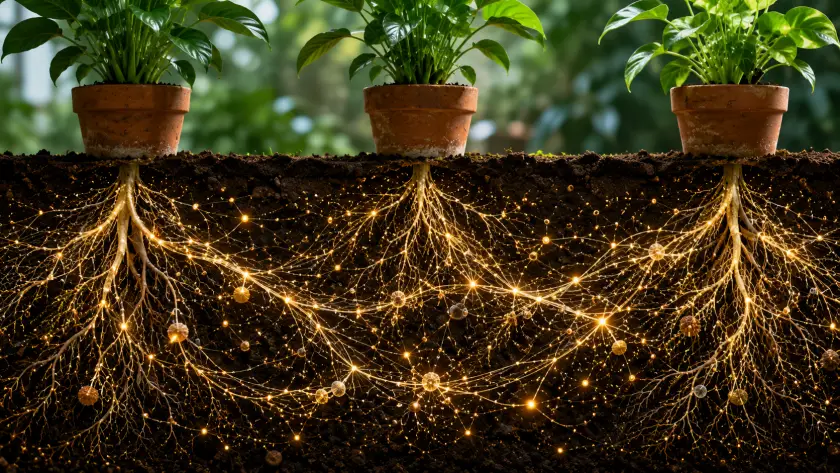
The most dramatic discovery in the study of do plants talk to each other is the mycorrhizal network — the vast underground fungal web that connects the root systems of trees and plants across entire forests. This network, which scientists have nicknamed the “wood wide web,” allows plants to:
- Transfer nutrients between connected individuals — particularly from established trees to seedlings in low-light understory conditions
- Signal threat information — when one plant is attacked, stress signals can travel through mycorrhizal connections to neighboring plants
- Share carbon compounds — large trees have been shown to send carbon through fungal networks to juvenile trees growing in shade
How do plant cells communicate with each other through this network? Root cells interface with fungal hyphae (microscopic fungal threads) at highly specialized junction points. Chemical compounds — sugars, nutrients, signalling molecules — are transferred across these junctions in processes that parallel, at a molecular level, the synaptic transmission that occurs between neurons in animal nervous systems.
Root Exudates — Chemical Ground Communication
Plant roots continuously release complex mixtures of sugars, amino acids, organic acids, and signalling compounds into the soil surrounding them — called root exudates. These compounds influence:
- The microbial community in the surrounding soil (the rhizosphere microbiome)
- The behavior of neighboring plant roots
- The activity of beneficial soil fungi and bacteria
Research has shown that plants can alter the composition of their root exudates in response to neighboring plants — effectively “reading” and “writing” chemical messages in the soil around them. This underground chemical dialogue represents one of the most sophisticated forms of how do plants communicate yet discovered.
Do Plants Have Nervous Systems? — The Science of Plant Signalling
Plant Neurobiology — A Genuine Scientific Field
Do plants have nervous systems? The conventional answer — no — is technically correct but increasingly insufficient. Plants do not have neurons, brains, synapses, or any of the anatomical structures that constitute animal nervous systems. But the emerging field of plant neurobiology has documented electrochemical signalling systems in plants that are functionally analogous in important ways.
Electrochemical Signalling in Plants
When a plant is touched, wounded, or exposed to environmental stress, it generates electrical signals that travel through its tissues — sometimes rapidly (at speeds of up to several centimeters per second in some species) and sometimes more slowly. These electrical signals are called action potentials and variation potentials — terms borrowed directly from neuroscience because the underlying mechanisms are genuinely similar:
Action potentials in plants: These are rapid electrical signals triggered by stimuli — touch, temperature change, damage — that propagate through plant tissues. They involve movement of ions (particularly calcium, potassium, and chloride) across cell membranes in patterns that mirror neuronal action potentials in animals.
Calcium wave signalling: When a plant experiences stress at one point — an insect bite, physical damage, light change — a wave of calcium ion concentration changes propagates through connected cells, carrying information about the nature and location of the stimulus throughout the plant. This calcium signalling system serves some of the same information-integration functions that neural signalling serves in animals.
How do plant cells communicate with each other through electrical signals? Specialized structures called plasmodesmata — microscopic channels that connect adjacent plant cells through their cell walls — allow both electrical signals and chemical compounds to pass directly between connected cells. This cell-to-cell communication network is distributed throughout the plant, enabling coordinated responses to localized stimuli.
Plants Cells and Cell Plant Functions in Communication
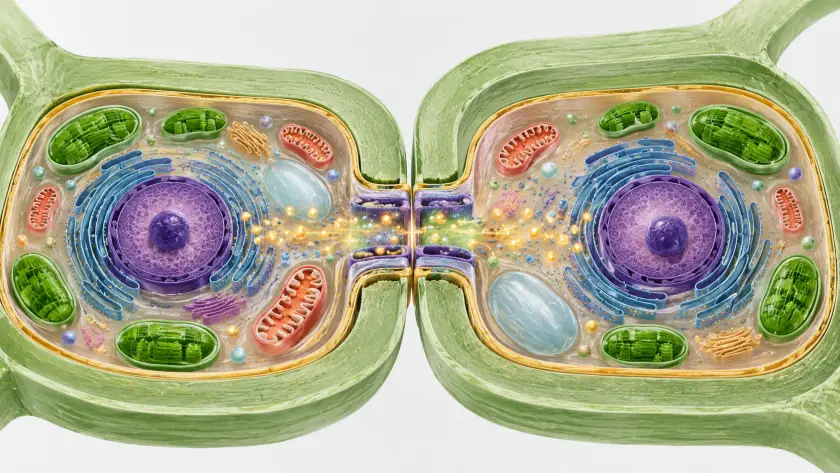
Understanding plants cells and cell plant functions relevant to communication reveals why plants are far more responsive to their environment than their apparent immobility suggests:
Cell wall mechanosensing: Plant cell walls are dynamic, mechanically-sensitive structures. Physical forces — including sound vibrations — deform the cell wall slightly, and these deformations are detected by mechanosensitive proteins that trigger intracellular signalling cascades. This mechanosensing function means that plant and plant cell structures are inherently capable of responding to the physical vibrations produced by speaking to plants.
Guard cell intelligence: Stomatal guard cells — the cells that control the size of stomatal pores — integrate multiple environmental signals (light, CO₂ concentration, temperature, water status, and potentially sound vibrations) to make “decisions” about stomatal aperture. This sophisticated environmental integration at the cellular level exemplifies the distributed intelligence that characterizes plants science research.
Does Talking to Plants Help — The Practical Reality
Speaking to Plants Positive Negative — An Honest Assessment
Speaking to plants positive negative effects — what does the evidence actually show?
Documented positive effects of speaking to plants:
Direct biological effects (moderate evidence):
- Sound vibrations may stimulate stomatal opening — improving gas exchange efficiency
- Frequency-specific sound exposure has been shown to alter gene expression in some species
- Vibration may improve nutrient absorption by influencing root activity
- Some studies show enhanced germination rates in seeds exposed to specific sound frequencies
Indirect positive effects (strong evidence):
- Speaking to plants dramatically increases time spent observing and attending to them
- Regular verbal interaction creates care rituals that improve consistency of watering, feeding, and inspection
- Talking while tending plants encourages slower, more mindful movement — reducing the risk of accidentally damaging stems or disturbing roots
- The habit of communicating with plants helps plant owners notice early warning signs — yellowing leaves, pest presence, wilting — before they become serious problems. Our guide on leaf curl, browning, and droop — what your plant is telling you covers exactly what to look for during these observation moments
Human wellbeing benefits (strong evidence):
- Talking plant routines reduce measurable stress markers in humans — heart rate, cortisol levels
- The practice creates a sense of connection and routine that supports psychological wellbeing
- Interaction with plants — including verbal interaction — has been shown to reduce feelings of loneliness and increase feelings of calm
Documented negative effects: None identified in peer-reviewed literature. Speaking to plants positive negative balance is definitively positive — or at worst neutral.
Do Plants Like Being Talked To? — Species Considerations
Do plants like being talked to? Different plant species show different sensitivities to sound and vibration, reflecting the diversity of environments they evolved in:
High-sensitivity species (most likely to benefit from talking):
Peace lily — one of the most environmentally sensitive houseplants, peace lilies respond perceptibly to changes in their immediate environment. The consistent attention generated by speaking to plants routines is particularly beneficial for this moisture-sensitive species — helping owners catch overwatering symptoms early. Our peace lily care guide covers the attentive care practices that keep peace lilies thriving.
Christmas cactus — this seasonal bloomer is exceptionally responsive to environmental consistency. The stable routines that talking plant habits create align well with the consistent environmental conditions christmas cacti need to bloom reliably. Our christmas cactus care guide covers how environmental consistency triggers reliable annual blooming.
Trailing plants — species like pothos and heartleaf philodendron that grow actively in response to environmental stimulation may show visible growth responses to the increased attention and potentially the vibration stimulation of regular speaking to plants sessions. Our guide on trailing plants that look stunning on shelves and bookcases covers the care practices that maximise trailing plant growth.
Money tree — associated in many cultures with positive energy and attentive care, the money tree responds well to the consistent observation that talking plant routines encourage. Our complete money tree care guide covers the specific care requirements that attentive plant owners — including those who talk to their plants — are most likely to deliver correctly.
Moderate-sensitivity species:
Snake plant — one of the most tolerant and resilient houseplants, the snake plant is unlikely to show dramatic responses to speaking plants sessions. However, the habit of regular verbal interaction keeps owners attentive to the subtle early signs that even this indestructible species occasionally shows. Our snake plant care guide covers the minimal but specific care requirements that attentive owners maintain most successfully.
Aloe vera — as a succulent, aloe vera is primarily sensitive to watering frequency and light rather than sound. However, the observation habit that communicating with plants builds is particularly valuable for aloe owners — who need to catch overwatering signs early to prevent root rot. Our aloe vera care guide covers the specific symptoms that attentive observation catches before they become serious.
Air-purifying plants — our guide on air-purifying indoor plants that actually work covers the species that most benefit from the increased metabolic activity that potential sound stimulation might provide.
Plant Science — What the Study of Plants Reveals About Their Sensitivity
Plants Science — A Field in Rapid Evolution
Plants science — particularly the sub-fields of plant neurobiology, plant sensory ecology, and plant communication — has been one of the most rapidly evolving areas of biology over the past two decades. The discoveries emerging from this research have consistently surprised scientists and public alike, repeatedly revealing capabilities in plants that were previously assumed impossible.
The Mancuso school of thought: Stefano Mancuso and colleagues at the International Laboratory of Plant Neurobiology in Florence have argued that plants should be understood as intelligent, sensing organisms that process environmental information through distributed networks rather than centralized brains. Their research on plant and plant cell signalling, how plants communicate, and root apex function has generated significant scientific controversy — and significantly greater public interest in science on plants.
Seralini and epigenetic responses: Research into how plants respond to environmental stress has revealed sophisticated epigenetic mechanisms — changes in gene expression patterns that persist across plant generations without changes to the underlying DNA sequence. This means plants can “remember” environmental experiences and transmit adapted responses to their offspring — a form of learning and memory that challenges traditional boundaries between plant and animal cognition.
The Chamovitz perspective: Plant biologist Daniel Chamovitz, author of “What a Plant Knows,” has taken a more measured position — acknowledging plant sensory capabilities (the ability to respond to light, smell, touch, and potentially sound) while arguing against attributing human-like consciousness or experience to plants. His framework is useful: do plants respond to talking in biologically meaningful ways? Yes. Do they “enjoy” or “appreciate” being talked to in any experiential sense? Almost certainly not.
Cell Plant Functions — How Plant Cells Process Environmental Information
Understanding cell plant functions relevant to environmental sensing explains the biological basis for do plants respond to talking:
Mechanoreceptors: Plant cells possess mechanosensitive ion channels — proteins in the cell membrane that physically deform in response to mechanical forces (including sound vibrations) and allow ions to flow across the membrane. This ion flow triggers electrical signals and chemical signalling cascades that influence cellular behavior.
Photoreceptors: Plants possess multiple types of photoreceptors — proteins that detect specific wavelengths of light and trigger appropriate growth and developmental responses. Understanding photoreceptor function in plants cells reveals the sophistication of the plant sensory system: plants do not simply “grow toward light” — they detect light wavelength, intensity, direction, and duration with a precision that rivals artificial light sensors.
Chemoreceptors: Plant cells detect chemical signals — both internally produced plant hormones and externally produced compounds from neighboring plants, soil microbes, and potential threats. The sophistication of chemical detection in plant and plant cell systems is extraordinary — plants can distinguish between the saliva of different herbivore species and tailor their defensive responses accordingly.
Touch response (thigmomorphogenesis): Plants respond to touch and mechanical stimulation by altering their growth patterns — typically by growing shorter and stronger (thigmomorphogenesis) in response to regular mechanical stimulation. This is why trees growing in windy locations develop thicker, more tapered trunks than those in sheltered positions. Sound vibrations represent a form of mechanical stimulation that might trigger similar adaptive responses.
The Psychology of Talking to Plants — Why It Benefits You
Speaking to Plants — The Human Side of the Equation
The most reliable and consistent benefit of speaking to plants may not be the effect on the plants at all — it may be the effect on you. The study of the plants and human wellbeing consistently finds that plant interaction — including verbal interaction — produces measurable benefits for human psychological and physical health.
Stress Reduction Through Plant Interaction
Research on human-plant interaction has consistently found that spending time with plants reduces cortisol levels (the primary stress hormone), lowers heart rate and blood pressure, and improves reported mood and feelings of calm. Communicating with plants — particularly in a consistent daily routine — amplifies these benefits by:
- Creating a dedicated daily mindfulness practice structured around plant care
- Providing a sense of purpose and responsibility that supports psychological wellbeing
- Generating the satisfaction of visible growth and health in plants you have personally tended
For more on the wellbeing benefits of indoor plants, our guide on Feng Shui indoor plants to attract positive energy covers how plant placement and interaction practices influence human environment and mood.
Building Better Plant Care Habits Through Talking
The most practically significant benefit of speaking to plants is the observation habit it builds. When you stop to talk to a plant, you inevitably look at it carefully — checking the soil, examining the leaves, noticing the new growth. This is the real mechanism behind does talking to plants help:
Early problem detection: The most common serious plant problems — overwatering leading to root rot, pest infestations in early stages, nutrient deficiencies showing in leaf color — are all significantly more treatable when caught early. Owners who regularly interact verbally with their plants catch these problems earlier. Our guide on signs you are overwatering and how to water correctly covers exactly the symptoms that close daily observation — prompted by talk with plants routines — catches earliest.
Watering consistency: Inconsistent watering is the most common cause of houseplant decline. Talking plant routines that bring you into daily close contact with your plants naturally make you more aware of soil moisture levels — catching both overwatering and underwatering before they cause serious damage. Our guide on the worst times to water your plants covers the timing principles that daily observation helps you apply correctly.
Pest management: Many common houseplant pests — fungus gnats, spider mites, mealybugs — are far more effectively managed when detected in their earliest stages. Daily close-range observation during speaking to plants sessions provides the observation frequency needed for early detection. Our guide on how to keep pests away from outdoor plants and plants that keep bugs away without chemical repellents cover organic pest management strategies that attentive plant owners apply most effectively.
Repotting timing: Knowing when to repot requires regular observation of root emergence at drainage holes, soil drying rate, and overall plant vigor. Our complete repotting guide covers exactly the signs that regular close observation during plant interaction catches before they become urgent.
Talking to Plants and Specific Plant Care — Practical Integration
How to Integrate Speaking to Plants Into Your Care Routine

Do plants like being talked to in a practical sense — and how should you integrate talk with plants habits into your existing care routine?
Morning plant check: The most effective time to both water plants and observe them for problems is morning — consistent with our watering timing guide. Combining morning watering rounds with verbal interaction creates a natural, sustainable routine that delivers both the care benefits and whatever direct plant response benefits speaking plants sessions may provide.
Light and placement observation: When you speak to your plants regularly and move around them to do so, you naturally observe how the light changes across different positions through the day — invaluable information for optimizing plant placement. Our complete guide to indoor light covers exactly how to use observation to match plants to their optimal light positions.
Humidity monitoring: Tropical plants in particular require humidity monitoring — and the close daily observation that communicating with plants encourages is the most reliable way to notice early humidity stress symptoms (leaf tip browning, crisping). Our guide on humidity hacks for keeping plants happy without a humidifier covers the symptoms that attentive observation catches earliest.
Seasonal care adjustments: Plants need different care in different seasons — reduced watering in winter, increased feeding in summer, repotting in spring. Regular verbal interaction with your plants makes you more attuned to the seasonal changes in their appearance that signal when care adjustments are needed. Our guide on fertilizing indoor vs outdoor plants covers seasonal feeding adjustments that observant plant owners apply at the right time.
When Talking Is Not Enough — Fundamentals Always Come First
Does talking to plants help when the fundamental care requirements are not being met? No — and this is the most important caveat in the entire science behind talking to plants discussion. Sound vibration, however beneficial, cannot compensate for:
Incorrect light: A plant in insufficient light will decline regardless of how consistently it is spoken to. Our complete guide to indoor light covers the specific light requirements of every plant type.
Incorrect watering: Overwatering is the most common cause of houseplant death — and no amount of verbal encouragement reverses root rot once established. Our guide on root rot — how to identify, prevent and treat it covers emergency treatment for overwatered plants.
Wrong soil: Soil that retains too much moisture for drought-tolerant species or drains too fast for moisture-lovers creates chronic stress that talking cannot overcome. Our complete soil mix guide covers exactly which soil is correct for every plant type.
Nutrient depletion: Plants in exhausted, depleted potting mix need feeding — verbal encouragement does not replace fertilizer. Our fertilizing guide covers complete feeding schedules for all plant types.
Treat talking as a supplement to correct care — never as a substitute for it. The genuinely thriving plant collections belong to owners who master the fundamentals first and use speaking to plants as the attentive practice that keeps them observant and connected to their collection.
Room-by-Room Guide — Where Talking to Plants Fits Best
Bedroom — The Most Natural Talking Environment
Bedrooms are where many people naturally talk to themselves — reviewing the day, thinking aloud, reading. Adding plants to the bedroom and including them in this existing verbal pattern is the most frictionless entry point into talking plant practice. Our guide on how to decorate your bedroom with plants for style and calm covers the best bedroom plant choices — all of which benefit from the attentive observation that verbal interaction encourages.
Home Office — Focus-Enhancing Plant Interaction
Home office plant interaction during work breaks — speaking to plants while stepping away from screens — combines the stress-reduction benefits of both plant interaction and break-taking. Our guide on how to improve your home office with plants covers the best office plant choices, all of which benefit from the regular attention that verbal interaction delivers.
Living Room — The Social Plant Space
Living room plants are most visible and most interacted-with in any plant collection — making them the most natural targets for speaking to plants sessions. Our guide on how to create an indoor jungle without overcrowding covers how to create living room plant displays that reward regular interaction and observation.
Bathroom — The Humidity Beneficiary
Bathroom plants — ferns, peace lilies, spider plants — benefit enormously from the humidity that shower steam provides. Our guide on the best plants for your bathroom covers the specific species that thrive in bathroom environments — where morning grooming routines provide natural opportunities for talking plant interactions.
Frequently Asked Questions
Do Plants Grow Better If You Talk to Them?
Do plants grow better if you talk to them? Research suggests potentially yes — sound vibrations from human voices in the 100–1,000 Hz range have been shown to influence plant biological processes including gene expression, nutrient flow, and stomatal function. However, the most reliably documented benefit is indirect: speaking to plants makes owners more attentive and observant, which improves care quality and plant health more consistently than any direct sound effect.
Do Plants Communicate With Each Other?
Do plants communicate with each other? Yes — definitively. How do plants communicate between individuals involves airborne volatile chemical compounds that warn neighboring plants of pest attacks, mycorrhizal fungal networks that allow nutrient and chemical signal transfer between root systems, and root exudate chemicals that influence neighboring plant behavior. Do plants talk to each other in a human sense? No — but they exchange meaningful environmental information through sophisticated chemical systems.
Do Plants Have Nervous Systems?
Do plants have nervous systems? Not in the anatomical sense — no neurons, synapses, or brain structures. But plants possess electrochemical signalling systems including action potentials, calcium wave signalling, and plasmodesmata-mediated cell-to-cell communication that function analogously to neural signalling for information transmission. How do plant cells communicate with each other without neurons? Through these distributed electrochemical systems, supplemented by hormonal chemical signals and mycorrhizal network connections.
Does Talking to Plants Help — What Is the Evidence?
Does talking to plants help based on current science? The evidence suggests:
- Moderate support for direct biological effects via sound vibration on plants cells and cell plant functions
- Strong support for indirect benefits through improved attentiveness and care consistency
- Strong support for human wellbeing benefits (stress reduction, routine-building, sense of connection)
- No documented negative effects from speaking to plants under any conditions
Do Plants Like Being Talked To?
Do plants like being talked to? Plants do not experience preferences in the conscious, experiential sense — so “like” is not a scientifically accurate term. But do plants respond to talking? Yes — through the mechanical stimulation of sound vibrations. Do plants like being talked to in practical terms? The evidence suggests that species sensitive to their environment (peace lily, christmas cactus, trailing plants) are most likely to show beneficial responses, while extremely tolerant species (snake plant, ZZ plant) show less measurable response but still benefit from the attentive care that talk with plants habits encourage.
Speaking to Plants Positive Negative — Is There Any Downside?
Speaking to plants positive negative balance: no peer-reviewed research has documented any negative effects of speaking to plants on plant health or human wellbeing. The speaking to plants positive negative equation is unambiguously positive for human wellbeing and at least neutral (potentially positive) for plants. There is no documented downside to communicating with plants — making it one of the most risk-free plant care practices available.
How Do Plants Communicate With Each Other Underground?
How do plants communicate underground? Through mycorrhizal fungal networks connecting root systems — the “wood wide web” — plants transfer nutrients, carbon compounds, and chemical stress signals between connected individuals. How do plant cells communicate with each other through this system? Root cells interface with fungal hyphae at specialized junction points, transferring compounds that carry information about environmental conditions, resource availability, and threat status.
What Is the Science on Plants and Sound?
Science on plants and sound has established that plants respond to mechanical vibrations in measurable ways — through stomatal regulation, gene expression changes, calcium ion signalling, and potentially growth rate modifications. Plants science research continues to clarify which frequencies are most effective, which species are most responsive, and what biological mechanisms drive these responses. The current scientific consensus: sound affects plants through physical vibration — not through any form of conscious recognition of words or meaning.
Related Guides on Patch Plants
- 🌸 Peace Lily Care Guide — Complete Spathiphyllum Tips
- 🐍 Snake Plant Care Guide — Complete Sansevieria Tips
- 🎄 Christmas Cactus Care Guide — Blooming Every Year
- 💰 Money Tree Care Guide — The Luckiest Indoor Plant
- 🌿 Trailing Plants That Look Stunning on Shelves
- 🌱 Air-Purifying Indoor Plants That Actually Work
- 💧 Complete Guide to Indoor Light
- 🔬 Root Rot — How to Identify, Prevent and Treat It
- 🪴 Best Soil Mix for Every Plant Type
- 💧 Worst Times to Water Your Plants
- 🌿 Humidity Hacks for Happy Plants
- 🌱 How to Repot a Plant — Complete Guide
- 🌿 Feng Shui Indoor Plants for Positive Energy
- 🌱 Browse All Indoor Plant Guides
Final Thoughts
Should you talk to your plants? The science says yes — but perhaps not for the reasons you expected. Plants will not absorb your words, understand your troubles, or appreciate your poetry in any experiential sense. But they will respond — however subtly — to the sound vibrations your voice creates. And more reliably, you will respond to them: becoming more attentive, more observant, more consistent in care, more connected to the living green things that share your space.
Do plants grow better if you talk to them? They might. The research on talking to plants help them grow through sound vibration effects is genuinely intriguing, even if not yet definitive. But what is definitive is that the plant owners who speak to their plants — who stop, look closely, check the soil, notice the new leaf — are the plant owners whose collections genuinely thrive.
The science behind talking to plants reveals something beautiful: that the boundary between caring for plants and caring through plants is thinner than we thought. Speaking to plants builds attentiveness. Attentiveness builds care. Care builds the living, breathing indoor environment that both your plants — and you — deserve.
According to the Royal Horticultural Society, ongoing research into plant responses to sound continues to reveal new dimensions of plant sensitivity — making talking to plants one of the most actively investigated questions in contemporary plants science. 🌿

[…] Should you talk to your plants? […]
[…] Should you talk to your plants? […]
I don’t think the title of your article matches the content lol. Just kidding, mainly because I had some doubts after reading the article. https://www.binance.com/register?ref=IHJUI7TF