To keep outdoor plants alive, put each plant where its light and soil needs are met, water deeply only when the root zone is dry, use pots with drainage holes, mulch the soil, and check your plants every week so you catch problems early. Most outdoor plants fail because of the wrong spot, poor drainage, or watering by habit rather than by need, not because of bad luck.
Outdoor plants face sun, wind, heavy rain, heatwaves, frost, pests and weeds, often in the same month. Plants in pots are even more exposed, because their small volume of soil dries, heats and chills quickly. The 17 outdoor plant survival tips below cover choosing plants, planting in beds and pots, watering, vacation care, soil, mulch, feeding, weather protection and a simple weekly routine for maintaining outdoor plants through the year.
Every guide on Patch Plants is researched and written by Sawera Shahid, a botanist with an MPhil in Botany and more than five years of gardening and plant-care writing. Our advice is based on plant science and trusted horticultural guidance rather than trends, so it works in real gardens, patios and balconies.
Why Outdoor Plants Struggle
Most failures come down to six causes: the wrong plant, the wrong place, the wrong watering, poor soil, poor drainage, or nobody looking closely until damage is obvious. A sun-loving lavender sulks in deep shade. A fern frazzles in a windy, sunny corner. A small pot can dry out in a single hot afternoon, while the same plant in the ground stays moist for days.
The fix is to stop treating every plant the same. Some want dry, lean soil; others want steady moisture and rich soil. Some need full sun, while others need shelter from afternoon heat. The tips below help you match care to the plant.
1. Choose the Right Plant for the Right Place
The single biggest step to keep outdoor plants alive is choosing plants that suit your real conditions. Before buying, check:
- Does the spot get full sun (6+ hours), part shade, or full shade?
- Is the soil heavy clay, sandy, chalky, compacted or free-draining?
- Is it windy or sheltered?
- Will the plant live in the ground or in a pot?
- Is it hardy enough for your winters?
- How much time can you give it each week?
Beginners can start with tough, forgiving plants from our lists of low-maintenance outdoor plants, 15 hardy outdoor plants and outdoor plants that survive British winters. For shady spots, see our shade-loving outdoor plants; for hot, bright spots, see our outdoor plants that like direct sunlight. Native plants are often the most resilient of all.
2. Plant at the Right Time of Year
Timing helps new plants settle before stress arrives. Spring suits most flowers, herbs, perennials and shrubs because roots have time to grow before summer heat. Autumn is excellent for hardy shrubs, trees, perennials and spring bulbs, because the soil is still warm and rain usually returns.
Summer planting can work but needs extra watering and some shade in hot spells. Winter planting is usually limited to hardy bare-root plants on mild days when the soil is not frozen or waterlogged. Our month-by-month garden calendar shows what to plant when, and our autumn plant care guide covers end-of-season jobs.
3. Plant Outdoor Plants Correctly
A plant’s first few weeks decide how well it establishes.
- Water the pot first: a dry root ball is hard to rewet in the ground.
- Dig wide: make the hole wider than the root ball, not deeper.
- Keep the same depth: plant at the level it grew in the pot.
- Loosen circling roots: gently tease them out if the plant is pot-bound.
- Backfill and firm gently: settle the soil without compacting it.
- Water deeply: soak the soil to settle it around the roots.
- Mulch: spread mulch around the plant, keeping it away from stems.
Avoid planting in extreme heat, hard frost, strong wind or waterlogged soil.
4. Plant Flowers for Their Type and Season
Annuals, perennials, bulbs and flowering shrubs all have slightly different timing. Plant frost-tender annuals after the last frost. Plant perennials in spring or autumn. Plant spring bulbs in autumn and most summer bulbs in spring. Space every plant to its full size so air moves between them and they do not compete for water.
For planting ideas, see our guides to color themes for your garden, a colorful garden for all seasons, and edible flowers.
5. Set Up Outdoor Pots for Success
Pots dry faster, heat up faster, freeze faster and run out of nutrients sooner than garden soil. To plant outdoor plants in pots well:
- Always use a container with drainage holes
- Use fresh potting mix suited to the plant, not garden soil
- Skip the layer of stones at the bottom; it does not improve drainage and can actually keep the soil above wetter
- Choose larger pots where you can; they hold more water and stay more stable
For pot ideas, see our guides to container gardening on patios, low-maintenance potted plants for full sun, plants in pots in shade and year-round balcony plants.
6. Raise Pots for Better Drainage
Lifting pots slightly off the ground on pot feet, small blocks or a plant riser lets water run out freely, so pots do not sit in puddles after rain. It also improves airflow, reduces staining on patios, and helps prevent pots cracking in frost. Make sure raised pots are stable and will not tip over in wind.
7. Water by Need, Not by Calendar
The Royal Horticultural Society’s watering advice is clear: avoid a fixed routine, because needs change with weather, soil, plant size and how established the plant is. Water less often but more thoroughly, and let the surface dry before watering again.
- Push a finger or a wooden stick into the soil. If it is moist below the surface, wait.
- Water the soil at the base, not the leaves.
- Water slowly so it soaks in rather than running off.
- Water early in the morning where possible; the RHS notes there is less evaporation then, and wet leaves overnight can encourage disease.
Our complete watering guide, our article on the worst times to water your plants, and the signs you’re overwatering explain more.
8. Know How Often to Water Outdoor Plants
How often depends on the plant, soil, weather, pot size, season and how new the plant is. The RHS gives these useful benchmarks:
- Containers and hanging baskets: check daily from spring to autumn, and water when the compost is dry about 2–3 cm (1 inch) below the surface.
- New trees and shrubs: water regularly in dry spells during their first year, soaking the soil 20–30 cm (8–12 inches) deep.
- New perennials: water in dry spells during their first year; once established, most rarely need regular watering.
Cut back after heavy rain, and never keep soil permanently soggy unless the plant naturally grows in wet ground.
9. Keep Outdoor Plants Watered While on Vacation
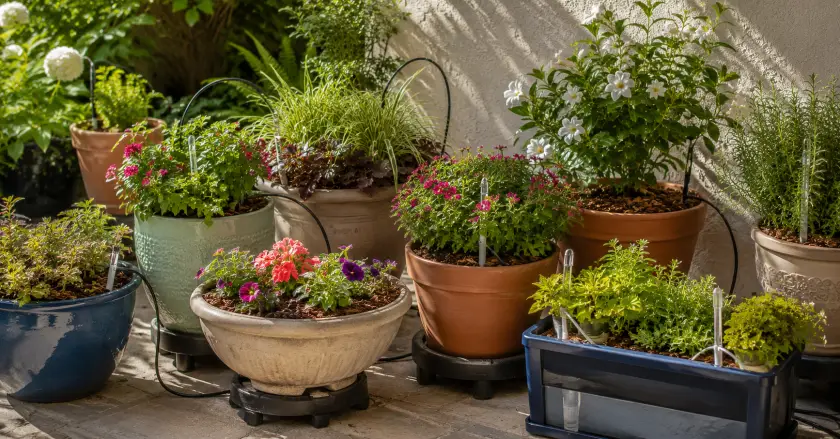
How you prepare depends on how long you are away and how hot it is.
- Water everything deeply the day before you leave
- Move pots into light shade and group them together to slow drying
- Add a layer of mulch to pots and beds
- Stand smaller pots in trays, or use capillary matting or watering wicks
- Use a drip system or soaker hose on a timer for larger areas; the RHS suggests automatic watering if you are away in summer
- Harvest ripe crops and deadhead flowers before you go
- Ask a neighbor to check the thirstiest pots during heatwaves
Self-watering pots can help, but test them before you travel. Our article on whether self-watering pots really work explains when they help.
10. Improve Soil Before Problems Start
Good soil makes everything else easier. Heavy clay holds too much water and compacts. Sandy soil drains too fast and loses nutrients. Old potting mix in containers breaks down and runs out of food.
- Dig in compost, leaf mold or well-rotted manure before planting beds
- Avoid walking on or digging wet soil, which compacts it
- Refresh the top layer of potting mix in containers each spring, and repot when roots fill the pot
Our guide to the best soil mix for every type of plant and our list of repotting mistakes to avoid help with containers.
11. Mulch Beds and Pots
Mulch is one of the easiest ways to keep outdoor plants alive through dry spells and temperature swings. It keeps moisture in the soil, suppresses weeds and protects roots. The RHS recommends an organic mulch layer at least 5 cm (2 inches) thick, applied from late autumn to late winter, and lists mulching borders every year among its top water-saving tips.
- Use compost, bark, leaf mold, wood chips or straw in beds
- Use gravel or grit on pots of succulents and Mediterranean herbs
- Apply to moist soil, not dry soil
- Keep mulch a few centimeters away from stems, crowns and tree trunks
12. Feed Carefully
More fertilizer does not mean better plants. Overfeeding produces soft growth that pests love, can reduce flowering, and builds up salts in pots. Match feeding to the plant:
- Container annuals and vegetables: regular liquid feed during active growth, because pots run out of nutrients fast
- Established shrubs and perennials in good soil: often just an annual layer of compost
- New plants: focus on watering and root establishment before feeding
Our guide to fertilizing indoor vs outdoor plants explains the differences.
13. Protect Plants from Heat, Cold and Wind
In heatwaves:
- Water early in the morning
- Move pots into light shade, and use shade cloth on vulnerable plants
- Mulch to slow moisture loss
- Avoid heavy pruning and planting during extreme heat
In cold weather:
- Move tender plants into a shed, greenhouse or porch
- Raise pots onto feet so they do not sit in icy water
- Wrap pots or cover plants with horticultural fleece on frosty nights
- Mulch roots of borderline-hardy plants
In wind: stake tall plants, use heavier pots, and group containers so they shelter each other. For tough choices, see our guides to plants that survive storms and heatwaves, top drought-resistant plants, hardy plants that survive on minimal watering and plants for coastal and windy gardens.
14. Maintain Outdoor Plants Weekly
Maintaining outdoor plants is easier with small, regular jobs than big rescues. A weekly walk-round should include:
- Checking soil moisture, especially in pots
- Removing dead or diseased leaves
- Deadheading faded flowers to encourage more
- Looking under leaves for pests
- Checking drainage holes are clear
- Pulling small weeds
- Checking ties, stakes and supports
- Cleaning tools after cutting diseased material
Our pruning basics guide explains when and how to cut back.
15. Keep Weeds Under Control
Weeds compete with your plants for water, nutrients, light and space. Pull them while they are small, ideally when the soil is slightly moist so roots come out whole. Mulch bare soil to stop new weeds germinating, and plant closely enough that your own plants shade the ground. Around edible plants, stick to hand weeding and mulch rather than chemicals.
16. Watch for Pests and Disease Early
Pest and disease problems are far easier to fix when caught early. Check the undersides of leaves, new shoots, flower buds and the soil surface. Warning signs include sticky leaves, holes, fine webbing, curled or distorted leaves, black spots, white powdery patches and sudden wilting.
Not every symptom is a pest. Wilting, yellowing and leaf drop are often caused by watering, heat or root problems, so check the soil first. Encourage natural predators such as ladybirds and birds by avoiding broad-spectrum sprays; our guide to a wildlife-friendly garden shows how. For gentle control, see how to keep pests away from outdoor plants, and our leaf curl, browning and droop guide to read leaf symptoms.
17. Group Plants by Their Needs
Organizing your outdoor space by care needs makes routine care far easier, especially with many pots or a small balcony. Put thirsty plants together and drought-tolerant plants together, so one watering suits a whole group. Keep herbs near the kitchen door, and put delicate or thirsty plants where you see them every day. A tiered plant stand or a simple written watering list helps you avoid forgetting small pots tucked out of sight.
Outdoor Plant Survival Checklist
| Task | Why It Helps | How Often |
|---|---|---|
| Check soil moisture | Prevents both drought and soggy roots | Daily for pots in summer; weekly for beds |
| Water deeply | Encourages deep, resilient roots | When the root zone is dry |
| Improve soil | Better drainage, nutrients and root growth | Before planting and each year |
| Mulch | Holds moisture, blocks weeds | Once a year, topped up as needed |
| Raise pots | Better drainage and airflow | Ongoing |
| Deadhead and prune | More flowers, healthier growth | As needed |
| Weed | Less competition for water | Weekly |
| Check for pests | Stops problems spreading | Weekly |
| Feed | Supports growth in pots | During active growth only |
| Vacation prep | Protects plants while away | Before travel |
Common Mistakes to Avoid
- Wrong plant, wrong place: a shade plant in full sun will struggle however carefully you water
- Watering on a strict schedule: weather and soil matter more than the calendar
- Pots without drainage: trapped water rots roots; see our root rot guide
- Light, frequent sprinkling: keeps roots shallow and weak
- Overfeeding: soft growth, fewer flowers and salt build-up
- Forgetting small pots: they dry fastest in sun and wind
- Leaving soil bare: loses moisture and grows weeds
- Waiting too long: early action saves far more plants; if one is already struggling, try our plant rescue plan
Expert Tip from Sawera Shahid
My best advice is to walk around your garden often, even for two minutes. Touch the soil, look under a few leaves, and notice which pots dry first and which plants droop in the afternoon heat. Plants show their needs early: a plant that wilts every afternoon may need shade, one that yellows may be too wet, and one that makes leaves but no flowers may need more sun. If you are new to gardening, start with fewer plants and look after them well. A small healthy garden beats a crowded, stressed one.
Frequently Asked Questions
How do I keep outdoor plants alive?
Choose plants that suit your light, soil and climate, plant them at the right time, water deeply only when the soil is dry, use pots with drainage holes, mulch the soil, feed carefully and check for pests every week.
How often should I water outdoor plants?
There is no fixed schedule. Check pots daily in summer and water when the top 2–3 cm is dry. Water new plants regularly in dry spells during their first year. Established garden plants usually only need water in long dry periods.
What is the best time to water outdoor plants?
Early morning is best, because less water evaporates and leaves dry during the day. Evening is the next best option. Avoid watering in the heat of the day.
How do I keep outdoor plants watered while on vacation?
Water deeply before leaving, move pots into light shade, group them together, mulch the soil, and use trays, wicks or a timed drip system. For longer trips in hot weather, ask someone to check the thirstiest pots.
Is it OK to plant outside in summer?
Yes, if you can water consistently and avoid extreme heat. Plant in the cooler part of the day, water deeply, mulch, and give new plants some shade for the first week or two.
Final Thoughts
To keep outdoor plants alive, focus on the basics before buying more plants: the right plant in the right place, careful planting, deep watering by need, good drainage, mulch, gentle feeding and a weekly look. Gardening gets easier when you stop guessing and start observing, because your plants will usually tell you what they need.
Explore more garden advice in our outdoor plants and plant care collections.