🌿 Key Takeaways
- Snake plant care is the easiest of any houseplant — water every 2–3 weeks, provide indirect light, and use well-draining soil
- Snake plant benefits include air purification, night-time oxygen production, and near-indestructible resilience
- Do snake plants need sunlight? They thrive in indirect light but tolerate low light better than almost any other houseplant
- Snake plant propagation is simple — leaf cuttings in water or soil both work reliably with minimal effort
- How tall can a snake plant grow? Indoors, most reach 60–120cm — large snake plant varieties can reach 150cm or more
- Potting soil for snake plant must always be well-draining cactus or succulent mix — never standard potting compost
- Overwatering is the single most common cause of snake plant death — always check soil before watering
- Browse our full indoor plant care guides for companion plant ideas that pair beautifully with snake plants
Why the Snake Plant Belongs in Every Home
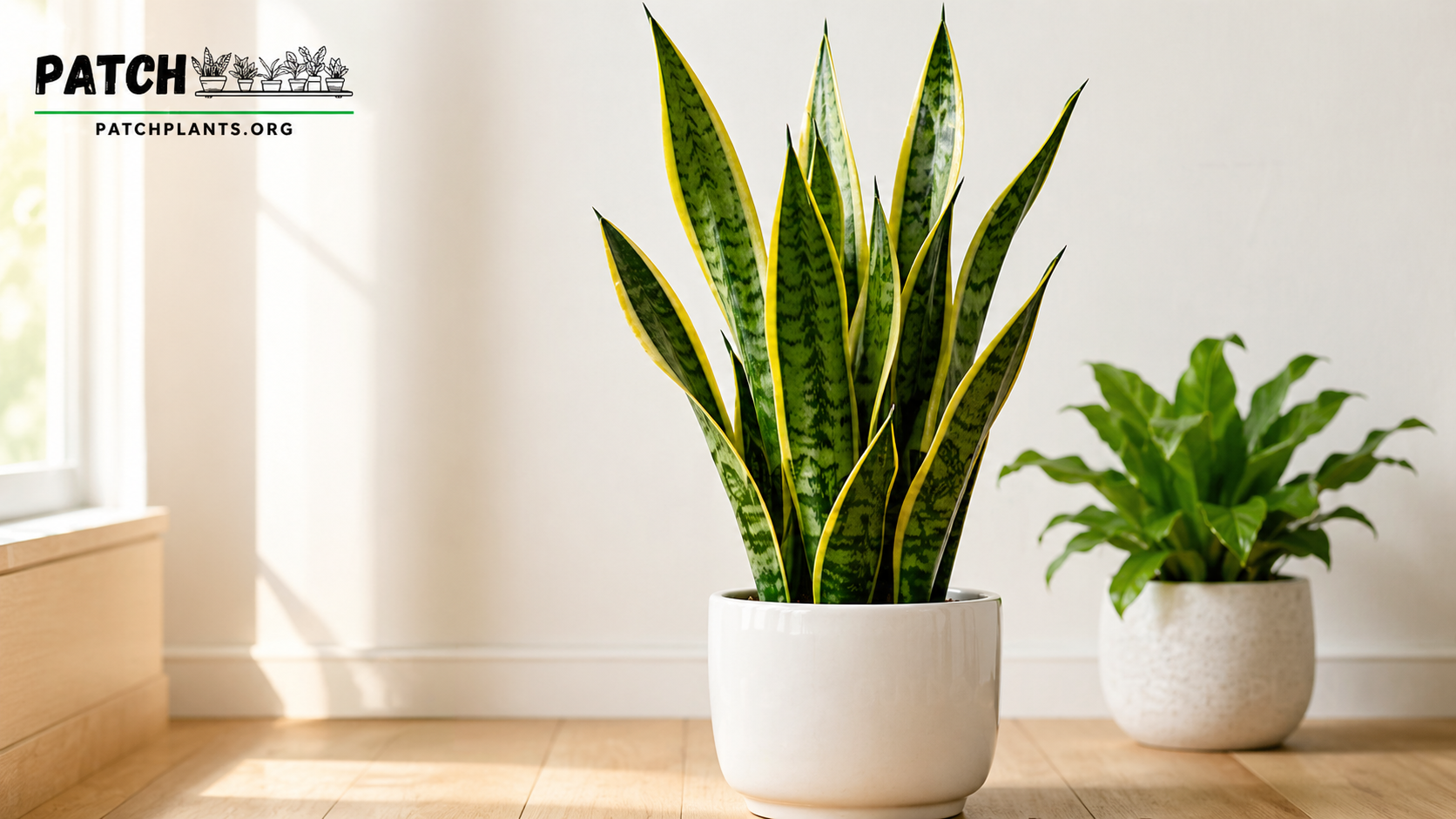
If there is one houseplant that genuinely deserves its reputation as practically indestructible, stylish, and genuinely useful — it is the snake plant. Also known as Sansevieria trifasciata (recently reclassified as Dracaena trifasciata), the snake plant is the houseplant that survives everything — missed waterings, low light, temperature fluctuations, and complete beginner-level neglect.
You have seen it before. Those tall, upright, sword-like leaves with deep green banding and sometimes a golden yellow edge — standing confidently in a corner, on a desk, beside a front door, or in an office that barely gets any natural light. That is the snake plant, and it has been quietly thriving in exactly those conditions for decades.
This complete snake plant care guide covers everything — from sansevieria tips on watering and light to snake plant propagation, repotting, troubleshooting, and the best varieties to grow. Whether you are a total beginner or an experienced plant parent, everything you need is here.
What Exactly Is a Snake Plant?
Is Sansevieria a Snake Plant?
Yes — is sansevieria a snake plant is one of the most frequently asked questions about this species. Sansevieria is the snake plant. The plant was classified under the genus Sansevieria for most of its botanical history but was reclassified into the Dracaena genus in recent taxonomy updates. Both names are still used interchangeably in nurseries and garden centres worldwide.
Why Do They Call It Snake Plant?
Why do they call it snake plant? The name comes from the long, upright, pointed leaf shape that resembles a snake standing at attention — or the patterned banding on the leaves that mimics snake skin. The plant is also known by several other common names:
- Mother-in-law’s tongue — referring to the sharp, pointed leaf tips
- Saint George’s Sword — used in Brazil and parts of Europe
- Lengua de suegra — Spanish equivalent of mother-in-law’s tongue
- Viper’s bowstring hemp — named for the strong fibres historically used to make bowstrings
Snake Plant Types — The Main Varieties
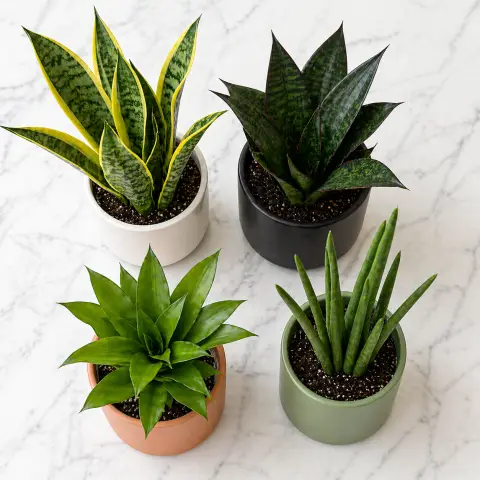
Snake plant types vary considerably in size, leaf pattern, and growth habit. Understanding which variety you have helps you care for it correctly.
Sansevieria Trifasciata Laurentii — Golden Snake Plant
The most popular variety. Tall upright leaves with deep green horizontal banding and a distinctive bright yellow margin. The golden snake plant coloring becomes more vivid in brighter indirect light — a window-adjacent position produces the most dramatic golden edges.
Sansevieria Black Coral
Darker, almost charcoal-toned leaves with subtle banding. One of the most dramatic-looking varieties for modern interiors — pairs beautifully with white or light grey walls.
Sansevieria Zeylanica
Slightly more silvery-grey banding than the standard variety. A reliable, attractive grower that handles low light exceptionally well — one of the best choices for darker rooms.
Sansevieria Cylindrica
Cylindrical, spear-like leaves rather than flat blades. An architectural variety that looks striking in minimalist interiors and works beautifully as a natural room divider.
Bird’s Nest Snake Plant — Sansevieria Hahnii
A compact, rosette-forming variety that stays small at 15–25cm — perfect for desks and shelves. Ideal if you want snake plant benefits without committing to a large snake plant.
Large Snake Plant Varieties
For maximum height impact, Sansevieria trifasciata and Sansevieria zeylanica are the best choices. Given the right conditions, big snake plant specimens can reach 120–150cm indoors — creating a genuine architectural statement in any room.
Snake Plant Benefits — What Are Snake Plants Good For?
Understanding what snake plants are good for goes well beyond aesthetics. The benefits of a snake plant are genuinely substantive — making it one of the most useful houseplants available.
Air Purification
Snake plant benefits for air quality are well documented. The plant absorbs airborne toxins including formaldehyde, benzene, xylene, and trichloroethylene — compounds commonly found in indoor environments from cleaning products and furniture off-gassing. NASA’s Clean Air Study identified snake plants as one of the most effective air-purifying houseplants available.
Night-Time Oxygen Production
Unlike most houseplants that release carbon dioxide at night, snake plants perform CAM photosynthesis — continuing to produce oxygen after dark. This makes them one of the best plants for bedrooms. Our guide on how to decorate your bedroom with plants explores the best bedroom placement strategies.
Mental Wellbeing and Focus
What do snake plants do for mental health? Research consistently shows that plants in living and working spaces reduce perceived stress and improve concentration. Our guide on improving your home office with plants covers exactly how to position snake plants for maximum wellbeing benefit.
Feng Shui Significance
In traditional Feng Shui practice, snake plants are considered powerful protective plants that absorb negative energy and promote strength. Their upward-pointing leaves are associated with positive chi flow. Our guide on Feng Shui indoor plants explores the best placement positions within the Bagua energy map.
Near-Indestructible Resilience
Perhaps the most practical snake plant benefit of all — they survive neglect that would kill most other houseplants. Forgetful plant parent? Travelling frequently? The snake plant handles all of it without complaint.
Complete Snake Plant Care Guide

Watering a Snake Plant
How Often to Water a Snake Plant
How often to water a snake plant is the single most important care question — and the answer is always less than you think. The universal rule: when in doubt, wait it out.
- Spring and Summer: Every 2–3 weeks
- Autumn: Every 3–4 weeks
- Winter: Once a month or less
Always push your finger 2 inches into the soil before watering. If any moisture remains — wait. Soil must be completely dry before watering again. Never water on a fixed schedule without checking first.
Can Snake Plants Live in Water?
Can snake plants live in water? Yes — snake plants can be grown in water using hydroponics. Place a leaf cutting into a glass of clean water, changing it weekly. However, long-term water culture requires careful monitoring. Soil growing is simpler and more reliable for most plant owners.
The Worst Times to Water
Timing matters as much as frequency. Never water in the evening — moisture sitting in soil overnight combined with cool temperatures creates ideal root rot conditions. Our guide on the worst times to water your plants explains exactly why morning watering produces the healthiest results for snake plants. For a complete watering system, our watering tips guide covers everything in detail.
Light Requirements for Snake Plants
Do Snake Plants Need Sunlight?
Do snake plants need sunlight? Yes — but far less than most houseplants. This adaptability is one of the defining snake plant benefits that makes them universally useful.
| Light Condition | Snake Plant Response |
|---|---|
| Bright indirect light | Best growth, most vivid coloring |
| Moderate indirect light | Good growth, reliable performance |
| Low light / shady corner | Slow growth but survives well |
| Direct intense sun | Leaf scorch — avoid completely |
| Fluorescent office lighting | Tolerates excellently |
How Much Sunlight Does a Snake Plant Need?
Do snake plants need a lot of light? No — this is the most common misconception about snake plant care. They are among the best plants for surviving fluorescent lighting — making them exceptional for offices, hallways, and windowless rooms.
Grow Light for Snake Plant
Grow light for snake plant use: if your space has genuinely no natural light, a simple LED grow light on a 12-hour timer will keep your snake plant healthy indefinitely. Position the light 30–60cm above the plant for best results.
Temperature and Humidity
Snake plants are comfortable across a wide temperature range — one of their most useful qualities.
- Ideal temperature: 15°C to 29°C (59°F to 85°F)
- Minimum temperature: Above 10°C (50°F)
- Humidity: Adaptable to normal indoor air — no misting required
Keep snake plants away from cold drafts and heating vents. Consistent moderate room temperature produces the healthiest long-term growth.
The Best Soil for Snake Plants
What Potting Soil for Snake Plant Works Best?
Potting soil for snake plant must drain quickly and freely. The wrong soil — particularly heavy water-retaining compost — causes root rot regardless of how carefully you water.
- Well-draining cactus or succulent potting mix
- Add 20–30% perlite or pumice for additional drainage
- Never use standard general purpose potting compost alone
- Always use pots with drainage holes — without exception
Snake plant soil should feel gritty and light when dry — not dense or heavy. Our comprehensive guide on the best soil mix for every plant type covers exactly how to build the perfect custom mix for succulents and snake plants.
If you are considering a self-watering pot, read our honest review of self-watering pots first — they can create waterlogging conditions harmful for snake plants.
Feeding Your Snake Plant
Snake plants are light feeders — they do not require frequent fertilization.
- Spring: Once monthly with diluted balanced liquid fertilizer (half strength)
- Summer: Once monthly
- Autumn: Stop feeding entirely
- Winter: No feeding — the plant is resting
Over-fertilizing causes brown leaf tips and root damage. Less is always better for snake plant nutrition. Our guide on fertilizing indoor vs outdoor plants explains the key differences in feeding requirements across plant types.
How to Plant a Snake Plant
Step-by-Step Planting Guide
How to plant a snake plant correctly from the beginning sets the foundation for years of healthy growth:
- Choose a pot with drainage holes — terracotta or ceramic works best
- Fill one-third with cactus/succulent potting mix
- Place the snake plant in the center — roots should sit 2–3cm below the pot rim
- Fill around roots with more potting mix, pressing gently
- Water lightly just to settle the soil
- Place in bright indirect light and do not water again for 2 weeks
How to Replant and Transplant a Snake Plant
How to replant a snake plant and how to transplant snake plant follow the same process — moving the plant from one pot to another due to root-bound conditions or routine maintenance.
When to replant:
- Roots visible growing through drainage holes
- Plant has become top-heavy and unstable
- Soil dries out within 2–3 days of watering
- Every 2–3 years as general maintenance
Step-by-step replanting:
- Water 24 hours before to reduce stress
- Tip the pot and ease the root ball out gently — never pull by leaves
- Shake loose old soil from around the roots
- Trim any brown or mushy roots with clean scissors
- Repot into fresh cactus mix in a pot 2–3cm wider
- Water lightly and keep in indirect light for 2 weeks to recover
Our guide on repotting mistakes to avoid covers the most common errors plant owners make during transplanting.
Snake Plant Propagation — 3 Reliable Methods
Snake plant propagation is one of the most rewarding aspects of growing this plant. A single healthy snake plant can produce dozens of new plants — free plants for every room in your home.
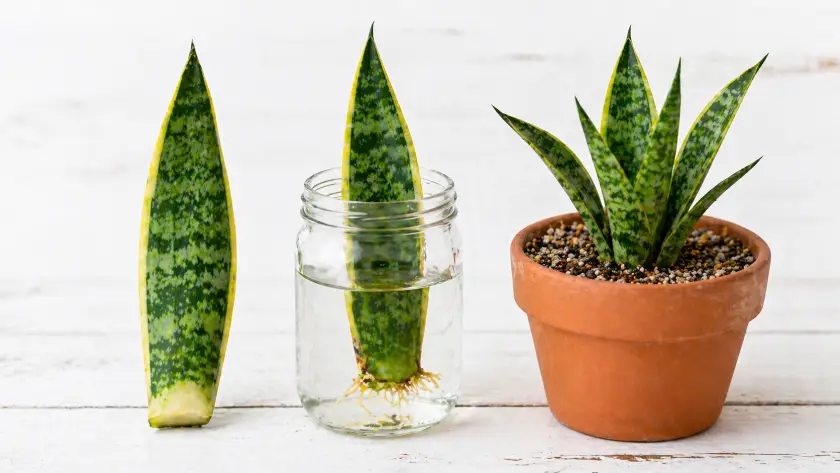
Method 1 — Snake Plant Cuttings in Water
Can you propagate a snake plant in water? Yes — this is one of the most reliable propagation methods.
- Cut a healthy leaf at the base using clean sharp scissors
- Allow the cut end to callous for 24 hours in open air
- Place 5–7cm deep in a glass of clean water
- Position in bright indirect light — never direct sun
- Change water every 5–7 days to prevent bacterial growth
- Roots appear in 3–6 weeks
- Once roots reach 3–5cm, transplant into cactus potting mix
Important: Leaf cuttings from golden Laurentii varieties will not preserve the golden margin — variegation is only maintained through division.
Method 2 — Snake Plant Cuttings in Soil
Snake plant cuttings rooted directly in soil skip the water stage:
- Cut a healthy leaf and allow the cut end to dry for 24 hours
- Dip in rooting hormone powder (optional but speeds results)
- Insert 5cm deep into moist cactus potting mix
- Water lightly and place in warm bright indirect light
- Roots develop in 4–8 weeks — resist checking by pulling the cutting
How to root snake plant successfully in soil requires patience — the roots are developing invisibly underground throughout this period.
Method 3 — Rhizome Division
Division is the fastest propagation method and the only one that preserves golden variegation in Laurentii varieties.
- Remove the plant from its pot and expose the root system
- Identify natural separation points between stems and root clusters
- Cut through the rhizome with a clean sharp knife
- Dust cut surfaces with cinnamon (natural antifungal) or rooting powder
- Pot each division separately in fresh cactus mix
- Water lightly and keep in warm indirect light for 3–4 weeks
For a broader guide to propagating different houseplant types, our step-by-step guide on how to propagate houseplants at home covers multiple methods across species.
Snake Plant Problems — Diagnosis and Solutions
| Problem | Most Likely Cause | Solution |
|---|---|---|
| Yellow leaves | Overwatering / root rot | Dry soil completely, check roots, repot if needed |
| Brown leaf tips | Dry air, fluoride in water, over-fertilizing | Use filtered water, reduce feeding, trim tips |
| Drooping leaves | Root rot or cold shock | Check roots, move to warmer spot, reduce watering |
| Wrinkled leaves | Underwatering (rare) | Water thoroughly and allow to drain |
| No growth | Too little light | Move to brighter indirect light |
| Pale or faded leaves | Too much direct sun | Move to indirect light immediately |
| Mushy base | Severe root rot | Emergency repot — remove all affected roots |
| White crusty soil | Mineral buildup from tap water | Flush soil with filtered water |
Yellow Leaves
Yellow snake plant leaves almost always indicate overwatering. When soil stays wet too long, roots suffocate and rot — unable to deliver nutrients. Our guide on why plant leaves turn yellow covers the full diagnostic process. If you also notice soft, mushy stems at the base, root rot has set in — our guide on how to revive a dying plant gives you a step-by-step rescue plan.
Brown Leaf Tips
Brown tips are usually caused by fluoride in tap water, excessively dry air, or over-fertilization. Switch to filtered or rainwater if brown tips persist. Our guide on what your plant’s leaves are telling you decodes all leaf symptoms in detail.
Signs of Overwatering
Consistently wet soil more than 7 days after watering, yellow lower leaves, musty soil smell, and soft translucent leaf bases are all overwatering signs. Our guide on signs you are overwatering gives the complete corrective process.
Root Rot
If root rot has developed, act immediately. Our dedicated guide on root rot — how to identify, prevent and treat it walks through the complete recovery process for snake plants and all houseplant species.
How to Clean Snake Plant Leaves
Snake plant leaves collect dust that reduces light absorption and photosynthesis efficiency. Clean every 4–6 weeks using this simple process:
- Dampen a soft cloth with plain water or very diluted neem oil solution
- Support each leaf from behind with one hand
- Wipe from base to tip in one gentle stroke — never scrub
- Avoid commercial leaf shine sprays — they block pores and reduce air purification
- Never use oils on snake plant leaves
Our full guide on how to clean plant leaves without damaging them covers techniques for different leaf types and textures.
Does a Snake Plant Flower?
Under certain stress conditions or with age, snake plants occasionally produce a tall flower spike bearing small, tubular, intensely fragrant white flowers. This flowering is rare indoors but unforgettable when it occurs — the fragrance is sweet and jasmine-like. Flowering is most common in slightly pot-bound plants exposed to occasional cool winter temperatures. It does not harm the plant — allow the flower stalk to die back naturally.
Is a Snake Plant Toxic to Pets?
Yes — snake plants are mildly toxic to cats and dogs. The saponins in the leaves cause nausea, drooling, and digestive upset if ingested. Symptoms are rarely severe but unpleasant. Place snake plants on high shelves or in rooms your pets do not access. Our guides on cat-friendly plants and dog-friendly plants give complete safe alternatives and placement strategies.
Where to Display Your Snake Plant
The snake plant’s adaptability makes it genuinely versatile across every room.
Bedroom
Night-time oxygen production makes it ideal for bedrooms. Does not need window-adjacent positioning. Read our full bedroom plant decoration guide for styling ideas.
Home Office
Air-purifying properties and fluorescent light tolerance make snake plants the single best home office plant. Our guide on improving your home office with plants gives specific positioning recommendations.
Living Room
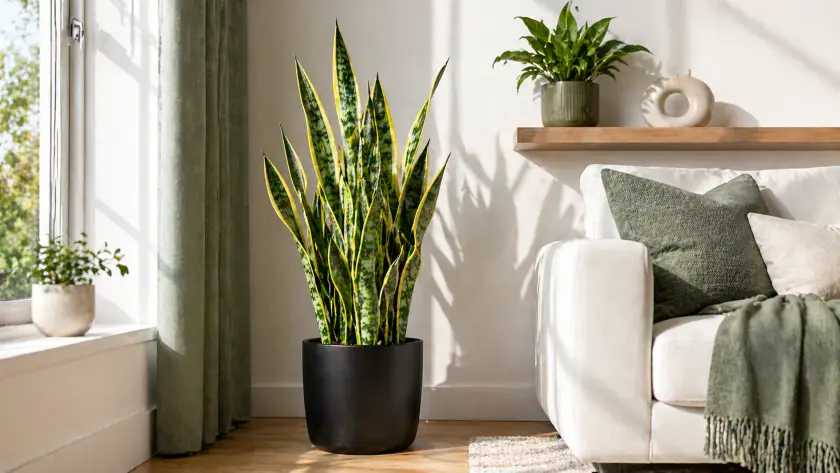
A large snake plant in a simple ceramic pot creates an immediate architectural statement. Use as a natural room divider in open-plan spaces — our guide on indoor plants as natural room dividers shows exactly how.
Hallway
Low light tolerance makes snake plants perfect for dark hallways. A tall cylindrica variety in a narrow entry adds drama without blocking movement.
Shelves and Bookcases
Smaller Bird’s Nest varieties look stunning on shelves alongside trailing plants for striking textural contrast.
If you are building a larger plant collection, our guide on creating an indoor jungle without overcrowding gives you the complete framework for incorporating snake plants into a cohesive display.
Frequently Asked Questions
How Often Should I Water a Snake Plant?
Water every 2–3 weeks in spring and summer, every 3–4 weeks in autumn, and once a month in winter. Always push your finger 2 inches into the soil before watering — if any moisture remains, wait longer. Soil must be completely dry between waterings. Overwatering is the number one cause of snake plant death — when in doubt, wait it out.
Do Snake Plants Need Sunlight?
Yes, but far less than most plants. Bright indirect light produces the best results — but snake plants survive and grow in low-light rooms, shady corners, and under fluorescent office lighting. How much sunlight does a snake plant need for healthy growth? A minimum of 2–4 hours of indirect light daily. Direct intense sunlight causes leaf scorch and should always be avoided.
Can You Propagate a Snake Plant Easily at Home?
Yes — snake plant propagation is one of the easiest propagation processes available. Leaf cuttings in water, leaf cuttings in soil, and rhizome division during repotting all work reliably. Expect roots to appear within 3–6 weeks using the water method. Only rhizome division preserves golden variegation in Laurentii varieties.
What Are Snake Plants Good For?
Snake plants benefits extend well beyond decoration. They purify indoor air by absorbing formaldehyde, benzene, and xylene. They produce oxygen at night making them exceptional bedroom plants. They regulate indoor humidity, improve focus, reduce stress in work environments, and hold Feng Shui significance as protective, positive-energy plants.
How Tall Do Snake Plants Get Indoors?
How tall do snake plants get depends on variety and growing conditions. Standard varieties reach 60–120cm indoors. Large snake plant specimens in ideal bright indirect light can reach 150cm. Bird’s Nest varieties stay permanently compact at 15–25cm. Growth is slow — expect 5–10cm per year in good conditions.
Can Snake Plants Live in Water Permanently?
Can snake plants live in water long term? They can survive in water for extended periods using hydroponic methods, but weekly water changes and nutrient supplements are required. Soil growing is simpler and more reliable for most plant owners. Water propagation for rooting cuttings works extremely well as a short-term method.
What Is the Best Soil for a Snake Plant?
Potting soil for snake plant must drain quickly and freely. Use a cactus or succulent specific potting mix and add 20–30% perlite or pumice. Never use heavy general purpose compost alone — it retains too much moisture and creates root rot conditions. Always plant in pots with drainage holes.
Is a Snake Plant Rare or Hard to Find?
Standard snake plant varieties are widely available. Rare varieties — including unusual variegated forms — can be harder to source. Our guide on rare houseplants worth hunting for covers specialist sourcing strategies for unusual snake plant varieties.
Related Guides on Patch Plants
- 🌸 Peace Lily Care Guide — Complete Indoor Growing Guide
- 🌵 Aloe Vera Care Guide for Home
- 💧 Worst Times to Water Your Plants
- 🪴 Complete Watering Guide for Healthy Thriving Plants
- 🌿 How to Propagate Houseplants at Home
- 🔬 Root Rot — How to Identify, Prevent and Treat It
- 🏠 Indoor Plants That Double as Natural Room Dividers
- 🌱 How to Create an Indoor Jungle Without Overcrowding
- 🌿 Browse All Indoor Plant Guides
Final Thoughts
The snake plant care guide comes down to one core principle — less is more. Less water, less feeding, less fussing. The sansevieria rewards restraint and neglect with decades of reliable, architectural beauty and genuine air-purifying performance.
Whether you choose a dramatic large snake plant for a living room corner, a golden snake plant for a sunny windowsill, or a compact Bird’s Nest variety for your desk — the snake plant benefits remain consistent across every variety and placement. Clean air, night-time oxygen, resilience to neglect, and striking visual presence that suits every interior style.
According to the Royal Horticultural Society, snake plants are among the most recommended houseplants for improving indoor environments — combining air quality benefits, low maintenance requirements, and year-round visual appeal in a single, endlessly versatile plant. 🌿