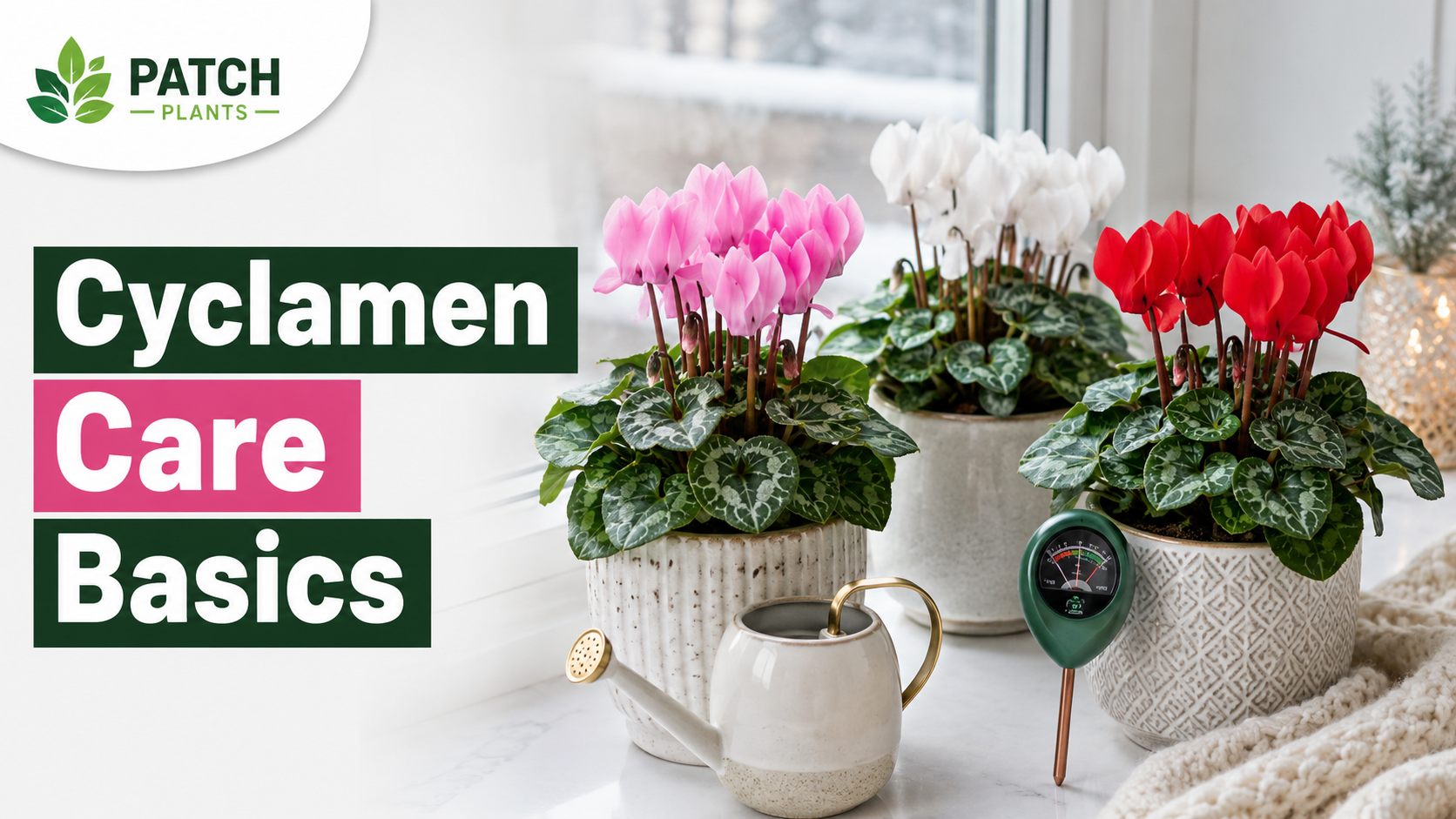
Cyclamen care is all about cool temperatures, bright but gentle light, careful watering, and knowing when the plant wants to rest. Cyclamen can look delicate, but they are not impossible. The main mistake is treating every cyclamen the same, because indoor florist cyclamen and outdoor hardy cyclamen have different jobs.
Florist cyclamen are usually grown as winter-flowering indoor plants or protected seasonal displays. Hardy cyclamen are better for outdoor shade, woodland-style planting, pots, and borders. Both grow from tubers, both dislike soggy crowns, and both reward steady care with beautiful flowers and patterned leaves.
Care Snapshot
For good cyclamen care, keep indoor cyclamen cool with bright indirect light, water from the bottom or around the pot edge, and avoid wetting the crown. Grow hardy outdoor cyclamen in partial shade with well-drained, humus-rich soil. Feed lightly during active growth, remove spent flowers from the base, and reduce watering when the plant naturally enters dormancy.
Key Takeaways
- Cyclamen care depends on whether you have indoor florist cyclamen or outdoor hardy cyclamen.
- Indoor cyclamen prefer cool rooms, bright indirect light, and careful watering.
- Outdoor hardy cyclamen prefer partial shade and well-drained soil.
- Water the soil, not the crown, because wet crowns can rot.
- Yellow leaves after flowering can be normal dormancy, not always a problem.
- Feed only during active growth and flowering, then stop during dormancy.
- Use this guide with complete watering tips, complete indoor light guide, and how to keep outdoor plants alive.
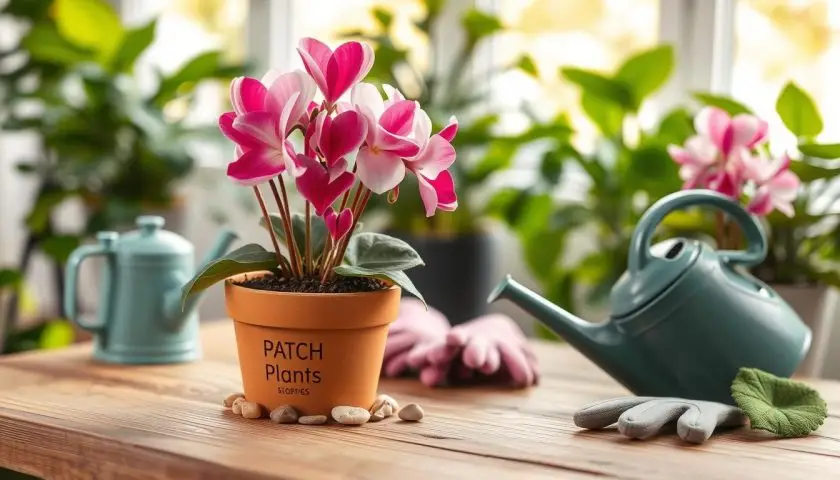
Indoor vs Outdoor Cyclamen: What Is the Difference?
The first step in any cyclamen care guide is knowing which type you have. Most gift cyclamen sold in supermarkets, florists, and garden centres are florist cyclamen, usually forms of Cyclamen persicum. These are grown for large colourful winter flowers and are best in cool indoor spaces or protected seasonal containers.
Hardy cyclamen are different. Species such as Cyclamen coum and Cyclamen hederifolium are used outdoors in shaded borders, under trees, on banks, and in woodland-style gardens. They are smaller, tougher, and better suited to long-term outdoor planting.
| Type | Best Place | Main Care Need |
|---|---|---|
| Florist cyclamen | Cool indoor room or protected pot | Bright indirect light and careful watering |
| Hardy cyclamen | Outdoor shade, borders, under trees | Partial shade and well-drained soil |
| Mini cyclamen | Cool windowsills or seasonal containers | Protection from heat and wet crowns |
| Container cyclamen | Porch, balcony, patio, bright indoor spot | Drainage and steady cool conditions |
Cyclamen Care at a Glance
| Care Area | Indoor Cyclamen | Outdoor Cyclamen |
|---|---|---|
| Light | Bright indirect light | Partial shade |
| Temperature | Cool room, away from heaters | Cool seasonal outdoor conditions |
| Water | Water when mix begins to dry | Moist while active, drier in dormancy |
| Soil | Free-draining potting mix | Humus-rich, well-drained soil |
| Feeding | Light feeding during bloom and growth | Usually light feeding or organic mulch |
| Dormancy | Often rests after flowering | Seasonal rest depends on species |
Understanding Cyclamen Varieties and Growth Cycles
Cyclamen grow from rounded tubers. These tubers store energy and help the plant survive seasonal changes. During active growth, leaves and flowers rise from the tuber. During dormancy, the top growth may fade while the tuber rests.
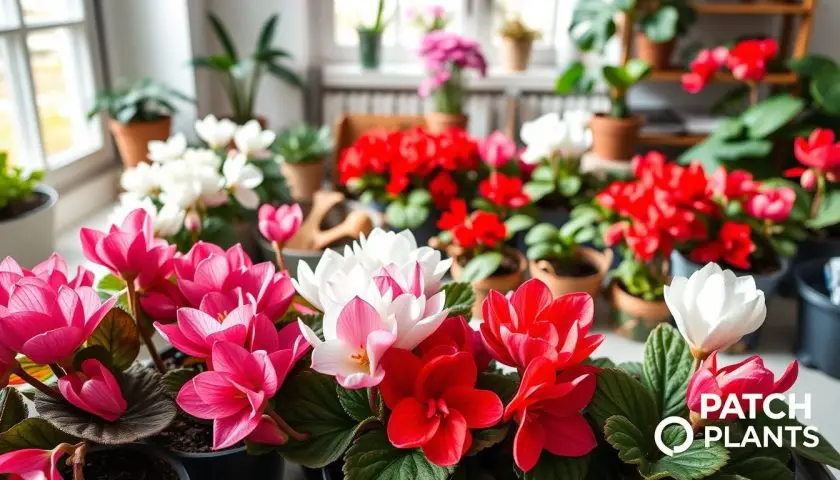
Florist cyclamen
Florist cyclamen are usually grown for bright winter flowers indoors. They like cool rooms and bright indirect light. A hot living room near a radiator can shorten flowering and push the plant into decline.
Hardy cyclamen
Hardy cyclamen are better for outdoor growing. They work well under deciduous trees, in shaded borders, in rock gardens, and in naturalistic planting schemes. They are usually smaller than florist cyclamen but more suited to permanent outdoor life.
The seasonal rhythm
Many cyclamen flower in cool months and rest when conditions become warmer or drier. If your indoor cyclamen starts yellowing after flowering, it may be moving toward dormancy rather than dying.
Indoor Cyclamen Care
Indoor cyclamen care works best when the plant is kept cool, bright, and evenly moist without being soaked. The plant may look like a typical houseplant, but it does not enjoy the warmest spot in the home.
Best indoor location
- A cool bright windowsill with indirect light.
- An east-facing window with gentle morning light.
- A bright north-facing window if the room is not too dark.
- A cool porch, conservatory, or hallway with good light.
- A bright room away from radiators and fireplaces.
Indoor conditions to avoid
- Hot rooms with dry heat.
- Direct harsh sun through glass.
- Dark corners far from windows.
- Water sitting in the saucer.
- Water splashed into the crown.
How long do indoor cyclamen bloom?
With cool conditions and careful watering, indoor cyclamen can bloom for several weeks. If the room is too warm, flowers may fade quickly and leaves may yellow sooner.
For more indoor flowering plant ideas, read blooming indoor plants, indoor plants with red flowers, and indoor plants with orange flowers.
Outdoor Cyclamen Care
Outdoor cyclamen care is mainly about choosing the right type and planting it in the right place. Do not plant tender florist cyclamen in an exposed winter border and expect it to behave like hardy garden cyclamen.
Best outdoor site
- Partial shade under deciduous trees.
- Shaded borders with good drainage.
- Rock gardens with gritty soil.
- Raised beds that do not stay waterlogged.
- Containers placed in cool bright shade.
Soil for outdoor cyclamen
Hardy cyclamen prefer well-drained soil with organic matter. Humus-rich soil helps support growth, but it should not stay soggy. Heavy wet clay may need grit, leafmould, compost, or raised planting to improve drainage.
Outdoor planting depth
Hardy cyclamen tubers should not be buried too deeply. Planting too deep can reduce flowering and increase rot risk. If you are planting dormant tubers, check which side is the top before planting.
For outdoor support, read hardy outdoor plants that thrive, shade-loving outdoor plants, and plants in pots in shade.
Cyclamen Light Requirements
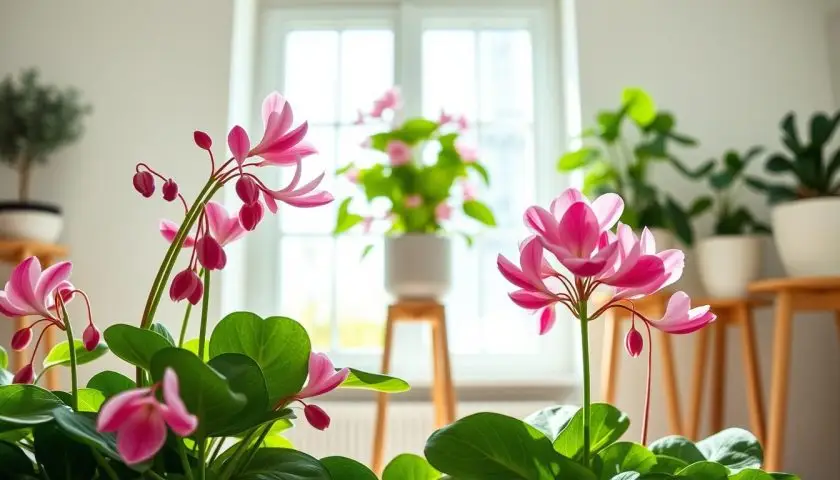
Cyclamen light requirements are different indoors and outdoors, but the goal is similar: enough light for flowers without harsh sun stress. Indoor cyclamen need bright indirect light. Outdoor hardy cyclamen usually prefer partial shade.
| Light Situation | Good or Bad? | What Happens |
|---|---|---|
| Bright indirect indoor light | Best indoors | Strong flowers and healthy leaves |
| Cool morning sun | Usually fine | Can support blooming if not hot |
| Hot direct sun | Avoid | Scorched leaves and stressed flowers |
| Deep indoor shade | Too dark | Weak growth and fewer flowers |
| Outdoor partial shade | Best for hardy types | Good long-term growth |
Signs of too little light
- Leaves stretch or lean.
- Flowers are fewer or weaker.
- Growth looks soft and pale.
- Soil stays wet for too long.
- The plant slowly declines in a dark room.
Signs of too much sun
- Brown crispy leaf patches.
- Flowers wilt quickly.
- Leaves curl or fade.
- The pot dries too fast.
- Damage appears on the sun-facing side.
For placement help, read complete guide to indoor light, low light house plants, and office-friendly plants for artificial light.
Cyclamen Watering Tips
Cyclamen watering is where many plants fail. Cyclamen like moisture during active growth, but they hate soggy crowns and waterlogged tubers. The safest method for potted cyclamen is watering from the bottom or around the pot edge.
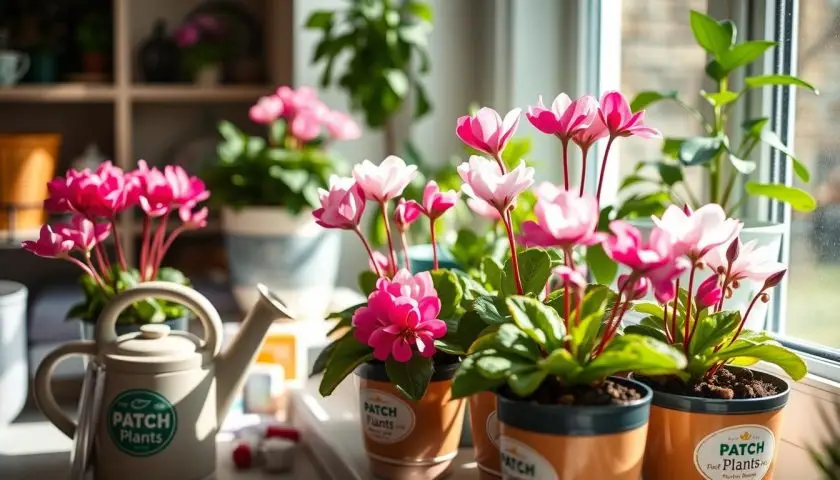
How to water indoor cyclamen
- Check the top layer of potting mix.
- Water when the mix begins to dry, not when it is still wet.
- Place the pot in a shallow tray of water for a short soak.
- Remove the pot once the mix has absorbed moisture.
- Let it drain fully before returning it to its cover pot.
Why bottom watering helps
Bottom watering reduces the chance of water collecting in the crown, where flower stems and leaves emerge. A wet crown can rot, especially in cool rooms with poor airflow.
Watering by growth stage
| Growth Stage | Watering Style | What to Avoid |
|---|---|---|
| Flowering | Keep lightly and evenly moist | Letting the plant wilt hard |
| Leafy active growth | Water when mix begins to dry | Standing water |
| Yellowing after bloom | Reduce watering gradually | Forcing wet growth |
| Dormancy | Keep barely moist or mostly dry | Soaking the dormant tuber |
| New growth returns | Resume watering slowly | Sudden heavy watering |
Overwatering signs
- Soft yellow leaves.
- Mushy stems near the base.
- Flowers collapsing even though soil is wet.
- Musty smell from the pot.
- Soft or rotting tuber.
Underwatering signs
- Flowers droop with dry soil.
- Leaves wilt but feel dry, not mushy.
- Pot feels very light.
- Soil pulls away from the pot edge.
- Plant perks up after careful watering.
For deeper watering support, use complete watering guide, worst times to water plants, and signs you are overwatering.
Temperature and Humidity for Cyclamen
Cyclamen prefer cool conditions while flowering. Warm indoor air is one of the fastest ways to shorten the display. A cool windowsill, porch, or bright hallway is often better than a hot living room.
Indoor temperature tips
- Keep cyclamen away from radiators.
- Avoid fireplaces and dry heat vents.
- Keep it away from hot afternoon sun.
- Avoid freezing windowsills at night.
- Choose a cool bright room for longer flowers.
Humidity tips
Cyclamen do not need wet leaves, but they dislike very dry hot air. If the room is dry, group plants nearby or place the pot on a pebble tray without letting the base sit in water.
For humidity help, read humidity hacks without a humidifier, DIY humidity tray, and misting for plants.
Best Soil for Cyclamen
The best soil for cyclamen drains well while holding enough moisture for active growth. Indoor potted cyclamen need a free-draining potting mix. Outdoor hardy cyclamen need humus-rich soil that does not stay wet.
Indoor potting mix
- 2 parts indoor potting mix.
- 1 part perlite, pumice, or grit.
- A little fine bark or coco coir for structure.
- A pot with drainage holes.
Outdoor soil improvement
- Add leafmould or garden compost for humus.
- Add grit if soil is heavy and wet.
- Use raised planting if drainage is poor.
- Avoid spots that stay waterlogged in winter.
- Avoid overly dry exposed summer sites for hardy types.
For soil and pot help, read best soil mix guide, how to repot a plant, and repotting mistakes to avoid.
Fertilizing Cyclamen
Fertilizing cyclamen should be gentle. Too much fertilizer can push weak leafy growth or stress the tuber. Feed when the plant is actively growing and flowering, then stop when it begins to rest.
Simple feeding schedule
| Stage | Feeding Advice | Why |
|---|---|---|
| Flowering | Feed lightly every few weeks if needed | Supports long display |
| Leafy growth | Use diluted balanced fertilizer | Supports leaves and tuber strength |
| Yellowing into dormancy | Stop feeding | Plant is slowing down |
| Dormant tuber | Do not feed | No active growth to use fertilizer |
Signs of overfeeding
- Brown leaf edges.
- White crust on the soil.
- Weak floppy growth.
- Yellowing after feeding.
- Soil staying too salty or compacted.
For feeding basics, read fertilizing indoor vs outdoor plants.
Deadheading and Pruning Cyclamen
Cyclamen pruning is simple. You are not shaping woody stems. You are removing old flowers and yellow leaves cleanly so the crown stays tidy and rot risk stays low.
How to deadhead cyclamen
- Find the spent flower stem at the base.
- Hold the stem low near the crown.
- Twist and tug gently until the whole stem releases.
- Remove yellow leaves the same way if possible.
- Do not leave soft broken stem pieces sitting on the crown.
Why not just cut the top off?
If you cut only the flower head or leaf top, the remaining stem can rot near the crown. Removing the full stem keeps the plant cleaner.
For more help, read pruning basics and how to clean plant leaves.
Cyclamen Dormancy: What to Do When Leaves Yellow
Cyclamen dormancy is often mistaken for death. After flowering, many indoor cyclamen gradually yellow and lose leaves. This can be part of the natural cycle, especially as conditions warm.
Signs of natural dormancy
- Flowering slows or stops.
- Leaves yellow gradually.
- The plant looks tired after a long bloom period.
- The tuber remains firm.
- No foul smell or mushy crown is present.
Dormancy care
- Reduce watering gradually as leaves fade.
- Stop fertilizing.
- Remove yellow leaves from the base.
- Keep the tuber in a cool dryish place.
- Begin watering again slowly when new growth appears.
When dormancy is not normal
If leaves yellow while the crown is soft, soil smells sour, or stems collapse into mush, the problem is more likely rot than normal rest. Check the tuber and roots before assuming it is seasonal dormancy.
Repotting Cyclamen
Cyclamen repotting is best done when the plant is waking up from dormancy, often late summer or early autumn for indoor florist cyclamen. Do not repot while it is in full bloom unless the plant has a drainage emergency.
When to repot
- The potting mix has broken down.
- Roots are crowded.
- The plant drains poorly.
- The tuber has outgrown the pot.
- New growth is beginning after dormancy.
Repotting steps
- Choose a pot only slightly larger than the old one.
- Use fresh free-draining potting mix.
- Handle the tuber gently.
- Keep the top of the tuber correctly positioned for the type.
- Water lightly after repotting and let the pot drain.
- Keep in bright indirect light while growth restarts.
Common Cyclamen Problems
Most cyclamen problems come from warmth, poor drainage, wet crowns, overwatering, pests, or ignoring dormancy. Use the symptoms to find the cause instead of changing every part of care at once.
| Problem | Likely Cause | What to Do |
|---|---|---|
| Yellow leaves after flowering | Natural dormancy | Reduce watering and stop feeding |
| Yellow soft leaves with wet soil | Overwatering or rot | Check drainage, crown, and tuber |
| Drooping flowers | Dry soil, heat, or old blooms | Check moisture and move to cooler spot |
| Grey fuzzy mould | Damp air and poor airflow | Remove affected parts and improve ventilation |
| Sticky leaves or distorted growth | Aphids or mites | Isolate and inspect closely |
| Soft crown | Crown rot | Stop overhead watering and check tuber health |
Aphids
Aphids can gather on new growth and flower stems. They may leave sticky residue and distorted growth.
Cyclamen mites
Mites can cause curled, distorted, or stunted growth. They are hard to see, so leaf distortion is often the first clue.
Grey mould
Grey mould is more likely when old flowers sit on damp soil or the plant is crowded with poor airflow. Remove old plant material quickly.
Root and crown rot
Rot often starts when the potting mix stays wet, the crown is splashed repeatedly, or drainage is poor. The tuber should feel firm, not soft or foul-smelling.
For troubleshooting, read yellow leaves on plants, root rot guide, leaf curl, browning and droop, and how to revive a dying plant.
Seasonal Cyclamen Care
| Season | Indoor Cyclamen | Outdoor Hardy Cyclamen |
|---|---|---|
| Winter | Flowering season, keep cool and bright | Some hardy types bloom or show foliage |
| Spring | Leaves may yellow after flowering | Allow foliage to complete its cycle |
| Summer | Dormant or resting, keep much drier | Avoid excessive summer moisture |
| Autumn | New growth may begin, resume watering | Plant hardy tubers and watch for flowers |
Common Cyclamen Care Mistakes
| Mistake | What Happens | Better Choice |
|---|---|---|
| Keeping indoor cyclamen too warm | Flowers fade quickly and leaves yellow | Use a cool bright room |
| Watering into the crown | Crown rot risk increases | Water from below or around the edge |
| Planting hardy cyclamen in wet soil | Tubers may rot | Choose well-drained partial shade |
| Ignoring dormancy | Plant is overwatered while resting | Reduce watering when leaves fade naturally |
| Leaving dead stems on the plant | Rot and mould risk increases | Remove spent stems from the base |
| Using a pot with no drainage | Roots and tuber stay soggy | Use drainage holes every time |
Cyclamen Care Checklist
| Task | How Often | What to Check |
|---|---|---|
| Check soil moisture | Before watering | Mix beginning to dry, not soggy |
| Empty saucer | After watering | No standing water |
| Deadhead flowers | As blooms fade | Remove full stems from base |
| Remove yellow leaves | As needed | Natural aging, dormancy, or rot signs |
| Check temperature | Weekly indoors | Too warm, too dry, or too close to heat |
| Inspect pests | Weekly | Aphids, mites, sticky leaves, distortion |
| Adjust dormancy care | After flowering | Less water and no fertilizer |
Helpful PATCH Guides for Cyclamen Care
Use these related PATCH guides to improve watering, light, dormancy, outdoor planting, indoor flowering plants, and plant problem-solving.
Indoor Plant Guides
- Indoor Plants hub
- Blooming indoor plants
- Indoor plants with red flowers
- Indoor plants with orange flowers
- Colorful foliage indoor plants
- Best indoor plants for beginners
- Best indoor plants for first-time plant parents
- Best indoor plants for tiny apartments
Outdoor and Shade Guides
- Outdoor Plants hub
- How to keep outdoor plants alive
- Hardy outdoor plants
- Shade-loving outdoor plants
- Plants in pots in shade
- Small plants that like shade
- Outdoor plants for British winters
- Container gardening on patios
Watering, Soil and Repotting Guides
- Complete watering guide
- Worst times to water plants
- Signs you are overwatering
- Best soil mix guide
- How to repot a plant
- Repotting mistakes to avoid
- Self-watering pots guide
Light, Humidity and Plant Problem Guides
- Plant Care hub
- Complete guide to indoor light
- Low light house plants
- Humidity hacks without a humidifier
- DIY humidity tray
- Misting for plants
- Yellow leaves on plants
- Root rot guide
Specific Indoor Plant Guides
- African Violet care guide
- Orchid care guide
- Peace Lily care guide
- Goldfish Plant care
- Christmas Cactus maintenance
- Christmas Cactus care tips
- Purple Passion Plant care
- Boston Fern care guide
Frequently Asked Questions
How do you care for cyclamen indoors?
Keep indoor cyclamen in a cool room with bright indirect light. Water when the potting mix begins to dry, preferably from the bottom or around the pot edge. Avoid wetting the crown and reduce watering when the plant naturally goes dormant.
Can cyclamen grow outdoors?
Yes, but choose hardy cyclamen for outdoor planting. Hardy types do well in partial shade with well-drained soil. Florist cyclamen are better indoors or in protected seasonal containers.
How often should I water cyclamen?
Water when the potting mix begins to dry. During active growth and flowering, cyclamen need steadier moisture. During dormancy, water much less and avoid soaking the tuber.
Should I water cyclamen from the bottom?
Bottom watering is often the safest method for potted cyclamen. It helps keep water away from the crown. After soaking, let the pot drain fully before placing it back in a decorative container.
Why are my cyclamen leaves turning yellow?
Yellow leaves can mean natural dormancy, especially after flowering. They can also come from overwatering, warm rooms, poor drainage, pests, underwatering, or crown rot.
Does cyclamen need direct sun?
No. Cyclamen prefer bright indirect light indoors and partial shade outdoors. Hot direct sun can scorch leaves and wilt flowers.
What is the best soil for cyclamen?
The best soil is free-draining but moisture-retentive. Indoor plants need a draining potting mix, while hardy outdoor cyclamen prefer humus-rich, well-drained soil.
How do I deadhead cyclamen?
Remove the whole flower stem from the base with a gentle twist and tug. Do the same with yellow leaves. Avoid leaving soft stem stubs near the crown.
When should I repot cyclamen?
Repot indoor cyclamen when new growth begins after dormancy, often late summer or early autumn. Use a pot only slightly larger and fresh free-draining mix.
Can cyclamen come back every year?
Yes, cyclamen can return if the tuber stays healthy. Indoor florist cyclamen may rebloom after dormancy with correct care, while hardy cyclamen can return outdoors for many seasons in the right site.
Final Thoughts
Cyclamen care becomes much easier when you match the plant to the place. Keep florist cyclamen cool and bright indoors, and plant hardy cyclamen outdoors in partial shade with well-drained soil. Do not drown the crown, do not keep dormant tubers wet, and do not panic when leaves yellow naturally after flowering.
RHS explains that hardy cyclamen grow best in partial shade in moderately fertile, humus-rich, well-drained soil, and that overly dry, sunny sites or excessive summer moisture should be avoided: RHS hardy cyclamen growing guide.
For the best results, treat cyclamen as seasonal plants with a rhythm. Cool weather, careful watering, and good drainage are more important than constant fussing.
Final Recap
Cyclamen are tuberous flowering plants that can grow indoors or outdoors depending on the type. Florist cyclamen are best for cool indoor winter displays, while hardy cyclamen are better for shaded outdoor gardens. Give indoor cyclamen bright indirect light, cool temperatures, and careful watering from below or around the pot edge. Give outdoor hardy cyclamen partial shade and well-drained, humus-rich soil. Remove spent flowers and yellow leaves from the base, feed lightly during active growth, reduce watering during dormancy, and watch for crown rot, mites, aphids, and fungal problems. With the right cool, bright, well-drained setup, cyclamen can flower beautifully and return season after season.