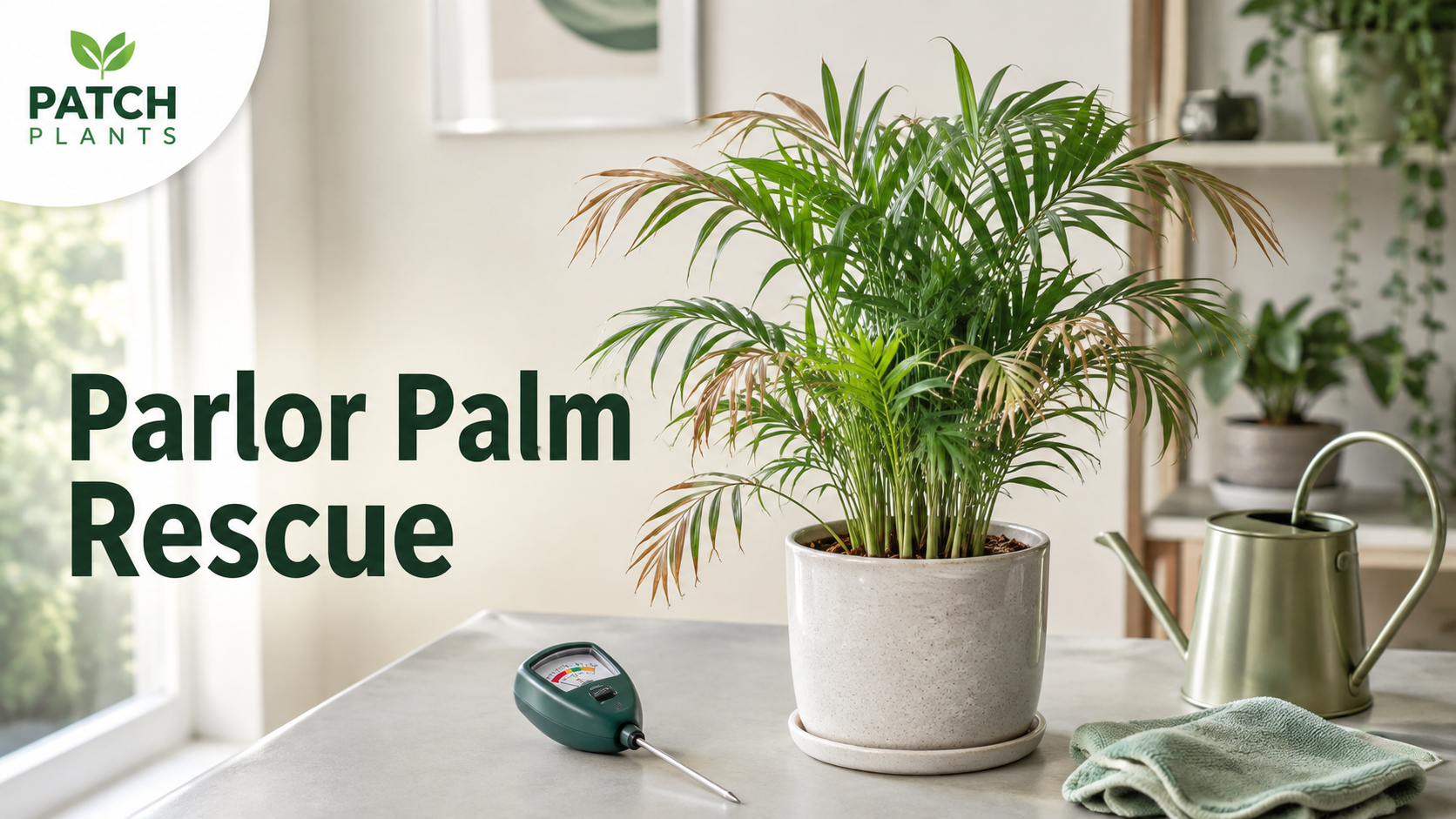
A parlor palm dying is usually reacting to a problem you can fix: too much or too little water, poor drainage, harsh sun, deep shade, dry air, hard tap water, pests, or cold drafts. Check the soil first. Wet soil with yellow, drooping fronds points to overwatering or root rot. Dry soil with crispy, drooping fronds points to underwatering. Fix the main cause, keep the plant in bright indirect light, and give it time.
Parlor palms (Chamaedorea elegans) are tough, slow-growing houseplants, so damage builds slowly and recovery takes patience. This guide walks you through the 11 most common causes, how to tell them apart, and a step-by-step rescue plan.
Key Takeaways
- Always check soil moisture before watering a drooping parlor palm. Wet-soil drooping and dry-soil drooping need opposite fixes.
- Overwatering, poor drainage, and oversized pots are the most common causes of yellow fronds and root rot.
- Brown tips usually come from dry air, hard tap water, fertilizer salts, or uneven watering.
- Parlor palms prefer bright indirect light. Direct summer sun scorches fronds, and deep shade weakens growth.
- Keep the plant between about 10–27°C (50–80°F) and away from cold drafts, radiators, and AC vents.
- Each parlor palm stem grows from a single central point and does not branch. If a stem’s crown rots, that stem will not regrow.
- Brown or yellow fronds will not turn green again. Healthy new growth is the real sign of recovery.
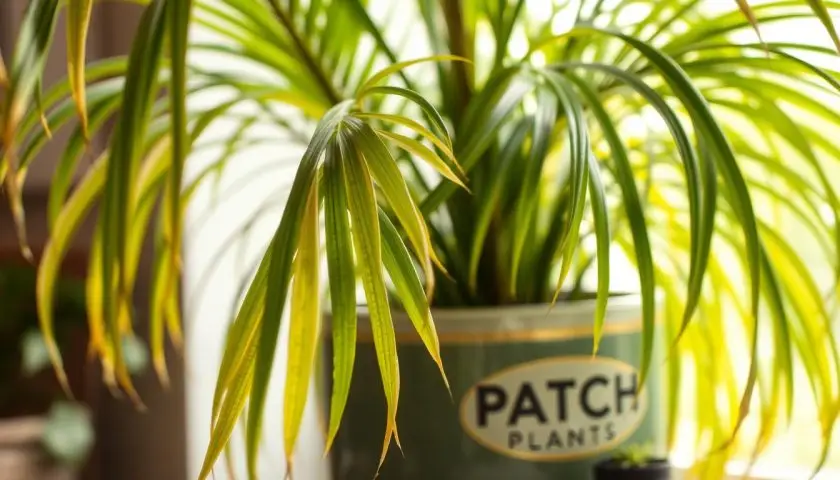
Parlor Palm Dying Symptoms at a Glance
| Symptom | Likely Cause | First Fix |
|---|---|---|
| Yellow fronds, wet soil | Overwatering, poor drainage, root rot | Stop watering; check drainage and roots |
| Drooping fronds, dry soil | Underwatering | Water thoroughly and let it drain |
| Drooping fronds, wet soil | Root rot or oxygen-starved roots | Do not water; inspect roots |
| Brown crispy tips | Dry air, hard water, salts, uneven watering | Improve humidity; switch to rainwater or filtered water |
| Bleached or brown patches on one side | Direct sun scorch | Move to bright indirect light |
| Pale, slow, leaning growth | Too little light | Move closer to a bright window |
| Fine webbing, speckled fronds | Spider mites | Isolate, wipe, and treat |
| Sticky leaves, brown bumps | Scale insects | Remove pests and repeat treatment |
| White crust on soil | Fertilizer or mineral buildup | Flush the pot and reduce feeding |
| One old lower frond yellowing | Natural aging | Remove when fully yellow |
Is Your Parlor Palm Really Dying?
Not every yellow or brown frond is an emergency. Parlor palms naturally shed their oldest lower fronds over time. The pattern tells you what is happening.
| Probably Normal | Needs Action |
|---|---|
| One or two oldest lower fronds fade slowly | Several fronds yellow or brown at the same time |
| New central fronds are green and firm | New growth is pale, weak, or collapsing |
| Soil smells earthy | Soil smells sour or swampy |
| No pests or sticky residue | Webbing, bumps, or sticky leaves |
| Plant stands upright | Fronds droop even when soil is wet |
Most parlor palms are sold as several single-stemmed plants growing together in one pot. One stem can decline while the others stay healthy, so check each stem separately.
11 Causes of a Dying Parlor Palm and How to Fix Them
Cause 1: Overwatering and Root Rot
Overwatering is the most common reason a parlor palm declines. The problem is not just how much water you pour, but how long the roots stay wet. Low light, cool rooms, dense soil, oversized pots, and water left in saucers all keep roots soggy.
Signs: soft yellow fronds, drooping in wet soil, a sour smell, fungus gnats, mushy stem bases, and dark, slimy roots.
Fix:
- Stop watering until the top few centimetres of soil feel dry.
- Empty the saucer or outer pot and make sure water drains freely.
- If the plant keeps drooping in wet soil, slide it out and check the roots.
- Healthy roots are firm and light-coloured. Cut away soft, dark, rotten roots with clean scissors.
- Repot into fresh, fast-draining mix and a pot that is not oversized.
Learn more in our root rot guide, healthy roots vs root rot, and signs you are overwatering.
Cause 2: Underwatering and Dry Soil
Parlor palms like their surface soil to dry between waterings, but they do not like staying bone-dry. A very dry root ball can also repel water, so water runs down the pot sides without reaching the roots.
Signs: drooping with dry soil, a very light pot, soil shrinking from the pot edge, and brown, crispy tips.
Fix: Water slowly until it drains from the bottom. If water rushes straight through, water in two or three rounds a few minutes apart, or soak the pot in a bowl of water for 15–20 minutes, then drain completely.
Cause 3: Poor Drainage and Heavy Soil
Even careful watering fails if the pot cannot drain. Dense, old potting mix and decorative pots without holes trap water around the roots.
Signs: soil stays wet for many days, water pools on the surface, mould on the soil, and repeated fungus gnats.
Fix: Use a pot with drainage holes and a light, fast-draining mix. A simple blend is 3 parts quality indoor potting mix to 1 part perlite or horticultural grit. Parlor palms prefer slightly acidic conditions, so a peat-free ericaceous mix works well as the base. See our best soil mix guide.
Cause 4: Too Much Sun or Too Little Light
Parlor palms naturally grow beneath taller trees, so they prefer bright indirect light and cope with light shade.
- Too much sun: bleached or brown patches on the window-facing side, and crispy fronds near hot glass.
- Too little light: slow, pale, stretched growth, leaning toward the window, and soil that stays wet too long.
Fix: Place the palm near an east-facing window, in a bright north-facing room, or a few feet back from a south- or west-facing window. Use a sheer curtain to soften strong sun. Read our guide to indoor light and low light house plants.
Cause 5: Dry Air and Low Humidity
Parlor palms do not need very high humidity, but dry indoor air, especially near heaters in winter, causes brown tips and encourages spider mites.
Fix:
- Move the plant away from radiators, fireplaces, and heat vents.
- Group it with other houseplants.
- Stand it on a pebble tray, keeping the pot base above the water line.
- Use a small humidifier in very dry rooms.
- Wipe or mist the fronds occasionally to remove dust. Misting alone raises humidity only briefly.
More ideas: humidity hacks without a humidifier and DIY humidity tray.
Cause 6: Hard Tap Water and Mineral Buildup
Hard tap water is alkaline and contains dissolved minerals. Over time it can build up in the potting mix and brown the leaf tips of parlor palms, which prefer slightly acidic conditions.
Signs: white crust on the soil or pot rim, and brown tips even when watering seems correct.
Fix: Use rainwater, filtered water, or distilled water at room temperature where possible. Flush the pot with plenty of clean water a few times a year if it drains well, or repot if the mix is old and crusty.
Cause 7: Cold, Heat, and Drafts
Parlor palms do best at around 20–27°C (68–80°F) in the growing season and tolerate down to about 10°C (50°F) in winter. Sudden cold, hot dry air, or AC blasts cause drooping, browning, and leaf drop.
Fix: Keep the plant away from cold winter windowsills, exterior doors, radiators, and AC vents. When moving it to a new room, choose a stable spot and leave it there.
Cause 8: Pests
Spider mites and scale insects are the most common parlor palm pests. Mealybugs also appear occasionally. Pests often hide under fronds and along stems.
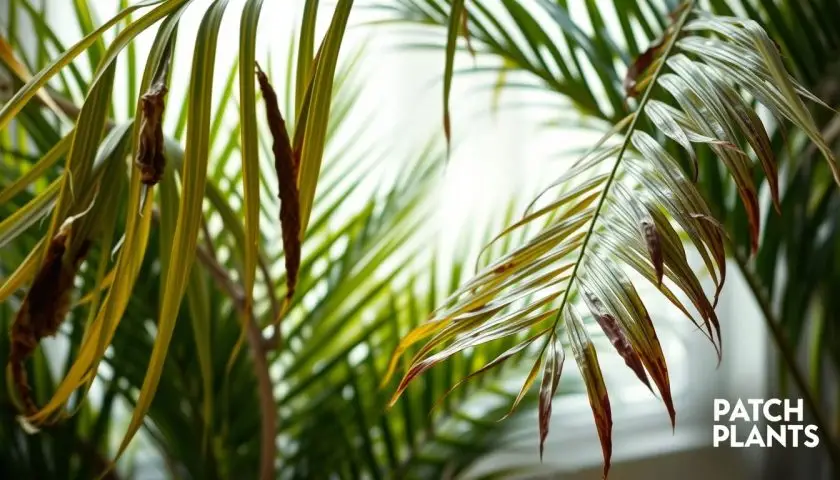
- Spider mites: fine webbing, pale speckling, dull dusty-looking fronds. Most common in dry, warm rooms.
- Scale: small brown or tan bumps on stems and frond undersides, often with sticky residue.
- Mealybugs: white, cottony clusters where fronds join the stems.
Fix:
- Isolate the palm from other plants.
- Wipe fronds and stems, including undersides, with a damp cloth.
- Remove scale and mealybugs with a cotton bud dipped in rubbing alcohol.
- Rinse the foliage in the shower if the pot can drain fully afterward.
- Use an insecticidal soap or houseplant pest treatment if needed, following the label.
- Recheck weekly for several weeks, because eggs hatch after the first treatment.
See how to clean plant leaves without damaging them.
Cause 9: Fertilizer Burn
Parlor palms are slow growers and need little feeding. Too much fertilizer burns roots and leaves salt deposits in the soil.
Signs: brown tips after feeding, white crust on the soil, and weak growth.
Fix: Stop feeding, flush the pot with clean water if drainage is good, and resume only once the plant is growing well. A balanced liquid feed about once a month from spring to autumn is plenty. Never feed a plant with root rot or one that has just been repotted. See fertilizing indoor vs outdoor plants.
Cause 10: Repotting Stress, Overpotting, or Root Crowding
Parlor palms grow slowly and can stay in the same pot for several years. Repotting too often, or moving into a much bigger pot, stresses roots and keeps too much wet soil around them. Leaving a palm in old, collapsed soil for too long also causes problems.
Repot only when: roots densely fill the pot, water runs straight through, or the old mix has broken down.
How: Repot in spring into a pot only about 2–3 cm (1 inch) wider, using fresh fast-draining mix. Handle the roots gently and do not fertilize for several weeks. Read how to repot a plant and repotting mistakes to avoid.
Cause 11: Natural Aging
Older lower fronds naturally yellow and die back as new fronds emerge from the centre. This is normal when only one or two fronds are affected at a time and new growth looks healthy.
Remove fully brown or yellow fronds at the base. Leave fronds that are still mostly green, because they continue to feed the plant.
How to Revive a Dying Parlor Palm Step by Step
Work through these steps in order. Changing everything at once makes it hard to tell what worked.
- Check the soil. Push a finger a few centimetres into the mix. Dry means water thoroughly. Wet means do not water.
- Check drainage. Make sure water can leave the pot. Remove any outer pot and empty trapped water.
- Inspect the roots if it droops in wet soil. Trim rotten roots and repot into fresh mix in a pot only slightly bigger than the root ball.
- Remove dead stems and fronds. If a stem’s central growing point is rotten or collapsed, that stem will not regrow. Cut it off at soil level so it does not spread rot to healthy stems.
- Move it to bright indirect light. Avoid direct sun and dark corners.
- Check for pests. Look under fronds and along stems, and treat early.
- Keep conditions stable. Keep it in one spot away from drafts and heaters, water only after checking the soil, and skip fertilizer until new growth appears.
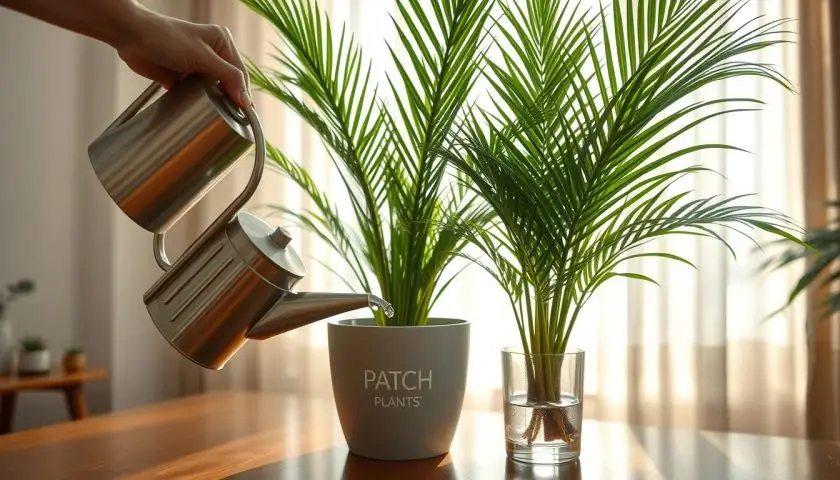
Parlor Palm Watering Guide
Water when the surface of the potting mix has dried, then water thoroughly and empty the saucer after 10–15 minutes. Base watering on the soil, not the calendar.
| Condition | Watering Need | Tip |
|---|---|---|
| Bright indirect light, summer | More frequent | Check the soil every few days |
| Lower light | Less frequent | Soil dries slowly; avoid routine watering |
| Winter | Reduced | Growth slows; feel below the surface before watering |
| Small or terracotta pot | Dries faster | Do not let it become bone-dry |
| Large or plastic pot | Dries slower | Check deeper moisture before watering |
For more help, see our complete watering guide and worst times to water your plants.
Parlor Palm Brown Tips
Brown tips are the most common parlor palm complaint. They show past stress but rarely mean the plant is dying on their own. The usual causes are dry air, hard tap water, fertilizer salts, and swings between very wet and very dry soil. Direct sun causes larger brown patches rather than just tips.
Trim brown tips with clean scissors, following the natural leaf shape and leaving a thin line of brown so you do not cut into healthy tissue. Then fix the cause so new fronds stay green. See leaf curl, browning and droop.
Parlor Palm Yellow Leaves
| Yellowing Pattern | Likely Cause | Fix |
|---|---|---|
| One old lower frond | Natural aging | Remove when fully yellow |
| Many fronds, wet soil | Overwatering or root rot | Check drainage and roots |
| Many fronds, dry soil | Underwatering | Water thoroughly and drain |
| Yellow speckling with webbing | Spider mites | Isolate and treat |
| Pale yellow, weak new growth | Low light | Move to brighter indirect light |
For more detail, read yellow leaves on plants.
Parlor Palm Drooping
- Drooping with dry soil: Water thoroughly, drain, and keep the plant out of hot sun while it recovers. It should perk up within a day or two.
- Drooping with wet soil: Do not water. This is more serious and often means damaged roots. Check drainage and inspect the roots.
- Drooping after a move or cold night: Keep the plant warm and in one stable spot. Avoid moving it again.
How Long Does Recovery Take?
Parlor palms grow slowly, so recovery takes weeks to months. Damaged fronds will not turn green again. Look for these signs instead:
- New fronds unfold green and firm from the centre.
- The soil dries at a normal pace.
- Yellowing and browning stop spreading.
- No pests return after repeated checks.
If the plant still droops in wet soil, roots smell rotten, or no stem has a healthy green centre left, recovery is unlikely. Healthy stems in the same pot can sometimes be saved by dividing them into a fresh pot. Our plant rescue plan covers this in more detail.
Common Mistakes When Saving a Parlor Palm
| Mistake | Why It Hurts | Better Choice |
|---|---|---|
| Watering because fronds droop | Wet-soil drooping can mean root rot | Check soil first |
| Moving it into direct sun to “help” | Fronds scorch | Use bright indirect light |
| Fertilizing a struggling plant | Damaged roots burn more easily | Wait for new growth |
| Repotting into a much bigger pot | Extra soil stays wet | Go only 2–3 cm wider |
| Cutting the central spear or healthy green fronds | Stems cannot branch or replace the growing point | Remove only dead fronds and dead stems |
| Treating pests once | Eggs hatch and reinfest | Repeat checks weekly |
Is a Parlor Palm Safe for Pets?
Yes. The ASPCA lists parlor palm as non-toxic to cats and dogs. Chewing can still damage the fronds and upset a pet’s stomach, so keep it out of reach of persistent chewers.
Related Guides
- Parlor palm care guide
- Kentia palm indoor care
- How to revive a dying plant
- Misting for plants: does it help?
- Pruning basics
- Plant Care hub
Frequently Asked Questions
Why is my parlor palm dying?
The most common causes are overwatering, poor drainage, underwatering, direct sun, low light, dry air, hard tap water, pests, fertilizer burn, and cold drafts. Check soil moisture first, because wet and dry soil need opposite fixes. Then check drainage, light, and the undersides of the fronds for pests.
Can a dying parlor palm be saved?
Often, yes. If some stems still have firm roots and a healthy green centre, fix the main cause, remove dead fronds and dead stems, and keep conditions stable. Recovery is slow because parlor palms grow slowly. A stem whose central growing point has rotted will not regrow, so remove it.
Why does my parlor palm have brown tips?
Brown tips usually come from dry indoor air, hard tap water, fertilizer salt buildup, or swings between very wet and very dry soil. Move the plant away from heaters, use rainwater or filtered water, flush the pot occasionally, and trim the brown tips for a neater look.
Why are my parlor palm leaves turning yellow?
One old lower frond turning yellow is normal aging. Many yellow fronds at once usually point to overwatering, poor drainage, or root rot, especially if the soil stays wet. Yellow speckling with webbing suggests spider mites, and pale weak growth suggests too little light.
Should I cut off dead parlor palm fronds?
Yes. Cut fully brown or yellow fronds close to the base with clean scissors. Leave fronds that are still mostly green, because they help the plant recover. Never cut the central spear, since each stem grows from that single point.
Final Thoughts
A parlor palm dying is usually telling you something specific. Drooping means check the soil. Yellow fronds mean check drainage, roots, and light. Brown tips mean look at humidity, water quality, and feeding. Webbing or sticky leaves mean check for pests.
The RHS Chamaedorea growing guide recommends bright indirect light, watering only when the compost surface is dry, never leaving the plant sitting in water, and avoiding hard tap water. It also notes that brown leaves can result from overwatering, underwatering, hard water, or direct sun.
Fix one cause at a time, keep the plant somewhere stable, and be patient. Old damaged fronds will not recover, but firm green new growth means your parlor palm is coming back. For everyday care once it is healthy again, see our parlor palm care guide.