The best way to keep pests away from outdoor plants is prevention: grow healthy plants in the right spot, water at the soil, space them for airflow, clear diseased debris, and check under leaves every week. When pests do appear, identify them first, then use the gentlest fix that works: hosing aphids off, hand-picking slugs, covering crops with insect mesh, and encouraging natural predators. Save sprays for real outbreaks.
Most garden pest problems start small: a few aphids on soft new shoots, a slug trail by a pot, or caterpillar holes that appear overnight. Caught early, they are easy to manage without harsh chemicals. This guide covers garden pest prevention, how to identify common pests, physical barriers, natural predators, safe sprays, companion planting, and protecting container plants and vegetable beds.
Every Patch Plants guide is researched and written by Sawera Shahid, a botanist with an MPhil in Botany and more than five years of gardening and plant-care writing. We base our advice on trusted horticultural guidance, so these methods are practical and safe for pollinators.
Start with Garden Pest Prevention
The Royal Horticultural Society notes that keeping plants healthy through good cultivation and hygiene is the best way to prevent pest and disease problems. Stressed plants attract pests and recover more slowly.
- Right plant, right place: match each plant’s light and soil needs
- Water at the base: morning watering at soil level keeps leaves dry; see our guide to the worst times to water your plants
- Do not overfeed: too much nitrogen produces soft, sappy growth that aphids love
- Space plants well: airflow reduces damp hiding spots and disease
- Keep it clean: remove diseased leaves, rotting fruit and dead plant matter
- Choose resistant varieties where possible, especially for vegetables like tomatoes and potatoes
Identify the Pest Before You Act
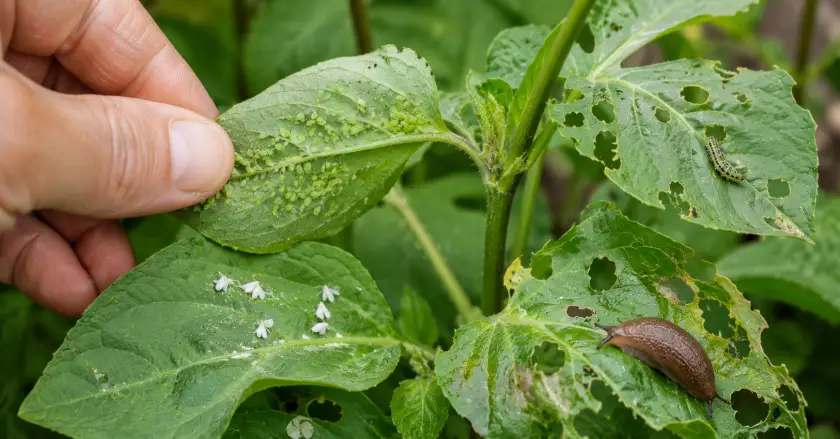
A fix that works for aphids will not stop slugs. Look under leaves, along stems, inside curled leaves and around the soil, ideally in the evening when many pests are active.
| Pest | Signs | First Step |
|---|---|---|
| Aphids | Clusters of small insects on new shoots; sticky leaves | Hose or rub them off |
| Slugs and snails | Ragged holes, slime trails, damage overnight | Hand-pick in the evening |
| Caterpillars | Chewed leaves, droppings | Pick off; cover crops with mesh |
| Whiteflies | Tiny white insects fly up when disturbed | Sticky traps; insecticidal soap |
| Spider mites | Fine speckling, webbing, in hot dry weather | Hose leaves; raise humidity |
| Fungus gnats | Tiny flies around damp pots | Let compost dry; top with grit |
Our guide to spider mites on plants covers that pest in detail, and our guide to white spots on plant leaves helps you tell pests from mildew.
Remove Pests by Hand and with Water
The simplest methods are often the most effective. The RHS recommends hosing off aphid colonies and picking slugs off by hand.
- Blast aphids, mites and whiteflies off with a strong jet of water, especially under leaves
- Squash small aphid clusters with your fingers
- Collect slugs, snails and caterpillars on mild, damp evenings with a torch
- Remove and bin badly infested leaves and shoots rather than composting them
Use Physical Barriers
Barriers stop pests reaching plants without any spraying.
- Insect-proof mesh or fleece: keeps caterpillars, cabbage white butterflies, carrot fly and flea beetles off vegetables; the RHS pairs mesh with crop rotation
- Collars: card or plastic rings around young stems protect against cutworms
- Cloches and bottle covers: protect seedlings from slugs and birds
- Sticky traps: help monitor and catch whiteflies and fungus gnats; the RHS lists sticky and pheromone traps for monitoring
- Netting: protects fruit and brassicas from birds
Encourage Natural Predators
Not every insect is a pest. Ladybirds, lacewings, hoverflies, ground beetles, parasitic wasps, spiders, frogs, toads and birds all eat garden pests. The RHS notes that hoverflies eat aphids, and recommends open-flowered plants from the daisy and carrot families to feed them.
- Grow open, single flowers such as daisies, yarrow, calendula, fennel and dill
- Avoid spraying plants in flower
- Leave some leaf litter, seed heads and log piles for shelter
- Add a shallow water source
- Accept a little damage so predators have food to build up their numbers
Our guides to pollinator-friendly plants and a wildlife-friendly garden show how to plan for this.
Natural Bug Spray for Plants
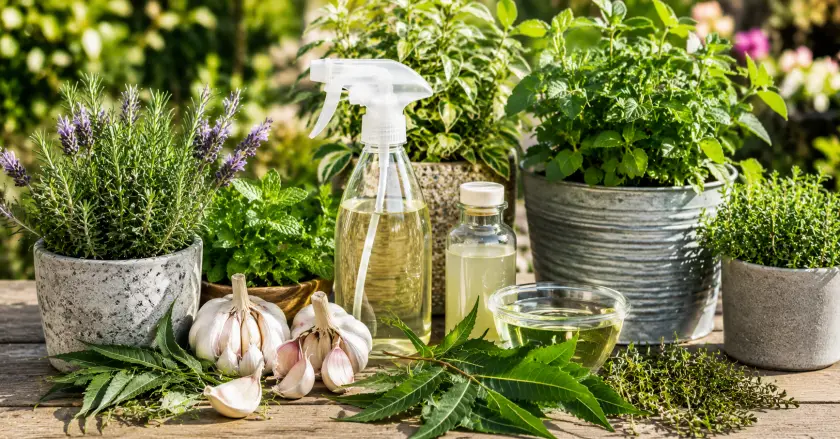
When pests get out of hand, a gentle spray can help with soft-bodied insects such as aphids, whiteflies, mealybugs and mites. Use them only on affected plants, not as a routine.
- Insecticidal soap: a ready-made product formulated for plants is safer than homemade dish soap, which can contain degreasers and fragrances that damage leaves. It only works on contact, so spray the pests directly.
- Plant oils: horticultural or plant-based oil sprays smother soft-bodied pests.
- Garlic or chilli sprays: sometimes used as deterrents; results vary, and chilli can irritate skin and eyes.
Whatever you use:
- Test on a few leaves and wait 24 hours.
- Spray in the evening or on a cloudy day, never in hot sun.
- Avoid open flowers and times when bees are active.
- Repeat only as the label directs, because sprays rarely kill eggs.
- Do not spray stressed, drought-hit plants.
Companion Planting and Herbs
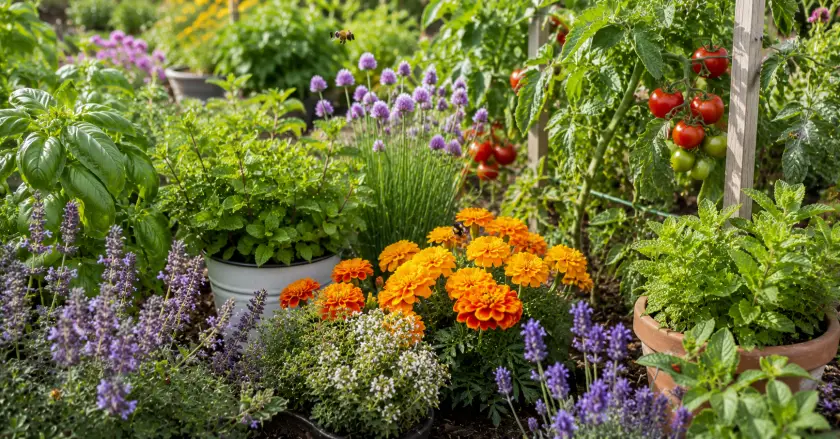
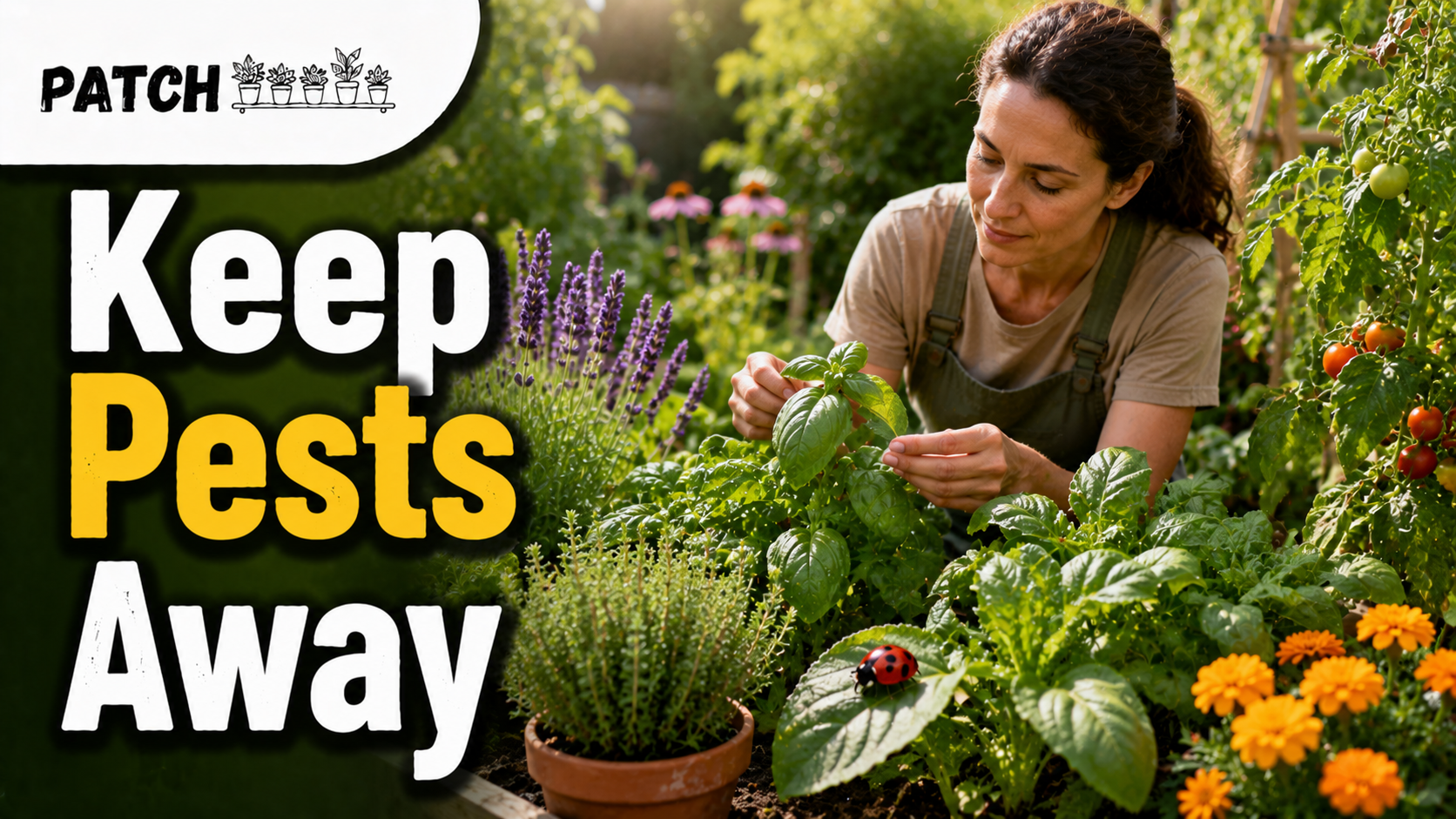
Mixing flowers and herbs with crops can help by attracting predators and making single crops harder for pests to find. Calendula, nasturtiums, marigolds, dill, fennel, chives and basil are popular choices. The evidence for scent alone “repelling” pests is mixed, so treat companion planting as one helpful layer alongside barriers and hand-picking, not a cure. Our guide to plants that keep bugs away covers the options.
Keep Insects Out of the Vegetable Garden
- Cover brassicas, salads and carrots with insect-proof mesh from sowing or planting
- Rotate crops each year; the RHS notes rotation helps prevent reinfection by soil-borne diseases and pests
- Pick off and destroy damaged leaves and rotting fruit
- Grow resistant varieties where available
- Plant flowers between and around crops to bring in predators
For crops that are easy to grow, see our guides to the easiest outdoor edible plants and planting tomatoes in a pot.
Protect Potted Outdoor Plants
- Lift pots onto feet so slugs cannot hide under them, and check pot bases regularly
- Empty saucers so water does not stand
- Let compost surfaces dry between waterings and add a grit top-dressing to deter fungus gnats
- Use fresh compost for new plantings instead of reusing soil from infested pots
- Group pots for shelter, but leave space for air to move
Our guides to container gardening on patios and self-watering pots cover container care.
Clean Pots, Tools and Soil
Pests and diseases can travel in old pots, compost and on tools. Wash pots with warm soapy water before reusing them, clean pruners between plants, and bin infested clippings. When bringing new plants home, check them closely and keep them apart from others for a week or two. The RHS also recommends removing infected leaves and fruit at the end of the season to break pest and disease cycles.
Common Mistakes to Avoid
- Spraying before identifying the pest: you may harm helpful insects and miss the real problem
- Spraying flowers: this harms bees and other pollinators
- Using harsh homemade mixes: strong soap or vinegar sprays can burn leaves
- Overfeeding: lush, soft growth attracts aphids
- Ignoring leaf undersides: eggs and colonies often hide there
- Expecting zero insects: a little damage keeps predators around
Frequently Asked Questions
How do I keep pests away from outdoor plants naturally?
Keep plants healthy and well spaced, water at soil level, clear diseased debris, use insect mesh on vegetables, hand-pick larger pests, and encourage predators like ladybirds and hoverflies with open flowers.
What is the best natural bug spray for plants?
A ready-made insecticidal soap or plant-oil spray works on soft-bodied pests such as aphids and whiteflies. Test it first, spray in the evening, and avoid open flowers. Often, a strong jet of water is enough.
How do I stop slugs eating my plants?
Hand-pick slugs on damp evenings, protect seedlings with cloches or collars, lift pots off the ground, and encourage predators like frogs, toads, birds and ground beetles.
How do I keep bugs out of my vegetable garden?
Cover crops with insect-proof mesh from the start, rotate crops each year, remove damaged leaves and fallen fruit, and grow flowers nearby to attract beneficial insects.
Do herbs keep pests away?
Some herbs and flowers can help by attracting predators and masking crops, but the evidence for repelling pests is mixed. Use them alongside barriers, hand-picking and good hygiene, not on their own.
Final Thoughts
To keep pests away from outdoor plants, build a garden that can largely defend itself: healthy, well-spaced plants, clean habits, physical barriers, plenty of predators, and regular checks. Save sprays for real outbreaks, use the gentlest option, and protect pollinators. A few holes in a leaf are a sign of a living garden, not a failing one.
Explore more outdoor advice in our outdoor plants collection and our guide to keeping outdoor plants alive.