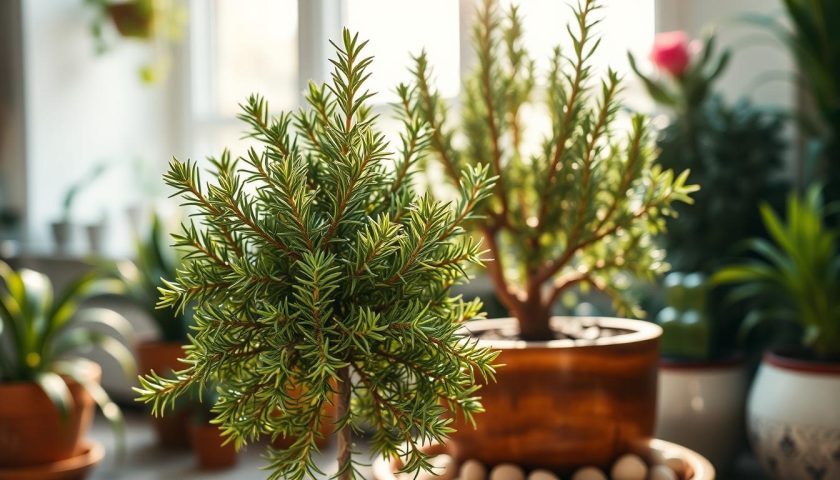
A rosemary Christmas tree is a young rosemary plant clipped into a small cone and sold as a living, scented alternative to a cut tree. It looks festive, but it is still a Mediterranean herb that wants bright light, sharp drainage and cool, fresh air, which is exactly what most heated homes in December do not offer. The good news is that rosemary Christmas tree care is simple once you understand what the plant expects.
I am Sawera Shahid, a botanist at Patch Plants. This guide covers how to choose a healthy plant, where to put it, how to water it, how to prune it (including pruning woody stems safely), how to keep it going after the holidays, and how to use it in the kitchen. If you also grow herbs in pots, our guide to growing rosemary indoors covers the wider picture.

Rosemary Christmas Tree Care at a Glance
The Royal Horticultural Society (RHS) advises growing rosemary in full sun, in light, free-draining soil, and warns that it dislikes wet roots, especially in winter. Those three points drive almost everything below.
| Care Factor | What Rosemary Needs | What to Do |
|---|---|---|
| Light | As much sun as possible | Use your brightest, sunniest window |
| Watering | Drought tolerant, hates wet roots | Let the soil dry on top, then water well and drain |
| Soil and pot | Free-draining mix, drainage holes | Remove foil; add grit if the mix stays wet |
| Air | Cool, fresh, moving air | Keep away from radiators and fireplaces |
| Pruning | Light trims on green growth | Never cut hard into bare old wood |
How to Choose a Healthy Rosemary Christmas Tree
Start with a good plant and half the work is done. Look for firm, green needles that cover the branches evenly, with no bare patches, and a sturdy central stem that sits steady in the pot. Check the soil too. Compost that is constantly soggy or smells sour suggests the roots are already struggling.
Walk away from any plant with these signs:
- Yellow or brown needles across the whole plant, which often points to root stress.
- Fine webbing or tiny speckles on the foliage, which can mean spider mites.
- Sticky residue or small bumps on the stems, which can mean scale insects. The RHS lists scale among rosemary’s pests.
- Muddy, waterlogged soil in the pot.

Setting Up Your Rosemary Christmas Tree at Home
When you get the plant home, take off any decorative foil, plastic sleeve or ribbon. These trap water around the pot and block airflow, and soggy roots are the main risk to a rosemary Christmas tree. If the decorative pot has no drainage holes, keep the plant in its plastic nursery pot and stand it inside the decorative one, tipping out any water that collects after each watering.
Choose a spot that is bright and cool, away from radiators, fireplaces and heating vents. The University of Illinois Extension notes that indoors rosemary prefers a cool, sunny spot, and that cool temperatures are fine for it. Dry heat is a bigger problem than a cool room.
If you plan to cook with it, keep festive edible decorations simple. Hang only clean, food-safe items such as dried fruit or natural ribbon on the branches, and avoid glitter, artificial snow and metallic sprays on any sprigs you intend to eat. Never use painted or sprayed ornaments on a plant you will harvest.
Light for a Rosemary Christmas Tree
Rosemary is a sun lover, and light is usually what separates a thriving rosemary Christmas tree from a fading one. Put it in your sunniest window, ideally south-facing in the northern hemisphere. In poor light the stems stretch, the shape loosens and the foliage turns pale.
If your home is dim in winter, a grow light can make up the shortfall. See our guide to grow lights for indoor plants. Turn the pot a quarter turn every week or so to keep the cone evenly shaped.
Watering a Rosemary Christmas Tree Without Rot
Overwatering is the commonest way to lose one. The University of Wisconsin Extension states that the biggest cause of rosemary decline and death is overwatering, and the RHS says containers must never become waterlogged. Rosemary is drought tolerant, so err on the dry side.
- Check the soil first. Push a finger into the top inch or two of the mix. If it feels damp, wait.
- Water thoroughly when it is dry, until water runs out of the drainage holes.
- Empty the saucer or decorative pot after a few minutes so the roots never stand in water.
- Water less in winter. Growth slows in dim, cool weather, so the plant uses less water.
Indoor air dries rosemary quickly, and brown tips or dieback are common results. The University of Illinois Extension advises against responding with more water, because that invites root rot. Raising humidity around the pot, for example by standing it on a saucer of pebbles with water below the base of the pot, helps without wetting the soil. Good airflow around the foliage also helps prevent leaf disease.
Soil, Pot and Feeding
For a container, the RHS suggests a soil-based compost mixed with up to 25% horticultural grit, in a pot with plenty of drainage holes. If your tree’s mix stays wet for days after watering, it is too heavy, so mix in extra grit or use a gritty compost blend.
Do not rush to repot at Christmas. The plant is adjusting to a new home and extra root disturbance only adds stress. Wait until growth picks up in spring, unless the pot has no drainage or the roots are clearly cramped. Do not fertilise in winter. Rosemary is not a heavy feeder, and winter is its slow season.
Pruning Woody Stems and Shaping the Cone
A rosemary Christmas tree keeps its shape with light, regular trimming. Snip the soft green tips to keep the cone dense and bushy, and cut just above a healthy leaf cluster. The University of Illinois Extension notes that rosemary can be sheared into forms resembling small evergreens, which is exactly how these trees are produced.
Take care when pruning woody stems. The RHS advises avoiding cutting into old wood because plants often do not recover from heavy pruning, and the University of Wisconsin Extension likewise cautions against cutting into woody stems unless you are shaping. Leave some green growth on every branch you trim.
| Task | Best Practice | Avoid |
|---|---|---|
| Shaping | Trim soft green tips lightly | Cutting into bare old wood |
| Harvesting | Snip a little from the outer edges | Stripping one side of the cone |
| Decorating | Light, clean, natural items | Heavy or sprayed ornaments |

Harvesting From Your Rosemary Christmas Tree
Rosemary is evergreen, so the RHS says you can pick it all year. Take small amounts from the outer growth, and never remove more than about 20% at once, which is the limit given by the University of Wisconsin Extension. If you harvest regularly, the trimmings double as your shaping.
Rinse sprigs before cooking and make sure they have not touched glitter, sprays or any decoration. The ASPCA lists rosemary as non-toxic to dogs, cats and horses, so it is a reasonable choice for a home with pets. Still, keep tinsel, ribbon and metallic decorations out of reach.
Common Problems on a Rosemary Christmas Tree
| Symptom | Likely Cause | What to Do |
|---|---|---|
| Yellowing, soft stems | Overwatering or root rot | Let the mix dry, check drainage, remove foil |
| Brown, crispy tips | Dry indoor air or heat | Move away from vents; do not simply water more |
| Stretched, pale growth | Too little light | Move to a brighter window or add a grow light |
| Webbing or speckles | Spider mites | Isolate the plant and rinse the foliage |
| Tiny flies around the pot | Constantly wet compost | Let the top dry out between waterings |
The University of Wisconsin Extension lists aphids, spider mites, mealybugs and scale as the main pests, and the RHS also names the rosemary beetle and leafhoppers. Isolate any affected plant and rinse it gently. Our guides to spider mites on plants and fungus gnats in houseplants explain the treatments. Because you may eat the herb, read any product label carefully before using it on a rosemary Christmas tree.
After Christmas: Keeping Your Rosemary Christmas Tree Going
Rosemary is not reliably hardy everywhere. The University of Wisconsin Extension says it is winter hardy only to about zone 8a, and the University of Illinois Extension treats it as a tender perennial in zone 6 and colder, to be brought indoors before frost. The RHS says rosemary can survive around -8°C in the UK, but harsh frost and cold wind can damage it, and cold, wet compost can rot the roots.
- Cold climates: keep it indoors in your brightest window through winter, with the soil on the dry side.
- Mild climates: a sheltered, sunny spot outdoors works, with the pot kept out of heavy rain.
- Moving outside: do it gradually in spring, after frost danger has passed, giving the plant a few hours outdoors at first and building up slowly.
Over time the plant will outgrow its cone. Trim lightly after flowering, per the RHS, and move it into a slightly larger pot with fresh gritty compost in spring. For other seasonal plants, browse our indoor plants section.
Frequently Asked Questions
How much light does a rosemary Christmas tree need?
As much as you can give it. Use your sunniest window, ideally south-facing, and add a grow light if your home is dim. Pale, stretched growth means it needs more light.
Why are the needles on my rosemary Christmas tree turning brown?
Usually dry heat or watering problems. Indoor air dries rosemary quickly, but overwatering is the bigger risk, so move it away from radiators and check the soil before watering rather than watering more.
Can I cook with my rosemary Christmas tree?
Yes, if the plant is a culinary rosemary and has not been sprayed or decorated with glitter or artificial snow. Rinse sprigs first and pick small amounts from the outer growth.
Is a rosemary Christmas tree safe for cats and dogs?
The ASPCA lists rosemary as non-toxic to dogs, cats and horses. Keep tinsel, ribbon and metallic decorations away from pets, and call your vet if your pet seems unwell.
Can I plant my rosemary Christmas tree outside?
Only in a mild climate. In colder areas, keep it in a pot and bring it indoors before frost, then move it out gradually in spring once frost danger has passed.
Final Thoughts
A rosemary Christmas tree rewards a little restraint. As a botanist, my advice is to give it the sunniest spot you have, water only when the soil has dried, remove the foil, and trim lightly. Treat it as a living herb rather than a disposable decoration and it will give you fragrant sprigs long after the holidays. For more seasonal ideas, explore Patch Plants.
Sources: RHS, How to grow rosemary; University of Wisconsin Extension, Rosemary; University of Illinois Extension, Rosemary; ASPCA, Rosemary.