Bay tree care is straightforward once you get three things right: a sheltered spot in sun or part shade, well-drained soil or compost, and protection from hard frost and cold wind. According to the RHS, a bay tree (Laurus nobilis) is generally hardy to about -5°C (23°F), grows happily in the ground or in a large pot, and needs only moderate watering. Overwatering and winter cold damage cause far more problems than anything else.
I am Sawera Shahid, a botanist at Patch Plants. This guide covers where to plant a bay tree, how to grow bay laurel in pots, watering, feeding, clipping, winter protection, pests, pet safety and harvesting leaves, using advice from the RHS and university extension services.
What Is a Bay Tree?
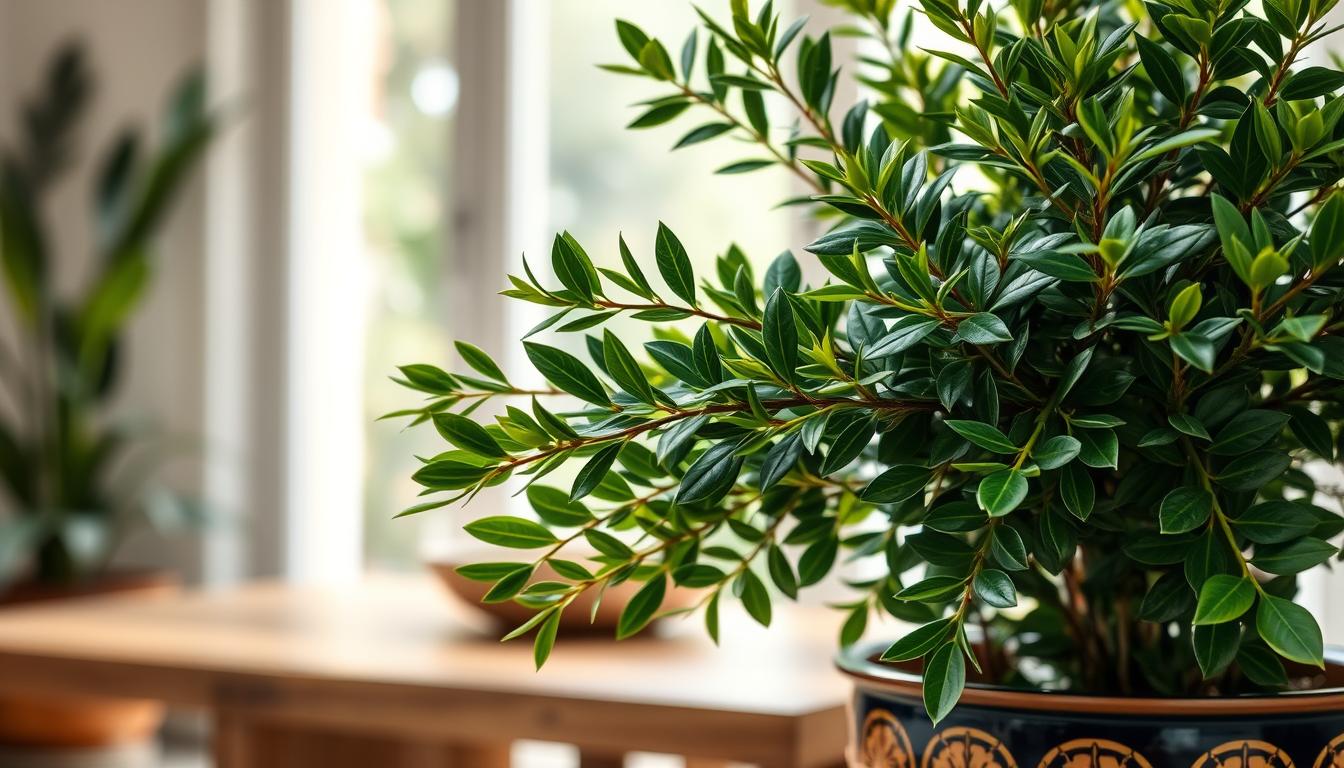
A bay tree, also called sweet bay or bay laurel, is an evergreen Mediterranean shrub or small tree with glossy, aromatic leaves used in cooking. The University of Wisconsin Horticulture Extension describes it as a medium-sized tree that can be trained as a single-trunked tree or a multi-trunked shrub, is relatively slow growing, and tolerates pruning and topiary well. That tolerance is why bay is so popular as clipped balls, pyramids and lollipop standards by a front door.
Several unrelated plants share the common name “bay”, so make sure you are buying Laurus nobilis if you want leaves for the kitchen. If you also grow herbs, see our guide to growing rosemary indoors.
Where to Plant a Bay Tree for Easy Bay Tree Care
The RHS recommends well-drained soil and a sheltered position in sun or part shade. Shelter matters more than sun: frost and cold, drying winds are what scorch the leaves. A spot against a south- or west-facing wall, or behind a fence or hedge, gives the best protection.
- Light: full sun or part shade outdoors.
- Soil: well-drained. The RHS lists waterlogging as a leading cause of leaf spots and yellowing.
- Shelter: out of cold winds, and away from frost pockets.
Plants in the ground are hardier than those in pots, because their roots are insulated. In warm climates the University of Wisconsin notes that light shade can suit bay better than baking afternoon sun.
Bay Tree Care in Pots
Bay is an excellent container plant, and bay tree care in pots is simple. For a bay tree in a pot, the RHS suggests soil-based, peat-free compost, or peat-free John Innes No 2 or a soilless compost with extra grit. Choose a pot with drainage holes, and raise it on pot feet or bricks so water drains freely and the pot is less likely to crack in frost.
- Start with a pot only a little larger than the root ball, and move up gradually.
- Repot every two years in spring. If you do not want a bigger pot, the RHS advises lifting the plant, removing about a third of the roots, and replacing the top 5cm (2in) of compost.
- Use a heavy pot or add stones in the base, since a tall clipped standard can topple in the wind.
For repotting steps, see how to repot a plant, and for compost basics, our soil mix guide. More ideas for planters are in the best plants for container gardening on patios.
Watering: Bay Tree Care Basics
The RHS advises watering container-grown bay moderately and warns that overwatering can damage the roots. Water when the top of the compost feels dry, then let the excess drain away. Do not leave the pot in a full saucer. The University of Wisconsin adds that the soil should never dry out completely, so aim for steady, light moisture rather than extremes.
In winter, water far less. A bay kept in a cool room stays dormant and needs only enough to keep the soil barely moist, according to Wisconsin Horticulture. For general watering technique, see our watering guide and signs you are overwatering.
Feeding and Bay Tree Care Through the Year
For potted plants, the RHS recommends controlled-release granules or a liquid feed every two weeks from mid-spring to late summer. Stop feeding in autumn and winter. In the garden, bay tree care is even easier, since plants in the ground rarely need feeding if the soil is reasonable, though a mulch of garden compost in spring helps retain moisture. Use our mulch calculator to work out how much you need.
Always follow the product label, and see fertilizing indoor vs outdoor plants for more detail.
Pruning and Clipping: Bay Tree Care for Shape
Bay tolerates clipping well, but the technique differs by use, according to the RHS:
- Topiary shapes: trim in summer with secateurs, cutting new shoots to a bud that faces the direction you want growth to go. Clipping shoot by shoot is a core part of bay tree care for shaped plants.
- Shrubs: cut back to a lower leaf or bud in spring or summer.
- Winter-damaged tips: prune lightly in late spring once the risk of frost has passed.
- Hard pruning: mature bays accept it, but they recover slowly, so spread it over two or three seasons in late spring.
The University of Wisconsin also notes that pruning is best done when the tree is not actively growing. For general technique, see pruning basics.
Winter Bay Tree Care
The RHS says bay is generally hardy to about -5°C (23°F), and can withstand lower temperatures in sheltered positions, but frost and cold winds can damage the foliage. To protect your plant:
- Cover the foliage with horticultural fleece in cold snaps.
- Wrap pots in hessian or reused bubble wrap to stop the roots freezing.
- Stand pots on feet or bricks so water does not freeze in the base.
- If temperatures fall below -5°C, the RHS suggests moving pots into a garage or cool room, up to 10°C (50°F).
In colder regions the University of Wisconsin says bay is not hardy and should be grown in a container and brought indoors for winter. It lists outdoor growing in zones 7a to 10b. Move plants out in spring and back in autumn once temperatures are consistently above freezing. A cool room needs little light, but in a warmer room give it as much sun as possible.
Ground-grown plants may lose the current season’s growth to cold or wind. The RHS advises pruning this out in spring. For other plants that cope with cold, see outdoor plants that survive British winters and winter plants for outside.
Common Bay Tree Care Problems
| Problem | Likely Cause | What to Do |
|---|---|---|
| Yellow leaves | Waterlogging or cold damage are more common than nutrient shortage (RHS). Some older leaves shed naturally | Check drainage and watering, protect from cold, feed container plants in the growing season |
| Brown or scorched leaf edges | Frost or cold, drying wind | Shelter the plant and prune damaged tips in late spring |
| Leaf spots | Waterlogging or wet weather, especially in old compost (RHS) | Repot in spring into fresh, well-drained compost |
| Curled, thickened, yellowing leaf edges | Bay sucker | Usually tolerated, see below |
| Sticky leaves with black coating | Scale insects and sooty mould | Inspect stems and undersides, and treat scale |
| Peeling bark | Often follows harsh winters, cause uncertain (RHS) | No action if growth is normal. Cut back to green wood if dead |
For a deeper look at yellowing, read our full guide to bay tree yellow leaves.
Bay Sucker and Scale
The RHS says bay sucker causes leaves to thicken, curl downwards at the margins and turn yellow, often with only half of the leaf affected. The affected areas later dry and turn brown, and small greyish-white insects covered in white wax may be visible underneath. The RHS adds that long-term plant health is usually unaffected, that control is usually unnecessary, and that removing distorted leaves may cause more damage than the insect. Encouraging natural predators such as birds, ladybirds and ground beetles helps keep damage low.
Scale insects suck sap and excrete honeydew, which allows sooty moulds to grow. The University of Wisconsin notes scale can be a problem, particularly indoors, where it appears as bump-like insects on leaves and woody parts. Check plants that spend winter indoors regularly.
Is Bay Laurel Safe for Pets?
The ASPCA lists bay laurel (Laurus nobilis) as toxic to dogs and cats. The toxic principles are eugenol and other essential oils, and signs include vomiting and diarrhoea. Eating large amounts of whole leaves can also cause an intestinal obstruction. Keep potted bays out of reach of pets, and dispose of clippings safely. See our guides to cat-friendly and dog-friendly plants. If you think a pet has eaten bay, contact your vet.
Harvesting Bay Leaves
Fresh mature leaves can be used in cooking, but the University of Wisconsin notes that drying concentrates the oils, and says to harvest in mid summer to maximise flavour. Bay is best in long-cooking dishes such as stews, roasts, casseroles and soups. Take leaves sparingly from a young plant, so it keeps enough foliage to grow.
How to Propagate a Bay Tree
The RHS suggests semi-ripe cuttings in late summer or softwood cuttings in early summer. Seed is possible, but it forms only on female plants. If you want to try seed, collect it in autumn, remove the fleshy casing and sow it as soon as possible. Layering often works but is slower than cuttings. Bay is slow growing, so expect patience to be needed.
Frequently Asked Questions
Can a bay tree grow in a pot?
Yes. Use peat-free, soil-based compost with good drainage, water moderately, feed fortnightly from mid-spring to late summer, and repot every two years in spring.
How often should I water a bay tree?
Water moderately when the top of the compost feels dry. The RHS warns that overwatering damages roots, and winter watering should be much lighter.
How cold can a bay tree tolerate?
The RHS says bay is generally hardy to about -5°C (23°F), and can cope with lower temperatures in sheltered spots. Protect pots and foliage during harder frosts.
Why are my bay tree leaves turning yellow or brown?
The RHS says waterlogging and cold weather damage are more common causes than nutrient deficiency, although older leaves do shed naturally. Bay sucker can also cause curled, yellow leaf edges. See our bay tree yellow leaves guide.
Is bay laurel poisonous to dogs and cats?
The ASPCA lists it as toxic to dogs and cats. Keep it out of reach and contact your vet if a pet eats it.
Final Thoughts
Good bay tree care comes down to shelter, drainage and restraint. As a botanist, my advice is to resist the urge to overwater or overfeed, protect the plant from winter wind, and clip with secateurs rather than shears. Do that and a bay will reward you with glossy leaves for years. For more ideas, explore Patch Plants and our drought-resistant plants.
Sources: RHS, Bay tree growing guide; RHS, Bay sucker; University of Wisconsin Horticulture Extension, Sweet bay; ASPCA, Bay laurel.