Amaryllis after flowering needs three things: cut off the faded flowers, keep the leaves growing so the bulb can recharge, and give it a rest before the next bloom. Do not throw the bulb away. Extension services agree that the leaves produce the energy for next year’s flowers, so keep them green, water and feed through spring and summer, then rest the bulb in a cool spot for roughly 8 to 12 weeks before restarting.
I am Sawera Shahid, a botanist at Patch Plants. This guide explains how to cut the stalk, how to reduce watering and resume fertilizing at the right times, when to move the pot outdoors, how dormancy works, when to repot and why a bulb sometimes fails to flower again.
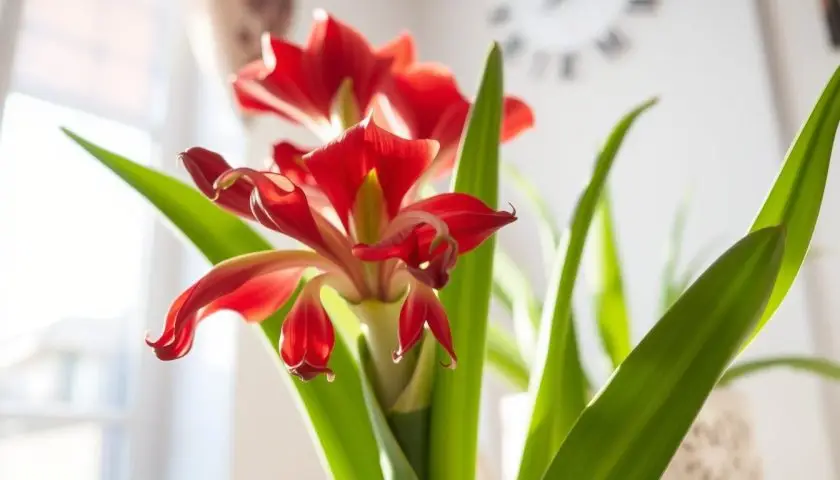
What to Do With Amaryllis After Flowering: Quick Plan
| Stage | What to Do |
|---|---|
| Flowers fade | Cut off faded flowers so the plant does not set seed |
| Stalk turns yellow | Cut the stalk back, but leave the leaves |
| Spring and summer | Bright light, regular watering and feeding, outdoors after frost |
| Late summer to autumn | Stop feeding, reduce watering and begin the rest period |
| Rest period | Cool place, roughly 8 to 12 weeks |
| Regrowth | Bright light, resume watering and feeding |
Cutting Spent Flowers and the Flower Stalk
The University of Illinois Extension says to cut off faded flowers to prevent seed formation, and to wait to remove the flower stalk until it begins to yellow, because it can photosynthesise until then. The University of Minnesota Extension says the same: do not remove the stalk until it has turned yellow, because green stalks and leaves keep storing energy for next year’s blooms. The RHS advises cutting spent flower spikes down to the base. The University of Maryland Extension adds that top-heavy stalks may need staking, with a support inserted carefully so the bulb is not injured.
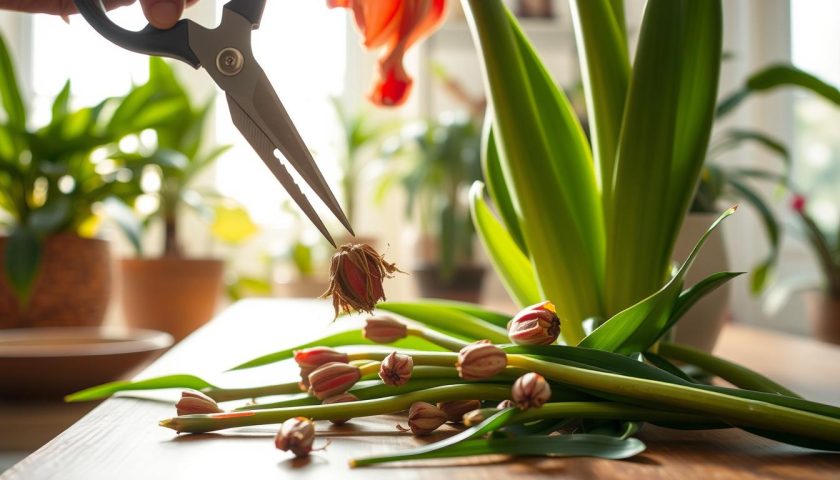
Keep the Leaves: Why Foliage Matters for Amaryllis After Flowering
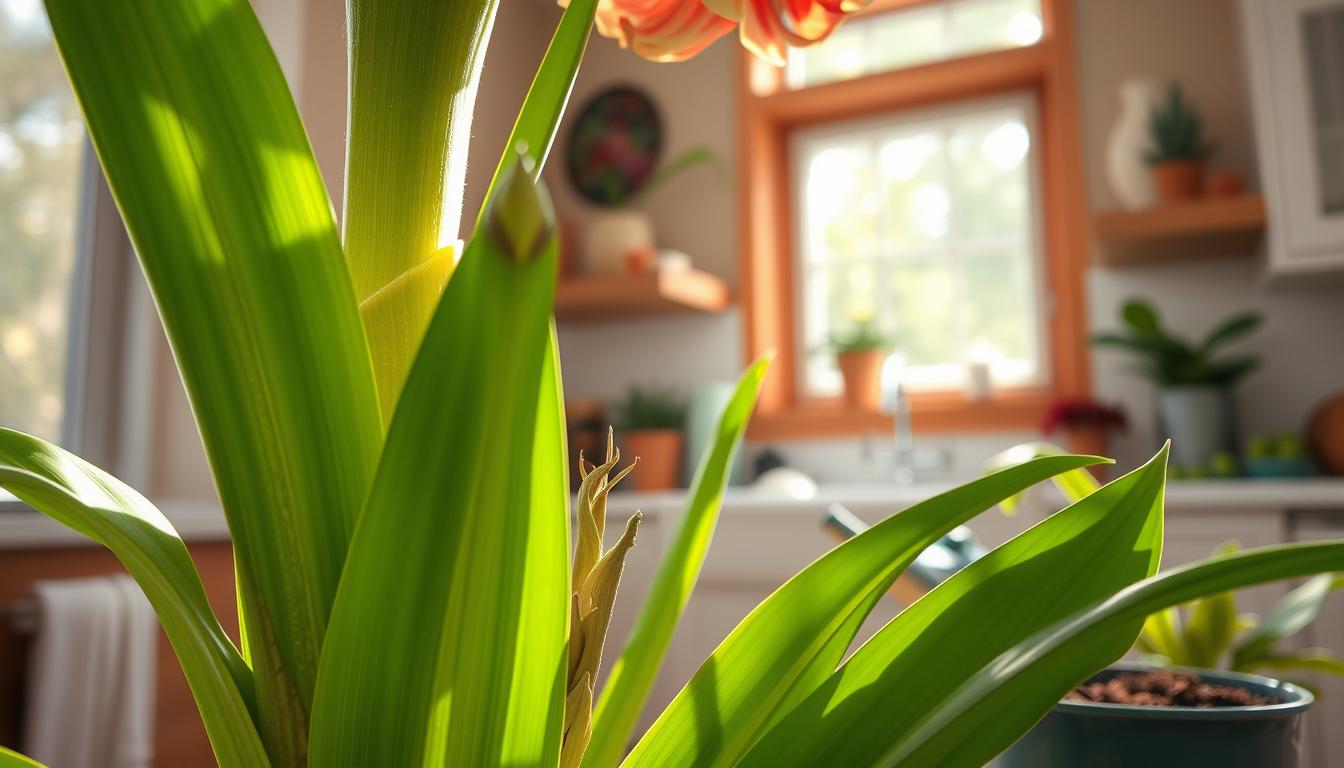
For amaryllis after flowering, the leaves are the plant’s engine. The University of Maryland Extension says the foliage should not be cut, because the leaves are needed to produce the energy the bulb needs to rebloom. The University of Illinois Extension says to remove leaves only once they turn yellow during dormancy. Do not braid, tie down or cut healthy green leaves.
Light matters too. The University of Minnesota Extension suggests the sunniest spot possible indoors after flowering, and the University of Illinois says a southern exposure is likely best. Rotating the pot every few days is an easy way to keep the leaves growing straight, though that is general practice rather than a source-backed rule.
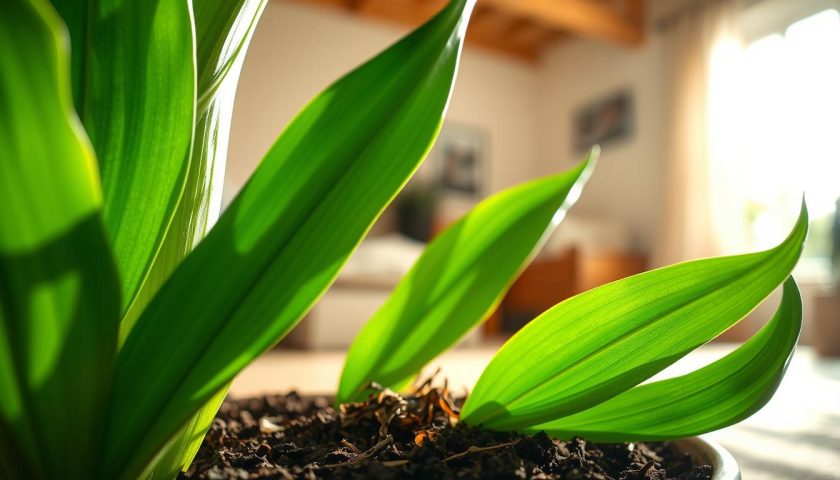
Reduce Watering and Resume Fertilizing After Flowering
Watering and feeding change through the year, so the plan is to resume fertilizing while the leaves grow and to reduce watering when growth slows.
- Watering: the University of Illinois Extension says to wait until the top two inches of soil feel dry, and to keep soil moist, not soggy. The University of Maryland Extension says to water less once the flowers fade. Always use a pot with drainage holes and empty saucers.
- Resume fertilizing: the University of Maryland Extension says after flowering is the time to fertilize, using a standard houseplant fertilizer as directed until dormancy begins. The University of Illinois suggests monthly feeding, while the RHS suggests a balanced liquid fertiliser weekly during active growth. The advice varies, so follow your product label.
- Stop feeding: the RHS says to stop feeding when the plant moves to its cool rest period.
For general watering technique, see our watering guide.
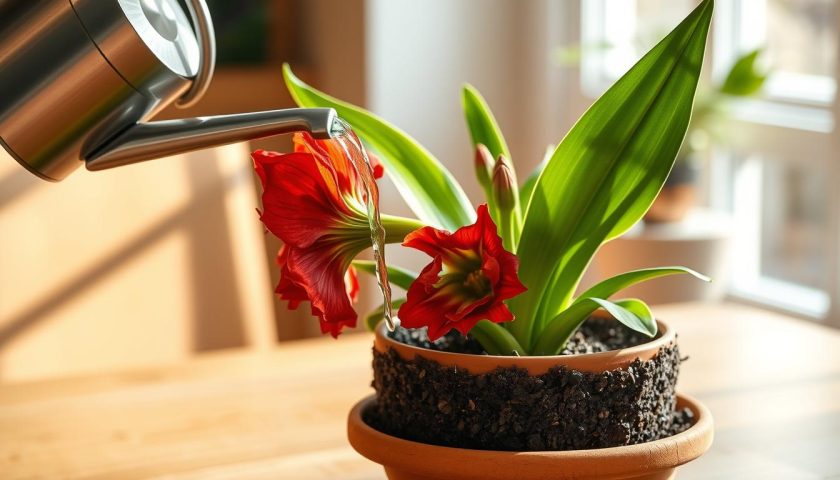
Moving Amaryllis Outdoors for Summer After Flowering
The RHS suggests moving pots outside or into a greenhouse for summer, shading them from strong sun, and watering regularly. The University of Illinois and University of Maryland extension services say to wait until the danger of frost has passed, start in filtered light or partial sun, and gradually move to brighter conditions. The University of Illinois suggests at least six hours of sun daily once acclimated, and says to bring it back indoors before the first fall frost, because it will not survive freezing. You can leave the plant in its pot, or sink the pot into a sunny bed.
Dormancy: Resting the Bulb After Flowering
Dormancy is the part of amaryllis after flowering that most people skip. The University of Illinois Extension says dormancy is optional, and controls when the plant blooms. Extension services and the RHS give slightly different temperatures, so the safe approach is a cool, dry, dark place and the shortest range that fits your home:
| Source | Rest Temperature | Rest Length |
|---|---|---|
| RHS (Method 1) | About 13°C (55°F), well lit, semi-dormant | 8 to 10 weeks |
| RHS (Method 2) | Cool place such as a garage, no light needed | 1 to 2 months |
| University of Illinois Extension | 45 to 55°F | About 8 to 12 weeks |
| University of Maryland Extension | 40 to 50°F, withhold water until leaves yellow | About 6 to 8 weeks |
| University of Minnesota Extension | About 50 to 60°F, dark and dry | 8 to 12 weeks |
The University of Minnesota Extension says to let the leaves turn brown and dry before cutting them off. Keep the bulb frost-free, since all of these ranges are above freezing. Do not water during the rest period, according to the University of Illinois. If new growth appears sooner, move the pot to a sunny window and resume watering and feeding.
Restarting Growth and Reblooming Time
After the rest, the RHS says to cut any remaining old leaves to 10cm (4in) above the bulb’s neck, replace the top 2.5 to 5cm (1 to 2in) of compost, and start growing as you would for a new bulb. The University of Illinois Extension says flowers usually develop about 4 to 6 weeks after the dormant period, and the RHS says bulbs flower about six to eight weeks after planting. So plan roughly 4 to 8 weeks from restart to bloom, depending on the source and your conditions.
If you want flowers around Christmas, count back from your target date. See our guide to planting amaryllis bulbs and the full amaryllis care guide.
Repotting Amaryllis After Flowering and Dividing Offsets
Do not repot every year. The University of Illinois says to repot only every 3 or 4 years, ideally after dormancy, and notes that amaryllis blooms best when slightly potbound. The RHS says to repot every two or three years from January to March after flowering. Choose a pot about one inch wider than the bulb’s widest part and about twice its height. The University of Illinois says to leave one-third to one-half of the bulb visible above the soil, while the RHS says to leave two-thirds of the bulb above the compost. Keep the neck above the surface to help prevent rot.
The RHS advises separating offsets when repotting, choosing those with their own roots, potting each one individually in free-draining, peat-free compost at about 21°C (70°F). Offsets take three to four years to produce a flowering bulb. See how to repot a plant for general technique.
Troubleshooting Amaryllis After Flowering
| Problem | Likely Cause | What to Do |
|---|---|---|
| Leaves but no flowers | Not enough energy stored, or no rest period | Give bright light and feeding while leaves grow, then rest the bulb |
| Yellow leaves during growth | Overwatering or poor drainage | Check the compost and drainage |
| Yellow leaves in autumn | Natural, as the plant heads into dormancy | Reduce watering and rest the bulb |
| Stalk falls over | Top-heavy flowers | Stake loosely, taking care not to injure the bulb |
| Soft or mushy bulb | Rot from too much moisture | Cut away damaged tissue and repot in fresh, free-draining mix. Discard a bulb that is soft throughout |
See signs you are overwatering for more.
Are Amaryllis Bulbs Safe for Pets?
No. The ASPCA lists amaryllis as toxic to dogs and cats. The toxic principle is lycorine and related compounds, and the signs include depression, diarrhoea, abdominal pain, excessive drooling, loss of appetite, tremors, and vomiting in dogs and cats. Keep bulbs and plants out of reach, and contact your vet or the ASPCA Poison Control line on (888) 426-4435 if you think a pet has eaten any. A consultation fee may apply. See poinsettia toxic to cats for how amaryllis compares with other holiday plants, and our cat-friendly and dog-friendly plant guides.
Frequently Asked Questions
Should I cut the leaves off amaryllis after flowering?
No. Cut the faded flowers and, once it turns yellow, the stalk. Keep the leaves, because they produce the energy for next year’s flowers. Remove them only when they yellow during dormancy.
How do I reduce watering for amaryllis after flowering?
Water less once the flowers fade, and wait until the top two inches of soil feel dry. In late summer, reduce watering further and stop completely during the rest period.
When should I resume fertilizing amaryllis?
After flowering, while the leaves grow. Use a houseplant fertilizer as the label directs, and stop feeding when the plant moves into its rest period.
How long does amaryllis need to rest before blooming again?
About 8 to 12 weeks in a cool, dark, dry place according to the University of Illinois and University of Minnesota extension services. The University of Maryland says 6 to 8 weeks.
Are amaryllis poisonous to cats and dogs?
Yes. The ASPCA lists amaryllis as toxic to dogs and cats. Keep bulbs and plants out of reach.
Final Thoughts
Amaryllis after flowering is not finished, it is simply between shows. As a botanist, my advice is to keep the leaves, feed and water through spring and summer, then give the bulb a proper rest. That patience is what brings the next set of trumpet flowers. For more help, explore Patch Plants and our indoor plants section.
Sources: RHS, Hippeastrum growing guide; University of Illinois Extension, How to take care of amaryllis and get them to rebloom; University of Maryland Extension, Amaryllis care; University of Minnesota Extension, Growing and caring for amaryllis; ASPCA, Amaryllis.