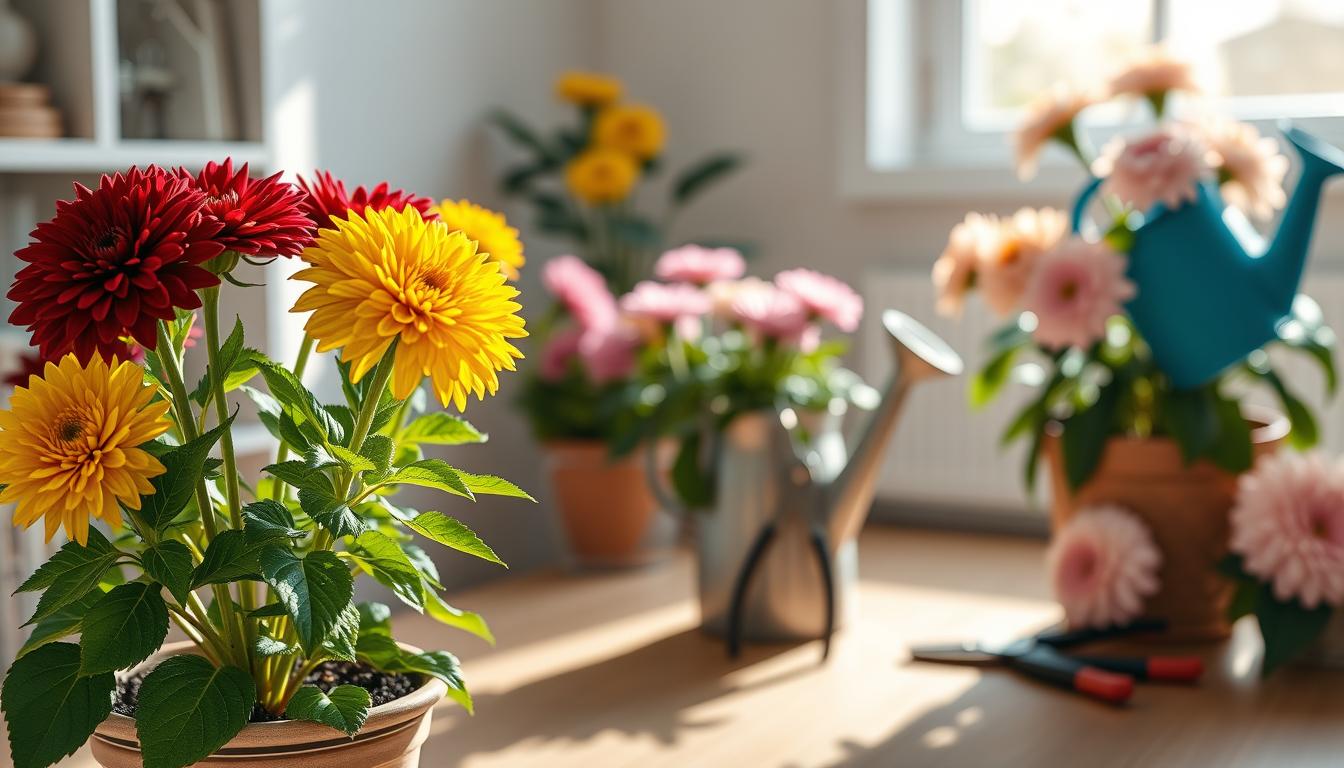
A mums potted plant stays in bloom longest with at least six hours of direct sun, a daily soil check with water given as soon as the top inch is dry, a pot with drainage holes, and regular deadheading of faded flowers. Container mums dry out fast in warm autumn weather, sometimes needing water twice a day, so missed watering is the number one reason they wilt and brown early.
Chrysanthemums are the classic autumn container flower, filling porches, steps and balconies with rich color just as summer plants fade. This guide covers how to choose a healthy mum, which pot and mix to use, how to water and position it, deadheading and feeding, troubleshooting, and how to try saving it for next year.
Patch Plants guides are researched and written by Sawera Shahid, a botanist with an MPhil in Botany who has more than five years of gardening and plant-care writing. We base our advice on university extension research, so these tips are tested rather than guessed. For more seasonal jobs, see our autumn plant care guide.
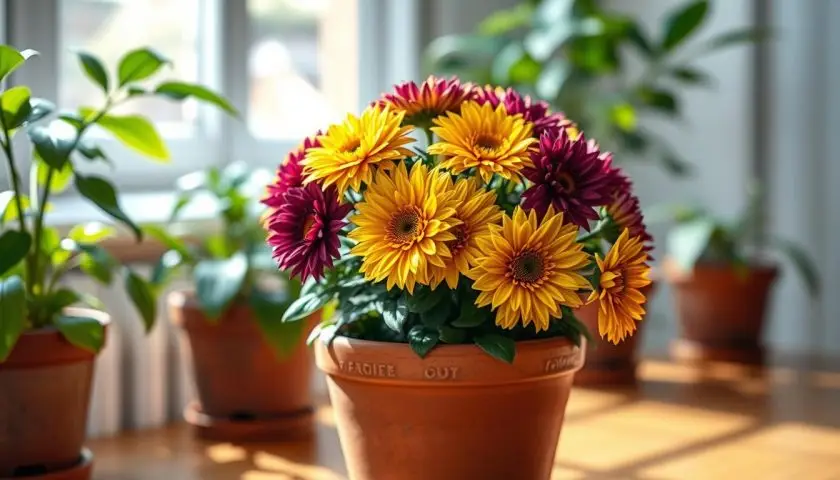
Mums Potted Plant Care at a Glance
| Need | What Potted Mums Want |
|---|---|
| Light | 6+ hours of direct sun a day |
| Water | Check daily; water when the top inch is dry, until it drains |
| Pot | Drainage holes; repot if root-bound |
| Soil | Light, well-draining potting mix |
| Deadheading | Remove faded flowers regularly |
| Feeding | Usually not needed for autumn-bought plants in bloom |
| Frost | Shelter on frosty nights to extend flowering |
| Pets | Toxic to cats, dogs and horses |
Garden Mums vs Florist Mums
Not all potted mums are the same, and knowing which you have tells you what to expect.
- Garden (hardy) mums are the bushy, dome-shaped plants sold outdoors in autumn. They are perennials in many cold climates and can come back the following year if planted early enough.
- Florist mums are sold indoors as gift plants, often wrapped in foil. They are bred for a single show of flowers and usually are not winter-hardy.
Either type makes a great seasonal display. Just treat florist mums, and garden mums bought in full bloom late in the season, as long-lasting seasonal color rather than permanent plants.
How to Choose a Healthy Potted Mum
- Buy plenty of buds: choose plants with a few open flowers and lots of tight, colored buds. They will bloom for weeks longer than plants already fully open.
- Check the leaves: look for dark green, healthy foliage with no yellowing, spots or webbing.
- Check the base: stems should be firm, and the soil should not be soggy or smell sour.
- Look underneath: roots poking from the drainage holes mean the plant is root-bound and will dry out fast.
If you hope to keep a mum for next year, Ohio State University Extension Master Gardeners note that plants which have not yet formed flower buds have a better chance of surviving winter than those already in full bloom.
Choose the Right Pot, Mix and Spot
Repot Root-Bound Mums
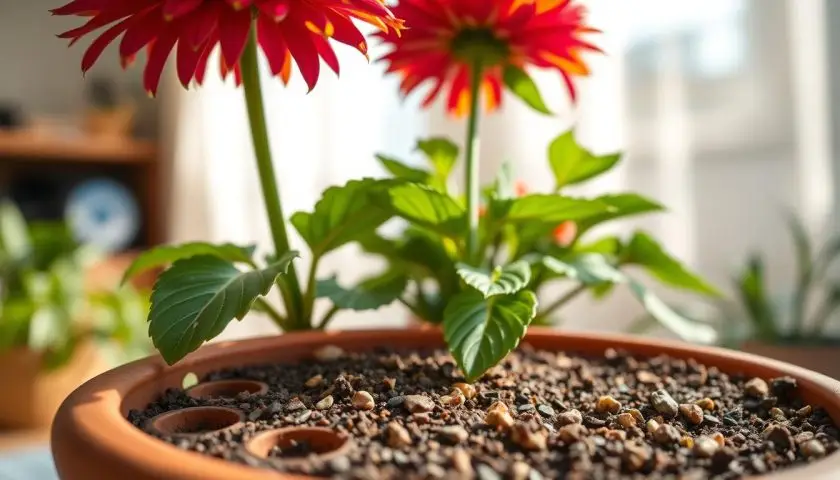
NC State Extension notes that mums are often root-bound when bought, which is why they wilt so quickly. Moving them into a larger container, or into the ground, gives the roots more soil to hold water.
- Choose a pot 2–4 inches wider than the nursery pot, with drainage holes
- Use fresh, well-draining potting mix, not garden soil
- Gently loosen circling roots and plant at the same depth
- Water thoroughly after repotting
If you use a decorative pot or basket without holes, keep the mum in its nursery pot inside it and tip out any water after watering. Remove foil wrappers, which trap water around the roots.
Give Them Full Sun
NC State and Ohio State both recommend at least six hours of direct sun a day. Mums in shade produce fewer flowers, and buds may not open. As autumn days shorten, NC State advises checking for new shade from trees or buildings and moving pots if needed.
Shelter from Wind and Heavy Rain
Wind tips over top-heavy pots and dries them fast, and roof runoff can waterlog the soil. A sunny porch, a spot against a wall, or grouped containers all help. Our guides to container gardening on patios and year-round balcony plants have more ideas for pots outdoors.
How to Water a Mums Potted Plant
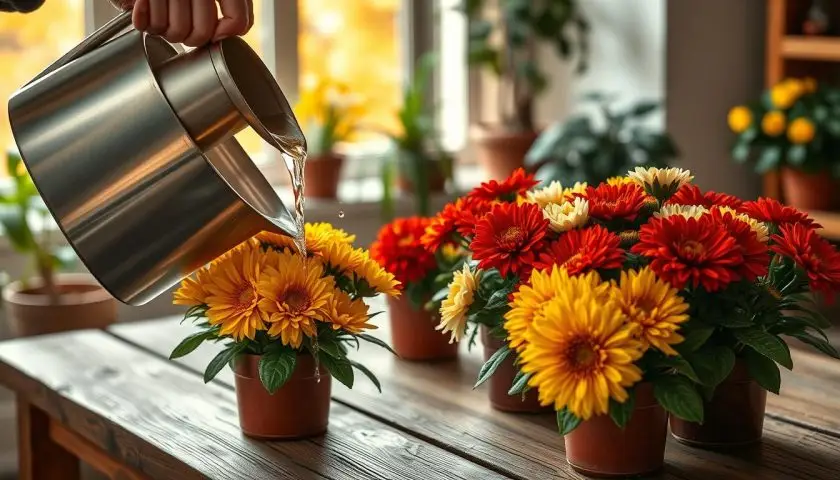
Watering is the key to long-lasting potted mums. NC State notes that in hot early-autumn weather, container mums may need water up to twice a day.
- Check daily: push a finger about 1–2 inches into the soil. If it feels dry, water.
- Water deeply: water slowly at the base until it runs from the drainage holes, so the whole root ball is soaked.
- Water the soil, not the flowers: NC State advises watering early in the day and aiming at the soil, which helps prevent disease.
- Empty saucers so roots never sit in water.
A badly wilted, bone-dry mum can be revived by standing the pot in a bucket of water for 20–30 minutes, then letting it drain. As days get cooler and shorter, NC State notes mums need less water, and overwatering becomes the bigger risk. Our complete watering guide and our article on the worst times to water your plants explain more.
Deadheading and Feeding
Deadheading keeps the display tidy and extends flowering. Both NC State and Ohio State recommend removing spent flowers. Pinch or snip each faded bloom just above the next bud or healthy leaf, and remove broken stems and dead leaves at the same time.
Mums bought in bloom in autumn usually do not need fertilizer. NC State recommends feeding mums in spring and mid-summer, when they are building plants and buds, not when already flowering. If you keep a mum for next year, start feeding again when new growth appears in spring. Our pruning basics guide covers clean cuts and tools.
Protect Mums from Frost
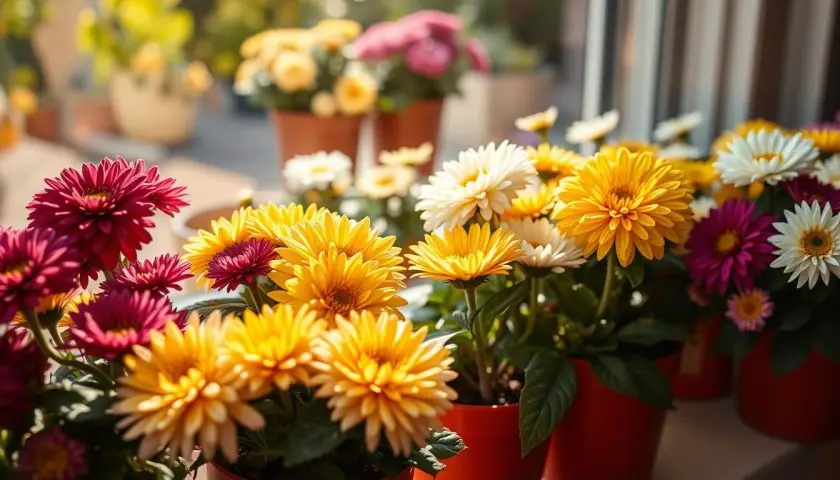
Light frost can damage open flowers, and a hard freeze ends the display. To extend the season:
- Move pots into a garage, porch or shed on frosty nights, then back into the sun the next day
- Cover plants with frost fleece or an old sheet if they are too heavy to move
- Group pots against a sunny wall, where it stays a little warmer
Mums can be brought indoors briefly as a table centerpiece, but warm, dry rooms shorten flowering. Keep them in a cool, bright spot near your sunniest window, and move them back outside when you can.
Common Potted Mum Problems
Wilting
If the soil is dry, the plant is thirsty; soak it thoroughly. If it wilts in wet soil, the roots may be damaged by waterlogging. Check drainage holes and let the soil dry slightly.
Brown, Dead Flowers in the Middle
Usually caused by the plant drying out repeatedly. Deadhead the brown flowers, repot if root-bound, and water more consistently.
Yellow Lower Leaves
Often from overwatering, a root-bound plant, or too little sun. A few yellow lower leaves late in the season are normal. Our guide to yellow leaves on plants explains other causes.
Buds Not Opening
Usually too little sun, drought stress, or early cold. Move the plant to full sun and keep watering consistent.
Pests
Aphids and spider mites are the most common. Rinse them off with a strong spray of water, or use insecticidal soap following the label. See our guides to spider mites on plants and keeping pests away from outdoor plants.
Can You Keep Potted Mums for Next Year?
Garden mums can survive winter, especially if they go into the ground early. Ohio State notes that mums can be planted from early spring until about six weeks before frost, and hardy mums can last around three years in the garden.
- Plant in the ground: the best option for hardy garden mums. Plant in a sunny, well-drained spot as early in autumn as possible.
- After a hard frost: NC State advises cutting plants back after frost kills the foliage. Ohio State suggests removing the dead foliage before winter.
- Mulch: both recommend mulching to insulate roots and protect them from freeze-thaw cycles.
- Pots: roots in containers are more exposed to cold. Move pots into an unheated garage or shed for winter and keep the soil barely moist, then return them outside in spring.
In spring, cut away dead stems, start regular watering and feeding when new shoots appear, and pinch the stems when they reach about 6 inches tall to keep them bushy. Ohio State recommends pinching again at about 12 inches. NC State advises finishing pinching by the end of July so flower buds can form for autumn.
Are Mums Safe for Pets?
No. The ASPCA lists mums (chrysanthemums) as toxic to dogs, cats and horses. They contain sesquiterpene lactones and pyrethrins, which can cause vomiting, diarrhea, drooling, incoordination and skin irritation. Keep potted mums where pets cannot chew them, and call your vet if they do. Our guides to cat-friendly plants and dog-friendly plants list safer choices.
Frequently Asked Questions
How often should I water a mums potted plant?
Check the soil every day and water when the top inch is dry. In warm early-autumn weather, container mums may need water once or even twice a day; in cool weather, much less.
Do potted mums need full sun?
Yes. Give them at least six hours of direct sun a day. In shade, they flower less and buds may not open.
Should I deadhead potted mums?
Yes. Removing faded flowers keeps the plant tidy and helps the remaining buds open, extending the display.
Can I keep potted mums indoors?
Briefly. They can brighten a table for a few days, but warm, dry rooms shorten flowering. Keep them in a cool, sunny spot and move them back outdoors when you can.
Will my potted mums come back next year?
Hardy garden mums can return if planted in the ground early enough, cut back after frost and mulched. Florist mums and late-bought plants in full bloom usually do not survive winter.
Final Thoughts
A mums potted plant rewards a few simple habits: full sun, a daily soil check with deep watering when dry, a pot with drainage, and regular deadheading. Repot root-bound plants, protect them from hard frost, and your chrysanthemums can stay colorful for weeks, and hardy types may even return next autumn.
Find more seasonal ideas in our outdoor plants collection, and check our garden calendar for what to do each month.