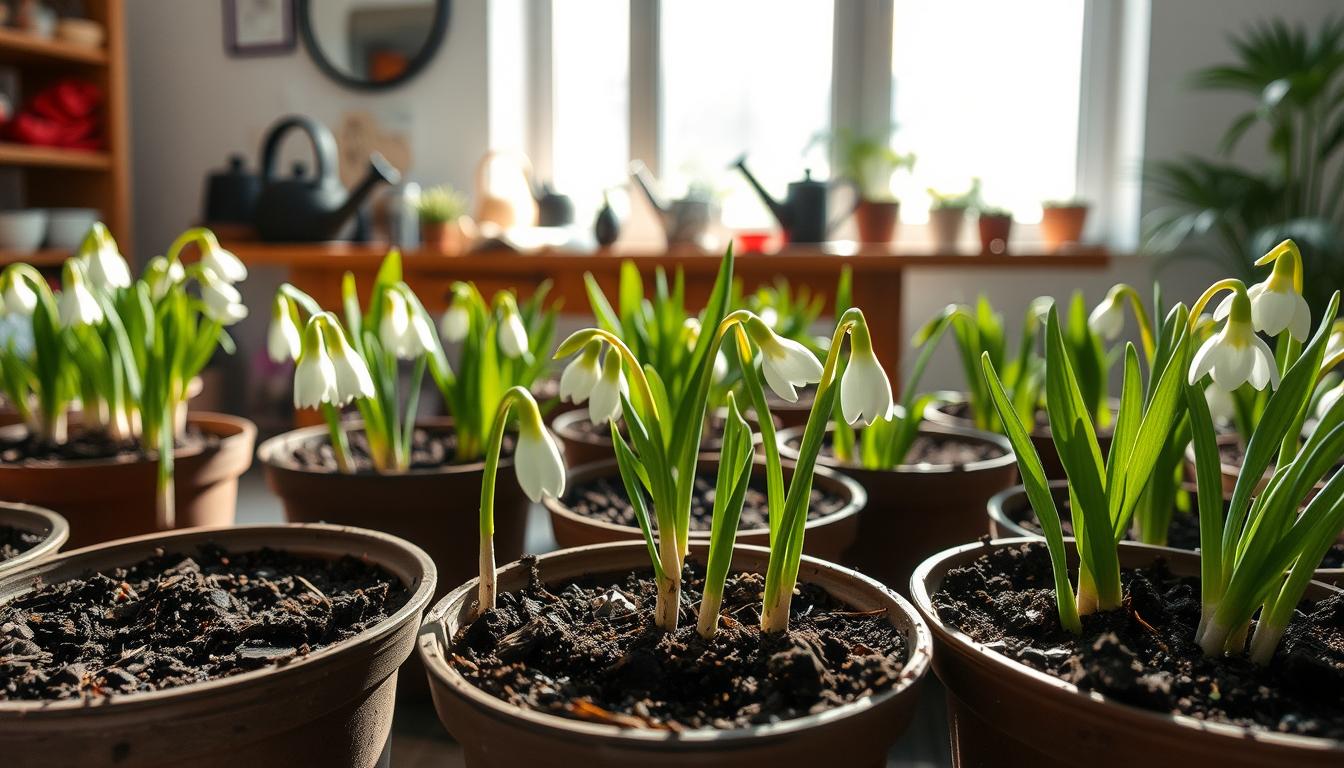
Forcing paperwhites is one of the easiest ways to get fragrant indoor flowers in winter. Set paperwhite narcissus bulbs in pebbles or soil with the pointed tip up, keep the water just below the base of the bulbs, give them bright light, and expect flowers roughly 3 to 6 weeks later. Unlike tulips and hyacinths, paperwhites need no chilling period, which is why they are so popular for holiday displays.
I am Sawera Shahid, a botanist at Patch Plants. This guide explains how forcing paperwhites works, how to plant them in water or soil, how to stop the stems flopping, what to do afterwards and why you should keep them away from pets.
What Are Paperwhites?
Paperwhites are a type of Narcissus, closely related to daffodils, with clusters of small white flowers on tall stems. The RHS identifies the fragrant paper-white daffodil (Narcissus papyraceus) as a forced bulb for indoor flowering. The University of Illinois Extension notes that paperwhites “don’t have a chilling requirement like many other bulbs”, so you can plant them at any point in the autumn or winter and skip the fridge.
The scent is strong. The University of Illinois Extension says some varieties, such as ‘Ziva’, have a musky scent that some people dislike, and suggests ‘Inbal’, ‘Wintersun’ or ‘Grand Soleil d’Or’ for a milder fragrance. If you are also planning other winter bulbs, see amaryllis care and planting amaryllis bulbs.
When to Start Forcing Paperwhites
The RHS suggests planting paperwhites in September for flowers at Christmas or New Year. Extension services give a quicker timeline once the bulbs are growing: the University of Illinois says 4 to 6 weeks, and the University of Wisconsin says 3 to 5 weeks. Plan for roughly 3 to 6 weeks, depending on how warm and bright your room is. For continuous flowers all winter, the University of Illinois suggests planting new bulbs every 10 days.
What You Need for Forcing Paperwhites
- Bulbs: large, firm paperwhite bulbs with no soft spots.
- Container: a shallow bowl or pot. The University of Wisconsin says a pot without drainage holes is fine when using pebbles.
- Medium: pebbles, gravel, marbles, sand or potting soil.
- Water: clean water, kept just below the bulbs.
- Light: a bright windowsill, or a lamp. See grow lights for indoor plants.
How to Plant Paperwhites in Pebbles and Water
- Add at least 1 to 2 inches of gravel or stones to the container, according to the University of Illinois Extension.
- Place the bulbs on top, flat end down, with the pointed end up. The University of Wisconsin says to fit as many as will go without touching each other. The University of Illinois suggests about an inch apart for a dense display.
- Add more stones around the bulbs so they stay upright, leaving the tips showing.
- Add water until it just reaches the bottoms of the bulbs. The University of Wisconsin warns: “If water touches the bulbs, they will rot.”
- Keep the water at that level as it drops.
How to Plant Paperwhites in Soil
The University of Illinois Extension suggests filling the pot about two-thirds full with potting soil, setting the bulbs in, and covering them so only the tips are visible. Keep the soil moist, not soaking. A pot with drainage holes helps avoid rot. Soil-grown paperwhites need a little more watering attention than pebble-grown ones, but they often stay slightly more stable as the stems get taller. For general watering advice see our watering guide.
Light and Temperature for Forcing Paperwhites
Extension sources give slightly different rooting advice, so choose one approach:
- University of Illinois: root at 50 to 60°F for a week or two, then move to a warm area in the low 70s°F. Keep plants in the 60s°F to avoid lanky growth.
- University of Wisconsin: root in a cool, dark spot at 45 to 50°F for about three weeks, then move to a cool, sunny spot.
Both agree on the principle: cooler conditions make for sturdier stems, and warmth speeds flowering. The University of Wisconsin says to move plants to a cooler spot and reduce watering to slow growth, or to a warmer place to speed flowering. Give as much bright light as possible while the plants are growing, then move them out of direct sun once the flowers open to prolong bloom, as the University of Illinois advises. See our indoor light guide.
How to Stop Paperwhites Flopping
Tall, floppy paperwhites are the most common complaint when forcing paperwhites. The University of Illinois Extension suggests:
- Light and cool temperatures: more light and cooler rooms give sturdier stems.
- Support: stake or tie the stems if they start to flop. The University of Wisconsin also recommends staking.
- The alcohol method: once shoots are 1 to 2 inches tall, replace the water with a 4 to 6% alcohol solution. The University of Illinois, citing Cornell research, says this can reduce plant height by one-third to one-half while keeping flower size, fragrance and longevity. It suggests 1 part 70% rubbing alcohol to 11 parts water, or 1 part hard liquor (about 40% alcohol) to 7 parts water. Avoid beer and wine, because the sugars can promote mould and bacteria, and do not use more alcohol than this, since it harms plants.
Paperwhites Timeline
| Stage | What to Do | Approximate Timing |
|---|---|---|
| Planting | Set bulbs pointed end up, water just below the bases | Day 1 |
| Rooting | Keep cool (45 to 60°F, depending on source) | 1 to 3 weeks |
| Growth | Bright light, cooler room, check water daily | Weeks 2 to 5 |
| Flowering | Move out of direct sun to prolong blooms | 3 to 6 weeks after planting |
| After flowers fade | Usually discard the bulbs (see below) | 10 days to several weeks of bloom |
What to Do After Paperwhites Bloom
Flowers last 10 days to several weeks in cool conditions, and less when warm, according to the University of Wisconsin. The University of Wisconsin also says bulbs grown without potting mix are more difficult to transplant and often won’t bloom again, even in the garden. The RHS notes that forced bulbs can sometimes be planted in the garden after flowering, but does not say whether this suits paperwhites, which are often treated as single-use. In practice, most gardeners compost the bulbs once the flowers fade. If you plant them outside, treat any later bloom as a bonus rather than a guarantee.
Are Paperwhites Safe for Pets?
No. The ASPCA lists paper white (Narcissus spp.) as toxic to dogs, cats and horses. The toxic principles are lycorine and other alkaloids, and the bulbs are the most poisonous part. Signs include vomiting, drooling and diarrhoea, and large ingestions can cause seizures, low blood pressure, tremors and irregular heart rhythms. Keep bulbs, water and stones out of reach, and contact a vet or the ASPCA Poison Control hotline at (888) 426-4435 if a pet may have eaten any. See our cat-friendly and dog-friendly plant guides.
Common Problems When Forcing Paperwhites
- Rotting bulbs: water touching the bulb, according to the University of Wisconsin. Lower the water level.
- Tall, floppy stems: too warm or too dim. Move somewhere cooler and brighter, and stake.
- Strong smell: choose a milder variety next time, and place pots where the scent is less overwhelming.
- Mould on stones: change the water, rinse the pebbles and avoid sugary liquids.
Frequently Asked Questions
Do paperwhites need to be chilled?
No. The University of Wisconsin lists the cold treatment for paperwhites as none, so you can plant them straight away.
How long do paperwhites take to bloom?
About 3 to 6 weeks after planting, depending on the source and how warm and bright the room is.
How deep should I plant paperwhites?
Only deep enough to hold them upright. In soil, the University of Illinois suggests leaving just the tips visible. In pebbles, keep the base of the bulb at the water line.
Can I replant paperwhites after they bloom?
You can try, but the University of Wisconsin says bulbs forced without potting mix often will not bloom again. Most people discard them.
Are paperwhites poisonous to cats and dogs?
Yes. The ASPCA lists them as toxic to dogs, cats and horses, with the bulbs being the most poisonous part.
Final Thoughts
Forcing paperwhites is quick, forgiving and very rewarding. As a botanist, my advice is to keep the water below the bulbs, give them plenty of light and a cool room, and stake early rather than waiting for stems to flop. Plant a few every week or two and you will have fragrant flowers right through winter. For more ideas, explore Patch Plants and our autumn plant care guide.
Sources: University of Illinois Extension, How to grow and care for paperwhites; University of Wisconsin Horticulture Extension, Forcing bulbs; RHS, How to plant paper-white daffodils; ASPCA, Paper white.