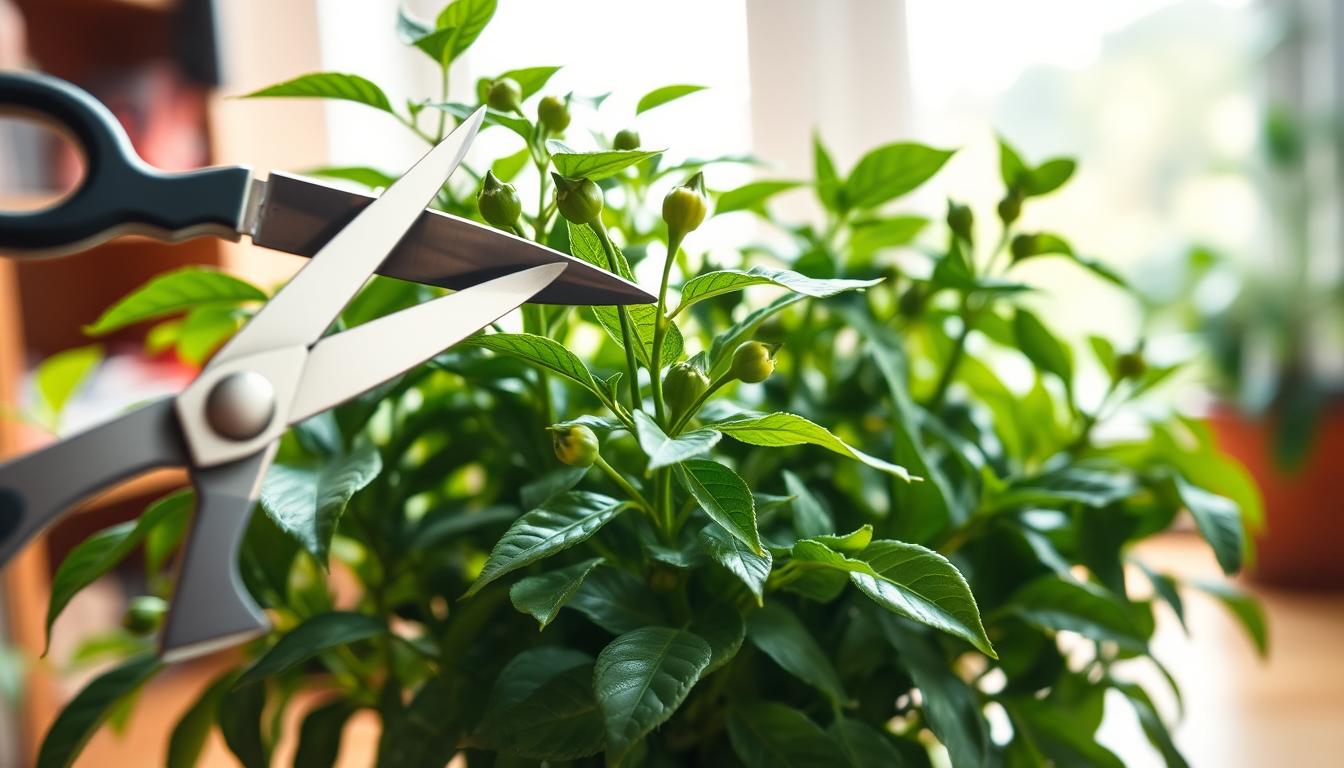
To top a padron pepper plant, wait until it is about 30cm (1ft) tall, then cut or pinch out the growing tip just above a healthy pair of leaves, leaving several sets of leaves below. This encourages side shoots and a bushier, sturdier plant. I am Sawera Shahid, a botanist at Patch Plants. Topping is optional rather than essential: the RHS notes that pinching out pepper plants is not usually needed for a good crop, and that it produces more, smaller fruits but can delay fruiting. For a Padron, where you want lots of small peppers, that trade-off often works in your favour.
This guide explains why topping works, when and how to top a padron pepper plant in 5 easy steps, when not to bother, and how to grow and harvest Padrons for the best flavour.
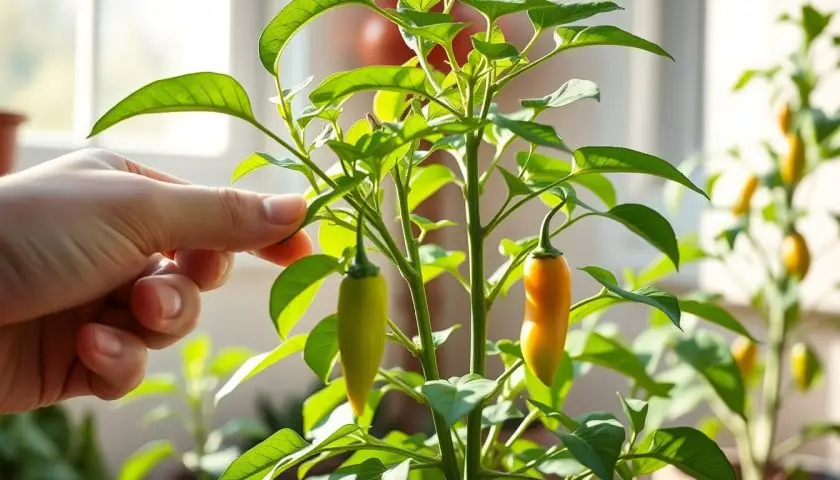
Padron Pepper Plant at a Glance
| Feature | Details |
|---|---|
| Botanical name | Capsicum annuum ‘Padron’ |
| Origin | Padrón, A Coruña, Galicia, north-west Spain |
| Harvest size | Green, up to about 5cm (2in) long |
| Harvest time | July to October (RHS) |
| Heat | Variable but generally mild; hotter if left to grow larger |
| Position | Full sun; warmest, most sheltered spot |
| When to top | At about 30cm (1ft) tall |
The harvest size, timing and position come from the RHS profile for ‘Padron’; the topping height comes from the RHS and University of Illinois Extension.
What Is a Padron Pepper?
The RHS describes ‘Padron’ as a well-known Spanish tapas pepper that produces small green fruits up to 5cm long when immature. The fruits grow larger and ripen to red as they mature, but they are at their best picked small, and the heat is variable but generally mild. Seed breeder data from Tozer Seeds notes that Padrons come from the municipality of Padrón in the province of A Coruña, Galicia, and that if fruits are left to grow bigger than 5cm they become quite pungent.
That is the key to growing them well. A padron pepper plant is grown for a steady supply of small, green fruits, picked often. Anything that increases the number of fruiting shoots, including topping, suits this style of harvest.
Why Top a Padron Pepper Plant?
Pepper plants, like many plants, are controlled by their growing tip. While the main tip is growing strongly, it suppresses the buds lower down the stem, a process botanists call apical dominance. Removing the tip releases those buds, so several side shoots grow instead of one main stem.
University of Illinois Extension notes that topping Capsicum annuum peppers encourages a stouter habit, a stronger stem and more flowers and fruit. It adds that annuum peppers tend to be taller and at higher risk of collapsing in wind, which is another reason to top them. The RHS agrees that pinching out once plants reach about 30cm (1ft) produces a bigger crop of smaller fruits.
What Does the Research Say?
Advice on topping is not unanimous, and it is worth knowing why. University of Maryland Extension has said there is no solid, research-based information to recommend a specific topping approach for increasing yields. University of Minnesota Extension has noted that in short growing seasons, topping could compromise yield. A University of Tennessee study on pimiento peppers, another Capsicum annuum type, found that plants topped to 23cm gave more ripe fruit at the first harvest, but total seasonal yield was not affected.
The practical conclusion: topping a padron pepper plant is most useful where you have a long, warm season, a greenhouse or a sunny, sheltered spot, and where you want a compact, bushy plant that holds lots of small fruit. In a short, cool summer, you may get an earlier crop by leaving the plant alone.
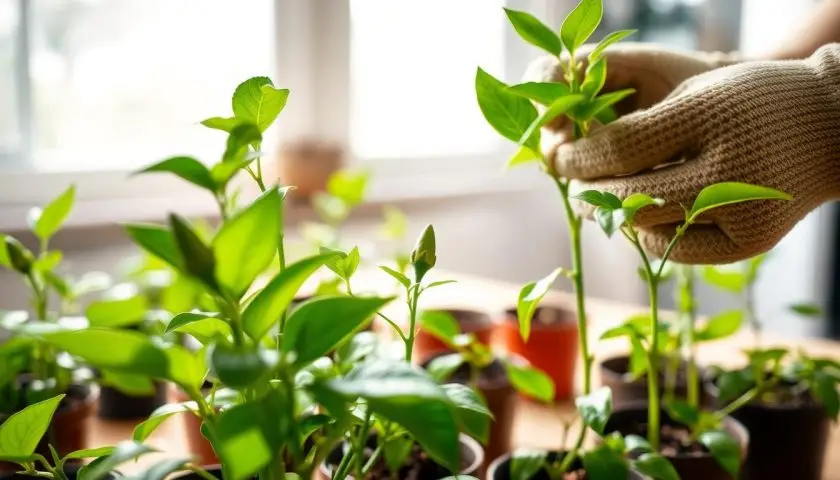
How to Top a Padron Pepper Plant in 5 Easy Steps
1. Wait until the plant is about 30cm tall
The RHS suggests pinching out once pepper plants reach around 30cm (1ft) tall, and University of Illinois Extension gives the same height, about 12in, during establishment. A plant this size has enough leaves to keep growing strongly after the cut. Topping a tiny seedling slows it down too much.
2. Make sure the plant is healthy and growing well
Only top a padron pepper plant that is actively growing, with firm stems and good green leaves. A plant that is stressed by cold, drought or pests will recover slowly. If you have just planted it out, give it a week or two to settle in first.
3. Choose where to cut
University of Illinois Extension recommends removing the top growth down to the second set of leaves. In practice, look for a pair of healthy leaves with small buds in the leaf joints, and cut just above them. Those buds will become the new side shoots.
4. Make a clean cut
Use clean, sharp scissors or snips, or pinch the soft tip out with your fingernails if the stem is young and soft. Make the cut just above the leaf joint without damaging the buds. Illinois notes that any flowers or tiny fruits on the top growth are removed at this stage; the plant will replace them on its new shoots.
5. Care for the plant after topping
Keep the compost steadily moist and the plant warm and bright. Within a couple of weeks, new side shoots should appear from the leaf joints below the cut. Once flowering starts, the RHS recommends feeding container plants weekly with a high-potash liquid fertiliser. As the plant fills out, add canes for support, as the RHS notes that pepper stems are brittle.
Topping vs Other Ways to Prune a Padron Pepper Plant
Topping is only one of several pruning jobs. University of Illinois Extension describes two for Capsicum annuum peppers, and the RHS adds a third at the end of the season.
| Technique | When | What It Does |
|---|---|---|
| Topping (pinching out) | At about 30cm (1ft) tall | Removes the growing tip to create a bushier plant with more fruiting shoots |
| Bottom pruning | At about 60cm (24in) tall | Illinois suggests removing leaves from the lowest 30cm (12in) to improve air flow |
| Cutting back to overwinter | End of the season | The RHS suggests pruning plants to a manageable size before overwintering indoors |
For a padron pepper plant in a pot, topping is usually the only pruning you need. Bottom pruning is more useful on large plants growing in the ground or in a crowded greenhouse.
When Not to Top a Padron Pepper Plant
- Late in the season: topping in mid-summer removes developing flowers and delays your harvest.
- In short, cool summers: as Minnesota Extension notes, topping may cost you yield when the season is short.
- On stressed plants: wait until the plant is growing well.
- If the plant is already bushy: Tozer Seeds describes Padron as a large plant with short internodes and small leaves, so a naturally branching plant may not need it.
How to Grow a Padron Pepper Plant
Sowing
The RHS advises sowing chillies indoors from late winter to mid-spring, at about 21°C (70°F) in a heated propagator or on a warm windowsill. Once seedlings appear, keep them at 16 to 18°C (60 to 64°F) in bright light. Prick them out at 2 to 3cm tall and pot on into 13cm (5in) pots when roots show through the drainage holes. If your windowsill is dim, a grow light helps prevent leggy seedlings.
Planting out
Keep young plants indoors until at least late May. The RHS advises planting outside only once night temperatures are reliably at least 12°C (54°F), after hardening off for two to three weeks. Choose your warmest, sunniest spot. In containers, grow one plant per 22cm (9in) pot, or three per growing bag.
Watering and feeding
The RHS advises keeping the compost steadily moist, as dry conditions can cause flower buds to drop; container plants may need watering daily in hot weather. Feed weekly with a high-potash liquid fertiliser once flowering starts. Temperatures above 30°C (86°F) can reduce fruiting, so ventilate a greenhouse in hot spells.
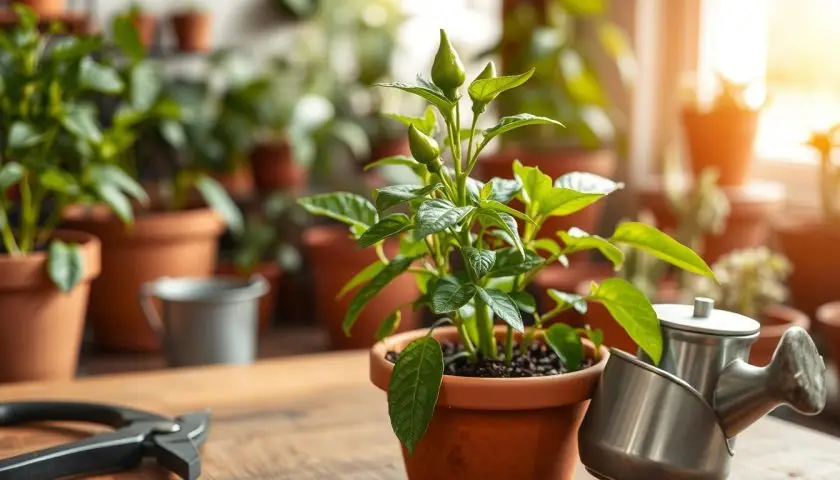
How to Harvest Padron Peppers
The RHS recommends harvesting ‘Padron’ when the peppers are small and still green, between July and October. Tozer Seeds notes that frequent picking is essential and that only a small percentage of fruits will be hot if picked at the green, immature stage. The RHS chilli guide adds that picking green fruit maximises the crop, while letting early fruit ripen on the plant reduces the number of new flowers and the overall harvest.
For a classic Spanish tapas dish, Padrons are usually fried whole in olive oil until blistered and served with coarse salt. Expect the occasional hot one; that unpredictability is part of their charm. Harvest every few days at the peak of summer, because a padron pepper plant that is picked often keeps setting new flowers.
Common Padron Pepper Plant Problems
| Problem | Likely Cause (RHS) | What to Do |
|---|---|---|
| Flower buds dropping | Dry compost | Water more steadily |
| Few fruits in hot weather | Temperatures above 30°C | Ventilate and shade |
| Distorted shoots, sticky leaves | Aphids | Check shoot tips and remove early |
| Mottled leaves, early leaf drop | Glasshouse red spider mite | Raise humidity; damp down the greenhouse |
| Fuzzy grey mould | Botrytis grey mould | Improve air flow; remove affected parts |
| Peppers too hot | Fruits left to grow over 5cm (Tozer) | Pick smaller and more often |
Overwintering a Padron Pepper Plant
Peppers are usually grown as annuals, but the RHS notes that chilli plants can be overwintered in a heated, warm, bright place such as a windowsill or conservatory. Prune them back to a manageable size and water sparingly. An overwintered plant can start cropping earlier the following year.
Is a Padron Pepper Plant Safe for Pets?
The RHS profile for the chilli pepper ‘Cayennetta’, another Capsicum annuum, lists it as irritant if eaten and a skin and eye irritant for humans and pets. Keep plants and fruit away from pets, wash your hands after handling peppers, and contact your vet or the ASPCA Animal Poison Control Center at (888) 426-4435 (a consultation fee may apply) if you are worried. Our guide to making your plants cat-friendly has more tips.
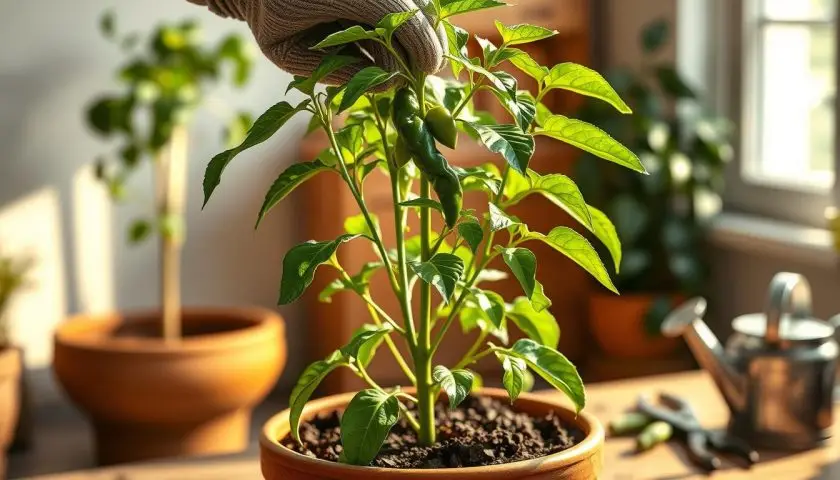
Frequently Asked Questions
When should I top my padron pepper plant?
Top it once it reaches about 30cm (1ft) tall and is growing strongly. Avoid topping late in the season, when it would remove flowers and delay your harvest.
Does topping peppers increase yield?
It can increase the number of smaller fruits and make plants bushier, according to the RHS and Illinois Extension. Research is mixed, and in short seasons it may delay or reduce the crop.
Where do I cut when topping a pepper plant?
Cut just above a healthy pair of leaves, leaving several sets below. Illinois Extension suggests cutting the top growth back to the second set of leaves.
Why are some padron peppers hot?
Heat varies between fruits. Tozer Seeds notes that only a small percentage are hot when picked green and small, and that fruits left to grow larger than 5cm become much hotter.
How big should padron peppers be when picked?
Pick them green, at up to about 5cm (2in) long. The RHS notes they are at their best small, and frequent picking keeps the plant producing.
Final Thoughts
As a botanist, I like topping because it is a simple way to use plant hormones in your favour. Remove the growing tip of a padron pepper plant at the right time and you trade one tall stem for a bushy plant covered in small green peppers, which is exactly what a Padron is for.
At Patch Plants, I try to give you the evidence as well as the method, so you can decide what suits your garden and climate. If you enjoy growing peppers, our guide to Jimmy Nardello pepper plants covers another delicious variety, and our list of easy outdoor edible plants has more ideas.
Sources: RHS, Capsicum annuum ‘Padron’; RHS, How to grow chilli peppers; University of Illinois Extension, Pruning tomatoes and peppers; University of Tennessee, Topping pimiento pepper; Tozer Seeds, Pepper Padron.

About the author
Sawera Shahid is a botanist with an MPhil in Botany and 5+ years of writing about plants. As founder and lead writer of Patch Plants, she writes practical, science-backed guides on indoor plants, outdoor gardens and plant problems, checked against RHS and university extension advice.