
🌿 Key Takeaways
- Growing your own easiest outdoor edible plants for beginners starts with just 2–3 pots — no backyard required
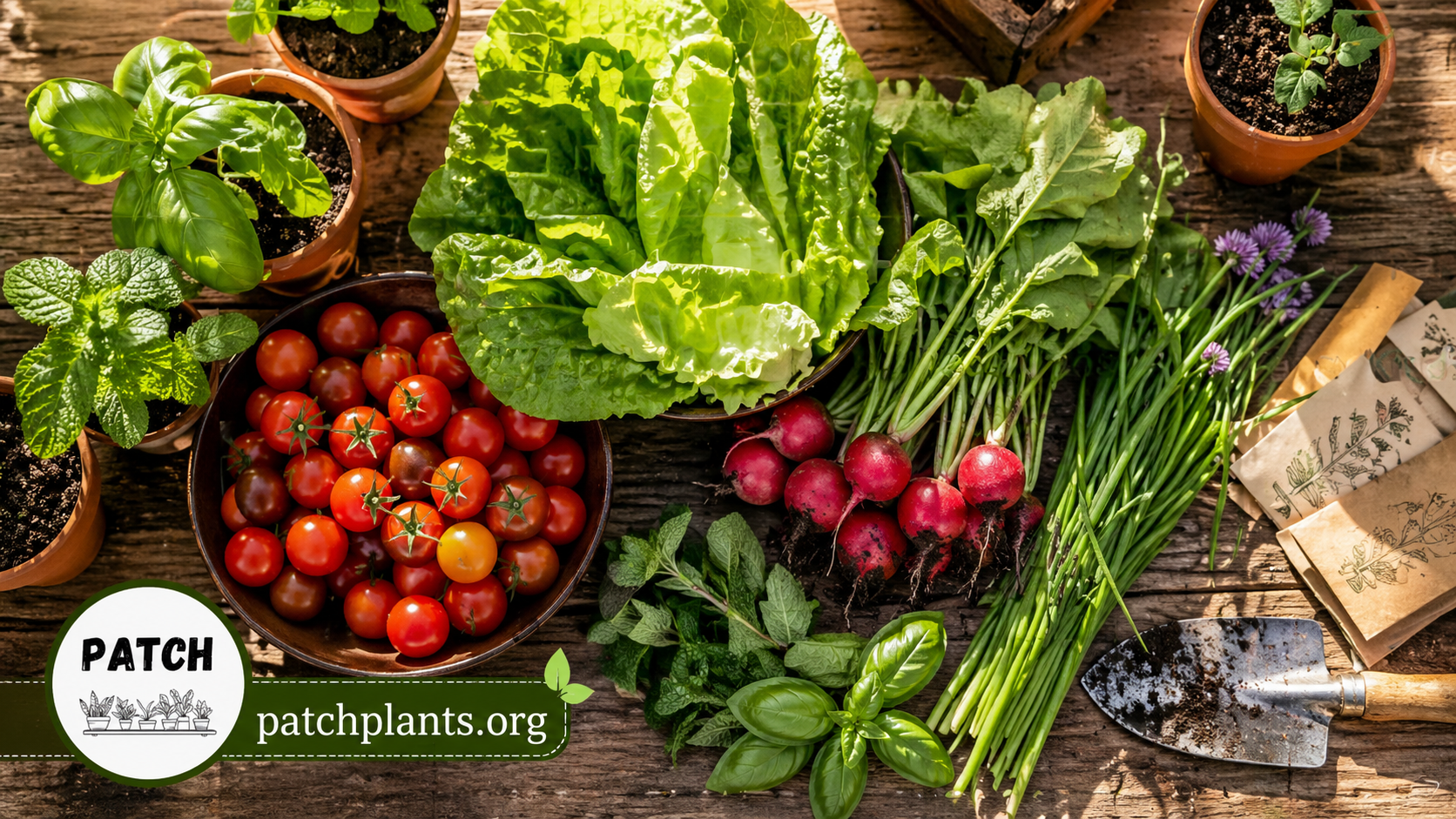
- The best beginner vegetables and herbs are lettuce, radishes, cherry tomatoes, basil, mint, chives, and spinach
- Most beginner-friendly edible plants need only 4–6 hours of sunlight and minimal watering to thrive
- Container vegetable gardening on a balcony or patio is just as effective as growing in open ground
- Harvesting regularly encourages faster regrowth — the more you pick, the more you get
- Edible plants share many care principles with popular indoor plants — if you can grow a peace lily you can absolutely grow food
- Browse our full outdoor plants section for companion planting and garden design ideas
Why Growing Your Own Food Is Easier Than You Think
There is something deeply satisfying about stepping outside and picking food you grew with your own hands. No grocery lines, no plastic packaging — just sunlight, soil, and a genuine sense of accomplishment. Yet for most beginner gardeners, the idea of how to start a garden feels overwhelming before it even begins.
Which edible plants actually survive neglect? What if everything dies in the first week? Do you need raised beds, expensive tools, or years of experience?
The honest answer is no. Beginner gardening does not require any of that. The easiest outdoor edible plants for beginners are designed by nature to grow fast, forgive mistakes, and reward minimal effort with real, edible results. This guide walks you through exactly which plants to start with, how to set them up, and how to keep them thriving — even if you have never grown anything before.
And if you have already dipped your toe into indoor plants — a trailing pothos, a DIY humidity tray, or a self-watering pot setup — you will find that outdoor edibles follow many of the same principles. The transition from indoor plant lover to grow your own gardener is smaller than most people expect.
What Makes an Edible Plant Truly Beginner-Friendly?
Before jumping into specific plants, it helps to understand what “beginner-friendly” actually means in the context of vegetable gardening.
A genuinely beginner-friendly edible plant is one that:
- Tolerates inconsistent watering — it will not die if you miss a day or two
- Grows quickly — fast results keep motivation high during the early weeks
- Adapts to different light conditions — not everyone has perfect south-facing sun exposure
- Thrives in containers — essential for gardeners without open ground
- Produces generously — the more it gives, the more rewarding the experience
These are the same qualities that make indoor favorites like snake plants and aloe vera so popular — reliable, low-fuss, and deeply satisfying to grow.
How to Start a Garden for Beginners — The Basics First
Choose Your Growing Space
How to start a vegetable garden in your backyard is one of the most searched gardening queries — but the reality is that a backyard is not a requirement. Your growing space could be:
- A sunny balcony or patio with container pots
- A windowsill for herbs
- A small raised bed in a garden corner
- A collection of grow bags on a driveway
The key is sunlight. Most easy plants to grow need a minimum of 4 to 6 hours of direct sunlight per day. Before choosing your plants, spend one day tracking where the sun falls in your outdoor space and for how long.
Start With the Right Containers
If you are beginning a garden without open ground, containers are your best friend. Use pots with drainage holes — this is non-negotiable. Waterlogged roots kill edible plants faster than any other cause, just as they damage indoor plants. If you want to understand exactly why drainage matters so much, our guide on worst times to water your plants explains root rot and soil moisture in detail.
Choose containers that match the plant’s root depth:
- Shallow containers (15–20cm): lettuce, radishes, herbs
- Medium containers (25–35cm): tomatoes, spinach, chives
- Large containers (40cm+): zucchini, strawberries, green beans
Use Quality Potting Soil
Do not use garden soil in containers — it compacts too heavily and drains poorly. Use a quality potting mix designed for edible plants. The right soil mix makes an enormous difference to how quickly your starter garden establishes and how productive it becomes. Our guide on the best soil mix for every plant type covers exactly what to look for when choosing soil for different growing conditions.
The 10 Easiest Outdoor Edible Plants for Beginners
1. Lettuce — The Instant Gratification Vegetable
If you want the fastest possible win in beginner gardening, start with lettuce. It is genuinely the most forgiving edible plant available — growing in shallow containers, forgiving irregular watering, and ready to harvest in just 30 to 45 days from seed.
Lettuce is the perfect starter garden plant because it gives visible results within days of germination. Those first tiny green shoots pushing through the soil are enormously motivating for first-time growers.
Care essentials:
- Sunlight: Partial to full sun (tolerates some shade — ideal for less sunny spaces)
- Watering: Keep soil consistently moist but never waterlogged
- Harvest time: 30–45 days
- Bonus: Cut leaves from the outside and it regrows repeatedly — one planting gives multiple harvests
Grow it in a window box, a shallow tray, or alongside other plants in a vegetable garden for spring. Lettuce is a cool-season crop, making it perfect for early spring and autumn planting when temperatures are mild.
2. Radishes — Shockingly Fast and Satisfying
Radishes are the speed champions of the vegetable garden. From seed to harvest in just 20 to 30 days, they are the best possible plant for beginner gardeners who need encouragement early in the growing process.
How to grow garden vegetables does not get more straightforward than radishes. Drop seeds into loose, well-drained soil, keep them watered, and pull them up in less than a month. They are small, spicy, and immensely satisfying to grow.
Care essentials:
- Sunlight: Partial to full sun
- Soil: Loose and well-drained — they need room to swell underground
- Harvest time: 20–30 days
- Spacing: Thin seedlings to 5cm apart for the best root development
Radishes also make excellent companion plants in a vegetable garden for spring alongside slower-growing crops like tomatoes and beans — they are harvested before the larger plants need the space.
3. Cherry Tomatoes — The Gateway Vegetable for Beginners
Cherry tomatoes are the plant that turns casual beginner gardeners into dedicated grow veggies enthusiasts. They are resilient, enormously productive, and watching them turn from green to glossy red is genuinely magical — especially for children and first-time growers.
Unlike large tomato varieties, cherry tomatoes are more forgiving of inconsistent care and grow happily in containers on a patio or balcony. Our guide on the best plants for container gardening on patios is an excellent companion read for setting up a productive patio growing space alongside your tomatoes.
Care essentials:
- Sunlight: Full sun — minimum 6 hours daily
- Support: A basic tomato cage or bamboo stake is sufficient
- Watering: Consistent moisture — irregular watering causes fruit to split
- Harvest time: Around 60 days from transplant
Plant in a large container with rich potting mix. Feed with a liquid tomato fertilizer every two weeks once flowering begins. Pinch out side shoots on cordon varieties to focus energy into fruit production.
4. Basil — Your Most Useful Kitchen Herb
Basil is the herb that makes everything taste better — pasta, pizza, salads, and fresh tomato dishes are all transformed by freshly picked basil leaves. It grows enthusiastically outdoors in warm weather and thrives on the same sunny windowsills and patio spots where you might keep your other container plants.
Edible herbs can also double as basil and mint mosquito repellent plants for patios, balconies, and kitchen doors. Grow them in pots near outdoor dining spaces so they are useful for cooking and close enough to help deter mosquitoes.
Planting veggies and herbs together in the same space is excellent practice — basil is known to repel aphids and whiteflies when planted beside tomatoes, making it a genuinely useful companion plant as well as a culinary one.
Care essentials:
- Sunlight: Full sun — at least 6 hours
- Watering: Keep soil slightly and consistently moist — never waterlogged
- Harvest time: 40–60 days
- Key tip: Pinch off flower heads as soon as they appear to keep leaves productive
Pinch leaves from the top down and your basil plant will bush out and produce for the entire growing season. Handle it exactly as you would handle a productive indoor plant — regular attention and harvesting keeps it in its best condition.
5. Mint — Grow With One Important Caution
Mint is one of the easiest easy plants to grow outdoors — but it comes with one critical rule. Never plant mint directly into an open garden bed. It spreads aggressively through underground runners and will take over neighboring plants within a single growing season.
Always grow mint in a container. This contains its growth, makes harvesting easier, and protects the rest of your vegetable garden from being overrun.
Care essentials:
- Sunlight: Partial to full sun
- Watering: Keep consistently moist
- Harvest: Continuous once established — simply snip as needed
- Best varieties for beginners: Spearmint, peppermint, apple mint
Mint is perfect for teas, cocktails, cooking, and even as a natural pest deterrent in your outdoor growing space. Our guide on plants that keep bugs away without chemical repellents covers how to use aromatic herbs like mint strategically in your garden layout.
6. Chives — The Perennial That Keeps Coming Back
Chives are the most effortless perennial vegetables available to beginner gardeners. Plant them once and they return year after year without replanting — quietly producing fresh, mild onion-flavored leaves for garnishing soups, eggs, and salads throughout the growing season.
Their purple pompom flowers are also genuinely beautiful — making chives one of the few edible plants that doubles as an ornamental addition to a vegetable garden for spring or a mixed container display.
Care essentials:
- Sunlight: Full sun to partial shade
- Soil: Adaptable — not picky at all
- Harvest time: 60 days from seed (but once established, harvest continuously)
- Division: Divide clumps every 2–3 years to keep them vigorous
7. Green Beans — Fast Growers With Generous Yields
Green beans are one of the most rewarding choices for anyone learning how to plant vegetables for the first time. They grow quickly, produce heavily through summer, and require very little specialist knowledge to succeed.
Choose bush bean varieties for the simplest growing experience — they do not require staking or support structures, making them ideal for how to set up a vegetable garden in a small space with minimal infrastructure.
Care essentials:
- Sunlight: Full sun
- Support: Bush beans need none; pole beans need a simple trellis or cane
- Watering: Regular and consistent — especially during pod formation
- Harvest time: 50–60 days
Harvest pods when they are young and tender — picking regularly encourages the plant to keep producing rather than directing energy into seed development.
8. Spinach — Quick, Nutritious, and Versatile
Spinach is a cool-season crop that excels in spring and autumn — the seasons when many other easy plants to grow outdoors are not yet in season. It grows quickly, tolerates partial shade better than most edible plants, and is packed with nutritional value.
How to grow vegetables at home in a small space works perfectly with spinach — it thrives in window boxes, shallow containers, and alongside other cool-season crops like lettuce and radishes in a vegetable garden for spring.
Care essentials:
- Sunlight: Partial sun to dappled shade
- Watering: Keep consistently moist
- Harvest time: 40–50 days
- Key tip: Harvest outer leaves first and the plant will continue producing from the center
9. Strawberries — A Sweet Long-Term Investment
Strawberries feel intimidating to beginner gardeners — but they are far more forgiving than their reputation suggests, especially when started from small established plants rather than seeds. They produce fruit year after year, making them one of the best long-term additions to any starter garden.
Container strawberries perform particularly well — the elevated position improves air circulation around the fruit and makes harvesting easier. A hanging basket of strawberries is also one of the most attractive vegetable gardening displays possible on a patio or balcony.
Care essentials:
- Sunlight: Full sun
- Drainage: Excellent drainage is essential — never let roots sit in water
- Harvest time: Around 90 days from planting
- Runners: Let runners establish in new pots to multiply your plants for free
For ideas on how to style your growing space beautifully alongside your strawberry containers, our outdoor garden color themes guide gives excellent inspiration for combining edible and ornamental plants.
10. Zucchini — Big, Bold, and Extraordinarily Productive
Zucchini is the plant that surprises every beginner gardener. It grows with almost alarming speed, produces enormous quantities of fruit from a single plant, and requires very little specialist care beyond consistent watering and full sun.
One or two zucchini plants will feed a household generously throughout summer. They need more space than most container plants — a large grow bag or raised bed section works best — but their productivity per square foot of space is unmatched among beginner-friendly edibles.
Care essentials:
- Sunlight: Full sun
- Watering: Regular and generous — especially during fruit development
- Harvest time: 50–60 days
- Key tip: Harvest fruits when small (15–20cm) for the best flavor and to encourage more production
Understanding how to keep pests away from your zucchini is also important as it grows — our guide on how to keep pests away from outdoor plants covers organic pest management strategies for all vegetable garden crops.
How to Set Up a Vegetable Garden — Step by Step
How to start a garden for beginners does not need to be complicated. Follow these steps and you will have a productive grow your own setup running within a single weekend.
Step 1 — Assess Your Sunlight
Spend one day tracking which areas of your outdoor space receive sun and for how long. Most edible plants need 4 to 6 hours minimum. Mark your sunniest spot — this is where your tomatoes, basil, and beans go.
Step 2 — Choose Your Containers
For a complete beginner gardening setup, start with 4 to 5 containers of varying sizes. This gives you enough variety to grow herbs, salad leaves, and one larger crop (tomatoes or zucchini) without becoming overwhelming.
Step 3 — Fill With Quality Potting Mix
Never use garden soil in containers. A good quality potting mix with added perlite for drainage gives your edible plants the best possible start. Add slow-release fertilizer granules at planting time for sustained feeding throughout the growing season.
Step 4 — Plant in the Right Season
- Spring (March–May): Lettuce, spinach, radishes, chives, peas
- Late spring–summer (May–July): Tomatoes, basil, beans, zucchini, mint
- Autumn (August–October): Lettuce, spinach, radishes, garlic
Step 5 — Water Consistently
Consistent moisture is the most important care factor for how to grow vegetables at home successfully. Check soil moisture daily — the finger test works for edibles exactly as it does for houseplants. Push one finger into the soil — if it feels dry at 1 inch depth, water thoroughly. Never water on a rigid schedule without checking first.
Step 6 — Harvest Regularly
This is the step most beginner gardeners overlook. Regular harvesting signals the plant to keep producing. Leaving lettuce unharvested causes it to bolt. Leaving beans on the plant too long causes it to stop flowering. Harvest frequently and your vegetable garden will reward you with continuous production throughout the season.
Companion Planting — Make Your Edible Garden Work Harder
Planting vegetables together strategically — known as companion planting — improves growth, deters pests, and maximizes the productivity of a small growing space.
Best beginner companion combinations:
- Tomatoes + Basil — basil repels aphids and whiteflies; improves tomato flavor
- Lettuce + Radishes — radishes are harvested before lettuce needs the space
- Beans + Carrots — beans fix nitrogen in soil that benefits root vegetables
- Mint (in a separate container) beside any brassicas — deters cabbage moths
For wildlife-friendly approaches to garden pest management that avoid chemical pesticides entirely, our guide on designing a wildlife-friendly garden shows how to attract beneficial insects that naturally control garden pests.
Edible Flowers — The Grow Your Own Upgrade
Once you are comfortable with basic vegetable gardening, adding edible flowers to your growing space is an excellent next step. They attract pollinators that improve fruit set on your tomatoes and beans, add visual beauty to the growing space, and are genuinely edible additions to salads and desserts.
Our dedicated guide on edible flowers to grow in your outdoor garden covers the best beginner-friendly edible flowers in detail — a natural companion to this guide for anyone wanting to expand their grow your own setup.
Fertilizing Your Edible Plants — What Beginners Need to Know
How to farm vegetables successfully long-term requires understanding basic plant nutrition. Edible plants are heavy feeders — they put enormous energy into producing food for you, and they need regular replenishment of nutrients to sustain that production.
For container edibles, liquid feed every 14 days during the growing season. Tomatoes and zucchini need a high-potassium feed once flowering begins. Leafy crops like lettuce and spinach respond best to nitrogen-rich feeds.
Understanding the difference between feeding requirements for different plant types — including how outdoor edibles compare to indoor plants — is covered in our guide on fertilizing indoor vs outdoor plants.
Common Beginner Mistakes — And How to Avoid Them
How to plant a vegetable garden successfully means avoiding the mistakes that catch most beginners out in their first season.
Overwatering is the most common error — exactly as it is with indoor houseplants. More plants die from too much water than too little. Always check before watering. Our guide on signs you are overwatering applies equally to edible plants and houseplants.
Planting too much too soon overwhelms beginners. Start with 3 to 4 plants maximum in your first season. Master those before expanding.
Ignoring pests early allows small infestations to become serious problems. Check the undersides of leaves weekly. Aphids, whiteflies, and slugs are the most common beginner vegetable garden pests.
Planting in too little light is the most common reason beginner edible plants fail to produce. If your growing space gets less than 4 hours of sun, focus on shade-tolerant crops like lettuce and spinach rather than sun-lovers like tomatoes and basil.
Year-Round Growing — Keeping Your Edible Garden Productive
One of the most rewarding aspects of how to grow a vegetable garden is learning to keep it productive across multiple seasons rather than treating it as a single summer project.
Spring and autumn are ideal for cool-season crops — lettuce, spinach, radishes, and chives. Summer is peak season for heat-lovers — tomatoes, basil, beans, and zucchini. Even winter offers opportunities in mild climates with cold-hardy herbs and overwintering garlic.
For ideas on plants that perform across all seasons in your outdoor space, our guide on creating a colorful garden for all seasons gives a framework for planning continuous outdoor interest — applicable to both edible and ornamental growing.
Frequently Asked Questions
Q: What are the easiest outdoor edible plants for complete beginners? The easiest outdoor edible plants for beginners are radishes, lettuce, mint, chives, and spinach. All five tolerate inconsistent watering, grow quickly enough to maintain motivation, and produce generously with minimal care. Radishes are the fastest — ready to harvest in just 20 to 30 days from seed. Start with these five and add cherry tomatoes and basil once you feel confident.
Q: How to start a garden for beginners with no experience? Start with 3 to 4 containers in your sunniest outdoor spot. Fill with quality potting mix, plant 2 to 3 beginner-friendly edible varieties, water consistently using the finger test, and harvest regularly. You do not need raised beds, expensive tools, or any prior experience. Lettuce and radishes are the ideal first plants — fast, forgiving, and enormously rewarding.
Q: Can I grow vegetables without a garden or backyard? Absolutely. A balcony, patio, or windowsill is sufficient for grow your own success. Cherry tomatoes, lettuce, herbs, radishes, and spinach all thrive in containers. Container vegetable gardening on a balcony or patio is genuinely as productive as open ground growing for the crops best suited to beginners.
Q: How to grow vegetables at home in small spaces? Go vertical and use containers strategically. Trailing bean varieties grow upward on a simple cane or trellis. Lettuce and herbs grow in window boxes. Cherry tomatoes thrive in a single large pot. Our guide on best plants for small outdoor spaces covers space-maximizing strategies for compact outdoor growing areas.
Q: What vegetables grow the fastest for beginners? Radishes grow fastest — ready in 20 to 30 days. Lettuce and spinach follow at 30 to 50 days. Basil and chives are harvestable within 40 to 60 days. These are the best choices if you need quick results to stay motivated during your first beginner gardening season.
Q: How often should I water my vegetable garden? Check daily and water when the top inch of soil feels dry. Most edible plants need water every 1 to 3 days during warm weather, and every 3 to 5 days in cooler conditions. Container plants dry out faster than open ground — check them more frequently. Never follow a fixed watering schedule without checking soil moisture first.
Q: What is the best vegetable to grow for beginners in containers? Cherry tomatoes are the single best container vegetable for beginners — productive, resilient, and deeply satisfying to grow. For herbs, basil and mint in separate containers give the best beginner results. For salad leaves, lettuce in a window box is effortless and harvests within a month of planting.
Related Guides on Patch Plants
- 🌿 Best Plants for Container Gardening on Patios
- 🌸 Edible Flowers to Grow in Your Outdoor Garden
- 💧 Complete Watering Guide for Healthy Thriving Plants
- 🦋 Pollinator-Friendly Plants for Urban Outdoor Spaces
- 🌱 How to Design a Wildlife-Friendly Garden
- 🪴 Best Low-Maintenance Outdoor Plants for Busy Gardeners
- 🌿 Native Plants That Thrive in Your Region
- 🌱 Browse All Outdoor Plant Guides
Final Thoughts
The grow your own movement is not reserved for experienced gardeners with large plots and years of knowledge. It starts with a single pot of lettuce on a balcony, a cherry tomato plant on a sunny patio, or a row of radish seeds pressed into a window box of potting mix. The easiest outdoor edible plants for beginners are designed to succeed — they grow fast, forgive mistakes, and reward consistent attention with real, harvestable food.
Start small. Pick two or three plants from this guide that match your available sunlight and space. Master those first. Then expand your vegetable garden one season at a time — adding new crops as your confidence grows and your understanding of how to grow vegetables at home deepens with each season.
According to the Royal Horticultural Society, growing edible plants at home measurably improves physical activity levels, mental wellbeing, and dietary quality — making your starter garden one of the highest-return investments you can make in your home and your health.
Your first green shoots will push through the soil sooner than you expect. And when they do — that quiet sense of accomplishment is the beginning of something genuinely addictive. 🌿


Can you be more specific about the content of your article? After reading it, I still have some doubts. Hope you can help me. binance US-registrera
Can you be more specific about the content of your article? After reading it, I still have some doubts. Hope you can help me. https://www.binance.bh/register?ref=IHJUI7TF
[…] should support edible and container guides like best plants for container gardening on patios, easiest outdoor edible plants, and planting potatoes in […]
I don’t think the title of your article matches the content lol. Just kidding, mainly because I had some doubts after reading the article. https://accounts.binance.bh/de/register?ref=W0BCQMF1