Did you know one well-tended patch can provide enough fruit for fresh family snacks all summer? Many gardeners think berries need a professional greenhouse or years of experience. With patience and the right approach, you can grow a large harvest in your backyard.
This guide helps you grow strong ozark beauty strawberry plants. You will learn to choose the best spot, prepare soil, and keep your crop healthy through changing seasons. You need no costly equipment or complex skills to begin today.
Steady, consistent care can make gardening a relaxing and rewarding hobby. Let us explore these practical tips so your garden thrives this year.
Key Takeaways
- Understand the basic needs for successful berry growth.
- Learn how to prepare your soil for maximum nutrient absorption.
- Discover the best methods for consistent watering and hydration.
- Master simple techniques to protect your fruit from common pests.
- Gain confidence in managing your garden throughout the entire season.
What to Know About Ozark Beauty Strawberry Plants
Understanding these plants makes growing Ozark Beauty strawberries much easier. This favorite variety gives home gardeners fresh fruit throughout the season, not one overwhelming harvest.
How Ozark Beauty strawberries grow and produce fruit
Ever-bearing habits and typical fruiting periods
Unlike June-bearing types, this variety is ever-bearing. Flowers and fruit appear in cycles from late spring until autumn’s first frost.
You will notice a heavy flush of berries early in the season, followed by a brief rest period. After this break, the plant resumes production, providing fresh berries into the cooler months.
Berry size, flavor, and expected yields
These strawberries have excellent, sweet flavor and medium-to-large fruit. They are perfect for eating fresh, freezing, or making jam.
With proper ozark beauty strawberry care, one plant can produce a generous yield. You can expect consistent harvests if you keep the plants well-fed and hydrated throughout their active growth phases.
What growing conditions support healthy plants
USDA hardiness considerations across the United States
These plants adapt well and thrive in USDA hardiness zones 4 through 8. They handle cold winters well with enough mulch for protection.
In warmer regions, they may need afternoon shade to prevent heat stress. Monitor local weather patterns to keep plants within their preferred temperature range.
Differences between garden beds, containers, and raised beds
Choosing the right home for your strawberries affects how you manage their needs. Each method offers benefits for root health and moisture retention.
| Growing Method | Moisture Control | Space Efficiency | Best For |
|---|---|---|---|
| In-Ground Beds | Moderate | High | Large gardens |
| Raised Beds | Excellent | High | Better drainage |
| Containers | Requires daily care | Limited | Patios and balconies |
Raised beds are often the best choice for beginners because they offer superior drainage and warmer soil in spring. Containers suit small spaces but need more frequent watering because their soil dries faster.
Choose Healthy Plants and the Right Source
Your journey toward a delicious strawberry patch begins by choosing quality nursery stock. When you decide to buy Ozark Beauty strawberry plants, the quality of this first investment directly affects your future harvest. Researching your options helps you start with vigorous, productive plants.
Tip 1: Buy Ozark Beauty strawberry plants from a reliable seller
To find the best Ozark Beauty strawberry plants, choose nurseries that specialize in berry crops. These experts often use better handling and shipping methods than general big-box stores. Check gardening forums or local agricultural extension websites to learn where to purchase Ozark Beauty strawberries confidently.
How to evaluate ozark beauty strawberry plants for sale
When you browse ozark beauty strawberry plants for sale, read clear descriptions of each plant’s age and origin. A trustworthy seller explains how they store stock to preserve dormancy. Avoid listings without specific variety or shipping details.
What to check when buying ozark beauty strawberry plants online
Read customer reviews to learn whether previous buyers received healthy, hydrated plants. Check the seller’s shipping policy to confirm plants ship at the right time for your planting zone. A good company guarantees your order’s arrival condition.
Signs of vigorous crowns, healthy roots, and disease-free leaves
Inspect your plants as soon as they arrive for signs of vitality. A healthy plant has a firm, light-colored crown without rot or mushiness. Its roots should look plump and creamy white, while present leaves must lack spots, webbing, and yellowing.
Match the plant type to your growing plan
Choose a plant type based on your budget and how quickly you want results. Each type offers different benefits for your home garden setup.
Bare-root plants, plugs, and potted plants
| Plant Type | Ease of Planting | Establishment Speed | Cost |
|---|---|---|---|
| Bare-root | Moderate | Slow | Low |
| Plugs | Easy | Fast | Medium |
| Potted | Very Easy | Immediate | High |
How many plants to purchase for a household harvest
For a typical household, aim for 25 to 50 plants for fresh berries throughout the season. If you plan to make jams or preserves, consider doubling that number for higher yields. A manageable start lets you learn plant habits before expanding your patch.
Prepare the Growing Site and Soil
Success with ozark beauty strawberry plants depends greatly on your planting location. Prepare the garden bed well to give your berries a strong start.
Tip 2: Select a sunny, well-drained planting location
Providing at least six to eight hours of direct sunlight
Strawberries thrive with plenty of sunshine each day. Choose a strawberry planting site with six to eight hours of direct sunlight daily. This energy helps plants produce sweet, juicy fruit during harvest.
Protecting plants from standing water and strong winds
Good drainage matters because strawberries dislike having “wet feet.” Avoid low areas where water pools after heavy rain. Choose a spot protected from harsh, drying winds.
Tip 3: Build fertile, slightly acidic soil before planting
Testing soil pH and improving drainage
Proper strawberry soil preparation supports healthy growth. Aim for slightly acidic strawberry soil with a pH between 5.5 and 6.5. If the soil contains heavy clay, add organic matter for better drainage and airflow.
Adding compost without overloading the soil with nitrogen
Well-rotted compost provides needed nutrients for berries. Do not add too much nitrogen, which causes leafy growth instead of fruit. A balanced soil keeps plants productive and strong.
Avoiding sites recently used for tomatoes, peppers, potatoes, or eggplants
Crop rotation helps prevent diseases that live in soil. Do not plant strawberries where you recently grew tomatoes, peppers, potatoes, or eggplants. These crops may share diseases that harm new strawberry plants.
| Soil Factor | Ideal Condition | Why It Matters |
|---|---|---|
| Soil pH | 5.5 to 6.5 | Nutrient absorption |
| Drainage | Well-draining | Prevents root rot |
| Organic Matter | Moderate compost | Improves soil structure |
| Sun Exposure | 6-8 hours | Boosts fruit yield |
Plant Ozark Beauty Strawberries Correctly
When you bring new plants home, careful planting helps them thrive. Learning the basics of planting Ozark Beauty strawberries helps your garden start strong. These simple steps support healthy growth and delicious fruit.
Tip 4: Plant at the proper depth and spacing
Keeping the crown level with the soil surface
The key to strawberry crown depth is keeping the crown exactly level with the soil. A crown buried too deeply may rot. A crown planted too high can make the roots dry out and wither.
Spacing plants for airflow, root growth, and easy harvesting
Give each plant room to breathe and spread its roots. Good spacing prevents fungal issues and makes berries easier to pick later.
- Space individual plants about 12 to 18 inches apart.
- Keep rows at least 30 inches apart to allow for easy movement.
- Ensure enough room for runners to establish new plants without overcrowding.
Watering immediately after planting
After planting, water the plants thoroughly. This settles soil around the roots and removes air pockets. Steady moisture is vital for ozark beauty strawberry plant care during the first few weeks.
Use the right planting calendar
Your local climate sets the best time to start your patch. A general strawberry planting calendar helps, but adjust it for your local frost dates.
Timing spring planting in colder regions
In northern areas, wait until the soil is workable and hard frost has passed. Early spring gives roots time to establish before summer heat arrives.
Timing fall planting in areas with mild winters
In regions with mild winters, autumn is an excellent planting time. Cooler temperatures help plants settle without intense sun stress.
Adjusting planting dates for local frost conditions
- Check your local extension office for the average last frost date in spring.
- Monitor soil temperatures to ensure they are consistently above 50°F.
- Avoid planting during extreme heat waves or deep freezes.
Establish a Consistent Watering Routine
Help your berries thrive with a simple, steady watering routine. When you buy ozark beauty strawberry plants online, give them the best start through careful hydration.
Tip 5: Keep roots evenly moist without creating soggy soil
Checking moisture below the soil surface
Do not judge moisture by the soil’s surface alone. Push your finger about one inch into the soil near the plant’s base. If it feels dry, water the plant.
Watering frequency during establishment, flowering, and fruit development
Young plants need frequent care while their roots settle into the ground. After flowering and fruit production begin, watering Ozark Beauty strawberries becomes even more critical. Steady moisture then helps berries grow large and juicy.
Using drip irrigation or soaker hoses to keep foliage dry
Tools such as drip lines and soaker hoses make strawberry irrigation a smart choice. They send water to the roots while keeping leaves dry. This habit helps prevent fungal problems and keeps fruit clean.
Prevent drought stress and overwatering
Recognizing wilted leaves, pale growth, and waterlogged roots
Watch plants closely for trouble. Wilted leaves during cool morning hours may show drought stress in strawberries. Pale growth or yellow leaves often mean roots sit in too much water.
Adjusting irrigation during heat, rain, and humid weather
Change your watering schedule with local weather. During intense summer heat, you may need to water daily to keep soil cool. When rain falls often or air stays humid, water less to protect roots.
Feed Plants for Leaves, Flowers, and Fruit
The right nutrients help plants produce a bountiful harvest. Focusing on fertilizing Ozark Beauty strawberries gives plants energy for sweet, juicy berries throughout the season.
Tip 6: Apply balanced fertilizer at the right time
Feeding after new growth begins
Wait until fresh green leaves emerge in spring before feeding your plants. Applying nutrients too early can shock plants waking from winter dormancy.
Supporting repeated flowering without excessive leafy growth
Encourage strawberry flowers and fruit, not only large, bushy leaves. A balanced strawberry fertilizer helps maintain this delicate balance. Use this guide to see how nutrients affect your plants:
| Nutrient | Primary Benefit | Impact on Harvest |
|---|---|---|
| Nitrogen | Leaf development | Supports plant size |
| Phosphorus | Root and bloom | Boosts berry count |
| Potassium | Overall health | Improves fruit quality |
Following soil-test results and the fertilizer label
Check your soil health with a simple test kit before applying any product. Follow the fertilizer label to use the correct amount for your garden size.
Keep fertilizer away from crowns and fruit
Watering after granular applications
Apply fertilizer to the soil around each plant’s base, avoiding the crown. After spreading granular fertilizer, water thoroughly so nutrients reach the roots safely.
Why excess nitrogen can reduce berry production
Lush, dark green foliage may seem desirable, but excess nitrogen in strawberries often reduces berry production. Too much nitrogen encourages leaves instead of fruit, so follow these tips:
- Avoid high-nitrogen lawn fertilizers near your patch.
- Look for balanced formulas labeled for edible crops.
- Monitor your plants for signs of over-fertilization like yellowing leaf tips.
Mulch and Manage the Planting Bed
A clean, well-managed planting bed supports healthy strawberry growth. It gives plants room to thrive without competing for nutrients or facing soil-borne rot.
Tip 7: Use clean mulch to protect roots and berries
Choosing straw, pine needles, or other suitable mulch
A high-quality strawberry mulch supports a healthy garden. Clean straw and pine needles let water pass through while keeping soil temperatures stable. They also suppress weeds, making seasonal care easier.
Maintaining a thin layer around—but not over—the crowns
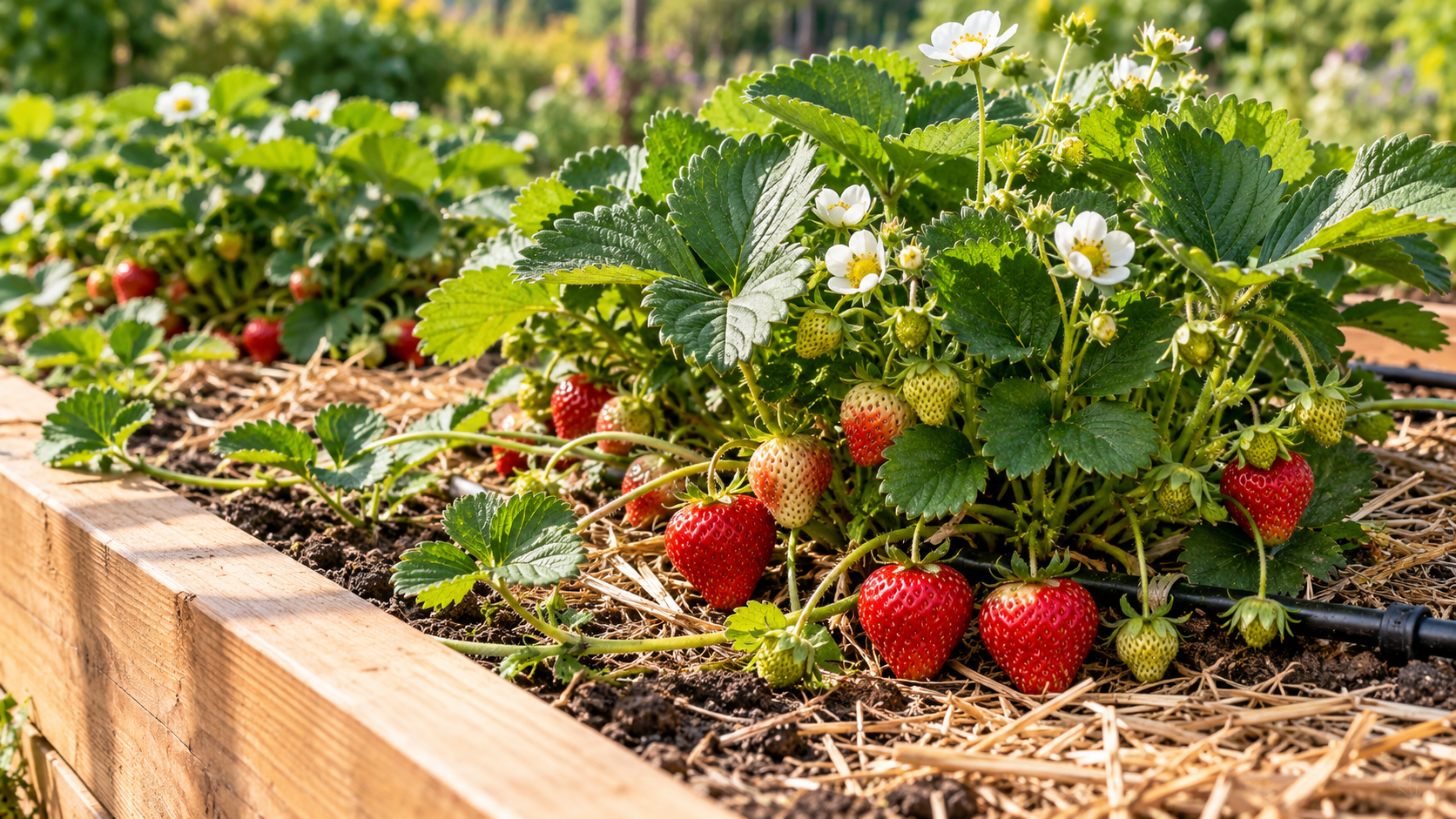
When mulching Ozark Beauty strawberries, place the mulch carefully. Spread it around the plant base, but keep the center crown clear. Covering the crown can cause rot and stop new leaves from emerging.
Keeping developing berries off wet soil
Mulch helps with protecting strawberry berries from damp soil. This simple barrier lowers fungal risks and keeps fruit clean. Your harvest quality can improve when berries stay dry and raised.
Control weeds without damaging shallow roots
Hand-weeding around crowns and runners
Good weed control around strawberries requires a gentle touch. These plants have delicate, shallow roots, so pull weeds by hand. This removes the whole weed without disturbing nearby strawberry roots.
Refreshing mulch as it breaks down
Organic mulch naturally decomposes and settles into the soil over time. Add fresh mulch when the ground becomes exposed. A steady layer protects plants from temperature swings and moisture loss.
Avoiding deep cultivation near established plants
Do not use a hoe or trowel for deep digging near established plants. Deep cultivation can sever roots that strawberries need for water and nutrients. Use light surface care instead to keep your patch healthy and productive.
- Use clean, weed-free straw or pine needles.
- Keep the crown of the plant exposed to air.
- Pull weeds by hand to protect shallow roots.
- Add more mulch as the old layer breaks down.
Support Flowering, Pollination, and Fruit Development
Proper care during bloom helps you pick juicy berries all summer long. When plants begin growing, your attention helps each blossom become a delicious treat.
Tip 8: Encourage strong flowering and well-shaped berries
The health of your Ozark Beauty strawberry flowers shapes your harvest quality. Simple environmental steps help plants produce beautiful, even fruit.
Providing consistent water during bloom and fruit set
Water fuels strawberry fruit development. Keep soil evenly moist because dry spells can make plants drop blossoms or produce tiny, underdeveloped berries.
Protecting blossoms from late frosts
Spring weather can change quickly, and a cold snap may damage delicate buds. If frost is forecast, cover plants overnight with light cloth or row cover.
Supporting pollinators with a pesticide-conscious garden
Successful strawberry pollination depends on bees and other helpful insects visiting your garden. Avoid harsh chemicals that may harm these visitors and reduce well-shaped fruit.
Reduce conditions that cause small or misshapen fruit
Despite your best efforts, you may find misshapen strawberries in your patch. Knowing the common causes helps you improve your care routine.
Preventing heat and drought stress
Extreme heat can weaken plants and cause poor fruit formation. Mulch around plant bases to cool roots and maintain moisture for healthy growth.
Improving airflow around crowded plants
Good airflow helps prevent fungal problems that can ruin developing berries. If plants are crowded, gently thin them so leaves and flowers stay dry and healthy.
Removing damaged flowers and fruit when necessary
Remove diseased or damaged flowers and berries promptly. This prevents problems from spreading and helps plants focus energy on healthy, productive growth.
Manage Runners and Renew Productive Plants
Keep your strawberry patch productive by managing how plants spread. As the garden grows, long, thin stems reach from the main crowns. These runners shape your patch’s life cycle.
Tip 9: Decide which runners to keep
When runners appear, choose how to use them. Use them for propagating Ozark Beauty strawberries to fill space, or remove them so plants focus on large, juicy fruit.
Rooting selected daughter plants to expand the bed
To expand your collection, choose the healthiest daughter strawberry plants at runner ends. These small plantlets will eventually develop their own roots if they touch soil. Guide them into place to build a thicker, lusher bed.
Removing excess runners when fruit production is the priority
For a heavy harvest, snip off most runners. By managing strawberry runners early, you keep the mother plant from wasting energy on new growth. This helps it direct resources toward ripening berries.
Pinning runners into small pots or prepared soil
For control, pin runners into small pots filled with potting mix. Use a bent wire or hair clip to hold each node against the soil. After roots take hold, cut the connection and move new starts wherever you like.
Prevent overcrowding over time
Over time, crowded patches produce smaller berries and face greater disease risk. Regularly renewing strawberry plants keeps your garden healthy and vibrant for many seasons.
Spacing new plants away from older crowns
Aim for 12 to 18 inches between plants. Good airflow helps prevent mold and rot. If the patch grows dense, thin younger plants so each has room to breathe.
Removing weak, diseased, or unproductive plants
Walk through your garden every few weeks to check for struggling plants. Remove any plant that looks yellow, stays stunted, or fails to produce fruit. Replace it with a fresh, vigorous start to keep the patch productive.
| Strategy | Primary Benefit | Best For |
|---|---|---|
| Keep All Runners | Rapid expansion | Filling empty garden beds |
| Remove All Runners | Maximum fruit yield | Small spaces or containers |
| Selective Propagation | Balanced growth | Maintaining a steady harvest |
Protect Against Pests and Strawberry Diseases
Regular observation helps your Ozark Beauty strawberries thrive. Visit your garden often to catch small problems before they cause major harvest losses.
Tip 10: Inspect plants regularly for common problems
Identifying slugs, aphids, spider mites, and strawberry insects
Walk through your patch at least twice a week to look for strawberry pests. Slugs leave slimy trails and ragged holes in leaves, while aphids and spider mites cluster on new growth. Tiny webbing or curled leaves can point to aphids or spider mites.
Recognizing gray mold, leaf spots, powdery mildew, and root problems
Watch closely for strawberry diseases that spread in damp conditions. Gray mold on strawberries creates fuzzy, dusty growth on ripening fruit. Leaf spots cause small, dark lesions, while wilted plants with moist soil may have root rot.
Checking the undersides of leaves and fruit clusters
Many pests hide in hard-to-see places. Lift leaves to inspect their undersides, where aphids and mites prefer to feed. Check fruit clusters often for early decay or insect damage before it spreads.
Use prevention before treatment
Improving airflow with proper spacing and runner control
Protecting strawberry plants starts with good garden habits. Proper spacing and runner control improve airflow, keep foliage dry, and discourage fungal growth.
Removing infected leaves, rotting berries, and garden debris
Sanitation is your best tool for strawberry pest prevention. Remove yellowing leaves and decaying fruit quickly to stop diseases from taking hold. A clean bed gives pests and spores fewer places to hide.
Using row covers, netting, and food-safe controls when appropriate
Physical barriers, such as netting, help keep birds away from your berries. When treatment is needed, choose food-safe sprays or options that are gentle on your garden ecosystem.
Following product labels and protecting bees and other beneficial insects
Always read the product label before applying a treatment. Avoid spraying during the day when bees are active. These pollinators are essential for fruit production, and protecting beneficial insects keeps your garden balanced and productive all season.
Harvest, Winterize, and Maintain Plants for the Next Season
At season’s end, gather your harvest and prepare the garden for its winter rest. Gentle harvesting Ozark Beauty strawberries helps preserve their best flavor.
Tip 11: Harvest ripe berries correctly and prepare plants for winter
Picking berries when they are fully red and fragrant
Pick only berries with a deep, even red color. A sweet, strong fragrance shows the fruit has reached peak sugar content.
Harvesting with the cap and a short stem attached
Use garden shears or your fingernails to snip each stem. Leave the green cap and a short stem attached to help berries stay fresh by limiting moisture loss.
Refrigerating berries promptly and avoiding unnecessary washing
For the best ripe strawberry care, refrigerate berries immediately after picking. Wash them only before eating, because extra moisture can cause early spoilage.
Protecting crowns with mulch after hard freezes in cold regions
When winterizing strawberry plants, wait until the ground freezes solid. Cover the crowns with clean straw or pine needles to protect them from extreme temperature changes.
Removing winter protection gradually as spring growth resumes
As spring weather warms, pull back the mulch in stages. Gradual exposure helps plants adjust to sunlight without shocking tender new growth.
Use seasonal maintenance to extend productivity
Regular strawberry plant maintenance helps a patch last for years. Cleaning the bed after the final harvest lowers pest and disease risks next year.
Removing overripe fruit and spent foliage
Remove rotting fruit and dead leaves from each plant’s base. This keeps the bed tidy and helps prevent fungal problems during damp winter months.
Refreshing soil fertility after the main harvest
After heavy production, your soil may need more nutrients. Gently mix a small amount of organic compost into its top layer for the next growth cycle.
Replacing declining plants and planning the next planting cycle
Remove plants that no longer produce well. Then map where to add new, vigorous runners and keep the patch productive.
| Season | Primary Task | Goal |
|---|---|---|
| Spring | Remove mulch | Encourage growth |
| Summer | Harvest fruit | Gather yield |
| Autumn | Cleanup beds | Prevent disease |
| Winter | Apply mulch | Protect crowns |
Conclusion
Start your garden with small, careful steps. This Ozark Beauty strawberry growing guide helps your plants thrive throughout the season.
Keep soil moisture steady, allow airflow, and manage runners carefully for a healthy strawberry harvest. Stay alert to soil and leaf health to keep your outdoor plants alive and productive.
Practice year-round strawberry care by adjusting watering and feeding to fit local weather patterns. Learn what your garden needs as the seasons change.
Your patience pays off when you pick fresh, sweet fruit from your backyard. Start your journey today and enjoy the rewarding process of growing your own food.