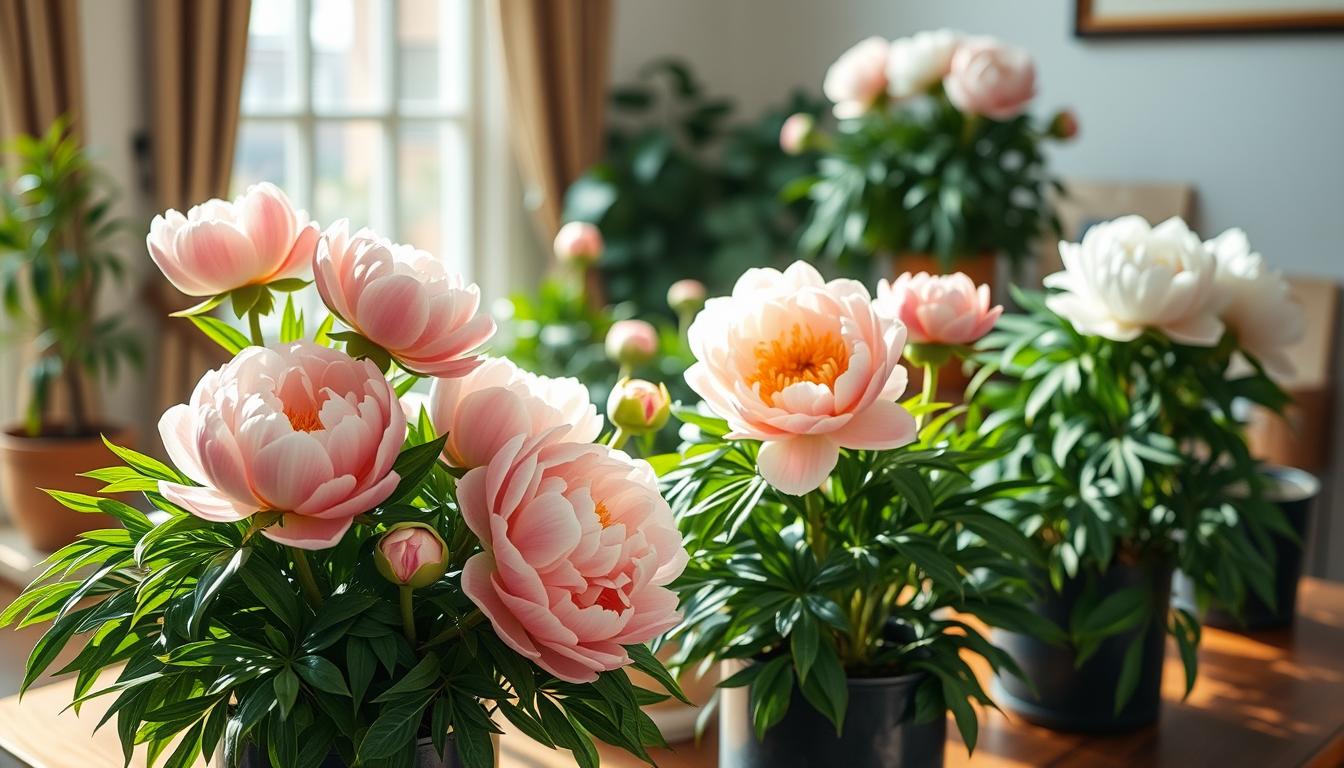
A container peony is possible, but it is not the easy option. The Royal Horticultural Society (RHS) is blunt about it: being deep rooted, peonies do not make good plants for containers. If you have no garden bed, you can still grow one in a pot, but you need to give it the deepest, heaviest pot you can manage, plant it shallowly, give it full sun, and let it have a proper cold winter outdoors.
I am Sawera Shahid, a botanist at Patch Plants. This guide covers the planting depth that decides whether a peony flowers, light, watering, feeding, support, winter care and common problems for a container peony. If you have the space to plant in the ground, read our guide to planting peonies first.
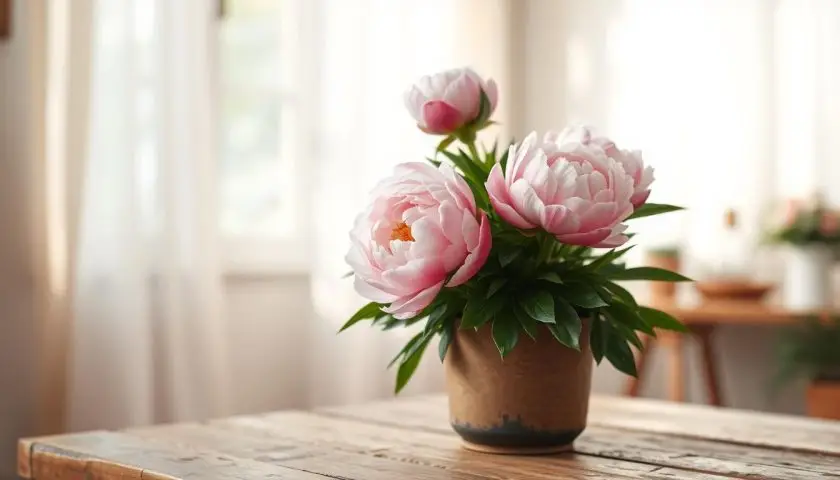
Container Peony: What to Know Before You Start
This guide is about herbaceous peonies, which die back to the ground each winter. The table below sums up the essentials, based on the RHS, Penn State Extension, Iowa State University Extension and Clemson Cooperative Extension.
| Care Factor | What a Peony Needs | Source |
|---|---|---|
| Planting depth | Buds (eyes) covered by no more than 1 to 2 inches of mix | RHS, Clemson, Penn State |
| Light | Full sun, at least six hours of direct sun | Iowa State, Clemson |
| Drainage | Excellent drainage; peonies do not tolerate wet feet | Penn State |
| Feeding | Low-nitrogen fertiliser in spring | Clemson |
| Winter | Needs winter chilling to bloom well | Clemson |
Choosing a Pot for a Container Peony
Because peonies are deep rooted, choose the largest, deepest pot you can lift into place, with several drainage holes. A heavy pot also resists tipping when the plant is in full leaf and flower. I could not find a research-based pot size, so treat depth as the priority and avoid a shallow bowl.
Penn State Extension says peonies prefer excellent drainage and do not tolerate wet feet. Use a free-draining potting mix rather than heavy garden soil. Clemson Extension recommends well-drained, loamy soil with a pH of 6.5 to 7.0 for peonies in the ground, so avoid very acidic mixes. See our guide to soil mixes.
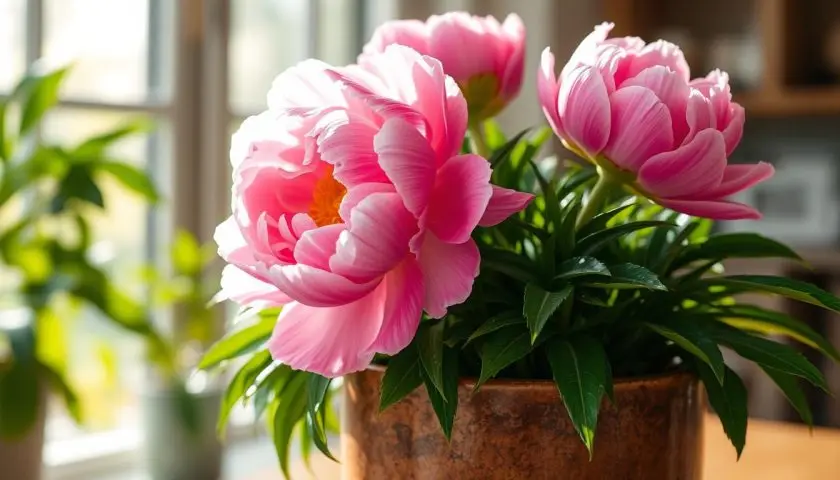
How to Plant a Container Peony at the Right Depth
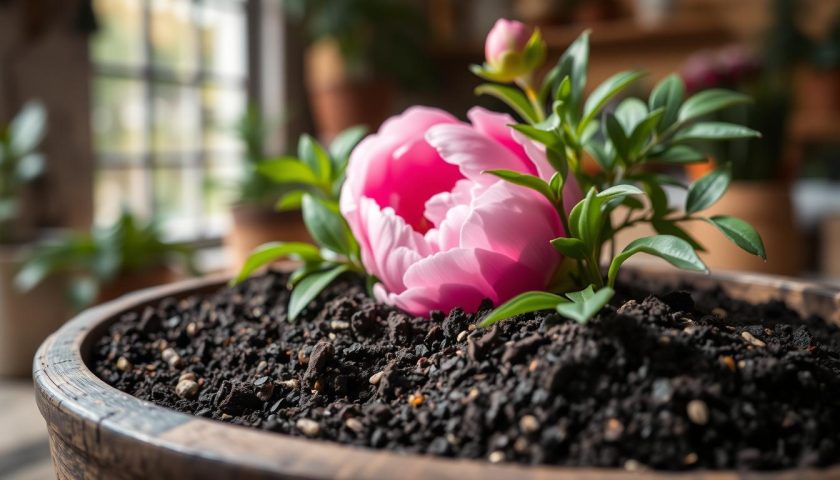
Depth is the most common reason a peony does not flower. The RHS says the bright red buds should be covered with no more than 2.5cm (1in) of soil, and that deep planting reduces flowering. Clemson Extension says to set the eyes no deeper than 1 inch below the surface, and calls deep planting the most common cause of bloom failure. Penn State Extension says to cover the top buds with only one to two inches of soil.
- Bare-root divisions: set the buds 1 to 2 inches below the surface of the mix, per Iowa State Extension. The RHS says bare-root divisions are best planted in late autumn.
- Potted plants: Iowa State Extension says container-grown peonies are usually at the correct depth already, so plant them at about the same depth. The RHS says potted plants are best planted in late spring.
- Water well after planting. Iowa State Extension says to water well in the first year so the plant develops a good root system.
Sun and Placement
Peonies do best in full sun. Iowa State Extension says most peonies need at least six hours of direct sunlight daily, and the RHS says shade can contribute to a lack of flowers. Clemson Extension adds afternoon shade in hot areas. Good air movement helps prevent leaf disease, so avoid a cramped corner.
Watering and Feeding a Container Peony
The RHS says established peonies in the ground are deep rooted and usually do not need routine watering. A pot is different, because the roots cannot reach deeper moisture and the mix dries faster than soil. Check the mix with your finger and water thoroughly when it is dry several inches down, then let excess drain freely. Avoid overhead watering. Clemson Extension notes that avoiding overhead irrigation helps control botrytis blight.
Feed lightly. Clemson Extension suggests a low-nitrogen complete fertiliser in spring, when the stems are 2 to 3 inches tall, kept off the stems, and warns that excess nitrogen can prevent blooming. The RHS suggests a general-purpose fertiliser each spring, followed by mulch. Follow the product label for amounts in a pot.
Support and Deadheading
Many peonies have heavy flower heads. The RHS recommends supporting the stems with stakes, and Clemson Extension suggests commercial hoops or a ring of three or four stakes with ties. Penn State Extension says tall herbaceous peonies with large, full flowers need staking, while those with smaller flowers and sturdy stems need less. Put the support in early, before the stems fall over.
After flowering, remove the dead flowers. Clemson Extension says to remove seed heads so the plant can store energy for next year’s bloom. Leave the leaves in place until they die back.
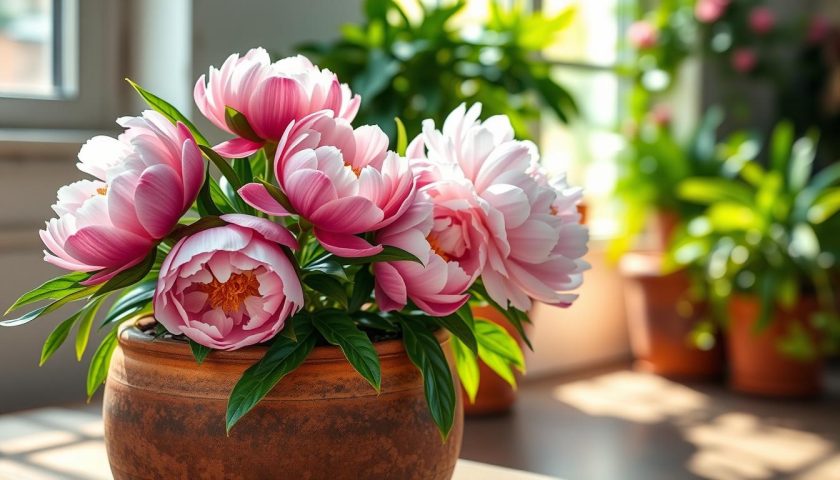
Overwintering Potted Perennials: Peony Winter Care
Peonies need a cold winter. Clemson Extension notes that peonies often perform poorly in the lower South because of insufficient winter chilling, and that some cultivars in zones 8 and 9 may fail to bloom for this reason. For overwintering potted perennials like peonies, that means leaving the pot outdoors rather than moving it into a warm room.
- Cut back in autumn: the RHS says to cut the foliage at ground level once it dies back, to reduce the risk of peony wilt infection. Clemson Extension says to do this after frost and to discard the stems rather than compost them, especially if disease has been a problem.
- Keep the pot outdoors: in a sheltered spot, where the mix will not stay waterlogged.
- Protect the pot in hard freezes: a pot is less insulated than the ground, so in very cold climates I would shelter it against a wall or group pots together. I could not find a research-based protection method, so choose what suits your climate.
Why a Container Peony May Not Flower
| Cause | What Happens | Fix |
|---|---|---|
| Planted too deep | Leafy plant, few or no blooms (RHS, Clemson) | Replant with the eyes within 1 to 2 inches of the surface |
| Too much shade | Reduced flowering (RHS) | Move to full sun |
| Spring drought | Poor bud development or buds failing to open (RHS) | Water the pot in dry spells |
| Recently moved | May take a year or two to flower again (RHS) | Be patient and avoid disturbing the roots |
| Excess nitrogen | Leaves instead of flowers (Clemson) | Use a low-nitrogen fertiliser |
| Too little winter chilling | May fail to bloom in mild climates (Clemson) | Keep the pot outdoors in winter |
Peony Pests, Diseases and Pet Safety
The RHS says peony wilt (grey mould) is the only serious disease noted, causing wilting and dieback of foliage, buds and flowers. Peony blotch causes grey-brown spots with red margins but is not serious, and ants on flower buds cause no damage. Good air movement and cutting back in autumn help prevent problems.
Peonies are toxic to pets. The ASPCA lists peony as toxic to dogs, cats and horses, with paeonol as the toxic principle and vomiting, diarrhoea and depression as clinical signs. Keep pots out of reach, and call your vet or the ASPCA Animal Poison Control Center on (888) 426-4435 if your pet chews the plant. A consultation fee may apply.
Frequently Asked Questions
Can you grow a container peony successfully?
Yes, but with limits. The RHS says peonies are deep rooted and do not make good container plants, so use a large, deep pot and be prepared for slower results than in the ground.
How deep should I plant a container peony?
Shallow. Cover the buds with no more than 1 to 2 inches of mix. Deep planting is the most common reason peonies fail to bloom.
How much sun does a container peony need?
At least six hours of direct sun a day, according to Iowa State and Clemson Extension. In hot climates, give it some afternoon shade.
How do I overwinter a potted peony?
Leave it outdoors in a sheltered spot, because peonies need winter chilling to bloom. Cut the foliage back to ground level once it dies back, and discard the stems rather than composting them.
Are peonies safe for cats and dogs?
No. The ASPCA lists peony as toxic to dogs, cats and horses, causing vomiting, diarrhoea and depression. Keep pots out of reach.
Final Thoughts
A container peony asks for patience. As a botanist, my advice is to choose the deepest pot you can, plant the buds shallowly, give it a full day of sun and a proper winter chill, and resist the urge to overfeed. If you ever have a garden bed available, a peony will usually be happier in the ground. For more container ideas, see our guide to the best plants for container gardening on patios, or explore our outdoor plants section.
Sources: RHS, Herbaceous and intersectional peonies growing guide; RHS, Herbaceous peonies plant guide; Iowa State University Extension, How and where do I plant peonies?; Clemson Cooperative Extension, How to Grow Peonies; Penn State Extension, The Beloved Peony; ASPCA, Peony.