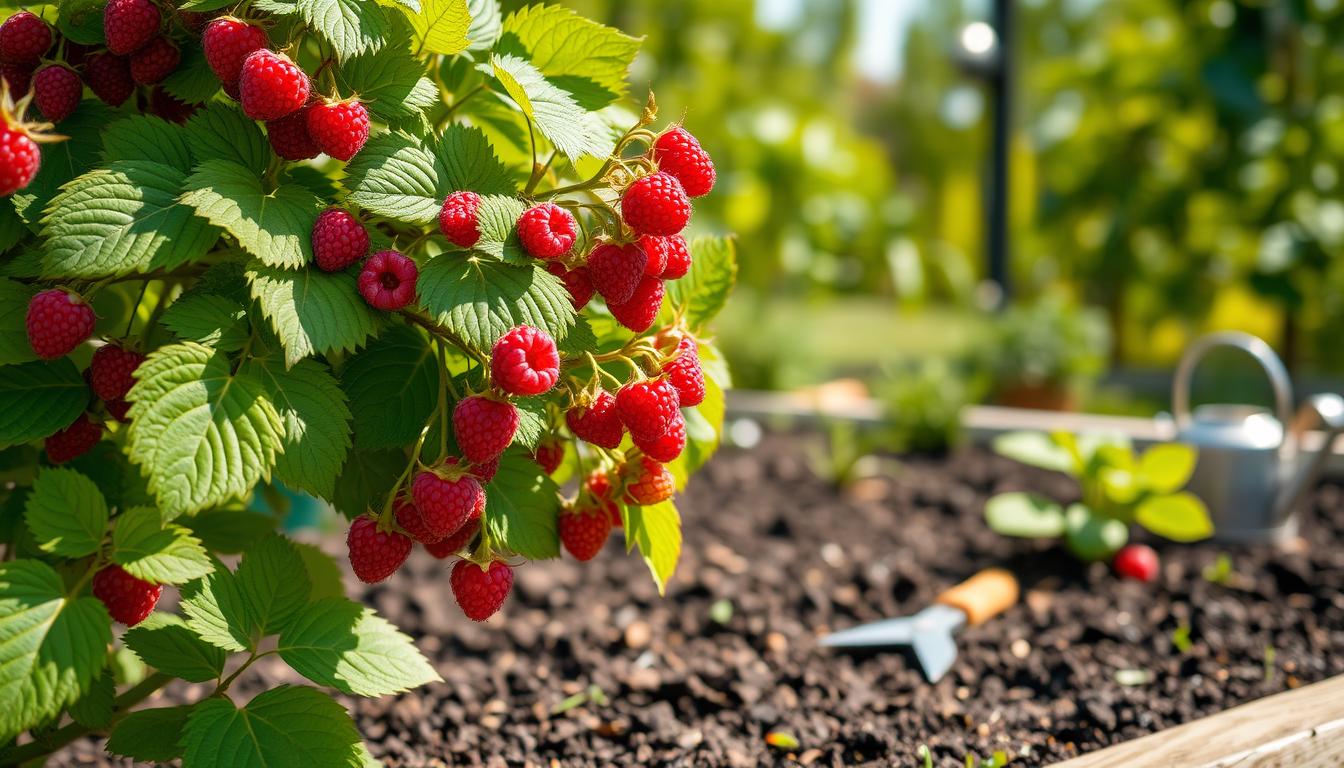
A raspberry bush is one of the easiest soft fruits to grow, but it rewards a little planning. The three things that decide your harvest are a sunny, well-drained site, a sturdy support, and pruning that matches your type of raspberry. Plant it while it is dormant, which makes the colder months a good time to get started.
I am Sawera Shahid, a botanist at Patch Plants. This guide covers how to choose a site and soil, how to plant, how to water and mulch, how to build a support, how to prune primocane and floricane types, and how to handle pests and diseases. For more easy edibles, see our guide to easy outdoor edible plants.
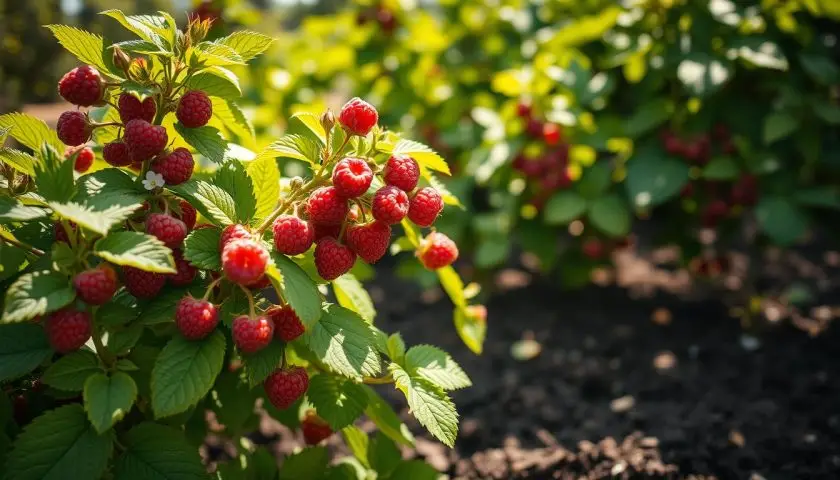
Raspberry Bush Care at a Glance
Raspberries are grown as canes, and the cane’s age decides when it fruits. Floricane (summer-fruiting) types fruit on canes that grew the previous year. Primocane varieties (autumn-fruiting) fruit on canes that grow in the current season. Knowing which you have is the key to pruning.
| Feature | Summer-Fruiting (Floricane) | Autumn-Fruiting (Primocane) |
|---|---|---|
| Fruiting season | June into September (RHS) | August into October (RHS) |
| Fruits on | Last year’s canes | This year’s canes |
| Pruning | Cut fruited canes to the ground after harvest | Cut all canes to the ground when dormant |
| Support | Sturdy posts and wires | Lower, simpler support |
Choosing a Site and Soil for a Raspberry Bush
The Royal Horticultural Society (RHS) advises a sunny, sheltered spot. Raspberries fruit in light shade but the crop is smaller, and the University of Maryland Extension says at least six hours of sun a day is best. The RHS also suggests rows running north to south so plants do not shade each other.
Drainage matters as much as light. Oregon State University Extension warns that roots suffocate if soil stays waterlogged for more than a few days, and that Phytophthora root rot is worse in wet, heavy soil. Where drainage is poor, both the RHS and Oregon State suggest raised beds. See also our guide to root rot.
- Soil pH: the RHS suggests about 6 to 6.7, and Oregon State suggests 5.6 to 6.5. Test your soil first, and adjust about a year before planting, because pH changes slowly.
- Avoid certain sites: the University of Maryland Extension and UNH Extension warn against ground where tomatoes, potatoes, peppers, eggplant or strawberries have recently grown, because of Verticillium wilt risk. Keep plantings away from wild brambles.
- Don’t replant on old raspberry ground: the RHS says this can cause replant problems.
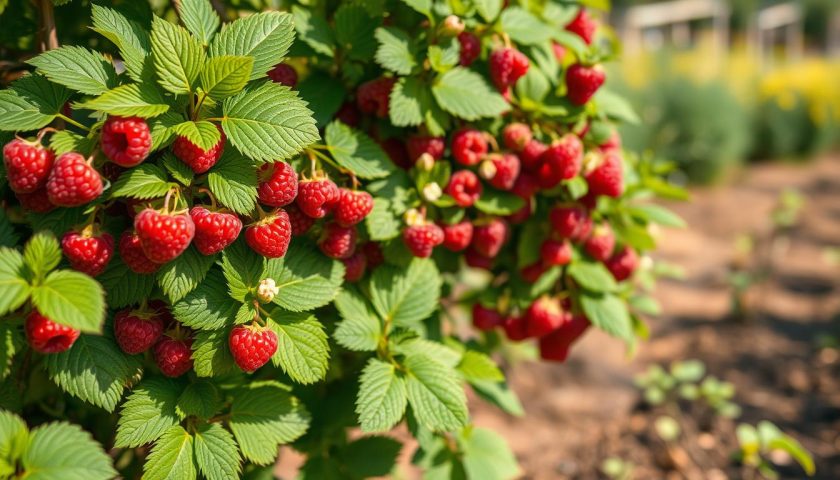
How to Plant a Raspberry Bush
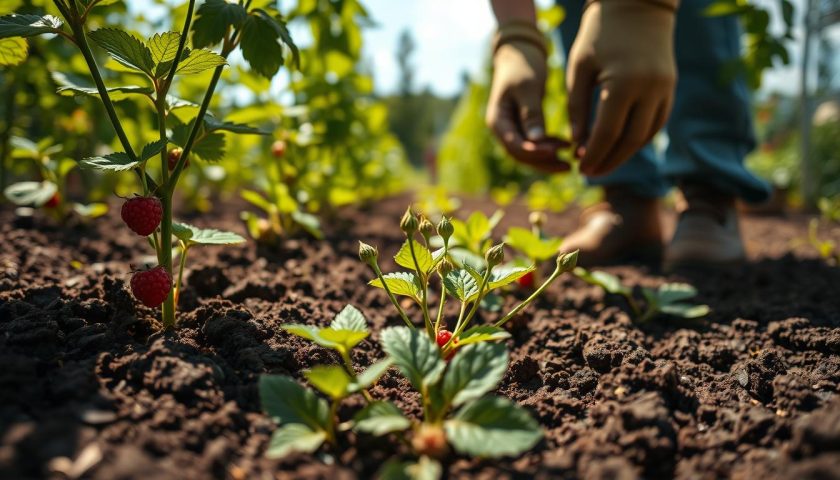
The RHS says to plant while the canes are dormant, from November to March, when the soil is not frozen, and that late autumn is good. The University of Maryland Extension recommends early spring in colder regions.
- Install the support first. The RHS advises putting up posts and wires before planting.
- Set the depth. The RHS says the first roots should be no more than 5cm (2in) below the soil surface, using the soil mark on the stem as a guide. Oregon State advises setting the point where roots meet cane about 1 to 2 inches below the soil.
- Space the plants. The RHS suggests 40 to 60cm between plants and 1.5 to 2m between rows. Oregon State and the University of Maryland suggest about 2 to 2.5 feet within the row and 8 to 10 feet between rows for a hedgerow.
- Cut back after planting. The RHS says to cut canes to about 25cm after planting, but not summer-fruiting canes sold as “long canes”, or you will lose that season’s fruit.
- Water well after planting, and during dry spells in the first season.
You can also grow a raspberry bush in a pot. The RHS suggests compact varieties in a pot at least 40cm wide and 30cm deep, with one cane in the centre at its previous soil level. See our guide to soil mixes for the compost.
Drip Irrigation, Mulch and Feeding
Established raspberries need regular but not excessive water. UNH Extension suggests about 1 to 2 inches per week, and Oregon State suggests 1 to 1.5 inches per week during the growing season, letting the soil dry slightly between waterings. The RHS says established plants rarely need extra water except in long dry spells while fruit develops.
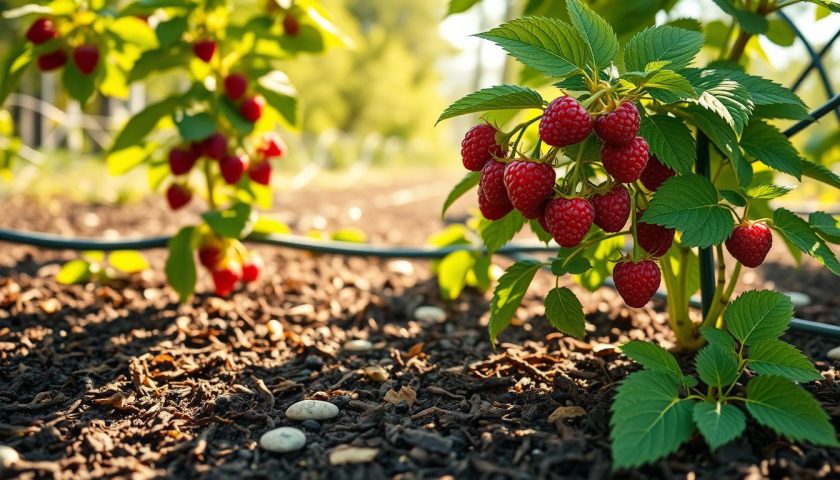
Both UNH Extension and Oregon State favour drip irrigation if rainfall is not enough, because it wets the root zone without soaking the foliage. Oregon State suggests one line per row, with half-gallon emitters every 18 inches. A soaker hose works if you monitor the soil.
- Mulch: the RHS suggests a 5 to 7.5cm layer of organic matter in late winter or early spring, leaving a gap around the stems to prevent rot. UNH Extension adds that you should avoid mulching heavy soils after the first year, because of Phytophthora root rot.
- Feeding: the RHS says mulched plants usually need no extra feed, but an organic granular fertiliser in early spring helps if harvests are poor.
- Too much nitrogen: Oregon State says very tall, thin primocanes suggest too much nitrogen, while pale or yellow leaves suggest too little.
Supports and Training Canes
Raspberries do best on a support. The RHS suggests, for summer-fruiting types, a fence of posts about 1.8m tall with three wires about 60cm apart, and for autumn-fruiting types, lower posts with parallel wires and cross-ties. UNH Extension suggests a simple T-trellis for red and yellow raspberries, and Oregon State describes a cross arm about 1.5 feet wide at knee height.
The University of Minnesota Extension suggests tying floricanes to one side of the trellis and primocanes to the other, which makes picking easier. Use soft ties and do not pull them tight.
Remove suckers that appear outside the intended row in spring, as the RHS advises. You can dig up healthy suckers while the plants are dormant and replant them elsewhere.
Pruning a Raspberry Bush: Primocane and Floricane
Summer-fruiting (floricane) raspberries
The RHS says to cut the old fruited canes to ground level right after harvest, and to keep six to eight of the strongest new canes per plant, tied to the wires about 10cm apart. In February, trim any long canes back to a bud about 10cm above the top wire. The University of Minnesota Extension says you can instead prune in late autumn after dormancy or in early spring.
Autumn-fruiting (primocane varieties)
The RHS says to cut all canes to ground level in February, and to thin overcrowded clumps in early summer so canes are about 10cm apart. The University of Minnesota Extension says you can use a mower, sharp loppers or a hedge trimmer, and to remove wires and drip lines before mowing. Leaving some canes for a summer crop is possible on established plants, but the University of Minnesota Extension notes it adds labour with little likely yield benefit.
| Type | When to Prune | What to Cut |
|---|---|---|
| Summer-fruiting | After harvest; trim in February | Fruited canes to the ground; keep six to eight new canes per plant |
| Autumn-fruiting | February (or dormant season) | All canes to the ground |
| Both | Spring | Suckers outside the row |
Harvesting a Raspberry Bush Through the Fruiting Season
The RHS says summer varieties start in June and can continue into September, and autumn varieties usually crop from August into October. Pick regularly on dry days, using shallow containers so the fruit is not squashed. UNH Extension says to pick fruit when it is firm and comes off the core easily.
Raspberry Pests and Diseases
| Problem | What It Does | What to Do |
|---|---|---|
| Raspberry beetle | Grubs damage the fruit (RHS) | Check fruit and clear debris |
| Aphids | Suck sap and can spread viruses (RHS) | Monitor and control early |
| Cane blight | Fungal die-back of canes (RHS) | Remove affected canes |
| Spur blight | Purple patches on canes (RHS) | Thin canes for airflow |
| Viruses | Stunting and distortion (RHS) | Remove affected plants; buy certified virus-free stock |
| Phytophthora root rot | Canes die in midsummer, laterals collapse near harvest (Oregon State) | Improve drainage; use raised beds |
The University of Maryland Extension advises removing old, dead canes attached to the crown, because they may harbour disease. UNH Extension adds that you should remove diseased canes and fallen fruit or leaves, and prune each year. For general control, see our guide to keeping pests away from outdoor plants.
Common Raspberry Bush Mistakes
| Mistake | Why It Hurts | Better Practice |
|---|---|---|
| Planting in waterlogged soil | Roots suffocate and rot | Improve drainage or use raised beds |
| Using the wrong pruning method | Removes next summer’s fruiting canes | Identify whether you have primocane or floricane types |
| Planting on old raspberry or tomato ground | Replant problems, Verticillium risk | Choose a fresh site |
| Piling mulch against the stems | Encourages rot | Leave a gap around the canes |
| Letting suckers spread | Crowds the row | Remove suckers outside the row each spring |
Frequently Asked Questions
When is the best time to plant a raspberry bush?
The RHS says to plant while canes are dormant, from November to March, when the soil is not frozen. In colder regions, the University of Maryland Extension recommends early spring.
How do I prune primocane varieties?
Cut all the canes to the ground when dormant. The RHS says February, and the University of Minnesota Extension says late autumn or early spring.
How often should I water a raspberry bush?
About 1 to 2 inches a week during the growing season, according to UNH Extension, with drip irrigation preferred. Established plants in the UK rarely need extra water except in long dry spells, according to the RHS.
What soil pH do raspberries need?
Slightly acidic soil. The RHS suggests about 6 to 6.7, and Oregon State suggests 5.6 to 6.5. Test your soil first.
Do I need a trellis for a raspberry bush?
It is strongly recommended. UNH Extension says to train all raspberries on a trellis, and the RHS suggests posts and wires installed before planting.
Final Thoughts
A raspberry bush rewards good groundwork. As a botanist, my advice is to pick a sunny, well-drained site, put the support in before you plant, and learn whether you have summer or autumn-fruiting canes, because that decides how you prune. A little attention to drainage and sanitation prevents most of the common diseases. For more ideas, explore Patch Plants and our outdoor plants section.
Sources: RHS, How to grow raspberries; Oregon State University Extension, Growing Raspberries in Your Home Garden; University of Maryland Extension, Growing Raspberries and Blackberries in a Home Garden; University of Minnesota Extension, Pruning and training raspberries; UNH Extension, Top Ten Tips for Successful Backyard Raspberry Production.