A reliable houseplant fertilizer guide can help you understand when indoor plants need nutrients, which fertilizer to choose, and how to avoid feeding mistakes. Fertilizer is useful for maintaining healthy leaves, roots, and flowers, but giving plants more nutrients than they need can damage their growth.
Most indoor plants grow in a limited volume of potting mix. Over time, nutrients may be taken up by roots or washed away during watering. Fertilizer can replace some of these nutrients, but the right amount depends on the plant, light exposure, potting medium, season, and existing fertilizer supply. A pothos growing quickly beside a bright window may need a different feeding approach from a cactus resting in a cool room.
This comprehensive houseplant fertilizer guide explains when and how to fertilize indoor plants, what NPK numbers mean, and how to compare liquid, water-soluble, controlled-release, and organic products. It also covers feeding schedules, newly repotted plants, nutrient deficiency symptoms, fertilizer burn, salt buildup, and common homemade fertilizer mistakes.
When and How Should You Fertilize Houseplants?
Fertilize houseplants when they are actively growing and need additional nutrients. For many indoor plants, this means spring and summer, when longer days support new foliage and roots. Use a fertilizer formulated for indoor plants or an appropriate complete fertilizer, following its label for dilution, amount, and application frequency.
Reduce or pause fertilizing when growth slows significantly, particularly during darker winter months. However, plants receiving sufficient artificial light and actively growing indoors may continue to use nutrients throughout the year.
Before feeding, check that the plant has adequate light, healthy roots, and appropriate moisture. Fertilizer cannot solve problems caused by poor watering, low light, pests, or root disease.
Iowa State University Extension recommends fertilizing houseplants during active growth and adjusting frequency according to the product and plant conditions. Read its houseplant care guidance for additional information.
Key Takeaways
- Most houseplants need fertilizer primarily during periods of active growth, often in spring and summer.
- Fertilizer supplies mineral nutrients; sunlight provides the energy plants use for photosynthesis.
- The NPK numbers on a fertilizer label represent nitrogen, available phosphate, and soluble potash.
- A complete, appropriately formulated indoor plant fertilizer is a practical starting point for many common houseplants.
- Liquid and water-soluble fertilizers allow feeding rates to be adjusted, while controlled-release products provide nutrients gradually.
- Follow the specific product label. General-purpose fertilizers may need lower concentrations when used on indoor plants.
- New potting mixes may already contain nutrients, so immediate additional feeding is often unnecessary.
- Reduce feeding when light and growth are limited, rather than following a rigid year-round calendar.
- Too much fertilizer may cause salt buildup, leaf-tip damage, root stress, or poor growth.
- Raw banana peels, coffee grounds, and eggshells do not provide a predictable, complete fertilizer for indoor containers.
Why Do Indoor Plants Need Fertilizer?
Plants require essential mineral nutrients to grow, produce healthy foliage, develop roots, and complete their life cycles.
In natural environments, nutrients are supplied through soil minerals, organic matter, and biological processes. In a container, the available nutrient supply is more limited.
Commercial potting mixes may include a starter fertilizer or controlled-release nutrients. Over time, those supplies are used or lost through drainage.
Applying the correct fertilizer helps maintain nutrient availability when the existing potting medium can no longer supply enough for healthy growth.
Does Fertilizer Give Plants Energy?
No. Fertilizer is not an energy source for plants in the way food provides energy for animals.
Plants capture light energy through photosynthesis and use carbon dioxide and water to produce sugars.
Mineral nutrients support processes such as chlorophyll formation, enzyme activity, cell development, and the movement of substances within the plant.
This is why a houseplant in a very dark room cannot be made healthy simply by adding fertilizer.
Can Houseplants Grow Without Fertilizer?
Some houseplants can grow for extended periods without supplemental feeding when their potting mix already contains sufficient nutrients.
However, nutrient reserves are not unlimited.
Plants growing actively in containers may eventually develop nutrient limitations if their growing medium is depleted and nutrients are not replenished.
Fertilizer should therefore be used according to actual plant needs rather than automatically added whenever a leaf changes colour.
What Nutrients Do Indoor Plants Need?
Houseplants require nitrogen, phosphorus, potassium, and several other essential elements.
The required quantities vary, and no single nutrient is responsible for one isolated function. Each contributes to multiple plant processes.
Nitrogen: Leaf Growth and Chlorophyll
Nitrogen (N) is important for proteins, chlorophyll, and many components of active plant growth.
It is particularly relevant to foliage plants that produce new leaves and stems.
Insufficient nitrogen can cause slower growth and yellowing that may begin on older leaves, although these symptoms can have other causes.
Phosphorus: Energy Transfer and Root Development
Phosphorus (P) supports energy transfer, genetic material, root development, and other essential growth processes.
Plants need phosphorus, but supplying excessive amounts does not automatically create stronger roots or more flowers.
If the growing medium already contains adequate phosphorus, extra additions may offer little benefit.
Potassium: Water Regulation and Plant Function
Potassium (K) supports water regulation, enzyme activity, and other physiological functions.
Adequate potassium contributes to overall plant health, but excessive fertilizer remains harmful even when potassium is included.
Secondary Nutrients and Micronutrients
Plants also require calcium, magnesium, and sulfur, along with smaller quantities of iron, manganese, zinc, boron, copper, molybdenum, chlorine, and nickel.
These elements perform essential functions despite being needed in different quantities.
A complete fertilizer may contain some or all of them. Always check the guaranteed analysis rather than assuming every fertilizer includes a full micronutrient package.
How to Read NPK Numbers on Houseplant Fertilizer
The three prominent numbers on many fertilizer labels are known as the NPK analysis.
They represent the percentages by weight of nitrogen, available phosphate, and soluble potash.
In the conventional fertilizer-label system, the second and third numbers are expressed as phosphate (P2O5) and potash (K2O) equivalents rather than elemental phosphorus and potassium percentages.
| Label Number | What It Represents | Main Importance |
|---|---|---|
| First number | Nitrogen (N) | Essential for proteins, chlorophyll, and growth |
| Second number | Available phosphate (P2O5) | Phosphorus nutrition and plant metabolism |
| Third number | Soluble potash (K2O) | Potassium nutrition and plant regulation |
What Does 10-10-10 Fertilizer Mean?
A fertilizer marked 10-10-10 contains 10% nitrogen, 10% available phosphate, and 10% soluble potash by weight.
The equal numbers indicate a balanced analysis by label percentage.
However, balanced does not necessarily mean ideal for every plant or growing medium.
What Does 3-1-2 Fertilizer Mean?
A 3-1-2 analysis indicates relatively more nitrogen than phosphate or potash.
Some fertilizers for foliage plants use nutrient proportions with relatively more nitrogen.
Do not choose a fertilizer based on ratio alone. Consider its complete nutrient analysis, recommended dose, plant type, and growing conditions.
Does a Higher NPK Number Mean Better Fertilizer?
No. Higher numbers generally indicate a more concentrated product, not automatically better plant performance.
A highly concentrated fertilizer may require greater dilution.
Applying an excessive amount can increase soluble salts and injure roots.
For further information about fertilizer analysis, consult Iowa State University’s fertilizer guide.
Types of Houseplant Fertilizer: Which Should You Choose?
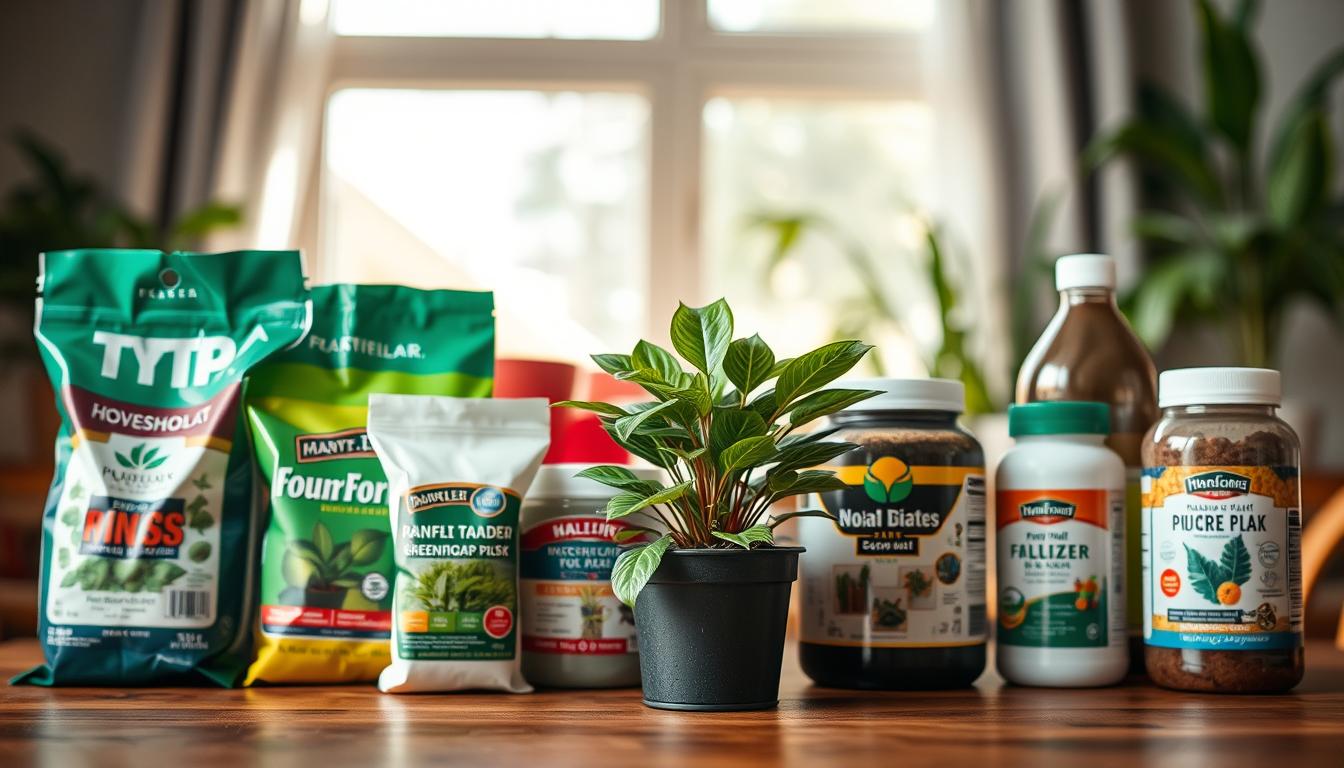
Fertilizers are available in several forms. Each can work when used correctly, so the most suitable choice depends on your routine and the plants you grow.
1. Liquid Houseplant Fertilizer
Liquid fertilizers are typically measured and mixed with water before application, although some products are ready to use.
They are useful when you want control over application strength and frequency.
Many houseplant growers prefer liquid products because they fit easily into an ordinary watering routine.
Best for: A mixed collection of actively growing indoor plants.
Main caution: Measure accurately and do not assume a stronger solution will improve growth.
2. Water-Soluble Fertilizer
Water-soluble powders or crystals are dissolved in water according to the product label.
They can be economical and allow different solution strengths where the label permits.
However, concentrated products require careful handling and measurement.
Best for: Larger plant collections and growers who prefer mixing fertilizer solutions.
Main caution: Fully dissolve the product and follow its stated concentration.
3. Controlled-Release Fertilizer
Controlled-release fertilizer granules gradually release nutrients over time.
The release period depends on the product, temperature, moisture, and other conditions.
These fertilizers can be convenient for growers who do not want to mix liquid feed regularly.
However, they do not automatically eliminate the possibility of overfertilization.
Best for: Growers who prefer fewer applications.
Main caution: Check whether the potting mix already contains controlled-release fertilizer before adding more.
4. Granular Fertilizer
Some granular fertilizers can be incorporated into a potting medium or applied to its surface.
Use only products suitable for container growing and follow the application directions.
Applying a strong garden fertilizer unevenly in a small pot can create high nutrient concentrations near roots.
5. Organic Houseplant Fertilizer
Organic fertilizers may include plant-derived materials, animal-derived ingredients, or processed organic amendments.
Depending on the product, some nutrients become available through microbial decomposition, while others may be present in soluble forms.
Organic does not automatically mean safer, more complete, or incapable of burning roots.
Choose properly processed products suitable for indoor containers and follow their labels.
| Fertilizer Type | Main Advantage | Main Limitation |
|---|---|---|
| Liquid | Easy to adjust concentration and frequency | Requires regular measuring and mixing |
| Water-soluble powder | Flexible mixing and useful for larger collections | Concentrated products require accuracy |
| Controlled-release | Gradual nutrient supply | Harder to change feeding quickly |
| Granular | Convenient for suitable formulations | Uneven application can be risky in small pots |
| Processed organic | Alternative nutrient sources and formulations | Variable release and possible odour |
When Should You Fertilize Houseplants During the Year?
The most useful feeding signal is active plant growth.
For many houseplants growing in natural daylight, spring and summer are the main fertilizing seasons.
However, seasonal behaviour depends on the species, hemisphere, climate, and conditions inside the home.
Spring: Begin Feeding as Growth Increases
Longer days and increasing light often encourage houseplants to produce new leaves and stems.
When growth becomes active, consider starting an appropriate fertilizer routine.
Begin with the product’s recommended concentration, or a conservative concentration for general-purpose fertilizer where appropriate.
Avoid feeding heavily simply because the calendar says spring.
Summer: Adjust for Light and Growth
Many houseplants grow actively during summer if temperature, water, and light are suitable.
Follow the selected product’s feeding interval and monitor how the plant responds.
Plants growing slowly because of heat stress or inadequate conditions may require less fertilizer, not more.
Autumn: Reduce Feeding When Growth Slows
Shortening days may lead to slower growth in many indoor plants.
Reduce fertilizer when new growth decreases and water use falls.
Do not continue an intensive summer feeding routine automatically.
Winter: Pause or Reduce Feeding as Needed
Many houseplants need little or no additional fertilizer during the darker winter months.
However, plants grown under sufficiently strong artificial light may continue growing and using nutrients.
Assess the actual plant rather than treating winter as a universal state of complete dormancy.
| Season | Common Growth Pattern | Feeding Approach |
|---|---|---|
| Spring | Growth often increases | Begin an appropriate routine when growth resumes |
| Summer | Often active growth | Follow product label and plant response |
| Autumn | Growth may slow | Reduce feeding where appropriate |
| Winter | Often slower in natural light | Pause or reduce unless continued growth warrants feeding |
How Often Should You Fertilize Indoor Plants?
Frequency depends on the specific product.
Some liquid feeds are applied at relatively short intervals during active growth. Controlled-release fertilizers may supply nutrients for several months.
Iowa State University Extension notes that recommended application intervals vary substantially by formulation, from frequent soluble feeds to products designed for applications several months apart.
Do not combine a recurring liquid fertilizer schedule with controlled-release granules unless the combined nutrient supply has been considered.
7 Smart Rules for Fertilizing Indoor Plants Safely
Rule 1: Identify the Plant and Its Nutritional Needs
Determine the species and consider whether it is actively growing.
A rapidly growing tropical foliage plant may have different nutrient requirements from a slow-growing cactus or succulent.
Check the product label for any plant-specific guidance.
Rule 2: Check Light and Plant Health First
Before feeding, inspect leaves, stems, roots where visible, and growing-medium moisture.
If the plant is suffering from severe drought, root rot, heavy pest infestation, or other major stress, address that problem first.
Fertilizer should support an otherwise suitable growing environment.
Rule 3: Read the Fertilizer Label
Check the guaranteed analysis, mixing instructions, application interval, and precautions.
Houseplant-specific products may be used at their labelled concentration.
General-purpose products intended for more vigorous outdoor growth may need lower concentrations for indoor use.
Rule 4: Measure and Dilute Accurately
Use a clean measuring device and watering container.
Never estimate fertilizer concentration by eye, double the recommended dose, or mix products without appropriate instructions.
For a concentrated fertilizer, adding too much product can significantly increase the dissolved salts around the roots.
Rule 5: Avoid Feeding Severely Dry Roots
Applying a concentrated fertilizer solution to extremely dry or drought-stressed growing medium may increase the risk of injury.
Restore appropriate moisture first if the plant is severely dry.
Follow the fertilizer label for application to moist or previously watered potting medium.
Rule 6: Apply Evenly and Allow Drainage
For a liquid fertilizer intended for root-zone application, distribute the prepared solution evenly over the growing medium.
Avoid splashing leaves or crowns unless the product specifically permits foliar application.
Allow excess liquid to drain and remove standing water from saucers or decorative outer pots.
Rule 7: Monitor the Plant and Adjust
Record when fertilizer was applied and look for changes in growth, foliage, and root health over time.
If new growth is healthy, continue the suitable routine.
If unusual leaf damage or salt deposits develop, pause feeding and investigate the possible causes before applying more.
How to Apply Liquid Fertilizer Step by Step
- Choose the product: Select a fertilizer suitable for the plant and growing medium.
- Inspect the plant: Confirm that it is growing actively and is not severely stressed.
- Check existing fertilizer: Determine whether the potting mix already contains controlled-release nutrients.
- Read the label: Identify the correct concentration, amount, and application interval.
- Prepare the solution: Measure the specified quantity into a clean container and mix as instructed.
- Check potting-medium moisture: Avoid applying strong fertilizer to a severely dry root zone.
- Apply carefully: Distribute the solution over the potting medium according to the label.
- Allow drainage: Remove excess liquid from saucers and cachepots.
- Record the date: Note the fertilizer type, concentration, and plant response.
Important: These steps apply primarily to liquid or water-soluble fertilizers used in the root zone. Controlled-release and specialty products have different instructions.
Best Fertilizer Approach for Different Houseplants
Not all indoor plants respond the same way to fertilizer.
Use the following comparison as a starting point, then follow species-specific and product-specific guidance.
| Plant Group | Suitable Approach | Important Caution |
|---|---|---|
| Pothos, Monstera, Philodendron | Complete houseplant fertilizer during active growth | Do not use fertilizer to compensate for low light |
| Ficus and rubber plants | Suitable balanced or foliage-oriented product | Adjust for season and light |
| Succulents and cacti | Conservative feeding during appropriate growth periods | Avoid overfertilizing slow-growing plants |
| African violets and other flowering houseplants | Suitable complete formula matched to growth | Extra phosphorus is not automatically necessary |
| Orchids | Orchid-suitable fertilizer and substrate-specific schedule | Species and potting material affect feeding |
| Ferns and calatheas | Careful, appropriately diluted feeding | Watch for salt sensitivity and root stress |
| Palms | Complete fertilizer including appropriate micronutrients | Species-specific deficiencies and sensitivities vary |
| Recently rooted cuttings | Delay or use gentle nutrition as roots establish | Do not expose fragile new roots to excessive salts |
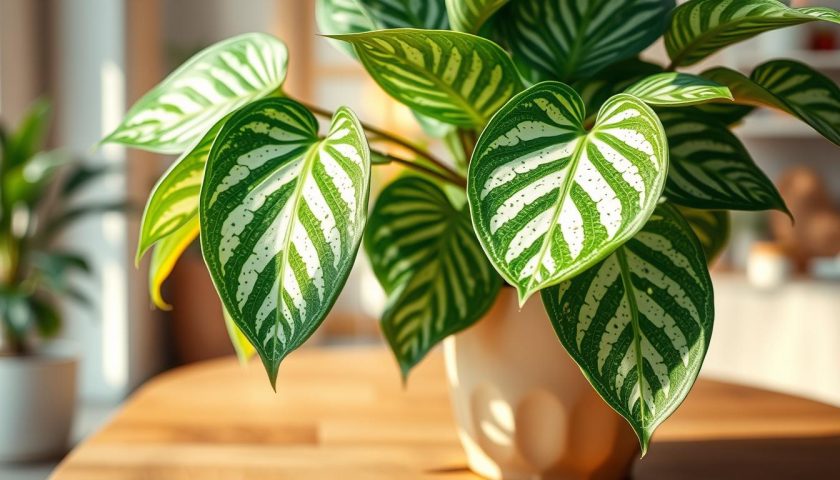
Foliage Plants: Pothos, Monstera, and Philodendron
These plants often benefit from appropriate feeding when they have enough light to support active growth.
A complete houseplant fertilizer is a practical starting point.
If a plant produces weak, elongated stems because of low light, adding extra nitrogen is unlikely to solve the problem.
Succulents and Cacti
Many succulent plants grow relatively slowly indoors.
Use a feeding approach appropriate to the species and active growing period.
Excessive fertilizer may encourage weak growth or create harmful salt concentrations.
For related care, see our succulent care guide.
Flowering Houseplants
African violets, peace lilies, orchids, and other flowering plants may benefit from suitable nutrition during active growth.
However, fertilizer alone does not trigger flowering.
Light, temperature, maturity, and species-specific flowering cycles are often equally important or more important.
Choose a fertilizer appropriate for the species instead of assuming every flowering plant needs a high-phosphorus bloom booster.
Ferns, Calatheas, and Sensitive Houseplants
Some indoor plants are particularly sensitive to high concentrations of soluble salts.
Use appropriate feeding rates and monitor leaf tips, growth, and root-zone conditions.
Do not assume an organic product is incapable of causing fertilizer injury.
New Cuttings and Young Plants
Freshly propagated cuttings may have limited root systems.
Prioritize appropriate moisture, light, and root establishment.
Introduce fertilizer according to the propagation method and growing medium once nutrients are needed.
Should You Fertilize After Repotting?
Houseplants repotted into fresh commercial potting mix may already receive nutrients from the new medium.
Some mixes contain a starter nutrient charge or controlled-release fertilizer.
In these cases, immediate feeding is often unnecessary.
However, the correct waiting period depends on the potting mix, its fertilizer content, plant condition, and growth rate.
Some mixes contain little or no added fertilizer, while others provide nutrients for weeks or months.
Iowa State University Extension generally advises waiting at least two to four weeks before regular fertilizing after repotting, while also noting that fertilizer-containing mixes may reduce the need for feeding for the first few months.
Always inspect the new mix’s ingredients and instructions.
For practical repotting advice, read our how to repot a plant guide.
Organic and Homemade Houseplant Fertilizer: What Works?
Many indoor gardeners want alternatives to conventional synthetic fertilizers.
Organic fertilizers can be useful when they are appropriately formulated and applied.
However, raw household scraps are not equivalent to a complete fertilizer product.
Worm Castings
Worm castings are a processed organic amendment that may contribute nutrients and organic matter.
The nutrient content varies by source and processing.
Use suitable quantities rather than assuming unlimited amounts are beneficial.
Fish Emulsion
Fish-based fertilizers can provide plant nutrients and may be used when the product is appropriate for indoor containers.
However, some products have strong odours.
Follow the label, and consider whether they are suitable for an indoor living space.
Seaweed Products
Seaweed-derived products vary widely.
Some supply nutrients, while others are marketed primarily as plant biostimulants and may not provide a complete NPK analysis.
Check the label rather than treating every seaweed product as a replacement for complete fertilizer.
Banana Peels
Banana peels contain plant nutrients, but placing raw peels into houseplant pots does not provide a predictable nutrient amount.
Decomposition may also contribute to unpleasant odours, fungi, or pest problems in a small indoor container.
Coffee Grounds
Used coffee grounds are not a reliable complete fertilizer.
Adding thick layers directly to houseplant pots may affect moisture movement or contribute to poor growing conditions.
They are often better handled through an appropriate composting process.
Eggshells
Eggshells contain calcium compounds, but large pieces break down slowly.
They do not supply the full range of nutrients required by houseplants.
Adding eggshells to a pot should not be considered a proven treatment for unspecified nutrient deficiency.
Compost Tea
Homemade compost teas vary considerably in nutrient content and microbiological quality.
They should not be assumed to be complete, predictable, or safe simply because they are homemade.
Best Practical Choice
For most beginners, a properly labelled complete houseplant fertilizer provides a more predictable nutrient supply than raw kitchen scraps.
Whether you choose a synthetic or processed organic product, follow its application instructions.
How to Recognize Fertilizer Deficiency and Overfertilization
Both insufficient nutrients and excessive fertilizer can contribute to poor plant growth.
However, their visible symptoms can overlap with problems caused by inadequate light, watering mistakes, pests, or damaged roots.
Possible Signs of Nutrient Deficiency
Symptoms may include unusually slow growth, pale foliage, smaller new leaves, or specific patterns of leaf yellowing.
For example, nitrogen shortage can cause yellowing that begins on older leaves because nitrogen is mobile within plants.
Other nutrient deficiencies produce different patterns, but visual symptoms alone are rarely enough for a confident diagnosis.
Possible Signs of Too Much Fertilizer
Excessive fertilizer may increase soluble salts around roots.
Possible warning signs include brown leaf tips, leaf-edge damage, poor root development, unusual wilting, or visible salt deposits.
These signs are not exclusive to fertilizer burn.
Salt crusts may also contain minerals from irrigation water, and leaf-tip browning can result from several different stresses.
Fertilizer Problems: Troubleshooting Table
| Symptom | Possible Explanation | What to Do |
|---|---|---|
| White crust on potting mix | Accumulated fertilizer or water minerals | Review water and fertilizer use |
| Brown leaf tips | Salt stress, water problems, or environmental conditions | Check roots, moisture, and recent feeding |
| Yellow older leaves | Possible nutrient limitation or other stress | Check light, roots, moisture, and nutrition |
| Weak stretched stems | Commonly insufficient light | Assess lighting before fertilizing |
| Slow growth | Low light, seasonal slowdown, poor roots, or nutrient shortage | Assess the whole growing environment |
| Wilting with moist soil | Possible root damage, oxygen shortage, or salt injury | Check drainage and root health |
| Recently repotted plant declines | Transplant stress, root damage, water problems, or excess nutrients | Stabilize care and avoid unnecessary feeding |
| New leaves remain unusually small | Possible insufficient light, nutrients, or root space | Compare with mature growth and growing conditions |
What Should You Do if You Overfertilize a Houseplant?
- Stop adding fertilizer while investigating the problem.
- Review how much fertilizer was applied and when.
- Check growing-medium moisture, drainage, and the condition of the roots.
- If soluble salt buildup is likely and roots are reasonably healthy, consider carefully leaching the potting medium with clean water in a container with functional drainage.
- Allow the pot to drain properly and do not leave it waterlogged.
- If the medium is severely damaged or root conditions require attention, consider appropriate repotting instead of repeatedly adding water.
- Wait for recovery and suitable active growth before restarting an appropriate feeding routine.
Do not flush a pot repeatedly without considering the plant’s moisture needs. Excess water can worsen problems when the root system is already compromised.
For related symptoms, see our plant rescue guide and white spots on plant leaves guide.
How to Prevent Fertilizer Salt Buildup
Soluble salts may accumulate in the growing medium as water evaporates and fertilizer or irrigation minerals remain behind.
The rate of accumulation depends on the product, water quality, fertilizer concentration, drainage, and watering practices.
Use the Correct Concentration
Follow the manufacturer’s application directions and avoid adding stronger solutions in an attempt to speed growth.
Use Containers With Drainage
Drainage allows excess water and dissolved materials to leave the pot.
However, drainage does not justify continuously keeping roots saturated.
Review Irrigation Water
Hard or mineral-rich water can contribute to deposits over time.
Consider your water quality if white crusts appear repeatedly despite conservative fertilizer use.
Leach Salts Only When Appropriate
When salt accumulation is likely, a controlled flush through a free-draining pot may help remove some dissolved material.
Do this only when the plant’s root health and moisture conditions make it appropriate.
Do not use excessive flushing as a routine substitute for correct fertilizer application.
How to Build a Simple Houseplant Feeding Schedule
A useful feeding schedule is flexible rather than fixed.
Record the date, fertilizer product, concentration, plant condition, and seasonal growth pattern.
The purpose is to avoid missed or repeated applications and to help identify how different plants respond.
Record These Details
| Tracking Field | Example |
|---|---|
| Plant | Golden pothos |
| Last feeding | Date fertilizer was applied |
| Product | Complete liquid houseplant fertilizer |
| Concentration | Actual concentration according to label |
| Light | Bright indirect light |
| Growth stage | New leaves developing |
| Plant response | Healthy growth or any unusual symptoms |
| Next review | According to product label and plant growth |
Example: Bright-Window Foliage Plant
A pothos receiving good daylight and actively producing new leaves may benefit from an ordinary houseplant fertilizer routine during its growing season.
Follow the fertilizer label and adjust when light and growth slow.
Example: Slow-Growing Succulent
A succulent growing slowly under indoor conditions may need relatively little fertilizer.
Feed only when appropriate for its growing cycle and use a suitable product.
Example: Winter Grow-Light Collection
Plants grown under strong supplemental light can remain active during winter.
Where new growth continues and nutrients are needed, a conservative feeding routine may remain appropriate.
Read our indoor gardening systems guide for more information about controlled indoor growing.
Fertilizer Safety for Pets, Children, and the Home
Store Fertilizer Securely
Keep products in their original labelled containers with closures secured.
Store them away from children, pets, food, and household items that could become contaminated.
Use Appropriate Protection
Follow the label’s recommendations for gloves, eye protection, and other precautions when mixing or applying fertilizer concentrates.
Wash hands and equipment after use.
Prevent Indoor Spills
Mix fertilizers in a suitable area and protect nearby furniture and flooring.
Do not leave fertilizer solution in open containers where children or pets can reach it.
Choose Appropriate Products for Edible Plants
When fertilizing indoor herbs or vegetables, use a product labelled for edible crops and follow its instructions.
Do not assume every ornamental houseplant fertilizer is appropriate for edible plants.
Dispose of Fertilizer Properly
Follow the product label and local waste-disposal rules.
Avoid excessive nutrient runoff and never dispose of concentrated fertilizer into storm drains or natural waterways.
Common Houseplant Fertilizing Mistakes
- Feeding plants that are not actively growing: Extra fertilizer may accumulate when nutrient demand is low.
- Using fertilizer instead of correcting light problems: Nutrients cannot replace photosynthesis.
- Applying too much fertilizer: Excess dissolved salts may damage roots and leaves.
- Ignoring the product label: Different fertilizers have different concentrations and application intervals.
- Applying fertilizer to severely drought-stressed roots: Correct moisture problems before feeding.
- Assuming every new pot needs immediate feeding: Fresh potting mixes may already contain fertilizer.
- Using high-phosphorus fertilizer for every flowering plant: Additional phosphorus is not always needed.
- Mixing multiple fertilizers without checking total nutrients: Combined applications can lead to overfeeding.
- Doubling the next dose after missing an application: Resume the normal, appropriate schedule instead.
- Using raw food scraps as complete fertilizer: Kitchen waste does not supply predictable nutrient ratios.
- Misdiagnosing yellow leaves: Watering, light, ageing, and roots can cause similar symptoms.
- Ignoring salt buildup: Repeated overapplication can contribute to damage.
- Applying products unsuitable for containers: Check that fertilizers are appropriate for indoor potted plants.
- Overlooking seasonal changes: Indoor growth often slows as daylight decreases.
- Using the same schedule for every plant: Species, potting medium, and growing conditions differ.
Frequently Asked Questions About Houseplant Fertilizer
When is the best time to fertilize houseplants?
The best time is during active growth, often in spring and summer for plants grown in natural daylight. Reduce or pause feeding when growth slows. Houseplants growing actively under adequate supplemental light may continue needing nutrients during other seasons. Follow the fertilizer label and consider the plant’s actual growth conditions.
How often should I fertilize indoor plants?
Feeding frequency depends on the fertilizer formulation and plant growth. Some liquid products are applied every few weeks during active growth, while controlled-release products may provide nutrients for months. Always follow the product’s instructions and avoid overlapping fertilizer sources. There is no universal feeding schedule that suits every houseplant.
What is the best fertilizer for indoor plants?
A complete fertilizer formulated for houseplants is a practical starting point for many common species. Liquid, water-soluble, and controlled-release products can all work when used correctly. Select a product based on the plant’s nutritional needs, the existing fertilizer in its potting mix, and your preferred application routine.
Can I use coffee grounds, banana peels, or eggshells as houseplant fertilizer?
These materials contain nutrients but do not provide a predictable, balanced fertilizer when placed directly into houseplant pots. They may also create odours, mould, or pest problems. For reliable indoor feeding, choose a properly labelled fertilizer or processed organic product suitable for containers.
How do I know if I have overfertilized my houseplant?
Possible signs include brown leaf tips, unusual wilting, poor root health, and visible salt deposits. However, these symptoms can also result from watering problems, low light, or other stresses. Stop feeding, review recent fertilizer use, assess the roots and growing medium, and correct any confirmed problem before restarting fertilizer applications.
Conclusion
A successful houseplant fertilizer guide begins with understanding that nutrients support plant growth but cannot replace adequate light, appropriate watering, and healthy roots.
Most indoor plants benefit from fertilizer when they are actively growing and their potting medium needs additional nutrients. Use a complete, suitable product, understand the NPK analysis, measure carefully, and follow the manufacturer’s directions.
Liquid, water-soluble, controlled-release, and processed organic fertilizers can all be useful when matched to the plant and growing conditions. However, stronger solutions and more frequent feeding do not automatically produce healthier houseplants.
Monitor seasonal growth, check whether fresh potting mix already contains fertilizer, and investigate leaf problems before assuming a nutrient deficiency. Avoid overfeeding and correct any root or watering issues before adding more products.
For related care guidance, explore our indoor versus outdoor plant fertilizing guide, repotting guide, and plant recovery guide.
With appropriate light, sound watering practices, and a carefully managed nutrient supply, indoor plants can maintain healthy growth without unnecessary fertilizer stress.