🌿 Key Takeaways
- Indoor gardening systems — from hydroponic kits to smart gardens — make it possible to grow fresh herbs, vegetables, and microgreens year-round regardless of outdoor space or season
- How to grow vegetables indoors successfully requires three elements — adequate light (LED grow lights), consistent moisture (automated or self-watering systems), and the right nutrients (hydroponic solution or quality soil)
- Growing herbs indoors is the easiest entry point for beginners — basil, mint, chives, and parsley all thrive in compact indoor herb garden systems with minimal maintenance
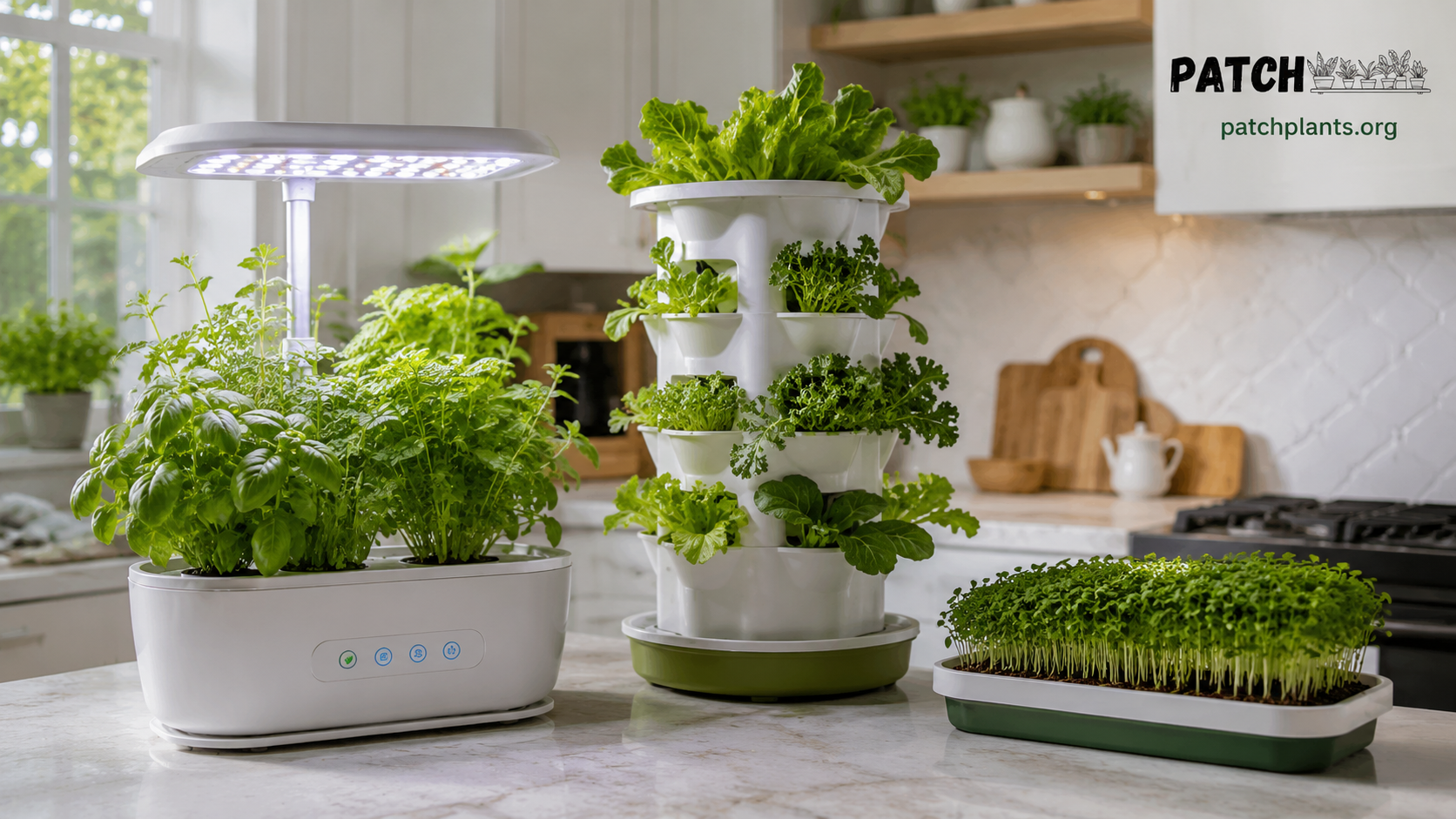
- Indoor vegetable garden ideas range from compact countertop hydroponic units to modular vertical towers that grow up to 50 plant varieties simultaneously
- How to start an indoor garden requires choosing between soil-based systems (most beginner-friendly), hydroponic systems (fastest growth), and aeroponic systems (most efficient water use)
- What food can you grow indoors? Herbs, leafy greens, cherry tomatoes, peppers, cucumbers, microgreens, and strawberries all grow successfully indoors with the right system
- Do it yourself indoor herb garden setups using basic pots, grow lights, and quality potting mix are the most affordable starting point before investing in dedicated gardening systems
- Browse our full indoor plant care guides for plant-specific care advice that complements every indoor gardening system on this list
Why Indoor Gardening Systems Are Changing How We Grow Food
With grocery prices climbing and fresh produce quality declining through long supply chains, the appeal of growing your own food at home has never been stronger. But not everyone has the outdoor space, the climate, or the time to maintain a traditional garden. That is exactly where indoor gardening systems come in — transforming any apartment, studio, or small home into a year-round growing environment.
How to grow a garden indoors has been revolutionized over the past decade. What was once limited to a few pots of herbs on a sunny windowsill is now a sophisticated category of smart growing technology — hydroponic systems with automated watering, AI-powered vertical gardens that monitor plant health through apps, and compact countertop units that grow fresh salad greens faster than outdoor gardens in any season.
Jane Dobbs, a UK-based gardening expert, explains the appeal clearly: “A hydroponic system, sometimes called a smart garden, grows plants indoors without the need for soil. It is a game-changer for anyone short on space or facing unpredictable weather. These systems create stable, controlled environments, which means plants can grow faster and more consistently.”
What can you grow inside with modern indoor gardening systems? Far more than most people expect — from everyday herbs like basil and chives to cherry tomatoes, peppers, microgreens, lettuce, spinach, strawberries, and even dwarf varieties of cucumbers. The limiting factor is almost never the indoor environment itself — it is choosing the right system for your space, budget, and growing ambitions.
This complete guide covers the 12 best indoor gardening systems available, explains exactly how to start an indoor garden from scratch, answers the most common questions about how to grow food indoors, and provides everything you need to choose the right system for your home.
What Is an Indoor Garden? — Understanding Your Options

Indoor Garden Types — Which System Suits You?
Before choosing among specific products, understanding the fundamental types of indoor garden systems helps you match the right technology to your specific needs:
Hydroponic Systems — Fastest Growing, No Soil Required
Hydroponic growing delivers nutrients directly to plant roots through water — eliminating soil entirely. Plants in hydroponic systems typically grow 30–50% faster than soil-grown equivalents because roots have direct, constant access to nutrients without the energy expenditure of searching through soil.
Best for: Herbs, leafy greens, cherry tomatoes, peppers, strawberries
Hydroponic supplies you need: A reservoir for nutrient solution, a pump for circulation, growing medium (rockwool, clay pebbles, or similar), and LED grow lights if natural light is insufficient.
Hydroponic garden seeds selection is broader than many beginners expect — almost any herb or vegetable variety can be grown hydroponically, though some cultivars are specifically bred for indoor hydroponic systems and produce better results in confined growing conditions.
For the science behind why plants grow so effectively under the consistent light conditions that indoor gardening systems provide, our complete guide to indoor light explains light spectrum, intensity, and duration requirements for food-growing plants.
Aeroponic Systems — Most Water-Efficient Technology
Aeroponic systems suspend plant roots in air and deliver nutrients through fine mist spraying. This approach uses up to 95% less water than traditional soil gardening and provides roots with exceptional oxygen access — typically producing the fastest growth rates of any indoor growing method.
Best for: Leafy greens, herbs, microgreens, and compact fruiting plants
Soil-Based Indoor Systems — Most Beginner-Friendly
Soil-based indoor garden kits use traditional potting mix or specialized growing media — the most familiar approach for beginners transitioning from outdoor gardening. Growth is slower than hydroponic alternatives but the learning curve is significantly lower.
Best for: Herbs, compact vegetables, microgreens, and beginners
For guidance on choosing the right potting mix for soil-based indoor vegetable garden ideas, our complete soil mix guide covers the specific mix requirements for every food plant category.
Vertical Garden Systems — Maximum Growing in Minimum Space
Vertical systems stack growing positions vertically — maximizing plant capacity in minimal floor space. A vertical tower taking up less than 0.5 square metres of floor space can grow 20–50 plants simultaneously, making these systems ideal for apartments and small homes.
Best for: Anyone with limited counter or floor space wanting maximum growing capacity
How We Selected the 12 Best Indoor Gardening Systems
Our selection process evaluated every major indoor gardening system across five criteria:
Ease of use: How accessible is setup and daily maintenance for beginners? The best systems should not require horticultural expertise.
Plant variety support: Can the system grow a meaningful range of plants — not just one or two species?
Water efficiency: Particularly relevant for hydroponic and aeroponic systems — more efficient systems reduce running costs and maintenance demands.
Light technology: Quality LED grow lights make the difference between productive growing and disappointing results — we prioritized systems with full-spectrum or plant-optimized LED technology.
Value for money: Both initial investment and ongoing costs (nutrient solutions, replacement pods, electricity) were considered.
The 12 Best Indoor Gardening Systems
1. Lettuce Grow The Farmstand Nook — Best Overall Hydroponic System
The Lettuce Grow Farmstand Nook is an innovative hydroponic system designed for both indoor and outdoor use — its compact tower design making it perfect for small spaces while delivering impressive growing capacity.
Features:
- Self-watering and self-fertilizing automated system
- Holds up to 36 plants simultaneously across multiple tiers
- Sustainable materials construction — eco-friendly design
- Compatible with both indoor and sheltered outdoor positions
Best For: Leafy greens, herbs, small vegetables, and edible flowers
Why It Stands Out: The automated watering system removes the most common maintenance burden of indoor garden growing — forgetting to water. The 36-plant capacity makes this one of the highest-yield compact systems available.
Growing tip: Start with fast-maturing crops — lettuce, spinach, kale, and herbs — to experience quick results that build growing confidence. For guidance on which edible plants establish fastest in hydroponic systems, our guide on growing your own easiest outdoor edible plants for beginners covers the fastest-maturing food plants applicable to indoor growing too.
2. Click & Grow Smart Garden 3 — Best for Beginners
The Click & Grow Smart Garden 3 is the definitive answer to what is the best indoor gardening system for beginners — its plug-and-play design requiring zero gardening experience while delivering consistent, impressive results.
Features:
- Biodegradable plant pods with pre-measured nutrients and seeds
- Built-in LED grow lights on adjustable arm
- Automated watering system with transparent water tank showing levels
- Available in 3, 9, and 25-pod configurations for different scales
Best For: Fresh herbs — basil, mint, thyme, chives, parsley — and small lettuce varieties
Why It Stands Out: The Click & Grow approach eliminates every variable that trips up beginners — soil choice, nutrient mixing, watering frequency — replacing all of them with a single pre-configured pod system. Insert pod, add water, connect power, grow.
Herb growing tip: The Click & Grow system is one of the most effective indoor herb garden solutions available for kitchens — keeping fresh herbs within arm’s reach while cooking. Our guide on fancy kitchen plants covers the best kitchen plant displays that pair with compact herb garden systems like Click & Grow.
3. Personal Rise Garden — Best Modular System
The Personal Rise Garden represents the most customizable approach to indoor vegetable garden ideas — its modular design allowing you to start with a single tier and expand as your growing ambition grows.
Features:
- Modular design — start with one tier, add more as needed
- App-controlled watering and light scheduling — manage remotely
- Supports over 50 plant varieties including fruiting vegetables
- Integrated nutrient delivery system with automated reminders
Best For: Tomatoes, peppers, microgreens, and serious herb collections
Why It Stands Out: The app connectivity transforms how to indoor garden for tech-oriented growers — you can monitor and adjust your garden remotely, receive watering and nutrient reminders, and track plant progress through an intuitive interface.
Water system note: For an understanding of indoor plant watering system principles that apply across all hydroponic growing systems — including the correct watering frequency and timing — our guide on the complete watering guide for healthy thriving plants covers watering principles that apply equally to hydroponic and soil-based systems.
4. AeroGarden Harvest Elite — Best Design-Conscious System
AeroGarden has been the category leader in indoor gardening systems for over a decade, and the Harvest Elite represents their most refined design — combining sophisticated aesthetics with proven hydroponic performance.
Features:
- Premium stainless steel finish — blends with modern kitchen interiors
- LED lighting optimized for specific plant growth spectrums
- Touch-sensitive control panel with automatic reminders
- 6-pod capacity with adjustable light arm
Best For: Herbs, salad greens, and cherry tomatoes for year-round kitchen harvest
Why It Stands Out: The Harvest Elite is the answer for plant owners who want a genuinely attractive indoor herb garden system that looks designed rather than utilitarian. Its automatic reminder system — alerting you to water and nutrient additions — makes it genuinely low-maintenance for busy households.
Light science: AeroGarden’s LED grow lights operate on specific light cycles that optimize photosynthesis for food-producing plants. Our complete guide to indoor light explains the science behind grow light spectrum and why these specific LED configurations outperform standard bulbs for indoor food growing.
5. Indoor Hydroponic Garden Hydroponics Growing System — Best Transparent Learning System
This system offers a uniquely educational approach to how to grow food indoors — its transparent water tank allowing growers to observe root development in real time, building genuine understanding of how hydroponic growing works.
Features:
- 12-plant capacity with efficient spacing
- Transparent water circulation system — visible root observation
- High-efficiency LED grow lights
- Water circulation pump for continuous oxygenation
Best For: Leafy greens and herbs — particularly valuable for curious growers who want to understand the hydroponic process
Why It Stands Out: Watching roots develop in the transparent tank makes this the most educational system on our list — building the understanding that eventually allows growers to scale beyond kit systems into custom hydroponic supplies setups.
Root health connection: Understanding root health in hydroponic systems parallels soil-based root care — our guide on root rot — how to identify, prevent and treat it covers root health principles applicable to both soil and hydroponic growing environments.
6. iDOO Hydroponics Growing System — Best Value Hydroponic System
The iDOO system delivers professional-quality hydroponic growing results at one of the most accessible price points in the category — making it the best entry point for anyone uncertain whether indoor gardening systems will suit their lifestyle before making a larger investment.
Features:
- Adjustable LED lighting with full-spectrum grow light technology
- Built-in water pump for continuous oxygenation and circulation
- Easy setup requiring no technical knowledge
- 12-plant capacity across two growing rows
Best For: Leafy greens, cherry tomatoes, herbs — the broadest range of any system at its price point
Why It Stands Out: The LED grow lights are specifically tuned for photosynthesis optimization — not simply white LEDs that happen to illuminate plants, but purpose-designed light spectrums that maximize plant growth rates and yields.
Growing herbs indoors tip: The iDOO system is particularly excellent for growing herbs indoors — the 12 positions allow a complete culinary herb collection including basil, mint, thyme, rosemary, chives, parsley, coriander, dill, and more, all growing simultaneously for year-round kitchen harvest. Our guide on indoor plants that smell amazing without being overpowering covers fragrant herbs that pair perfectly with hydroponic indoor growing for aromatic kitchen environments.
7. Ingarden Microgreens Growing Kit — Best for Microgreens
Microgreens are among what food can you grow indoors most productively — ready to harvest in just 7–14 days from sowing, nutritionally dense, and genuinely delicious. The Ingarden kit is the most refined microgreens-specific system available.
Features:
- 100% biodegradable seed mats — no seed measuring or soil preparation
- Minimal water requirement — bottom-watering system prevents mold
- No grow lights required — a bright windowsill is sufficient
- Grows arugula, kale, radish, sunflower, broccoli, and mixed varieties
Best For: Microgreens enthusiasts — those who want the fastest possible harvest cycle from any indoor grow kit
Why It Stands Out: Microgreens provide harvest within 7–14 days — the fastest possible return from any food-growing activity. The Ingarden biodegradable seed mat eliminates all the preparation variables that make traditional microgreens growing inconsistent.
Nutrition note: Microgreens contain 4–40 times more nutrients than the same plants at maturity — making them one of the most nutritionally productive crops per square centimetre of growing space available in any indoor garden setup.
8. AeroGarden Bounty Basic — Best Mid-Size System
For growers who have outgrown compact 3–6 pod systems and want to grow larger plants — particularly fruiting vegetables like tomatoes and peppers — the AeroGarden Bounty Basic represents a significant step up in capacity and performance.
Features:
- 9-pod capacity — the sweet spot between compact and large systems
- Energy-efficient LED lighting with 45-watt output
- Digital display with intuitive controls and reminder functions
- Accommodates plants up to 60cm tall — enables fruiting plant growing
Best For: Tomatoes, peppers, salad greens, and large herb plants — the most versatile growing range of any countertop system
Why It Stands Out: The Bounty Basic’s 9-pod configuration and taller clearance enable how to grow vegetables indoors ambitions beyond herbs and salads — making genuinely productive tomato and pepper growing possible in a countertop format.
Tomato growing indoors tip: Cherry tomato varieties perform best in indoor hydroponic systems — try ‘Tumbling Tom’, ‘Red Robin’, and ‘Tiny Tim’ for the most productive countertop tomato experience. For companion plant information that maximizes productivity alongside indoor tomato growing, our guide on edible flowers to grow in your outdoor garden covers companion planting principles applicable to indoor food growing.
9. AeroGarden Harvest Hydroponic System — Best Space-Saving System
The original AeroGarden Harvest remains the most recommended indoor grow kit for urban dwellers — its compact footprint fitting genuinely small kitchens and studio apartments where counter space is at a premium.
Features:
- 6-pod capacity in the smallest AeroGarden footprint
- Automated nutrient reminders — app and display alerts
- Space-saving design — fits on crowded counters
- Compatible with the full AeroGarden seed pod library
Best For: Herbs, lettuces, and small vegetables in space-constrained kitchens
Why It Stands Out: The Harvest answers how to grow an herb garden indoors for people in truly small spaces — studio apartments, compact kitchens, and homes where every square centimetre of counter space is contested.
Watering system note: The AeroGarden Harvest uses an internal indoor plant watering system that circulates nutrient solution automatically — our guide on the truth about self-watering pots — do they really work? covers the self-watering principles that make automated indoor garden systems so effective for busy plant owners.
10. Amazing Creation Stackable Vertical Garden — Best for Flowers and Succulents
Not all the best indoor gardening systems are technology-driven — the Amazing Creation Stackable Vertical Garden offers a low-tech, high-impact solution for growing ornamental plants, succulents, and herbs in confined spaces.
Features:
- Stackable modular planter design — configurable height and capacity
- Suitable for both indoor and outdoor use — balcony, patio, or windowsill
- Lightweight construction — easy repositioning as light requirements change
- Drainage designed to prevent waterlogging between stacked levels
Best For: Flowers, succulents, herbs, and compact ornamental plants — not designed for fruiting vegetables
Why It Stands Out: This system bridges the gap between traditional plant growing and modern indoor gardening systems — it does not require electricity, proprietary nutrients, or a learning curve, making it genuinely the most accessible system on this list.
Succulent growing tip: The stackable design is ideal for do it yourself indoor herb garden setups — fill each tier with a different herb for a visually organized culinary collection. For guidance on growing succulents in stackable systems, our aloe vera care guide covers drought-tolerant plant care applicable to stackable outdoor planter systems.
11. Gardyn — Best AI-Powered Indoor Garden
Gardyn represents the most technologically sophisticated approach to how to indoor garden — an AI-powered vertical tower that monitors plant health, optimizes growing conditions, and manages your garden remotely through an intelligent app interface.
Features:
- AI-powered plant monitoring through integrated camera system
- Self-watering and self-lighting — fully automated daily management
- App interface for remote monitoring and control from anywhere
- Vertical structure accommodating up to 30 plants in 0.5m² floor space
Best For: Serious growers wanting the most hands-off, highest-yield indoor growing experience available
Why It Stands Out: The Gardyn’s AI monitoring is genuinely revolutionary — the integrated camera photographs plants daily, identifying early signs of stress, disease, or nutrient deficiency before they become visible to human observation. This is home gardening elevated to precision agriculture.
Observation habit connection: The daily monitoring habit that the Gardyn’s AI performs automatically mirrors the attentive observation that all successful plant care requires. Our guide on should you talk to your plants — the science behind it covers why daily plant observation — whether by AI or human — is the single most impactful care practice available.
12. Culinary Herb Seed Kit — Best Budget Starting Point
Not every home gardening journey needs to begin with a sophisticated hydroponic system. The Culinary Herb Seed Kit offers the most affordable, accessible entry point into growing herbs indoors — requiring nothing beyond seeds, basic pots, potting mix, and a sunny windowsill.
Features:
- Comprehensive seed selection — basil, mint, thyme, oregano, parsley, chives, rosemary
- Simple soil and pot setup — no technology required
- Indoor and outdoor compatibility — start indoors, move outdoors seasonally
- Expandable indefinitely — seeds can be resown continuously
Best For: Complete beginners, budget-conscious growers, and anyone wanting to test growing herbs indoors before investing in more sophisticated systems
Why It Stands Out: The Culinary Herb Seed Kit proves that the answer to how to grow an herb garden inside does not require a significant investment. A few pots, quality potting mix, good light, and regular watering produce fresh herbs as effectively as expensive systems — with zero learning curve.
DIY herb garden success: For guidance on building the most productive do it yourself indoor herb garden using basic supplies, our guide on grow your own — easiest outdoor edible plants for beginners covers herb growing techniques applicable to both indoor and outdoor situations.
How to Start an Indoor Garden — Complete Beginner Guide
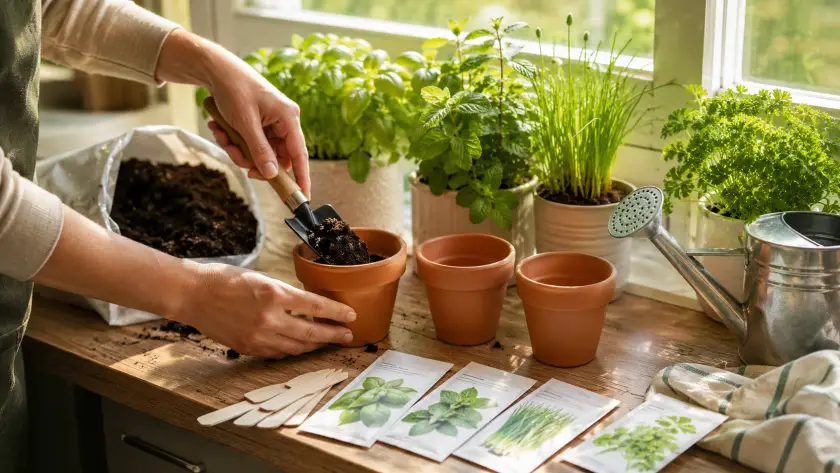
Step 1 — Choose Your System Type
How to start an indoor garden begins with an honest assessment of your situation:
Budget under £50: Start with a culinary herb seed kit, basic pots, and a grow light clip-on if your windowsill light is insufficient. This do it yourself indoor herb garden approach builds fundamental skills before any technology investment.
Budget £50–£150: The Click & Grow Smart Garden 3 or AeroGarden Harvest provides the best introduction to automated indoor gardening systems with minimal setup complexity.
Budget £150–£300: The iDOO or AeroGarden Bounty system provides serious growing capacity — enabling how to grow vegetables indoors beyond herbs into genuine food production.
Budget £300+: The Rise Garden, Lettuce Grow Farmstand, or Gardyn systems provide maximum growing capacity and the most sophisticated technology for committed indoor food growers.
Step 2 — Choose Your Location
Indoor vegetable garden ideas work best in positions that provide:
Natural light supplementation: Even systems with built-in grow lights benefit from proximity to natural light. South or west-facing positions reduce the electricity demand on supplemental lighting. Our complete guide to indoor light covers exactly how to optimize any indoor position for food growing.
Stable temperature: Food plants need consistent temperatures — 18–24°C for most herbs and leafy greens. Avoid positions beside radiators, air conditioning vents, or cold drafts.
Electrical access: All powered indoor gardening systems require a nearby electrical outlet — plan cable routing to avoid trip hazards.
Easy water access: Daily or near-daily water management is part of most indoor garden systems — position near a sink where possible.
Step 3 — Choose What to Grow
What can you grow inside with modern indoor gardening systems? The answer is broader than most beginners expect:
Best Plants for Indoor Gardening Systems — Complete List
Herbs (Easiest — Start Here):
- Basil — grows fastest, most productive culinary herb for indoor systems
- Mint — aggressive grower, best in its own container
- Chives — easy, continuous harvest, purple flowers are edible
- Parsley — slower but long-lasting production
- Thyme — compact, drought-tolerant, excellent in stacked systems
- Oregano — Mediterranean herb that thrives under grow lights
- Cilantro/Coriander — fast growing, multiple harvests before bolting
Leafy Greens (Quick Harvest):
- Lettuce varieties — ready in 4–6 weeks, continuous cut-and-come-again harvest
- Spinach — high nutritional value, grows quickly in hydroponic systems
- Kale — slower but productive and highly nutritious
- Arugula — peppery flavor, fast-growing, excellent in compact systems
- Mizuna and mustard greens — excellent hydroponic performers
Fruiting Vegetables (More Advanced):
- Cherry tomatoes — ‘Tumbling Tom’, ‘Red Robin’, and ‘Tiny Tim’ perform best indoors
- Peppers — compact varieties produce well under grow lights
- Cucumbers — dwarf varieties in larger systems
- Strawberries — compact varieties produce sweet fruit year-round indoors
Microgreens (Fastest Harvest):
- Sunflower microgreens — mild nutty flavor, ready in 10–12 days
- Radish microgreens — spicy, ready in 7–9 days
- Arugula microgreens — peppery, ready in 7–10 days
- Kale microgreens — nutritionally dense, ready in 8–12 days
- Broccoli microgreens — highest sulforaphane content, ready in 7–10 days
For specific guidance on growing edible flowers alongside herbs and vegetables in indoor systems, our guide on edible flowers to grow in your outdoor garden covers edible flower varieties that transfer effectively to indoor growing conditions.
Step 4 — Set Up Your Watering System
Indoor plant watering system management is the most critical daily task in any indoor garden setup. The fundamental rule — consistent moisture without waterlogging — applies equally to hydroponic and soil-based systems.
For hydroponic systems: Monitor water reservoir levels daily and top up as needed. Change the nutrient solution completely every 2–3 weeks to prevent mineral buildup and bacterial growth.
For soil-based indoor herb gardens: Water when the top inch of soil is dry — using the finger test consistently. Our guide on the worst times to water your plants covers optimal watering timing that applies to indoor food gardens as much as decorative plants.
Signs of overwatering in indoor food gardens: Yellow lower leaves, mushy stems, and foul soil smell. Our guide on signs you are overwatering covers the complete diagnostic and correction process.
What Can You Grow Indoors? — Category-by-Category Guide

Can I Grow Vegetables Inside Year-Round?
Can I grow vegetables inside during every season? Yes — with the right system and adequate grow lighting, indoor vegetable garden ideas can produce fresh vegetables every month of the year regardless of outdoor conditions.
What veg can you grow indoors most successfully?
Year-round indoor vegetables:
- Cherry tomatoes — need bright light (south-facing window or strong grow lights)
- Compact peppers — sweet and chilli varieties in large hydroponic systems
- Salad leaves — the easiest indoor vegetable garden ideas for consistent harvest
- Spinach — performs excellently in hydroponic systems at any time of year
- Kale — slower but reliable indoor performer
Can you grow veggies inside that normally only thrive outdoors? With dedicated grow lights and hydroponic systems, many vegetables that require outdoor conditions perform indoors — the key is matching light intensity and duration to the plant’s natural requirements.
Can You Grow Herbs Inside? — Complete Guide
Can you grow herbs inside successfully? This is where indoor gardening systems deliver the most reliable, most immediately rewarding results for beginners.
Growing herbs indoors is the most recommended starting point for several reasons:
Speed: Most culinary herbs are ready for first harvest within 4–8 weeks of sowing — faster than any vegetable crop.
Continuous harvest: Unlike vegetables that produce one crop and finish, herbs can be harvested continuously for months — providing ongoing reward from a single plant.
Kitchen convenience: Fresh herbs step away from the kitchen transform cooking — the flavor difference between fresh-from-the-plant herbs and shop-bought pre-packaged herbs is dramatic.
Grow herbs indoors kit options range from the sophisticated (Click & Grow, AeroGarden) to the simple (basic pots with quality potting mix and a grow light). All deliver excellent results when placed in adequate light.
How to grow an herb garden indoors — the three rules:
- Light — minimum 6 hours bright indirect light or 12–16 hours grow light
- Water — when top inch of soil is dry for soil-based systems
- Harvest — regularly pinch growing tips to encourage bushy, productive growth
How to Grow Food Indoors — Advanced Tips
How to grow food indoors beyond basic herbs and salads requires understanding a few additional principles:
Pollination: Most outdoor food plants are pollinated by insects or wind — neither of which occurs indoors. For fruiting plants (tomatoes, peppers, cucumbers), manual pollination using a small soft brush transferred between flowers is required for fruit development.
Nutrient management: Food-producing plants need different nutrient ratios at different growth stages — vegetative growth requires higher nitrogen, while flowering and fruiting requires higher phosphorus and potassium. Quality hydroponic supplies include stage-appropriate nutrient formulations.
Pest management: Enclosed indoor environments can allow pest populations to build rapidly without natural predators. Our guide on how to keep pests away from outdoor plants covers organic pest management strategies applicable to indoor food growing environments.
Hydroponic Garden Outdoors — Can Indoor Systems Work Outside?
Outdoor Hydroponics and Hydroponic Gardening Outside
Hydroponic garden outdoors and hydroponic gardening outside applications extend the season for outdoor food growing — using the same water-efficient, nutrient-precise technology in sheltered outdoor positions like greenhouses, covered patios, and balconies.
Outdoor hydroponics advantages over indoor systems:
- Free natural lighting reduces electricity costs
- Greater air circulation reduces humidity-related disease risk
- More growing space available outdoors than indoors
Hydroponic greenhouses represent the professional extension of home outdoor hydroponics — creating controlled growing environments that produce year-round yields regardless of outdoor temperature.
For guidance on outdoor food growing that complements indoor system growing, our guides on grow your own easiest outdoor edible plants for beginners and best plants for container gardening on patios cover outdoor growing approaches that work alongside indoor food production.
What Are the Downsides of Hydroponic Systems?
Hydroponic indoor gardening systems have genuine advantages — but honest assessment requires acknowledging their limitations too.
Initial cost: Quality hydroponic systems represent a significant upfront investment compared to traditional soil-based growing. However, reduced water use, faster growth, and year-round production typically justify the investment within 12–18 months of regular use.
Electricity dependency: All powered indoor gardening systems rely on electricity — for grow lights, water pumps, and climate control. Power outages, which can jeopardize plant health if extended, represent a genuine risk. Diane Kuthy, founder of How to Grow Everything, notes: “Just one blackout can jeopardize the health of your plants.” Systems with battery backup capability mitigate this risk.
Learning curve: While the best beginner systems minimize the learning curve, transitioning from basic herb growing to productive vegetable growing in hydroponic systems does require learning nutrient management, pH monitoring, and plant-specific growing requirements.
Electricity costs: Grow lights — particularly larger systems running 16+ hours daily — add measurably to electricity bills. Energy-efficient LED systems minimize this impact, but it remains a genuine ongoing cost. For guidance on maximizing natural light to reduce grow light dependency, our complete guide to indoor light covers natural light optimization strategies that reduce reliance on supplemental lighting.
Indoor Gardening Systems and Your Existing Plant Collection
Connecting Indoor Food Growing to Decorative Houseplants
Many plant enthusiasts who start with decorative houseplants — peace lilies, snake plants, pothos — discover that the observation and care skills they have developed transfer directly to indoor food growing. The watering discipline, the light assessment, the troubleshooting of yellowing leaves — all apply equally to herb and vegetable growing.
For existing plant owners adding food growing:
Our guide on snake plant care demonstrates the low-maintenance care principles that make snake plants so forgiving — the same restraint-in-watering principle applies to herbs in soil-based indoor gardens.
Our peace lily care guide covers the moisture-loving care that peace lilies need — similar to the consistent moisture requirements of hydroponic leafy green growing.
Our pothos care guide covers fast-growing vining plant care — the growth rate and vigor of established pothos mirrors what growers experience with fast-maturing herbs in hydroponic systems.
Propagation connections: The propagation skills used to create new decorative houseplants from cuttings transfer directly to food garden management. Our guide on how to propagate houseplants easily at home covers propagation principles applicable to herbs like basil and mint that can be propagated from cuttings in water.
Repotting food plants: When soil-based indoor herb gardens need refreshing, the same repotting principles that apply to decorative houseplants apply to culinary herbs. Our complete repotting guide covers the correct technique for transitioning herbs from small seed-starting pots to larger productive containers.
Room-by-Room Indoor Garden Placement Guide
Kitchen — The Natural Home for Indoor Food Gardens
The kitchen is the most logical position for any indoor herb garden or food-growing system — keeping fresh herbs within arm’s reach while cooking and making daily watering easy through sink proximity.
Best kitchen systems: Click & Grow, AeroGarden Harvest, iDOO — all compact enough for counter positioning without dominating the workspace.
Kitchen display inspiration: Our guide on how to style indoor plants by room covers kitchen plant display principles applicable to both decorative and food-growing indoor plants.
Living Room — Statement Indoor Garden Displays
Larger indoor garden systems — particularly vertical towers like the Gardyn or Lettuce Grow Farmstand — create dramatic living room focal points that combine food production with genuine interior design impact.
For guidance on large indoor plant display integration in living rooms, our guide on how to create an indoor jungle without overcrowding covers the plant density and display principles that apply to large food-growing systems positioned in living spaces.
Home Office — Productivity-Boosting Indoor Gardens
Research consistently shows that indoor plants improve focus, reduce stress, and increase productivity in work environments. Adding a small indoor herb garden or food-growing system to a home office combines these benefits with fresh ingredient production.
Our guide on improving your home office with plants covers the best indoor plant additions for home office environments — all principles apply equally to small food-growing systems.
Frequently Asked Questions
What Is the Best Indoor Gardening System for Beginners?
The Click & Grow Smart Garden 3 is the definitive beginner recommendation — its pre-configured plant pods eliminate every variable that trips up new growers (soil choice, nutrient mixing, watering frequency) while delivering consistent, impressive results. For beginners interested in herbs specifically, the AeroGarden Harvest provides the most beginner-friendly hydroponic experience with excellent customer support and an extensive compatible plant pod library.
How to Grow an Herb Garden Indoors — Where Do I Start?
How to grow an herb garden indoors most simply: buy a basic seed kit, small terracotta pots with drainage holes, quality potting mix with perlite, and position on your brightest windowsill. Start with basil, chives, and mint — the three most forgiving culinary herbs. Water when the top inch of soil is dry. Harvest regularly by pinching stem tips. This do it yourself indoor herb garden approach costs under £20 and delivers results within 4–6 weeks.
Can You Grow Veggies Inside Year-Round?
Can you grow veggies inside continuously? Yes — with adequate grow lighting and a suitable system. Leafy greens, herbs, cherry tomatoes, and peppers all grow year-round indoors without seasonal restriction. The key is matching grow light intensity and duration to the plant’s light requirements — our complete guide to indoor light covers the specific requirements for food-producing plants.
What Food Can You Grow Indoors Most Easily?
What food can you grow indoors with the least effort and fastest results? Microgreens (7–14 days to harvest), herbs (4–8 weeks to first harvest), and lettuce (4–6 weeks to first harvest) are the three most immediately rewarding indoor food crops. All three grow successfully in basic soil-based systems or beginner hydroponic kits without advanced growing knowledge.
What Veg Can You Grow Indoors in Limited Space?
What veg can you grow indoors in very small spaces? Salad leaves, spinach, herbs, and microgreens all produce excellent yields in compact systems occupying as little as 20cm × 30cm of counter space. Cherry tomatoes and compact peppers require slightly more space but produce in containers under 30cm in diameter with adequate grow lighting.
How to Grow Vegetables Indoors Without a Garden?
How to grow vegetables indoors without any outdoor space: choose a compact hydroponic system like the AeroGarden Harvest or Click & Grow for herbs and salads; upgrade to the AeroGarden Bounty or Rise Garden for fruiting vegetables. Position near your brightest window and supplement with grow lights. Water and nutrient management are handled automatically by quality systems — making productive indoor vegetable growing accessible to complete beginners.
Are Hydroponic Systems Better Than Soil for Indoor Growing?
Hydroponic systems typically grow food 30–50% faster than equivalent soil-based systems and use significantly less water. However, soil-based systems have a lower learning curve, lower initial cost, and more forgiving margin for error — making them better starting points for beginners. The ideal long-term indoor garden setup often combines both — soil for herbs and slower-growing food plants, hydroponic for fast-growing leafy greens and high-production crops.
Related Guides on Patch Plants
- 🌱 Grow Your Own — Easiest Outdoor Edible Plants for Beginners
- 🌸 Edible Flowers to Grow in Your Outdoor Garden
- 💡 Complete Guide to Indoor Light and Grow Lights
- 💧 Complete Watering Guide for Healthy Thriving Plants
- 💧 Worst Times to Water Your Plants
- 🪴 Best Soil Mix for Every Plant Type
- 🌿 How to Propagate Houseplants Easily at Home
- 🌱 How to Repot a Plant — Complete Guide
- 🌿 The Truth About Self-Watering Pots
- 🐍 Snake Plant Care Guide
- 🌸 Peace Lily Care Guide
- 🌿 Pothos Plant Care Guide
- 🌵 Aloe Vera Care Guide
- 🌿 How to Style Indoor Plants by Room
- 🌿 How to Create an Indoor Jungle Without Overcrowding
- 🏢 Improve Your Home Office With Plants
- 🌱 Browse All Indoor Plant Guides
Final Thoughts
The best indoor gardening system is the one that fits your specific combination of space, budget, lifestyle, and growing ambition. For some, that is the sophisticated AI-powered Gardyn vertical tower. For others, it is the simple Culinary Herb Seed Kit on a sunny windowsill. Both deliver fresh, homegrown produce with genuine satisfaction — the technology is simply different.
How to start an indoor garden has never been more accessible. The systems available today — from sub-£20 seed kits to £500 smart towers — cover every budget and skill level. The universal starting point is the same regardless of which system you choose: begin with herbs. They grow fastest, harvest most frequently, and deliver the most immediate, practical reward of any indoor food crop.
What food can you grow indoors will surprise you as confidence builds. Start with basil and lettuce. Add tomatoes when those thrive. Expand to peppers when tomatoes succeed. The progression from beginner herb grower to productive indoor food gardener happens faster than most people expect — because the skills are cumulative and the systems are increasingly designed to do the complicated parts for you.
According to the Royal Horticultural Society, growing herbs in containers — including indoor systems — is one of the most recommended starting points for new growers of any age, delivering reliable results and building the fundamental plant care skills that underpin all successful gardening. 🌿