Winter plants for outside can keep your garden attractive long after summer flowers fade. Hardy evergreens, colourful stems, winter-flowering perennials, and shrubs covered in berries bring structure and seasonal interest to landscapes that might otherwise look bare during the coldest months.
However, choosing cold-weather plants involves more than finding species described as frost resistant. A plant may survive extremely low temperatures in the ground yet struggle in an exposed container, waterlogged border, or location affected by drying winter winds. Your USDA hardiness zone, soil conditions, sunlight, and local climate all influence its chances of success.
This guide introduces 17 winter plants for outside, including pansies, hellebores, winterberry holly, red-twig dogwood, arborvitae, creeping juniper, and Christmas fern. You will learn which plants provide winter flowers, evergreen foliage, colourful berries, or attractive stems, as well as how to protect outdoor plants from winter burn, frozen soil, and repeated freeze-thaw cycles.
What Are the Best Winter Plants for Outside?
The best winter plants for outside include pansies, violas, hellebores, ornamental kale and cabbage, winter heath, snowdrops, red-twig dogwood, winterberry holly, witch hazel, mahonia, evergreen azalea, American arborvitae, dwarf Alberta spruce, eastern red cedar, creeping juniper, inkberry holly, and Christmas fern.
For winter flowers, consider hellebores, winter heath, winter-flowering witch hazel, and suitable mahonia varieties. Pansies and violas are particularly useful for seasonal colour in mild-winter regions, while ornamental kale and cabbage provide decorative foliage.
For lasting structure, American arborvitae, dwarf Alberta spruce, eastern red cedar, creeping juniper, and inkberry holly offer evergreen interest. Winterberry holly contributes colourful fruit on bare branches, while red-twig dogwood provides striking stems.
There is no single plant that survives every winter climate. The best choice depends on the species, cultivar, local minimum temperatures, drainage, and exposure.
Key Takeaways
- Winter plants for outside include cold-hardy perennials, evergreen shrubs, trees, seasonal flowers, and plants grown for berries or colourful stems.
- Always check your USDA hardiness zone and the specific cultivar’s cold tolerance before planting.
- Pansies, violas, and ornamental kale provide seasonal colour, but prolonged severe freezes may damage or kill them.
- Hellebores, winter heath, and suitable witch hazels can provide flowers during winter or late winter, depending on climate.
- Winterberry holly is deciduous, and female plants normally require a compatible male pollinator to produce berries.
- Red-twig dogwood produces its strongest winter stem colour on younger growth.
- American arborvitae and dwarf Alberta spruce provide evergreen structure but may suffer winter desiccation or other weather-related damage.
- Christmas fern is useful for sheltered, shady woodland gardens.
- Good drainage, suitable mulch, fall watering, and wind protection help reduce winter injury.
- Plants grown in above-ground containers often need additional root protection compared with the same species planted in the ground.
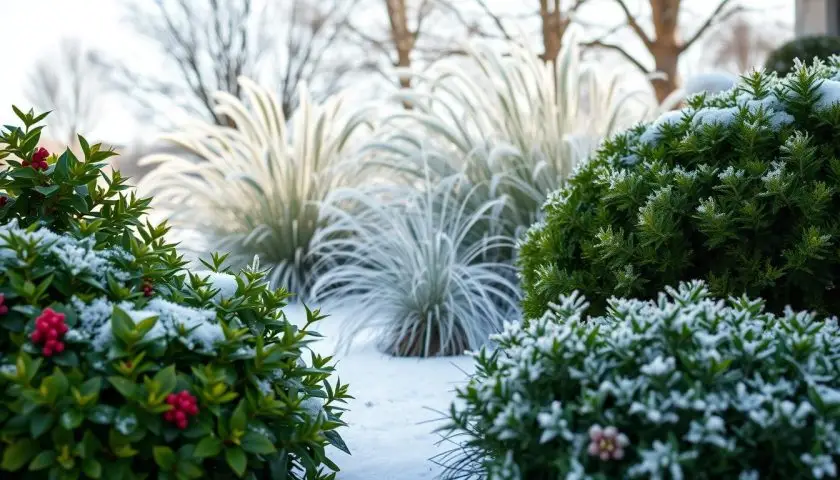
Quick Comparison: 17 Best Outdoor Winter Plants
| Winter Plant | Botanical Name | Winter Interest | Preferred Light | Best Use |
|---|---|---|---|---|
| 1. Pansies | Viola × wittrockiana | Cold-season flowers | Sun to part shade | Pots and borders |
| 2. Violas | Viola species and hybrids | Small colourful flowers | Sun to part shade | Containers and edging |
| 3. Hellebores | Helleborus species and hybrids | Winter to early-spring flowers | Part shade | Woodland-style gardens |
| 4. Ornamental Kale and Cabbage | Brassica oleracea ornamental cultivars | Colourful foliage | Full sun preferred | Seasonal containers |
| 5. Winter Heath | Erica carnea | Evergreen foliage and flowers | Sun to part shade | Rock gardens and edging |
| 6. Snowdrops | Galanthus species | Late-winter to early-spring flowers | Part shade | Woodland borders |
| 7. Red-Twig Dogwood | Cornus sericea | Bright winter stems | Sun to part shade | Shrub borders |
| 8. Winterberry Holly | Ilex verticillata | Winter berries | Sun to part shade | Wildlife gardens |
| 9. Witch Hazel | Hamamelis × intermedia and selected species | Late-winter flowers | Sun to part shade | Focal-point shrub |
| 10. Mahonia | Selected Berberis/Mahonia species and hybrids | Foliage and seasonal flowers | Part shade | Woodland-style borders |
| 11. Evergreen Azalea | Evergreen Rhododendron cultivars | Winter foliage | Filtered light | Sheltered foundation beds |
| 12. American Arborvitae | Thuja occidentalis | Evergreen screening | Sun to part shade | Hedges and privacy |
| 13. Dwarf Alberta Spruce | Picea glauca ‘Conica’ | Compact evergreen form | Sun to part shade | Small gardens |
| 14. Eastern Red Cedar | Juniperus virginiana | Evergreen foliage and berry-like cones | Full sun | Screening and wildlife |
| 15. Creeping Juniper | Juniperus horizontalis | Evergreen groundcover | Full sun | Slopes and rock gardens |
| 16. Inkberry Holly | Ilex glabra | Evergreen foliage | Sun to part shade | Hedges and foundation beds |
| 17. Christmas Fern | Polystichum acrostichoides | Winter-green fronds | Part to full shade | Woodland gardens |
Important: Plant survival and flowering vary by region. Winter flowers may appear at different times in mild and colder climates. Some seasonal plants remain attractive through light frost but cannot tolerate prolonged extreme freezing.
How to Choose Cold-Weather Plants for Your Garden
Check Your USDA Plant Hardiness Zone
Before buying a perennial, shrub, or evergreen tree, identify your local USDA hardiness zone.
The USDA Plant Hardiness Zone Map classifies locations according to their average annual extreme minimum winter temperature.
This information helps gardeners assess whether a plant is likely to survive normal winter cold in a particular area.
However, the map cannot guarantee survival during unusual temperature extremes. Plant health, drainage, snow cover, wind, and local microclimates also matter.
Understand Winter Microclimates
Not every part of a garden experiences the same winter conditions.
An open, windy lawn may expose foliage to greater moisture loss than a sheltered border. Low-lying areas may collect colder air, while walls and buildings can influence temperature and sunlight.
Choose the planting position carefully rather than relying only on a regional hardiness-zone number.
Check Winter Sunlight
The sun sits lower in the sky during winter, and shadows from buildings or trees can change substantially.
Evergreen plants continue to have living foliage during the cold season, so appropriate light remains important.
Hellebores and Christmas ferns generally prefer more shade than eastern red cedar or creeping juniper.
Choose Soil Conditions Carefully
Cold-tolerant plants can still decline in poorly drained soil.
Excess water limits oxygen around roots and may contribute to rot.
However, not all winter plants require equally dry ground. Winterberry holly and red-twig dogwood can tolerate wetter conditions than many conifers.
Match the plant to the site’s natural soil moisture rather than assuming one drainage requirement fits every species.
Consider Safety and Mature Size
Some winter ornamentals have toxic leaves, berries, or other plant parts. Hellebores, azaleas, hollies, and several other landscape plants require consideration where children or pets may chew vegetation.
Also check mature size. An evergreen shrub purchased in a small pot may eventually become much larger than its original planting space.
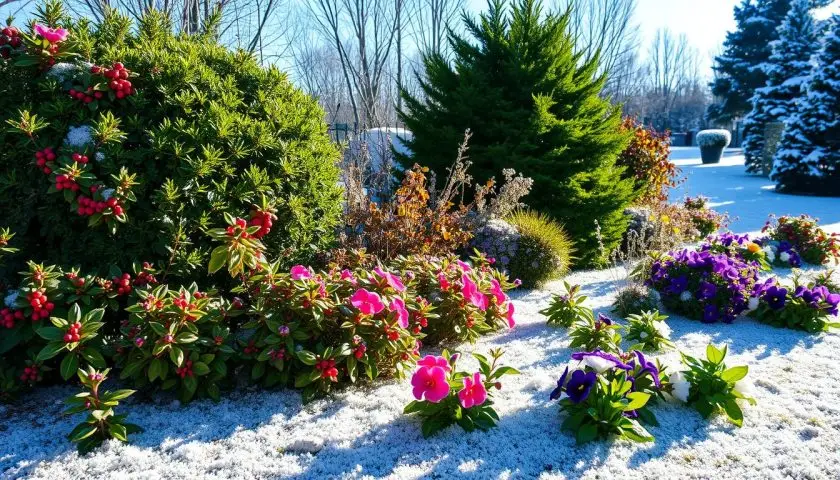
Winter Flowers and Colourful Foliage: 6 Beautiful Choices
Winter flowers and colourful foliage can make a garden more inviting during colder months.
The following plants provide different types of seasonal interest, from cool-weather bedding displays to bulbs and perennial flowers.
1. Pansies: Best for Colourful Winter Containers
Botanical name: Viola × wittrockiana.
Pansies are popular cool-season flowers available in purple, yellow, white, orange, blue, and many multicoloured forms.
They perform especially well during autumn, mild winter periods, and spring.
Pansies tolerate light frosts, but their performance depends on cultivar, planting time, and winter severity.
In mild-winter regions, they may flower through much of the cool season. In colder climates, blooms may pause or plants may suffer damage during prolonged freezes.
- Light: Full sun to partial shade.
- Soil: Fertile, well-drained soil.
- Water: Maintain suitable moisture without waterlogging.
- Best use: Containers, window boxes, borders, and entryways.
- Care tip: Remove faded flowers where practical and protect containers during severe weather.
Pansies are useful when you want immediate colour rather than waiting for a perennial shrub to mature.
2. Violas: Best for Small Cold-Season Flowers
Botanical group: Viola species and hybrids.
Violas are close relatives of pansies and often produce smaller, abundant flowers.
They are attractive in borders, pots, and mixed seasonal displays.
Many viola types perform well in cool conditions, although exact frost tolerance differs among species and cultivars.
Like pansies, violas may bloom through mild winter periods but should not be treated as universally hardy in every climate.
- Light: Sun to partial shade.
- Soil: Well-drained soil with appropriate fertility.
- Water: Check soil moisture during dry periods.
- Best use: Border edging, patio pots, and seasonal colour combinations.
- Care tip: Maintain airflow and remove damaged foliage when needed.
For the most attractive effect, use several plants together where their roots have adequate room to develop.
3. Hellebores: Best for Winter Flowers in Partial Shade
Botanical group: Helleborus species and hybrids.
Hellebores are long-lived perennials valued for their attractive flowers and foliage.
Depending on species, cultivar, and climate, they may bloom during winter or early spring.
Their flowers occur in shades of white, cream, pink, purple, green, and other colours.
Hellebores are especially useful in woodland-style beds and beneath deciduous trees, where winter light may reach the ground before the overhead canopy develops leaves.
- Light: Partial shade or suitable filtered light.
- Soil: Fertile, well-drained soil.
- Water: Moderate, especially during establishment.
- Best use: Woodland borders and sheltered perennial beds.
- Care tip: Avoid prolonged waterlogging and unnecessary root disturbance.
Safety note: Hellebores are toxic if ingested and may irritate skin. Wear gloves when handling plants and place them carefully around pets and children.
4. Ornamental Kale and Cabbage: Best for Winter Foliage Colour
Botanical group: Ornamental cultivars of Brassica oleracea.
Ornamental kale and cabbage are grown primarily for their decorative leaves rather than their flowers.
Cool temperatures can intensify their white, cream, pink, and purple colouring.
Their compact forms make them useful in seasonal containers and flower beds.
Although they tolerate cool weather and frost, severe or prolonged freezing can still cause significant damage.
- Light: Full sun preferred.
- Soil: Fertile, well-drained soil.
- Water: Maintain suitable moisture during active growth.
- Best use: Autumn and winter containers, entryways, and borders.
- Care tip: Remove damaged leaves and replace seasonal plants when they decline.
Ornamental kale provides an especially effective contrast beside small evergreen conifers or pansies.
5. Winter Heath: Best for Low-Growing Winter Flowers
Botanical name: Erica carnea.
Winter heath is a low-growing evergreen shrub valued for its fine foliage and pink, white, or reddish flowers.
Depending on climate and cultivar, flowers may appear in winter or early spring.
Its compact growth makes it suitable for edging, rock gardens, and well-drained slopes.
Winter heath differs from some other members of the heather family because suitable cultivars may tolerate neutral soil and certain alkaline conditions, although acidic soil is generally preferred.
- Light: Full sun to partial shade.
- Soil: Well-drained, usually acidic soil; some cultivars tolerate neutral or alkaline conditions.
- Water: Suitable moisture during establishment; avoid stagnant water.
- Best use: Rock gardens, low borders, and sunny edges.
- Care tip: Choose a cultivar suitable for local temperatures and soil conditions.
For detailed cultivation information, consult the NC State Extension winter heath profile.
6. Snowdrops: Best for Late-Winter Bulb Flowers
Botanical group: Galanthus species, including Galanthus nivalis.
Snowdrops produce delicate white flowers that often appear in late winter or very early spring.
They are a familiar sign of the approaching growing season in many temperate climates.
Snowdrops are useful beneath deciduous trees and in sheltered woodland borders.
They often perform best where the soil has adequate moisture during active growth but does not remain persistently waterlogged.
- Light: Partial shade or appropriate seasonal light.
- Soil: Moist, well-drained soil.
- Water: Suitable moisture during active growth.
- Best use: Woodland gardens, naturalised beds, and shaded edges.
- Care tip: Allow foliage to die back naturally after flowering.
Planting tip: Snowdrops are often successfully established by planting freshly lifted bulbs after flowering or plants sold “in the green” while leaves remain present.
The Royal Horticultural Society snowdrop guide explains that planting fresh bulbs or plants in active growth can improve establishment compared with poorly stored dry bulbs.
Use cultivated nursery stock rather than collecting bulbs from wild populations.
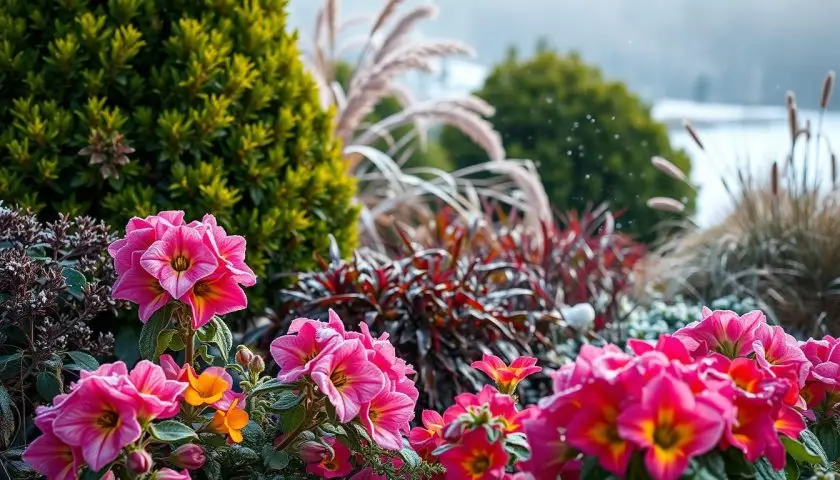
Hardy Winter Shrubs: 5 Choices for Berries, Bark and Flowers
Shrubs provide permanent garden structure and offer valuable winter features after many herbaceous plants become dormant.
Some have colourful stems or berries, while others retain foliage or produce winter flowers.
7. Red-Twig Dogwood: Best for Bright Winter Stems
Botanical name: Cornus sericea.
Red-twig dogwood is a deciduous shrub known for its colourful stems.
Its bright red young branches create a striking display after autumn leaf drop, especially against snow or evergreen foliage.
Red-twig dogwood grows well in suitable moist soils and can tolerate wetter conditions than many ornamental shrubs.
However, its mature size and vigorous growth may make it unsuitable for small planting spaces.
- Light: Full sun to partial shade.
- Soil: Moist soil with suitable drainage conditions.
- Water: Moderate to consistent depending on location.
- Best use: Winter shrub borders and moist landscape areas.
- Care tip: Remove some older stems periodically to encourage young, colourful growth.
Pruning guidance: The newest stems generally display the strongest colour.
Selective removal of older stems in late winter or early spring can encourage replacement growth without unnecessarily cutting down the whole plant every year.
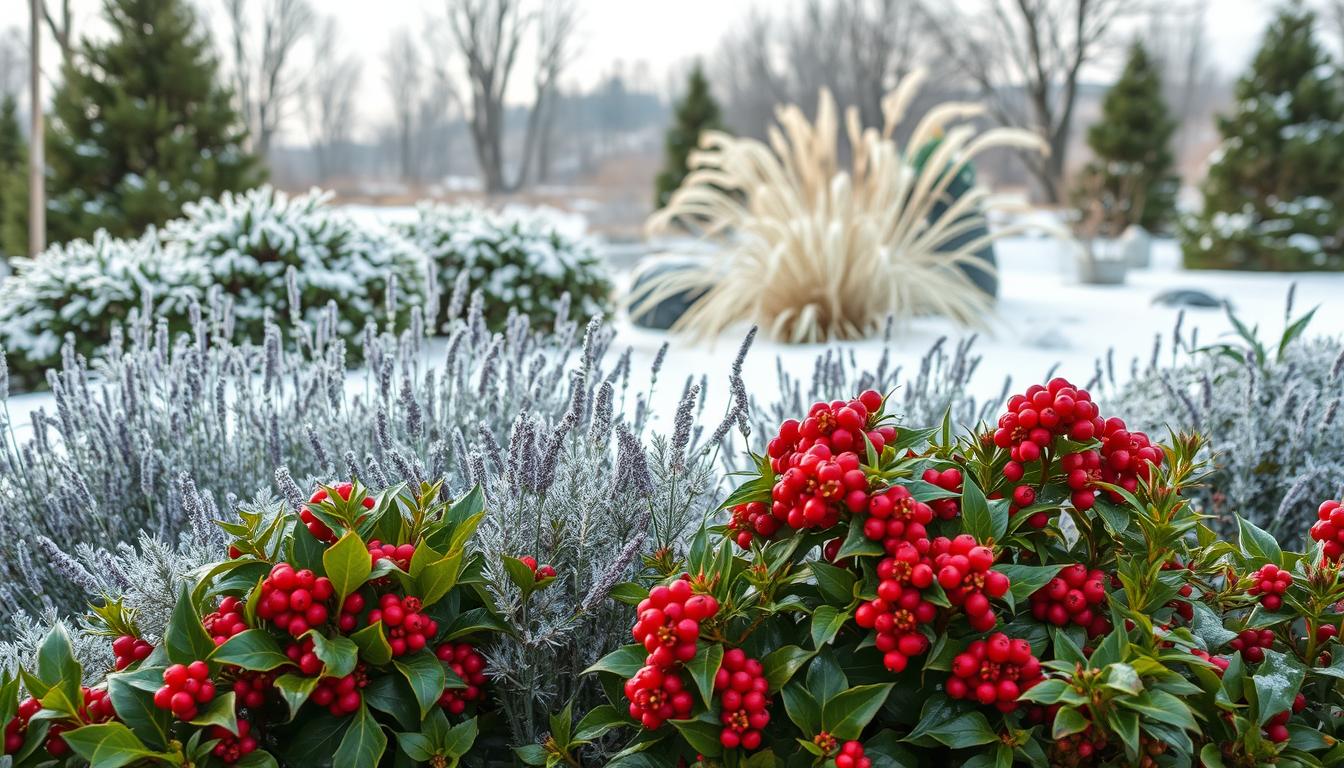
8. Winterberry Holly: Best for Red Winter Berries
Botanical name: Ilex verticillata.
Winterberry holly is a deciduous North American shrub valued for its colourful berry-like fruits.
Its leaves fall in autumn, exposing clusters of red, orange, or yellow fruits depending on the cultivar.
These fruits can provide winter interest and support wildlife.
Winterberry differs from evergreen hollies because it does not retain its foliage throughout winter.
- Light: Full sun to partial shade.
- Soil: Moist, preferably acidic soil; tolerates some wetter conditions.
- Water: Maintain suitable moisture, especially during establishment.
- Best use: Winter borders, rain gardens, and wildlife landscapes.
- Care tip: Choose compatible male and female plants if berries are desired.
Why does winterberry need a pollinator? Winterberry is generally dioecious, meaning separate plants produce male and female flowers.
Female plants require pollen from a compatible male plant, with flowering periods that overlap, to produce a strong fruit display.
Early-flowering and late-flowering cultivars do not always pollinate each other effectively.
The NC State Extension winterberry profile explains cultivar compatibility and pollination requirements.
Safety note: Holly fruits should not be eaten by people or household pets.
9. Witch Hazel: Best for Fragrant Late-Winter Flowers
Botanical examples: Hamamelis × intermedia, Hamamelis mollis, and suitable cultivars.
Witch hazel produces distinctive narrow-petalled flowers in yellow, orange, copper, or reddish shades.
Some cultivars flower in late winter, creating a welcome display before most spring shrubs begin blooming.
Other species, including common American witch hazel, Hamamelis virginiana, flower mainly in autumn.
This distinction matters when choosing plants specifically for winter flowers.
- Light: Full sun to partial shade.
- Soil: Moist, well-drained soil suitable for the chosen species.
- Water: Moderate during establishment and dry periods.
- Best use: Specimen shrub near paths or entrances.
- Care tip: Choose a winter-flowering species and avoid unnecessary pruning.
Some witch hazel flowers are fragrant, making them especially attractive near a regularly used winter walkway.
For winter colour, consider a cultivar of Hamamelis × intermedia with a known flowering season.
10. Mahonia: Best for Evergreen Leaves and Winter Flowers
Botanical group: Selected Mahonia species and hybrids, sometimes classified within Berberis.
Mahonia plants are valued for their evergreen or semi-evergreen foliage, clusters of yellow flowers, and dark berry-like fruits.
Some varieties, including certain hybrid mahonias, produce flowers during winter or late winter.
Others bloom during different seasons, so plant identification is essential.
Many mahonias tolerate partial shade and can bring useful texture to woodland-style borders.
- Light: Partial shade or suitable filtered light.
- Soil: Appropriate well-drained soil.
- Water: Moderate during establishment.
- Best use: Sheltered borders and evergreen shrub planting.
- Care tip: Select a suitable winter-flowering species or cultivar.
Regional caution: Some Mahonia species can spread aggressively or have invasive potential in particular regions.
Check local invasive-plant guidance before selecting a variety. Also avoid positioning sharp-leaved species where people regularly brush against the foliage.
11. Evergreen Azalea: Best for Year-Round Foliage
Botanical group: Evergreen azalea cultivars within Rhododendron.
Evergreen azaleas are attractive shrubs that retain much of their foliage through winter.
Although their main flower display typically occurs in spring, they provide valuable green structure during colder months.
Azaleas generally prefer acidic soil, suitable drainage, and filtered light or sheltered conditions.
They can be vulnerable to drying winter winds, especially when roots are cold or soil moisture is limited.
- Light: Filtered light or partial shade for many cultivars.
- Soil: Acidic, organic-rich, well-drained soil.
- Water: Maintain suitable moisture without saturation.
- Best use: Sheltered foundation beds and woodland borders.
- Care tip: Mulch appropriately and avoid heavy late-season fertilization.
Safety note: Azaleas are toxic if ingested. Check placement carefully in homes with pets or young children.
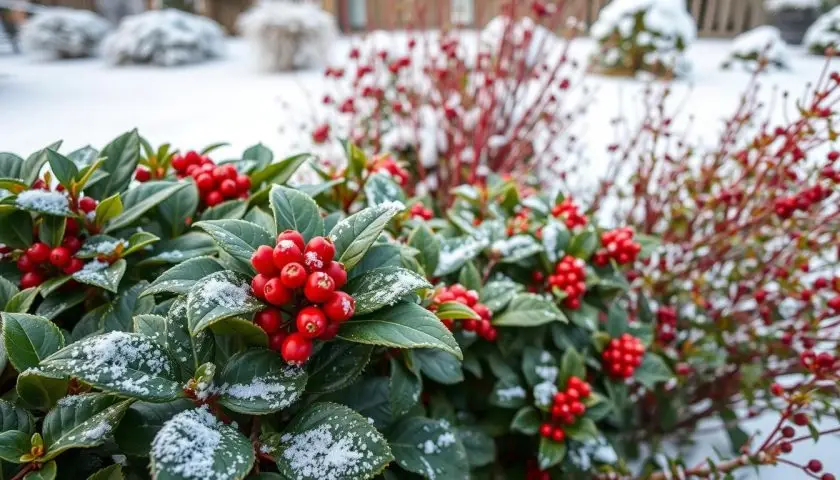
Evergreen Winter Plants: 6 Choices for Structure and Groundcover
Evergreens help maintain visible foliage when deciduous trees and shrubs are bare.
These plants can provide privacy, screening, groundcover, or woodland texture, depending on species and mature size.
12. American Arborvitae: Best for Evergreen Privacy Screens
Botanical name: Thuja occidentalis.
American arborvitae is a conifer used for hedges, screening, and year-round garden structure.
Its dense foliage makes it useful for privacy where growing conditions are appropriate.
However, mature dimensions vary dramatically among cultivars.
Some remain relatively narrow, while others become much wider and taller than expected.
- Light: Full sun to partial shade.
- Soil: Suitable, adequately drained soil with appropriate moisture.
- Water: Consistent during establishment.
- Best use: Privacy screens and evergreen borders.
- Care tip: Protect vulnerable plants from winter wind, browsing animals, and heavy snow damage.
Winter caution: Arborvitae foliage can suffer winter burn when moisture loss exceeds the amount roots can replace.
Choose an appropriate site and maintain suitable moisture through the growing season and autumn.
13. Dwarf Alberta Spruce: Best for Small Evergreen Spaces
Botanical name: Picea glauca ‘Conica’.
Dwarf Alberta spruce is a slow-growing evergreen conifer with a naturally conical habit.
Its compact appearance makes it popular for foundation beds and small garden displays.
However, slow growing does not mean permanently miniature.
Given enough time, mature plants can become considerably taller than nursery specimens.
- Light: Full sun to partial shade.
- Soil: Well-drained soil.
- Water: Maintain suitable moisture, especially while establishing.
- Best use: Small gardens, entryways, and suitable containers.
- Care tip: Watch for spider mites and winter desiccation.
Container caution: Roots in above-ground pots can experience colder temperatures than roots insulated by surrounding garden soil.
Protect exposed containers according to local conditions, and do not assume a hardy spruce needs no winter maintenance.
14. Eastern Red Cedar: Best for Wildlife and Evergreen Structure
Botanical name: Juniperus virginiana.
Despite its common name, eastern red cedar is a species of juniper.
It is a North American evergreen tree valued for its foliage, structural form, and wildlife benefits.
Female trees can produce blue berry-like cones that are eaten by birds.
Eastern red cedar can tolerate relatively dry conditions after establishment and often performs well in sunny, appropriately drained locations.
- Light: Full sun.
- Soil: Adaptable but best suited to appropriate drainage.
- Water: Moderate while establishing; often lower afterward.
- Best use: Screening, native landscapes, and wildlife gardens.
- Care tip: Allow sufficient room for mature growth.
Some red cedars serve as alternative hosts for cedar-apple rust fungi, which may affect nearby apple and related trees.
Consider local extension advice when planting near susceptible fruit trees.
15. Creeping Juniper: Best for Evergreen Groundcover
Botanical name: Juniperus horizontalis.
Creeping juniper is a low-growing evergreen shrub that spreads horizontally.
It is useful on sunny slopes, in rock gardens, and across open areas where a low evergreen carpet is desirable.
Foliage colour varies by cultivar, with green, blue-green, and other tones available.
Established plants can tolerate relatively dry conditions, but poor drainage may contribute to root problems.
- Light: Full sun.
- Soil: Well-drained soil.
- Water: Water during establishment; avoid prolonged saturation.
- Best use: Slopes, rock gardens, and low-maintenance groundcover.
- Care tip: Allow enough room for the mature spread.
Creeping juniper is a useful alternative to seasonal flowers where year-round ground coverage is the priority.
16. Inkberry Holly: Best for Broadleaf Evergreen Hedges
Botanical name: Ilex glabra.
Inkberry holly is a broadleaf evergreen shrub native to eastern North America.
It is useful for hedges, foundation planting, and naturalistic borders.
Unlike needled conifers, inkberry retains rounded to oval green leaves that provide a softer evergreen appearance.
It generally prefers acidic soil with suitable moisture.
- Light: Full sun to partial shade.
- Soil: Moist, acidic soil with appropriate drainage.
- Water: Moderate, depending on location and establishment.
- Best use: Low hedges, mixed shrub borders, and foundation beds.
- Care tip: Choose a cultivar suited to the desired mature height and shape.
Berry production: Inkberry holly generally has separate male and female plants. Compatible pollination is needed when berries are desired.
Do not assume every ornamental inkberry cultivar will produce a strong fruit display.
17. Christmas Fern: Best for Shady Winter Greenery
Botanical name: Polystichum acrostichoides.
Christmas fern is a North American evergreen fern valued for its leathery green fronds.
Its foliage provides structure during colder months, especially in sheltered woodland gardens.
Unlike many other plants in this list, Christmas fern performs best in shade or partial shade.
It appreciates soil rich in organic matter with suitable moisture and drainage.
- Light: Partial to full shade.
- Soil: Organic-rich, well-drained soil.
- Water: Maintain suitable moisture during establishment.
- Best use: Woodland gardens, shaded slopes, and naturalistic borders.
- Care tip: Use leaf-litter mulch and protect plants from hot, dry exposure.
Christmas fern is especially effective when planted near other woodland species with similar light and soil requirements.
Its fronds may lie flatter during harsh winter conditions rather than remaining perfectly upright throughout the season.
Which Winter Plants Are Best for Different Garden Needs?
| Garden Goal | Recommended Plants | Important Consideration |
|---|---|---|
| Winter flowers | Hellebores, winter heath, witch hazel, selected mahonias | Flowering season varies by species and climate |
| Small seasonal containers | Pansies, violas, ornamental kale and cabbage | Protect pots during severe freezes |
| Red berries | Winterberry holly | Compatible male and female plants |
| Colourful stems | Red-twig dogwood | Young stems provide strongest colour |
| Evergreen privacy | American arborvitae, eastern red cedar | Consider mature height and spread |
| Small evergreen focal point | Dwarf Alberta spruce | Winter burn and mature size |
| Sunny groundcover | Creeping juniper | Full sun and good drainage |
| Shady woodland garden | Christmas fern, hellebores | Suitable soil moisture and shade |
| Moist landscape areas | Winterberry holly, red-twig dogwood | Confirm site-specific drainage |
For more general winter-hardy landscaping ideas, see our 15 hardy outdoor plants guide.
How to Prepare Outdoor Plants for Winter
1. Check Hardiness Before Planting
Choose species and cultivars suited to the local climate.
Use the USDA map for an initial comparison, then check local extension guidance and plant descriptions for specific growing requirements.
2. Plant at an Appropriate Time
Woody shrubs and perennials need time to establish roots before winter conditions become severe.
Planting dates vary considerably by climate, species, and whether the plant is sold in a container, as a bare-root specimen, or as a bulb.
Follow regional planting recommendations instead of using one universal calendar.
3. Prepare the Soil
Check drainage before planting.
Do not dig a small planting hole that becomes a water-filled basin inside heavy surrounding soil.
Improve site conditions as appropriate and choose species adapted to existing soil moisture whenever possible.
4. Water Plants During Establishment
Newly planted evergreens and shrubs may need supplemental water while roots develop.
Water according to rainfall, temperature, and soil conditions.
Avoid both prolonged drought and saturated soil.
5. Apply Suitable Mulch
Mulch can help moderate soil temperature and reduce rapid moisture loss.
In many ornamental beds, an appropriate layer of organic mulch helps protect roots during fluctuating winter conditions.
Keep mulch away from trunks and crowns rather than piling it directly against stems.
6. Protect Vulnerable Plants From Wind
Exposed evergreens may experience winter foliage injury during windy and sunny weather.
Where appropriate, consider a wind barrier positioned to reduce exposure without enclosing the plant too tightly.
The University of Minnesota Extension winter protection guide provides useful information about winter burn and protective barriers.
7. Avoid Unnecessary Late-Season Fertilization
Heavy fertilization near the end of the growing season may encourage tender new growth that is more vulnerable to cold in some plants.
Follow species-specific fertilizer recommendations and use soil testing when necessary.
How to Protect Outdoor Winter Plants in Containers
Growing winter plants in pots creates additional challenges because container roots are more exposed to freezing conditions than roots surrounded by garden soil.
Choose Suitable Containers
Use containers designed to tolerate local outdoor temperatures.
Some ceramic and terracotta pots can crack during freeze-thaw conditions, particularly when saturated with water.
Choose containers with functioning drainage holes.
Protect the Root Zone
Move vulnerable containers to a sheltered position where appropriate.
Insulating pots, grouping them together, or temporarily sinking containers into garden soil may help protect roots in colder regions.
Choose the method according to the plant’s needs and the actual winter climate.
Avoid Standing Water
Winter containers should not remain waterlogged.
Remove excess drainage water and make sure pots are not trapped in saucers filled with freezing water.
Check Plants During Mild Weather
Containers may still dry out during winter, especially those holding evergreens.
Check moisture when temperatures permit and water appropriately if the growing medium is dry and unfrozen.
Do not water frozen soil simply because the surface looks dry.
Choose Compatible Winter Container Combinations
For mild-winter seasonal colour, pansies, violas, and ornamental kale can work together when their growing requirements are compatible.
In colder climates, container protection becomes more important.
For planting calculations, the PatchPlants Soil Calculator can help estimate the growing-medium volume required for appropriately sized containers.
Winter Watering: When Should Outdoor Plants Be Watered?
Outdoor plants do not necessarily stop needing moisture during winter.
Evergreens can continue losing water from foliage even when growth slows.
However, cold weather often reduces evaporation from soil, and watering must reflect actual conditions.
Water Before the Ground Freezes
Maintaining suitable soil moisture during autumn helps plants enter winter in better condition.
This is particularly important for newly planted shrubs and evergreens.
Water During Suitable Mild Periods
If the ground is unfrozen and conditions are dry, some outdoor plants may benefit from supplemental watering.
Water only when needed, taking rainfall and soil moisture into account.
Avoid Overwatering
Cold, wet soil may drain slowly.
Do not keep plants constantly saturated, especially species that require sharp drainage.
For general advice, see our plant watering guide.
Common Winter Plant Problems and How to Fix Them
| Problem | Possible Cause | Recommended Action |
|---|---|---|
| Evergreen leaves turn brown | Winter burn, root damage, salt, or other stress | Check exposure and wait to assess spring recovery |
| Roots appear pushed above soil | Freeze-thaw soil heaving | Restore suitable soil contact when conditions permit and use appropriate mulch |
| Container plants suddenly decline | Root freezing, poor drainage, or winter desiccation | Assess container protection and moisture |
| Hellebores fail to flower | Species, age, site conditions, or seasonal timing | Review light, maturity, and cultivar |
| Winterberry produces no fruit | Missing or incompatible male pollinator | Check male-female flowering compatibility |
| Red-twig dogwood loses bright colour | Older stems becoming less vivid | Prune selectively to encourage younger growth |
| Pansies are damaged after a cold snap | Prolonged severe freezing | Assess damage and protect during future extremes |
| Winter heath becomes unhealthy | Unsuitable soil, drainage, heat, or cultivar | Check soil conditions and regional suitability |
| Azalea leaves curl or discolour | Cold response, desiccation, or other stress | Check exposure and plant health |
| Dwarf Alberta spruce develops webbing or discolouration | Possible spider mites or other causes | Inspect foliage and identify the problem before treatment |
What Is Winter Burn?
Winter burn refers to damage that can occur when foliage loses moisture while roots cannot replace it quickly enough.
Drying winter winds, bright sunlight, and frozen soil may contribute to the problem.
Susceptible plants include arborvitae and other evergreens, especially in exposed locations.
Maintain suitable watering throughout the growing season, protect vulnerable sites, and avoid pruning visibly damaged foliage too early when surviving buds have not yet developed.
What Is Frost Heaving?
Frost heaving occurs when freezing and thawing soil shifts and may push plant roots or crowns upward.
Recently planted or shallow-rooted specimens may be particularly vulnerable.
Appropriate mulch can help moderate soil temperature changes.
If a plant has lifted, restore suitable root-to-soil contact when the ground is workable.
When Should Winter-Damaged Plants Be Pruned?
Do not automatically remove every brown-looking branch during winter.
Some stems may remain alive even when leaves are damaged.
Wait until appropriate spring growth reveals the extent of injury, unless branches are clearly broken, hazardous, or diseased.
Common Mistakes to Avoid With Winter Plants for Outside
- Choosing plants by appearance alone: Check actual hardiness and site conditions.
- Assuming all frost-tolerant flowers survive severe freezes: Seasonal bedding plants have limits.
- Ignoring drainage: Some roots decline in persistently saturated soil.
- Placing shade plants in exposed full sun: Hellebores and Christmas ferns need appropriate shelter.
- Growing sunny conifers in deep shade: Eastern red cedar and creeping juniper perform best with sufficient light.
- Ignoring winterberry pollination: Female plants require a compatible male flowering at the right time.
- Expecting every witch hazel to flower in winter: Blooming seasons vary by species.
- Choosing winter heath without considering soil: Cultivar and soil compatibility matter.
- Forgetting container roots: Above-ground pots may experience damaging root temperatures.
- Allowing mulch to touch trunks: Piling mulch against stems may contribute to decay.
- Over-fertilizing late in the season: Tender growth may become vulnerable to cold.
- Watering frozen or waterlogged soil unnecessarily: Check conditions first.
- Pruning too early after winter injury: Some buds may still recover in spring.
- Overlooking regional invasiveness: Research locally appropriate mahonias and other species.
- Ignoring plant toxicity: Some winter ornamentals are unsafe if eaten.
Frequently Asked Questions About Winter Plants for Outside
What are the best winter plants for outside in cold weather?
Useful choices include hellebores, winter heath, red-twig dogwood, winterberry holly, American arborvitae, dwarf Alberta spruce, creeping juniper, and Christmas fern. Pansies, violas, and ornamental kale can provide seasonal colour where winter temperatures permit. Always match the species and cultivar to your USDA hardiness zone and planting conditions.
Which outdoor plants stay green throughout winter?
American arborvitae, dwarf Alberta spruce, eastern red cedar, creeping juniper, inkberry holly, and Christmas fern provide evergreen or winter-green foliage. Evergreen azaleas and suitable mahonias also retain foliage in appropriate climates. However, winter injury and leaf appearance can vary with temperature, exposure, and plant health.
What winter plants are best for outdoor pots?
Pansies, violas, ornamental kale, and suitable small evergreens are popular for outdoor winter containers. Select plants appropriate for the local climate and protect roots during severe freezing. Above-ground containers are often more exposed to cold than garden soil, so good drainage, suitable pot materials, and winter protection are important.
Why does my winterberry holly have no berries?
Winterberry hollies usually require compatible male and female plants for fruit production. The flowering periods must overlap, so having any male holly nearby may not be enough. Inadequate light, unsuitable growing conditions, pruning, or poor pollination may also affect the fruit display. Check the specific cultivar’s pollination requirements.
How do I protect outdoor plants from winter frost and freezing?
Choose cold-hardy species, maintain appropriate soil moisture before winter, use suitable mulch, protect vulnerable plants from strong wind, and insulate exposed containers when needed. Avoid waterlogged soil and sudden unnecessary pruning. The correct protection depends on the plant, its established root system, local temperatures, and site conditions.
Conclusion
Winter plants for outside can create an attractive garden throughout the cold season when they are chosen for the local climate and planting conditions.
Pansies, violas, ornamental kale, hellebores, winter heath, and snowdrops provide flowers or seasonal colour. Red-twig dogwood, winterberry holly, witch hazel, mahonia, and evergreen azalea offer different combinations of stems, berries, foliage, and winter flowers.
American arborvitae, dwarf Alberta spruce, eastern red cedar, creeping juniper, inkberry holly, and Christmas fern help maintain year-round structure in suitable garden settings.
The most successful winter landscapes balance plant hardiness with sunlight, moisture, drainage, wind exposure, and mature plant size.
Start with a few well-matched species, prepare them properly before cold weather arrives, and monitor them during unusual winter conditions.
For more inspiration, explore our plants that survive British winters, hardy outdoor plants, autumn plant care guide, and low-maintenance outdoor plants.
With thoughtful planning, your outdoor garden can provide colour, texture, structure, and seasonal interest even when temperatures fall.