What does root rot smell like? Root rot may produce a sour, swampy, stale, or sewage-like smell from a plant’s potting mix or drainage holes. The odor is often associated with decomposing organic material in overly wet, poorly aerated conditions. However, root rot does not always smell bad, and an unpleasant odor alone cannot confirm that the roots are diseased.
If your houseplant smells unusual, check whether the soil stays wet, whether the leaves are yellowing or wilting, and whether the roots are firm or mushy. This guide explains seven warning signs, how to inspect roots safely, and what to do if you discover decay.
Key Takeaways
- Root rot may smell sour, swampy, musty, or sewage-like, especially when decay is advanced.
- Healthy potting mix generally smells earthy rather than sharply unpleasant.
- A bad smell can come from stagnant water or decomposing organic matter even when roots are still healthy.
- Seven important clues include mushy roots, persistent odor, yellow leaves, wilting in wet soil, slow growth, stem-base damage, and poor drainage.
- Root texture and condition are more useful diagnostic clues than smell alone.
- Correcting excess moisture and poor drainage is essential when treating affected plants.
What Does Root Rot Smell Like in Houseplants?
When gardeners ask what does root rot smell like, they are usually describing a sudden change from an ordinary earthy soil scent to something unpleasant.
Depending on the potting mix, moisture conditions, and degree of decomposition, the smell may resemble stagnant pond water, sour compost, a swamp, or sewage. Some gardeners notice it only while watering, whereas others detect it near the drainage holes or after removing the plant from its container.
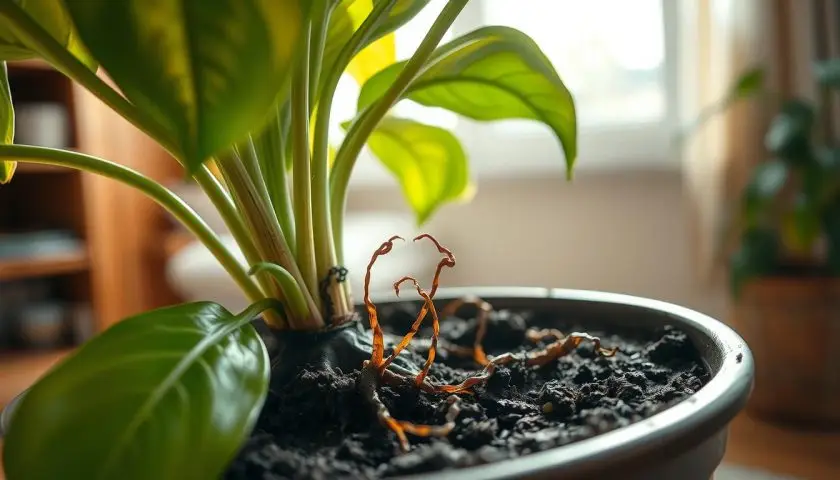
Why rotten roots may smell sour or swampy
Roots require oxygen to function properly. When a potting mix stays saturated, air spaces fill with water and oxygen availability decreases. Root tissues can become stressed or die, and microorganisms may decompose the damaged material.
That decomposition can contribute to unpleasant odors. Wet, poorly aerated conditions may also favor organisms associated with root disease.
The odor is not a unique chemical signature of root rot. Other decomposing materials in the pot can produce similar smells.
What healthy roots and potting soil smell like
Healthy potting mix usually has a mild, earthy scent. Some peat-based, bark-based, or compost-containing mixes smell stronger than others, particularly after watering.
Healthy roots generally feel firm. Depending on the plant, they may be white, cream, tan, or naturally darker. Color alone is not a reliable diagnosis.
Can root rot happen without any smell?
Yes. A plant may have diseased roots without a noticeable odor. Early infections, localized root damage, and differences in potting media can all affect whether a smell develops.
That is why the answer to what does root rot smell like should always be paired with an examination of root texture, soil moisture, and plant health.
Root Rot Smell vs. Normal Potting Soil Smell
Use this comparison to decide whether the odor deserves closer investigation. These descriptions are clues, not definitive diagnoses.
| Smell | Possible Explanation | What to Check |
|---|---|---|
| Mild and earthy | Normal potting mix or organic matter | Plant growth and moisture |
| Musty or stale | Persistently damp soil or surface mold | Airflow, drying rate, and roots |
| Sour or fermented | Decomposing organic material in wet conditions | Drainage and root condition |
| Swampy or stagnant | Waterlogged, poorly aerated potting mix | Standing water and drainage holes |
| Strong sewage-like odor | Significant decomposition or anaerobic conditions | Roots and decaying material |
| Unusual chemical smell | Possible contamination or product residues | Recent treatments and potting materials |
A strong sour or sewage-like odor deserves attention, but do not discard a plant solely because its potting mix smells different after watering.
7 Signs of Root Rot to Check
If you suspect root rot, examine several signs together. The strongest evidence usually comes from a combination of damaged roots, consistently wet growing conditions, and declining foliage.
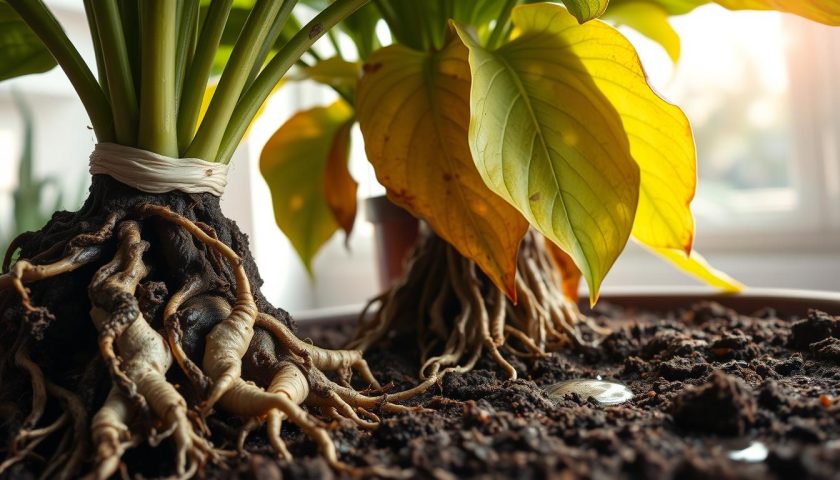
1. Soft, Brown, Black, or Mushy Roots
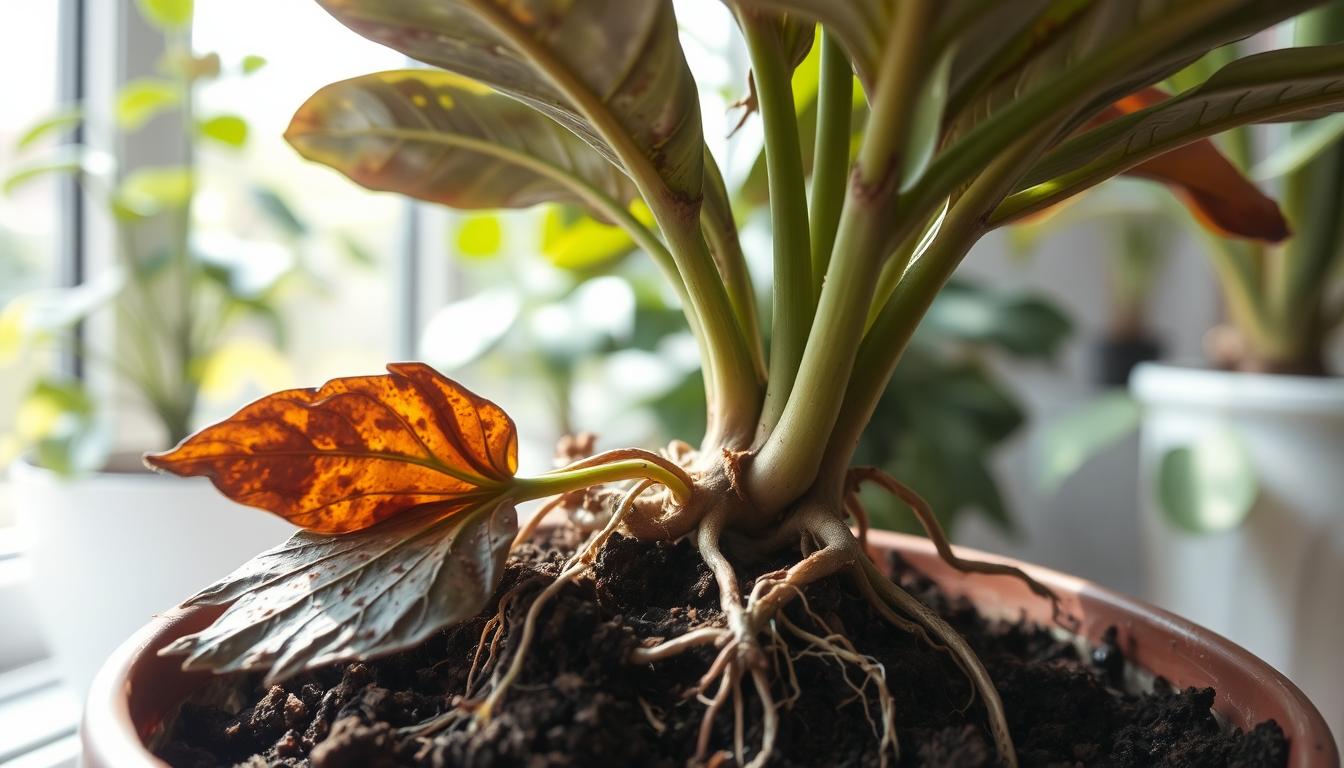
Roots that are soft, slimy, collapsing, or shedding their outer covering are among the most concerning signs of root decay.
Healthy roots are generally firm, although their natural color varies by species and growing medium. A dark root is not automatically rotten if it remains structurally sound.
How to check root texture
Gently expose a small section of the root system. Look for roots that fall apart under light handling or have a damaged outer layer that slips away.
Compare suspicious roots with firm sections on the same plant. Our healthy roots vs. root rot guide provides additional comparison points.
2. A Persistent Foul Smell From the Pot
A lasting sour, swampy, or sewage-like smell is another important warning sign.
When considering what does root rot smell like, pay attention to where the odor originates. A smell from the drainage holes or deep within the root ball may be more concerning than a slight musty odor limited to the soil surface.
Does a bad smell prove fungal root rot?
No. Smell cannot distinguish a fungal disease from bacterial decomposition, waterlogged organic matter, or other causes.
Inspect the roots before deciding that a pathogen is responsible.
3. Yellowing Leaves While the Soil Remains Wet
Yellow leaves can develop when roots cannot function properly. Damaged roots may struggle to absorb water and nutrients, even when moisture is abundant.
However, yellow foliage can also result from natural leaf aging, inadequate light, pests, or nutrient imbalances.
What makes yellow leaves more concerning?
Look for yellowing combined with wet soil, poor drainage, a foul odor, or visibly damaged roots.
Our guide to yellow leaves on plants explains other common causes.
4. Wilting Even Though the Potting Mix Is Damp
Wilting is not always a sign that a plant needs more water.
When roots are damaged, they may no longer move enough water into the plant’s stems and leaves. As a result, the foliage can droop even while the soil remains saturated.
How to distinguish underwatering from root problems
Check the moisture below the surface rather than relying only on the top layer. A lightweight pot with dry soil suggests a different problem from a heavy pot containing persistently wet mix.
If the plant is wilting in wet soil, avoid adding more water until you have investigated the cause.
5. Slow Growth, Leaf Drop, or Small New Leaves
A plant with unhealthy roots may struggle to support new foliage. Growth may slow, older leaves may fall, and emerging leaves may remain smaller than expected.
These symptoms are not specific to root rot. Seasonal dormancy, low light, restricted roots, and temperature stress can produce similar changes.
When slow growth becomes a warning sign
Compare the plant’s current condition with its normal growth pattern. A sudden decline during otherwise suitable growing conditions deserves investigation, especially when combined with wet soil or damaged roots.
6. Dark Lesions or Soft Tissue Near the Stem Base
Some plants develop dark, water-soaked, or soft tissue near the point where the stem meets the potting mix.
This may indicate crown or stem-base damage, sometimes occurring alongside root rot.
Why crown damage is serious
The crown connects the roots to the upper plant. Severe damage in this area can interfere with transport of water and nutrients.
Inspect the tissue carefully. If the stem base is collapsing, recovery may be more difficult than when only a few peripheral roots are affected.
7. Standing Water, Compacted Soil, or Poor Drainage
Poor drainage is a major risk factor for root problems. A pot without drainage holes, a blocked opening, or an excessively dense growing medium may remain wet long after watering.
Although these conditions do not prove that root rot has developed, they can create an environment where roots receive too little oxygen.
What to inspect
Check that the pot has usable drainage holes, excess water can escape, and the potting mix suits the plant.
For more help, read our guide to signs of overwatering.
Early Root Rot vs. Advanced Root Decay
Root problems vary in severity. The following comparison can help you decide how urgently to inspect the plant.
| Feature | Possible Early Problem | More Advanced Damage |
|---|---|---|
| Root texture | Some weakened or softened roots | Extensive mushy or collapsing roots |
| Odor | None or mild mustiness | Sometimes strong sour or foul odor |
| Leaves | Minor yellowing or slower growth | Widespread wilting, yellowing, or leaf loss |
| Stem base | May remain firm | May become soft or dark |
| Potting mix | Slow drying | Persistent saturation or stagnant water |
Not every plant follows this progression. Some root diseases advance rapidly, and some severely affected plants never develop a noticeable smell.
How to Check a Houseplant for Root Rot Safely
If several warning signs are present, a careful root inspection can help establish whether the problem is below the soil.
Step 1: Gather clean supplies
Prepare gloves, a clean work surface, disinfected pruning shears, fresh potting mix, and a container with drainage holes.
Wash your hands after handling soil, particularly if the plant has irritating or toxic sap.
Step 2: Check moisture and drainage before unpotting
Feel the potting mix at an appropriate depth and inspect the drainage openings. Check whether water has collected inside a decorative outer pot.
If the plant appears healthy and only the surface smells slightly musty, improving watering and airflow may be sufficient. Unnecessary root disturbance can stress an otherwise healthy plant.
Step 3: Remove the plant gently if inspection is needed
Support the root ball, tip the pot carefully, and ease the plant out without pulling forcefully on its stems.
Loosen only enough potting mix to see the roots clearly. Avoid tearing healthy roots unnecessarily.
Step 4: Examine root color, texture, and odor
Look for roots that are firm versus those that are soft, slimy, or disintegrating.
Notice whether the strongest odor comes from the root ball, stagnant water, or decomposing potting material.
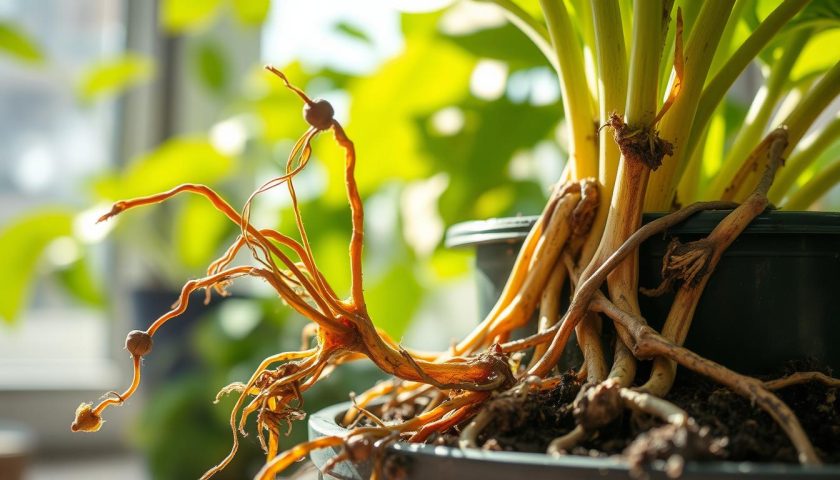
Step 5: Decide whether the roots are healthy, questionable, or rotten
- Healthy: Firm roots that retain their structure, regardless of natural color.
- Questionable: Discolored roots that remain firm and need closer inspection.
- Clearly decayed: Roots that are mushy, collapsing, or losing their outer tissue.
Do not remove every dark-colored root. Some healthy roots are naturally tan or brown.
What Causes Root Rot and Unpleasant Soil Odors?
Understanding why roots deteriorate helps prevent the same problem after treatment.
Overwatering and prolonged saturation
Repeated watering before a potting mix has dried sufficiently can reduce oxygen around the roots.
Different plants tolerate different moisture levels, so watering should match the species, container, and growing conditions.
Missing or blocked drainage holes
Water can accumulate in a pot without effective drainage. Decorative cachepots may also trap water around an inner nursery pot.
Empty collected water and make sure the growing container drains properly.
Dense or unsuitable potting mix
Compacted material has fewer air spaces and may retain excessive moisture.
Choose a mix suited to the plant’s root system. Our plant soil mix guide covers different growing-medium requirements.
Low light and cool temperatures
Plants may use water more slowly in cool or dim conditions. A watering routine that worked in summer can leave soil wet for too long in winter.
Adjust the frequency according to growth and moisture rather than following a fixed calendar.
Root pathogens
Several organisms, including certain water molds and fungi, can cause root diseases. Moisture conditions influence their development, but the precise cause cannot be identified by odor alone.
For a broader explanation, see our guide to identifying, preventing, and treating root rot.
How to Treat Root Rot and Reduce the Smell
If root inspection reveals decay, the priority is to remove clearly damaged tissue where appropriate and correct the conditions that allowed the problem to develop.
1. Separate the affected plant
Keep the plant away from shared water trays and avoid transferring its potting mix to other containers.
Isolation can also make it easier to monitor changes without disturbing nearby plants.
2. Remove clearly rotten roots
Use clean, sharp shears to trim roots that are visibly mushy or disintegrating. Preserve firm, healthy tissue whenever possible.
Disinfect tools between plants and after working with diseased material. Excessive pruning can reduce the plant’s ability to recover.
3. Replace unsuitable or contaminated potting mix
If the old mix is waterlogged, decomposing, or suspected of harboring root pathogens, discard it rather than transferring it to another houseplant.
Use fresh, appropriate potting mix with good aeration and drainage.
4. Clean the container
Wash away old potting material and sanitize reusable containers according to a suitable disinfectant’s instructions. Never mix cleaning chemicals.
Choose a pot proportionate to the remaining root system. A much larger pot may hold more water than the weakened plant can use.
5. Repot carefully
Position the plant at an appropriate depth, spread the remaining roots gently, and fill around them with fresh mix.
Avoid compacting the material excessively. Make sure water can drain from the bottom of the container.
6. Adjust watering and growing conditions
Provide suitable light, temperature, and airflow for the species. Check moisture before watering and avoid leaving the pot in standing water.
Do not assume that every plant should dry completely between waterings. Some species prefer consistently light moisture, while others need a drier interval.
7. Monitor recovery
Watch for stable foliage, firm stems, and eventual new growth. Recovery can take time, particularly if a substantial portion of the root system was lost.
Avoid adding fertilizer immediately to severely stressed roots unless a plant-specific care recommendation supports it.
Can a Plant Recover From Root Rot?
Many plants can recover if enough healthy root and stem tissue remains. However, recovery is less likely when the crown has collapsed or nearly the entire root system has decayed.
Signs recovery may be possible
- Several roots remain firm and functional.
- The main stem or crown is still structurally sound.
- At least some foliage remains viable.
- The plant can be moved into appropriate growing conditions.
When recovery may be unlikely
Extensive root collapse, severe crown rot, or a completely soft stem base can make rescue difficult.
Some plants can be propagated from healthy, unaffected stem sections even when their original roots cannot be saved.
Our step-by-step guide to reviving a dying plant covers additional recovery considerations.
Should you throw away the old soil?
If the potting mix is suspected of containing root-disease pathogens or extensive decaying material, do not reuse it for other houseplants.
Dispose of affected material appropriately and clean the pot before reuse.
How to Prevent Root Rot From Returning
Prevention depends on keeping the root environment suitable for the species rather than simply watering less.
Choose a pot with drainage holes
Use a container that allows excess water to leave the root zone. Empty saucers and decorative outer pots after watering.
Use an appropriate potting mix
Aroids, ferns, succulents, and other plant groups have different moisture and aeration needs.
Use a mix that balances moisture retention with air circulation around the roots.
Check moisture below the surface
The top layer may dry while the center of a large pot remains wet. Check deeper moisture using a finger, wooden skewer, or another suitable method.
Adjust watering to seasonal conditions
Lower light, cooler temperatures, and slower growth can reduce water use. Review your routine when the seasons change.
Avoid oversized containers
Choose a pot appropriate to the existing root system. Excess unused potting mix can remain wet longer than necessary.
Inspect plants that stop growing unexpectedly
Sudden wilting, yellowing, or an unusual smell deserves attention, particularly when the potting mix is consistently wet.
Common Mistakes When Diagnosing Root Rot
Relying on smell alone
Even a strong odor does not identify a particular pathogen. Examine roots and growing conditions before deciding on treatment.
Watering wilted plants without checking moisture
Wilting in saturated soil can indicate root dysfunction. Additional watering may worsen the situation.
Removing every brown root
Some healthy roots are naturally dark. Remove tissue based on evidence of decay, especially softness and structural breakdown, rather than color alone.
Repotting into another poorly draining mix
Fresh soil will not solve the underlying problem if it remains excessively wet or poorly aerated.
Applying fungicide without identifying the problem
Not all root rot is caused by the same organism, and fungicides are not interchangeable. Correct moisture and drainage problems first, and use any disease treatment only when it is appropriate and labeled for the situation.
Repeatedly disturbing recovering roots
After repotting, avoid unnecessary inspections that tear newly developing roots. Monitor foliage, moisture, and growth unless worsening symptoms justify another examination.
Root Rot Troubleshooting Checklist
| What You Notice | What It Might Mean | Next Step |
|---|---|---|
| Sour smell but healthy foliage | Wet or decomposing potting material | Check drainage and drying rate |
| Yellow leaves and wet soil | Root stress or another care problem | Inspect roots if symptoms persist |
| Wilting despite moisture | Impaired root function | Check root texture and drainage |
| Firm brown roots | Possibly normal root coloration | Do not prune based on color alone |
| Soft, collapsing roots | Likely root decay | Remove damaged tissue and correct conditions |
| Soft stem base | Possible crown or stem rot | Assess whether healthy tissue remains |
| Musty surface mold | Persistently damp surface | Review watering and airflow |
Frequently Asked Questions
What does root rot smell like when it first starts?
Early root rot may have no noticeable smell. Some affected pots develop a mild musty or stale odor, while more extensive decomposition may produce sour, swampy, or sewage-like smells. Odor alone cannot establish the stage of disease.
Can soil smell musty without root rot?
Yes. Damp organic matter, surface mold, and poorly ventilated potting mix can smell musty even when the roots remain healthy. Check root firmness, moisture, and plant growth before diagnosing root rot.
Why does my plant smell bad even though I have not watered it recently?
Water may remain trapped deeper in the pot, especially in compacted soil or a container with poor drainage. Decomposing organic material may also produce odors. Inspect the drainage and root zone rather than relying on the dry surface.
Can a plant have root rot without a strong smell?
Yes. Root rot can occur without an obvious odor. Mushy roots, wilting in wet soil, yellowing leaves, and stem-base damage may provide more useful clues.
How should I clean pruning tools after removing rotten roots?
Remove visible soil and plant debris, then disinfect tools with a suitable product according to its label. Clean tools between affected and healthy plants, and never mix disinfectants.
Should I throw away soil that smells sour?
If the soil is associated with clearly rotten roots or suspected root disease, replacing it is generally sensible. A mild odor alone does not prove contamination, so examine the growing medium and plant first.
Can overwatering cause a bad soil smell without killing the plant?
Yes. Persistently wet soil can develop an unpleasant odor before extensive root damage occurs. Improving drainage and adjusting watering early may prevent further problems.
Conclusion
So, what does root rot smell like? It may smell sour, swampy, stale, or sewage-like, particularly when wet organic material and damaged roots are decomposing. But the smell is only a warning sign, not a diagnosis.
Check all seven clues: root texture, persistent odor, yellow leaves, wilting in wet soil, slow growth, stem-base damage, and poor drainage. When roots are clearly decayed, act promptly to correct the growing conditions and preserve healthy tissue.
With appropriate watering, suitable potting mix, effective drainage, and regular observation, you can reduce the risk of root problems and give recovering houseplants a better chance of producing healthy new growth.