A medinilla plant (Medinilla magnifica, the rose grape) needs bright, filtered light, high humidity, a free-draining compost that is watered moderately in growth and sparingly in winter, and a winter minimum of about 15°C (59°F). I am Sawera Shahid, a botanist at Patch Plants. With its leathery leaves and hanging clusters of pink flowers, the medinilla plant is one of the most spectacular flowering houseplants, but it is also one of the more demanding, mainly because of its need for warmth and humid air.
This guide explains where the medinilla plant comes from, 7 expert tips for keeping it healthy and flowering, how to propagate it, the problems to watch for, and whether it is safe around pets. The advice is based on the RHS plant profile and NC State Extension, with the plant science explained so you understand why each step matters.
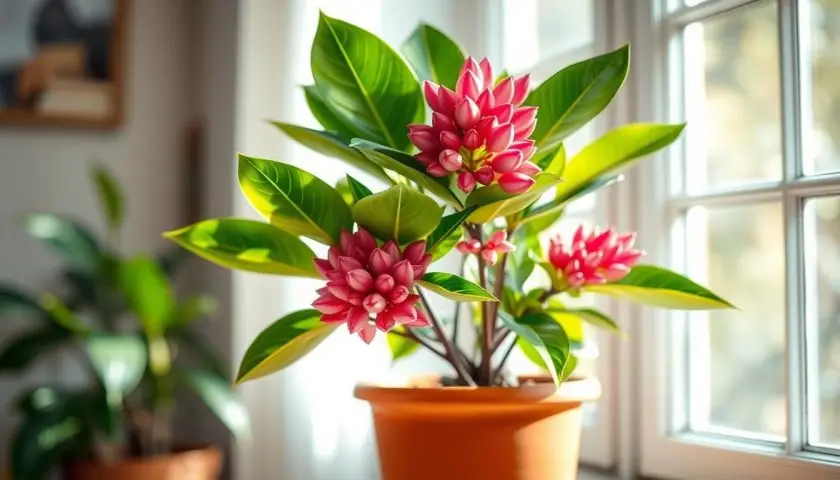
Medinilla Plant at a Glance
| Need | What Works |
|---|---|
| Botanical name | Medinilla magnifica (family Melastomataceae) |
| Native range | Philippines |
| Light | Bright, filtered light, or full light with shade from hot sun |
| Compost | Peat-free, loam-based potting compost |
| Water | Moderately in growth; sparingly in winter |
| Humidity | High; stand on a tray of moist gravel |
| Feeding | Balanced liquid fertiliser monthly in growth |
| Temperature | Minimum about 15°C (59°F) in winter |
| Size | Up to 1.5 to 2.5m tall and 1 to 1.5m wide over many years |
The light, compost, watering, feeding, humidity and size details come from the RHS plant profile; the winter minimum comes from RHS Plants.
What Is a Medinilla Plant?
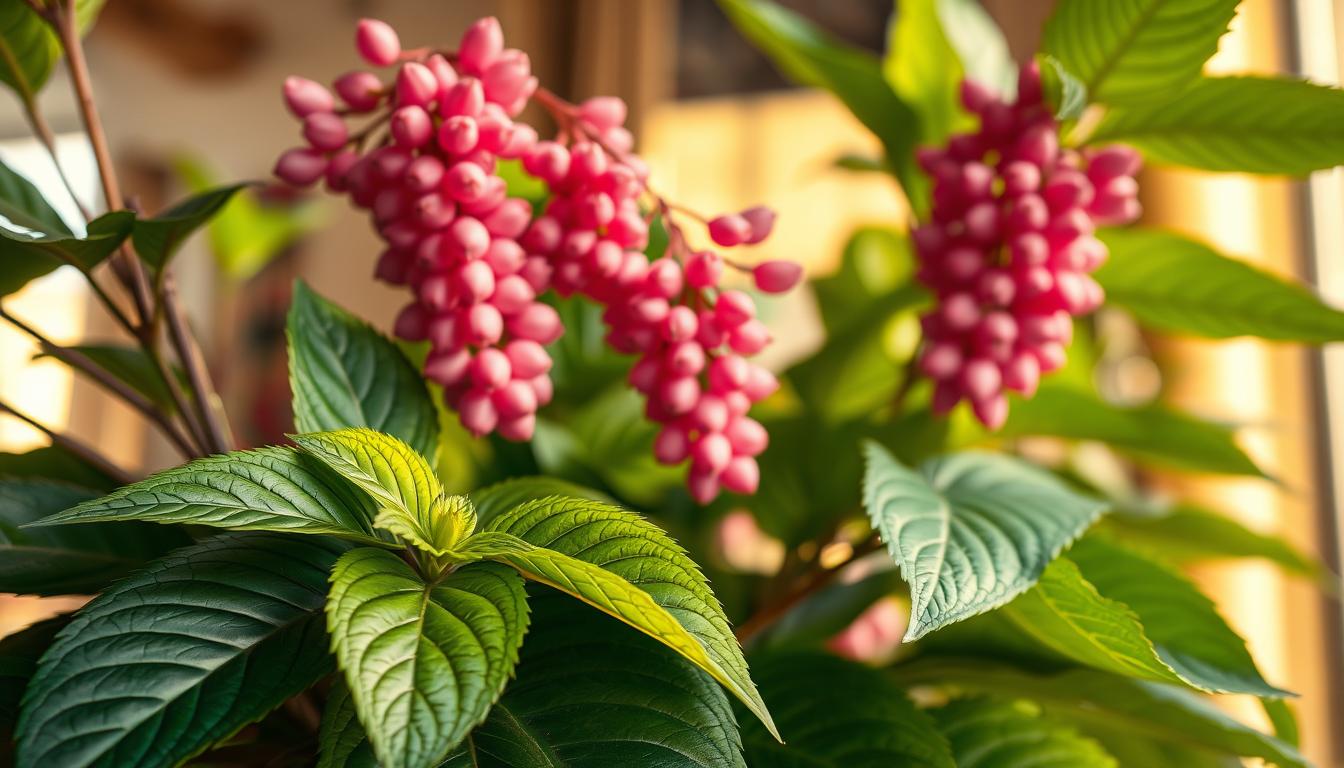
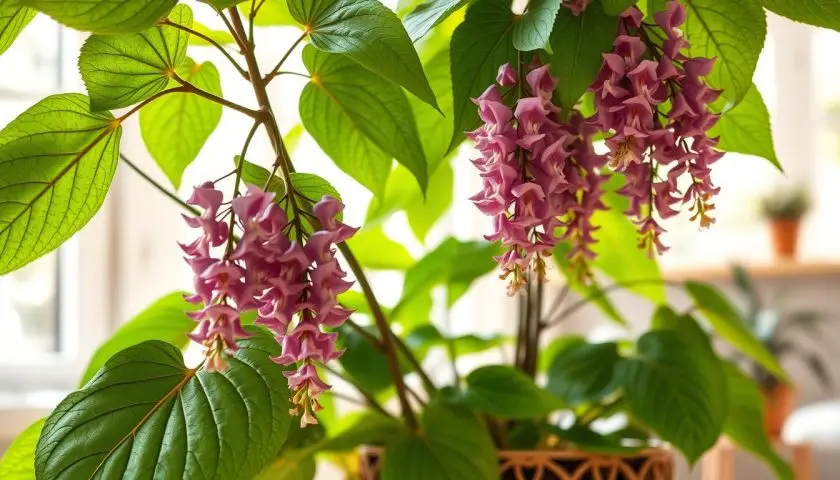
The RHS describes Medinilla magnifica as an upright, epiphytic shrub with leathery, broadly oval, pale-veined, deep green leaves up to 30cm long. In summer it produces arching sprays of pink flowers about 2.5cm across, with showy pink bracts at the base. It belongs to the family Melastomataceae and comes from the Philippines, where, as its epiphytic habit suggests, it grows on other plants rather than in the ground.
The common name rose grape comes from the way the flower sprays hang like bunches of grapes. The RHS gives the medinilla plant a hardiness rating of H1A, which means it must be grown under glass or indoors all year in the UK. It is slow to mature: the RHS gives a time to ultimate size of 5 to 10 years.
Why Medinilla Needs Humidity
Understanding the medinilla plant’s natural home explains most of its needs. As an epiphyte, it grows perched in trees in warm, humid forest, with its roots in pockets of decaying leaves and moss. That means three things for growers:
- Roots need air. They are adapted to an open, free-draining root run, not dense, wet soil.
- Humidity is high. The air in its native forest is moist, so dry, heated rooms are its biggest challenge indoors.
- Light is bright but filtered. In the canopy it receives dappled light rather than full, scorching sun.
Match these three conditions and a medinilla plant becomes much easier to keep.
7 Expert Tips for Medinilla Plant Care
1. Give it bright, filtered light
The RHS recommends bright, filtered light, or full light with shade from hot sun. In practice, a spot near an east- or west-facing window, or a little back from a south-facing one with a sheer curtain, works well. Good light is important for flowering, but strong midday sun through glass can scorch the large leaves. Our complete guide to indoor light explains how to judge brightness in your home.
2. Use a free-draining, peat-free compost
The RHS suggests a peat-free, loam-based potting compost, moist but well-drained. Because the medinilla plant is an epiphyte, adding some coarse material such as bark or perlite helps keep the compost open and airy. Always use a pot with drainage holes. For more on mixes, see the best soil mix for every type of plant.
3. Water moderately in growth and sparingly in winter
The RHS advises watering moderately while the plant is in growth and sparingly in winter. Let the top of the compost dry a little between waterings, then water thoroughly and let the excess drain away. Never leave the pot standing in water, as the roots are adapted to air as well as moisture. Our guide to signs you are overwatering shows what to look for.
4. Provide high humidity
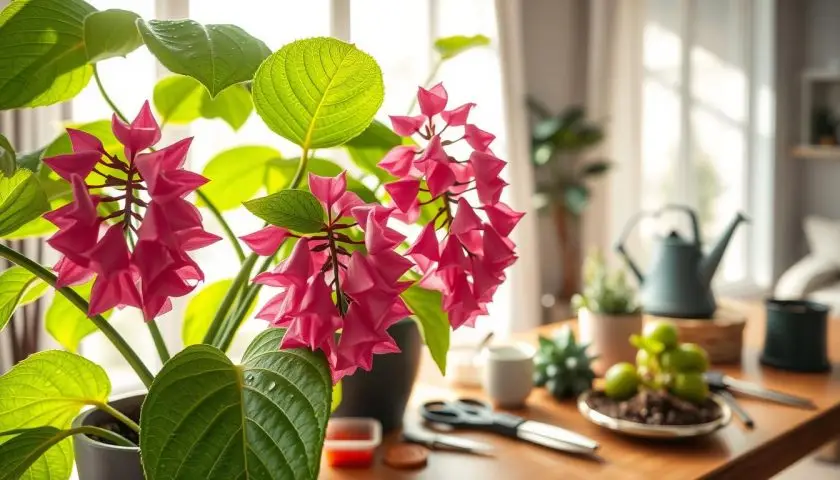
The RHS recommends providing high humidity by standing the pot on an upturned saucer in a tray of moist gravel. This keeps the pot above the water while the evaporating water raises the humidity around the leaves. Grouping plants together also helps. A DIY humidity tray is an easy way to set this up, and a bright bathroom can also suit a medinilla plant.
5. Keep it warm, especially in winter
RHS Plants advises keeping temperatures above 15°C (59°F) in winter. Keep the plant away from cold windows, outside doors and draughts, and also away from radiators, which dry the air. Sudden changes in temperature can cause buds and flowers to drop.
6. Feed during the growing season
The RHS recommends a balanced liquid fertiliser once a month while the plant is in growth. RHS Plants suggests feeding from spring to late summer. Stop feeding in autumn and winter, when growth slows.
7. Do not move it while it is in bud
Many flowering houseplants dislike being moved once buds form, and a medinilla plant is no exception. Choose its position carefully before flowering begins, and try to keep light, temperature and watering steady while the flower sprays develop. Remove faded flower sprays once they finish to keep the plant tidy.
How to Encourage Medinilla to Flower Again
Getting a medinilla plant to rebloom is the real test. Flowering depends on a healthy, mature plant with enough light and a period of slower growth in winter. Follow the RHS advice to water sparingly in winter, keep the plant bright and above 15°C, then resume normal watering and monthly feeding as growth restarts in spring. New flower stems grow from the stem joints, so avoid cutting back the plant heavily.
Be patient. The RHS notes the plant takes 5 to 10 years to reach its full size, and a young plant may need time to build up enough strength to flower freely. If your plant is growing well but not flowering, more light is usually the first thing to try.
How to Propagate a Medinilla Plant
The RHS lists three methods: seed, softwood cuttings in spring, or semi-ripe cuttings in summer. Cuttings are the most practical at home:
- In spring or summer, take a healthy shoot with at least two pairs of leaves.
- Remove the lowest pair of leaves and insert the stem into a moist, free-draining cuttings compost.
- Cover with a clear bag or place in a propagator to keep the humidity high.
- Keep the cutting warm and bright, out of direct sun.
- Pot it up once roots have formed and new growth appears.
Rooting can be slow. Warmth and humidity are the two things that make the biggest difference. Our guide on how to propagate houseplants covers the basic technique.
Choosing a Healthy Medinilla Plant
A medinilla plant is often bought in flower, so it is worth checking it carefully before you take it home. Look for these signs:
- Firm, glossy leaves with no brown, crispy edges or scorched patches.
- Plenty of buds that have not yet opened, so you enjoy the full flowering period.
- No webbing, speckling or white, cottony clusters under the leaves or at the stem joints.
- Compost that is moist but not waterlogged, with no sour smell.
Protect the plant from cold on the journey home, especially in winter, as a sudden chill can make buds drop.
How to Display a Medinilla Plant
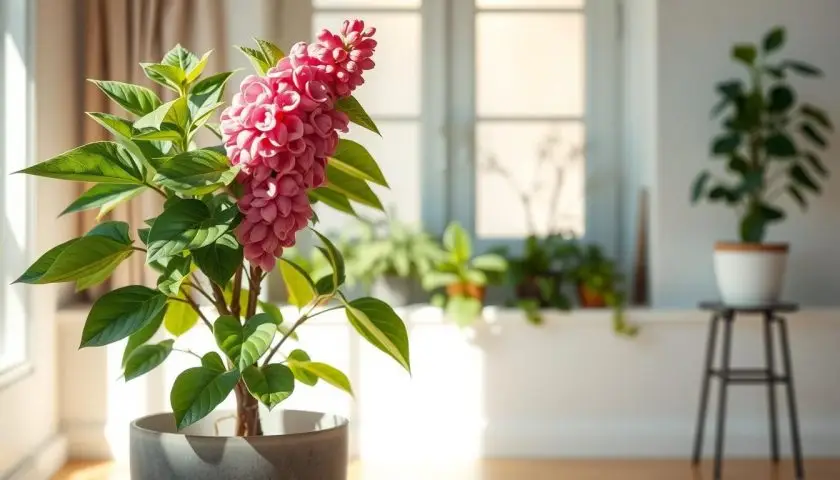
The RHS lists the medinilla plant as suitable for hanging baskets, houseplants, patio containers and conservatories. Its arching flower sprays look best when they can hang freely, so a raised plant stand, a wide shelf or a large hanging container shows them off well. Choose a spot with bright, filtered light where the air stays humid, such as a conservatory, a bright bathroom or a warm room grouped with other foliage plants. Avoid busy walkways, where the large leaves and hanging flowers can be knocked.
Repotting a Medinilla Plant
A medinilla plant does not need frequent repotting. Move it up only when roots are crowded, and only into a pot slightly larger than the current one, in spring as growth starts. Use the same open, peat-free compost. Because the stems are heavy and the plant can be top-heavy when in flower, a stable, weighty pot helps prevent it toppling over. For step-by-step help, see how to repot a plant.
Common Medinilla Plant Problems
| Problem | Likely Cause | What to Do |
|---|---|---|
| Brown, crispy leaf edges | Dry air | Raise humidity with a gravel tray; move away from heaters |
| Buds or flowers dropping | Draughts, temperature swings or moving the plant | Keep conditions steady while in bud |
| No flowers | Too little light or no winter rest | Give brighter, filtered light; water sparingly in winter |
| Scorched patches on leaves | Hot, direct sun | Provide shade from midday sun |
| Yellowing leaves, soft stems | Overwatering or cold, wet compost | Let the compost dry slightly; check roots |
| Fine webbing, speckled leaves | Spider mites in dry air | Raise humidity; wipe leaves; treat early |
| White, cottony clusters | Mealybugs | Remove by hand and isolate the plant |
For help with pests, see our guide to spider mites on plants.
Medinilla Plant Care Through the Year
| Season | What to Do |
|---|---|
| Spring | Resume regular watering and monthly feeding; repot if crowded; take softwood cuttings. |
| Summer | Flowering season; keep conditions steady, maintain humidity and take semi-ripe cuttings. |
| Autumn | Remove faded flower sprays; stop feeding as growth slows. |
| Winter | Water sparingly, keep above 15°C (59°F) and in bright light. |
Is a Medinilla Plant Safe for Pets?
NC State Extension tags Medinilla as non-toxic for dogs and cats. Even so, it is best to discourage pets from chewing any houseplant, as eating plant material can upset the stomach. If you are worried, contact your vet or the ASPCA Animal Poison Control Center at (888) 426-4435 (a consultation fee may apply). Our guide to making your plants cat-friendly has more tips.
Frequently Asked Questions
Is a medinilla plant hard to grow?
It is more demanding than most houseplants, mainly because it needs high humidity and steady warmth above 15°C. In a bright, humid room or conservatory it grows well and flowers reliably.
How often should I water a medinilla plant?
Water moderately while it is growing, letting the top of the compost dry slightly between waterings, and water sparingly in winter, as the RHS advises.
Why is my medinilla dropping its flowers?
Draughts, sudden temperature changes, dry air or moving the plant while it is in bud are the usual causes. Keep conditions steady during flowering.
How do I get my medinilla to flower again?
Give it bright, filtered light, a drier winter rest above 15°C, then regular watering and monthly feeding from spring. Mature plants flower most freely.
Is medinilla toxic to cats?
NC State Extension tags Medinilla as non-toxic for cats and dogs. Still, discourage pets from chewing it to avoid stomach upsets.
Final Thoughts
As a botanist, I see the medinilla plant as a lesson in growing epiphytes indoors. Give it what a tree-dwelling plant from the Philippines expects, which is filtered light, airy roots, warmth and moist air, and it rewards you with some of the most dramatic flowers you can grow at home. Focus on humidity first, as it is the one need most homes fall short on, and the rest of its care follows naturally.
At Patch Plants, I aim to explain why a plant needs what it needs, so that even a demanding plant like this one feels manageable. For more flowering houseplants, see our guide to blooming indoor plants, and for pink flowers and foliage, our list of plants with pink and green leaves.
Sources: RHS, Medinilla magnifica; RHS Plants, Medinilla magnifica; NC State Extension, Medinilla.

About the author
Sawera Shahid is a botanist with an MPhil in Botany and 5+ years of writing about plants. As founder and lead writer of Patch Plants, she writes practical, science-backed guides on indoor plants, outdoor gardens and plant problems, checked against RHS and university extension advice.