
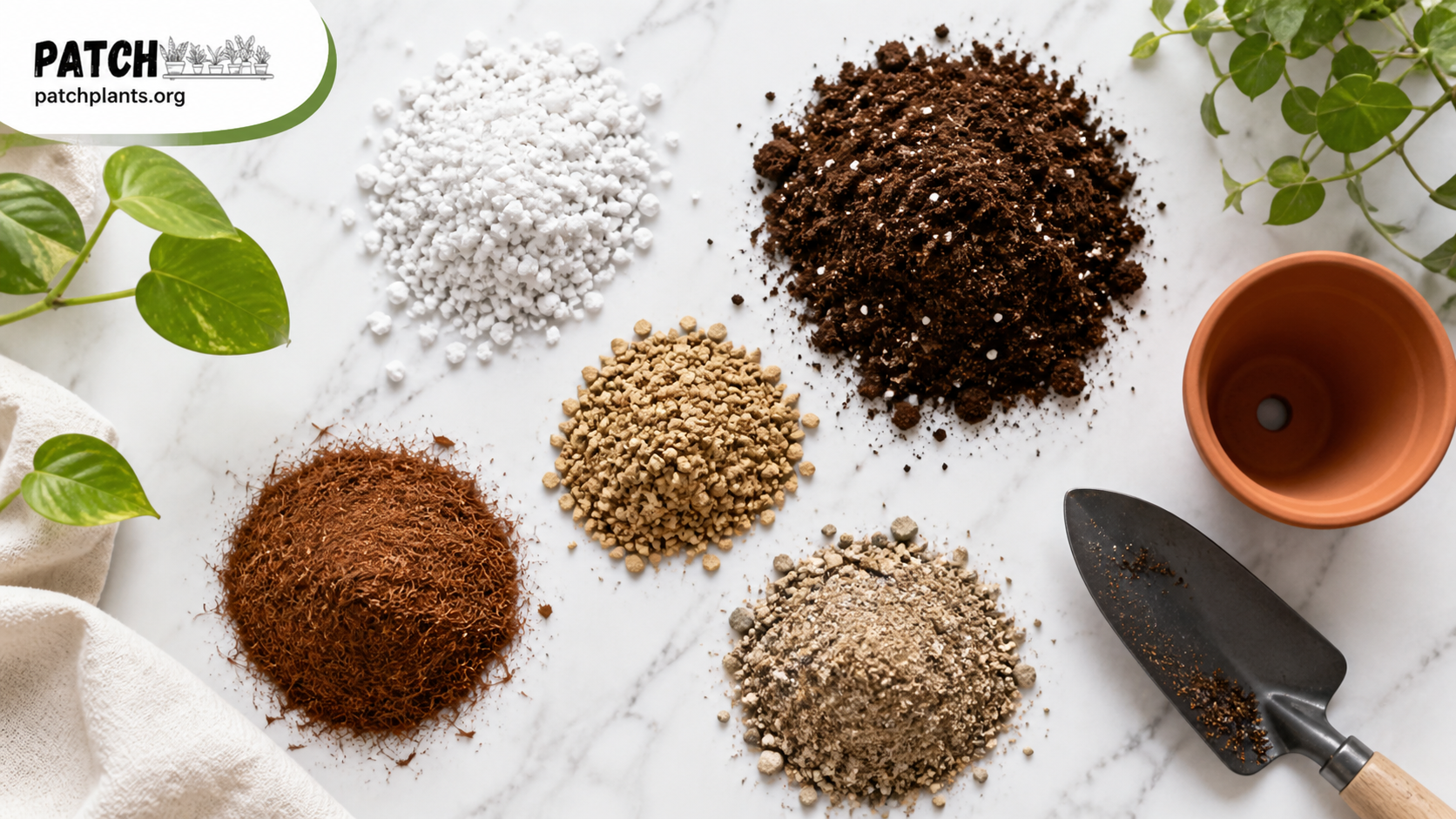
🌿 Key Takeaways
- Best potting soil is not universal — succulents, ferns, tropical plants, and cacti each need completely different soil compositions to thrive
- Cactus soil mix and cactus and succulent mix must drain immediately — any moisture retention causes root rot in desert species
- Best soil for snake plants is a cactus potting mix with added perlite — never standard potting compost which stays too wet
- How to make potting soil for succulents at home: 2 parts coarse sand or perlite + 1 part cactus soil + 1 part pumice — drains within seconds
- Can you use regular potting soil for succulents? No — standard potting soil retains too much moisture and causes root rot within weeks
- What is the difference between topsoil and potting soil? Topsoil is dense garden soil for in-ground use — potting soil is lighter, sterilized, and designed for container growing
- Is topsoil the same as potting soil? No — they are completely different products with different compositions and purposes
- Can you use outdoor soil for indoor plants? No — outdoor garden soil compacts in containers, drains poorly, and introduces pests and diseases
- Browse our full indoor plant care guides for plant-specific soil recommendations alongside complete care information
Why Soil Is the Most Underestimated Factor in Plant Care
Soil is not just dirt. It is the life-support system that every plant depends on for water, oxygen, nutrients, and physical anchoring. The right soil creates the conditions your plant evolved to grow in — mimicking the drainage, moisture retention, aeration, and nutrient levels of its natural habitat. The wrong soil creates conditions that stress roots, promote disease, and ultimately kill plants that would otherwise thrive with minimal effort.
The challenge is that best potting soil for one plant can be actively harmful for another. Cactus soil mix that drains instantly would leave a moisture-loving fern wilting within days. The rich, moisture-retaining mix perfect for peace lilies would cause root rot in a succulent within weeks. Can you use potting mix for succulents designed for tropical plants? Absolutely not — and understanding why is the foundation of successful plant care.
This complete guide covers the best soil mix for every type of plant — from desert succulents to moisture-loving ferns, from snake plants to tropical species — with ready-to-use recipes, soil component explanations, testing methods, and practical advice on when and how to repot correctly. Whether you are building a mixed plant collection or troubleshooting why a specific plant is struggling, the answer starts with the soil.
Understanding Soil Components — What Each Ingredient Does
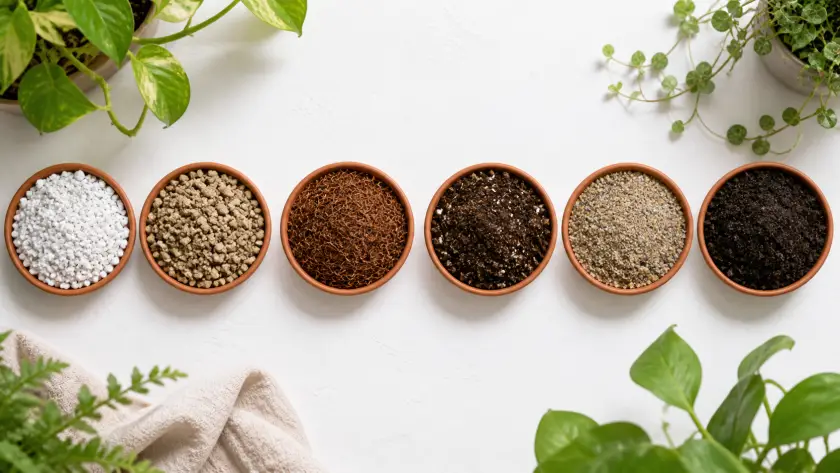
The Building Blocks of Every Potting Mix
Before diving into specific soil recipes for each plant type, understanding what each component does in a mix — and why — allows you to adapt recipes to your specific conditions and plant needs.
Peat Moss — Traditional Moisture Retention
Peat moss has been the primary moisture-retaining component in commercial potting mixes for decades. It holds water effectively, is lightweight, and creates the fluffy texture that allows plant roots to spread easily. However, peat moss is not renewable — it takes thousands of years to form and is being harvested faster than it regenerates.
Best used for: Ferns, moisture-loving tropical plants, seed starting Avoid for: Succulents, cacti, snake plants, any drought-tolerant species
Coco Coir — The Sustainable Moisture Retention Alternative
Coco coir is the fibrous husk material extracted from coconut shells — a byproduct of coconut processing that would otherwise be discarded. It provides similar moisture retention to peat moss but is completely renewable and increasingly preferred by environmentally conscious gardeners.
Best used for: Tropical plants, ferns, seed starting, orchids Properties: pH neutral, naturally antifungal, excellent drainage despite moisture retention
Perlite — The Drainage Essential
Perlite is expanded volcanic glass — those white, styrofoam-like particles you see in commercial potting mixes. It is completely inorganic and permanent, never breaking down or compacting over time. Perlite improves drainage dramatically while also creating air pockets that allow roots to breathe.
Best used for: All plant types benefit from perlite addition — it is the most universally useful soil amendment available Ratio guidance: 20–30% perlite in most mixes; up to 50% for succulents and cacti
Pumice — Superior to Perlite for Succulents
Pumice is volcanic rock that has been ground into coarse granules. It provides even better drainage than perlite for succulents and cacti — heavier than perlite (so it does not float to the surface when watering) and providing superior aeration for desert plant root systems.
Best used for: Succulents, cacti, snake plants, any drought-tolerant species The upgrade: If you are serious about cactus succulent soil, replacing perlite with pumice produces superior results
Vermiculite — Moisture Retention With Better Drainage Than Soil
Vermiculite is expanded mica that holds moisture while still providing significantly better drainage than standard potting compost. It is lighter than perlite and retains more moisture — making it a useful component in mixes for plants that need consistent moisture but not waterlogging.
Best used for: Seed starting, tropical plants, moisture-loving species Not for: Succulents or cacti — it retains too much moisture for desert species
Sand and Grit — Essential for Drainage in Desert Mixes
Coarse horticultural sand or granite grit improves drainage in succulent and cactus mixes. It is important to use coarse sand specifically — fine beach sand or builders sand actually impedes drainage by filling the spaces between soil particles too tightly.
Best used for: Succulents, cacti, Mediterranean herbs, any drought-tolerant species Important: Always use coarse grit or horticultural sand — never fine sand
Pine Bark — Aeration and Organic Matter
Pine bark fines and chips add texture, improve aeration, and contribute slowly-releasing organic matter to soil mixes. They are particularly useful in mixes for orchids, epiphytic plants, and any species that needs excellent root zone airflow.
Best used for: Orchids, aroids (monstera, philodendron), large tropical plants Benefit: Bark resists compaction over time — important in mixes for large, long-term container plants
Compost and Worm Castings — Natural Nutrition
Well-rotted garden compost or worm castings add a slow-release nutrient source to potting mixes. Unlike synthetic fertilizers, compost improves soil biology — supporting the beneficial microbial communities that help roots absorb nutrients more efficiently.
Best used for: Tropical plants, vegetables, any heavy-feeding species Not for: Succulents and cacti — the nutrient richness encourages soft, vulnerable growth in desert species
Best soil mix for every type of plant Succulents — Complete Guide

What Soil Is Best for Succulents?
What soil is best for plants in the succulent category is fundamentally different from any other plant type. Succulents evolved in arid desert and semi-desert environments where rainfall is infrequent, drainage is immediate, and soil nutrient levels are low. Every aspect of succulent planting soil mix design must reflect this origin.
The core principle: Cactus and succulent mix must drain completely within seconds of watering. Any soil that retains moisture around succulent roots — even briefly — creates the conditions for root rot, which kills succulents faster than almost any other cause.
How to Make Potting Soil for Succulents — DIY Recipes

How to make potting soil for succulents at home gives you complete control over the drainage speed and nutrient level:
Recipe 1 — Standard DIY Succulent Mix
2 parts coarse horticultural sand or perlite 1 part cactus potting soil 1 part pumice or additional gritMix thoroughly and test by watering — the mix should drain within 2–3 seconds of watering and feel completely dry within 24–48 hours.
Recipe 2 — Premium Inorganic Succulent Mix
2 parts pumice 1 part coarse perlite 1 part turface (calcined clay)This fully inorganic mix provides maximum drainage and is ideal for collectors growing rare or particularly rot-prone succulent species.
Recipe 3 — Budget DIY Succulent Mix
1 part standard cactus potting mix 1 part coarse perlite 1 part coarse sand (horticultural grade — never beach sand)How to make soil for succulents correctly requires testing before planting. Pour water through the prepared mix in an empty pot — if it flows freely through drainage holes within 5 seconds, the mix is correct. If water sits on the surface before slowly being absorbed, add more perlite or grit.
Can You Use Regular Potting Soil for Succulents?
Can you use regular potting soil for succulents? No — this is one of the most important plant care facts for succulent owners. Standard potting compost is designed to retain moisture for 7–10 days between waterings — exactly the condition that kills succulents through root rot.
Can you use potting mix for succulents sold as general-purpose? The same applies — general potting mix retains far too much moisture. If standard potting mix is all you have, amend it heavily with perlite and coarse grit (at least 50% amendment) before using it for succulents.
What to plant succulents in soil terms: the lighter, grittier, and faster-draining the mix, the better. When in doubt, add more perlite.
What Type of Potting Soil for Succulents Is Available Commercially?
What type of potting soil for succulents is best from commercial options? Look for products specifically labeled “cactus and succulent mix” or “cactus potting soil” rather than general potting mix. Even then, most commercial cactus potting soil benefits from additional perlite amendment — most are still slightly too moisture-retentive for the most rot-prone species.
Best commercial options:
- Dedicated cactus succulent soil products with grit already incorporated
- Standard cactus potting mix amended with 30–50% additional perlite
- Fully inorganic commercial mixes from specialist succulent suppliers
Our comprehensive guide on aloe vera care for home covers aloe soil requirements in specific detail — aloe vera is one of the most commonly incorrectly potted succulents.
Best Soil Mix for Cacti
Cactus Soil Mix — Even Faster Than Succulents
Cactus potting mix for snake plant and other succulents is often the same product — but true cactus cactus soil can be even more extreme in its drainage requirements than standard succulent mixes.
While most succulents tolerate a small amount of organic matter in their soil, the most drought-adapted cacti — particularly those native to the driest desert environments — perform best in almost entirely inorganic mixes.
Best cactus soil mix recipe:
2 parts pumice or coarse perlite 1 part coarse horticultural grit or granite chips 1 part cactus potting soil (optional — can be omitted entirely)Potting soil mix for cactus key requirements:
- Drains completely within 2 seconds of watering
- Feels dry to the touch within 12–24 hours of watering in normal indoor conditions
- Never stays damp for more than 48 hours after watering
- pH between 6.0–7.0 — slightly acidic to neutral
Cactus soil mix for indoor cactus collections differs slightly from outdoor use — indoor conditions have lower air circulation and evaporation rates, meaning indoor cactus potting soil needs to be even faster-draining than outdoor equivalents to compensate.
Best Soil for Snake Plants — A Special Case
Best Potting Soil for Snake Plants — What They Need
Best soil for snake plants and best potting soil for snake plants sit very close to succulent soil requirements — snake plants (Sansevieria trifasciata) store water in their thick leaves and rhizomes, making them highly susceptible to root rot from overly moist soil.
Snake plant potting mix requirements:
- Must drain completely between waterings
- Cannot stay moist for more than 5–7 days after watering
- Must provide excellent aeration around the thick rhizomes
Best Soil for Snake Plants — Ready-to-Use Recipe
Potting mix for snake plant — the most reliable home recipe:
2 parts cactus potting mix 1 part perlite or pumice Optional: small amount of coarse sand for additional drainageCactus potting mix for snake plant from commercial suppliers works well as a base — but always add at least 20–30% additional perlite to improve drainage further. Our comprehensive snake plant care guide covers soil selection and all other care factors for snake plants in detail.
Soil for snake plants — what to avoid:
- Standard potting compost — too moisture-retentive
- Peat-heavy mixes — hold moisture too long around thick rhizomes
- Heavy garden soil — compacts and creates anaerobic conditions
Best Soil Mix for Ferns
Ideal Fern Soil — The Opposite of Succulent Mix
Ferns evolved in humid forest environments — often growing in deep leaf litter, mossy banks, and shaded forest floors where moisture is consistently available and soil is rich in organic matter. Best soil mix for ferns reflects this origin exactly — fluffy, moisture-retentive, nutrient-rich, and never allowed to dry out completely.
This places ferns at the opposite end of the soil spectrum from succulents — and means that any soil suitable for succulents will cause ferns to wilt and die within days.
Fern Soil Mix — Ready-to-Use Recipe
2 parts coco coir or peat moss 1 part perlite (for drainage — even moisture-loving plants need some drainage) 1 part worm castings or well-rotted compost Small handful of pine bark finesKey fern soil requirements:
- Stays consistently moist but never waterlogged
- Rich in organic matter for sustained nutrition
- Light and fluffy texture — never compacting around delicate fern roots
- pH slightly acidic: 5.5–6.5
Testing fern soil: Squeeze a handful of moist fern mix — it should hold together and release one or two drops of water when squeezed firmly. If it releases a stream of water, it is too wet. If it falls apart completely when squeezed, it is too dry or sandy.
For bathroom fern displays — one of the best positions for ferns due to ambient humidity from showers — our guide on the best plants for your bathroom identifies the best fern varieties and soil requirements for bathroom growing conditions.
Best Soil Mix for Tropical Houseplants
What Soil Do Tropical Indoor Plants Need?
Tropical houseplants — peace lilies, calatheas, monsteras, philodendrons, and pothos — sit in the middle of the moisture spectrum between drought-tolerant succulents and continuously moist ferns. They need soil that retains moisture between waterings while still providing adequate drainage to prevent root rot.
Tropical Plant Soil Mix — Ready-to-Use Recipe
1 part standard potting mix 1 part coco coir (moisture retention) 1 part perlite (drainage and aeration) Small handful of worm castings (nutrition)This balanced mix works well for the majority of popular tropical houseplants. It retains enough moisture to keep roots hydrated between weekly waterings while draining freely enough to prevent the waterlogging that causes root rot.
Tropical plant soil testing: Push your finger 2 inches into the soil. In a correctly mixed tropical plant soil, you should find the top inch dry within 5–7 days of watering while the lower soil remains slightly moist. If the entire pot is bone dry within 2 days, add more coco coir. If the top inch is still wet after 10 days, add more perlite.
Our peace lily care guide covers the specific soil requirements for one of the most popular tropical houseplants — including the balance between moisture retention and drainage that keeps peace lily roots healthy long-term.
Best Potting Soil for Air-Purifying Plants
What Soil Do Air-Purifying Plants Need?
Many of the most effective air purifying houseplants — spider plants, pothos, ZZ plants, and dracaenas — fall in the middle of the soil moisture spectrum and tolerate a wider range of soil conditions than succulents or ferns.
Balanced air-purifying plant soil mix:
1 part standard potting soil 1 part perlite 1 part coco coirThis equal-thirds mix provides excellent results for most air-purifying species. It drains well enough to prevent root rot while retaining sufficient moisture for plants that prefer consistent (but not constant) moisture.
Our guide on air-purifying indoor plants that actually work covers the specific care requirements — including soil — for the most effective air-purifying houseplant species.
Best Soil Mix for Large and Oversized Indoor Plants
Soil for Large Indoor Plants — Special Considerations
Large indoor plants — fiddle leaf figs, large monsteras, indoor trees — require soil that balances the same moisture and drainage requirements of their smaller counterparts while providing the structural support that heavy root systems need.
The key difference with large plant soil is longevity — a small pot of succulent soil can be refreshed easily and inexpensively. A large specimen tree in a 40cm pot has significant soil volume that compacts, degrades, and loses drainage capacity over 2–3 years.
Large plant soil mix recipe:
1 part standard potting soil 1 part perlite 1 part pine bark (medium chips) Small amount of slow-release fertilizer granulesThe pine bark in this mix is critical — it resists compaction over the long periods between repotting that large specimens require. A large monstera or fiddle leaf fig may not need repotting for 2–3 years. Without bark in the mix, the soil compacts into a dense mass that excludes oxygen from the root zone. For guidance on displaying and caring for these large specimens, our guide on creating an indoor jungle without overcrowding covers large plant soil and placement in detail.
Topsoil vs Potting Soil — Clearing Up the Confusion
What Is the Difference Between Topsoil and Potting Soil?
What is the difference between topsoil and potting soil is one of the most commonly asked soil questions — and the answer significantly affects plant health.
Topsoil is the upper layer of native ground soil — collected from the top 15–30cm of the earth’s surface. It contains natural mineral particles, organic matter, and soil organisms. It is dense, heavy, and designed for outdoor in-ground use where its weight and density provide structural support for plants growing directly in the ground.
Potting soil (also called potting mix or potting compost) is a manufactured product specifically designed for container growing. It is lighter than topsoil, sterilized to eliminate weed seeds and pathogens, and formulated to provide good drainage and aeration in the confined space of a pot.
Is topsoil the same as potting soil? No — they are fundamentally different products for different purposes.
| Factor | Topsoil | Potting Soil |
|---|---|---|
| Weight | Heavy and dense | Light and fluffy |
| Drainage | Poor in containers | Designed for container drainage |
| Sterilization | Not sterilized | Sterilized — weed and pathogen free |
| Nutrient content | Variable | Consistent and formulated |
| Best use | In-ground planting | Container and pot growing |
| Organic matter | Variable | Controlled and consistent |
Can You Use Topsoil as Potting Soil?
Can you use topsoil as potting soil in containers? Not directly — topsoil compacts heavily in containers, creating poor drainage and anaerobic conditions that damage roots. If topsoil is all you have available, it must be mixed with at least 50% perlite, coarse sand, and compost before it becomes usable as a container growing medium.
Can I use top soil for potting small pots and delicate plants? No — the drainage and compaction problems are worse in smaller containers. Always use a purpose-made potting mix for container plants.
Can You Use Outdoor Soil for Indoor Plants?
Can you use outdoor soil for indoor plants? No — for several important reasons:
Drainage problems: Outdoor garden soil compacts severely in containers, creating waterlogged conditions that damage or kill most indoor plants.
Pest introduction: Outdoor soil contains soil organisms, weed seeds, fungal spores, and insect eggs that cause serious problems in indoor environments. Fungus gnats, soil mites, and various fungal diseases are commonly introduced through outdoor soil.
Weight: Garden soil is significantly heavier than potting mix — problematic for shelves, tables, and any elevated plant display.
Nutrient inconsistency: Outdoor soil nutrient levels vary enormously and are impossible to predict or manage in container conditions.
How to Make and Test Your Soil Mix at Home
DIY Soil Mixing — The Correct Approach
Best potting soil for any plant type can be made at home by combining commercial base materials in the correct ratios. DIY soil mixing allows precise control over drainage speed, moisture retention, and nutrient levels — often producing superior results to commercial pre-mixed products.
Essential equipment for DIY soil mixing:
- Large mixing tray or bucket
- Measuring containers for consistent ratios
- Sieve for removing large debris from base materials
- Spray bottle for adding moisture during mixing
- Testing pot with drainage holes
The Drainage Test — Essential for Every New Mix
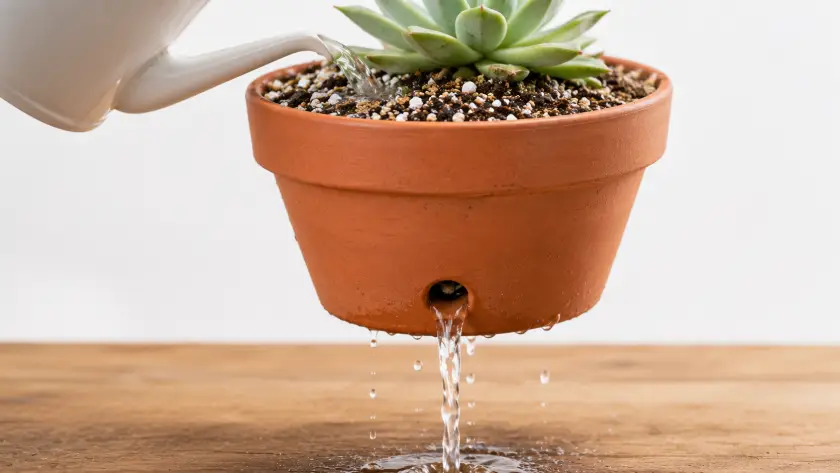
Before planting in any new soil mix — commercial or DIY — perform a drainage test:
- Fill a pot with the soil mix and press down gently to remove large air pockets
- Water thoroughly until water runs from the drainage holes
- Time how long it takes for surface water to be absorbed
- Check the drainage hole — water should flow freely, not drip slowly
Interpreting drainage test results:
- Water flows through within 5 seconds: Correct for succulents and cacti
- Water is absorbed within 30–60 seconds: Correct for most tropical houseplants
- Water sits on the surface for more than 60 seconds: Mix too dense — add perlite
- Mix stays visibly wet after 24 hours: Needs significant amendment with perlite or grit
The Squeeze Test — Assessing Moisture Balance
The squeeze test assesses whether a soil mix holds the right level of moisture for its intended plant type:
- Water the mix thoroughly and allow to drain for 30 minutes
- Take a generous handful of the moist mix
- Squeeze firmly in your fist for 3–5 seconds
- Open your hand and observe
Results:
- Succulent mix (correct): Falls apart completely, releases no water, feels barely moist
- Tropical plant mix (correct): Holds its shape briefly, releases 1–2 drops of water
- Fern mix (correct): Holds shape firmly, releases a few drops of water when squeezed hard
- Too wet for any plant: Releases a stream of water — add more perlite or grit
- Too dry to assess: Mix needs slight moisture before testing
When to Change Your Soil Completely
Signs Your Soil Needs Replacing
Even the best potting soil eventually degrades — organic matter breaks down, structure collapses, and drainage capacity decreases. Knowing when to replace soil rather than simply fertilize can save struggling plants.
Signs that soil needs complete replacement:
Physical signs:
- Water runs off the surface immediately rather than being absorbed — the soil has become hydrophobic
- Visible white salt crust on the soil surface — mineral buildup from tap water and fertilizer
- Soil has shrunk significantly away from the pot walls — organic matter has completely decomposed
- Visible mold growth on the soil surface
Plant performance signs:
- Stunted growth despite correct watering, light, and feeding
- Persistent yellowing despite correct watering frequency
- Root rot that recurs immediately after treatment — the soil is harboring pathogens
- Roots circling the pot and emerging from drainage holes — root bound plant in degraded soil
General replacement schedule:
- Succulents and cacti: Every 2–3 years or when drainage noticeably slows
- Tropical plants: Every 12–18 months
- Ferns: Every 12 months — fern soil degrades fastest due to high organic matter content
- Large specimen plants: Top-dress annually, full replacement every 3–4 years
Our guide on repotting mistakes to avoid covers the most common errors plant owners make when changing soil and repotting — essential reading before undertaking any soil replacement.
Soil for Specific Popular Plants — Quick Reference
Peace Lily Soil
Peace lilies need moisture-retentive but well-draining soil — the tropical plant mix works perfectly. Our peace lily care guide covers soil in detail alongside all other care requirements.
Snake Plant Soil
Best soil for snake plants is cactus potting mix with 30% additional perlite. Never standard potting compost. Full details in our snake plant care guide.
Aloe Vera Soil
Aloe vera needs the same soil as succulents — immediately draining cactus mix with pumice. Full soil guide in our aloe vera care for home.
Christmas Cactus Soil
Christmas cactus needs faster drainage than tropical plants but slightly more moisture retention than desert cacti — the tropical plant mix with extra perlite works well. Full details in our christmas cactus care guide.
Trailing Plant Soil
Most popular trailing plants (pothos, heartleaf philodendron, string of pearls) need different soil types — our guide on trailing plants for shelves and bookcases covers species-specific soil requirements for each trailing variety.
Outdoor Container Plant Soil
For outdoor container gardening — patios, balconies, raised beds — soil requirements differ from indoor growing. Our guide on the best plants for container gardening on patios covers outdoor container soil selection in detail.
Complete Soil Mix Reference Guide
| Plant Type | Drainage Need | Moisture Retention | Best Base | Key Amendment |
|---|---|---|---|---|
| Succulents | ⚡ Immediate | Very Low | Cactus soil | 30–50% pumice/perlite |
| Cacti | ⚡ Immediate | Minimal | Inorganic mix | 50%+ pumice/grit |
| Snake plant | ⚡ Fast | Low | Cactus mix | 30% perlite |
| Aloe vera | ⚡ Fast | Low | Cactus mix | Pumice |
| Tropical plants | ✅ Good | Medium | Potting mix | Coco coir + perlite |
| Peace lily | ✅ Good | Medium-high | Potting mix | Coco coir |
| Monstera | ✅ Good | Medium | Potting mix | Bark + perlite |
| Air-purifying plants | ✅ Good | Medium | Potting mix | Equal perlite + coir |
| Ferns | ✅ Moderate | High | Coco coir | Worm castings |
| Orchids | ⚡ Fast | Low | Bark chips | Perlite |
| Christmas cactus | ✅ Good | Medium-low | Cactus mix | 20% coco coir |
Frequently Asked Questions
What Is Best Potting Soil for Most Houseplants?
What is best potting soil for general houseplant use? A quality multi-purpose potting mix amended with 20–30% perlite works for the majority of tropical houseplants. For succulents and cacti, always use dedicated cactus potting soil or cactus and succulent mix with additional perlite amendment. There is no single best potting soil for all plant types — matching soil to the specific plant’s drainage and moisture requirements is the only approach that consistently works.
Can You Use Regular Potting Soil for Succulents?
Can you use regular potting soil for succulents? No — regular potting soil retains far too much moisture for succulents. It will cause root rot within weeks in most succulent species. Can you use potting mix for succulents of the general-purpose variety? Only if heavily amended — add at least 50% perlite and coarse grit to any general potting mix before using it for succulents. What to plant succulents in soil terms: dedicated cactus and succulent mix is always the correct starting point.
How to Make Potting Soil for Succulents at Home?
How to make potting soil for succulents: Mix 2 parts coarse perlite or horticultural grit with 1 part cactus potting soil and 1 part pumice. Test by watering — the mix should drain within 3–5 seconds. How to make soil for succulents without commercial cactus mix: combine coarse sand, perlite, and a small amount of general potting soil in equal parts. How to make succulent potting mix that is inorganic: combine pumice, perlite, and turface (calcined clay) in equal parts for maximum drainage.
What Is the Difference Between Topsoil and Potting Soil?
What is the difference between topsoil and potting soil? Topsoil is dense, heavy native ground soil collected from the earth’s surface — designed for outdoor in-ground planting. Potting soil is a lightweight, manufactured, sterilized growing medium designed specifically for container use. Is topsoil the same as potting soil? No — they are completely different products. Can you use topsoil as potting soil in containers? Only with heavy amendment of at least 50% perlite, sand, and compost. Can I use top soil for potting delicate indoor plants? Never without significant amendment.
Can You Use Outdoor Soil for Indoor Plants?
Can you use outdoor soil for indoor plants? No — garden soil compacts severely in containers, creates poor drainage, introduces pests and diseases, and is far too heavy for container use. Always use a purpose-made potting mix for indoor plants. If outdoor soil is the only option available, mix it with at least 50% perlite, compost, and grit before using it in containers — and accept the risk of introducing pests.
What Is the Best Soil for Snake Plants Specifically?
Best soil for snake plants and best potting soil for snake plants is dedicated cactus potting mix amended with 30% additional perlite or pumice. Potting mix for snake plant must drain immediately and feel dry within 5–7 days of watering. Snake plant potting mix from commercial suppliers marketed specifically for snake plants is a reliable option — but always check that it drains as fast as a standard cactus soil mix. Soil for snake plants should never include heavy compost or moisture-retaining additions.
What Soil Do Cacti Need Specifically?
Cactus potting soil and cactus soil mix requirements are more extreme than succulent mixes. Use potting soil mix for cactus that drains completely within 2–3 seconds of watering. The best cactus soil is inorganic — pumice, perlite, and granite grit with minimal or no organic matter. Cactus succulent soil sold commercially works for most cacti — but for the most drought-adapted species, a fully inorganic mix performs better.
Related Guides on Patch Plants
- 🐍 Snake Plant Care Guide — Complete Sansevieria Tips
- 🌵 Aloe Vera Care Guide — Growing, Gel & Benefits
- 🌸 Peace Lily Care Guide — Complete Spathiphyllum Tips
- 🎄 Christmas Cactus Care Guide — Blooming Every Year
- 🪴 Repotting Mistakes to Avoid — Complete Guide
- 🌿 Trailing Plants That Look Stunning on Shelves
- 🌱 How to Create an Indoor Jungle Without Overcrowding
- 💧 Complete Watering Guide for Healthy Thriving Plants
- 🌱 Browse All Indoor Plant Guides
Final Thoughts
Choosing the right soil is not just a technical step in plant care — it is the foundational decision that determines whether every subsequent care effort succeeds or fails. You can water correctly, provide perfect light, and feed diligently — but if the best potting soil is wrong for your specific plant, roots cannot thrive, nutrients cannot be absorbed, and the plant cannot grow.
The spectrum from cactus and succulent mix to fern soil represents the full range of moisture and drainage requirements that indoor plants need. Understanding where your specific plants sit on that spectrum — and choosing or mixing a soil that reflects their natural growing conditions — removes the most common single cause of houseplant failure.
How to make potting soil for succulents that drains immediately. Best soil for snake plants that stays dry between waterings. Fern soil that stays consistently moist. Tropical plant mix that balances both. These are not complicated formulations — they are straightforward applications of one simple principle: match the soil to the plant’s natural environment, and the plant will thrive.
Start with one plant. Get its soil right. Then apply the same thinking to every plant you grow. The improvement in plant health — and the satisfaction that comes from truly understanding what your plants need — makes every moment of soil research worthwhile.
According to the Royal Horticultural Society, choosing the correct growing medium is the single most important factor in container plant success — more impactful than fertilizing, watering frequency, or any other care variable. Get the soil right, and everything else becomes significantly easier. 🌿
[…] for succulents or the rich moisture-retaining mix that flowering annuals love. Our guide on the best soil mix for every plant type covers exactly which potting mix suits every patio plants category. You choose the position — […]
[…] outdoor care, read complete watering guide, best soil mix for every plant, and seasonal plant care […]
[…] For potting help, read how to repot a plant and the best soil mix guide. […]
Can you be more specific about the content of your article? After reading it, I still have some doubts. Hope you can help me.
[…] more help, use best soil mix guide, repotting mistakes, and root rot […]
[…] more soil and repotting support, use best soil mix for every plant type, how to repot a plant, and repotting mistakes to […]
[…] more support, read best soil mix for every plant type, how to repot a plant, and repotting mistakes to […]
[…] more support, read best soil mix for every plant type, how to repot a plant, and repotting mistakes to […]
[…] potting basics, use best soil mix guide, how to repot a plant, and repotting mistakes to […]
[…] soil help, read best soil mix guide, how to repot a plant, and self-watering pots […]
Can you be more specific about the content of your article? After reading it, I still have some doubts. Hope you can help me.
Your point of view caught my eye and was very interesting. Thanks. I have a question for you. https://www.binance.com/register?ref=GGYHGRE
[…] potting mix support, read best soil mix guide, how to repot a plant, and repotting mistakes to […]
[…] care does not require a complicated routine. Understanding basic plant care, choosing the right potting mix, checking moisture before watering, and providing appropriate indoor light can make a major […]
[…] If you want to understand how different ingredients affect drainage and moisture retention, read our guide to the best soil mix for different types of plants. […]
[…] the fundamentals behind these requirements, read our complete guide to watering plants, soil mix guide, pruning basics, and wider Plant Care […]
[…] the fundamentals behind these requirements, see our complete watering guide, soil mix guide, repotting guide, and pruning […]
[…] For a deeper explanation of different growing media, read The Best Soil Mix for Every Type of Plant. […]
[…] If you want to understand how different potting materials behave, read the Patch Plants guide to the best soil mix for different plants. […]
[…] For more help understanding growing media, read our guide to choosing the best soil mix for plants. […]
[…] guide to choosing the best soil mix for plants explains how drainage, aeration, and moisture retention work […]
[…] we will cover 11 practical tips for growing huckleberries, including variety selection, sunlight, healthy soil, planting, proper watering, mulching, fertilizing, pruning plants correctly, pest management, […]
[…] you are repotting, first review our plant soil mix guide and use the Patch Plants Soil Calculator to estimate how much potting mix your new container […]
[…] For additional help, see our indoor light guide, watering guide, and potting soil guide. […]
[…] For additional help, use our indoor light guide, watering guide, and soil mix guide. […]
[…] Need help with the basics? Read our complete watering guide, indoor light guide, and soil mix guide. […]
[…] For more information about growing media, read our soil mix guide. […]
[…] our complete soil mix guide to understand drainage, aeration, and moisture […]
[…] our soil mix guide to learn more about balancing drainage, moisture retention, and […]