Key Takeaways
- The signs of overwatering plants are frequently misdiagnosed as underwatering — drooping leaves occur in both cases, which is why so many plant owners respond by adding more water and accelerating the very damage they’re trying to reverse.
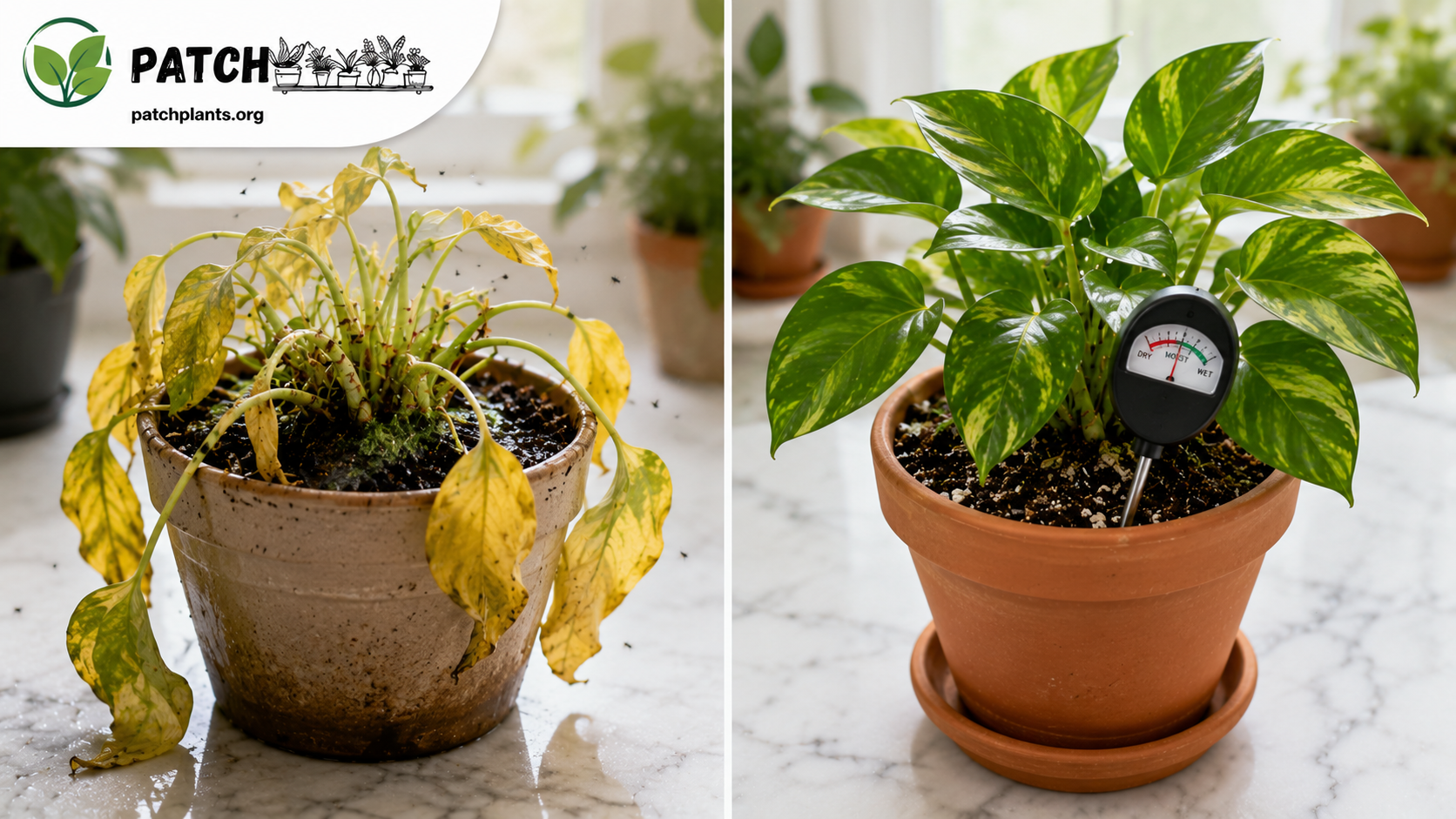
- Overwatered plant symptoms to watch for include yellowing soft leaves (not dry and crispy), wilting despite wet soil, a sour or fermented smell from the pot, fungus gnats hovering around the soil surface, and stunted growth despite adequate light and feeding.
- Root rot from overwatering is the most serious consequence of sustained waterlogging — anaerobic conditions in saturated soil destroy root tissue faster than most plant owners expect, and the damage continues even after watering is reduced unless the plant is actively treated.
- How to fix overwatered plants requires active intervention — unpotting, root inspection, removing mushy roots, drying, and repotting in fresh well-draining soil. Simply watering less going forward slows the decline but doesn’t reverse root rot already present.
- How to tell if a plant is overwatered or underwatered comes down to one key test — check the soil. Wet or damp soil with drooping yellow leaves means overwatering. Bone-dry soil with crispy curling leaves means underwatering.
- Overwatering plants signs appear in a specific sequence — yellowing lower leaves appear first, followed by soil smell changes, then fungus gnats, then stem softening, and finally total collapse if not addressed. Catching the first signs gives the best recovery outcome.
- How to save an overwatered plant is most successful when caught at the yellowing leaf stage before root rot has fully established — at this stage, simply improving drainage and reducing watering frequency often resolves the problem without repotting.
- Signs of overwatered plants differ by species — succulents show translucent mushy leaves, tropical plants show yellow drooping foliage, and cacti develop soft spots at the base. Understanding species-specific overwatered plant signs prevents misdiagnosis.
- Overwatering vs underwatering — when in doubt, always err on the side of underwatering. Most plants recover from dryness within 24–48 hours. Few recover from advanced root rot without significant intervention.
- The single most effective overwatering prevention strategy is checking soil moisture at 3–5cm depth before every watering rather than following a fixed schedule — soil moisture varies with season, pot size, light level, and temperature in ways that make any fixed schedule unreliable.
Introduction
Overwatering is the most common cause of houseplant death — more common than pests, more common than underwatering, more common than insufficient light. It’s also the most counterintuitive plant problem because it comes directly from the impulse to care. We water when leaves droop. We water when soil looks dry on the surface. We water on a schedule to stay consistent. And in doing all of this with good intentions, we create exactly the waterlogged, oxygen-depleted root conditions that kill the plants we’re trying to keep healthy.
Understanding the signs of overwatering plants is the single most valuable skill in houseplant care — more valuable than knowing the perfect watering schedule, the ideal fertilizer, or the best soil mix, because none of those things matter if the plant’s roots are sitting in water they can’t absorb. This complete guide covers every overwatering plants sign, exactly how to tell if a plant is overwatered, how to fix overwatered plants at every stage of damage, and — most importantly — how to develop the watering habits that prevent overwatering from happening again.
For related plant health guidance, our how to revive a dying plant guide, what is root rot guide, complete watering guide, and leaf curl browning and droop guide cover every connected topic in full detail.
Why Overwatering Happens — The Psychology Behind the Most Common Plant Mistake
Overwatering plants rarely comes from laziness — it comes from care applied without accurate feedback. Water feels like the most direct expression of plant ownership, and the association between water and life is so deeply ingrained that most plant owners water reactively whenever something looks wrong rather than diagnostically after checking what the plant actually needs.
Several specific patterns drive most overwatering plant signs situations. Watering on a fixed schedule regardless of soil moisture means plants are watered when they don’t need it as often as when they do — a schedule designed for summer becomes a drowning routine in winter when growth slows and water use drops dramatically.
Watering from the top without checking drainage means water accumulates in the bottom of pots sitting in saucers, creating a permanently waterlogged zone around the deepest roots. And the most insidious pattern — seeing drooping leaves and immediately watering — misses the crucial fact that drooping is a symptom of both overwatering and underwatering, and adding more water to an already overwatered plant accelerates root rot rather than solving the problem.
Our complete watering guide covers the psychology and practice of correct watering across every plant type. Our signs of overwatering guide on our site provides a quick-reference version of the key symptoms covered in depth below.
The Complete Signs of Overwatering Plants — What to Look For
Sign 1: Yellowing Leaves — Soft Not Crispy
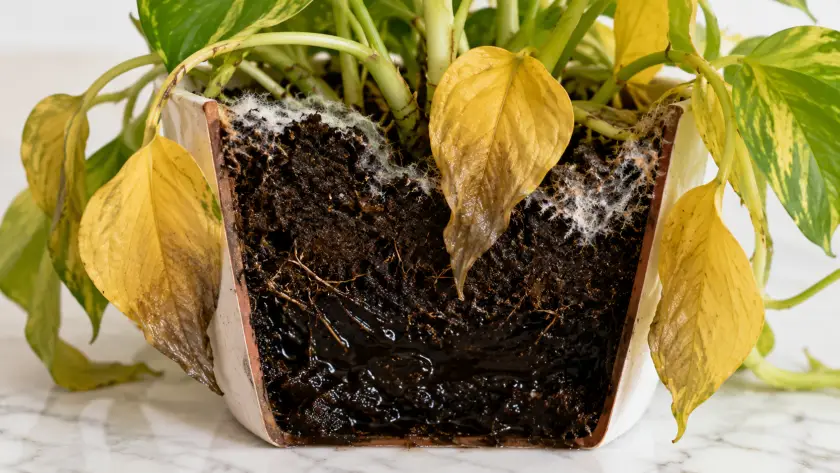
Yellowing leaves are the most universal of all signs of overwatering plants — but the specific quality of the yellowing distinguishes overwatering from underwatering and nutrient deficiency. Overwatered plant yellowing is soft and mushy at the edges, starting from lower leaves and working upward. The yellow tissue feels limp and waterlogged rather than dry and papery.
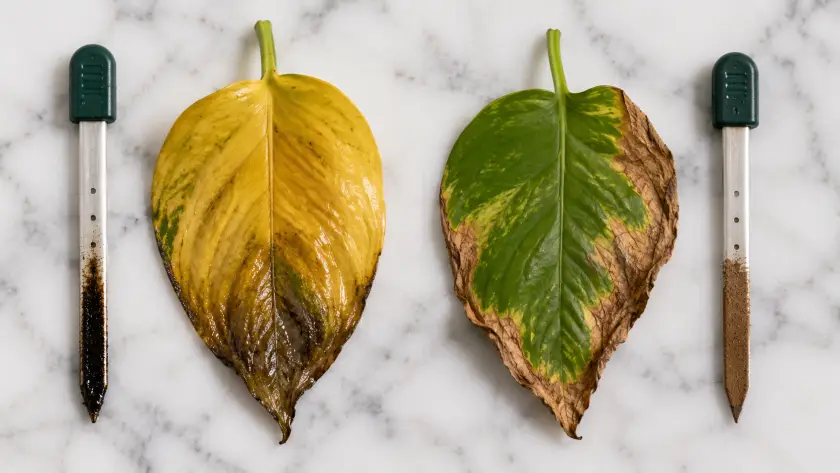
Underwatering yellowing by contrast produces dry, crispy yellow edges that crumble when touched. Nutrient deficiency yellowing typically produces interveinal yellowing — the leaf veins remain green while the tissue between them turns yellow — rather than the overall soft yellowing of overwatered plants.
Species-specific overwatered plant signs — yellowing in pothos appears across multiple lower leaves simultaneously. In peace lily, yellowing accompanies dramatic overall drooping. In snake plant, yellowing appears at leaf bases before softening spreads upward. In calathea, yellowing accompanies brown crispy edges that misleadingly suggest underwatering or low humidity.
Our why leaves turn yellow guide covers every possible cause of yellowing with diagnosis guidance for each.
Sign 2: Wilting Despite Wet Soil
Wilting despite wet soil is the clearest and most diagnostic of all overwatering plants signs — because it directly contradicts the intuitive connection between water and plant health. When a plant wilts in dry soil, the cause is obvious. When it wilts despite consistently moist or wet soil, the cause is overwatering-induced root damage that has destroyed the root system’s ability to take up and transport water to the leaves.
This symptom — what do overwatered plants look like when wilting with wet soil — appears when root rot has progressed to the point where sufficient functional root tissue no longer remains to supply the plant’s water needs. The leaves are literally dying of thirst despite sitting in waterlogged soil because the roots that would normally absorb that water have rotted and can no longer function.
This is the most urgent of all signs of overwatered plants — it indicates root rot has progressed beyond the early stage and requires immediate active treatment. See our what is root rot guide and how to revive a dying plant guide for immediate response steps.
Sign 3: Foul Smell from the Soil
A sour, fermented, or rotten smell rising from potting soil is an unmistakable sign of overwatering plants — indicating that the anaerobic bacteria and fungi that thrive in oxygen-depleted waterlogged soil are actively breaking down root tissue. Healthy potting soil smells neutral or faintly earthy. Overwatered soil smells distinctly unpleasant — like rot, fermentation, or sour compost.
This smell indicates root rot is already active and requires immediate action — not just reduced watering but active unpotting, root inspection, and treatment. See our what is root rot guide for the complete treatment protocol.
Sign 4: Fungus Gnats Around the Soil
Fungus gnats — tiny black flies hovering around the soil surface and emerging in clouds when the pot is disturbed — are a reliable sign of overwatering plants because their larvae require consistently moist soil to complete their life cycle. Fungus gnats don’t cause the overwatering damage directly, but their persistent presence confirms that soil is staying wet long enough between waterings to support their breeding cycle.
Treating fungus gnats without addressing the underlying overwatering only temporarily reduces the population — the infestation returns as long as soil remains consistently moist. Allow soil to dry more thoroughly between waterings, apply a neem oil soil drench, and use yellow sticky traps to reduce the adult population while soil conditions improve. Our leaf curl browning and droop guide covers fungus gnat treatment in detail.
Sign 5: Brown Soft Stem Base
Softening or browning at the stem base — where the stem meets the soil surface — is one of the most serious signs of overwatered plants, indicating that rot has progressed from the roots into the stem tissue itself. At this stage, the rot is working upward through the plant’s vascular system and recovery becomes significantly more challenging.
Check the stem base by gently pressing with a finger — healthy stem tissue is firm. Soft, mushy, or discoloured stem tissue at soil level indicates stem rot progressing from the roots. At this stage, see our how to revive a dying plant guide for emergency rescue protocols.
Sign 6: Stunted Growth Despite Good Conditions
A plant that isn’t dying visibly but simply isn’t growing — producing no new leaves, no new stems, no visible development over multiple growing season weeks — despite adequate light, temperature, and occasional fertilizing is often showing one of the subtlest overwatering plants signs. Root systems compromised by sustained mild overwatering can’t absorb nutrients effectively even when those nutrients are present in the soil, creating a plant that survives but cannot grow.
This is the overwatered plant situation that most often goes undiagnosed for months — the plant doesn’t look sick enough to investigate but never improves either. Checking soil drying time (soil that stays moist for more than 2 weeks after watering) and inspecting roots reveals the underlying cause.
Sign 7: Mould on Soil Surface
White or grey fuzzy mould growing on the soil surface is a visible sign of overwatering plants — mould requires consistently moist conditions to establish on soil, and its presence confirms that soil is remaining wet long enough between waterings to support fungal growth. While some surface mould is relatively harmless to the plant directly, it confirms the soil conditions that cause root rot are present.
Scrape away surface mould, allow the soil to dry thoroughly, improve air circulation around the plant, and adjust watering frequency. Our humidity hacks guide covers air circulation and humidity management that helps prevent mould conditions.
What Do Overwatered Plants Look Like — Species by Species
Overwatered snake plant: Leaves soften and develop mushy patches, particularly at the base. Yellowing starts at the leaf base rather than the tip. The characteristically firm, rigid leaves lose their structural integrity.
Overwatered pothos: Multiple lower leaves yellow simultaneously, stems develop a limp rather than turgid quality, and the characteristic trailing growth slows or stops entirely.
Overwatered aloe plant: Leaves become translucent and mushy rather than firm and plump — the water storage tissue in the leaves becomes waterlogged and begins breaking down. The base of the plant softens visibly.
Overwatered monstera: New leaves emerge pale or with brown edges, existing leaves yellow across the lower portion of the plant, and aerial roots appear unhealthy and brown rather than vigorous and white.
Overwatered peace lily: Dramatic overall drooping that doesn’t resolve after watering (unlike underwatering drooping which resolves within hours), yellowing lower leaves, and black leaf tips.
Overwatered spider plant: Brown mushy leaf tips (different from the dry brown tips of low humidity), yellowing across lower leaves, and the fleshy roots become brown and soft when inspected.
Overwatered ZZ plant: Yellowing leaflets, stems that lose their characteristic glossy rigidity, and rhizomes that feel soft rather than firm when unpotted. The ZZ plant’s rhizome storage system makes it the most rot-resistant common houseplant — visible overwatering symptoms indicate significant sustained overwatering.
How to Tell if a Plant is Overwatered or Underwatered — The Definitive Test
How to tell if a plant is overwatered or underwatered is one of the most searched plant care questions because the surface symptoms — drooping, poor growth, leaf discolouration — overlap significantly between the two conditions. The definitive test is simple and takes 30 seconds:
Step 1: Insert a finger or wooden skewer 3–5cm into the soil. Wet or damp at this depth = overwatering risk. Bone dry at this depth = underwatering.
Step 2: Lift the pot. Heavy for its size = wet soil = overwatering. Surprisingly light = dry soil = underwatering.
Step 3: Check leaf quality. Soft yellow mushy leaves = signs of overwatering plants. Dry crispy brown-edged leaves = underwatering. Leaves that wrinkle when gently squeezed = underwatering.
Step 4: Check soil smell. Sour or rotten smell = overwatered plant with root rot developing. No smell or neutral earthy smell = normal.
Overwatering vs underwatering rule: When in doubt, wait. A plant suspected of underwatering that actually needs more time to dry out will show worsening crispy edges. A plant suspected of overwatering that actually needs water will develop wrinkled leaves. Neither of these is irreversible — but watering an already overwatered plant is far more damaging than allowing a slightly underwatered plant to wait another day.
How to Fix Overwatered Plants — Step by Step
Stage 1: Early Signs (Yellowing Leaves Only, No Smell)
How to save an overwatered plant caught at this early stage often requires only two interventions. First, stop watering immediately and allow the soil to dry thoroughly — insert a skewer and wait until it comes out completely dry at 5cm depth before watering again. Second, check that drainage holes are unblocked and that the plant isn’t sitting in a saucer of standing water. Remove standing water from saucers within 15 minutes of every watering going forward.
At this stage, repotting is often unnecessary. Allow the soil to dry, resume watering correctly, and monitor for improvement over 2–3 weeks.
Stage 2: Moderate Signs (Smell, Gnats, Stem Softening)
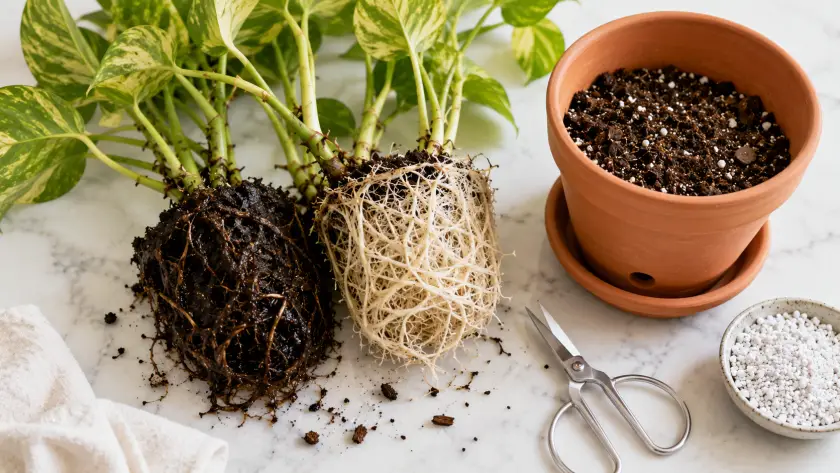
How to fix overwatered plants at the moderate stage requires unpotting and root inspection. Slide the plant from its pot, inspect roots, and use sterile scissors to remove all dark mushy root tissue. Allow roots to air dry for 30–60 minutes. Repot in fresh, dry, well-draining soil appropriate for the plant type. Choose a pot with drainage holes and do not place in a saucer that could collect standing water.
Withhold water for 5–7 days after repotting then resume correct watering schedule. Our how to repot a plant guide and best soil mix guide cover the repotting process in full detail.
Stage 3: Advanced Signs (Wilting Despite Wet Soil, Stem Rot)
At the advanced stage, how to fix overwatered plants requires the complete rescue protocol from our how to revive a dying plant guide — unpotting, extensive root pruning, stem inspection, foliage trimming, drying, repotting, and careful post-treatment care. Recovery at this stage is possible but requires patience — new growth may not appear for 4–8 weeks after correct treatment. See also our what is root rot guide for advanced root rot treatment.
How to Water Plants Correctly — Building the Right Habits
The Soil Check Method
The single most important habit in preventing overwatering plants signs is checking soil moisture before every watering rather than following a fixed schedule. Insert a finger or wooden skewer 3–5cm into the soil — water only when completely dry at this depth for drought-tolerant plants like succulents, snake plant, and ZZ plant. Water when the top 2–3cm are dry for moisture-loving plants like calathea, boston fern, and peace lily.
Seasonal Adjustment
Overwatered plant situations most commonly develop in autumn and winter when plant growth slows dramatically and water use drops significantly — but watering frequency hasn’t been adjusted from summer levels. Reduce watering frequency by approximately 50% from October through February for most houseplants. Snake plant winter watering: once monthly. Pothos winter watering: every 21 days. Monstera winter watering: every 14–21 days.
Drainage — Non-Negotiable
Every pot must have drainage holes. Standing water in pots without drainage creates the waterlogged anaerobic conditions that cause root rot regardless of how carefully watering frequency is managed. Empty saucers within 15 minutes of watering — never allow plants to sit in water. Our complete watering guide covers drainage setup for every pot type.
The Right Soil
Correct soil for each plant type prevents waterlogging at the structural level. Succulents and cacti need gritty mix with 40–50% perlite. Tropical foliage plants need quality compost with 20–30% perlite added. Boston fern and moisture-lovers need peat or coco coir-based moisture-retentive mix. Our best soil mix guide covers every plant type. The truth about self-watering pots guide covers whether self-watering systems help or worsen overwatering tendencies.
Overwatering vs Underwatering — Quick Reference
| Symptom | Overwatering | Underwatering |
|---|---|---|
| Leaf colour | Soft yellow | Dry brown/crispy |
| Leaf texture | Mushy, limp | Papery, thin |
| Soil | Wet, damp | Bone dry, pulling away |
| Soil smell | Sour/rotten | No smell |
| Stem base | Soft, possibly brown | Firm |
| Fungus gnats | Common | Rare |
| Recovery speed | Weeks–months | Hours–days |
Plant-Specific Watering Guides
Different plants have dramatically different watering needs — and applying one plant’s schedule to another creates overwatering plants signs in drought-tolerant varieties or underwatering in moisture-lovers. Our individual care guides cover correct watering for each species: pothos, monstera, snake plant, peace lily, calathea, ZZ plant, philodendron, rubber plant, fiddle leaf fig, bird of paradise, boston fern, spider plant, aloe vera, jade plant, dracaena, money tree, succulent care, string of pearls.
Frequently Asked Questions
What are the signs of overwatering plants? The main signs of overwatering plants are soft yellow leaves (starting from lower leaves), wilting despite wet soil, sour or rotten soil smell, fungus gnats around the soil surface, soft or brown stem base, mould on the soil surface, and stunted growth despite good light and feeding. The most diagnostic single sign is wilting despite consistently wet soil — this indicates root rot has damaged the plant’s ability to absorb water. Our leaf curl browning and droop guide covers symptom diagnosis in full detail.
How do I fix an overwatered plant? How to fix overwatered plants depends on severity. Early stage (yellow leaves only): stop watering, improve drainage, allow soil to dry completely before next watering. Moderate stage (smell, gnats, stem softening): unpot, inspect and trim mushy roots, repot in fresh soil. Advanced stage (wilting despite wet soil): complete rescue protocol — see our how to revive a dying plant guide and what is root rot guide.
How do I tell if a plant is overwatered or underwatered? How to tell if a plant is overwatered or underwatered — check the soil first. Wet or damp soil with drooping yellow mushy leaves = overwatering. Bone dry soil with dry crispy brown-edged curling leaves = underwatering. The soil test overrides all visual symptoms because both conditions cause drooping and discolouration that look similar on the surface.
Can overwatered plants recover on their own? Rarely. Overwatered plants in waterlogged soil continue experiencing root rot conditions regardless of whether additional water is added. Active rescue — unpotting, root trimming, fresh soil — produces far better outcomes than simply withholding water and hoping. See our how to revive a dying plant guide.
How often should I water indoor plants? There is no universal answer — overwatering plants signs develop precisely because plant owners apply one schedule to all plants. Check soil moisture at 3–5cm depth before every watering. Drought-tolerant plants (succulents, snake plant, ZZ plant): water every 14–28 days in summer, monthly in winter. Moisture-lovers (calathea, ferns, peace lily): water every 7–10 days in summer, every 14 days in winter. Our complete watering guide covers species-specific watering schedules.
What does an overwatered plant look like? What do overwatered plants look like — soft yellow lower leaves, limp stems, wet heavy soil, possible white mould on soil surface, fungus gnats, and in advanced cases a soft or discoloured stem base. Succulents show translucent mushy leaves. Tropical plants show yellow drooping foliage. All overwatered plants share the common characteristic of drooping despite wet soil rather than recovering after watering.
Related Guides
- What Is Root Rot Guide
- How to Revive a Dying Plant
- Leaf Curl Browning Droop Guide
- Why Leaves Turn Yellow
- Complete Watering Guide
- Complete Indoor Light Guide
- Humidity Hacks Guide
- DIY Humidity Tray Guide
- How to Repot a Plant
- Repotting Mistakes to Avoid
- Best Soil Mix Guide
- Truth About Self-Watering Pots
- Fertilizing Indoor vs Outdoor
- Snake Plant Care Guide
- Pothos Care Guide
- ZZ Plant Care Guide
- Peace Lily Care Guide
- Monstera Care Guide
- Calathea Care Guide
- Philodendron Care Guide
- Rubber Plant Care Guide
- Fiddle Leaf Fig Care Guide
- Boston Fern Care Guide
- Spider Plant Care Guide
- Aloe Vera Care Guide
- Bird of Paradise Care Guide
- Jade Plant Care Guide
- Dracaena Care Guide
- Money Tree Care Guide
- Succulent Care Guide
- String of Pearls Care Guide
- Christmas Cactus Care Guide
- 35 Low Maintenance Plants
- Best Indoor Plants for Beginners
- 33 Best Bathroom Plants
- Low Light Hanging Plants
- Air Purifying Indoor Plants
- Keep Pests Away Outdoor Plants
- Best Low Maintenance Outdoor Plants
- Top Drought Resistant Plants
- How to Propagate Houseplants
- Cat Friendly Plants Guide
- Dog Friendly Plants Guide
- Browse All Plant Care →
- Browse All Indoor Plants →
Final Thoughts
Signs of overwatering plants are the most important symptom set to learn in all of houseplant care — because overwatering is simultaneously the most common cause of plant death and the most preventable one. Once you understand what overwatered plant symptoms look like, how to distinguish them from underwatering, and how to respond at each stage of severity, the single most common cause of houseplant loss becomes something you can catch, treat, and prevent with confidence.
The shift from schedule-based watering to observation-based watering — checking soil moisture before every watering rather than following a fixed routine — is the single most impactful change any plant owner can make. It costs nothing, takes 30 seconds, and eliminates the root cause of most overwatering plants signs before they develop into the root rot and plant loss that follows sustained waterlogging.
According to the Royal Horticultural Society (RHS), overwatering is consistently identified as the primary cause of houseplant failure in UK homes — more significant than pests, disease, or any other care factor — making correct watering habit development the highest-priority skill for anyone growing plants indoors. 🌿