Understanding healthy roots vs root rot is one of the most useful skills a plant parent can learn. Leaves often show the first warning signs, but the real problem may be hidden under the soil. A plant with yellow leaves, drooping stems, or slow growth may not need more water. It may need healthier roots.
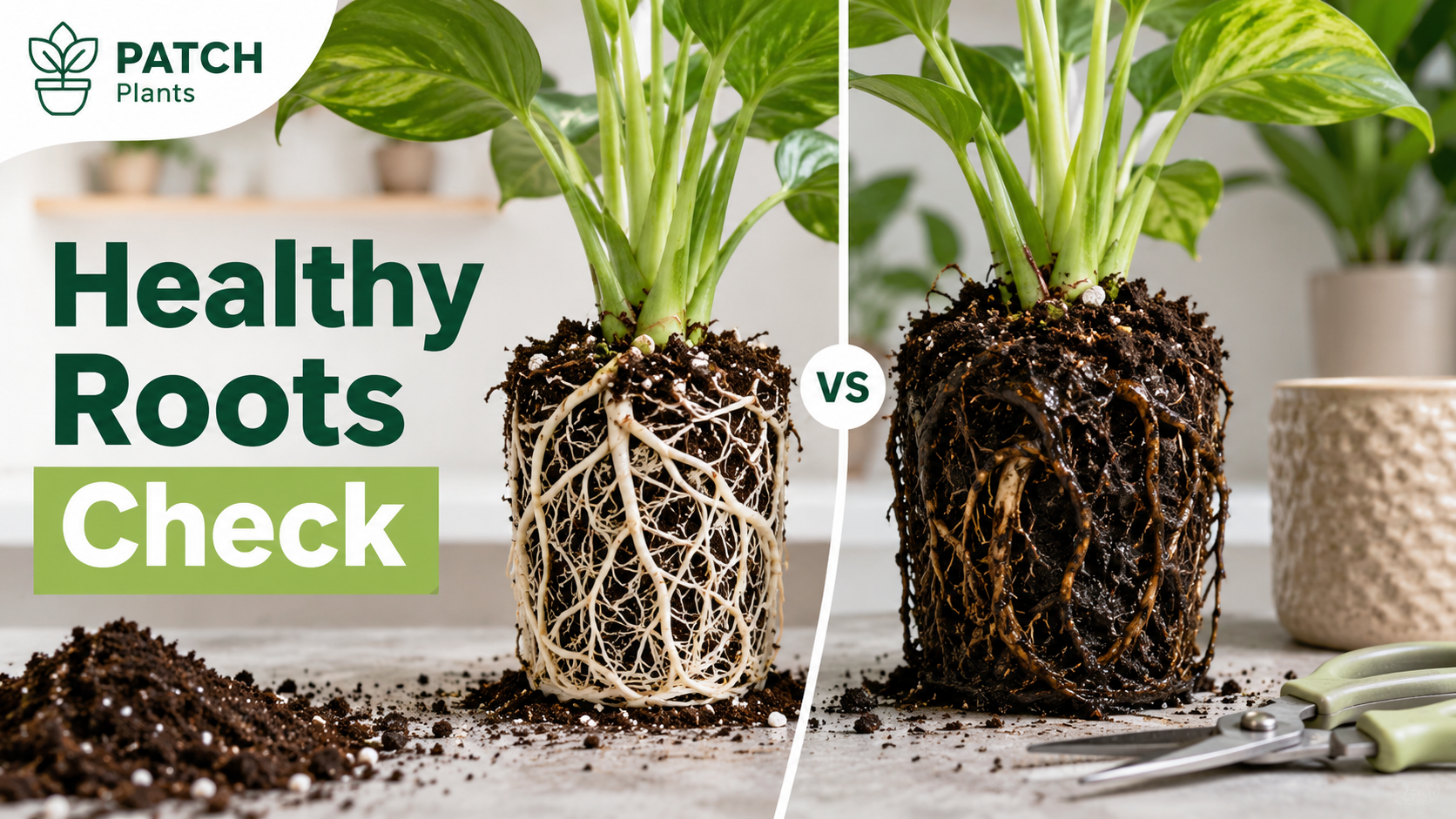
Healthy plant roots are usually firm, fresh-smelling, and able to absorb water and nutrients. Root rot looks and feels different. Rotten roots are often dark, mushy, hollow, slimy, or sour-smelling. This guide shows you what to look for, how to check roots safely, how to remove rot, and how to prevent the same problem from coming back.
Root Check Snapshot
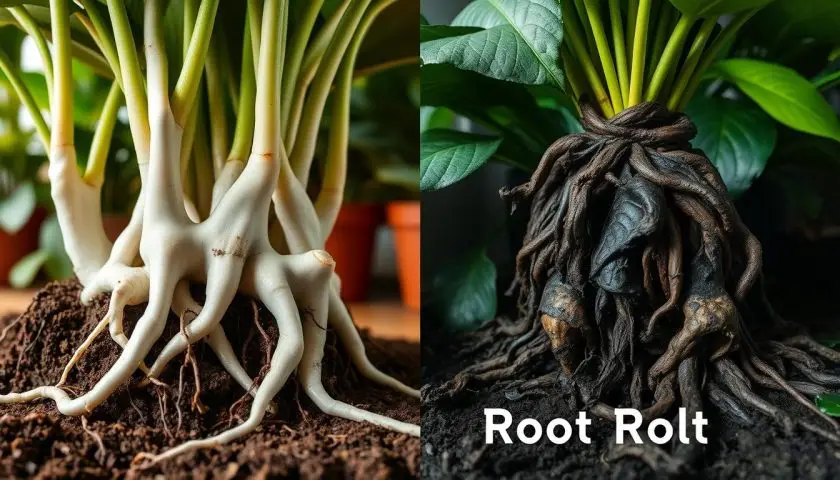
The easiest way to compare healthy roots vs root rot is to check texture, smell, color, and soil condition together. Healthy roots feel firm and may be white, cream, tan, or light brown. Rotten roots feel mushy, collapse when touched, peel apart easily, or smell sour. If the soil stays wet for days and the plant still wilts, inspect the roots before watering again.
Key Takeaways
- Healthy roots vs root rot is best judged by firmness, smell, color, and plant symptoms together.
- Healthy plant roots are usually firm, flexible, and fresh-smelling.
- Root rot roots are often mushy, slimy, black, dark brown, hollow, or foul-smelling.
- Wilting in wet soil is a common root rot warning sign.
- Overwatering, poor drainage, compacted soil, and oversized pots can all increase root rot risk.
- Root rot treatment usually means trimming damaged roots, repotting in fresh mix, and adjusting watering.
- Use this guide with what is root rot, signs you are overwatering, and best soil mix guide.
Healthy Roots vs Root Rot at a Glance
| Feature | Healthy Roots | Root Rot |
|---|---|---|
| Texture | Firm, slightly flexible, solid | Mushy, slimy, hollow, collapsing |
| Color | White, cream, tan, pale brown, or plant-specific darker tones | Dark brown, black, grey, water-soaked, or discolored |
| Smell | Fresh, earthy, neutral | Sour, swampy, rotten, stale |
| Outer layer | Stays attached when touched gently | May slip off, peel away, or leave a string-like core |
| Soil condition | Moisture changes normally between watering | Soil stays wet too long or smells sour |
| Plant signs | Steady growth, firm stems, normal leaf color | Wilting, yellow leaves, soft stems, leaf drop, poor growth |
Why Plant Root Health Matters
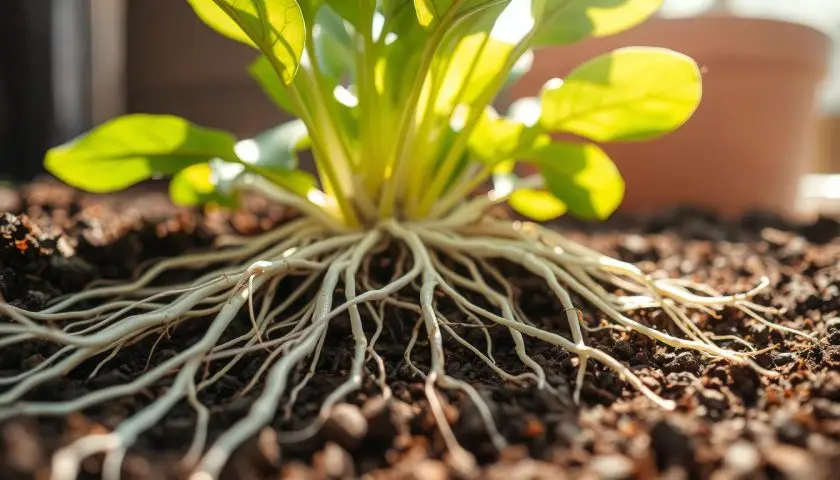
Roots are the hidden support system of your plant. They anchor the plant, absorb water, take in nutrients, and help support new leaves, stems, and flowers. When roots are healthy, the rest of the plant has a better chance of staying firm, green, and actively growing.
How healthy roots support leaves and stems
Healthy roots move water and nutrients from the potting mix into the plant. When roots are firm and active, leaves usually hold their shape better, stems stay stronger, and new growth appears more steadily.
How root problems affect the whole plant
Damaged roots cannot move water properly. That is why a plant with root rot can look thirsty even when the soil is wet. The soil may contain water, but the roots are too damaged to use it.
Why leaves alone can mislead you
Yellow leaves, drooping, brown tips, and leaf drop can come from several issues. The root check confirms whether the problem is underground or whether you should look at light, pests, temperature, or watering habits instead.
For symptom help, read yellow leaves on plants, leaf curl, browning and droop, and how to revive a dying plant.
What Healthy Plant Roots Look Like
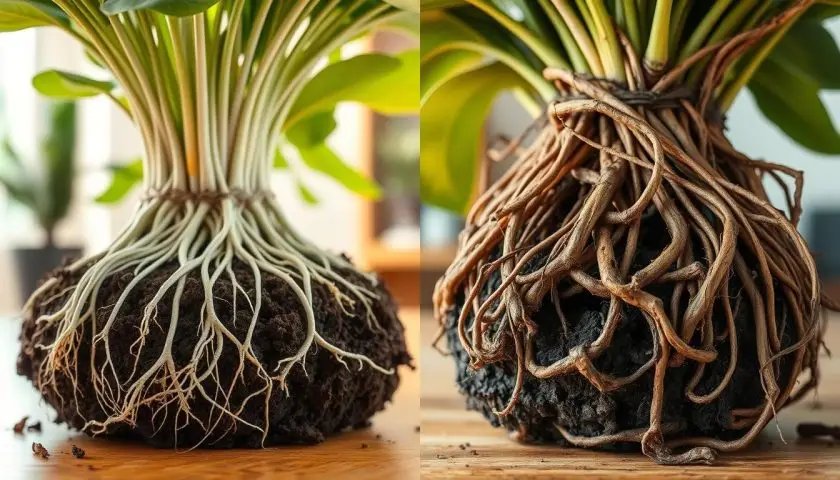
Healthy plant roots are not always pure white. Root color changes by plant type, age, potting mix, and soil staining. The important signs are firmness, structure, and smell.
Healthy root color
- Fresh new roots are often white or cream.
- Older roots may be tan or light brown.
- Some plants naturally have thicker brown roots or darker aerial roots.
- Soil, bark, coco coir, or compost can stain healthy roots.
Healthy root texture
- Roots feel firm when touched gently.
- Fine roots may be delicate, but they should not feel slimy.
- Thicker roots should not collapse between your fingers.
- The outer layer should not slip off easily.
Healthy root smell
Healthy roots usually smell earthy, fresh, or neutral. A normal potting mix may smell like bark, compost, or soil, but it should not smell sour, rotten, or stagnant.
What Root Rot Looks Like
Root rot signs become clearer when you inspect the root ball. Root rot is not just a color change. It is a breakdown of root tissue, usually linked with wet, oxygen-poor, or diseased conditions.
Rotten root color
- Dark brown roots.
- Black roots.
- Grey or water-soaked roots.
- Patchy roots with dark soft sections.
- Roots that look dead while the surrounding mix is wet.
Rotten root texture
- Mushy roots.
- Slimy roots.
- Hollow roots.
- Roots that break apart with light pressure.
- Outer root skin that slides off and leaves a thread behind.
Rotten root smell
A sour, swampy, sewage-like, or rotten smell is a serious warning sign. Healthy soil can smell earthy, but it should not smell like decay.
When color is not enough
A brown root is not always rotten. A firm brown root can still be healthy. A white root that is slimy or collapsing is not healthy. Always check color with texture and smell.
Above-Soil Signs That Point to Root Rot
You do not need to pull up every plant with one yellow leaf. But when several symptoms appear together, it is time to check the roots.
| Above-Soil Sign | Why It Happens | What to Check First |
|---|---|---|
| Wilting in wet soil | Damaged roots cannot move water | Root texture and smell |
| Yellow leaves | Root stress, water imbalance, or nutrient uptake issues | Soil moisture and drainage |
| Brown leaf edges | Water stress, damaged roots, salts, or dry air | Watering pattern and root health |
| Soft stems | Rot may be moving upward | Base of stem and crown |
| Slow growth | Roots are not supporting new leaves | Pot size, roots, light, and soil |
| Leaf drop | Stress response from poor roots or water swings | Root ball moisture |
| Soil stays wet for too long | Poor drainage, low light, oversized pot, or compact mix | Pot holes and potting mix |
Common Root Rot Causes in Houseplants
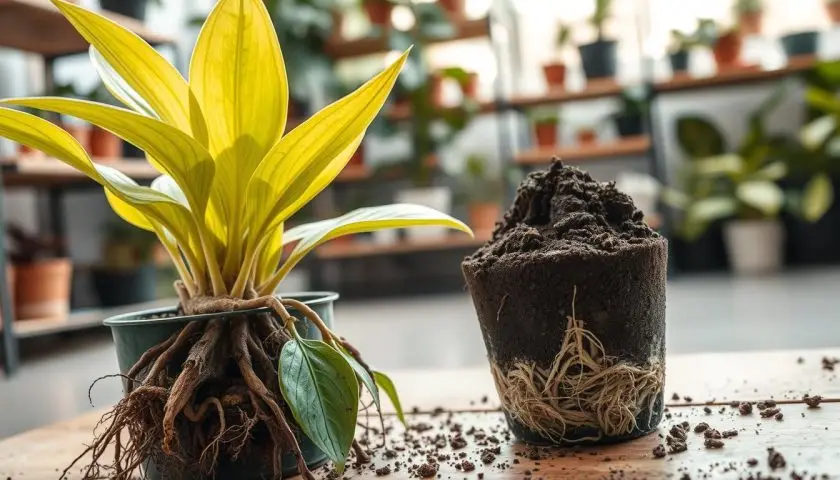
Root rot usually starts when roots spend too much time in wet, oxygen-poor conditions. Fungal and bacterial problems can then spread more easily through weakened roots.
1. Overwatering
Overwatering is not just watering too often. It means the roots are staying wet longer than the plant can handle. A plant in low light, a large pot, or dense soil may rot even if you water only once a week.
2. Poor drainage
A pot without drainage holes traps water at the bottom. Even if the top looks dry, the lower root zone may stay wet and stagnant.
3. Compacted soil
Old potting mix can collapse and block airflow. Roots need oxygen as well as water. Dense soil makes root rot more likely.
4. Oversized pots
A small root ball in a large pot leaves too much unused wet soil around the roots. That extra moisture can create root problems, especially in low light.
5. Decorative cachepots
Cover pots look nice, but they can hide standing water. Always remove the nursery pot, drain it fully, and empty any water collected inside the cachepot.
6. Low light
Plants use less water in low light. If the plant sits in a dim corner but receives the same watering schedule as a bright-window plant, the soil can stay wet too long.
7. Cold rooms
Cold temperatures slow growth and soil drying. Wet roots in cold conditions are more likely to decline.
8. Reused contaminated soil
Old soil from a diseased plant can carry problems into the next pot. If a plant had root rot, do not reuse that mix for another houseplant.
9. Dirty tools and pots
Unclean scissors, old pots, and contaminated work surfaces can spread disease from one plant to another.
How to Check Roots Safely
A root inspection sounds scary, but it is simple when you work gently. The goal is to see enough of the root system without tearing healthy roots.
What you need
- Clean scissors or pruning shears.
- Gloves.
- Fresh potting mix.
- A clean pot with drainage holes.
- Rubbing alcohol for tools.
- Paper towels or newspaper.
- A trash bag for rotten roots and contaminated soil.
Step 1: Check soil moisture first
If the soil is soaking wet, work carefully because the root ball may fall apart. If the soil is slightly moist, it is often easier to slide the plant out without ripping roots.
Step 2: Slide the plant out
Hold the plant near the base, tip the pot sideways, and slide the root ball out. Tap the pot if needed. Avoid pulling hard on the stems.
Step 3: Loosen the outer soil
Remove enough potting mix to see the roots. You do not need to wash every root unless the soil is sour, rotten, or badly contaminated.
Step 4: Check color, texture, and smell
Look for firm roots first. Then check dark or soft areas. Smell the root ball. If it smells rotten and roots collapse easily, root rot is likely.
Step 5: Decide how severe it is
If only a few roots are affected, the plant has a good chance of recovery. If almost all roots are mushy and the stem base is soft, saving the plant may be difficult.
How to Remove Root Rot
Root rot treatment starts by removing dead tissue. Rotten roots do not recover, and leaving them in the pot can keep the plant in decline.
Trim back to healthy tissue
Cut mushy or black roots back to firm tissue. Do not remove firm roots just because they are tan or stained. Keep as many healthy roots as possible.
Disinfect tools
Wipe or dip scissors in rubbing alcohol between plants. If the rot is severe, disinfect between cuts too. This reduces the risk of spreading disease into healthy tissue.
Remove badly damaged leaves
If roots have been reduced heavily, remove dead, yellow, or collapsing leaves. Do not strip the plant bare. It still needs healthy leaves to recover.
When propagation is better
If the roots and stem base are badly rotten, propagation may be safer than repotting the original plant. Take healthy stem cuttings if the plant type allows it.
For propagation basics, read how to propagate houseplants, Spider Plant care guide, and Pothos plant care guide.
How to Repot After Root Rot
After trimming rotten roots, repot the plant into conditions that let roots breathe. Fresh mix, drainage, and correct pot size matter more than any quick fix.
Choose the right pot
- Use a pot with drainage holes.
- Choose a pot only slightly larger than the remaining root ball.
- Do not move a damaged plant into a huge pot.
- Clean old pots before reuse.
- Empty saucers and cover pots after watering.
Choose the right potting mix
The best mix depends on the plant. A succulent needs a faster-draining mix than a fern. Aroids such as Monstera, Pothos, and Philodendron often do better with airy chunky mix than dense soil.
| Plant Type | Better Potting Mix | Why It Helps |
|---|---|---|
| Succulents and cacti | Fast-draining succulent or cactus mix | Prevents roots sitting wet too long |
| Aroids | Indoor mix with bark, perlite, or coco chips | Adds air pockets around roots |
| Ferns | Moisture-retentive but airy mix | Holds moisture without becoming stagnant |
| Peace Lily | Indoor mix with added perlite or bark | Balances moisture and drainage |
| Snake Plant and ZZ Plant | Chunky, fast-draining mix | Reduces rot risk in low water plants |
Water carefully after repotting
After repotting, water enough to settle the mix if the plant needs it. Then wait until the soil dries to the right level before watering again. Do not keep a recovering plant constantly wet.
For repotting and soil help, read how to repot a plant, repotting mistakes to avoid, and best soil mix guide.
Care During Root Rot Recovery
A plant recovering from root rot needs steady care, not extra attention every day. Too much water, too much fertilizer, or constant moving can slow recovery.
Light
Place the plant in suitable light for its type. Bright indirect light often helps recovery because the plant can use water more efficiently, but avoid harsh sun on a stressed plant.
Watering
Check the soil before watering. A recovering plant with fewer roots uses less water than a healthy full-rooted plant, so the old watering schedule may be too much.
Fertilizer
Pause fertilizer until you see new growth. Damaged roots do not need feeding pressure while they are trying to recover.
Humidity
Humidity can help some tropical plants, but high humidity plus wet soil and poor airflow can make rot worse. Balance humidity with ventilation.
Recovery signs
- Leaves stop yellowing rapidly.
- Stems feel firmer.
- Soil begins drying at a normal pace.
- New leaves appear.
- New white or cream roots appear during a later check.
Warning signs after repotting
- More stems turn soft.
- The pot smells sour again.
- Soil stays wet for too long.
- Leaves collapse quickly.
- New black roots appear.
Healthy Roots vs Root Rot by Plant Type
Different plants have different root systems, so do not expect every plant to look the same. The texture test is usually more reliable than color alone.
| Plant | Healthy Root Clue | Root Rot Risk |
|---|---|---|
| Snake Plant | Firm roots and rhizomes | Wet soil, cold rooms, no drainage |
| ZZ Plant | Firm roots and firm potato-like rhizomes | Frequent watering and oversized pots |
| Peace Lily | Firm pale to tan roots | Constant soggy soil |
| Pothos | Firm white or tan roots | Dense soil and waterlogged cuttings |
| Philodendron | Firm roots with airy mix | Heavy soil and poor drainage |
| Spider Plant | Firm thick storage roots | Sitting in water-filled saucers |
| Monstera | Firm roots and chunky mix | Large pots with dense wet soil |
| Succulents | Fine but firm roots in dry-draining mix | Frequent watering and low light |
For plant-specific help, read Snake Plant care guide, ZZ Plant care guide, Peace Lily care guide, Pothos care guide, and Monstera care guide.
Root Rot Prevention Strategies
Root rot prevention is easier than root rot rescue. The best habits are simple: water by soil dryness, use the right pot, improve drainage, and match care to light.
Check soil before watering
Do not water just because it is watering day. Check the soil with your finger, a wooden skewer, the pot weight, or a moisture meter.
Use drainage holes
Drainage holes let extra water leave the pot. A closed decorative pot should only be used as a cover pot, not as the main growing container.
Match pot size to root size
Move up only one pot size when repotting unless the plant has a huge root system. Bigger is not always better.
Improve light
Plants in brighter suitable light usually use water faster than plants in dim corners. If soil stays wet too long, review light as well as watering.
Refresh old potting mix
Old soil can become compacted and slow to drain. Refresh or repot when mix breaks down, smells stale, or stays wet too long.
Quarantine sick plants
Keep plants with suspected root disease away from healthy plants until the problem is controlled. Clean the work area after repotting.
For prevention basics, read complete watering guide, worst times to water plants, and complete guide to indoor light.
Common Mistakes When Checking Roots
| Mistake | What Happens | Better Choice |
|---|---|---|
| Judging by color only | Healthy brown roots may be removed | Check texture and smell too |
| Watering a wilting plant without checking soil | Root rot can get worse | Check whether soil is wet or dry first |
| Repotting into a huge pot | Extra soil stays wet too long | Use a pot close to root ball size |
| Reusing rotten soil | Disease and sour mix may remain | Use fresh potting mix |
| Not cleaning tools | Rot can spread to healthy tissue or other plants | Disinfect scissors and pots |
| Fertilizing immediately after root damage | Stressed roots may decline further | Wait for new growth |
| Leaving water in cachepots | Roots sit in hidden water | Drain fully after watering |
Healthy Root Care Checklist
| Task | How Often | What to Watch |
|---|---|---|
| Check soil moisture | Before watering | Wet soil, dry soil, slow drying |
| Inspect drainage holes | Every few months | Blocked holes or roots clogging drainage |
| Empty saucers | After watering | Standing water |
| Smell the soil | When a plant declines | Sour or rotten smell |
| Inspect roots | When symptoms suggest root trouble | Mushy, black, hollow, or foul roots |
| Refresh potting mix | When compacted or stale | Slow drainage and poor aeration |
| Clean tools | Before and after root work | Disease spread |
Helpful PATCH Guides for Healthy Roots and Root Rot
Use these related PATCH guides to improve watering, soil, repotting, light, plant recovery, and root rot prevention.
Root Rot, Watering and Soil Guides
- What is root rot?
- Signs you are overwatering
- Complete watering guide
- Worst times to water plants
- Best soil mix guide
- How to repot a plant
- Repotting mistakes to avoid
- Self-watering pots guide
Plant Problem Guides
- Plant Care hub
- Yellow leaves on plants
- Why plant leaves turn yellow
- Leaf curl, browning and droop
- How to revive a dying plant
- How to clean plant leaves
- Pruning basics
- How to keep pests away from outdoor plants
Light, Humidity and Indoor Setup Guides
- Complete guide to indoor light
- Low light house plants
- Small low light indoor plants
- House plants that like direct sunlight
- Humidity hacks without a humidifier
- DIY humidity tray
- Misting for plants
- Office-friendly plants
Specific Plant Care Guides
- Snake Plant care guide
- Tall Snake Plant guide
- ZZ Plant care guide
- Peace Lily care guide
- How often to water Peace Lily
- Pothos plant care guide
- Philodendron care guide
- Monstera plant care guide
- Spider Plant care guide
- Spider Plant light requirements
- How to transplant a Spider Plant
- Rubber Plant care guide
- Fiddle Leaf Fig care guide
- Dracaena care guide
- Boston Fern care guide
- Succulent care guide
- Cactus care guide
- Fishbone Cactus care
Indoor Plant Choice Guides
- Indoor Plants hub
- Best indoor plants for beginners
- Best indoor plants for first-time plant parents
- Best indoor plants for tiny apartments
- Low-maintenance plants
- Blooming indoor plants
- Tropical house plants
- Oversized indoor plants
Bathroom and Low Light Guides
- Best plants for your bathroom
- Plants for bathroom with no light
- Low light plants for bathroom
- Bathroom plants for mold
- Low light hanging plants
Frequently Asked Questions
How can I tell healthy roots vs root rot apart?
Healthy roots are firm, fresh-smelling, and usually white, cream, tan, or light brown. Root rot roots are often dark, mushy, slimy, hollow, collapsing, or sour-smelling.
Can brown roots still be healthy?
Yes. Brown does not always mean rotten. Some roots are naturally tan or brown, and potting mix can stain them. Firm brown roots can still be healthy. Mushy brown or black roots are a problem.
What does root rot smell like?
Root rot often smells sour, swampy, rotten, or stagnant. Healthy roots usually smell earthy or neutral.
Why is my plant wilting when the soil is wet?
Wet-soil wilting often means the roots are damaged and cannot move water to the leaves. Check the roots before adding more water.
What are the most common root rot causes?
Common root rot causes include overwatering, poor drainage, compacted soil, oversized pots, low light, cold rooms, dirty pots, contaminated soil, and leaving water inside cachepots.
Can I save a plant with root rot?
Yes, if enough healthy roots and stems remain. Remove rotten roots, repot into fresh draining mix, improve care, and wait for new growth before feeding.
Should I wash all soil off roots during root rot treatment?
Only wash roots fully if the soil is sour, rotten, or badly contaminated. If the root ball is mostly healthy, gently remove enough mix to inspect and trim damaged areas.
Should I fertilize after cutting rotten roots?
No. Wait until the plant shows recovery with new leaves, firmer stems, or new roots. Fertilizer too soon can stress damaged roots.
How do I prevent root rot after repotting?
Use a clean pot with drainage holes, fresh suitable potting mix, correct pot size, better light, and a watering routine based on soil dryness rather than a fixed schedule.
Is root rot contagious to other plants?
Root rot itself is usually linked to poor conditions, but disease organisms and contaminated soil can spread. Keep affected plants separate, clean tools, and avoid reusing rotten soil.
Final Thoughts
Healthy roots vs root rot comes down to a few clear checks: firm or mushy, fresh or foul-smelling, draining or waterlogged, growing or declining. Do not panic over one yellow leaf, and do not remove every brown root. Look at the full picture before you cut.
University of Maryland Extension explains that root rots in indoor plants can cause yellowing, browning, dieback, poor growth, and brown or blackened roots, and recommends avoiding excess water, using clean pots, using suitable potting media, and separating infected plants: University of Maryland Extension guide to root rots of indoor plants.
For the best results, build better habits before root rot starts. Use drainage holes, check soil before watering, choose the right pot size, refresh compacted mix, and keep plants in suitable light. Healthy roots are quiet, but they are the reason the whole plant looks alive.
Final Recap
Healthy roots are usually firm, fresh-smelling, and white, cream, tan, or light brown depending on the plant. Root rot roots are often dark, mushy, slimy, hollow, collapsing, or foul-smelling. Above the soil, root rot may show as yellow leaves, wilting in wet soil, brown edges, leaf drop, soft stems, slow growth, or sour-smelling potting mix. The most common causes are overwatering, poor drainage, compacted soil, oversized pots, low light, cold rooms, contaminated soil, and standing water in cachepots. To treat root rot, remove the plant from the pot, inspect the root system, trim rotten roots, disinfect tools, repot in fresh suitable mix, and water carefully during recovery. Prevent future problems by checking soil moisture before watering, using pots with drainage holes, matching pot size to root size, improving light, and refreshing old potting mix when it becomes dense or stale.