A Texas ranger plant (Leucophyllum frutescens, also called Texas sage) thrives in full sun and sharply drained soil with very little water once established, and it flowers best when left to grow into its natural shape rather than clipped into a ball. I am Sawera Shahid, a botanist at Patch Plants. This silver-leaved desert shrub is one of the toughest flowering plants for hot, dry gardens, and its most common problems come from too much care: too much water, too much feed and too much pruning.
NC State Extension describes the Texas ranger plant as a low-maintenance evergreen desert shrub native to Texas and Mexico, popular across the south-western United States as a water-conserving ornamental. This guide covers how to plant and grow it, how to prune it without ruining its shape, the best cultivars and how to avoid its few problems.
Texas Ranger Plant at a Glance
| Feature | Details |
|---|---|
| Botanical name | Leucophyllum frutescens |
| Other names | Texas sage, cenizo, purple sage, Texas silverleaf, barometer bush |
| Native range | Southwest Texas and Mexico |
| Size | About 1.8 to 3.7m (6 to 12ft) tall and wide |
| Light | Full sun preferred; tolerates partial shade |
| Soil | Well drained; clay, loam, sand or rocky; alkaline |
| Water | Very low once established |
| Hardiness | USDA zones 8a to 11b; hardy to about -12°C (10°F) |
| Flowers | Pink to purple, summer into autumn, often after rain |
The size, soil, zone and flower details come from NC State Extension; the cold hardiness figure comes from the Arizona-Sonora Desert Museum.
What Is a Texas Ranger Plant?
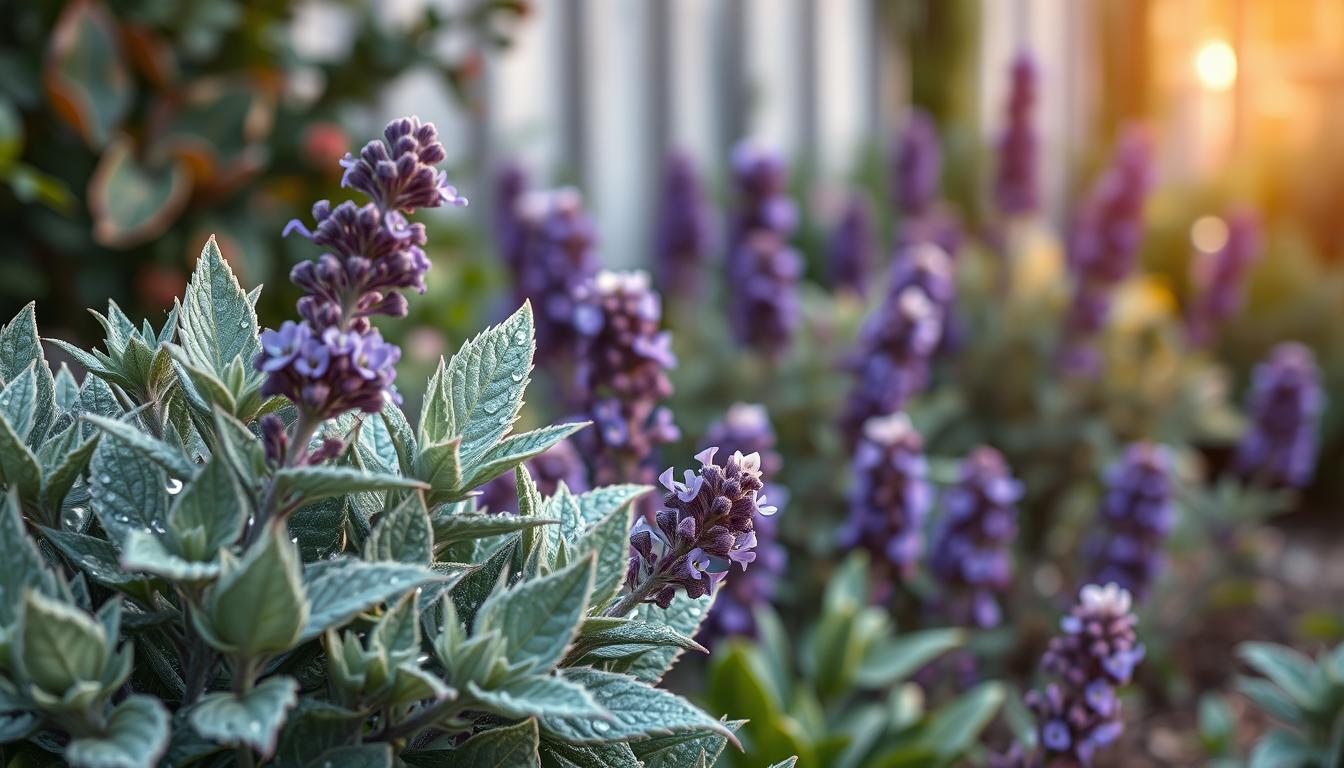
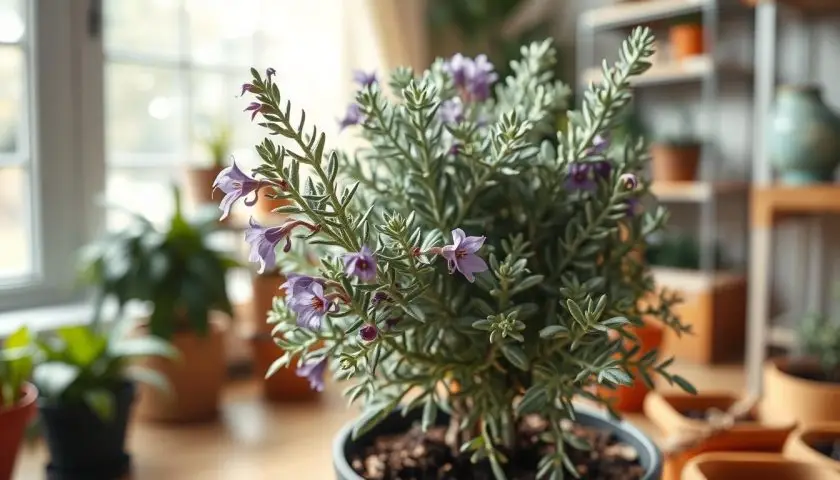
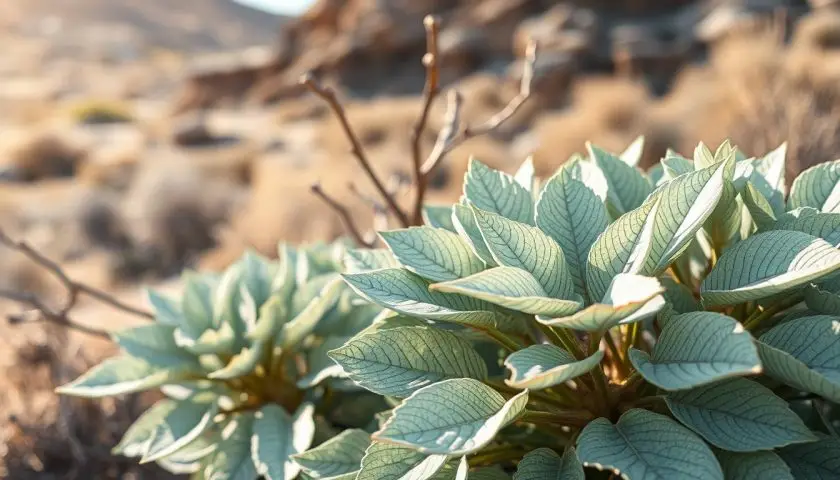
Despite the name Texas sage, this plant is not a true sage. NC State Extension lists it in the figwort family, Scrophulariaceae. It forms a dense, rounded, evergreen shrub with soft leaves that are silvery grey to greenish and covered in tiny star-shaped hairs, which is where the name silverleaf comes from. The leaves are mostly 2.5cm (1in) long or less.
Those silvery hairs are a classic desert adaptation. They reflect strong sunlight and slow water loss, which is why the Texas ranger plant handles heat and drought so well, and also why it dislikes humid, wet conditions. NC State notes that high humidity and high night temperatures can be a problem for it, even though it tolerates heat and drought very well.
Why It Is Called the Barometer Bush
The Texas ranger plant is famous for flowering in flushes after rain. NC State Extension explains that blooming is triggered when a rise in humidity signals approaching rain, and that flowers usually appear after rainfall. Each flush lasts several days, and flushes can repeat from summer into autumn. The small, bell-shaped flowers are up to 2.5cm (1in) long and range from bright pink to purple or lavender. The Arizona-Sonora Desert Museum notes that humidity drives flowering in cultivars such as ‘Compacta’ and ‘Heavenly Cloud’.
NC State also notes that the plant attracts butterflies, which makes it a good choice for a wildlife-friendly dry garden.
How to Grow a Texas Ranger Plant
Light
NC State Extension recommends full sun, meaning six or more hours of direct sunlight a day, though the plant tolerates partial shade. The Arizona-Sonora Desert Museum also says it grows best in full sun. In too much shade, a Texas ranger plant tends to become open and leggy and flowers less.
Soil and drainage
Drainage matters more than soil type. NC State lists clay, loam, sand and shallow rocky soils as suitable, with an alkaline pH, as long as drainage is good. It warns that overwatering or poorly drained soils can lead to cotton root rot, and suggests raised beds in high-rainfall areas. If your soil stays wet after rain, plant on a mound or in a raised bed.
Watering
Water a new Texas ranger plant regularly while it establishes its roots, then cut back sharply. Once established, NC State describes it as tolerant of conservative watering and low humidity, and the Arizona-Sonora Desert Museum lists its water needs as low. Deep, infrequent watering in long droughts is better than frequent light watering, which keeps the soil around the roots wet.
Feeding
Sources differ slightly here. NC State Extension advises not to fertilise the plants at all, while the Arizona-Sonora Desert Museum says they benefit from a spring feed. Both agree that this is a plant adapted to poor soil. If you feed, use a light spring application only; rich feeding causes soft, leggy growth and fewer flowers.
Temperature and hardiness
NC State lists the Texas ranger plant for USDA zones 8a to 11b, and the Arizona-Sonora Desert Museum gives cold hardiness down to about -12°C (10°F). In colder areas, it can be grown in a large pot with very free-draining compost and moved under cover for winter.
How to Plant a Texas Ranger Plant
- Choose the sunniest, best-drained spot you have, with room for the plant’s full mature size.
- Dig a hole as deep as the root ball and two to three times as wide, without adding rich compost.
- Set the plant at the same depth it was in its pot, or slightly higher on heavy soil.
- Backfill with the original soil, firm gently and water in thoroughly.
- Water regularly through the first growing season, then reduce as the plant establishes.
- Mulch with gravel rather than bark, which keeps the base of the plant dry.
Growing a Texas Ranger Plant in a Pot
NC State Extension lists containers and patios among the uses for the Texas ranger plant, and ‘Compacta’ is the best choice for pots because of its small size. Use a large pot with drainage holes and a gritty, free-draining compost, such as a cactus and succulent mix with added grit. Let the compost dry out well between waterings, and never leave the pot standing in water. A potted Texas ranger plant is also easier to protect in winter in areas colder than USDA zone 8, because it can be moved to a bright, frost-free spot.
How to Prune a Texas Ranger Plant
Pruning is where most gardeners go wrong. NC State Extension notes that the Texas ranger plant blooms on new wood and can be pruned to shape. The Arizona-Sonora Desert Museum adds that it blooms and forms best when grown naturally, and recommends choosing a spot where it can reach its full size without pruning.
Shearing a Texas ranger plant into tight balls or boxes several times a year removes flowering growth and, over time, leaves woody stems with few leaves inside. For a healthier plant:
- Choose a cultivar whose mature size fits the space, so you do not need to cut it back constantly.
- Prune selectively, removing whole branches back to a main stem rather than shearing the outside.
- Remove dead, crossing or damaged branches.
- Where hard renovation is needed, do it once and then let the plant regrow naturally.
For general technique, see our guide to pruning basics.
Best Texas Ranger Plant Cultivars
| Cultivar | Size | Features |
|---|---|---|
| ‘Compacta’ | About 1.2 to 1.5m (4 to 5ft) | Dense, rounded dwarf needing little or no pruning; grey-silver leaves; dark pink flowers (NC State, Desert Museum) |
| ‘Green Cloud’ | About 1.8 to 2.4m (6 to 8ft) | Green leaves; magenta to rose-pink flowers often through summer and autumn; NC State notes it can lose leaves in winter |
| ‘Heavenly Cloud’ | Up to about 1.8m (6ft) | Hybrid with L. laevigatum; lavender to magenta flowers in heat and humidity |
| ‘White Cloud’ | Full-sized | White flowers and grey foliage (NC State) |
For small gardens or low hedges, ‘Compacta’ is the easiest choice, because it stays small without constant cutting.
How to Use a Texas Ranger Plant in the Garden
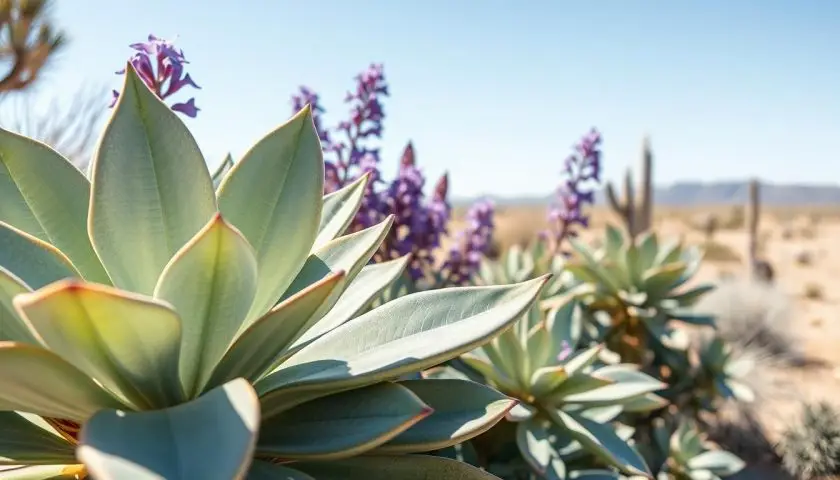
NC State Extension lists hedges, foundation planting, accent plants and containers as good uses, along with butterfly gardens and drought-tolerant gardens. The Arizona-Sonora Desert Museum suggests it as a low barrier or screen with summer flowers as a bonus. Its silver leaves contrast well with dark green or purple foliage and with spiky succulents. For more ideas, see our guides to drought-resistant plants and outdoor plants that like direct sunlight.
NC State also notes that the Texas ranger plant is moderately salt tolerant and listed as resistant to deer, which makes it useful in coastal or exposed gardens. Our guide to plants for coastal and windy gardens has more tough choices.
How to Propagate a Texas Ranger Plant
NC State Extension lists seed and stem cuttings as propagation methods. Cuttings keep the features of a named cultivar, while seed-grown plants can vary. Take cuttings from healthy, non-flowering shoots during the growing season, root them in a very free-draining mix, and keep them warm and bright but not waterlogged, as wet compost is the main cause of failure. For the basics, see how to propagate plants.
Common Texas Ranger Plant Problems
| Problem | Likely Cause | What to Do |
|---|---|---|
| Sudden wilting and death | Cotton root rot from wet or poorly drained soil (NC State) | Improve drainage; plant in raised beds; water less |
| Few or no flowers | Too much shade, overfeeding or frequent shearing | Move to full sun; stop feeding; prune less |
| Leggy, open growth | Shade or too much water and feed | More sun; lean conditions |
| Woody, bare centre | Repeated shearing into tight shapes | Prune selectively and let it regrow naturally |
| Leaf drop in winter | Normal for some cultivars such as ‘Green Cloud’ | No action needed |
NC State notes that the Texas ranger plant has no serious insect or disease problems when grown in the right conditions, so most issues come back to drainage and over-care.
Texas Ranger Plant Care Through the Year
| Season | What to Do |
|---|---|
| Spring | Plant new shrubs; do any selective pruning; optional light feed. |
| Summer | Water young plants in drought; enjoy flowers after rain. |
| Autumn | Further flowering flushes; stop watering established plants. |
| Winter | Keep dry; protect potted plants in cold areas. |
Is a Texas Ranger Plant Safe for Pets?
The Texas ranger plant does not appear on the ASPCA’s list of plants toxic to dogs or cats, and NC State Extension does not list any toxicity for it. As with any garden plant, discourage pets from chewing it, as eating plant material can upset the stomach. If you are worried, contact your vet or the ASPCA Animal Poison Control Center at (888) 426-4435 (a consultation fee may apply). Our guide to making your plants cat-friendly has more tips.
Frequently Asked Questions
Is a Texas ranger plant the same as Texas sage?
Yes. Texas ranger and Texas sage are both common names for Leucophyllum frutescens. It is not a true sage; NC State lists it in the figwort family.
How often should I water a Texas ranger plant?
Water regularly only while it establishes. After that, it needs very little water, and deep watering only in long droughts. Too much water can cause cotton root rot.
Why is my Texas ranger plant not flowering?
The usual causes are too much shade, too much feed or frequent shearing. It flowers on new wood, often after rain or rising humidity, so give it full sun and prune lightly.
How big does a Texas ranger plant get?
The species reaches about 1.8 to 3.7m (6 to 12ft) tall and wide, according to NC State. ‘Compacta’ stays around 1.2 to 1.5m (4 to 5ft).
When should I prune a Texas ranger plant?
Prune selectively in spring if needed, removing whole branches rather than shearing. It blooms best when allowed to grow into its natural shape.
Final Thoughts
As a botanist, I think the Texas ranger plant is a perfect lesson in matching a plant to its climate. Its silvery, hairy leaves and love of lean, dry soil tell you exactly what it needs, and when it gets sun, drainage and space, it rewards you with waves of flowers after every summer storm.
At Patch Plants, I aim to help you choose plants that work with your conditions rather than against them. If you garden in heat and drought, the Texas ranger plant is one of the most reliable flowering shrubs you can grow.
Sources: NC State Extension, Leucophyllum frutescens; Arizona-Sonora Desert Museum, Texas Sage.

About the author
Sawera Shahid is a botanist with an MPhil in Botany and 5+ years of writing about plants. As founder and lead writer of Patch Plants, she writes practical, science-backed guides on indoor plants, outdoor gardens and plant problems, checked against RHS and university extension advice.