Key Takeaways
- Pruning basics are simple once you understand why you are cutting, where to cut, and when to stop.
- If you are learning how to prune plants, start with dead, damaged, diseased, crossing, weak, or overcrowded growth.
- Pruning plants for beginners should be light and careful. Do not remove too much at once.
- When to prune plants depends on the plant type, flowering time, growth habit, and season.
- The best pruning tips are simple: use clean sharp tools, cut above healthy growth, avoid long stubs, and never prune a stressed plant heavily.
Introduction
Pruning basics can feel confusing at first. One person says cut in spring. Another says prune after flowering. A plant label says “lightly trim,” but the plant looks wildly overgrown. It is no surprise many beginners worry they will cut the wrong stem and ruin the plant.
The good news is that pruning is not about hacking plants into shape. It is selective, careful cutting. Once you know how to prune plants, you can remove dead leaves, tidy brown stems, shape shrubs, encourage new growth, improve airflow, and stop plants becoming weak or messy.
This plant pruning guide covers pruning plants for beginners in plain steps. You will learn when to prune plants, where to cut when pruning, how much to prune a plant, which tools to use, and the pruning mistakes to avoid.
For wider plant care support, you can also read the complete watering guide, how to clean plant leaves, and how to revive a dying plant.
What Is Pruning?
Pruning means removing selected parts of a plant. That may include leaves, stems, branches, flowers, damaged shoots, or old growth. The goal is not to cut for the sake of cutting. The goal is to help the plant grow better.
Good pruning can improve shape, reduce overcrowding, remove disease, encourage flowering, control size, and direct energy into stronger growth. Poor pruning can weaken a plant, remove flower buds, create ugly gaps, or invite disease through rough cuts.
That is why pruning basics matter. Before you cut, ask three questions: Why am I cutting? Where should I cut? Is this the right time?
Why Prune Plants?
If you have ever wondered why prune plants, the answer is usually plant health, shape, safety, or better growth. Pruning is useful when a plant has dead leaves, damaged stems, tangled growth, weak branches, or old flowers that need removing.
The main benefits of pruning plants include:
- Pruning for plant health: Removing dead, diseased, or damaged growth helps the plant focus energy on healthy parts.
- Pruning for new growth: Cutting above a node or bud can encourage fresh shoots.
- Pruning to encourage growth: Light pruning can make some plants fuller and less leggy.
- Pruning to shape plants: Careful cutting keeps plants balanced, tidy, and suitable for their space.
- Better airflow: Removing crowded growth helps reduce damp, stagnant areas where pests and disease can build.
If your plant already looks weak, check the basics first. Yellow leaves, droop, or root problems may be linked to watering, soil, light, or stress. Helpful guides include why plant leaves turn yellow, leaf curl, browning, and droop, and root rot guide.
Pruning Plants for Beginners: Start Here
Pruning plants for beginners should start with easy cuts. You do not need to reshape the whole plant on your first try. Begin with obvious problems and work slowly.
Start by removing:
- Dead leaves
- Brown leaf tips if they look messy
- Dead branches
- Broken stems
- Diseased growth
- Crossing stems that rub together
- Weak leggy growth
- Old spent flowers
This beginner guide to pruning is built around one rule: remove only what you can clearly explain. If you cannot explain why you are cutting a stem, leave it for now.
When to Prune Plants
When to prune plants depends on the plant. Some plants can be lightly tidied almost any time. Others flower on old wood, so cutting at the wrong time can remove the next flower display.
The best time to prune plants is usually when the plant can recover well. For many plants, that means active growth or the right seasonal window. Avoid heavy pruning during severe heat, drought stress, hard frost, transplant shock, or pest outbreaks.
When to Prune Shrubs
When to prune shrubs depends on flowering time. Many spring-flowering shrubs are pruned after they finish blooming. Many summer-flowering shrubs are pruned in late winter or spring because they flower on new growth.
The best time to prune shrubs is also affected by local climate. If your area gets hard frost, avoid making big cuts just before a freezing spell.
When to Prune Flowers
When to prune flowers often means deadheading, cutting back tired stems, or removing damaged growth. Many annuals and perennials benefit from regular tidying during the growing season.
Some flowering plants bloom again if spent flowers are removed. Others are best left with seed heads for wildlife or winter interest. If the seed heads look attractive or feed birds, you do not always need to cut them straight away.
When to Prune Houseplants
When to prune houseplants is usually during active growth, often spring or early summer. Light pruning can also be done whenever you see dead leaves, yellow leaves, or damaged stems.
Avoid heavy pruning indoor plants in winter if growth has slowed. If your houseplant is already stressed, fix watering, light, or soil first. Read complete guide to indoor light and best soil mix for every plant before making major cuts.
How to Prune Plants Step by Step
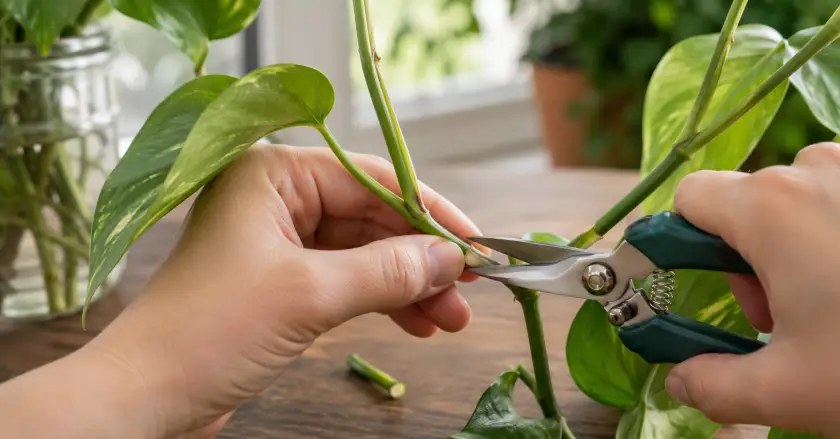
Learning how to prune plants is easier when you follow a simple order. Do not start by shaping. Start by cleaning up the plant.
- Look at the whole plant first: Check shape, health, light direction, and weak areas before cutting.
- Remove dead growth: Dead leaves, dry stems, and dead branches can go first.
- Remove diseased or damaged growth: Cut below the damaged section into healthy tissue.
- Thin crowded areas: Remove crossing, rubbing, or inward-growing stems.
- Shape lightly: Step back after every few cuts and check balance.
- Stop early: It is better to prune lightly now and come back later than remove too much in one session.
These basic pruning techniques work for many common plants. Always adjust for plant type, season, and overall health.
Pruning Cuts Explained
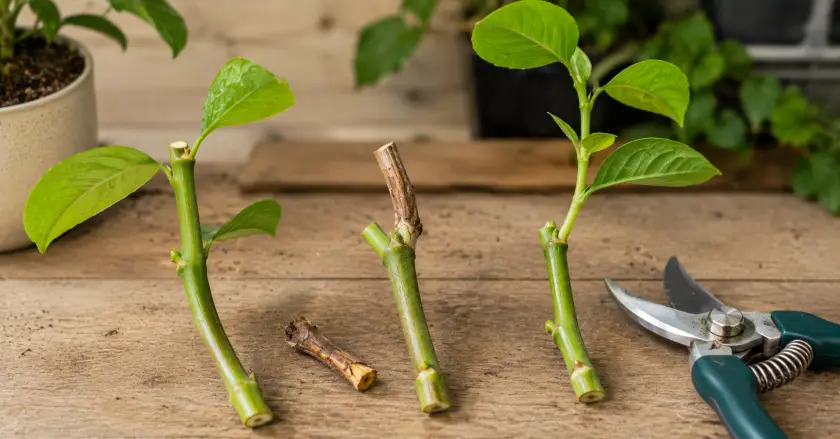
Pruning cuts explained simply: every cut should have a purpose and a clean finish. A clean cut heals better than a crushed, torn, or ragged cut.
Where to Cut When Pruning
Where to cut when pruning depends on what you are removing. For leafy stems, cut just above a healthy node or leaf joint. For shrubs, cut above an outward-facing bud when shaping. For branches, avoid cutting flush against the trunk. Leave the natural branch collar intact.
Do not leave long stubs. They dry out, look untidy, and can become entry points for problems. Do not cut too close either, because that can damage the bud or main stem.
How to Make Pruning Cuts
How to make pruning cuts correctly comes down to clean tools and confident movement. Use sharp pruning shears for plants with woody stems, small clean scissors for soft houseplant stems, and loppers for thicker outdoor branches.
Make one clean cut instead of chewing through the stem with blunt tools. For angled cuts on outdoor stems, keep the cut neat so water does not sit on damaged tissue.
How Much to Prune a Plant
How much to prune a plant depends on its health and growth habit. For beginners, a safe rule is to remove less than you think you need. Light pruning is much safer than hard pruning.
For houseplants, avoid removing more than one-quarter of healthy growth at one time unless the plant is being rescued or propagated. For outdoor shrubs, hard pruning should be done only when the plant type, season, and reason are clear.
Can Pruning Hurt Plants?
Can pruning hurt plants? Yes, if it is done badly. The most common damage comes from removing too much, pruning at the wrong time, using dirty tools, cutting into old wood that does not regrow well, or pruning a plant that is already stressed.
Pruning can also hurt plants if you remove flower buds without realising it. This is common with spring-flowering shrubs. If a shrub blooms early in the year, check whether it flowers on old wood before cutting in winter.
Done correctly, pruning helps. Done randomly, it can set the plant back.
How to Prune Garden Plants
How to prune garden plants starts with the plant’s role. Is it a flowering shrub, border perennial, herb, climber, evergreen, fruiting plant, or container plant? Each responds differently.
For most garden plants, remove dead or diseased growth first. Then thin crowded stems. Then shape lightly. Avoid cutting everything into a ball unless that is the intended style for the plant.
Garden plants also face weather stress. If your outdoor plants struggle with frost, drought, or heat, use pruning carefully. Useful guides include 15 hardy outdoor plants, top drought-resistant plants, and heat tolerant plants.
How to Prune Outdoor Plants
How to prune outdoor plants depends strongly on season. Outdoor pruning also needs clean tools, dry weather where possible, and awareness of frost, pests, and flowering cycles.
For outdoor plants, remove damaged growth after storms, cut back dead stems, thin overcrowded shrubs, and keep paths clear. Avoid heavy pruning during heatwaves because plants need leaves to protect themselves and make energy.
If your garden is exposed, windy, or coastal, pruning should help plants stay balanced, not top-heavy. For tough outdoor choices, read best outdoor plants for coastal and windy environments and outdoor plants that survive British winters.
How to Prune Indoor Plants
How to prune indoor plants is usually simpler than pruning outdoor shrubs. Houseplant pruning often means removing yellow leaves, brown tips, dead stems, leggy vines, or damaged foliage.
Use small clean scissors or fine pruning snips. Cut close to the base of a dead leaf stem without damaging the main plant. For vining plants like pothos or philodendron, cut above a node to encourage branching.
For indoor plant care, read best indoor plants for beginners, 35 low-maintenance plants, and air-purifying indoor plants.
How to Prune Shrubs
How to prune shrubs depends on whether the shrub flowers on old wood, new wood, or mainly provides evergreen structure. This is where beginners need to slow down.
Start by removing dead, diseased, damaged, crossing, or weak stems. Then look at the shape. If the shrub flowers in spring, prune after flowering unless you know it is safe to prune earlier. If it flowers in summer or autumn on new growth, spring pruning is often more suitable.
Do not shear every shrub into a tight shape. Some shrubs look better with selective pruning, where older stems are removed and younger healthy stems are kept.
How to Prune Flowers
How to prune flowers usually means deadheading, cutting back tired stems, and keeping the plant from wasting energy on old blooms. Flower pruning can keep borders looking fresh and may encourage repeat flowering in some plants.
For soft flowering stems, use clean scissors or small snips. Cut spent flowers back to a healthy leaf joint or side shoot. Remove yellowing or diseased leaves at the same time.
Deadheading flowers is not always required, but it is useful for many bedding plants, containers, and repeat-flowering perennials.
How to Prune Houseplants
How to prune houseplants depends on whether the plant grows upright, vines, clumps, or rosettes. Snake plants, pothos, peace lilies, monsteras, spider plants, and ZZ plants all need slightly different handling.
For upright plants, remove damaged leaves at the base. For vining plants, cut just above a node. For clumping plants, remove old outer growth. For large leaves, remove only leaves that are badly damaged, yellow, diseased, or blocking airflow.
Plant-specific guides can help: pothos care guide, monstera care guide, snake plant care guide, peace lily care guide, and ZZ plant care guide.
How to Prune Overgrown Plants
How to prune overgrown plants requires patience. Do not try to fix years of growth in ten minutes. Overgrown plants often need staged pruning over several weeks, months, or seasons.
First, remove dead and damaged growth. Next, thin crossing stems. Then reduce height or length gradually. For shrubs, avoid removing all old stems at once unless the plant responds well to hard renovation pruning.
For houseplants, overgrown vines can often be cut back and propagated. For more recovery help, read how to revive a dying plant and how to repot a plant.
How to Prune Dead Leaves and Branches
How to prune dead leaves is simple. If the leaf is fully dead, remove it at the base of its stem. If only the tip is brown, you can trim the brown part while following the natural shape of the leaf.
How to prune dead branches takes a little more care. Cut back to healthy wood or to the branch collar. If you are unsure whether a branch is dead, gently scratch the bark. Green tissue underneath usually means it is still alive. Brown, dry tissue often means it is dead.
When pruning damaged leaves, pruning yellow leaves, or pruning brown leaves, always ask why the damage happened. If the cause is still present, the plant will keep producing damaged growth.
Pruning Leggy Plants
Pruning leggy plants helps encourage fuller growth, but it only works if the plant also gets enough light. A plant becomes leggy when it stretches toward light or grows without enough branching.
Cut leggy stems above a node to encourage new side shoots. Rotate the plant, move it closer to suitable light, and avoid overfeeding weak growth. For indoor light help, read complete guide to indoor light.
Pruning vs Trimming
Pruning vs trimming is a common beginner question. Pruning is usually more selective. It removes specific growth for health, shape, flowering, airflow, or size control. Trimming is often lighter and more cosmetic, such as tidying a hedge, clipping edges, or keeping a plant neat.
Both can be useful. The mistake is trimming everything the same way. A hedge may suit trimming. A flowering shrub may need selective pruning instead.
Pruning vs Deadheading
Pruning vs deadheading is another useful difference. Pruning removes leaves, stems, branches, or growth for plant health and shape. Deadheading removes spent flowers.
Deadheading flowers can make flowering plants look cleaner and may encourage more blooms. It is usually lighter than pruning and can be done regularly during the growing season.
Pruning Tools for Beginners
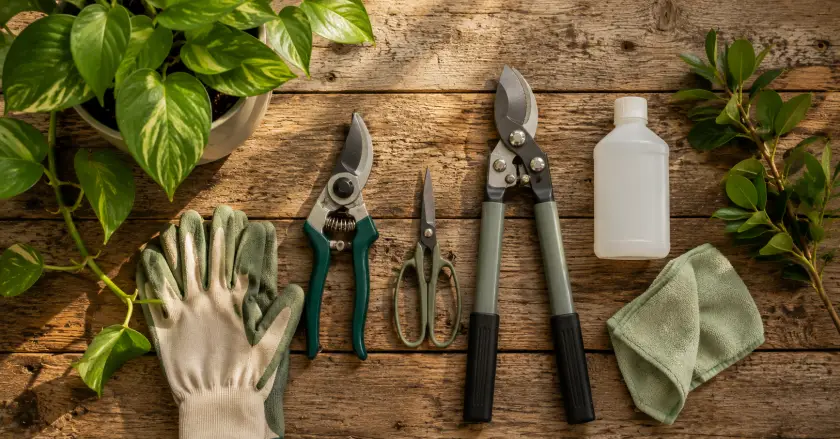
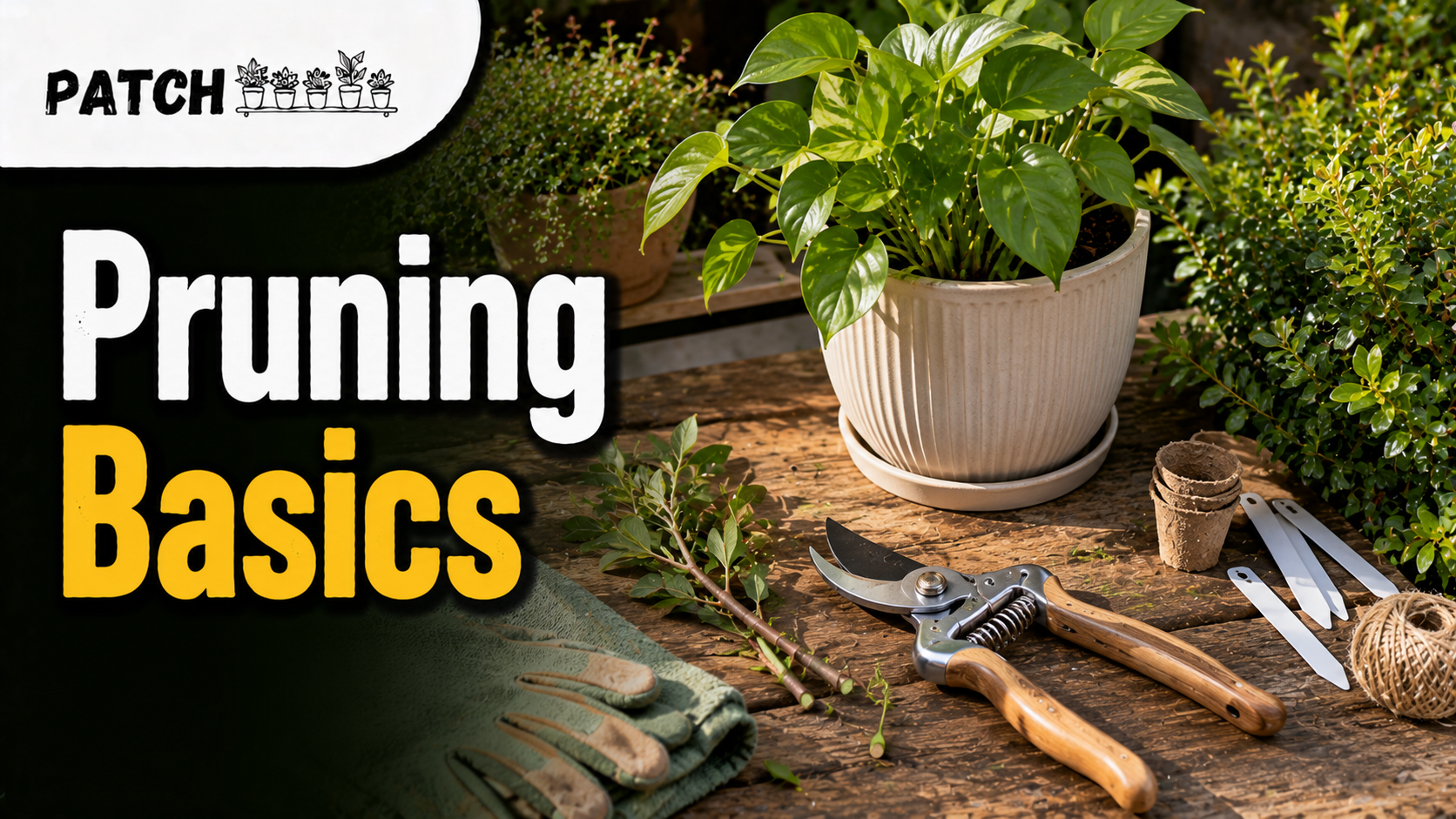
The right tools make pruning safer for both you and the plant. Pruning tools for beginners do not need to be expensive, but they should be sharp, clean, and comfortable to use.
The best pruning tools for most beginners include:
- Pruning shears for plants: Best for small woody stems, shrubs, and many outdoor plants.
- Small scissors or snips: Useful for houseplants, soft stems, dead leaves, and delicate pruning.
- Loppers: Useful for thicker shrub stems that are too large for hand pruners.
- Gloves: Helpful for thorny, sticky, or irritating plants.
- Disinfectant or rubbing alcohol: Useful for cleaning blades between plants.
- Soft cloth: Good for wiping sap, dirt, and residue from tools.
Do not use blunt kitchen scissors on woody stems. They crush instead of cutting cleanly.
How to Clean Pruning Shears
How to clean pruning shears matters because dirty tools can spread disease from one plant to another. Clean tools also cut better and last longer.
- Brush off soil, sap, and plant bits after pruning.
- Wipe blades with a cloth.
- Disinfect blades if you cut diseased growth.
- Dry the tool properly to prevent rust.
- Add a little tool oil if needed.
Clean pruning shears before moving from a sick plant to a healthy plant. This small habit prevents many common pruning problems.
Basic Pruning Techniques
These basic pruning techniques cover most beginner situations.
1. Pinching
Pinching removes the soft growing tip of a plant. It can encourage bushier growth on some herbs, flowers, and houseplants.
2. Deadheading
Deadheading removes old flowers. It keeps plants tidy and can support more blooms in repeat-flowering plants.
3. Thinning
Thinning removes selected stems to reduce crowding and improve airflow. It is useful for shrubs and dense houseplants.
4. Heading Back
Heading back shortens a stem by cutting above a bud or node. It can help shape a plant and encourage branching.
5. Removing Dead or Diseased Growth
This is the safest pruning job for beginners. Dead, damaged, or diseased growth should not stay on the plant longer than necessary.
These are practical pruning techniques for beginners. Use them slowly, and avoid combining too many heavy cuts in one session.
Simple Pruning Tips for Better Results
Good pruning does not need to be dramatic. These simple pruning tips will help you avoid most beginner problems:
- Look before cutting.
- Use clean sharp tools.
- Remove dead, damaged, or diseased growth first.
- Cut above a healthy node, bud, or side shoot.
- Do not leave long stubs.
- Do not remove too much healthy growth at once.
- Prune after flowering if the plant blooms on old wood.
- Step back often and check the shape.
- Clean tools after cutting diseased material.
- Support the plant after pruning with correct water, light, and care.
Pruning Mistakes to Avoid
Pruning mistakes to avoid are often simple, but they can make a big difference.
- Cutting without a reason: Every cut should have a purpose.
- Removing too much: Heavy pruning can shock plants, especially weak ones.
- Using dirty tools: This can spread disease.
- Leaving long stubs: Stubs die back and look messy.
- Cutting too close: Cutting into the main stem or branch collar can slow healing.
- Pruning at the wrong time: This can remove flower buds or expose tender growth to frost.
- Ignoring plant type: A shrub, vine, cactus, fern, and houseplant do not all need the same pruning style.
These common pruning mistakes are easy to avoid if you slow down and prune in small steps.
Winter Pruning Tips
Winter pruning tips depend on your climate and plant type. Many deciduous trees and shrubs are easier to assess in winter because the leaves have dropped. You can see the structure clearly.
However, do not prune everything in winter. Some spring-flowering shrubs already carry flower buds. Cutting them in winter may remove the flowers you were waiting for.
Avoid pruning during hard frost. Frozen stems can be brittle, and fresh cuts may be more vulnerable to cold damage.
Spring Pruning Tips
Spring pruning tips are useful because many plants begin active growth in spring. This can be a good time to remove winter damage, trim houseplants, cut back some summer-flowering shrubs, and tidy perennials.
Spring is also a good time to check plant health. If leaves are yellow, stems are weak, or roots are struggling, fix the care problem first. For seasonal planning, read garden calendar 2026 and seasonal plant care in autumn.
Pruning for Different Plant Problems
Pruning Damaged Leaves
Pruning damaged leaves improves appearance and helps the plant focus on healthy growth. Trim only the damaged part if the rest of the leaf is still green and useful.
Pruning Yellow Leaves
Pruning yellow leaves is fine when the leaf is fully yellow or dying. But yellow leaves are often a symptom. Check watering, drainage, light, and root health.
Pruning Brown Leaves
Pruning brown leaves can be cosmetic or necessary. Brown crispy tips can be trimmed neatly. Fully dead brown leaves should be removed at the base.
Pruning Dead Branches
Dead branches should be removed because they no longer help the plant. Cut back to healthy wood, a side branch, or the correct branch collar.
Aftercare: What to Do After Pruning
After pruning, a plant needs steady care. Do not immediately overwater or overfeed. Give the plant good light, correct watering, and time to respond.
Aftercare steps:
- Remove fallen leaves and cuttings from the soil surface.
- Check the plant for pests.
- Water only if the soil needs it.
- Avoid strong fertiliser right after heavy pruning.
- Keep the plant away from extreme heat, cold, or harsh direct sun if it is stressed.
- Watch for new growth over the next few weeks.
For plant recovery support, read how to revive a dying plant, repotting mistakes, and self-watering pots guide.
Expert Tips from Sawera Shahid
My best pruning advice is simple: prune less, observe more. Most beginners remove too much because they want instant results. Plants respond better when you work gradually.
Before cutting a healthy stem, ask what job that stem is doing. Is it carrying leaves, flowers, shape, or new growth? If it is useful and healthy, there may be no reason to remove it.
For houseplants, clean leaves and correct watering often improve appearance more than pruning. For outdoor plants, timing matters most. A careful cut at the right time is better than a perfect-looking cut at the wrong time.
Future Trends
Pruning advice is becoming more beginner-focused, especially as more people grow plants in small homes, balconies, containers, and low-maintenance gardens.
Expect more interest in light maintenance pruning, pruning for plant health, pruning leggy plants, pruning indoor plants, and simple plant care routines that fit busy lives.
Smaller gardens also mean more people need to control plant size without harming growth. That makes pruning basics even more useful for modern plant care.
Frequently Asked Questions
What are pruning basics?
Pruning basics are the simple rules for removing selected plant parts, such as dead leaves, damaged stems, diseased growth, crowded branches, or spent flowers, to improve plant health and shape.
How do I learn how to prune plants?
To learn how to prune plants, start with dead or damaged growth, use clean sharp tools, cut above healthy nodes or buds, and avoid removing too much at once.
When should beginners prune plants?
For pruning plants for beginners, light pruning can be done when dead or damaged growth appears. Heavier pruning should be timed according to the plant type and flowering season.
When is the best time to prune plants?
The best time to prune plants depends on the plant. Many houseplants prefer spring or early summer pruning. Many spring-flowering shrubs are pruned after flowering. Many summer-flowering shrubs are pruned in late winter or spring.
Where should I cut when pruning?
Cut just above a healthy bud, node, leaf joint, or side shoot. For branches, avoid cutting into the branch collar. This is the simplest answer to where to cut when pruning.
Can pruning hurt plants?
Yes. Pruning can hurt plants if you cut too much, prune at the wrong time, use dirty tools, or make rough cuts. Careful light pruning is usually safer than aggressive cutting.
What is the difference between pruning vs trimming?
Pruning vs trimming is about purpose. Pruning is selective and supports health, growth, flowering, or shape. Trimming is usually lighter and more cosmetic.
What is the difference between pruning vs deadheading?
Pruning vs deadheading is simple. Pruning removes leaves, stems, branches, or growth. Deadheading removes spent flowers.
Related Guides
- PATCH Plants homepage
- PATCH Plants blog
- Plant Care hub
- Indoor Plants hub
- Outdoor Plants hub
- Garden Calendar 2026
- Seasonal plant care in autumn
- Complete guide to watering plants
- Worst times to water plants
- Signs you are overwatering
- Root rot guide
- How to revive a dying plant
- Leaf curl, browning, and droop
- Why plant leaves turn yellow
- How to clean plant leaves
- Best soil mix for every plant
- Repotting mistakes to avoid
- How to repot a plant
- Fertilizing indoor vs outdoor plants
- Self-watering pots guide
- DIY indoor humidity tray
- Humidity hacks for plants
- Complete guide to indoor light
- 35 low-maintenance plants
- Best indoor plants for beginners
- Best indoor plants for first-time plant parents
- Best indoor plants for tiny apartments
- Air-purifying indoor plants
- How to style indoor plants by room
- Bedroom plants for style and calm
- Indoor plants as natural room dividers
- Trailing plants for shelves
- Low-light hanging plants
- Indoor plants that smell amazing
- Colorful foliage indoor plants
- Rare houseplants worth the hunt
- Blooming indoor plants
- Best office plants
- Office-friendly plants for fluorescent lighting
- Oversized indoor plants
- Indoor gardening systems
- Should you talk to your plants?
- Snake plant care guide
- Peace lily care guide
- Christmas cactus care guide
- Money tree care guide
- Best bathroom plants
- Succulent care guide
- Cactus care guide
- Boston fern care guide
- Bird of paradise care guide
- Pothos plant care guide
- Philodendron care guide
- Monstera plant care guide
- Hoya plant care guide
- Orchid care guide
- Rubber plant care guide
- Fiddle leaf fig care guide
- Spider plant care guide
- ZZ plant care guide
- Jade plant care guide
- Dracaena care guide
- Anthurium care guide
- African violet care guide
- String of pearls care
- Calathea care guide
- Best low-maintenance outdoor plants
- 15 hardy outdoor plants
- Hardy plants with minimal watering
- Outdoor plants that survive British winters
- Coastal and windy outdoor plants
- Keep pests away from outdoor plants
- Top drought-resistant plants
- Heat tolerant plants
- Container gardening on patios
- Best plants for small outdoor spaces
- Pollinator-friendly plants
- Wildlife-friendly garden guide
- Shade-loving outdoor plants
- Colorful garden for all seasons
- Easiest outdoor edible plants
- Plants that bloom at night
- Native plants
- Year-round balcony plants
Final Thoughts
Pruning basics are not about cutting more. They are about cutting with purpose. Start with dead, damaged, diseased, weak, or overcrowded growth. Use clean sharp tools. Make neat cuts. Stop before the plant looks stripped. Then give it steady light, water, and care while it recovers.
The Royal Horticultural Society explains pruning as a way to remove dead or unsightly growth, improve shape, restrict size, increase vigour, and keep plants healthy for flowers or berries, making it a useful reference for beginners learning careful pruning: RHS pruning plants guide.
If you remember one thing, remember this: do not prune because you feel nervous about a messy plant. Prune because you know what that cut will improve. That is the difference between random trimming and confident plant care.
Summary
This guide explains pruning basics for beginners, including how to prune plants, when to prune plants, where to cut when pruning, and how much to prune a plant. It covers pruning plants for beginners, pruning tips, pruning cuts explained, pruning tools for beginners, pruning shears for plants, how to clean pruning shears, pruning vs trimming, pruning vs deadheading, deadheading flowers, winter pruning tips, spring pruning tips, pruning leggy plants, pruning yellow leaves, pruning brown leaves, pruning damaged leaves, and common pruning mistakes to avoid.