Key Takeaways
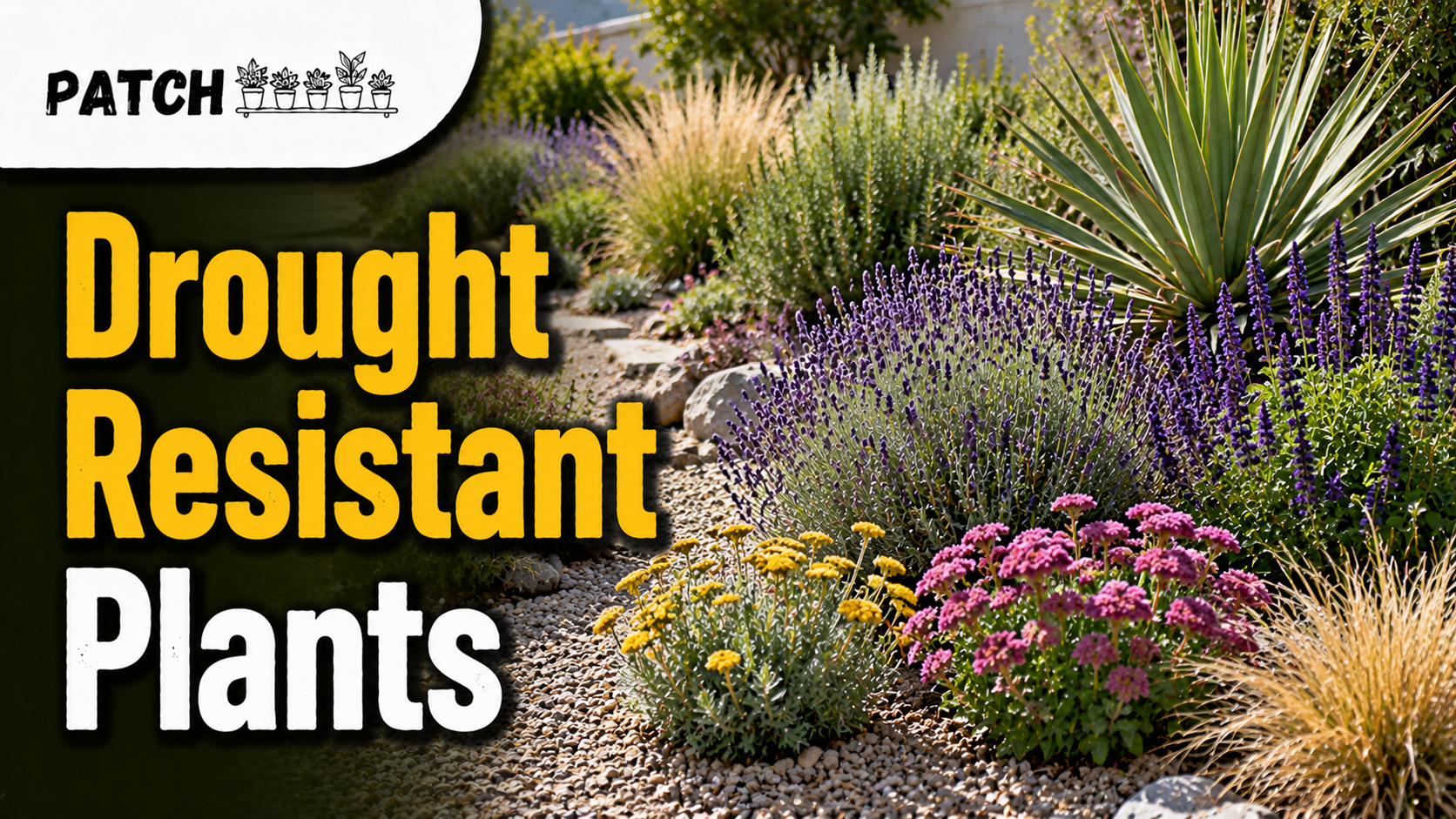
- Drought resistant plants help gardens stay colourful, structured, and healthy with less watering once the plants are established.
- The best drought resistant flowers include lavender, salvia, yarrow, verbena, California poppy, gazania, sea holly, and sedum.
- Reliable drought resistant shrubs include rosemary, santolina, artemisia, abelia, elaeagnus, bottlebrush, rock rose, and some drought tolerant evergreen bushes.
- Drought resistant container plants need free-draining compost, drainage holes, deep watering, and pots that do not trap water around roots.
- Waterwise gardening is not about never watering. It is about watering better, choosing the right plants, and keeping moisture in the soil for longer.
Introduction
Drought resistant plants are becoming essential for modern gardens. Hotter summers, dry spells, water restrictions, exposed patios, and busy schedules all make low-water planting more practical. The good news is that a drought-friendly garden does not have to look bare or dusty. It can be colourful, fragrant, pollinator-friendly, and full of texture.
The best drought resistant plants are not magic. They still need water while they establish. But once their roots settle, they can handle dry soil better than thirsty bedding plants. Many have silver leaves, waxy foliage, deep roots, narrow leaves, or succulent growth that helps them hold moisture and reduce stress.
This guide covers drought resistant flowers, drought resistant shrubs, drought resistant container plants, drought tolerant hedges, zone notes, watering tips, and smart design ideas for a low-water garden. For more outdoor support, read best low-maintenance outdoor plants, hardy plants that survive on minimal watering, and outdoor plants for storms and heatwaves.
What Is Drought Resistant Plants?
If you are asking what is drought resistant plants, the simple answer is this: they are plants that can cope with dry conditions once established. They use water efficiently, lose moisture slowly, or reach deeper into the soil for water.
Some drought resistant plants come from Mediterranean climates. Others are prairie plants, succulents, grasses, herbs, or native shrubs adapted to dry summers. Their survival traits vary. Lavender has narrow aromatic leaves. Sedum stores water in fleshy foliage. Yarrow and coneflower develop strong roots. Ornamental grasses bend through heat and wind without needing constant irrigation.
That said, drought resistant does not mean no water ever. New plants need regular watering while roots grow. Even established plants need occasional deep watering during long extreme drought.
Why Waterwise Gardening Works
Waterwise gardening saves time, reduces waste, lowers stress during heatwaves, and helps plants survive real weather. It also makes your garden more resilient because you are not relying on daily watering to keep everything alive.
The key is preparation. Improve soil before planting. Add mulch. Group plants by water needs. Choose plants for your actual site, not just the label. A sunny gravel border needs different plants from a shaded clay garden or a windy balcony.
Waterwise gardening also helps avoid overwatering. People often ask, “can plants drown?” Yes, plants can drown when roots sit in waterlogged soil and cannot access enough oxygen. This is especially common in pots without drainage, heavy clay, and saucers that hold water for too long.
Best Drought Resistant Plants for Low-Water Gardens
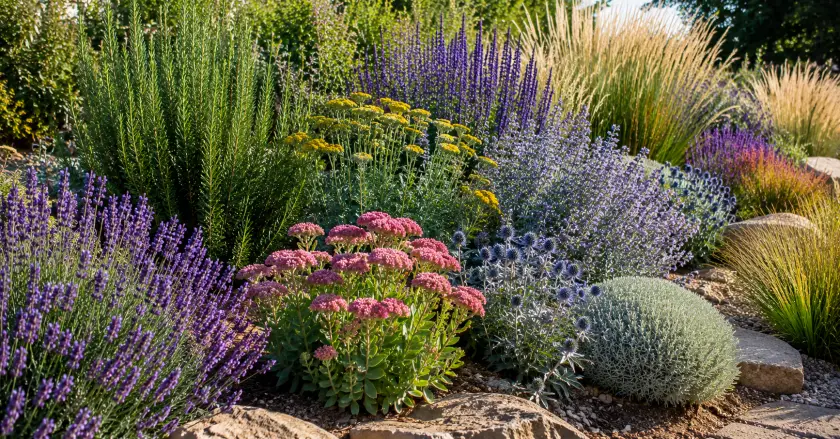
Lavender
Lavender is one of the best drought resistant plants for full sun. It brings fragrance, purple flowers, silver foliage, and pollinator value. It is ideal for paths, borders, patio pots, and cheap drought tolerant landscaping because one plant gives scent, colour, and structure.
Plant lavender in free-draining soil and avoid overfeeding. It dislikes wet roots, especially in winter. In pots, use gritty compost and never let the container sit in standing water.
Rosemary
Rosemary is a drought tolerant evergreen herb that works like a small shrub. It stays useful all year, handles sun, and gives you edible stems for cooking.
Dry, sunny gardens are also a good place for drought-tolerant mosquito repellent plants such as lavender, rosemary, lemongrass, catmint, and marigolds. Keep them near patios, paths, and seating areas so their scent is close to where people relax.
Use rosemary in low-water borders, raised beds, and drought resistant container plants displays. It is one of the best shrubs for full sun drought tolerant gardens where you want structure and fragrance.
Salvia
Salvia gives long-lasting colour in hot, sunny spaces. Many varieties are loved by bees and butterflies, and once settled, they can handle dry soil better than many soft annual flowers.
Use salvia with lavender, yarrow, grasses, and sedum for a flower bed that looks alive through summer without daily watering.
Yarrow
Yarrow is tough, airy, and perfect for naturalistic planting. Its flat flower heads come in white, yellow, pink, red, and soft pastels. It is also one of the strongest drought resistant flowers for pollinator-friendly gardens.
Yarrow works well in poor soil, gravel gardens, and full sun. It also suits deer resistant and drought tolerant plants lists because deer often avoid its aromatic foliage.
Sedum
Sedum, also called stonecrop, stores water in its thick leaves. It is one of the best low-water plants for sunny borders, rock gardens, containers, and dry edges.
Use upright sedum for late-season flowers and creeping sedum for ground cover. Both types are useful for drought resistant container plants because they handle missed watering better than many flowering plants.
Catmint
Catmint is easy, soft, fragrant, and drought tolerant once established. It produces clouds of blue-purple flowers and works beautifully along paths, under roses, or in relaxed borders.
It can be cut back after flowering to refresh the plant. Pair it with yarrow, salvia, and ornamental grasses for a low-water cottage garden look.
Sea Holly
Sea holly has spiky metallic flowers and architectural foliage. It thrives in sunny, dry, free-draining soil and looks excellent in coastal, gravel, and wildlife-friendly gardens.
This is one of the best drought resistant plants if you want something bold instead of soft. It also handles wind better than many delicate flowers.
Santolina
Santolina, also known as lavender cotton, has silver aromatic foliage and small yellow button flowers. It is compact, tough, and useful in borders, edging, and Mediterranean-style planting.
It is one of the most useful drought resistant shrubs for small gardens because it stays neat with light trimming and loves sun.
Artemisia
Artemisia is grown mainly for silver foliage. The colour reflects light beautifully and helps soften hot borders. It is useful where you want contrast against purple, blue, yellow, or pink flowers.
Use artemisia in dry borders, gravel gardens, and low-maintenance flower beds. It pairs well with lavender, sedum, yarrow, and ornamental grasses.
Ornamental Grasses
Ornamental grasses bring movement, height, and texture to dry gardens. Many need very little water once established and look good long after flowers fade.
Try blue fescue, feather grass, switchgrass, fountain grass, and other compact varieties suited to your climate. Grasses also work well in drought tolerant hedges and mixed windbreak-style planting.
Drought Resistant Flowers for Colour
Drought resistant flowers are perfect when you want colour without constant watering. Choose flowers with strong roots, silver leaves, narrow foliage, or dry-climate origins.
Good drought resistant flowers include lavender, salvia, yarrow, verbena, California poppy, gazania, calendula, cosmos, sea holly, osteospermum, coneflower, and blanket flower. These plants work well in sunny beds, gravel gardens, and waterwise planting schemes.
For a soft, natural look, repeat three or four drought resistant flowers rather than planting one of everything. Repetition makes a low-water garden look designed instead of random.
Drought Resistant Shrubs and Hedges
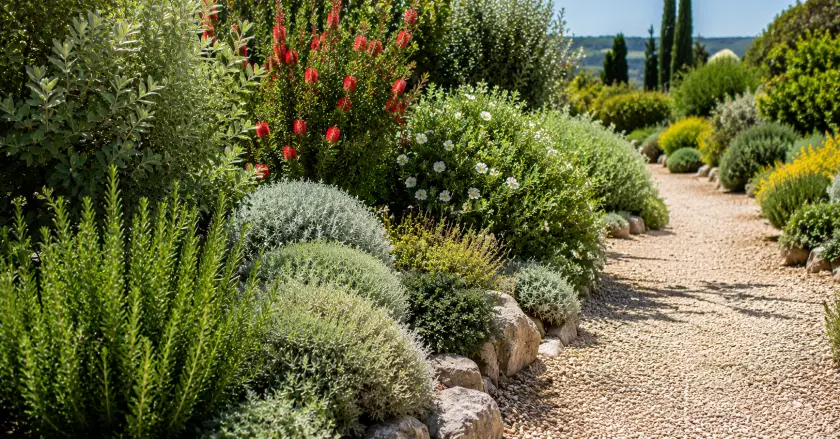
Drought resistant shrubs give structure when flowers are resting. They are also useful for privacy, front gardens, foundation planting, and dry slopes.
Good shrubs that are drought tolerant include rosemary, santolina, artemisia, abelia, elaeagnus, rock rose, bottlebrush, lavender, potentilla, ceanothus, and some viburnum varieties. For evergreen structure, look for drought tolerant evergreen options such as rosemary, juniper, elaeagnus, cistus, pittosporum in mild areas, and dwarf conifers suited to your climate.
Drought tolerant evergreen bushes are especially helpful in front gardens because they do not disappear in winter. Drought tolerant hedges can include rosemary, elaeagnus, lavender hedging, oleaster, juniper, and some native hedging plants depending on region.
Drought Resistant Container Plants
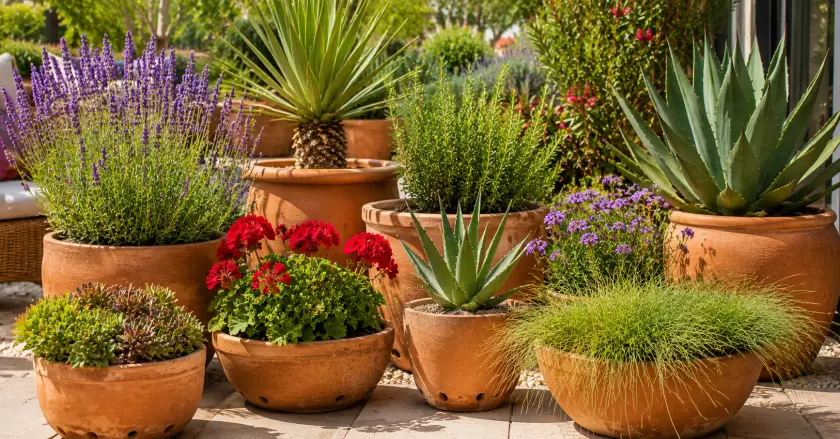
Drought resistant container plants are useful for patios, balconies, courtyards, and small gardens. Containers dry out faster than garden beds, so plant choice matters.
Good options include lavender, rosemary, thyme, sedum, geraniums, verbena, santolina, yucca, aloe, agave, dwarf grasses, helichrysum, and compact salvias. Use large pots where possible because they hold moisture better than tiny balcony pots.
Always use drainage holes. Add pot feet if water collects underneath. If you wonder what to put under plants to catch water, use a saucer only where it will not leave roots sitting wet for hours. Empty saucers after heavy rain. Outdoors, a drip tray can protect surfaces, but standing water can cause root rot.
Water Outdoor Plants the Right Way
To water outdoor plants in a drought-friendly garden, water deeply and less often instead of giving a light sprinkle every day. Deep watering encourages roots to grow downward, where soil stays cooler and moister.
Water early in the morning when possible. Mulch after watering to slow evaporation. Avoid high-nitrogen fertiliser because it encourages soft, leafy growth that needs more water.
If you also water house plants, remember that indoor watering habits do not always transfer outside. Many water house plants need steadier moisture and indirect light, while drought resistant outdoor plants often prefer sun, airflow, and sharper drainage.
Drought Zones and Climate Notes
When choosing plants for zone 6a, plants for zone 6b, plants for zone 8a, or zone 9 plants drought tolerant gardens, always check cold hardiness as well as drought tolerance. A plant may handle heat but fail in winter, or survive cold but dislike dry summer soil.
For plants for zone 6a and plants for zone 6b, consider sedum, yarrow, catmint, coneflower, switchgrass, lavender varieties suited to cold winters, sea holly, and hardy ornamental grasses. For plants for zone 8a, you may have more options, including rosemary, santolina, cistus, salvia, yucca, and many Mediterranean plants.
For zone 9 plants drought tolerant gardens, try lavender, rosemary, agave, aloe, lantana, salvia, bottlebrush, ornamental grasses, bougainvillea in mild areas, and native dry-climate shrubs. Local native plants are often the best long-term choice.
Plants That Absorb Moisture vs Drought Resistant Plants
Some searches ask for a plant that absorbs moisture or plants that absorb moisture. These are usually different from drought resistant plants. Moisture-loving plants are often used in damp soil, rain gardens, bathrooms, or humid indoor spaces.
If you are asking what plants absorb moisture, think about ferns, peace lilies, spider plants, pothos, and other humidity-friendly houseplants. They can help create a fresher indoor feel, but they are not the same as drought resistant plants for hot, dry outdoor beds.
For damp garden areas, choose plants that like moisture. For dry gardens, choose drought resistant plants. Mixing the two in one bed usually creates watering problems.
Plants That Can Grow in Water
Some plants that can grow in water are excellent indoors, but they do not belong in dry, drought-resistant borders. If you are asking what plants can be grown in water or what plants can you grow in water, good choices include pothos, philodendron, lucky bamboo, monstera cuttings, spider plant babies, mint, basil, and tradescantia.
The best plants to propagate in water are often houseplants or soft herbs. Plant cuttings in water can root well if the node sits below the waterline and the water is changed regularly. Common plants to propagate in water include pothos, philodendron, monstera, mint, basil, coleus, and spider plant offsets.
So, what plants can be propagated in water? Many indoor plants can. But drought resistant plants such as lavender, rosemary, sedum, and salvia usually prefer propagation in gritty compost, cuttings mix, or well-drained soil rather than standing water.
Cheap Drought Tolerant Landscaping Ideas
Cheap drought tolerant landscaping starts with fewer plant types and better repetition. Use gravel, mulch, cuttings, divisions, and small starter plants rather than buying mature specimens.
Choose drought resistant plants that spread gently or return each year. Yarrow, catmint, sedum, ornamental grasses, lavender, rosemary, and salvia can cover space without needing constant replanting.
Use mulch to reduce weeds and moisture loss. Group plants by water need. Add drought resistant shrubs first, then fill gaps with drought resistant flowers and grasses. A simple gravel path, repeated lavender, and a few grasses can look more polished than a crowded bed of thirsty annuals.
Common Mistakes to Avoid
- Assuming drought resistant means no watering: New plants still need water while roots establish.
- Planting in soggy soil: Many drought resistant plants hate wet roots and can rot quickly.
- Using tiny containers: Small pots dry out fast and stress roots during heatwaves.
- Overfeeding: High-nitrogen fertiliser creates soft growth that needs more water.
- Mixing thirsty plants with dry-garden plants: One group will always be unhappy.
- Forgetting local climate: Zone, rainfall, soil, wind, and winter cold all matter.
Expert Tips from Sawera Shahid
Start with the soil before buying plants. If the soil is compacted, water will run off instead of soaking in. If the soil is too heavy, drought-tolerant plants may rot in winter. A low-water garden needs drainage and root space.
Buy smaller plants when possible. Small plants often establish better because their roots adapt to your garden from the beginning. Mature plants can struggle if they were raised in very different conditions.
Think in layers. Use drought resistant shrubs for structure, drought resistant flowers for colour, grasses for movement, and mulch to protect the whole bed. That is the fastest way to make a dry garden look intentional.
Future Trends
Waterwise gardening will keep growing because gardeners want resilient outdoor spaces that can handle heat, restrictions, travel, and unpredictable weather. Drought resistant plants are no longer only for desert gardens. They now belong in city patios, front gardens, balconies, and family yards.
Expect more interest in native dry-climate plants, gravel gardens, drought resistant container plants, drought tolerant evergreen bushes, low-water hedges, and plant combinations that support pollinators while reducing water use.
Frequently Asked Questions
What is drought resistant plants?
Drought resistant plants are plants that can tolerate dry conditions once established. They may have deep roots, silver leaves, waxy foliage, fine hairs, succulent leaves, or narrow leaves that reduce water loss.
What are the best drought resistant flowers?
The best drought resistant flowers include lavender, salvia, yarrow, verbena, California poppy, gazania, sea holly, coneflower, calendula, and sedum. Choose full-sun varieties for hot, dry beds.
What are good drought resistant shrubs?
Good drought resistant shrubs include rosemary, lavender, santolina, artemisia, abelia, elaeagnus, bottlebrush, cistus, potentilla, and some drought tolerant evergreen bushes.
Can plants drown?
Yes. Can plants drown is a common question, and the answer is yes when roots sit in waterlogged soil for too long. Roots need oxygen, so even drought resistant plants can die in soggy compost.
What plants can be propagated in water?
What plants can be propagated in water usually includes pothos, philodendron, monstera, spider plant babies, mint, basil, coleus, and tradescantia. These are different from most drought resistant outdoor plants.
What are good shrubs for full sun drought tolerant gardens?
Good shrubs for full sun drought tolerant gardens include rosemary, lavender, santolina, cistus, elaeagnus, bottlebrush, potentilla, ceanothus, and artemisia in suitable climates.
Related Guides
- PATCH Plants homepage
- PATCH Plants blog
- Outdoor Plants hub
- Plant Care hub
- Indoor Plants hub
- Low-maintenance outdoor plants
- Hardy plants that survive minimal watering
- Outdoor plants for storms and heatwaves
- Year-round balcony plants
- Container gardening on patios
- Best plants for small outdoor spaces
- 15 hardy outdoor plants
- Outdoor plants that survive British winters
- Coastal and windy outdoor plants
- Keep pests away from outdoor plants
- Plants that bloom at night
- Pollinator-friendly outdoor plants
- Wildlife-friendly garden guide
- Shade-loving outdoor plants
- Colorful garden for all seasons
- Easiest outdoor edible plants
- Plants that keep bugs away
- Mosquito repellent plants
- Native plants that thrive in your region
- Complete watering guide
- Worst times to water plants
- Signs you are overwatering
- Root rot guide
- How to revive a dying plant
- Leaf curl, browning, and droop
- Why plant leaves turn yellow
- How to clean plant leaves
- Fertilizing indoor vs outdoor plants
- Best soil mix for every plant
- Repotting mistakes to avoid
- How to repot a plant
- Self-watering pots guide
- DIY humidity tray
- Humidity hacks for plants
- Dog-friendly plants
- Cat-friendly plants
- Air-purifying indoor plants
- 35 low-maintenance plants
- Best indoor plants for beginners
- First-time plant parent plants
- Best indoor plants for tiny apartments
- Bedroom plants for style and calm
- How to style indoor plants by room
- Indoor plant room dividers
- Indoor jungle guide
- Trailing plants for shelves
- Low-light hanging plants
- Indoor plants that smell amazing
- Colorful foliage plants
- Rare houseplants worth hunting
- Blooming indoor plants
- Best office plants
- Office plants for fluorescent lighting
- Oversized indoor plants
- Indoor light guide
- Indoor gardening systems
- Should you talk to your plants?
- Snake plant care guide
- Peace lily care guide
- Christmas cactus care guide
- Money tree care guide
- Best bathroom plants
- Succulent care guide
- Cactus care guide
- Boston fern care guide
- Bird of paradise care
- Pothos care guide
- Philodendron care guide
- Monstera care guide
- Hoya care guide
- Orchid care guide
- Rubber plant care guide
- Fiddle leaf fig care guide
- Spider plant care guide
- ZZ plant care guide
- Jade plant care guide
- Dracaena care guide
- Anthurium care guide
- African violet care guide
- String of pearls care
Final Thoughts
Drought resistant plants make gardening more practical, especially when summers are hot, schedules are busy, and water needs to be used carefully. With the right mix of drought resistant flowers, drought resistant shrubs, grasses, herbs, succulents, and drought resistant container plants, a low-water garden can still feel full and beautiful.
The Royal Horticultural Society explains that, with soil conditioning and careful watering, a wide range of plants can tolerate dry conditions once established. Read the full advice here: Royal Horticultural Society drought-resistant plants advice.
Start small. Choose a few reliable plants, mulch well, water deeply while roots establish, and group plants by moisture needs. That is the heart of waterwise gardening: less waste, less stress, and a garden that keeps going when the weather turns dry.
Article Summary
The best drought resistant plants are plants that handle dry soil and reduced watering once established. Strong choices include lavender, rosemary, salvia, yarrow, sedum, catmint, sea holly, santolina, artemisia, ornamental grasses, yucca, aloe, and agave. Good drought resistant flowers add colour without daily watering, while drought resistant shrubs and drought tolerant evergreen bushes provide structure. For patios and balconies, choose drought resistant container plants in large pots with excellent drainage. Waterwise gardening works best when you improve soil, mulch, water deeply, group plants by water needs, and avoid mixing thirsty plants with low-water plants. Some plants can grow in water or be propagated in water, but those are usually different from dry-garden plants, which prefer free-draining soil rather than wet roots.