Are you noticing tiny, dark fungus gnats hovering around your favorite greenery? These common houseplant pests often appear when potting soil stays damp too long. While mostly a nuisance, a persistent fungus gnat infestation can frustrate anyone new to indoor plant care.
The good news is that you can reclaim your home with a few simple steps. Effective control combines moisture management, yellow sticky traps for adults, and treatments for soil-dwelling larvae. If these visitors persist, check your signs you are overwatering and how to water the right to prevent future issues.
We will guide you through identifying these insects and creating a clear removal plan. We will cover everything from root-care advice to long-term prevention tips to keep your collection healthy and thriving.
Key Takeaways
- Identify the pests by looking for small, dark flies near the soil surface.
- Reduce moisture levels, as damp soil is the primary breeding ground for these insects.
- Use yellow sticky traps to capture adult flies and break their reproductive cycle.
- Treat the soil to eliminate larvae, which cause the most damage to plant roots.
- Improve your watering habits to ensure your plants stay healthy and pest-free.
Quick Answer: How to Get Rid of Fungus Gnats in Houseplants
A fungus gnat infestation needs two steps: target flying adults and hidden larvae. Combine physical traps, biological treatments, and better plant care to manage these pests.
Dry the soil surface before watering again
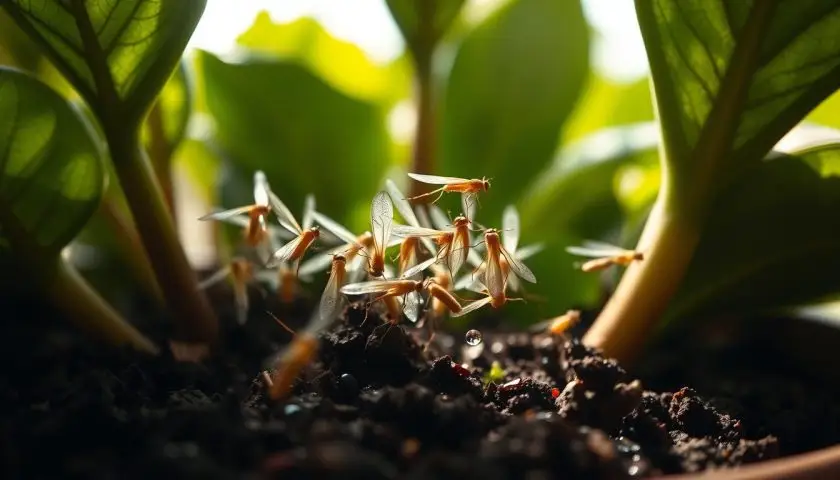
The most important recovery step is moisture control. Fungus gnats thrive in wet soil, so let the top inch or two of potting mix dry completely between waterings. This disrupts their life cycle.
Use yellow sticky traps to catch adult fungus gnats
While the soil dries, place yellow sticky traps near your plant bases. These traps catch adult flies and stop them from laying more eggs in your pots.
Treat potting soil larvae with Bacillus thuringiensis israelensis
To solve the problem, target the potting soil larvae beneath the surface. Use a product containing Bacillus thuringiensis israelensis, often called Bti. It is the safest, most reliable way to kill these immature pests without harming your plants.
Repeat treatment and correct the moisture problem
One application rarely solves the problem. Follow these steps consistently:
- Continue using sticky traps to monitor adult activity.
- Apply Bti treatments according to the label instructions for several weeks.
- Maintain consistent moisture control to keep the soil environment inhospitable for new eggs.
Safety note for pets, children, and edible plants
Always read the product label carefully before applying any treatment. Keep all traps and solutions away from children and pets for a safe home. If treating herbs or vegetables, verify that the specific Bacillus thuringiensis israelensis product is approved for use on edible plants.
Key Takeaways About Fungus Gnats
A healthy plant collection depends on managing its environment, not just removing bugs. Understanding how these pests affect greenery helps you reclaim your indoor garden.
Why moisture control is the foundation of control
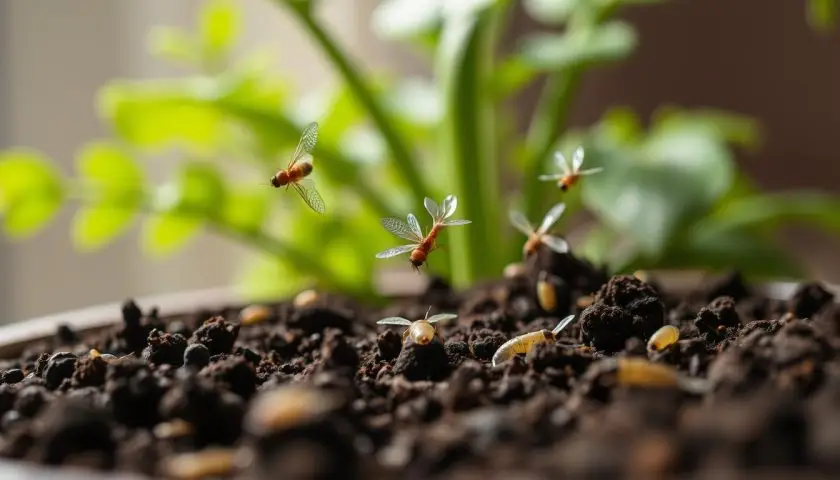
The best way to stop fungus gnats is through moisture control. These pests thrive in damp, soggy potting mix, which gives their eggs a perfect nursery.
Let the soil’s top layer dry between waterings to make the environment less inviting. This change disrupts reproduction and helps keep your plants healthy.
How adult flies differ from soil-dwelling larvae
The tiny flies you see are only one part of the fungus gnat life cycle. Adults are annoying, but they do not feed on plants.
The real trouble comes from soil-dwelling larvae beneath the surface. These worm-like creatures eat organic matter and may nibble delicate root hairs when other food runs out.
Why one treatment rarely eliminates an infestation
Because these insects have different life stages, one treatment rarely solves the problem. You may have eggs, larvae, and adults at the same time.
- Adults lay new eggs daily in moist soil.
- Larvae remain protected deep within the potting mix.
- New generations emerge continuously until the cycle is broken.
When houseplant root damage requires faster action
These pests are usually a nuisance, but they can signal a deeper issue. Wilting, yellowing, or stunted growth may point to significant houseplant root damage.
Stressed or decaying roots can suffer more harm from the larvae. Act quickly: inspect the root ball, then give your plant fresh, clean soil for recovery.
How to Identify Fungus Gnats and Rule Out Other Houseplant Pests
Not every small fly in your home is a pest, so learning the difference matters. Before treatment, make sure you are dealing with fungus gnats. Misidentifying these insects can waste time and stress your plants.
Recognizing adult Sciaridae flies
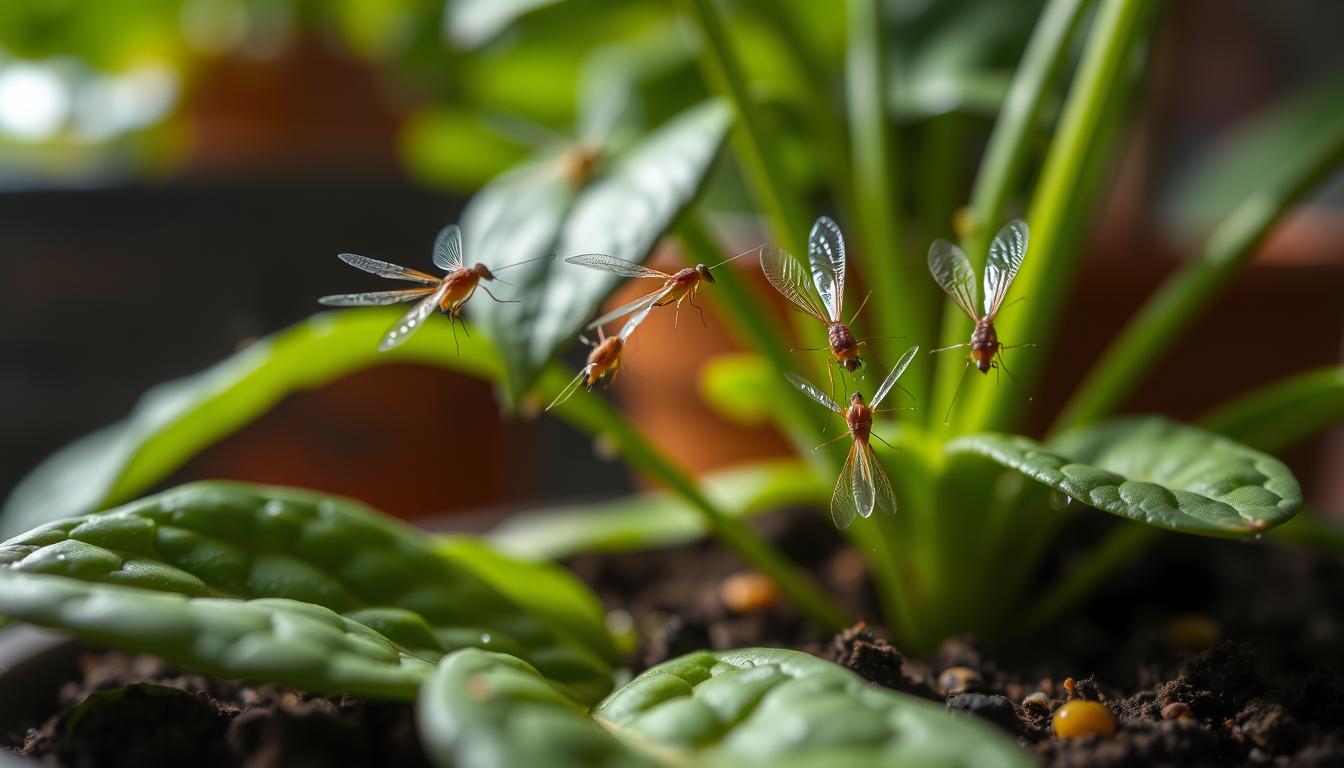
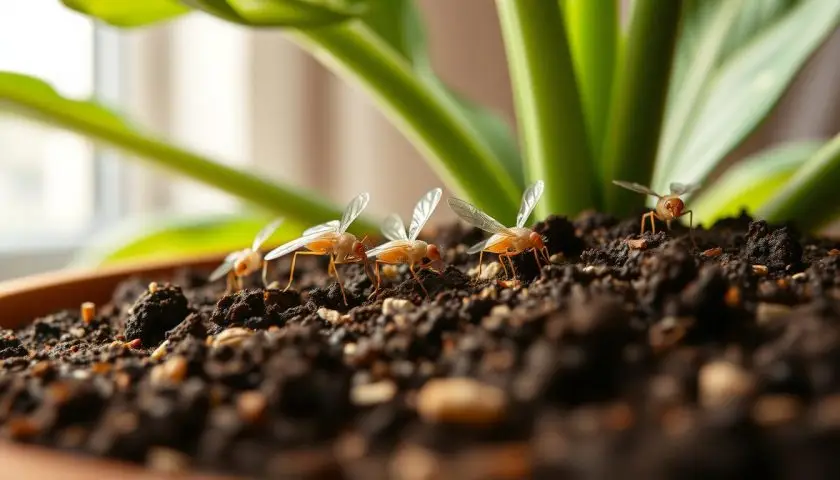
Adult Sciaridae flies are tiny, dark insects that resemble mosquitoes. They often fly in short, jerky patterns near your houseplant soil. These weak fliers rest on potting mix or nearby leaves when they are not flying.
Finding potting soil larvae and their feeding areas
The real trouble happens beneath the surface. Gently scrape the topsoil to find potting soil larvae. These translucent larvae have black heads and thrive in moist, organic-rich soil.
They mainly eat decaying matter and fungi, but they may chew tender roots when food runs low. Place yellow sticky traps near the plant base to help confirm an infestation.
Distinguishing fungus gnats from fruit flies, drain flies, and shore flies
These pests are easy to confuse with other household insects. Fruit flies usually gather around ripening produce, while drain flies emerge from pipes and floor drains. Shore flies resemble gnats but often live near algae or very wet areas.
Comparison table: appearance, habitat, and behavior of common small flies
| Pest Type | Primary Habitat | Behavior |
|---|---|---|
| Fungus Gnats | Potting soil | Hovers near soil |
| Fruit Flies | Rotting fruit | Swarming food |
| Drain Flies | Sink drains | Resting on walls |
| Shore Flies | Algae/Wet soil | Stronger fliers |
Signs that plants may have fungus gnat-related root stress
When larvae feed on roots, your plant may show distress that resembles other common problems. You might notice yellow leaves on plants or a sudden lack of vigor. This houseplant root damage often resembles overwatering, making accurate diagnosis important.
If your plant looks tired despite proper watering, check the soil for larvae. Treating houseplant root damage early helps your plant recover after the pest population is controlled.
Why Fungus Gnats Keep Appearing in Indoor Plants
Many plant owners face recurring infestations because they miss hidden conditions inside their homes. If fungus gnats keep returning, their environment may still support the insects’ life cycle. Long-term prevention works better than searching for one quick fix.
How consistently damp potting mix supports eggs and larvae
The main cause of a lasting problem is a damp potting mix that never fully dries. Fungus gnats thrive in moist soil and lay eggs in its top layer. When the surface stays wet, larvae hatch safely and feed on organic material.
If containers hold water for too long, their soil attracts these insects. Improve moisture control by letting the top inch or two dry between waterings.
Where fungus gnats enter the home
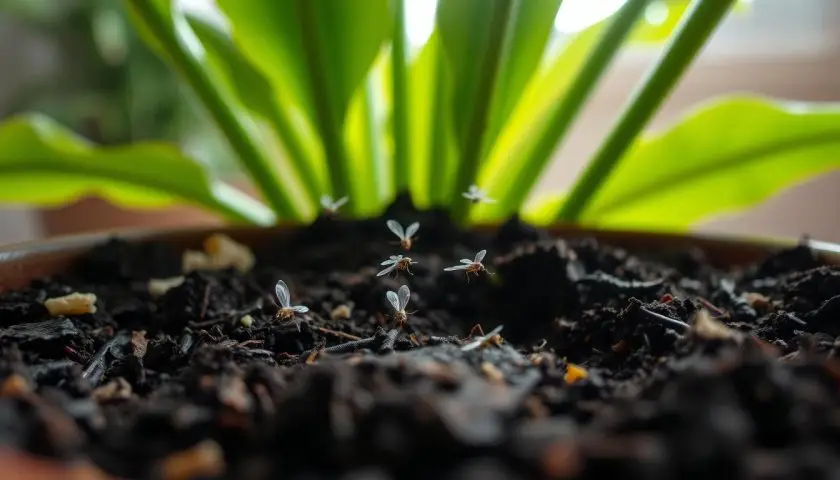
You may wonder how these pests enter your home. They often arrive on new plants from the nursery. They may also hide in potting soil stored outdoors in damp conditions.
- Check new plants for adult flies before placing them near your collection.
- Store your potting soil in sealed, airtight containers to prevent contamination.
- Keep your indoor growing areas clean to avoid attracting pests from other rooms.
How organic matter, peat, and decaying roots attract larvae
Larvae feed on nutrients found in the soil. Potting mixes with organic matter and peat moss attract larvae because they hold moisture and provide food. Overwatering can cause decaying roots, creating an ideal food source for larvae.
Why drainage, humidity, and container size affect infestation levels
Your pot and its surroundings affect how easily these pests establish themselves. Poor drainage prevents excess water from leaving the root zone. High indoor humidity slows evaporation, keeping soil wet longer.
A pot that is too large can also cause problems. It holds more soil, which takes longer to dry and creates a moisture trap. Choose the right pot size and provide good airflow for a healthier balance.
Inspecting new plants and unopened potting soil before bringing them indoors
Prevention starts before you place a plant on your shelf. Inspect the foliage and soil surface of every new plant. If tiny flies buzz around the pot, isolate the plant until you know it is clean.
Also inspect soil bags for moisture or tears. These problems may have allowed pests to enter.
Step-by-Step Plan to Eliminate Fungus Gnats
A swarm of tiny flies around your plants can feel overwhelming, but a clear plan helps. A structured approach stops reproduction and protects your greenery from added stress.
Step 1: Isolate affected houseplants
Move infested plants away from healthy plants
The first priority is plant isolation to stop pests from reaching other plants. Move plants showing activity to another room or area.
Check nearby pots, saucers, shelves, and propagation containers
Adult flies often gather in damp areas, so inspect your entire collection. Even bathroom plants can harbor these pests when the environment stays humid.
Step 2: Confirm the infestation with sticky traps and soil inspection
Place traps at soil level without covering leaves
Using yellow sticky traps is the most effective way to monitor adult activity. Place them near the plant’s base, where flies are most active.
Examine the upper layer of potting mix for larvae
Gently scrape the top inch of soil to find tiny, translucent potting soil larvae. These creatures thrive in organic matter and cause the main root damage.
Step 3: Let the soil surface dry appropriately
Adjust watering according to plant type, pot size, and indoor conditions
Effective moisture control is your best defense against future generations. Let the top two inches of soil dry completely before watering again.
Prevent drought stress in moisture-sensitive plants
Drying the soil is crucial, but consider your plant’s specific needs. Moisture-loving species need excellent drainage to prevent standing water in the saucer.
Step 4: Treat the larvae in the potting mix
Apply Bacillus thuringiensis israelensis according to the product label
To target the next generation, use Bacillus thuringiensis israelensis, a safe and effective biological control. Follow the manufacturer’s instructions for dosage and frequency.
Consider beneficial nematode biocontrol for persistent infestations
If the problem continues, nematode biocontrol can eliminate larvae naturally. These microscopic organisms hunt pests in soil without harming plants or pets.
Step 5: Continue monitoring through multiple life cycles
Replace filled yellow sticky traps
Watch your traps closely and replace them when flies cover them. This helps you track whether the population decreases over time.
Repeat larval treatment as directed rather than treating only adult flies
Because eggs hatch in waves, one treatment rarely stops fungus gnats. Continue your chosen treatment for at least three to four weeks to catch every life cycle stage.
Fungus Gnats Treatment Options Compared
Many treatments can control fungus gnats, but choosing one does not need to feel difficult. Because these pests have several life stages, combining tools often works best. Learn how each method works to protect plants and prevent root rot caused by excess moisture or larval damage.
Yellow sticky traps for adult fungus gnats
These bright cards monitor and reduce flying adults. They do not kill larvae in soil, but they provide a clear visual indicator of pest numbers. Place them near the soil surface to catch flies as they emerge.
Bacillus thuringiensis israelensis for larvae
Often sold as mosquito bits or dunks, Bacillus thuringiensis israelensis is a natural bacterium that targets larvae. Apply it to the soil during watering for strong results. It is safe for most houseplants and does not harm plant roots.
Beneficial nematodes as a biological control
Using nematode biocontrol adds microscopic worms to potting mix. They hunt and consume larvae, making this a good choice for large collections or severe infestations. These living organisms need specific soil moisture levels to survive and work properly.
Hydrogen peroxide soil drench: limitations and precautions
A hydrogen peroxide soil drench can kill larvae on contact, but it is not a long-term solution. Use it carefully because repeated treatments or high concentrations can damage delicate root hairs. Always dilute it properly, and do not use it as your main ongoing treatment.
Repotting and physical removal of infested soil
For heavy infestations, removing infested soil may work best. Gently wash the roots and move the plant into fresh, sterile potting mix to remove most eggs and larvae. Then inspect the root system for signs of decay.
Top-dressing and barriers that reduce egg-laying access
Adding sand, decorative gravel, or specialized horticultural grit creates a top-dressing that blocks egg-laying access. This simple, non-toxic barrier helps break the life cycle. Make the layer thick enough to cover every exposed soil surface.
Comparison table: speed, target life stage, benefits, and limitations
| Method | Target Stage | Speed | Key Benefit |
|---|---|---|---|
| Yellow sticky traps | Adults | Fast | Monitoring and reduction |
| Bti | Larvae | Moderate | Safe and targeted |
| Nematodes | Larvae | Moderate | Natural biological control |
| Repotting | All stages | Immediate | Removes source of pests |
How to Use Moisture Control Without Harming Your Plants
Healthy indoor plants need careful hydration, especially when preventing fungus gnats. Rather than follow a fixed calendar, meet each plant’s needs.
Check soil moisture below the surface before watering
The topsoil often dries quickly, but roots may still sit in damp soil. Check the soil moisture by pushing your finger two inches into the pot.
If the soil feels damp at that depth, wait a few more days. This habit prevents soggy conditions that attract pests.
Improve drainage with suitable containers and drainage holes
Proper drainage holes help keep every plant healthy. Without them, water collects below the pot and creates a breeding ground for larvae.
If unsure, learn more about the best soil mix for every type of plant to support healthy root growth.
Empty saucers and cachepots after watering
Standing water in saucers or decorative cachepots often causes infestations. Empty these containers within 30 minutes of plant watering to keep roots aerated.
Letting a plant sit in a puddle undoes your hard work. Keeping the area around the pot dry supports good moisture control.
Use bottom watering carefully and avoid leaving pots submerged
Bottom watering hydrates roots without wetting the surface, but it requires careful timing. Place your pot in a water tray for about 15 to 20 minutes, then remove it.
Never leave the pot submerged for hours. This lets the soil absorb enough moisture without becoming waterlogged.
Match drying intervals to plant needs rather than following a fixed schedule
Every plant needs a different amount of water, so do not treat them alike. Watch how quickly each plant dries to create a custom routine.
Plants that tolerate drying between waterings
Succulents, snake plants, and ZZ plants prefer soil that almost completely dries. These varieties resist fungus gnats because they spend more time in dry soil.
Plants that need more consistently moist soil
Ferns and peace lilies prefer more hydration. Give them excellent airflow, and never let them sit in standing water.
Protecting Houseplant Roots During an Infestation
When tiny flies buzz around, focus first on the root system beneath the soil. Adult flies are mostly a nuisance, but the potting soil larvae can feed on delicate root hairs. This is more likely in young or stressed plants.
How fungus gnat larvae can stress young or damaged roots
Healthy, mature plants often tolerate a few larvae without major distress. If your plant already struggles, these pests can cause significant houseplant root damage by creating entry points for pathogens. This stress weakens the plant’s ability to absorb water and nutrients.
Signs of root damage versus overwatering and root rot
It is easy to confuse pest damage with common problems like root rot. Both problems often result from soil that stays wet too long. Watch for yellow leaves, stunted growth, or wilting while the soil remains damp.
| Symptom | Fungus Gnats | Root Rot |
|---|---|---|
| Leaf Color | Yellowing or pale | Dark brown or mushy |
| Soil Smell | Musty or earthy | Sour or rotten |
| Root Texture | Thin and brittle | Slimy and black |
When to inspect the root ball and remove deteriorated roots
You do not need to repot every plant after seeing a few flies. Inspect the root ball only when the plant declines or the soil has fully broken down. Gently slide the plant from its pot and trim mushy, dark, or foul-smelling roots.
How to repot an affected plant into clean potting mix
If you find major damage, move the plant into clean potting mix to reset its growing environment. Shake away as much old, infested soil as possible without tearing healthy roots. This gives the plant a fresh medium without eggs or larvae.
Disinfecting containers, tools, and growing surfaces
Wash pots with hot, soapy water before reusing them, so no pests remain. Wipe your workspace and sanitize pruning shears with rubbing alcohol. This simple step keeps fungus gnats from returning to fresh soil right away.
Reducing transplant shock after repotting
Repotting can stress any plant, so handle it carefully to reduce transplant shock. Keep the plant in bright, indirect light and avoid fertilizer for a few weeks. Gentle, consistent watering helps the roots settle and recover.
Common Mistakes That Make Fungus Gnats Worse
Some popular home remedies may make a fungus gnat problem worse. Good intentions can create conditions that help these pests thrive. Change your approach to stop the cycle and protect your plants.
Using sticky traps without treating the larvae
Many people rely only on yellow sticky traps to solve pest problems. These traps monitor and catch adult flies, but they do not affect eggs or larvae in soil. Ignoring the next generation lets the population grow.
Watering on a calendar instead of checking soil moisture
A fixed watering schedule can keep potting mix damp. Fungus gnats prefer wet conditions, so check soil moisture before watering. Let the top inch dry to the touch to discourage egg-laying.
Applying hydrogen peroxide repeatedly or at excessive strength
A hydrogen peroxide soil drench can help, but use it carefully. Too much solution or frequent use can damage delicate root hairs. Use a mild dilution only when needed to avoid plant stress.
Using household insecticides not labeled for indoor plants
You may reach for any spray under the kitchen sink, but that choice can be dangerous. Many household products harm indoor foliage or pets. Choose indoor plant insecticides labeled for houseplants.
Repotting every plant unnecessarily
Replacing all soil may seem proactive, but repotting every plant can cause transplant shock. Healthy roots need recovery time, and needless disturbance can weaken plants. Use targeted treatments unless the infestation is severe.
Ignoring newly purchased plants and stored potting soil
Pests often enter homes on new plants or contaminated supplies. Quarantine new plants for a few weeks to check for pests. Keep your stored potting soil in a sealed, dry container to prevent gnats from laying eggs.
| Common Mistake | Why It Fails | Better Alternative |
|---|---|---|
| Calendar Watering | Keeps soil too wet | Check soil moisture first |
| Sticky Traps Only | Ignores soil larvae | Combine with biological controls |
| Strong Peroxide | Burns plant roots | Use mild, diluted solutions |
| Generic Sprays | Risk of plant toxicity | Use labeled indoor insecticides |
How to Prevent Future Fungus Gnat Infestations
After clearing your plants, focus on keeping them healthy and pest-free over time. Proactive care helps your indoor garden thrive without constant concern about returning pests.
Quarantine and inspect new houseplants
Each new plant may carry pests. Practice strict houseplant quarantine by keeping new additions in a separate room for at least two weeks. During quarantine, inspect soil and leaves for movement or damage.
Store potting soil in a sealed, dry container
Many infestations begin in soil bags stored in closets. Good potting soil storage means sealing bags tightly in a cool, dry place. This keeps adult flies from laying eggs in the mix before use.
Remove dead leaves and decaying organic matter
Fungus gnats feed on decomposing plant material on the soil surface. Remove fallen leaves and spent blooms often to take away their main food source. Clean soil surfaces make plants less attractive to adults laying eggs.
Maintain airflow and appropriate indoor humidity
Stagnant air and high indoor humidity create ideal breeding conditions for pests. Better airflow helps soil surfaces dry faster between waterings. Use a small fan or space plants apart for better circulation.
Keep monitoring traps in high-risk areas
Even without visible flies, yellow sticky traps help detect pests early. Place them near plants that stay damp longest, where new colonies are most likely to start. A sudden rise in trapped flies lets you act before the problem becomes a full infestation.
Prevention checklist for seasonal watering changes
Seasonal changes affect how much water your plants need. Use this guide to adjust your moisture control habits throughout the year.
| Season | Watering Habit | Action Required |
|---|---|---|
| Winter | Reduced | Check soil depth before adding water |
| Spring/Summer | Increased | Ensure drainage holes are clear |
| Autumn | Transition | Slowly decrease frequency |
These simple steps can keep fungus gnats away for good. Consistent care supports a healthy, happy indoor garden.
When to Seek Additional Help for a Houseplant Pest Problem
Knowing when to seek professional advice shows that you care deeply for your plants. Most problems can be managed at home, but expert help can prevent further stress.
Situations that justify professional plant-care advice
Contact a local nursery or plant specialist if your efforts keep failing. If several methods, including nematode biocontrol or soil drenches, have not lowered the population, expert guidance may reveal a new solution.
Seek help sooner when valuable houseplants struggle to recover. A quick consultation may save a rare plant with important sentimental or financial value.
When repeated treatment does not reduce adult flies
If repeated treatment cycles still leave adult flies, the infestation may be deeper than expected. A lasting colony may mean larvae live in hidden organic matter, or excess moisture supports them.
When you feel stuck, review your care routine. If flies keep appearing, a professional can find the source you may have missed.
How to reassess the diagnosis if traps remain empty
The problem may not be what you think. Empty sticky traps with flying insects may mean you misidentified the pest as fungus gnats.
Reassessing your pest diagnosis is a smart step. Place traps near the soil surface, where these insects are most active. If traps stay empty, your strategy may target the wrong pest.
When severe root damage threatens valuable or rare plants
Watch for houseplant root damage, including wilting in moist soil or yellow leaves. Act quickly because larvae may cause a weak plant to collapse.
You may need to follow a detailed rescue plan to save the root system. If damage looks severe, seek help before the plant reaches a point of no return.
What information to record before asking for help
Bring clear details to get the best advice. Before speaking with an expert, record the following information:
- The specific type of plant and how long you have owned it.
- Your typical watering history and the current state of the soil.
- A list of all products or methods used for repeated treatment.
- Clear photos of the insects and any visible houseplant root damage.
| Scenario | Action to Take | When to Seek Help |
|---|---|---|
| Occasional flies | Dry soil and traps | Not needed |
| Persistent infestation | Review moisture habits | After 3 failed cycles |
| Root decline | Inspect root ball | Immediate expert advice |
| Empty traps | Re-identify pest | If flies persist |
Conclusion
Managing indoor plants gets easier when you understand these pests’ life cycle. You can reclaim your space through steady moisture control and regular monitoring. Healthy soil remains your best defense against future problems.
You can stop fungus gnats by targeting flying adults and soil-dwelling larvae. Yellow sticky traps track population levels and catch active adults. Bacillus thuringiensis israelensis offers a safe way to eliminate larvae without harsh chemicals.
Watch your plants closely for early signs of houseplant root damage. Checking soil moisture before watering makes a massive difference in plant health. Isolate new arrivals to keep your collection safe and thriving.
You are ready to maintain a pest-free home. Trust your instincts, and keep your routine simple. Your plants will reward your care with steady growth and vibrant leaves.