Knowing how to prune a fig tree is mostly about knowing where the fruit comes from. Figs grow into large, leafy shrubs unless they are cut back regularly, but careless cuts can remove the very shoots that carry next season’s crop. The simple approach is to cut out dead, damaged and crowded wood, remove suckers, keep the compact fruiting shoots, and avoid heavy cuts in any one year.
I am Sawera Shahid, a botanist at Patch Plants. This guide explains when to prune, what tools and safety steps to use, a step-by-step method, how to shape a bush, fan or container fig, how to renovate an overgrown tree, and how to prevent fig rust afterwards. For general growing advice, see our fig tree care guide.
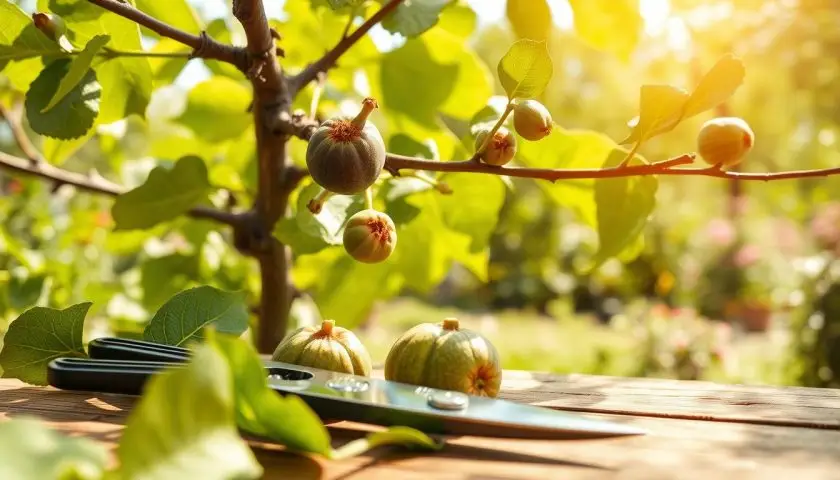
How to Prune a Fig Tree: Quick Guide
The advice below comes from the Royal Horticultural Society (RHS), Oregon State University Extension, the University of California (UC) Master Gardeners and the University of Maryland Extension. Climates differ, so check which source matches your region.
| Task | When | Notes |
|---|---|---|
| Main pruning | Spring after the last hard frost (RHS), January to February (Oregon State), March to April (Maryland) | Match to your climate; avoid pruning in a hard freeze |
| Remove suckers | During spring pruning | Cut them off at the base |
| Summer tidy | Early summer | Pinch shoot tips after five to six leaves, then stop by mid-summer |
| Remove unripe figs | Mid-autumn | Leave the tiny embryo figs at shoot tips |
| Renovation | Spread over several years | Never take most of the tree at once |
How to Prune a Fig Tree: When to Cut
There is no single date, because fig advice varies with climate. The RHS says to do the major pruning in spring after frosts have passed, around April in the southern UK or May further north, and to revisit in early summer for thinning. Oregon State University Extension recommends pruning in January or February. The University of Maryland Extension recommends March or April, and UC Master Gardeners say to prune during winter dormancy. If your winters are cold enough to injure wood, wait until the worst of the frost has passed so you can see what has survived.
Be careful with summer cuts. UC Master Gardeners warn that figs secrete an irritating sap if pruned in summer, so keep summer work to pinching and light tidying. The RHS also says to remove larger figs that did not ripen in mid-autumn, because they will not ripen and can fail the following year.
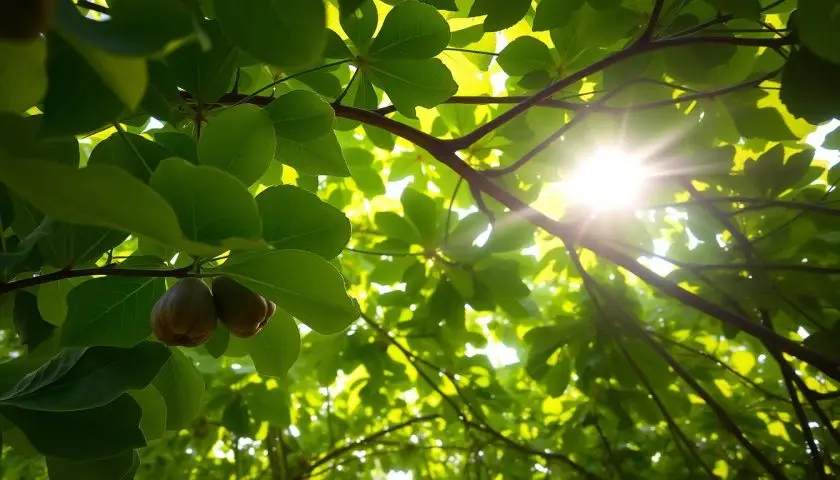
Tools and Safety: How to Prune a Fig Tree Safely
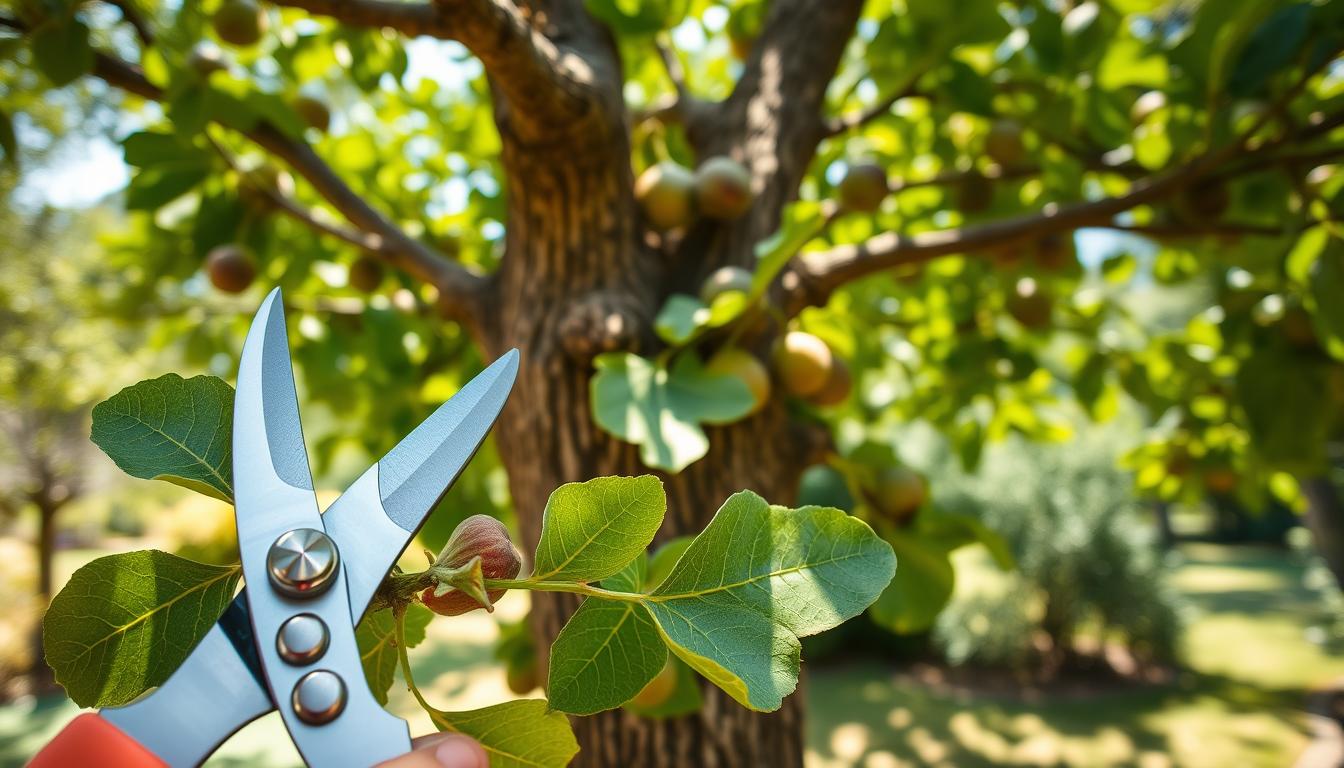
The RHS suggests secateurs for most cuts, and a pruning saw for thicker branches because it makes a cleaner cut than loppers. Keep blades sharp so cuts are clean. Fig sap is an irritant, so the RHS advises wearing gloves and long sleeves, and wearing a hat if the plant is taller than you. If the plant is tall, start at the bottom and work upward so sap does not drip on you.
Make cuts in dry weather. Penn State Extension advises pruning at the branch collar in dry weather when dealing with diseased wood, and disposing of the diseased parts rather than leaving them under the tree.
Fruiting Wood: What to Keep When You Prune a Fig Tree
Understand where figs form before you cut. The RHS explains that tiny embryo figs form at shoot tips in late summer and overwinter. These are the figs that ripen the next year outdoors, so keep plenty of the smaller, compact shoots that carry them. UC Master Gardeners and the University of Maryland Extension add that some trees also give an early breba crop on last year’s wood, with the main crop forming on the current season’s wood.
- Keep: compact shoots with tiny figs at the tips.
- Be cautious with: heavy shortening of new growth. The RHS says it removes next year’s fruit.
- Retain a share of one-year wood: Oregon State Extension advises keeping about one-third to one-half of the one-year growth, which is green and smooth, as opposed to older grey wood.
If your tree produces a breba crop, UC Master Gardeners advise avoiding heavy winter pruning and pruning lightly right after the main crop is harvested.
Step-by-Step: How to Prune a Fig Tree
- Look at the whole tree first. Find the main stems, spot where tiny figs are forming, and decide your goal: size, light or tidiness.
- Remove dead and damaged wood. In spring, Oregon State Extension says to prune out tips that are black and dead early to stimulate new growth. The University of Maryland Extension suggests shaving the bark lightly: green tissue underneath means the stem survived.
- Remove suckers. The RHS says to remove suckers from the base, since they draw energy from the plant, and to cut them off at the base. The University of Maryland Extension also lists root suckers among the things to remove in spring.
- Open the centre. For a container plant, the RHS says to thin the centre so the bush stays open like a bowl. Oregon State Extension says to remove some older interior wood to improve light and airflow.
- Shorten selectively. The RHS says to cut last year’s young shoots by about a third in spring, leaving stubs of about 2.5cm (1in), preferring to remove lanky shoots that lack tiny fruitlets.
- Pinch in early summer. The RHS says to pinch out shoot tips once they have five to six leaves, and to stop by mid-summer.
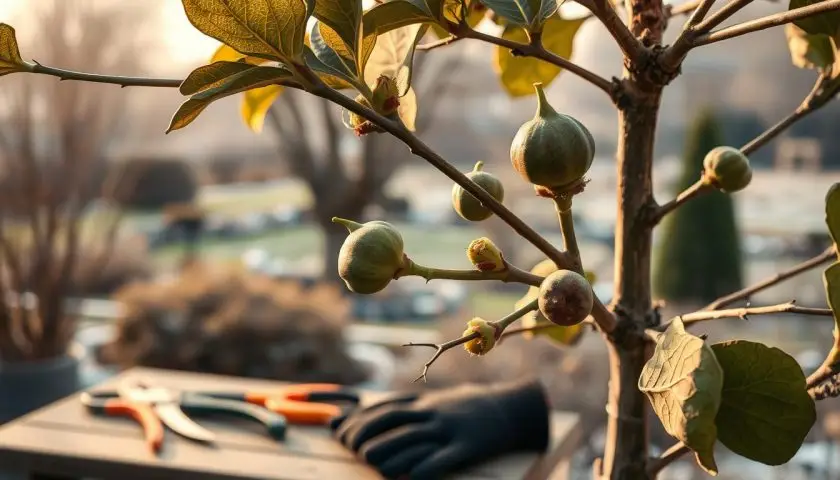
How to Prune a Fig Tree Into a Bush, Fan or Container Shape
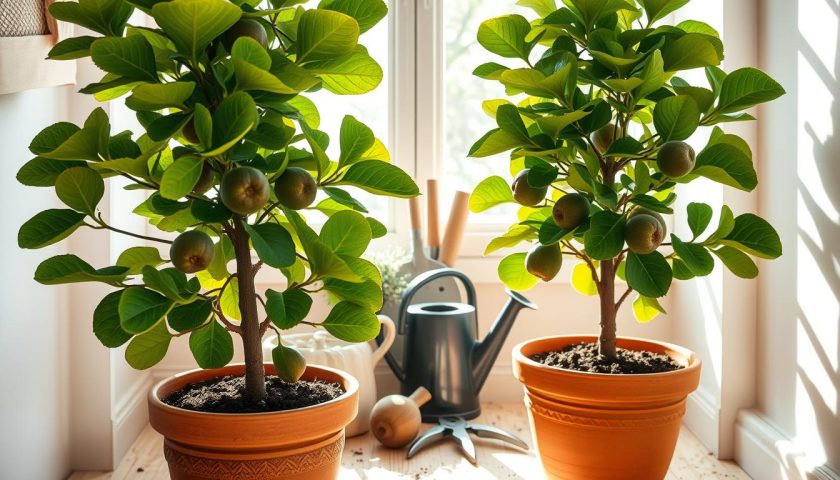
Figs are naturally multi-stemmed. Oregon State Extension notes that growing them as multi-trunked plants matches their natural habit, and the University of Maryland Extension says mature plants usually have three to eight main stems. Choose the form that suits your space.
| Form | How It Is Shaped | Source |
|---|---|---|
| Open bush | Several stems; centre kept open | RHS, Maryland Extension |
| Fan against a wall | Branches spread on horizontal wires about 30cm (1ft) apart | RHS |
| Container tree | Short trunk with a crown of branches, or three to five branches of equal height | RHS, Penn State Extension |
| Standard | Taller clear stem with a crown on top | RHS |
For a fan, the RHS says to tie new shoots to the wires as they grow, and that a fan can be kept to about 1.8m (6ft) tall and 3.5m (11½ft) wide. For a container fig, the RHS suggests removing about a third of the stems when pruning. Oregon State Extension adds that when a potted fig is root-bound, you should prune the roots hard and reduce the canopy to match. For the pot itself, read our guide to repotting.
How to Prune a Fig Tree That Is Overgrown or Neglected
Do not renovate an old fig in one season. The RHS says to stagger major pruning over several years unless an urgent total renovation is needed, because hard pruning triggers excessive regrowth. Each spring, thin about a third of the vigorous regrowth, and pinch out shoot tips in early summer to encourage branching. An in-ground fig can take three to five years to bring under control.
Protect exposed bark. UC Master Gardeners warn that young trees and heavily pruned trees with exposed bark are vulnerable to sunburn, and suggest painting main limbs and trunk with a 1:1 mix of indoor latex paint and water.
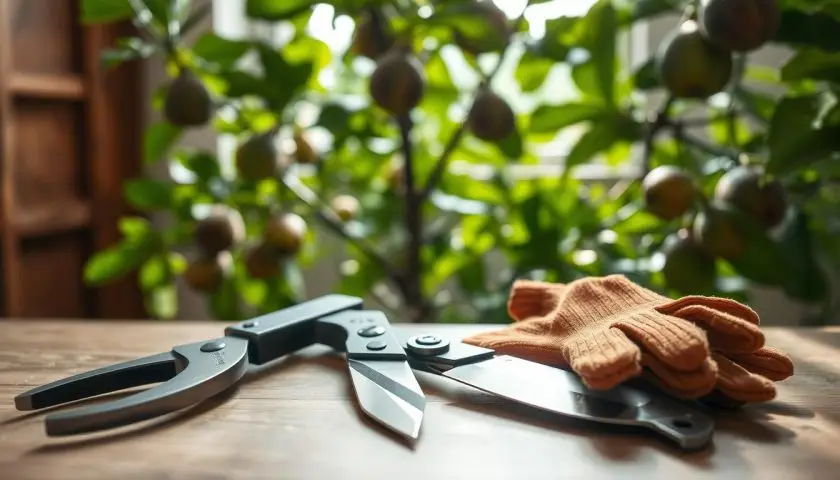
Pruning to Prevent Fig Rust and Other Leaf Diseases
Good pruning helps prevent fig rust. Penn State Extension recommends selective pruning, removing leaf debris and keeping leaves dry to manage fig leaf spot and fig rust. Clemson Cooperative Extension says to prune to improve air circulation, remove fallen leaves in late autumn to reduce overwintering spores, and that spraying is not warranted unless fig rust is an annual problem.
- Water at the base of the tree rather than over the leaves.
- Clear fallen leaves in late autumn.
- Keep the canopy open enough for air to move through.
If a potted fig struggles after pruning, check watering and drainage before cutting more. See our guide to root rot.
How to Prune a Fig Tree: Common Mistakes to Avoid
| Mistake | Why It Hurts | Better Approach |
|---|---|---|
| Cutting back hard in spring | Removes next year’s fruit (RHS) | Shorten shoots by about a third and keep compact fruiting shoots |
| Renovating in one year | Triggers excessive regrowth (RHS) | Stagger the work over several years |
| Leaving suckers | They draw energy from the plant (RHS) | Remove suckers at the base each spring |
| Summer pruning heavily | Irritating sap leaks (UC) | Pinch only, and wear gloves |
| Exposing bark suddenly | Sunburn on limbs (UC) | Paint exposed limbs with diluted latex paint |
Frequently Asked Questions
When is the best time to prune a fig tree?
It depends on your climate. The RHS says spring after the last hard frost, Oregon State Extension says January to February, and the University of Maryland Extension says March to April. Wait for the worst frost to pass in cold areas.
How much can I cut off a fig tree?
Be moderate. The RHS says to remove about a third of the stems on a container plant, and Oregon State Extension says to retain about one-third to one-half of the one-year growth.
Should I remove suckers from my fig tree?
Yes. The RHS says suckers draw energy from the plant and should be cut off at the base. Do this while you prune in spring.
Will pruning stop my fig from fruiting?
It can if you cut off the shoots that carry the fruit. Keep the compact shoots with tiny figs at the tips, and avoid heavy shortening of new growth in spring, according to the RHS.
Is fig sap harmful when pruning?
It can irritate skin, so wear gloves and long sleeves. The ASPCA also lists fig as toxic to dogs, cats and horses, so keep pets away from cuttings.
Final Thoughts
Pruning a fig is less about cutting a lot and more about cutting the right things. As a botanist, my advice on how to prune a fig tree is to protect the tiny figs at the shoot tips, remove dead wood and suckers, open the centre for light, and spread any big renovation over several seasons. Check your own climate and winter damage before you begin. For more outdoor ideas, explore Patch Plants and our outdoor plants section.
Sources: RHS, How to prune a fig; RHS, Figs: pruning and training; Oregon State University Extension, Grow great figs in Oregon; University of Maryland Extension, Growing Figs in Maryland; UC Master Gardeners, Figs; Penn State Extension, Figs in the Home Garden; Clemson Cooperative Extension, Figs; ASPCA, Fig.