Key Takeaways
- Seasonal plant care in autumn is about helping plants slow down safely after the main growing season.
- Seasonal plant care autumn routines should include watering changes, light pruning, garden clean up, container checks, and winter protection.
- Autumn plant care is different for indoor plants, outdoor beds, shrubs, perennials, patios, and pots.
- The best autumn gardening tips are simple: reduce watering, avoid heavy feeding, remove diseased leaves, plant at the right time, and protect roots before frost.
- Use fall planting tips based on your local frost date, growing zone, soil condition, and plant type.
Introduction
Seasonal plant care matters most when the weather starts to shift. Autumn can look gentle, but plants notice every change. Days get shorter, soil cools down, rain patterns change, and the active growing season begins to slow.
This is where seasonal plant care autumn planning becomes useful. Instead of treating your plants like it is still summer, you adjust the routine. You water less often, feed more carefully, clean up diseased growth, protect vulnerable pots, and choose the right plants for the fall.
This guide covers practical autumn plant care for indoor plants, outdoor beds, containers, patio pots, shrubs, perennials, flowers, and winter preparation. You will also find fall planting tips, fall garden clean up advice, fall container gardening ideas, and simple ways to prepare plants for colder weather.
For extra support, pair this guide with the garden calendar, complete watering guide, and pruning basics.
Why Seasonal Plant Care Changes in Autumn
Plants do not grow at the same speed all year. During spring and summer, many plants put energy into leaves, flowers, roots, stems, and fruit. In autumn, that energy shifts. Some plants slow down. Some go dormant. Some focus on roots. Some prepare for winter flowers or spring growth.
A good seasonal plant care routine follows that rhythm. If you keep watering and feeding as if it is midsummer, plants can become weak, soggy, or stressed. If you ignore them completely, tender plants, young shrubs, and container plants may struggle when the first cold snap arrives.
The goal of seasonal plant care autumn is not to force growth. It is to help plants transition. That means protecting roots, improving drainage, removing problems, and giving each plant the right level of attention before winter.
Autumn Plant Care Checklist
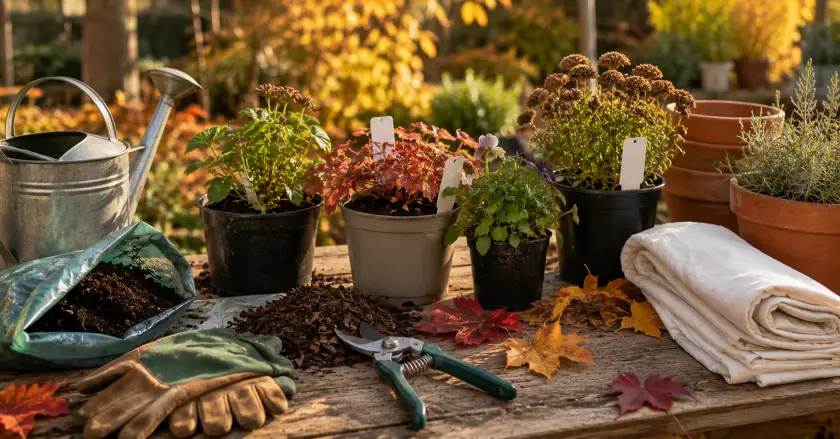
Use this autumn plant care checklist as a quick starting point before going deeper into each section.
- Check soil moisture before watering.
- Reduce watering for indoor plants as light levels drop.
- Stop heavy feeding once growth slows.
- Use compost or gentle feeding early for suitable outdoor plants.
- Remove dead, diseased, or damaged leaves.
- Clean fallen leaves from pots and beds if they show disease.
- Mulch outdoor soil before hard frost.
- Move tender potted plants into shelter.
- Check fall outdoor potted plants for drainage.
- Plant hardy perennials, shrubs, bulbs, and cool-season flowers at the right time.
- Prepare fall winter container plants before temperatures drop.
- Keep fall indoor plants away from drafts, radiators, and dry heat.
Autumn is also a good time to plan perennial mosquito repellent plants for next summer. Lavender, rosemary, mint, lemon balm, and catnip can return year after year when planted in the right light, soil, and drainage.
1. Adjust Watering as the Growing Season Slows
One of the most important autumn gardening tips is to stop watering by habit. The growing season slows in autumn, and cooler soil holds moisture longer. This means many plants need less frequent watering than they did in summer.
For indoor plants, check the top few centimetres of soil before watering. For outdoor plants, pay attention to rainfall. A week of autumn rain can do more watering than you realise, especially in heavy soil or pots without good drainage.
Container plants still need checking because pots dry differently from beds. Fall outdoor plants for pots may dry quickly during windy weather, but they can also become waterlogged after heavy rain.
If you often struggle with watering, read signs you are overwatering, worst times to water plants, and root rot guide.
2. Fall Fertilizing Perennials
Fall fertilizing perennials should be gentle. Autumn is not the time to push soft, leafy growth that can be damaged by frost. Instead, focus on soil health and root support.
For many perennial beds, compost or leaf mould is safer than strong fertiliser. A light layer can improve soil structure, protect roots, and feed the ground slowly over time.
Avoid heavy nitrogen feeding late in autumn. If a perennial is already tired, yellowing, or preparing for dormancy, forcing new growth can weaken it before winter.
3. Fall Fertilizing Shrubs
Fall fertilizing shrubs also needs care. Established shrubs often do not need much feeding in autumn. Young shrubs may benefit from compost around the root zone, but avoid piling mulch against stems.
If your shrub is newly planted, watering and mulching usually matter more than fertiliser. Roots need steady moisture and protection while they settle.
For hardy outdoor choices, see outdoor plants that survive British winters, 15 hardy outdoor plants, and hardy plants with minimal watering.
4. Light Pruning and Tidying
Autumn pruning should be careful. Remove dead, damaged, or diseased growth, but avoid heavy cutting unless you know the plant responds well at this time of year.
Many plants should not be pushed into fresh growth right before winter. Light tidying is usually enough. Cut away broken stems, remove diseased leaves, and clear material that could hold pests or fungal problems.
For more detail on where and how to cut, use the pruning basics guide. For indoor plants, also read how to clean plant leaves.
5. Fall Garden Clean Up
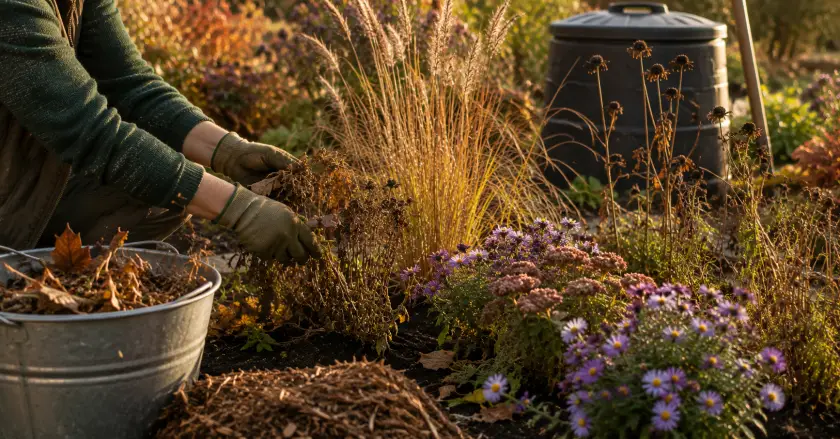
Fall garden clean up is not about stripping the garden bare. A too-clean garden can remove shelter and food for insects, birds, and beneficial wildlife. The better approach is selective cleaning.
Remove diseased leaves, rotting fruit, slimy stems, and anything that could spread problems. Leave healthy seed heads where they offer structure, food, or winter interest. Keep paths clear and safe, but let some natural material break down where it helps the soil.
Cleaning up garden in fall should leave your beds healthier, not empty. If you grow for wildlife, read wildlife-friendly garden guide and pollinator-friendly plants.
6. Fall Flower Bed Ideas
The best fall flower bed ideas combine colour, texture, seed heads, and structure. Autumn beds should not rely only on summer flowers. Add plants with late blooms, colourful leaves, grasses, berries, and evergreen shapes.
Good choices include asters, sedum, chrysanthemums, pansies, violas, ornamental grasses, heuchera, cyclamen, heather, and compact evergreens. These plants for the fall can keep beds interesting when summer annuals fade.
If you want more colour planning, read create a colorful garden for all seasons, native plants, and shade-loving outdoor plants.
7. Autumn Flowers for Bees
Autumn flowers for bees are valuable because pollinators still need food late in the season. Many gardens run out of nectar once summer bedding fades, so late flowers can make a real difference.
Try asters, sedum, single chrysanthemums, helenium, rudbeckia, salvias in mild areas, ivy flowers, and late-flowering perennials. Native plants are especially useful where they match local insects.
Autumn flowers for bees also support a healthier garden next year. More pollinator activity means better garden balance, more wildlife value, and a more resilient outdoor space.
8. Fall Container Garden Plants
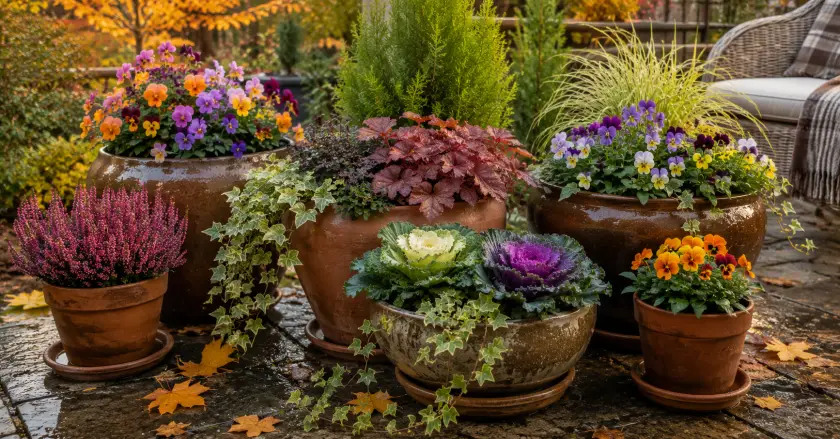
Fall container garden plants need to handle cooler nights, changing rain, and limited root space. Pots are more exposed than beds, so choose plants that can cope with autumn conditions.
Good fall plants for containers include pansies, violas, heuchera, heather, cyclamen, ornamental cabbage, ivy, small grasses, sedum, dwarf conifers, and compact evergreen shrubs. These also work well as good fall plants for pots on steps, balconies, and patios.
For general container care, read best plants for container gardening on patios, year-round balcony plants, and best plants for small outdoor spaces.
9. Fall Container Gardening Ideas
The best fall container gardening ideas use layers. Put a taller plant in the centre or back, add medium plants for colour, then use trailing plants around the edge.
Try these combinations:
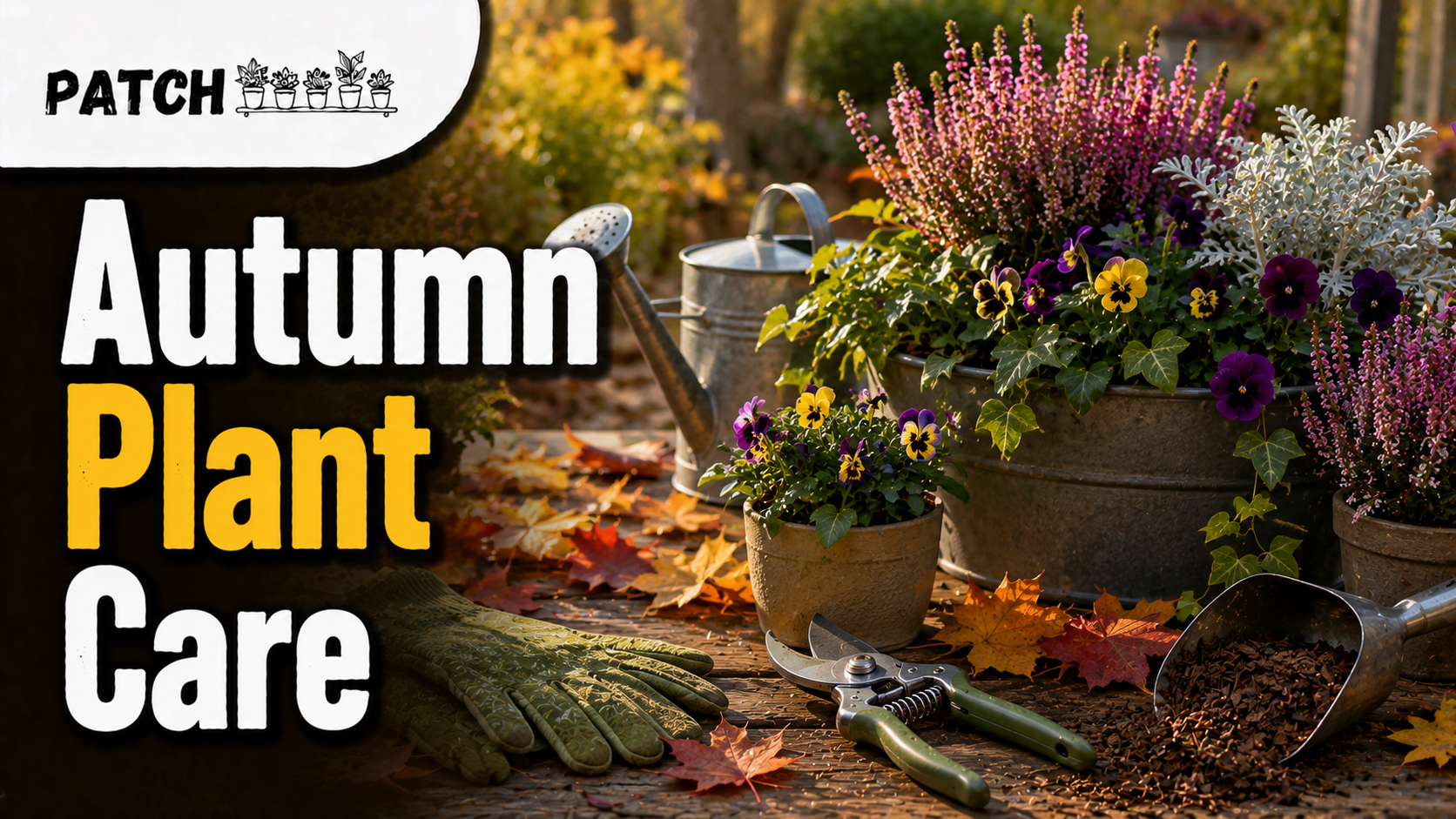
- Heather, ivy, heuchera, and pansies for a classic autumn pot.
- Ornamental cabbage, violas, and compact grasses for texture.
- Dwarf conifer, cyclamen, and trailing ivy for fall winter container plants.
- Sedum, heuchera, and evergreen herbs for a low-maintenance container.
Keep drainage clear. Fall winter container plants can fail quickly if roots sit in cold, wet compost.
10. Fall Outdoor Plants for Pots
Fall outdoor plants for pots should be chosen for weather tolerance, not just colour. A pretty plant that collapses after the first cold night will not give you value.
Use hardy or semi-hardy choices suited to your climate. Pansies, violas, heather, ivy, ornamental grasses, hardy cyclamen, small conifers, and heuchera are reliable in many autumn displays.
Fall outdoor potted plants need pot feet or raised bases in wet areas. This improves drainage and reduces the chance of the container freezing into soggy soil.
11. Fall Patio Plants
Fall patio plants should look good from close up because patios are usually used as everyday spaces. Choose plants with strong leaf colour, neat shape, and long-lasting seasonal interest.
Good options include heuchera, ornamental grasses, cyclamen, violas, pansies, evergreen herbs, dwarf conifers, and compact shrubs. Place pots where you can see them from windows once the weather becomes too cold to sit outside.
For a patio that stays useful across the year, mix fall patio plants with hardy evergreen structure. That way the patio does not look empty after autumn flowers fade.
12. Fall Winter Outdoor Plants
Fall winter outdoor plants give structure when tender summer plants disappear. Look for evergreens, hardy perennials, ornamental grasses, winter berries, and plants with interesting stems or seed heads.
Strong choices include hellebores, heather, skimmia, boxwood alternatives, carex, sedge grasses, ivy, ornamental cabbage, winter pansies, and hardy cyclamen.
If your garden faces storms, frost, or wind, choose tough plants and protect young roots with mulch. For challenging weather, read coastal and windy outdoor plants and plants for storms and heatwaves.
13. Flowers That Bloom in Fall and Winter
Flowers that bloom in fall and winter can make a garden feel alive when everything else slows. Choose plants that suit your climate and planting conditions.
Useful options include pansies, violas, cyclamen, heather, hellebores, winter jasmine, snowdrops in late winter, camellias in mild areas, and some chrysanthemums in autumn.
If you want flowers to grow in fall and winter, start early enough for roots to settle before the hardest weather. Planting too late can leave roots weak and vulnerable.
14. Flowers to Grow in Fall and Winter
Flowers to grow in fall and winter should be chosen by frost tolerance, drainage, and local weather. In mild areas, you can keep colour going for months with the right planting.
Use hardy annuals, bulbs, and cold-season bedding. Pansies and violas work well in containers. Spring bulbs planted in autumn give a strong display later. Hellebores and heather add structure and long seasonal interest.
If your garden is wildlife-focused, include autumn flowers for bees before frost reduces pollinator activity.
15. Deer Resistant Fall Plants
Deer resistant fall plants are useful if your garden gets regular browsing. No plant is completely deer-proof, but some are less tempting because of scent, texture, or taste.
Consider lavender, rosemary, ornamental grasses, hellebores, yarrow, catmint, ferns, boxwood alternatives, and many strongly scented herbs. Local deer behaviour varies, so observe what they avoid in your area.
Use deer resistant fall plants near entrances, vegetable beds, or vulnerable young shrubs. Protection works best when planting choices are combined with fencing or barriers where deer pressure is high.
16. Fall Indoor Plants
Fall indoor plants need a different routine from summer. Indoor light drops, rooms cool at night, and heating can dry the air. Your plants may need less water but more stable placement.
Move plants away from cold windows, radiators, heating vents, and drafty doors. Rotate pots so each side gets light. Clean dust from leaves because lower autumn light makes every bit of light more important.
Good fall indoor plants include snake plant, ZZ plant, pothos, peace lily, spider plant, rubber plant, philodendron, dracaena, and Christmas cactus. For plant-specific care, read snake plant care, ZZ plant care, pothos care, and peace lily care.
17. Fall Tree Indoor Styling
The phrase fall tree indoor often comes up when people want a small tree-like plant indoors for autumn decor. Instead of using fake seasonal decor, you can use real indoor trees and large plants to create a warmer room.
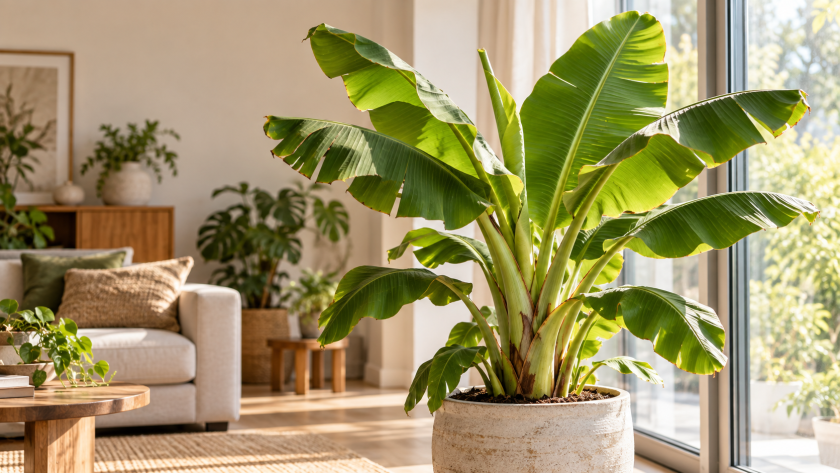
Good indoor tree-style choices include money tree, rubber plant, fiddle leaf fig, bird of paradise, dracaena, and compact palms. These plants make living rooms, offices, and entryways feel more seasonal without needing pumpkins or disposable decorations.
For bigger indoor plants, read 20 oversized indoor plants, money tree care, rubber plant care, and fiddle leaf fig care.
Fall Planting Tips
Fall planting tips begin with timing. Autumn can be one of the best seasons for planting because soil is often still warm while air temperatures are cooler. That helps roots establish with less stress than summer planting.
Plant when soil is workable, not frozen, waterlogged, or baked dry. Water new plants well after planting, then monitor rainfall. Mulch lightly to protect roots, but keep mulch away from stems and crowns.
Good autumn planting choices include shrubs, trees, spring bulbs, hardy perennials, cool-season flowers, herbs, and some vegetables depending on your region.
Fall Planting Guide Zone 5
A fall planting guide zone 5 needs to respect earlier frost. In colder areas, plant earlier in autumn so roots have time to settle before hard freezes.
Zone 5 gardeners often focus on spring bulbs, hardy perennials, shrubs, trees, garlic, cool-season vegetables, and winter protection. Tender plants should be moved or protected before frost warnings.
Do not wait until the ground is close to freezing before planting. In Zone 5, timing matters because roots need several weeks to establish.
Fall Planting Guide Zone 7
A fall planting guide zone 7 usually gives gardeners a longer planting window. The season is milder, so autumn can be excellent for shrubs, trees, perennials, bulbs, cool-season herbs, and winter containers.
Zone 7 gardeners may also have more options for flowers that bloom in fall and winter, including pansies, violas, cyclamen, hellebores, and hardy annuals.
Even in Zone 7, drainage matters. Warm autumn days followed by cold wet soil can still stress roots if containers or beds stay soggy.
Gardening for Fall: What to Prioritize
Gardening for fall works best when you prioritize the jobs that prevent winter problems. Focus on roots, drainage, plant health, and protection.
Your autumn priority list should look like this:
- Plant hardy choices early enough to establish.
- Clean up diseased material.
- Reduce watering as growth slows.
- Improve container drainage.
- Mulch outdoor beds before deep cold.
- Move tender pots to shelter.
- Prepare indoor plants for lower light and dry heat.
This kind of seasonal plant care keeps the garden steady without overworking it.
How to Take Care Plants in Winter
Many people search how to take care plants in winter, and the answer starts in autumn. Winter care becomes easier when your plants are already watered properly, cleaned, mulched, and protected before the coldest weather arrives.
For outdoor plants, protect roots with mulch, lift pots onto feet, move vulnerable containers to a sheltered wall, and avoid cutting back every healthy seed head. For indoor plants, reduce watering, pause heavy feeding, increase light where possible, and keep plants away from cold drafts.
For winter-sensitive plants, check Christmas cactus care, succulent care, and cactus care.
Common Autumn Plant Care Mistakes
- Watering like it is still summer: Cooler soil dries more slowly, so check moisture first.
- Feeding too late: Heavy fertiliser can push soft growth before frost.
- Cleaning too aggressively: Healthy seed heads and stems can help wildlife.
- Ignoring drainage: Wet autumn and winter compost can damage roots.
- Leaving tender pots exposed: Containers freeze faster than ground soil.
- Moving indoor plants too late: Sudden cold windows and heating changes can shock plants.
- Planting without checking frost dates: Fall planting tips only work when timing matches your local climate.
Expert Tips from Sawera Shahid
My best autumn gardening tips are simple. Do less than you did in summer, but pay closer attention. Autumn is not lazy plant care. It is careful plant care.
Check soil before watering. Feed only when there is a clear reason. Keep containers draining well. Clean up disease, but leave some healthy natural structure for wildlife. Move tender pots before frost, not after damage appears.
For indoor plants, autumn is the time to watch light and humidity. A plant that looked happy in July may need a brighter position by October. Clean leaves, rotate pots, and avoid placing plants too close to heating vents.
Future Trends
Seasonal plant care is becoming more important because gardeners are dealing with unpredictable autumns, heavier rain, warmer spells, early cold snaps, and smaller outdoor spaces.
Expect more interest in fall winter container plants, autumn flowers for bees, drought-tolerant planting, hardy patio pots, indoor plant lighting, and low-maintenance seasonal gardening.
Gardeners are also moving away from disposable seasonal decor and choosing real plants for the fall instead. This makes autumn plant care both practical and more sustainable.
Frequently Asked Questions
What is seasonal plant care in autumn?
Seasonal plant care in autumn means changing watering, feeding, pruning, cleaning, planting, and protection routines as plants slow down after the growing season.
What are the best autumn plant care tips?
The best autumn plant care tips are to water less often, avoid heavy late feeding, remove diseased leaves, improve drainage, mulch roots, and protect tender pots before frost.
What are good fall plants for pots?
Good fall plants for pots include pansies, violas, heather, heuchera, cyclamen, ornamental cabbage, ivy, sedum, small grasses, and dwarf evergreens.
What are the best fall container garden plants?
The best fall container garden plants are hardy, colourful, and tolerant of cooler nights. Try violas, pansies, heather, heuchera, ornamental cabbage, cyclamen, ivy, grasses, and compact conifers.
Should I do fall garden clean up?
Yes, but keep it selective. Fall garden clean up should remove diseased leaves, rotting stems, and unsafe debris while leaving healthy seed heads and useful shelter for wildlife where possible.
Should I fertilize perennials and shrubs in fall?
Fall fertilizing perennials and shrubs should be gentle. Compost or light soil improvement is often better than strong fertiliser late in the season.
What flowers bloom in fall and winter?
Flowers that bloom in fall and winter include pansies, violas, cyclamen, heather, hellebores, winter jasmine, and some chrysanthemums depending on climate.
What are deer resistant fall plants?
Deer resistant fall plants may include lavender, rosemary, ornamental grasses, hellebores, ferns, catmint, yarrow, and strongly scented herbs, although no plant is completely deer-proof.
How do I take care plants in winter?
To answer how to take care plants in winter, reduce watering, pause heavy feeding, protect roots, move tender pots to shelter, improve drainage, and keep indoor plants away from drafts and dry heat.
Related Guides
- PATCH Plants homepage
- PATCH Plants blog
- Plant Care hub
- Outdoor Plants hub
- Indoor Plants hub
- Garden Calendar 2026
- Pruning Basics
- Complete guide to watering plants
- Signs you are overwatering
- Worst times to water plants
- Root rot guide
- How to revive a dying plant
- Leaf curl, browning, and droop
- Why plant leaves turn yellow
- How to clean plant leaves
- Best soil mix for every plant
- Repotting mistakes to avoid
- How to repot a plant
- Fertilizing indoor vs outdoor plants
- Self-watering pots guide
- DIY humidity tray
- Humidity hacks for plants
- Complete guide to indoor light
- Best low-maintenance outdoor plants
- 15 hardy outdoor plants
- Hardy plants with minimal watering
- Outdoor plants that survive British winters
- Coastal and windy outdoor plants
- Top drought-resistant plants
- Heat tolerant plants
- Keep pests away from outdoor plants
- Best plants for container gardening on patios
- Best plants for small outdoor spaces
- Year-round balcony plants
- Pollinator-friendly plants
- Wildlife-friendly garden guide
- Native plants
- Colorful garden for all seasons
- Shade-loving outdoor plants
- Easiest outdoor edible plants
- Plants that bloom at night
- Plants that keep bugs away
- Mosquito repellent plants
- 35 low-maintenance plants
- Best indoor plants for beginners
- Best indoor plants for first-time plant parents
- Best indoor plants for tiny apartments
- Air-purifying indoor plants
- How to style indoor plants by room
- Bedroom plants for style and calm
- Indoor plants as room dividers
- Indoor jungle guide
- Trailing plants for shelves
- Low-light hanging plants
- Indoor plants that smell amazing
- Colorful foliage indoor plants
- Rare houseplants worth the hunt
- Blooming indoor plants
- Best office plants
- Office plants for fluorescent lighting
- Oversized indoor plants
- Indoor gardening systems
- Snake plant care guide
- Peace lily care guide
- Christmas cactus care guide
- Money tree care guide
- Best bathroom plants
- Succulent care guide
- Cactus care guide
- Boston fern care guide
- Bird of paradise care
- Pothos care guide
- Philodendron care guide
- Monstera care guide
- Hoya care guide
- Rubber plant care guide
- Fiddle leaf fig care guide
- Spider plant care guide
- ZZ plant care guide
- Jade plant care guide
- Dracaena care guide
- String of pearls care
Final Thoughts
Seasonal plant care in autumn is about working with the season instead of fighting it. Water less often, clean up carefully, feed gently, protect roots, choose strong fall container garden plants, and prepare both indoor and outdoor plants before winter pressure arrives.
The Royal Horticultural Society advises that improving shelter, staking plants, mulching, wrapping pots, and matching plants to the right place can help prevent winter damage, which makes autumn the right time to prepare vulnerable plants before harsher weather arrives: RHS guide to preventing winter damage.
Use this seasonal plant care autumn guide as a working checklist. Your garden does not need to look perfect in fall. It needs to be healthier, cleaner, better protected, and ready for the next growing season.
Summary
This guide covers seasonal plant care for autumn, including autumn plant care, autumn gardening tips, fall planting tips, fall garden clean up, cleaning up garden in fall, fall container garden plants, fall container gardening ideas, fall fertilizing perennials, fall fertilizing shrubs, fall flower bed ideas, fall indoor plants, fall outdoor plants for pots, fall patio plants, fall planting guide zone 5, fall planting guide zone 7, fall winter container plants, flowers that bloom in fall and winter, flowers to grow in fall and winter, deer resistant fall plants, autumn flowers for bees, and how to take care plants in winter. The goal is simple: help plants slow down, stay healthy, and enter winter with stronger roots and less stress.