Key Takeaways
- Hardy outdoor plants survive frost, drought, heat, and neglect — they are the foundation of any low-maintenance garden
- The 15 plants in this guide cover full sun, partial shade, and deep shade positions — there is a hardy outdoor plant for every garden situation
- Hardy outdoor perennial plants like coneflower, heuchera, and hellebores return year after year without replanting
- Evergreen hardy outdoor plants including boxwood, yew, juniper, and rosemary provide year-round structure and colour even in winter
- Hardy outdoor plants for pots and containers include lavender, ornamental grasses, sedum, and rosemary — all suitable for patios and balconies
- Drought-tolerant hardy outdoor plants — lavender, sedum, Russian sage, coneflower, and rosemary — require watering only during establishment and prolonged dry spells
- Hardy outdoor shade plants including hostas, hellebores, and heuchera solve the challenge of difficult shaded garden positions
- Pollinator-friendly hardy outdoor plants like coneflower and lavender support bees and butterflies throughout the growing season
- Most hardy outdoor plants need very little maintenance once established — an annual cut back and occasional feed is sufficient for most
- Combining hardy outdoor plants across different heights, textures, and seasonal interest periods creates a garden that looks good every month of the year
Introduction
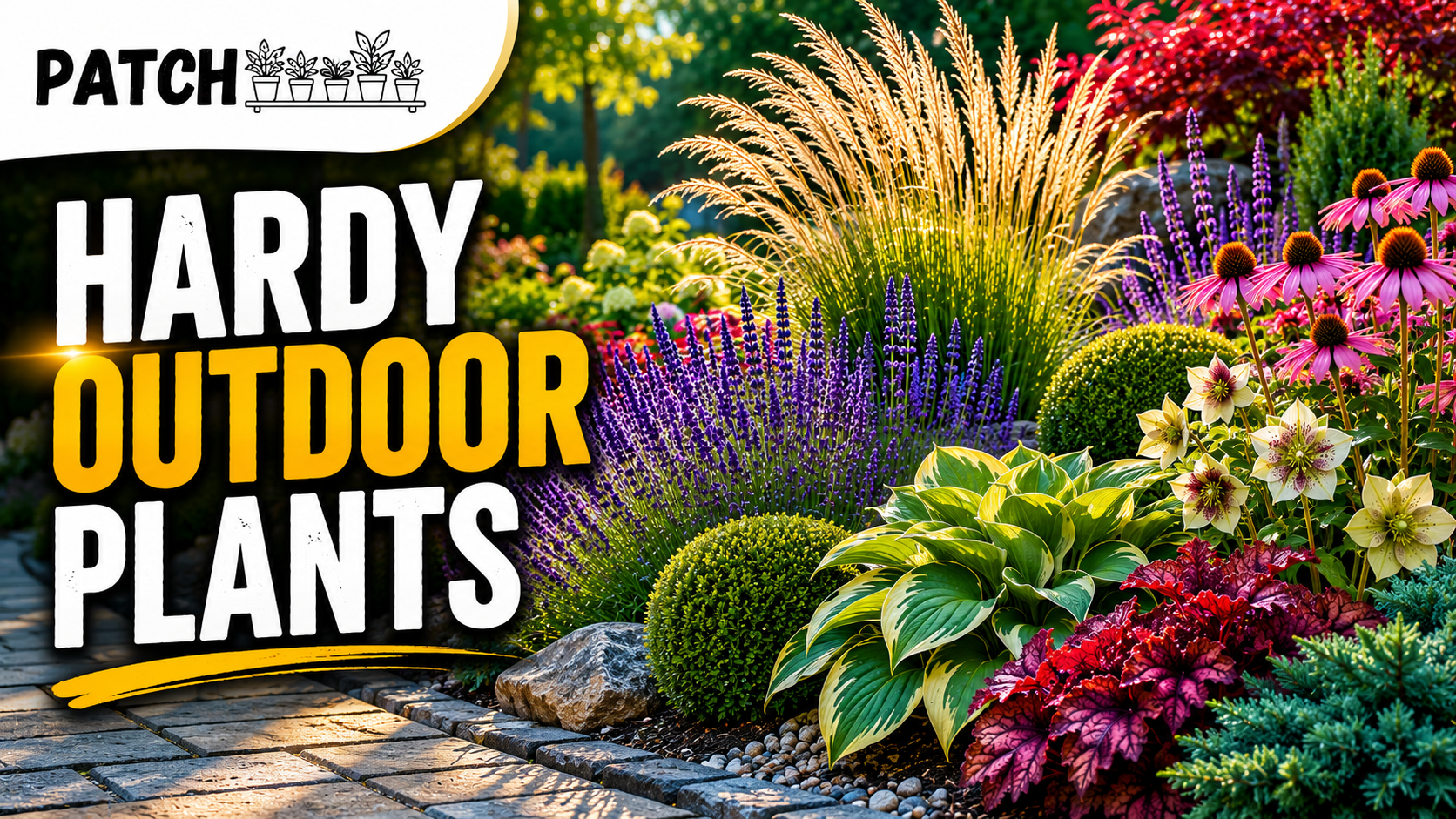
A garden that looks good all year with minimal effort is not a fantasy — it is the result of choosing the right plants. Hardy outdoor plants are the backbone of any successful low-maintenance garden. They survive frost, tolerate drought, cope with poor soil, and come back reliably year after year without the replanting cycles and constant attention that less resilient garden plants demand.
This guide covers 15 of the best hardy outdoor plants available — chosen for their year-round performance, adaptability to different garden conditions, and ability to deliver structure, colour, and interest across all four seasons. Each plant includes specific guidance on light requirements, watering needs, and ideal garden positions.
Whether you are designing a new garden from scratch, adding structure to an established border, or looking for hardy plants for outdoor pots and containers, this list gives you reliable, proven options that will perform season after season. For companion reading on outdoor plant maintenance and pest management, our how to keep pests away from outdoor plants guide and best low-maintenance outdoor plants guide cover the practical ongoing care these plants require.
What Makes a Plant Truly Hardy?
Before diving into the list, it is worth clarifying what “hardy” actually means in practical gardening terms. Hardy outdoor plants are those that can withstand challenging conditions without dying, collapsing, or requiring significant intervention. This typically means tolerance of one or more of the following:
- Frost and freezing temperatures — fully hardy plants survive temperatures well below zero without protection
- Drought — established hardy plants survive extended dry periods without supplementary watering
- Poor or thin soil — many hardy outdoor plants actually perform better in poor soil than in rich, overly fertile conditions
- Wind exposure — particularly relevant for coastal and exposed garden positions
- Neglect — perhaps the most practically relevant hardiness factor for busy gardeners
Hardy does not mean invincible. Every plant on this list benefits from decent planting conditions and basic establishment care. But once settled, these plants look after themselves to a remarkable degree. For guidance on outdoor plant care through challenging weather conditions, our outdoor plants that survive British winters guide covers the most demanding hardiness scenarios in detail.
The 15 Best Hardy Outdoor Plants
1. Lavender (Lavandula angustifolia)
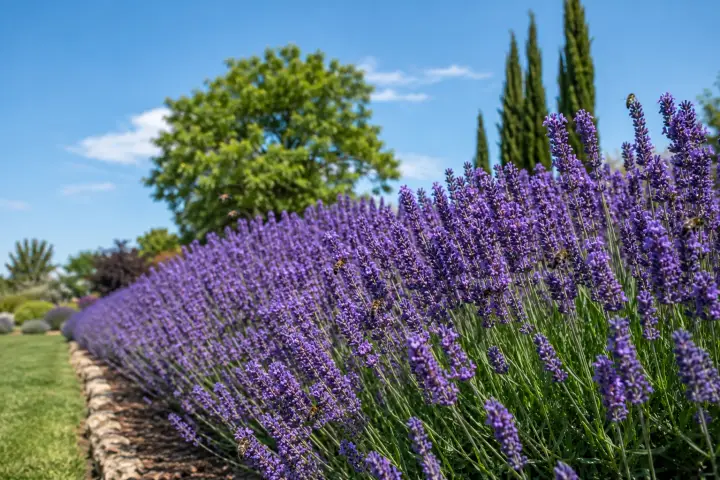
Lavender is arguably the most widely loved hardy outdoor plant in temperate gardening — and for good reason. It combines exceptional drought tolerance, pest-repelling properties, extraordinary fragrance, and months of summer flower colour into a single compact shrub that asks almost nothing in return.
Lavender thrives in full sun and poor, well-draining soil. Rich, fertile soil and excess moisture are its enemies — it performs best in the conditions most other plants struggle with. Once established, it requires watering only during prolonged drought. Cut back by about one third after flowering to maintain a compact bushy habit and prevent the woody leggy growth that develops in unpruned plants.
As a hardy outdoor patio plant, lavender is outstanding — it suits containers, raised beds, and border edges equally well. It is also one of the best hardy outdoor plants for repelling garden pests, as noted in our plants that keep bugs away guide.
- Position: Full sun
- Soil: Poor, well-draining — avoid rich or wet soil
- Hardiness: Fully hardy, tolerates frost
- Maintenance: Annual cut back after flowering
- Best for: Borders, containers, patio pots, edges
2. Boxwood (Buxus sempervirens)
Boxwood is the ultimate structural hardy outdoor plant. Evergreen, frost-hardy, and remarkably tolerant of clipping into almost any shape — spheres, cubes, cones, or free-form — boxwood provides year-round green structure that anchors a garden in every season.
It tolerates both sun and partial shade, grows in most well-draining soils, and withstands significant frost. Slow growth means it maintains its shape for months between cuts. Boxwood blight (Cylindrocladium buxicola) is a concern in some regions — choose resistant varieties where available and ensure good air circulation when planting.
As a hardy outdoor container plant, a pair of clipped boxwood spheres flanking a doorstep or entrance is a classic and enduring garden design choice that performs through every season.
- Position: Full sun to partial shade
- Soil: Most well-draining soils
- Hardiness: Fully hardy
- Maintenance: One to two clips per year
- Best for: Hedging, topiary, containers, formal structure
3. Sedum (Hylotelephium — Stonecrop)
Sedum is one of the most drought-tolerant hardy outdoor plants available. Like its indoor succulent cousins, sedum stores water in its thick leaves — allowing it to survive extended dry periods without irrigation. It thrives in thin, gravelly soil and full sun, producing flat-topped flower heads in pink, red, and white that attract pollinators from late summer through autumn.
After flowering, the dried seed heads remain ornamental through winter and provide valuable wildlife habitat. Cut back to the base in early spring before new growth emerges. Sedum is an excellent hardy outdoor plant for pots, gravel gardens, green roofs, and sunny borders where other plants struggle.
- Position: Full sun
- Soil: Poor, well-draining — tolerates gravel and thin soil
- Hardiness: Fully hardy
- Maintenance: Minimal — cut back in early spring
- Best for: Gravel gardens, pots, sunny borders, green roofs
4. Hellebores (Helleborus)
Hellebores are among the most valuable hardy outdoor shade plants available — they bloom in late winter and early spring when almost nothing else in the garden is flowering. Their nodding, cup-shaped flowers in deep purple, pink, white, and cream provide extraordinary colour at the most colour-starved point of the gardening year.
They are evergreen or semi-evergreen, tolerant of deep shade, and largely ignored by deer and rabbits — making them ideal for shaded borders under trees where other hardy outdoor perennial plants struggle. Remove old leaves in early winter to give the emerging flowers more prominence and reduce disease transmission. They are long-lived perennials that establish slowly but reliably and require almost no maintenance once settled.
- Position: Partial to full shade
- Soil: Moist, well-draining, enriched with organic matter
- Hardiness: Fully hardy
- Maintenance: Remove old leaves in winter
- Best for: Shaded borders, woodland gardens, under trees
5. Japanese Maple (Acer palmatum)
The Japanese maple is the most architecturally striking hardy outdoor plant on this list. Its deeply lobed leaves in shades of red, orange, bronze, and green provide spectacular seasonal interest — fiery colour in autumn, elegant emerging growth in spring, and structural branch form through the winter months after leaf fall.
While Japanese maples are not completely maintenance-free, they are far hardier and more adaptable than their reputation suggests. They prefer a sheltered position away from cold drying winds and late spring frosts, and thrive in moist, slightly acidic, well-draining soil. In exposed gardens, a position against a wall or sheltered by other plants significantly improves performance. They are excellent hardy outdoor container plants when grown in large pots with ericaceous compost.
- Position: Dappled shade to partial sun — sheltered from wind
- Soil: Moist, slightly acidic, well-draining
- Hardiness: Hardy — protect from cold drying winds
- Maintenance: Minimal pruning — remove dead or crossing branches only
- Best for: Specimen plants, containers, sheltered borders
6. Russian Sage (Perovskia atriplicifolia)
Russian sage is one of the most effortlessly beautiful hardy outdoor plants for full sun positions. Its tall, airy stems covered in silvery-grey foliage and delicate lavender-blue flowers create a haze of soft colour from midsummer through autumn. It actively prefers poor, dry soil and genuinely thrives on neglect — rich, moist soil produces floppy, weak growth.
Russian sage is fully hardy, deer resistant, drought tolerant once established, and provides excellent late-season colour for pollinators. Cut back hard to within fifteen centimetres of the ground in early spring to maintain a compact upright habit. An excellent tall hardy outdoor plant for the back of sunny borders and gravel gardens.
- Position: Full sun
- Soil: Poor, dry, well-draining — avoid rich or wet soil
- Hardiness: Fully hardy
- Maintenance: Hard cut back in early spring
- Best for: Back of border, gravel gardens, mixed perennial planting
7. Heuchera (Coral Bells)
Heuchera is one of the most versatile hardy outdoor perennial plants available — producing mounds of lobed foliage in an extraordinary range of colours including deep plum, burnt orange, lime green, silver, and bronze. Small bell-shaped flowers rise above the foliage on thin stems in early summer, providing an additional ornamental season.
Heuchera tolerates both sun and partial shade, making it useful in garden positions where light is variable or inconsistent. It is deer resistant, evergreen in mild winters, and excellent in containers where its colourful foliage provides year-round interest. Divide clumps every three to four years to maintain vigour and prevent the central crown from lifting out of the soil.
- Position: Sun to partial shade
- Soil: Well-draining, moderately fertile
- Hardiness: Fully hardy
- Maintenance: Divide every 3–4 years
- Best for: Borders, containers, edging, mixed perennial planting
8. Hostas
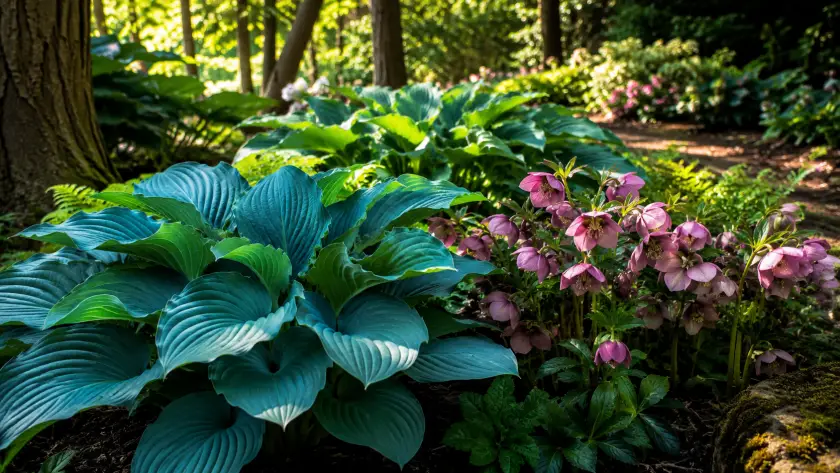
Hostas are the definitive hardy outdoor shade plants — producing large, bold, beautifully textured foliage in shades of blue-green, yellow-green, and variegated combinations that light up dark garden areas where most other plants struggle to perform. They are fully hardy perennials that die back completely in winter and re-emerge reliably in spring, often with increasing vigour year on year.
The primary challenge with hostas is slug and snail damage — their large soft leaves are extremely attractive to molluscs. Copper tape around containers, grit mulch around border plantings, and regular evening checks significantly reduce damage. Grow in moist, humus-rich soil for the best leaf size and colour. For pest management strategies that apply to hostas and other vulnerable garden plants, our how to keep pests away from outdoor plants guide covers the most effective approaches.
- Position: Partial to full shade
- Soil: Moist, humus-rich
- Hardiness: Fully hardy
- Maintenance: Slug protection, cut back dead foliage in autumn
- Best for: Shaded borders, under trees, containers
9. Yew (Taxus baccata)
Yew is one of the toughest and longest-lived hardy outdoor plants in cultivation. Fully evergreen, tolerant of almost any soil type including chalk and clay, adaptable to sun or deep shade, and extraordinarily frost-hardy — yew asks very little and delivers year-round dense green structure that few other plants can match.
It can be left to grow as a specimen tree, shaped into formal hedging or topiary, or used as a dark backdrop against which flowering plants show most dramatically. Yew is slow-growing, which means it maintains its shape for longer between cuts than faster-growing alternatives. Note that all parts of the yew plant except the red berry flesh are toxic to humans and animals — plant thoughtfully in gardens with children and pets.
- Position: Full sun to full shade
- Soil: Most soils including chalk and clay
- Hardiness: Exceptionally hardy
- Maintenance: One cut per year — slow growing
- Best for: Hedging, topiary, specimen trees, backdrop planting
10. Coneflower (Echinacea purpurea)
Coneflower is one of the best hardy outdoor flowering plants for full sun borders — producing large, daisy-like flowers with prominent central cones in pink, purple, white, and orange from midsummer through early autumn. It is drought-tolerant once established, deer resistant, and one of the most valuable pollinator plants available, attracting bees and butterflies throughout its long blooming season.
Leave the seed heads standing through winter — they provide food for birds and structural interest in the winter border. Cut back to the ground in early spring before new growth emerges. Coneflower is an excellent hardy outdoor perennial plant that becomes more impressive year on year as established clumps increase in size and flower count. For more pollinator-friendly outdoor plant options, our pollinator-friendly plants guide covers the full range of plants that support garden wildlife.
- Position: Full sun to partial shade
- Soil: Average, well-draining — tolerates poor soil
- Hardiness: Fully hardy
- Maintenance: Leave seed heads for winter, cut back in spring
- Best for: Full sun borders, wildlife gardens, prairie-style planting
11. Juniper (Juniperus)
Juniper is one of the most reliably year-round hardy outdoor plants available. Fully evergreen, extremely frost-hardy, tolerant of poor and dry soils, and virtually pest-free — junipers provide low-maintenance structure and year-round green interest in positions where more demanding plants struggle.
The range of growth habits available within the juniper family is exceptional — from prostrate ground-covering forms that spread to cover large areas, to upright columnar varieties that provide strong vertical structure. Low-growing junipers are excellent for suppressing weeds in sunny positions and providing year-round ground cover on slopes and banks where erosion is a concern. For coastal and exposed garden positions, junipers are among the most wind-tolerant hardy outdoor plants available. Our best outdoor plants for coastal and windy environments guide covers this in detail.
- Position: Full sun
- Soil: Most soils including poor and dry — excellent drainage essential
- Hardiness: Exceptionally hardy
- Maintenance: Minimal — remove dead wood if needed
- Best for: Ground cover, slopes, rock gardens, exposed positions
12. Ornamental Grasses
Ornamental grasses bring a dimension to outdoor planting that few other plant groups can provide — movement. Grasses sway in the slightest breeze, catch and filter light in the morning and evening, and provide textural contrast against the solid forms of shrubs and perennial flowers. Most are fully hardy outdoor plants with very low maintenance requirements once established.
Blue fescue (Festuca glauca) is a compact mound-forming grass in blue-grey — excellent for containers and border edges. Miscanthus sinensis is a tall, dramatic grass producing feathery plumes in late summer that stand through the winter months. Stipa tenuissima (Mexican feather grass) produces extraordinarily fine, hair-like foliage that moves constantly in even slight air movement. All are drought-tolerant once established and require nothing more than an annual cut back in early spring.
- Position: Full sun to partial shade depending on variety
- Soil: Most well-draining soils
- Hardiness: Fully hardy for most varieties
- Maintenance: Annual cut back in early spring
- Best for: Mixed borders, containers, gravel gardens, wildlife planting
13. Camellia (Camellia japonica and C. x williamsii)
Camellias are among the most spectacular hardy outdoor flowering plants — producing large, rose-like blooms in red, pink, white, and bi-coloured combinations in late winter and early spring when the garden desperately needs colour. They are fully evergreen, providing glossy dark green foliage interest throughout the year.
Camellias require slightly acidic soil (pH 5.5 to 6.5) — they perform best in ericaceous compost in containers or in naturally acidic garden soil. They need shelter from cold drying winds and early morning sun in spring (which can damage frosted buds). In the right position they are relatively low maintenance — a feed with ericaceous fertiliser in spring and a mulch of leaf mould or bark chippings annually. Camellia x williamsii varieties are generally hardier and more reliable in colder climates than pure japonica varieties.
- Position: Partial shade — sheltered from cold wind and morning sun
- Soil: Moist, acidic, well-draining — ericaceous compost in containers
- Hardiness: Hardy in sheltered positions
- Maintenance: Annual ericaceous feed, mulch, deadhead spent flowers
- Best for: Sheltered borders, walls, large containers, woodland edges
14. Lamb’s Ear (Stachys byzantina)
Lamb’s ear is one of the most distinctive hardy outdoor plants for sunny borders — its soft, silver-felted leaves have the exact texture and colour their name suggests, and they catch light in a way that makes them almost luminous in low sun. It spreads steadily to form an attractive ground-covering mat, tolerates poor dry soil, and produces upright flower spikes with small pink-purple flowers in summer.
Lamb’s ear is fully hardy, drought-tolerant once established, and requires almost no maintenance beyond removing dead or tatty leaves in late winter. It is excellent for softening hard edges in formal borders, filling sunny gaps between more upright plants, and providing silver-grey colour contrast in planting schemes. A reliable and underused hardy outdoor perennial plant that consistently earns its place in the garden.
- Position: Full sun
- Soil: Poor to average, well-draining — avoid wet or heavy soil
- Hardiness: Fully hardy
- Maintenance: Remove dead leaves in late winter
- Best for: Border edges, ground cover, silver planting schemes
15. Rosemary (Salvia rosmarinus)
Rosemary is the most useful hardy outdoor plant on this list — evergreen, drought-tolerant, structurally attractive, fragrant, bee-friendly, and fully edible. It provides year-round green and blue-grey foliage interest, produces blue flowers in early spring that are valuable for early pollinators, and delivers a constant supply of fresh culinary herb throughout the year.
Rosemary thrives in full sun and poor, well-draining soil — exactly the same conditions as lavender. It is fully hardy in most temperate climates, though prolonged wet winters in heavy soil can cause problems. In containers it performs excellently and remains more easily protected in very cold spells. Cut back lightly after flowering to maintain shape but never cut back into old wood — it does not regenerate from the woody base the way some other shrubs do. For companion planting in edible garden setups, our top drought-resistant plants guide covers more edible and ornamental drought-tolerant options.
- Position: Full sun
- Soil: Poor, well-draining — avoid wet heavy soil
- Hardiness: Fully hardy in most climates
- Maintenance: Light trim after flowering — never cut into old wood
- Best for: Herb gardens, sunny borders, containers, edible gardens
Hardy Outdoor Plants for Specific Garden Situations
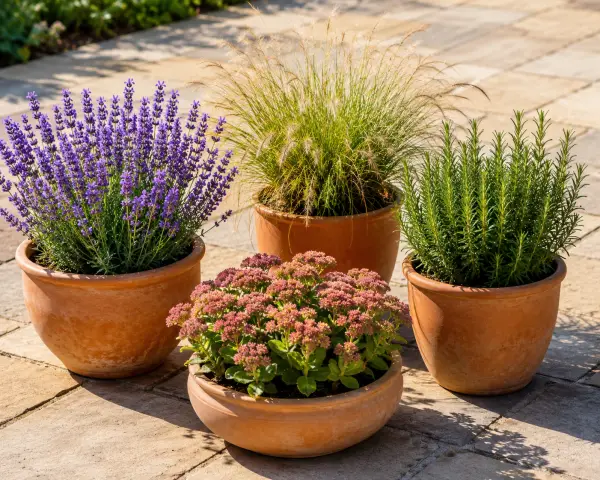
Choosing the right hardy outdoor plant for your specific garden conditions is more important than choosing the most visually appealing option. Here is a quick reference guide to the best plants from this list for each common garden situation:
Hardy Outdoor Plants for Full Sun
Lavender, sedum, Russian sage, coneflower, rosemary, lamb’s ear, and ornamental grasses all thrive in full sun positions receiving six or more hours of direct sunlight daily. For more full sun outdoor planting ideas, our best plants for small outdoor spaces guide covers compact sun-loving options for restricted garden areas.
Hardy Outdoor Shade Plants
Hellebores, hostas, heuchera, boxwood, and yew are the best hardy outdoor shade plants from this list. These plants tolerate limited direct sunlight and perform well in north-facing gardens, under tree canopies, and in other shaded positions.
Hardy Outdoor Plants for Pots and Containers
Lavender, ornamental grasses, sedum, rosemary, Japanese maple, heuchera, and boxwood all perform well in containers. Use appropriately sized pots with drainage holes, high-quality compost suited to the plant type, and increase watering frequency compared to ground-planted specimens — containers dry out faster than garden beds. Our year-round balcony plants guide covers container hardy outdoor plants for balcony and terrace situations specifically.
Hardy Outdoor Plants for Pollinators
Coneflower, lavender, rosemary, Russian sage, and camellia all provide significant pollinator value. Coneflower and lavender are particularly important late-season sources of nectar for bees and butterflies. For a comprehensive guide to supporting garden wildlife with plant choices, our pollinator-friendly plants guide is essential reading.
Hardy Outdoor Plants for Winter Interest
Boxwood, yew, juniper, rosemary, hellebores, and ornamental grass seed heads all provide significant winter interest. Hellebores are the outstanding winter-flowering choice — producing blooms from December through March when everything else in the garden is dormant. For guidance on keeping outdoor plants performing through the coldest months, our outdoor plants that survive British winters guide covers winter hardiness in detail.
Article Summary
| Plant | Position | Key Quality | Best Use |
|---|---|---|---|
| Lavender | Full sun | Fragrant, drought-tolerant, pest-repelling | Borders, containers |
| Boxwood | Sun to shade | Evergreen, shapeable, frost-hardy | Hedging, topiary |
| Sedum | Full sun | Drought-tolerant, pollinator-friendly | Gravel, pots, borders |
| Hellebores | Shade | Winter bloomer, evergreen foliage | Shaded borders |
| Japanese Maple | Sheltered partial shade | Spectacular autumn colour, year-round structure | Specimen, containers |
| Russian Sage | Full sun | Silvery stems, long-season blue flowers | Back of border |
| Heuchera | Sun to shade | Multi-coloured foliage, versatile | Borders, containers |
| Hostas | Shade | Bold foliage, slug-resistant varieties available | Shaded positions |
| Yew | Sun to full shade | Extremely long-lived, tolerates any soil | Hedging, topiary |
| Coneflower | Full sun | Drought-tolerant, pollinator magnet | Full sun borders |
| Juniper | Full sun | Evergreen, pest-resistant, low-maintenance | Ground cover, slopes |
| Ornamental Grasses | Sun to partial shade | Movement, texture, minimal maintenance | Mixed borders, containers |
| Camellia | Sheltered partial shade | Late winter flowering, evergreen | Sheltered borders |
| Lamb’s Ear | Full sun | Silver foliage, drought-tolerant | Border edges, ground cover |
| Rosemary | Full sun | Evergreen, edible, pollinator-friendly | Herb gardens, containers |
Related Guides
- Best Low-Maintenance Outdoor Plants for Busy Gardeners
- Outdoor Plants That Survive British Winters
- Pollinator-Friendly Plants for Urban Outdoor Spaces
- Best Outdoor Plants for Coastal and Windy Environments
- Best Plants for Small Outdoor Spaces
- Year-Round Balcony Plants
- Top Drought-Resistant Plants
- How to Keep Pests Away from Outdoor Plants
- Plants That Keep Bugs Away Without Chemical Repellents
- Garden Calendar 2026
- Native Plants That Thrive in Your Region
- How to Design a Wildlife-Friendly Garden
Final Thoughts
The best garden is not the most complicated one — it is the one that looks good consistently, through every season, without demanding constant attention. Hardy outdoor plants make this possible. They bring structure, colour, texture, and life to a garden even through frost, drought, and the difficult months of late winter when most of the gardening world is dormant.
Combining plants from this list across different light levels, heights, and seasonal interest periods produces a garden that delivers something in every month of the year. Lavender and Russian sage for summer fragrance and colour. Hellebores and camellia for winter and early spring flowers. Yew and boxwood for year-round evergreen structure. Ornamental grasses for movement and texture through every season.
According to the Royal Horticultural Society, the shift toward low-maintenance, climate-resilient planting is one of the most significant trends in UK garden design — with hardy perennials, drought-tolerant shrubs, and evergreen structural plants increasingly recommended as the foundation of any sustainable modern garden. The fifteen plants in this guide represent exactly that foundation.
Choose your conditions. Match your plants. Plant well, establish properly, and then step back — these plants will do the rest.
Frequently Asked Questions
What are hardy outdoor plants?
Hardy outdoor plants are plants that can withstand challenging outdoor conditions including frost, drought, heat, poor soil, and strong wind without dying or requiring significant intervention. Most hardy outdoor plants are perennials or evergreen shrubs that return or remain year after year with minimal care once established.
Which hardy outdoor plants are best for pots and containers?
The best hardy outdoor plants for pots and containers include lavender, ornamental grasses, sedum, rosemary, heuchera, and Japanese maple. These plants tolerate restricted root space and variable moisture conditions and perform well on patios, balconies, and doorsteps year-round. Our year-round balcony plants guide covers container planting options in more detail.
Which hardy outdoor plants tolerate full sun?
Hardy outdoor plants that thrive in full sun include lavender, sedum, Russian sage, coneflower, rosemary, ornamental grasses, and lamb’s ear. These plants prefer six or more hours of direct sun daily and perform best in south or west-facing garden positions with well-draining soil.
Which hardy outdoor plants grow well in shade?
Hardy outdoor plants that tolerate or prefer shade include hellebores, hostas, yew, boxwood, and heuchera. These plants perform well in north-facing gardens, under trees, or in any position that receives limited direct sunlight. Hellebores are particularly valuable as the only winter-flowering shade-tolerant option on this list.
Do hardy outdoor plants need a lot of maintenance?
Most hardy outdoor plants require very little maintenance once established. An annual cut back, occasional feeding, and watering during prolonged drought covers the majority of maintenance for all fifteen plants on this list. Hardy low maintenance outdoor plants like lavender, sedum, ornamental grasses, and yew need almost no intervention once settled into their garden position.