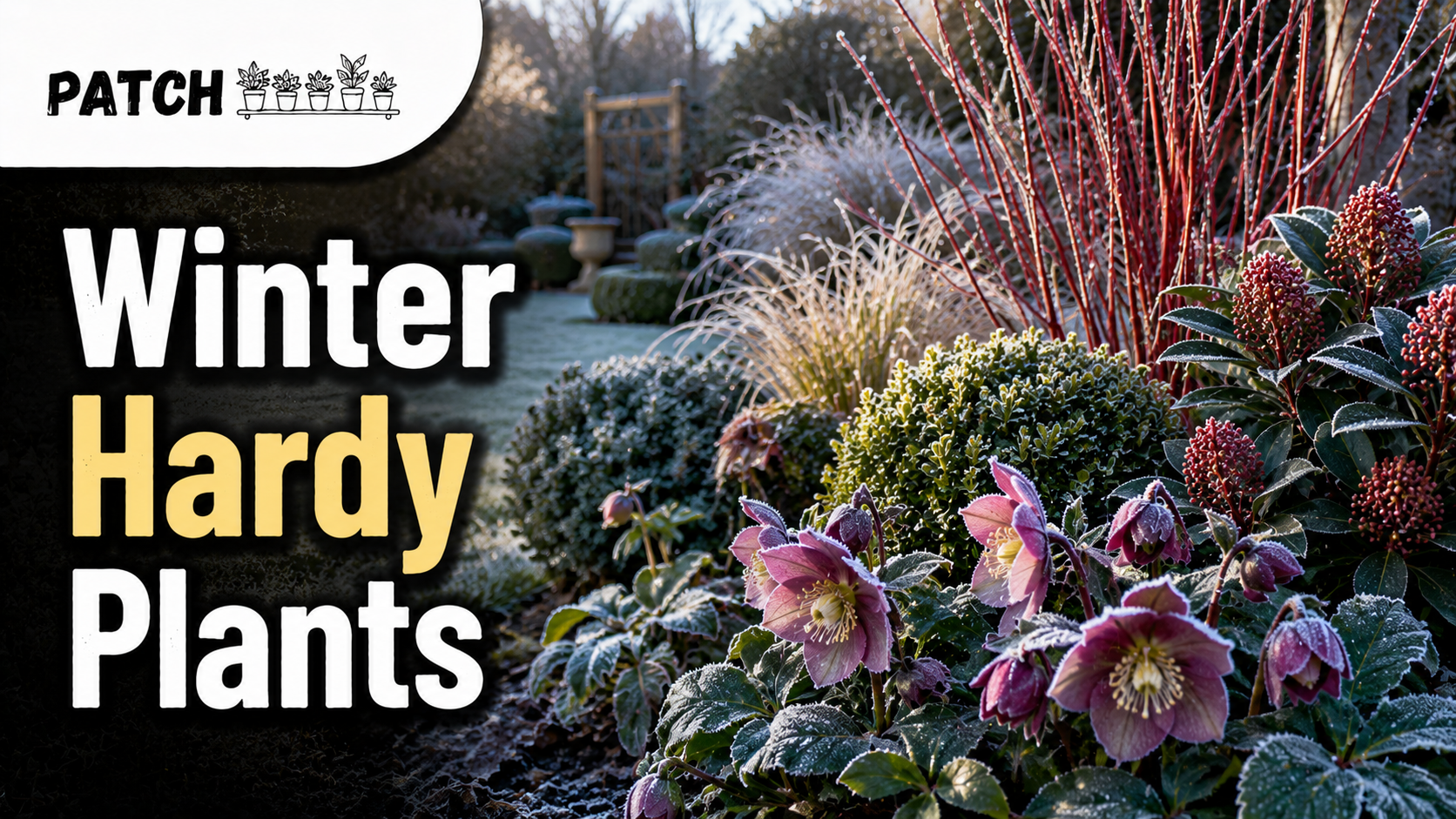
The outdoor plants that survive British winters best are hellebores, snowdrops, Cyclamen coum, heuchera, winter-flowering heather, skimmia, mahonia, sarcococca, yew, ivy, red-stemmed dogwood, winter jasmine, hardy ferns, ornamental grasses and box (or a box alternative). Look for an RHS hardiness rating of H5 or higher for cold or exposed gardens, plant in well-drained soil, and protect pots, because in a British winter wet roots kill more plants than frost does.
British winters are rarely bitterly cold for long, but they are wet, windy and changeable, with mild spells followed by sharp frosts. A plant that survives cold on paper can still fail if its roots sit in waterlogged clay for weeks. This guide explains how to choose winter-hardy plants, gives 15 reliable choices, and covers pots, wet soil and simple winter protection.
Every Patch Plants guide is researched and written by Sawera Shahid, a botanist with an MPhil in Botany and more than five years of gardening and plant-care writing. We base our advice on trusted horticultural guidance, so these plants are chosen for real British gardens.
How to Choose Outdoor Plants That Survive British Winters
Check the RHS Hardiness Rating
Plant labels and the RHS hardiness rating system show how much cold a plant tolerates:
| Rating | Minimum Temperature | What It Means |
|---|---|---|
| H3 | -5 to 1°C | Half-hardy: fine in mild or coastal areas, needs protection elsewhere |
| H4 | -10 to -5°C | Hardy in an average winter across most of the UK, except colder inland, upland and northern areas |
| H5 | -15 to -10°C | Hardy across most of the UK, even in severe winters |
| H6 | -20 to -15°C | Hardy throughout the UK; pots usually still need protection |
| H7 | Below -20°C | Very hardy, even in exposed upland sites |
The RHS notes that potted plants are more vulnerable than the same plant in the ground, so aim one rating higher for containers.
Match Plants to Your Soil and Exposure
- Heavy clay: choose plants that tolerate damp, and improve drainage before planting
- Frost pockets: low spots where cold air settles suit only the toughest plants
- Coastal or windy gardens: choose wind-tolerant plants; see our guide to plants for coastal and windy gardens
- Shade: many winter flowers, such as hellebores and sarcococca, enjoy it; see our shade-loving outdoor plants
Mix Structure, Flowers and Color
A good winter garden combines evergreen shape, a few winter flowers, colorful stems and grasses, so it never looks bare from the window.
15 Outdoor Plants That Survive British Winters
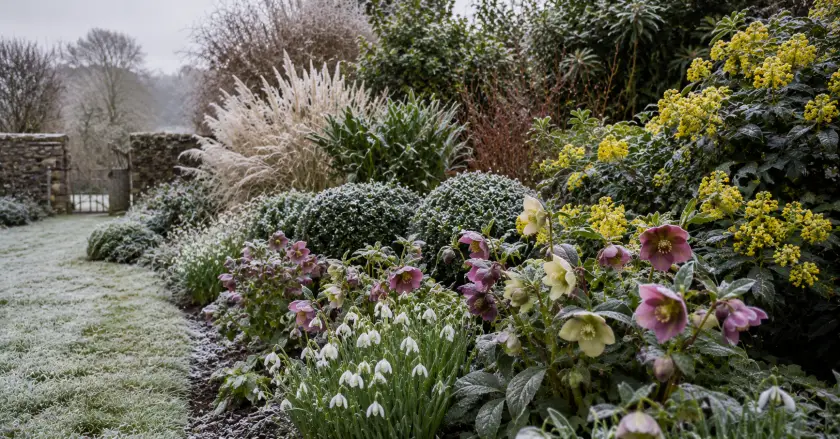
Winter Flowers
1. Hellebores
Among the most dependable winter-flowering perennials, with nodding flowers from midwinter into spring. They suit partial shade and woodland borders. Cut off old, tatty leaves in winter so the flowers show and leaf spot does not spread.
2. Snowdrops (Galanthus)
The first sign that spring is coming, pushing through cold soil in late winter. Plant them under shrubs and along paths, and they spread into drifts over the years.
3. Cyclamen coum
Small and delicate-looking but very tough, with pink, magenta or white flowers in late winter and silver-marked leaves. It suits shade under trees and pairs well with snowdrops and hellebores. Do not confuse it with the large florist cyclamen sold indoors, which is not frost-hardy.
4. Winter-Flowering Heather (Erica carnea)
Low mats of pink, white or purple flowers from winter into spring. Unlike many heathers, it tolerates neutral and slightly alkaline soil. A great choice for pots and edges.
5. Winter Jasmine (Jasminum nudiflorum)
Bright yellow flowers on bare green stems through the coldest months. It is not scented, but it is cheerful against walls and fences and copes with shade.
6. Sweet Box (Sarcococca)
A compact evergreen shrub with tiny white flowers in winter and a powerful honey scent. Plant it by a doorway or path so you catch the fragrance. It is tolerant of shade.
Evergreen Structure
7. Skimmia
Glossy evergreen leaves, winter flower buds, and red berries on female plants. It prefers partial shade and acidic to neutral soil, and does well in pots near a doorway.
8. Mahonia
Bold, spiky evergreen leaves with sprays of scented yellow flowers in winter, which feed early bees. It suits shady corners and larger borders.
9. Yew (Taxus baccata)
One of the hardiest evergreens for hedges and clipped shapes, tolerant of sun or shade. All parts except the red berry flesh are highly toxic, so plant it away from children and grazing animals.
10. Box and Box Alternatives
Box (Buxus) is a classic for low hedges and topiary, but in the UK it is often damaged by box blight and box tree caterpillar. Japanese holly (Ilex crenata), dwarf yew and small-leaved hebes are popular alternatives with a similar look.
11. Ivy (Hedera)
Tough and evergreen, it covers walls and fences and trails over pots. Its late flowers and winter berries are valuable food for insects and birds.
Color and Texture
12. Heuchera
Grown for its colorful leaves in lime, caramel, burgundy, purple or silver. It looks good all winter in pots and shady beds, but it needs good drainage, as it rots in waterlogged soil.
13. Red-Stemmed Dogwood (Cornus)
After the leaves fall, its red, orange or yellow stems glow in winter light. It tolerates damp soil better than most shrubs. Cut some old stems hard in early spring for the brightest new growth.
14. Hardy Ferns
Evergreen ferns such as hart’s-tongue and soft shield fern keep their fronds through winter in shady, moist spots. Cut old fronds back in early spring as new ones unfurl.
15. Ornamental Grasses
Sturdy grasses add movement and catch frost beautifully. Leave the dead stems and seed heads standing until late winter for structure and wildlife cover, then cut back before new growth. In exposed gardens, choose sturdy types that will not flatten in heavy rain.
For more tough plants, see our 15 hardy outdoor plants that thrive all year and low-maintenance outdoor plants.
Winter Plants for Pots and Patios
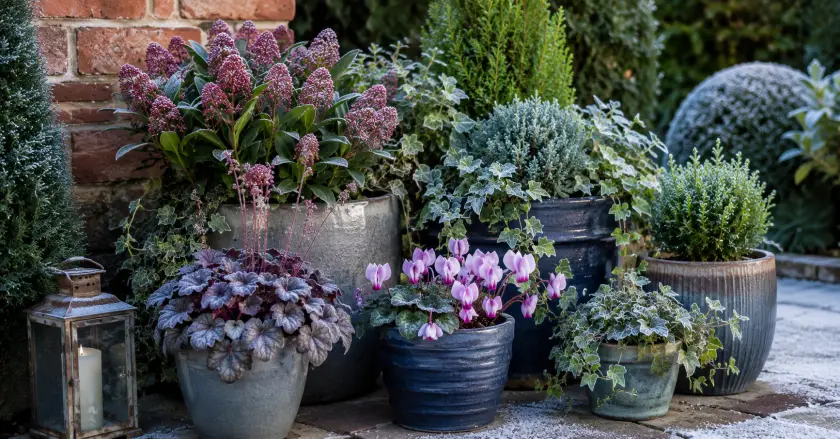
Roots in pots are far more exposed than roots in the ground, so choose tough plants and give them extra care.
- Good pot plants: heuchera, skimmia, winter heather, ivy, hellebores, Cyclamen coum, sarcococca, dwarf conifers and small grasses
- Drainage: use pots with holes and a free-draining mix; see our best soil mix guide
- Pot feet: raise pots so they do not sit in puddles or freeze to the patio
- Frost-proof pots: choose frost-resistant terracotta, stone or thick plastic
- Shelter: group pots against a house wall
For more container ideas, see our guides to container gardening on patios, year-round balcony plants and plants for small outdoor spaces.
Plants for Wet Winters
Many plants that tolerate cold fail in prolonged wet. In heavy, damp soil, dogwood, hellebores, hardy ferns, skimmia and sturdy grasses cope better than Mediterranean plants such as lavender and rosemary, which need sharp drainage.
- Dig in plenty of organic matter to improve clay
- Plant slightly proud of the soil surface in heavy ground
- Use raised beds where water sits
- Avoid walking on or digging wet soil, which compacts it
How to Protect Plants in Winter
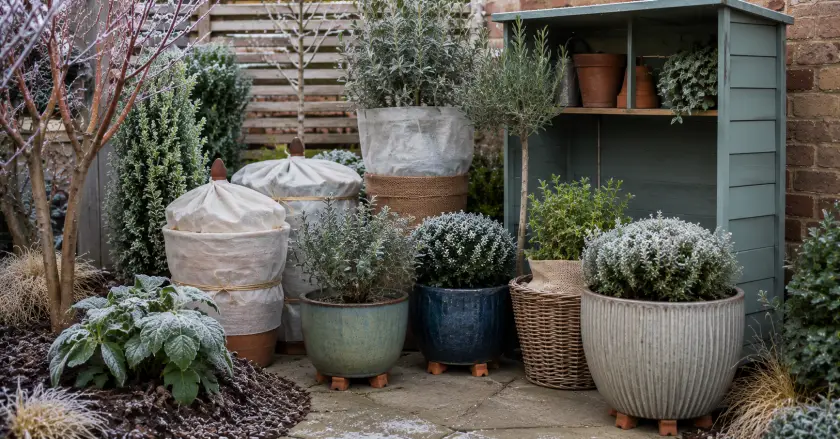
The RHS advice on preventing winter damage focuses on protecting roots, sheltering plants and fixing drainage:
- Protect pot roots: wrap containers in bubble wrap or hessian, or group them in a sheltered spot
- Mulch: spread compost, leaf mold or bark around plants to insulate roots
- Shelter: walls, hedges and windbreaks reduce wind damage
- Fix drainage: waterlogged soil damages roots and makes young trees more likely to blow over
- Shake off heavy snow from evergreen branches
- Use fleece over tender plants on frosty nights, removing it once the cold passes
Help plants go into winter healthy: avoid late feeding that encourages soft growth, and avoid heavy pruning just before frost. Our autumn plant care guide covers what to do before winter, and our guide to overwintering geraniums explains how to save tender patio plants.
Common Mistakes to Avoid
- Ignoring wet soil: many plants die from soggy roots, not frost
- Using small pots outdoors: they freeze solid and dry out in wind
- Buying half-hardy plants for exposed spots: check the RHS rating first
- Pruning hard in late autumn: fresh cuts and soft regrowth are damaged by frost
- Clearing everything: seed heads and grasses add winter structure and shelter wildlife
Expert Tip from Sawera Shahid
Build winter resilience in layers: evergreen shrubs for structure, tough perennials and bulbs for flowers, and a few pots of seasonal color near the door. Plant new shrubs and perennials in early autumn, while the soil is still warm, so roots establish before hard weather. And plan around the view from your windows, because in winter that is how you will see your garden most.
Frequently Asked Questions
What outdoor plants survive British winters?
Hellebores, snowdrops, Cyclamen coum, winter heather, skimmia, mahonia, sarcococca, yew, ivy, heuchera, dogwood, hardy ferns, winter jasmine and sturdy ornamental grasses are all reliable in most UK gardens.
What does H4 mean on a plant label?
It is the RHS hardiness rating. H4 plants tolerate about -10 to -5°C and are hardy in an average winter across most of the UK. For cold or exposed gardens, choose H5 or higher.
Which winter plants are best for pots?
Heuchera, skimmia, winter heather, ivy, hellebores, Cyclamen coum, sarcococca and dwarf conifers. Use frost-proof pots with drainage holes, raise them on feet and group them in a sheltered spot.
What plants cope with wet winter soil?
Dogwood, hellebores, hardy ferns, skimmia and sturdy grasses cope better than most. Improve drainage with organic matter or raised beds where water sits.
How do I protect plants from frost in the UK?
Mulch roots, wrap or group pots against a wall, raise pots on feet, use fleece over tender plants on frosty nights, and make sure soil drains well.
Final Thoughts
The outdoor plants that survive British winters best are tough, well-drained and matched to their spot. Check the RHS hardiness rating, combine evergreens, winter flowers and colorful stems, improve drainage and protect your pots, and your garden can look alive from November to March.
Explore more ideas in our outdoor plants collection.