

🌿 Key Takeaways
- How to care for aloe vera plant comes down to three rules — bright indirect light, infrequent watering, and well-draining soil
- Does aloe vera need sunlight? Yes — aloe vera sunlight requirements are 6–8 hours of bright indirect light daily. Direct intense sun causes leaf scorch
- Aloe vera plant water needs are minimal — water only when soil is completely dry 2 inches deep, roughly every 2–3 weeks
- Best potting soil for aloe vera plants is a cactus or succulent specific mix with added perlite — never standard potting compost
- Is aloe vera safe for cats? No — aloe vera cats toxicity is real. Both cats and dogs experience digestive upset if they ingest aloe leaves or gel
- Can you eat aloe vera from the plant? The clear inner gel is safe for topical skin use — raw ingestion of unprocessed aloe is not recommended
- Advantages of aloe vera plant include skin healing, burn relief, air purification, and one of the most useful gel-producing plants you can keep at home
- Browse our full indoor plant care guides for companion plant ideas that suit aloe vera’s care requirements
Why Aloe Vera Belongs in Every Home
The aloe vera plant occupies a unique position in the houseplant world — simultaneously one of the most visually striking succulents available and one of the most genuinely useful plants you can keep in your home. Its thick, architectural, sword-like leaves store healing gel that has been used medicinally for over 6,000 years. Its near-indestructible resilience makes it one of the easiest plants to keep alive. And its dramatic rosette form adds structural interest to any room it inhabits.
Yet despite its reputation for being virtually foolproof, aloe vera is one of the most commonly killed houseplants — almost always through overwatering. The plant that survives droughts in the wild dies in the average home because its owners treat it like a tropical houseplant rather than the desert succulent it actually is.
This complete guide to aloe vera care for home covers everything — from the correct aloe vera sunlight and soil requirements to how to water aloe vera, propagation from pups, gel harvesting, flowering, troubleshooting, and the full range of advantages of aloe vera plant for your home and health. Whether you are a first-time plant owner or an experienced collector, this guide gives you everything you need to grow a thriving aloe vera for years.
What Is an Aloe Vera Plant?
Botanical Identity and Origins
Aloe vera (Aloe barbadensis Miller) is a succulent perennial plant native to the Arabian Peninsula — specifically the arid, well-drained rocky environments of Oman, Yemen, and surrounding regions. It now grows naturalized across tropical and subtropical regions worldwide, thriving in Mediterranean climates, the Caribbean, South Africa, and warm parts of North and South America.
As a succulent, aloe vera stores water in its thick, fleshy leaves — an adaptation to the long dry periods of its native desert environment. This water-storage mechanism is the key to understanding how to care for aloe vera plant correctly. It is designed to survive drought, not consistent moisture. Every care decision — from aloe vera plant water frequency to aloe vera potting mix choice — flows from this fundamental biological fact.
The Gel Inside — What Makes Aloe Vera Unique
What distinguishes aloe vera from other succulents is the clear, mucilaginous gel contained within its leaves. This gel — technically called aloe vera latex and parenchyma — contains over 75 active compounds including vitamins, minerals, enzymes, amino acids, and polysaccharides. It is this composition that gives aloe vera its remarkable skin-healing, anti-inflammatory, and wound-soothing properties.
People have used aloe vera gel for at least 6,000 years — ancient Egyptians called it “the plant of immortality” and used it in burial preparations. It appears in Ayurvedic, Chinese, and Greek medical traditions as a topical treatment for burns, wounds, and skin irritation. Modern science has confirmed many of these traditional applications — particularly the gel’s effectiveness for first and second-degree burns and sunburn relief.
Aloe Vera vs Other Aloe Species
Not all aloes are aloe vera. The genus Aloe contains over 500 species — most of which look similar but have different care requirements and gel compositions. Aloe barbadensis Miller (aloe vera) is the specific species with the most documented healing properties and the most widely grown for home use. When purchasing, confirm you are buying Aloe barbadensis rather than a decorative aloe species if you want the gel for skincare use.
Advantages of Aloe Vera Plant — Beyond Decoration
What Are the Advantages of Aloe Vera Plant for the Home?
The advantages of aloe vera plant extend far beyond its striking appearance. Understanding what this plant actually does for your home and health helps explain why it has been cultivated by humans for thousands of years.
Skin Healing and First Aid
The most immediate and practical of all advantages of aloe vera plant — the gel provides effective, immediate relief for minor burns, sunburn, skin irritation, cuts, insect bites, and dry skin conditions. Having a mature aloe vera in your kitchen — where minor burns from cooking are the most common household injury — is one of the most genuinely useful plant decisions you can make.
Is aloe vera good for your face? Yes — aloe vera gel is one of the most widely used skincare ingredients globally. Applied directly from the plant, it hydrates skin without clogging pores, soothes inflammation and redness, accelerates healing of minor blemishes, and provides a cooling, calming effect on sensitive skin. It is particularly effective for:
- Sunburn relief
- Post-shaving skin soothing
- Moisturizing dry or flaky skin
- Reducing redness from acne or skin irritation
- Minor wound care and abrasion healing
Air Purification
Like many succulents, aloe vera performs CAM (Crassulacean Acid Metabolism) photosynthesis — absorbing carbon dioxide and releasing oxygen at night rather than during the day. This makes it an excellent bedroom plant for improving overnight air quality. It also absorbs benzene and formaldehyde — compounds commonly found in household cleaning products and building materials. Our guide on air-purifying indoor plants that actually work ranks aloe vera among the most effective air-purifying succulent species available.
Low-Maintenance Resilience
One of the most underrated advantages of aloe vera plant for busy plant owners is its extraordinary tolerance of neglect. A well-established aloe vera in the right soil and pot can survive weeks without water — making it one of the most forgiving houseplants available for people who travel frequently or simply forget to water. Our guide on top drought-resistant plants identifies aloe vera as one of the top drought-tolerant indoor plants available at any price point.
Feng Shui Benefits
In Feng Shui practice, aloe vera is considered a protective plant that absorbs negative energy and promotes healing energy flow. Its upward-pointing leaves are associated with positive chi direction. Our guide on Feng Shui indoor plants covers the best placement positions for aloe vera within the Bagua energy map.
Complete Aloe Vera Care Guide
Aloe Vera Care at a Glance
| Care Factor | Aloe Vera Requirement |
|---|---|
| Light | Bright indirect light — 6–8 hours daily |
| Watering | Every 2–3 weeks — only when soil completely dry |
| Temperature | 18°C–24°C (65°F–75°F) — not frost tolerant |
| Humidity | Low to moderate — tolerates dry indoor air |
| Soil | Well-draining cactus/succulent mix |
| Fertilizer | Optional — diluted feed once monthly in spring/summer |
| Pot | Terracotta or ceramic with drainage holes |
| Toxicity | Toxic to cats and dogs if ingested |
Aloe Vera Sunlight Requirements
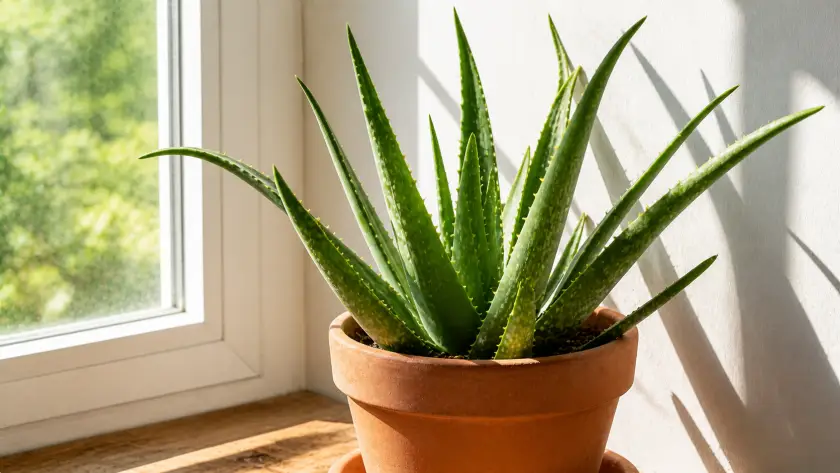
Does Aloe Vera Need Sunlight?
Does aloe vera need sunlight? Yes — adequate light is the single most important environmental factor in aloe vera plant health. Does aloe vera plant like sun? It loves bright light, but the intensity and directness of that light matters significantly.
Aloe vera sunlight requirements by window position:
| Window Orientation | Light Quality | Aloe Vera Suitability |
|---|---|---|
| South-facing | Bright direct sun | ✅ Best — ideal with some sheer curtain filtering |
| West-facing | Afternoon direct sun | ✅ Good — monitor for afternoon heat scorch |
| East-facing | Morning sun + indirect | ✅ Excellent — gentle and consistent |
| North-facing | Indirect only | ⚠️ Tolerated — growth will be slow |
Do Aloe Plants Need Sunlight All Day?
Do aloe plants need sunlight continuously? Do aloe plants like sun exposure all day long? Aloe vera thrives with 6–8 hours of bright light daily — this does not need to be continuous direct sun. In fact, direct intense afternoon sun in summer can cause leaf scorch — turning the normally green leaves orange or brown.
Aloe plant sun balance is about bright, consistent light rather than maximum intensity. A south or west-facing window with a sheer curtain filtering the most intense midday sun provides ideal aloe vera sunlight conditions for most home environments.
Do Aloe Vera Plants Need Sunlight When Grown Indoors?
Do aloe vera plants need sunlight when kept exclusively indoors? Yes — aloe vera cannot thrive without adequate light indoors. If your home has limited natural light, supplemental grow lights for indoor plants can effectively replace natural light. Our complete guide to indoor light covers exactly how to set up grow lights for succulents and aloe vera specifically.
How to Water Aloe Vera
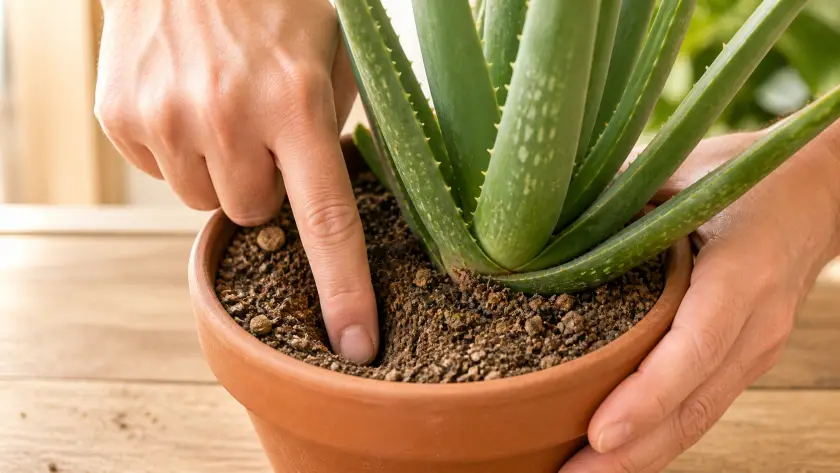
Aloe Vera Plant Water — The Most Important Care Rule
How to water aloe vera correctly is the single most important skill in caring for aloe — and the area where most plant owners go wrong. The universal rule for aloe watering: the soil must be completely dry before you water again. No exceptions.
Aloe vera plant water schedule by season:
- Spring and Summer: Every 2–3 weeks — check soil first
- Autumn: Every 3–4 weeks
- Winter: Once a month or less — the plant is dormant
Always use the finger test before every watering. Push your finger 2 inches into the soil — if any moisture remains at 2 inches depth, wait. Aloe watering only happens when the soil is genuinely, completely dry throughout.
How to Water Aloe Vera — Step by Step
How to water aloe vera correctly when the soil is dry:
- Take the plant to a sink or outdoor area
- Water deeply and slowly — pour until water flows freely through drainage holes
- Allow to drain completely — never let the pot sit in standing water
- Return to its light position and do not water again until completely dry
Water quality for aloe vera: Hard tap water high in minerals causes white salt crust buildup on soil and can contribute to brown leaf tips over time. Use filtered water or allow tap water to sit uncovered for 24 hours before use to allow chlorine to dissipate.
Common Watering Mistakes
Overwatering — by far the most common cause of aloe vera plant death. Signs: yellow or translucent leaves, mushy stems at the base, musty soil smell.
Watering on a schedule — never water aloe on a fixed schedule without checking soil first. Seasonal temperature changes, pot size, and soil type all affect drying time dramatically.
Evening watering — always water aloe in the morning. Our guide on the worst times to water your plants explains exactly why evening watering creates root rot conditions that are particularly damaging to succulents like aloe.
Best Potting Soil for Aloe Vera Plants
What Soil Does Aloe Vera Need?
Aloe soil must drain freely and rapidly — this is non-negotiable. The root systems of aloe vera plants are adapted to the well-drained, rocky, sandy soils of their native desert habitat. They cannot tolerate moisture-retaining soil for any extended period.
Best potting soil for aloe vera plants:
- Cactus/succulent specific potting mix — the foundation for all aloe vera potting mix options
- Add 20–30% perlite or coarse sand for additional drainage
- Add a small amount of pumice if available — improves drainage and aeration
Soil for aloe vera — what to avoid:
- Standard all-purpose potting compost — retains too much moisture
- Garden soil — too heavy and compacts in containers
- Peat-heavy mixes — water-retentive by nature
Our comprehensive guide on the best soil mix for every plant type covers exactly how to build the ideal aloe vera potting mix from scratch.
Pot Selection for Aloe Vera
Terracotta is the single best pot material for aloe vera — it is porous, wicking excess moisture away from the root zone and providing the dry conditions aloe roots prefer. Ceramic and concrete pots are acceptable alternatives. Plastic pots retain moisture longer — acceptable only if you are disciplined about underwatering.
Always use pots with drainage holes. A pot without drainage is a slow death sentence for aloe vera plants regardless of how carefully you water.
Temperature and Climate Needs
Ideal Temperature for Aloe Vera
- Ideal indoor temperature: 18°C–24°C (65°F–75°F)
- Minimum nighttime temperature: Above 10°C (50°F)
- Maximum heat tolerance: Around 32°C (90°F) in low humidity conditions
Avoid placing aloe vera near radiators, heating vents, or air conditioning units — all create extreme local temperature fluctuations that stress the plant. Cold windowsills in winter — particularly north-facing single-glazed windows — can expose roots to damaging cold even when room temperature feels comfortable.
Can Aloe Vera Live Outdoors?
Aloe plant sun exposure outdoors can dramatically accelerate growth during warm months. Moving aloe vera outdoors in summer — to a sheltered position with bright indirect light — is beneficial. However:
- Bring indoors before nighttime temperatures drop below 10°C
- Never leave outdoors over winter in temperate climates
- Protect from direct intense midday sun outdoors — outdoor sun intensity is far greater than indoor window light and causes rapid leaf scorch
Fertilizing Aloe Vera
Aloe vera is a light feeder — it does not require frequent fertilization and will thrive for years in fresh potting mix with minimal additional feeding.
Feeding schedule:
- Spring: Once monthly with diluted cactus/succulent fertilizer (half strength)
- Summer: Once monthly — continue the same diluted feed
- Autumn: Stop feeding entirely
- Winter: No feeding — the plant is in a rest period
Never apply fertilizer at full strength — the sensitive roots of succulents are easily burned by excess nutrients. Dilute to half or even quarter strength for the safest results.
How to Grow Aloe Vera — Repotting Guide
How Do I Grow Aloe Vera Plants in Pots?
How do I grow aloe vera plants successfully over the long term requires understanding the repotting cycle. Aloe vera grows slowly indoors but does eventually outgrow its container — particularly as it produces pups (baby plants) around its base.
When to Repot Aloe Vera
- Every 2–3 years as a general maintenance schedule
- When roots emerge from drainage holes
- When the plant becomes top-heavy and unstable
- When pups are forming and crowding the pot
- When soil dries out within 2–3 days of watering
How to Plant an Aloe Plant — Repotting Step by Step
How to plant an aloe plant when repotting:
- Water 24 hours before repotting to reduce stress
- Choose a new pot 2–3cm wider — terracotta preferred
- Fill one-third with fresh dry cactus/succulent mix
- Tip the plant out gently — support the root ball, never pull by leaves
- Shake off old soil and inspect roots — trim any brown or mushy roots
- Position in the new pot at the same depth as before
- Fill around roots with fresh dry potting mix — do not water immediately
- Wait 5–7 days before first watering — allows cut root surfaces to heal
How to plant an aloe plant from scratch in a new pot follows the same steps — use dry soil and wait before watering to prevent rot at the cut base.
Our guide on repotting mistakes to avoid covers the most common errors plant owners make when repotting succulents and aloe vera specifically.
How to Grow Aloe Vera from Pups — Propagation Guide
Aloe Plant How to Grow New Plants from Pups
Aloe plant how to grow additional plants is straightforward — aloe vera does the hard work for you by producing offsets called pups around the base of the mother plant. Each pup is a genetically identical copy of the parent plant that, once separated, will grow into a full independent aloe vera.
How to Propagate Aloe Vera — Step by Step
How to grow aloe vera from pups:
- Wait until pups are at least 8–10cm tall with their own visible roots
- Remove the entire mother plant from its pot
- Identify pups — they will be attached at the root zone of the mother plant
- Use clean, sharp scissors or a knife to cut the pup from the mother — include as much of the pup’s own root system as possible
- Allow both the pup and the mother plant’s cut surfaces to dry and callous for 24–48 hours in open air
- Plant the pup in its own small terracotta pot with dry cactus/succulent mix
- Do not water for 5–7 days after planting
- Begin normal watering once established — every 2–3 weeks when soil is completely dry
For a broader guide to propagating different houseplant types, our step-by-step guide on how to propagate houseplants at home covers propagation methods across multiple species.
Can You Eat Aloe Vera from the Plant?
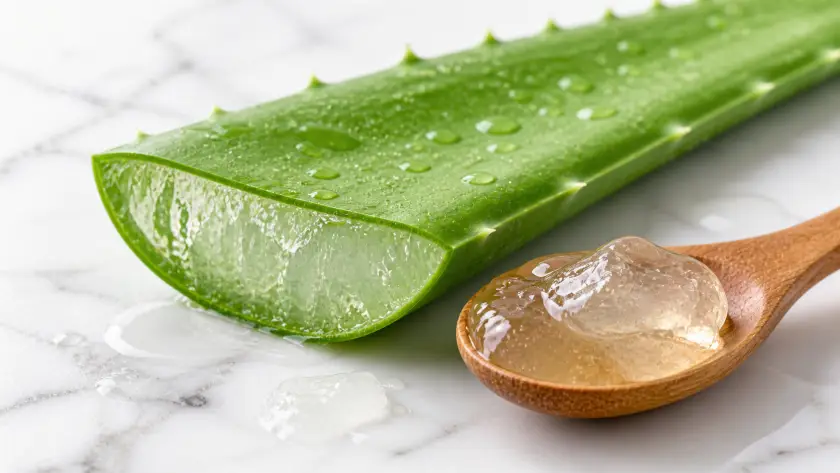
Is It Safe to Use Aloe Vera Gel from the Plant?
Can you eat aloe vera from the plant in its raw, unprocessed form? The answer requires important nuance. The clear inner gel of aloe vera leaves is safe for topical skin application and is widely used for this purpose. However, raw unprocessed aloe vera should not be ingested:
- Raw aloe vera gel contains aloin — a yellow sap found between the green leaf skin and the clear inner gel — which is a potent laxative compound and can cause serious digestive distress
- Processed aloe vera products (drinks, supplements) have the aloin removed and are safe for consumption
- Topical gel (directly from the leaf) is safe for skin application when applied externally
Is aloe vera good for your face when applied directly from the plant? Yes — the clear inner gel applied topically to skin is safe, effective, and well-tolerated by most skin types.
How to Harvest Aloe Vera Gel Safely
- Choose a mature, healthy outer leaf — the oldest leaves closest to the base
- Cut the leaf cleanly near the base with a clean sharp knife
- Stand the cut leaf upright in a glass for 10–15 minutes — allow the yellow aloin sap to drain away
- Lay the leaf flat and cut away the green outer skin along both sides
- Scoop out or scrape the clear inner gel
- Apply directly to skin for burns, sunburn, or skin irritation
- Store unused gel in a sealed container in the refrigerator for up to one week
Aloe Vera Flower Care — Can It Bloom Indoors?
In its natural outdoor environment, a mature aloe vera produces tall flower spikes bearing tubular red, orange, or yellow blooms — dramatic and architecturally striking. Indoors, aloe vera flowering is rare — the plant requires intense consistent light and temperature fluctuations that most home environments cannot provide.
To encourage indoor aloe vera flowering:
- Provide the maximum available aloe vera sunlight — south or west-facing window with no obstruction
- Allow a cooler winter rest period (around 10–15°C) followed by warmth in spring — this temperature differential can trigger flowering
- Avoid frequent repotting — plants that are slightly pot-bound flower more readily
- Feed with a phosphorus-rich fertilizer once in early spring
- Be patient — flowering is most common in plants over 4–5 years old
If blooms appear, enjoy them — they typically last 2–4 weeks. The flower spike can be trimmed at the base once blooming is complete.
Is Aloe Vera Safe for Cats and Dogs?
Aloe Vera Cats and Dogs — Toxicity Information
Is aloe vera safe for cats? No — aloe vera cats toxicity is a real and important concern for pet-owning households. The saponins and anthraquinones in aloe vera leaves cause vomiting, diarrhoea, lethargy, and abdominal cramping in cats and dogs if ingested. Symptoms are rarely life-threatening but are unpleasant and require veterinary attention if severe.
Aloe vera cats safety guidelines:
- Place aloe vera plants on genuinely inaccessible high shelves or in rooms pets cannot enter
- Never leave freshly cut aloe leaves where pets can reach them — the gel and outer skin are both toxic if consumed
- The gel is safe for topical application on human skin — but should never be applied to pets
For complete pet-safe plant alternatives and placement strategies, our guides on cat-friendly plants and dog-friendly plants give comprehensive lists of safe alternatives to aloe vera for pet-owning households.
Aloe Vera Problems — Diagnosis and Solutions
| Problem | Most Likely Cause | Solution |
|---|---|---|
| Yellow/translucent leaves | Overwatering / root rot | Stop watering, let dry, repot if needed |
| Brown leaf tips | Sunburn, mineral buildup, or low humidity | Filter water, adjust light, trim tips |
| Leaf curling or wrinkling | Underwatering | Water thoroughly — leaves will plump within days |
| Stretching toward light (etiolation) | Insufficient light | Move to brighter position |
| Orange/red leaf coloring | Too much direct sun or heat stress | Move to bright indirect light |
| Mushy base | Severe root rot | Emergency repot, remove all affected roots |
| White crusty soil surface | Mineral buildup from hard water | Flush with filtered water, switch water source |
| Leaning plant | Reaching for light or too small pot | Rotate plant, repot into more stable container |
Why Is My Aloe Vera Plant Leaning Over?
An aloe vera plant leaning to one side is almost always reaching toward its light source — indicating insufficient light from directly above. Rotate the pot 90 degrees every 2 weeks to encourage even growth in all directions, and move to a brighter position if leaning is severe. Overwatering can also cause a soft, unstable base that causes leaning — check soil moisture as a first diagnostic step.
Root Rot — The Most Serious Aloe Problem
Root rot from overwatering is the most serious problem aloe vera plant owners face. If you notice mushy, discolored stems at the base combined with persistently wet soil, act immediately. Our dedicated guide on root rot — how to identify, prevent and treat it gives the complete recovery process. For a step-by-step rescue plan for severely struggling plants, our guide on how to revive a dying plant is essential reading.
Yellow Leaves
Yellow aloe vera leaves almost always indicate overwatering — the same pattern seen across most succulent species. Our guide on why plant leaves turn yellow covers the complete diagnostic process for yellowing across all houseplant species.
Signs of Overwatering Aloe Vera
Consistently wet soil, soft or translucent leaves, musty soil odor, and a mushy or discolored stem base are all overwatering warning signs. Our guide on signs you are overwatering gives the complete corrective process for aloe vera and all succulent species.
Where to Display Aloe Vera in Your Home
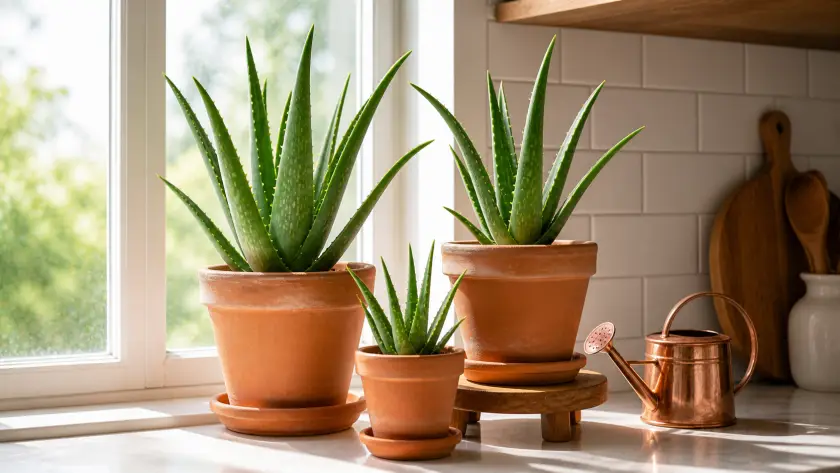
Kitchen
The kitchen is the single most practical location for aloe vera — keeping its burn-soothing gel within immediate reach of the most common household minor burns from cooking. Position on a sunny kitchen windowsill for adequate aloe vera sunlight while maintaining easy access for gel harvesting.
Bedroom
Night-time oxygen production from CAM photosynthesis makes aloe vera an excellent bedroom plant. Position beside a south or west-facing bedroom window. Our guide on decorating your bedroom with plants covers optimal placement for succulents in bedroom environments.
Home Office
Aloe vera’s air-purifying properties and near-zero maintenance requirements make it ideal for home offices — it will not suffer if you occasionally forget about it during busy work periods. Our guide on improving your home office with plants covers specific positioning recommendations for succulents in work environments.
Living Room
A large, mature aloe vera in a striking terracotta or concrete pot creates a sculptural focal point in any living room. Pair it with trailing plants for textural contrast — our guide on trailing plants that look stunning on shelves gives excellent companion plant suggestions.
Bathroom
Bathrooms with adequate natural light suit aloe vera well — particularly if they are humid. Our guide on the best plants for your bathroom identifies aloe vera as one of the most practical bathroom plant choices for sunny bathroom environments.
Frequently Asked Questions
How Often Should I Water Aloe Vera?
How to water aloe vera on a schedule? Avoid fixed schedules entirely — always check soil first. In spring and summer water every 2–3 weeks when soil is completely dry 2 inches deep. In autumn every 3–4 weeks. In winter once a month or less. Aloe watering frequency is always determined by soil dryness, never by the calendar.
Does Aloe Vera Need Sunlight — How Much?
Does aloe vera need sunlight? Yes — 6–8 hours of bright light daily. Does aloe vera plant like sun directly? It tolerates some direct morning sun but prefers bright indirect light — intense afternoon sun causes leaf scorch. Aloe vera sunlight from a south or east-facing window provides the ideal combination of intensity and duration. Do aloe plants like sun all day? No — bright indirect is better than relentless direct sun exposure.
What Is the Best Potting Soil for Aloe Vera Plants?
Best potting soil for aloe vera plants is a cactus or succulent specific potting mix with 20–30% added perlite. Aloe vera potting mix must drain immediately — never use standard potting compost. Aloe soil that retains moisture for more than 5–7 days after watering is too dense and will cause root rot regardless of how carefully you manage watering frequency.
Is Aloe Vera Good for Your Face?
Is aloe vera good for your face? Yes — the clear inner gel applied directly from a freshly cut leaf is safe, effective, and widely recommended for moisturizing, soothing inflammation, reducing redness, and healing minor skin irritation. It is particularly effective for sunburn, post-shaving skin soothing, and dry skin moisturizing. The outer green skin and yellow aloin sap should be avoided — only the clear inner gel is used for skincare.
Can You Eat Aloe Vera from the Plant?
Can you eat aloe vera from the plant directly? Not safely in its raw unprocessed form. Raw aloe vera leaves contain aloin — a compound removed from commercial aloe vera drinks and supplements — which causes significant digestive distress if ingested in quantity. The clear inner gel is safe for topical skin application. For internal consumption, use commercially processed aloe vera products that have had aloin removed.
Is Aloe Vera Safe for Cats?
Is aloe vera safe for cats? No — aloe vera cats interaction is toxic. The saponins and anthraquinones in aloe vera leaves cause vomiting, diarrhoea, and lethargy in cats and dogs if ingested. Keep aloe vera plants on high shelves inaccessible to pets. For pet-safe plant alternatives, our guide on cat-friendly plants gives complete safe options.
How Do I Grow Aloe Vera from Pups?
How do I grow aloe vera plants from the pups that appear around the base? Wait until pups reach 8–10cm with their own roots. Remove the mother plant from its pot, identify and cut pups from the root zone with clean scissors, allow cut surfaces to dry 24–48 hours, and plant in dry cactus mix. Wait 5–7 days before first watering. This is the only reliable propagation method — aloe plant how to grow from leaf cuttings does not work reliably.
What Are the Advantages of Aloe Vera Plant?
Advantages of aloe vera plant include immediate first aid gel for burns and skin irritation, air purification through nighttime oxygen production, low maintenance requiring minimal watering, long lifespan (well-cared-for aloe vera plants live for decades), propagation through pups providing free new plants, Feng Shui protective energy properties, and one of the most striking succulent forms available for home display.
How to Care for Aloe Vera Plant in Winter?
Taking care of aloe vera plant in winter requires three adjustments: reduce watering to once monthly or less, stop fertilizing entirely, and ensure adequate light — winter daylight reduction is often insufficient for aloe vera. Supplement with grow lights for indoor plants if natural light decreases significantly. Keep away from cold windowsills and heating vents. Winter is the plant’s natural rest period — minimal intervention produces the best results.
Related Guides on Patch Plants
- 🐍 Snake Plant Care Guide — Complete Sansevieria Tips
- 🌸 Peace Lily Care Guide — Complete Spathiphyllum Tips
- 💧 Worst Times to Water Your Plants — Avoid These Mistakes
- 🔬 Root Rot — How to Identify, Prevent and Treat It
- 🌱 How to Propagate Houseplants at Home — Step by Step
- 🪴 The Best Soil Mix for Every Plant Type
- 🌿 Top Drought-Resistant Plants for Low-Water Gardens
- 🏠 Complete Guide to Indoor Light and Grow Lights
- 🌱 Browse All Indoor Plant Guides
Final Thoughts
Caring for aloe is one of the most rewarding and practical experiences in houseplant ownership — because this plant gives back in ways that purely decorative houseplants cannot. It heals minor burns. It purifies your air. It produces pups that become new plants. And it asks almost nothing in return beyond adequate aloe vera sunlight, the right aloe vera potting mix, and the restraint to let the soil dry completely before you water again.
Master those three elements — light, soil, and restrained aloe watering — and your aloe vera plant will thrive for years, possibly decades. It will grow from a small pot on a windowsill into a substantial, architectural specimen that commands attention in any room. And every time you cut a leaf to soothe a burn or hydrate dry skin, you will understand exactly why humans have been cultivating this remarkable plant for 6,000 years.
The advantages of aloe vera plant are not marketing — they are genuine, proven, and immediate. Grow one well and experience them firsthand.
According to the Royal Horticultural Society, aloe vera is among the most recommended easy-care houseplants for home growing — combining genuine practical utility, low maintenance requirements, and year-round visual appeal in a single, extraordinarily versatile succulent. 🌿


I don’t think the title of your article matches the content lol. Just kidding, mainly because I had some doubts after reading the article. https://www.binance.bh/register?ref=IXBIAFVY