Key Takeaways
- The best plants for your bathroom conditions thrive on exactly what bathrooms naturally provide — warmth, humidity from shower steam, and consistent temperatures that mirror tropical environments most houseplants evolved in.
- Best bathroom plants no light genuinely exist — ZZ plant, snake plant, cast iron plant, and Chinese evergreen all survive windowless bathrooms on artificial ceiling light alone.
- Bathroom plants that absorb moisture from shower steam — boston fern, calathea, peace lily — actually benefit from the humidity that damages other household items.
- Good bathroom plants for hanging positions include pothos, spider plant, english ivy, and boston fern — all producing trailing growth that looks most dramatic when elevated.
- Best shower plants include eucalyptus, air plants, and boston fern — they thrive when steam surrounds them and use moist air as a supplementary water source.
- Plants for a bathroom without window must be selected carefully — ZZ plant, snake plant, and peace lily are the most reliable where artificial lighting is the only light source.
- Small bathroom plants — haworthia, watermelon peperomia, air plants, baby’s tears — fit perfectly on narrow ledges and limited counter space most bathrooms offer.
- Best plants for your bathroom humidity are tropical species — calathea, peace lily, monstera, boston fern, and anthurium all perform visibly better in shower steam than in dry room air.
- Bathroom hanging plants transform wasted vertical space — a trailing pothos near the shower or a fern above the bath creates layered greenery that makes a functional room genuinely restorative.
- The easiest best plants for your bathrooms for beginners are pothos, spider plant, and ZZ plant — all three tolerate inconsistent watering, low light, and humidity fluctuations without complaint.
Introduction
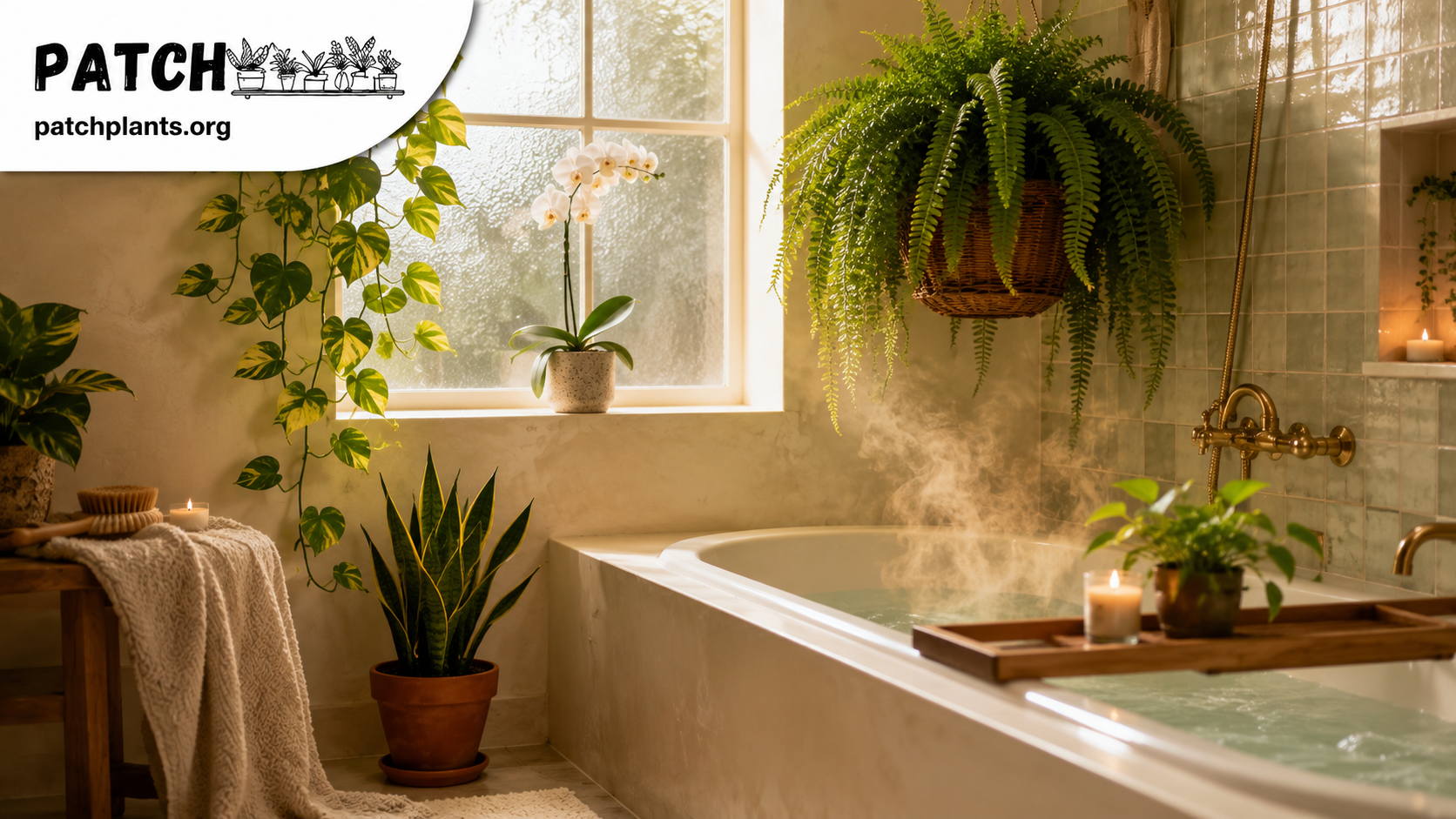
Bathrooms are the most underrated plant environment in any home. They offer consistent warmth from hot water use, reliable humidity from daily showers, and a naturally enclosed environment that holds temperature and moisture in ways that genuinely replicate tropical conditions most popular houseplants evolved in.
The only real challenge with bathroom plants is light — not humidity. Once you choose species that handle lower light conditions, the best plants for your bathroom growing become some of the most effortlessly thriving plants you’ll own. Ferns that need constant misting elsewhere flourish beside a shower. Tropical plants that demand warmth maintain their health naturally in the room where hot water runs daily.
The transformation good bathroom plants create is disproportionate to the effort required. A trailing pothos above the shower, a boston fern hanging beside the window, a snake plant in the corner by the sink — each addition shifts the room from functional to genuinely restorative. This guide covers all 33 best plants for your bathrooms — from the toughest best bathroom plants no light survivors to the most beautiful best plants for your bathroom humidity lovers. For more plant care guidance, explore our complete indoor light guide, complete watering guide, and humidity hacks guide.
The 33 Best Plants for Your Bathroom

1. Pothos
The undisputed champion of good bathroom plants — trailing heart-shaped leaves that grow enthusiastically in low light, tolerate inconsistent watering, and actively benefit from shower humidity. Golden, marble queen, and neon pothos all perform equally well. Hang in a basket or place on a high shelf where vines trail freely. Water every 10–14 days in summer, every 21 days in winter. The high humidity keeps leaves glossy and prevents the brown tips that pothos develops in dry air. ⚠️ Toxic to pets. Full care at our pothos care guide.
2. ZZ Plant
The most reliable of all best bathroom plants no light options — thick waxy leaves and water-storing rhizomes allow it to survive windowless bathrooms where ceiling lighting is the only light source. The glossy dark green foliage adds genuine sophistication, and the plant’s extraordinary resilience means it grows steadily through the neglect that busy bathroom routines create. Water every 3–4 weeks in summer, every 6 weeks in winter. ⚠️ Toxic if ingested. Full care at our ZZ plant care guide.
3. Snake Plant
The most versatile of all good bathroom plants — upright sword-like leaves create architectural presence in bathroom corners while tolerating low light, inconsistent watering, and humidity fluctuations. Snake plants in bathrooms often grow faster than the same plant in drier rooms because shower humidity supports active leaf development. Water every 3–4 weeks in summer, monthly in winter. ⚠️ Toxic to cats and dogs. Full care at our snake plant care guide.
4. Boston Fern
The plant that looks designed specifically for bathrooms — long arching fronds trailing from a hanging basket in steamy air create exactly the lush atmosphere that defines the most beautiful bathroom hanging plants displays. Boston fern is among the finest bathroom plants that absorb moisture, using shower humidity to maintain the consistently moist frond surfaces it needs. Keep soil consistently moist, provide indirect light, and allow shower steam to supplement humidity between waterings. ✅ Pet safe. Full care at our boston fern care guide.
5. Spider Plant
Cheerful arching foliage and dangling spiderette offshoots make spider plant one of the best bathroom hanging plants available — the elevated position allows characteristic runners to hang freely. Spider plants appreciate bathroom humidity, which prevents the brown leaf tip browning that occurs in dry air. They tolerate a wide light range making them suitable for almost any bathroom configuration. Water every 7–10 days in summer. ✅ Non-toxic. Full care at our spider plant care guide.
6. Peace Lily
Combines two exceptional qualities — one of the best bathroom plants that absorb moisture and one of the few low-light houseplants that produces regular elegant white flowers. The atmospheric moisture from showers keeps large leaves hydrated and encourages the regular blooming that defines a well-grown peace lily. Keep soil evenly moist, provide low to medium indirect light. ⚠️ Toxic to cats and dogs. Full care at our peace lily care guide.
7. Aloe Vera
A functional good bathroom plant that doubles as a first-aid kit — the gel inside thick spiky leaves soothes burns and dry skin, making the bathroom a logical placement. In a bright well-ventilated bathroom, aloe thrives where other succulents would struggle. Needs a window position and excellent drainage. Water every 14–21 days — never let roots sit in water. ⚠️ Mildly toxic to pets. Full care at our aloe vera care guide.
8. English Ivy
Trailing romantic vines with old-world charm that thrive in cooler humid environments — perfectly happy climbing trellises, trailing from baskets, or trained across bathroom walls. One of the best bathroom hanging plants for a lush, layered look. Known for air purification which is a bonus in enclosed bathroom spaces. Grows fast — trim regularly to keep tidy. Provide indirect light and water every 7–10 days. ⚠️ Toxic if ingested.
9. Monstera Deliciosa
Iconic split leaves and bold tropical presence make monstera one of the most dramatic best plants for your bathroom humidity lovers. Monstera loves the warmth and humidity that bathrooms naturally provide, often producing larger, more dramatically split leaves in bathroom conditions than in drier rooms. Suitable for larger bathrooms with good indirect light. Water every 10–14 days. ⚠️ Toxic if ingested. Full care at our monstera care guide.
10. Bird’s Nest Fern
Large rippled fronds that look like green waves frozen mid-movement — the bird’s nest fern is more forgiving than most ferns as long as you provide consistent moisture and avoid direct sunlight. Thrives in the warm steamy air of a bathroom and adds instant tropical elegance to shelves or window ledges. Never water into the central nest — water the soil only. Keep consistently moist. ✅ Pet safe.
11. Lucky Bamboo
Instantly adds Zen calm to any bathroom — lucky bamboo grows happily in water alone with no soil required, making it one of the most low-maintenance best plants for your bathroom displays available. Change the water every 2–3 weeks and add a drop of liquid fertiliser monthly. Tolerates low light making it suitable for most bathroom positions. ✅ Non-toxic to humans but mildly toxic to pets.
12. Calathea
Calathea is among the finest best plants for your bathroom humidity — its patterned leaves fold up at night and unfurl each morning, creating a gentle daily ritual to observe. It loves humidity, dislikes harsh light, and needs regular watering — essentially everything a steamy bathroom naturally provides. The vibrant colours and unique patterns make calathea living art for bathroom shelves and counters. Water every 7–10 days with room temperature water. ✅ Pet safe. Full care at our calathea care guide.
13. Philodendron Heartleaf
Glossy heart-shaped leaves spill gracefully from shelves and hanging planters, instantly softening bathroom lines. The philodendron heartleaf prefers low to medium indirect light and thrives in humid conditions — making a steamy bathroom the ideal setting. One of the most forgiving good bathroom plants available, tolerating missed waterings without dramatic response. Water every 10–14 days. ⚠️ Toxic to pets. Full care at our philodendron care guide.
14. Chinese Evergreen
A superhero among best bathroom plants no light options — broad colourful leaves in shades from deep green to silver and pink, thriving in minimal light and high humidity. Excellent air purifier keeping post-shower bathroom air fresh and clean. Sensitive to cold drafts so avoid positioning near exterior windows in winter. Water every 10–14 days allowing top inch of soil to dry between waterings. ⚠️ Toxic if ingested.
15. Cast Iron Plant
True to its name — nearly indestructible. Doesn’t need much light, tolerates sporadic watering, and handles the high humidity of a bathroom without complaint. One of the most reliable plants for a bathroom without window as it genuinely thrives on artificial light alone. Deep green understated elegance without demanding attention — perfect for low-drama bathroom greenery. Water every 14–21 days. ✅ Pet safe.
16. Orchid
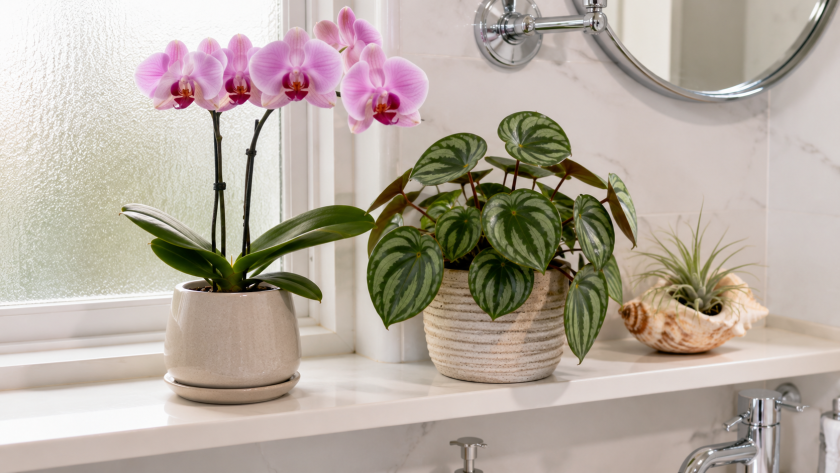
Orchids are considered fussy but bathrooms provide exactly the humidity they need to thrive. With intricate elegant blooms they transform an ordinary bathroom into a luxurious spa setting. Prefer bright indirect light and careful watering — water every 7–10 days allowing roots to dry slightly between waterings, and empty the saucer completely. Blooms last months in good bathroom humidity conditions. ✅ Non-toxic. See our 23 blooming indoor plants guide for more flowering options.
17. Fernwood Mikado
A stylish compact twist on the traditional snake plant — thin upright leaves clustered like a fountain make it an excellent choice for tighter bathroom spaces. Thrives in low-light humid bathroom conditions while requiring minimal watering. Great for modern minimalist bathrooms where clean architectural lines are the design priority. Water every 3–4 weeks. ⚠️ Toxic if ingested. See our snake plant care guide for full care details.
18. Rubber Plant
Bold and dramatic with large glossy leaves that steal attention wherever they grow. In bathrooms, humidity helps keep broad leaves healthy and shiny — rubber plants in bathroom conditions often display richer, deeper colour than the same plant in drier rooms. Suits larger bathrooms with good indirect light. Water every 10–14 days. ⚠️ Toxic if ingested. Full care at our rubber plant care guide.
19. Watermelon Peperomia
Charming patterned leaves that genuinely resemble tiny watermelons make this one of the most characterful small bathroom plants available. Loves humid environments and thrives in bright indirect light. Compact size fits beautifully on bathroom shelves, counters, and window ledges without overwhelming limited space. Pet-friendly and forgiving of occasional missed waterings. Water every 10–14 days. ✅ Pet safe.
20. Baby’s Tears
Delicate fast-growing plants that spread a lush carpet of tiny leaves — fantastic small bathroom plants because they adore the moisture and humidity that bathroom use provides, practically drinking it from the air. Work beautifully as filler plants around the base of larger bathroom pots or trailing over shelf edges. Need consistently moist soil and will dry out quickly if neglected. Water every 5–7 days. ✅ Pet safe.
21. Air Plants
The most fascinating best shower plants available — they require no soil at all, absorbing water and nutrients directly through their leaves from the humid air that surrounds them. Bathrooms are near-perfect environments because shower steam provides the atmospheric moisture air plants need between their weekly soaking sessions. Tuck into shells, hang from strings, or mount on driftwood for quirky bathroom displays. Soak in water for 20–30 minutes weekly. ✅ Non-toxic.
22. Lavender
For bathrooms with a bright sunny window, lavender transforms the space into a genuine aromatherapy retreat — the calming fragrance released by leaves and flowers makes every shower feel spa-like. Needs plenty of direct sun and well-drained soil; the bathroom humidity helps keep the plant hydrated but drainage must be excellent. Water every 10–14 days allowing soil to dry between waterings. ✅ Pet safe. See our indoor plants that smell amazing guide for more fragrant options.
23. Swiss Cheese Vine
If you love monstera but don’t have room for a large plant, swiss cheese vine (Monstera adansonii) offers the same holey tropical character in a compact trailing form. Thrives in humid bathroom conditions and bright indirect light — let it trail from a shelf or train it to climb for a more dramatic effect. One of the best bathroom hanging plants for adding tropical character in smaller bathrooms. Water every 10–14 days. ⚠️ Toxic if ingested.
24. Tradescantia Zebrina
Vibrant purple and silver striped leaves add a bold colour splash to any bathroom — one of the most visually striking good bathroom plants in any collection. Fast-growing and humidity-loving, tradescantia thrives in bathroom conditions with moderate natural light. The trailing vines create a lush almost-magical atmosphere from shelves and hanging baskets. Trim regularly to keep bushy and full. Water every 7–10 days. ✅ Pet safe.
25. Anthurium
All drama and beauty — waxy heart-shaped flowers in red, pink, or white thrive in the warm steamy environments that bathrooms provide. One of the most rewarding best plants for your bathroom humidity as the elevated moisture actively encourages the continuous blooming that makes anthurium such a spectacular display plant. Keep soil slightly moist and provide bright indirect light. ⚠️ Toxic if ingested. Full care at our anthurium care guide — coming soon.
26. Parlor Palm
For bathrooms with vertical space and good indirect light, the parlor palm adds soft feathery fronds that create a relaxed tropical feel without demanding much care. Incredibly tolerant of low light and fluctuating humidity — one of the few palms genuinely suited to bathroom conditions. Pet-safe and slow-growing which means it maintains its proportions without outgrowing bathroom space quickly. Water every 7–10 days. ✅ Pet safe.
27. Silver Satin Pothos
Large velvety green leaves dusted with silvery spots that shimmer in light — silver satin pothos behaves like standard pothos in terms of resilience but offers a more sophisticated, muted aesthetic that suits modern bathroom design. Trails beautifully from high shelves or hanging baskets and benefits enormously from the steady bathroom humidity. Water every 10–14 days. ⚠️ Toxic if ingested.
28. Lemon Button Fern
A smaller more compact cousin of the classic boston fern — round cheerful fronds release a subtle lemony scent when brushed against, adding gentle freshness to bathroom air. Ideal for bathroom shelves where a full boston fern would be too large. Thrives in high humidity and filtered light making it a natural small bathroom plant choice. Keep consistently moist. Water every 5–7 days. ✅ Pet safe.
29. Grape Ivy
Glossy dark green leaves love humid air and moderate light — grape ivy is a resilient low-maintenance trailing plant for bathrooms with small windows. The sophisticated vineyard-inspired vibe works well in bathroom schemes that lean toward natural or botanical aesthetics. Requires only occasional watering and a position away from harsh direct sunlight. Water every 10–14 days. ✅ Pet safe.
30. Bird of Paradise
For bathrooms with a large bright window, bird of paradise creates an unmatched tropical impact — vast paddle-like leaves bring bold texture and with enough care and patience, eventually produce the famous crane-like flowers. One of the most dramatic best plants for your bathroom humidity when light permits. Needs significant space so suits larger bathrooms only. Water every 10–14 days. ⚠️ Toxic if ingested. Full care at our bird of paradise care guide.
31. Japanese Asplenium Fern
Sleek and structured with shiny undulating leaves that give it a very modern minimalist aesthetic — the Japanese asplenium fern thrives in steamy warm bathrooms and requires minimal attention beyond regular watering. Its upright growth habit makes it ideal for smaller bathroom spaces where a striking architectural look is wanted without large footprint. Keep soil consistently moist. Water every 7–10 days. ✅ Pet safe.
32. Haworthia
The best succulent for bathroom conditions — unlike most succulents, haworthia genuinely tolerates lower light and higher humidity, making it the ideal small bathroom plant for window ledges and bathroom counters where succulents are wanted but light is limited. Thick spiky leaves look fantastic in small terracotta pots. Extremely low maintenance needing water only every 3–4 weeks. ✅ Non-toxic. See our succulent care guide for full details.
33. Moth Orchid
The most luxurious of all best plants for your bathroom selections — moth orchid genuinely loves the warmth and humidity bathroom conditions provide, producing graceful stems of long-lasting blooms that make any bathroom feel like a five-star spa. Give it bright indirect light, water every 7–10 days allowing roots to partially dry, and let bathroom humidity do the rest. One of the most rewarding best plants for your bathroom humidity once the watering rhythm is established. ✅ Non-toxic.
How to Style Bathroom Plants by Space
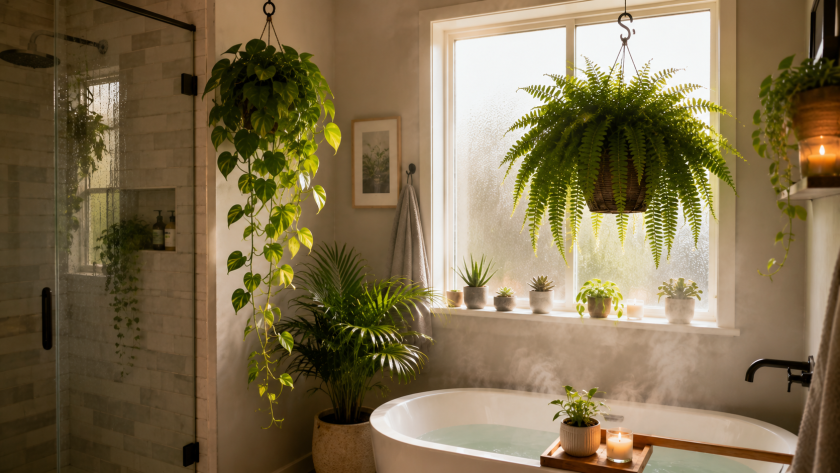
Window ledge: Best plants for your bathroom window ledges are compact varieties — haworthia, watermelon peperomia, air plants, and small orchids all fit narrow ledges perfectly while benefiting from whatever natural light the window provides.
Hanging positions: The best bathroom hanging plants for ceiling hooks and shower rods are pothos, spider plant, boston fern, and tradescantia — all producing trailing growth that looks most impressive when elevated. See our low light hanging plants guide for full hanging plant guidance.
Floor space: For bathrooms with floor space, snake plant, bird of paradise, parlor palm, and monstera all make excellent statement floor plants. Our 20 oversized indoor plants guide covers large statement plants in detail.
Shelves and counters: Small bathroom plants including baby’s tears, lemon button fern, calathea, and watermelon peperomia work best on bathroom shelves and counters where their detail can be appreciated up close.
Shower enclosures: True best shower plants — eucalyptus, air plants, and boston fern — can be hung directly in or adjacent to shower enclosures where steam surrounds them with every use. See our 33 bathroom plants guide on our category page for display inspiration alongside our how to style indoor plants by room guide.
Pet Safety in Bathroom Plant Selections
If pets have access to your bathroom, pet safety becomes a critical consideration in good bathroom plants selection. Our cat friendly plants guide and dog friendly plants guide cover full pet safety details.
✅ Pet-safe bathroom plants: Boston fern, spider plant, calathea, cast iron plant, parlor palm, haworthia, air plants, lavender, tradescantia, watermelon peperomia, baby’s tears, lemon button fern, grape ivy, Japanese asplenium fern, moth orchid, bird’s nest fern, lucky bamboo.
⚠️ Toxic bathroom plants: Pothos, ZZ plant, snake plant, peace lily, philodendron, monstera, rubber plant, silver satin pothos, chinese evergreen, anthurium, bird of paradise, english ivy. Keep these out of reach or choose pet-safe alternatives.
Troubleshooting Common Bathroom Plant Problems
Yellow leaves: Most commonly overwatering in bathroom conditions — the added humidity means soil dries more slowly than expected. Reduce watering frequency. See our yellow leaves guide for full diagnosis.
Brown leaf tips: Usually low humidity — unlikely in a well-used bathroom but possible in rarely-used guest bathrooms. Increase shower use frequency or supplement with a humidity tray. See our humidity hacks guide and leaf curl browning guide.
Drooping or wilting: Can indicate either overwatering (mushy stem base) or underwatering (dry soil, wrinkled leaves). Check soil moisture before rewatering. See our signs of overwatering guide and revive a dying plant guide.
Leggy stretching growth: Insufficient light — move closer to window or supplement with a grow light. See our complete indoor light guide.
Root bound: Bathroom plants often grow faster than expected due to favourable humidity conditions and need repotting more frequently. See our how to repot a plant guide and repotting mistakes guide.
Pests: Fungus gnats (from overwatered soil) are the most common bathroom plant pest. Allow soil to dry more between waterings and treat with neem oil drench. See our leaf curl browning and droop guide for pest identification.
Frequently Asked Questions
What are the best plants for a bathroom with no windows? The best plants for a bathroom without window are ZZ plant, snake plant, cast iron plant, and peace lily — all four genuinely tolerate artificial ceiling lighting as their sole light source. Chinese evergreen and lucky bamboo are excellent secondary options. Avoid any plant marketed as “low light” if it still requires some natural light — true best bathroom plants no light options are specifically the varieties listed above that evolved in deeply shaded forest floor conditions. See our best indoor plants for beginners guide for additional low-light options.
Do bathroom plants really help with humidity and mould? Bathroom plants that absorb moisture from the air — including boston fern, peace lily, and calathea — do reduce atmospheric humidity marginally, which can help with surface condensation. However, the effect of a few plants on mould prevention is modest compared to adequate ventilation. Plants improve bathroom air quality and atmosphere far more significantly than they reduce mould risk. Our air purifying indoor plants guide covers air quality benefits in detail.
How often should I water bathroom plants? Less often than you’d expect — bathroom humidity means soil dries significantly more slowly than in other rooms. Most good bathroom plants need watering every 7–14 days in summer and every 14–21 days in winter. Always check soil moisture before watering rather than following a fixed schedule. See our complete watering guide.
What are the best hanging plants for bathrooms? The finest bathroom hanging plants are pothos, spider plant, boston fern, tradescantia, and english ivy. All five produce trailing growth that looks most impressive when elevated, all tolerate the humidity of bathroom use, and all can be grown in standard hanging baskets with drainage holes. See our low light hanging plants guide for detailed hanging plant guidance.
Can succulents survive in bathrooms? Most succulents struggle in consistently humid bathroom conditions — the combination of high atmospheric moisture and typically lower light creates the opposite of what most succulents need. The exceptions are haworthia (shade-tolerant and more humidity-tolerant than most succulents) and aloe vera (in bright well-ventilated bathrooms with a window). See our succulent care guide for full guidance on the few succulents that genuinely work in bathroom conditions.
Are bathroom plants safe for children and pets? Safety varies significantly by variety. Many of the most popular best plants for your bathroom choices — including pothos, peace lily, ZZ plant, and monstera — are toxic if ingested. For bathrooms accessible to children or pets, choose from the pet-safe list above (boston fern, spider plant, calathea, haworthia, air plants, parlor palm). Our cat friendly plants and dog friendly plants guides cover full toxicity details.
Related Guides
- Pothos Care Guide
- ZZ Plant Care Guide
- Snake Plant Care Guide
- Boston Fern Care Guide
- Spider Plant Care Guide
- Peace Lily Care Guide
- Aloe Vera Care Guide
- Monstera Care Guide
- Calathea Care Guide
- Philodendron Care Guide
- Rubber Plant Care Guide
- Bird of Paradise Care Guide
- Succulent Care Guide
- String of Pearls Care Guide
- Jade Plant Care Guide
- Dracaena Care Guide
- Fiddle Leaf Fig Care Guide
- Money Tree Care Guide
- Christmas Cactus Care Guide
- Low Light Hanging Plants
- 20 Oversized Indoor Plants
- Air Purifying Indoor Plants
- 35 Low Maintenance Plants
- Best Indoor Plants for Beginners
- Colorful Foliage Indoor Plants
- Rare Houseplants Guide
- 23 Blooming Indoor Plants
- Indoor Plants That Smell Amazing
- Complete Indoor Light Guide
- Complete Watering Guide
- Humidity Hacks Guide
- Signs You’re Overwatering
- Why Leaves Turn Yellow
- Leaf Curl Browning Droop Guide
- How to Revive a Dying Plant
- How to Repot a Plant
- Repotting Mistakes to Avoid
- Best Soil Mix Guide
- Cat Friendly Plants Guide
- Dog Friendly Plants Guide
- Style Indoor Plants by Room
- Decorate Bedroom with Plants
- Office Friendly Plants Guide
- Best Low Maintenance Outdoor Plants
- Improve Home Office with Plants
- Browse All Indoor Plants →
- Browse All Plant Care Guides →
Final Thoughts
The best plants for your bathroom growing are ultimately those that match your specific bathroom conditions — the light you actually have, the space that genuinely exists, and the care routine that realistically fits your life. A windowless bathroom with only ceiling light calls for ZZ plant and snake plant. A bright bathroom with a south-facing window opens up almost unlimited plant possibilities. A tiny bathroom with one narrow ledge is perfect territory for small bathroom plants like haworthia, air plants, and watermelon peperomia.
What all 33 of these good bathroom plants share is the ability to transform a purely functional room into something genuinely restorative — a space that feels alive, that changes with the seasons, that rewards the daily routine of showering and bathing with something more beautiful than white tiles and chrome fixtures alone can provide.
According to the Royal Horticultural Society (RHS), plants in living spaces including bathrooms measurably improve psychological wellbeing and create environments that humans consistently rate as more comfortable, more restorative, and more pleasant than equivalent spaces without plants — making the best plants for your bathroom display one of the highest-return wellbeing investments any home can make. 🌿