Key Takeaways
- Money tree care (Pachira aquatica) centres on three fundamentals: bright indirect light for at least 6 hours daily, watering only when the top 5cm of soil is dry, and good drainage — get these right and money trees thrive for years with minimal intervention.
- How to care for a money tree starts with understanding its origins — native to tropical wetlands of Central and South America, Pachira aquatica evolved with bright filtered light, seasonal rainfall, and rich but fast-draining soil that perfectly explains every indoor care requirement.
- Money tree plant care is genuinely forgiving — unlike many tropical houseplants, money trees tolerate occasional missed waterings, brief low-light periods, and temperature fluctuations without suffering permanent damage, making them one of the most accessible tropical plants for beginner growers.
- Braided money tree care follows identical principles to standard money tree care — the iconic braided trunk is an entirely aesthetic modification made while the stems are young and flexible, and the braided form has no effect on the plant’s care requirements or growth habits.
- Money tree care indoor success depends most heavily on correct watering — overwatering is by far the leading cause of money tree decline, causing root rot that progresses rapidly in the compact root system of a braided specimen.
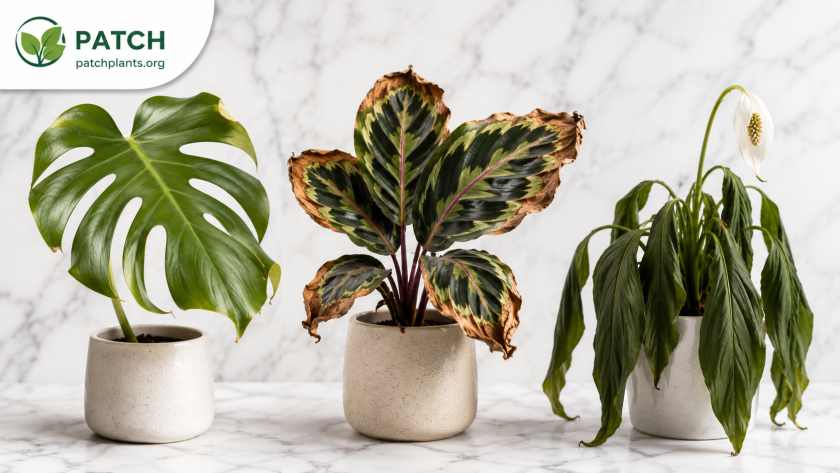
- Money tree yellow leaves indicate one of three problems in order of likelihood: overwatering causing root rot, insufficient light causing chlorophyll breakdown, or nutrient deficiency in plants that haven’t been fed in over a year — identifying which is critical before applying any fix.
- Money tree leaves curling most commonly results from underwatering or low humidity — the plant curls leaves inward to reduce moisture loss from leaf surfaces when either soil moisture or atmospheric humidity drops below comfortable levels.
- Money tree care tips for long-term success include rotating the plant quarterly to ensure balanced light exposure across all sides, wiping leaves monthly with a damp cloth to maximise photosynthetic efficiency, and flushing soil thoroughly every 3 months to prevent mineral salt accumulation.
- Pachira money tree care includes understanding the plant’s remarkable cultural significance — in feng shui tradition, the five leaves on each money tree branch represent the five elements of earth, water, fire, wood, and metal, while the braided trunk is said to trap good fortune within its twists.
- Money tree plant care indoors is appropriate for homes with pets — Pachira aquatica is confirmed non-toxic to cats and dogs by the ASPCA, making it one of the safest dramatic tropical houseplants for pet-owning households.
Introduction
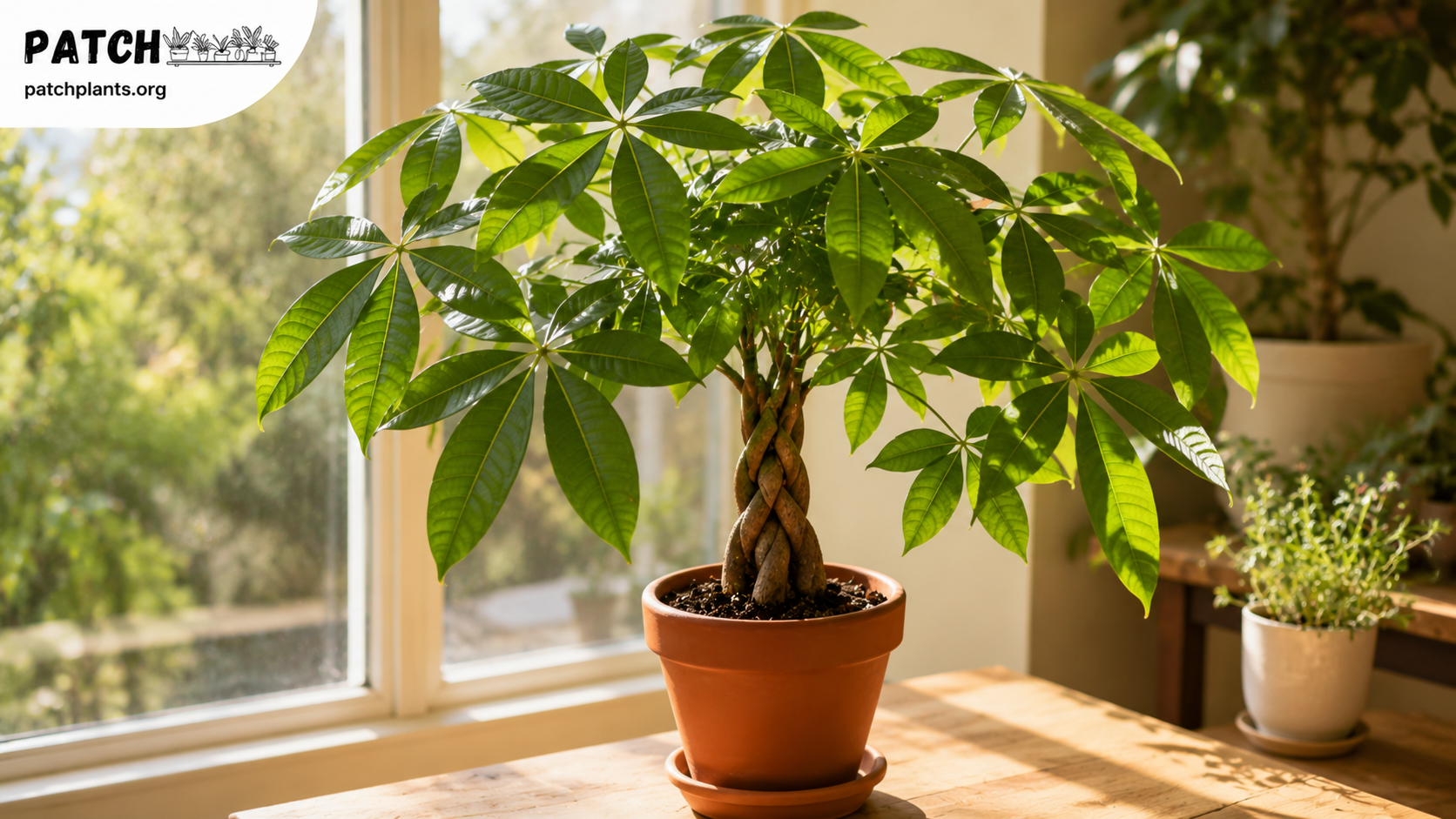
There is something immediately appealing about a money tree that goes beyond its reputation for good luck. Perhaps it’s the architectural elegance of the braided trunk — that spiralling column of woody stems woven together into a single graceful form. Or the palmate leaves spreading outward in fans of five, each leaflet glossy and confidently green. Or simply the particular quality of optimism that comes with keeping a plant that, by long tradition, is supposed to bring prosperity into the spaces it inhabits.
Money tree care is considerably more straightforward than the plant’s striking appearance might suggest. Pachira aquatica is native to tropical wetlands across Central and South America — seasonally flooded riverbanks and forest margins where bright filtered light filters through the canopy, rainfall comes in intense seasonal bursts rather than constant drizzle, and the rich soil drains rapidly between wet periods. Understanding these origins transforms how to care for a money tree from a list of arbitrary rules into a logical response to a plant’s natural history. Bright indirect light, thorough but infrequent watering, fast-draining soil — all of it makes complete sense once the plant’s homeland is understood.
This complete money tree care guide covers every aspect of growing Pachira aquatica successfully — from light and watering through soil, fertilizing, repotting, propagation, troubleshooting every common problem, and understanding the plant’s remarkable cultural significance. Whether you’re troubleshooting money tree yellow leaves, wondering how to repot a money tree, or simply setting up care for your first specimen, everything you need is here. For more easy-care tropical plants to companion your money tree, our best indoor plants for beginners guide covers the most forgiving and rewarding houseplants available.
What Is a Money Tree? Understanding Pachira Aquatica
Pachira aquatica belongs to the Malvaceae family — the same broad family that includes hibiscus and cotton — and is native to tropical wetland environments from Mexico through Central America and into northern South America. In its natural habitat, it grows as a large tree reaching 18 metres or more, producing large, showy cream-yellow flowers and edible chestnut-like seeds. Indoors, it remains a manageable 1.5–2.5 metres depending on pot size and care, making it one of the most practical large statement tropical plants for home environments.
The common name “money tree” originates from a Taiwanese folk story — a poor man prayed for money and found this plant, which he grew and sold, becoming wealthy. The name and the associated symbolism of luck and prosperity spread across East Asian cultures and eventually worldwide, making money tree one of the most gifted houseplants for housewarmings, business openings, and New Year celebrations globally.
The iconic braided money tree trunk is entirely human-made — nursery growers braid three to seven young stems together while they’re still flexible, then allow them to grow and fuse into the twisted woody column that defines the plant’s aesthetic. Braided money tree care is identical to standard money tree care in every respect — the braiding affects only appearance, not the plant’s biological needs or growth patterns.
The Chinese money tree and feng shui money tree names reflect the plant’s strong association with prosperity beliefs in feng shui tradition — the five leaflets on each leaf representing the five feng shui elements simultaneously, and the braided trunk said to trap good fortune within its twists. Whether or not you subscribe to these beliefs, the money tree is genuinely one of the most beautiful and well-behaved tropical plants available for indoor growing. For more plants associated with indoor wellbeing and positive energy, our air-purifying indoor plants guide covers the houseplants that genuinely improve indoor environments in measurable ways.
Complete Money Tree Care Guide
Light Requirements for Money Tree
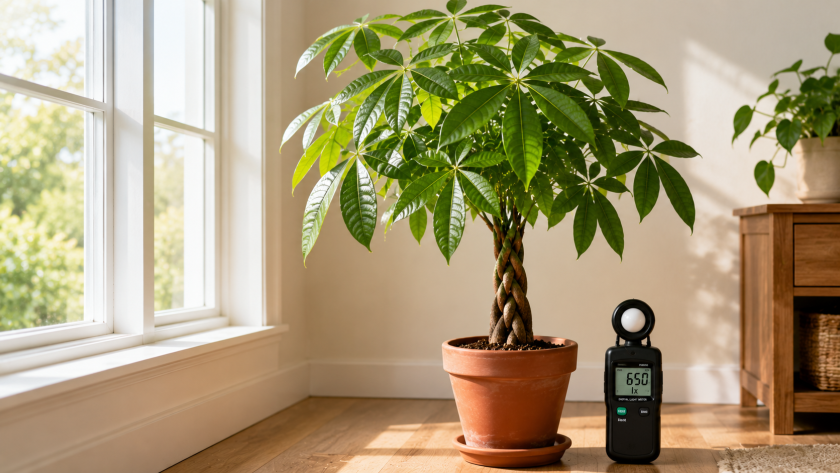
Money tree care light requirements are the foundation of every other care decision — a money tree in the wrong light position will struggle regardless of perfect watering, soil, and feeding. Pachira aquatica evolved under bright but filtered canopy light — neither the deep shade of a forest floor nor the full intensity of open tropical sun, but the bright, diffused, indirect light of a forest margin or riverside clearing.
Ideal money tree light conditions:
- Best position: 1–2 metres from a south or east-facing window — bright indirect light throughout the day
- Acceptable: Filtered direct light through sheer curtains in a south-facing window
- Minimum: 4–6 hours of bright indirect light daily — below this, growth stalls and leaves pale
Signs of insufficient light:
- Leaves turning pale yellowish-green overall
- Stems becoming leggy with large gaps between leaf nodes
- New growth emerging smaller and weaker than established leaves
- Plant leaning aggressively toward the light source
Signs of too much direct sun:
- Pale, bleached patches appearing on leaf surfaces facing the window
- Leaf edges browning and crisping in the afternoon
- Soil drying out unusually rapidly
Money tree light hack: East-facing windows provide the ideal balance for money tree care — morning sun that’s bright enough to support healthy growth without the intensity of afternoon direct sunlight that can scorch the large leaf surfaces. Rotate the pot a quarter turn every 2–3 weeks to ensure balanced growth across all sides. Our complete indoor light guide covers exactly how to measure and optimise light levels for money tree and all other tropical plants.
How to Water a Money Tree
Watering is where money tree care most commonly goes wrong — and almost exclusively in the same direction. Overwatering causes root rot, stem softening, and rapid decline in money trees, and it is the leading cause of money tree death in indoor environments. How often to water a money tree is not a fixed schedule question — it’s a soil moisture question, answered by checking the soil rather than the calendar.
Money tree watering fundamentals:
- Check before watering: Insert a finger 5cm into the soil — water only when this depth feels completely dry
- Spring and summer: Typically every 7–14 days depending on pot size, light level, and room temperature
- Autumn: Reduce to every 14–21 days as growth slows
- Winter: Water every 3–4 weeks — the plant is semi-dormant and moisture demand drops significantly
- Method: Water thoroughly until draining from the bottom, then empty the saucer completely after 15 minutes
Reading the plant — money tree water signals:
- Firm, glossy, upright leaves: Well-hydrated — maintain current schedule
- Slightly drooping, dull leaves: Mildly underwatered — water now
- Curling leaves with dry soil: Underwatered — water thoroughly
- Yellow leaves with consistently moist soil: Overwatering — reduce frequency immediately and check roots
- Soft, mushy stems at soil level: Root rot from overwatering — emergency action required
Why is my money tree losing leaves? Sudden leaf drop combined with yellowing is almost always overwatering causing root rot — unpot immediately and inspect roots. Brown, mushy roots must be removed with sterile scissors before repotting in fresh dry mix. If the plant looks recoverable, our revive a dying plant guide covers step-by-step money tree recovery. For complete moisture management guidance, our complete watering guide and overwatering signs guide are essential reading.
Humidity and Temperature
Money tree plant care humidity requirements are moderate — Pachira aquatica prefers 50–60% humidity, which is higher than most homes achieve naturally (typically 30–40%) but lower than the 60–70% demanded by more finicky tropical species. Low humidity produces the brown leaf tips that affect many money trees — a problem entirely distinct from watering and resolved only by increasing atmospheric moisture.
Temperature requirements:
- Ideal range: 18–27°C (65–80°F) year-round
- Minimum: 15°C (59°F) — below this causes growth cessation and potential leaf damage
- Avoid: Cold drafts from windows in winter, air conditioning vents blowing directly on the plant, outdoor temperatures below 10°C
Increasing humidity for money tree:
- Cool-mist humidifier positioned 1–2 metres from the plant (most effective)
- Grouping with other tropical plants for microclimate humidity benefits
- Pebble tray with water below pot level — evaporation increases immediate surrounding humidity
- Bathroom placement if the room receives adequate natural light
Our humidity hacks guide covers every practical solution for maintaining adequate humidity without specialist equipment.
Money Tree Soil — Best Mix for Long-Term Success
Money tree care soil must balance two seemingly opposing requirements — moisture retention adequate for a tropical plant from wetland origins, and drainage fast enough to prevent the root rot that money trees are particularly susceptible to. The right mix achieves both simultaneously.
Ideal money tree soil mix:
- 40% quality potting compost
- 30% perlite (drainage and aeration)
- 20% coarse horticultural sand
- 10% worm castings (gentle slow-release nutrition)
Commercial alternatives that work:
- Standard potting compost amended with 30–40% perlite — widely available and effective
- African violet mix — moisture-retentive structure that drains adequately for money tree needs
- Quality all-purpose potting mix amended with horticultural sand (2:1 ratio)
What soil to avoid:
- Heavy garden soil — compacts and waterloggs completely
- Pure peat mixes — become water-repellent when dry
- Cactus mix — too fast-draining for money tree’s moderate moisture needs
What kind of soil for money tree is the most common soil question — the answer is always the same: well-draining but moisture-retentive, never purely fast-draining. Our best soil mix guide covers exact soil ratios for money tree and every other common tropical houseplant.
Fertilizing Money Tree — Money Tree Food Guide
Taking care of a money tree plant includes regular but restrained feeding during the growing season. Money trees are moderate feeders — they benefit meaningfully from spring and summer nutrition but react poorly to heavy fertilizing, which causes mineral salt accumulation producing brown leaf tips that owners often misattribute to watering problems.
Money tree fertilizer schedule:
- Spring and summer: Every 4 weeks with balanced liquid fertilizer (NPK 10-10-10) at half the recommended strength
- Autumn: Every 6–8 weeks, reducing gradually as growth slows
- Winter: Stop feeding completely — the plant is semi-dormant
Money tree food application tips:
- Always water the plant the day before fertilizing — never apply to dry soil
- Flush soil with plain water every 2–3 months to clear accumulated mineral salts
- White crusty deposits on soil surface indicate salt buildup — flush thoroughly and reduce feeding frequency
Our fertilizing indoor vs outdoor plants guide covers seasonal feeding schedules for money tree alongside every other common tropical houseplant.
How to Repot a Money Tree
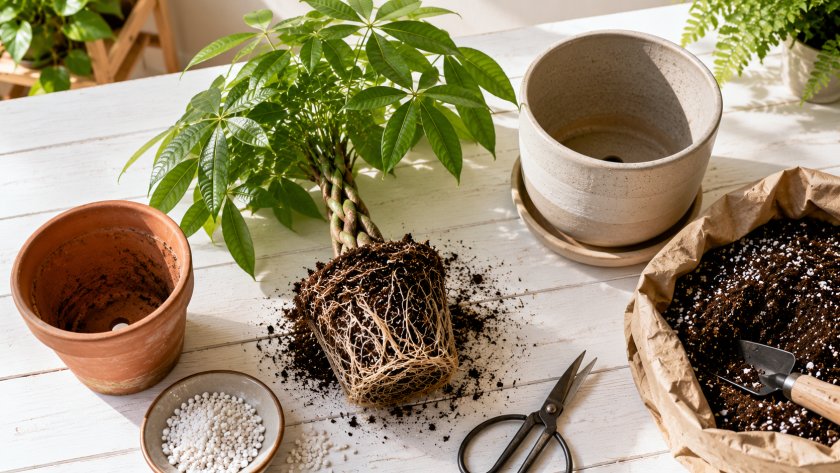
Money tree maintenance includes repotting every 2–3 years when the plant has outgrown its container. Knowing how to repot a money tree correctly prevents the post-repotting decline that many owners experience when they choose an oversized pot or disturb the root system unnecessarily.
Signs your money tree needs repotting:
- Roots emerging clearly from drainage holes
- Water running straight through without absorbing
- Plant drying out within 3–4 days of thorough watering
- Significantly slowed growth despite spring and summer care
- Plant becoming physically unstable due to top-heavy growth
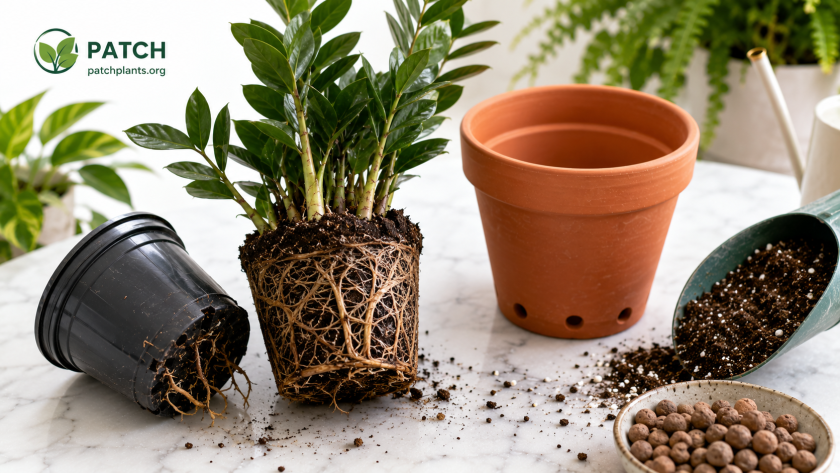
How to repot money tree — step by step:
- Step 1: Choose a new pot only 5cm larger in diameter — too large creates excess soil that stays wet too long
- Step 2: Ensure drainage holes are adequate — money tree must never sit in standing water
- Step 3: Water the plant thoroughly 24 hours before repotting to reduce transplant stress
- Step 4: Gently remove from the old pot and shake loose excess soil without damaging roots
- Step 5: Position in the centre of the new pot and fill with fresh money tree soil mix
- Step 6: Water thoroughly and allow to settle for 1–2 weeks before resuming normal care
How big do money trees get indoors? With correct repotting and care, indoor money trees typically reach 1.5–2.5 metres — the braided trunk becomes increasingly architectural with age as stems thicken and the surface develops attractive silvery-brown bark. Our how to repot a plant guide covers every step in detail, and our repotting mistakes guide prevents the most common errors.
Pruning and Shaping
How to care for a money tree includes occasional pruning to maintain the plant’s shape, encourage bushy growth, and remove any leggy or damaged stems. Money trees tolerate pruning well and bounce back quickly from even significant cuts.
Pruning money tree:
- Prune in spring at the beginning of the growing season for fastest recovery
- Cut just above a leaf node — new growth emerges from the cut point
- Remove any leggy stems growing disproportionately long relative to the rest of the canopy
- Remove yellowed or damaged leaves cleanly at the base
- Never prune the braided trunk itself — the stems are fused and cannot be separated without permanently damaging the plant
Money Tree Propagation
How to care for money tree collections includes propagating new plants from stem cuttings — money tree roots readily from stem cuttings taken in spring and summer, making it straightforward to create new plants from a healthy parent specimen.
Money tree propagation steps:
- Step 1: Select a healthy stem with at least 2–3 leaf nodes and 15–20cm length
- Step 2: Cut cleanly just below a node using sterile scissors
- Step 3: Remove lower leaves to leave bare stem at the base
- Step 4: Allow the cut end to callous for 1–2 hours
- Step 5: Place in water or moist potting mix — water propagation allows root development to be observed before potting
- Step 6: Position in bright indirect light — avoid direct sun on unrooted cuttings
- Step 7: Roots develop within 4–6 weeks — transfer to soil when roots reach 3–4cm
Our complete propagation guide covers water and soil propagation methods for money tree alongside every other common houseplant type.
Troubleshooting Common Money Tree Problems
Money Tree Yellow Leaves
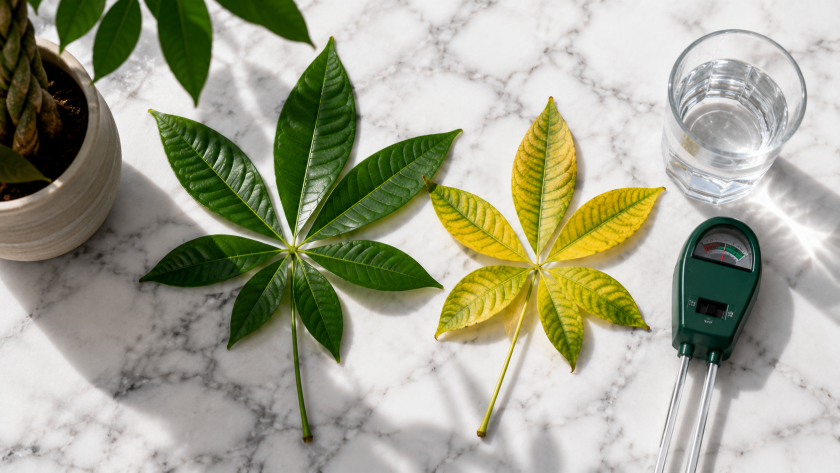
Money tree yellow leaves are the most common problem and can result from several distinct causes — identifying which is essential before attempting any fix, as the most common response (watering more) is often precisely the wrong action.
Money tree yellow leaves — causes in order of likelihood:
Overwatering (most common): Multiple leaves yellowing simultaneously, soil consistently moist, possible mushy stems at soil level. Fix: Stop watering immediately, allow soil to dry completely, check roots for rot. See our yellow leaves guide for complete diagnosis.
Insufficient light: Overall pale yellowing across the plant, leaves losing glossy appearance, slow growth. Fix: Move to brighter indirect light position — see our indoor light guide.
Natural ageing: Single lower leaves yellowing occasionally while plant is otherwise healthy and actively growing. Fix: Remove the yellowed leaf and continue normal care.
Nutrient deficiency: Pale overall yellowing in a plant that hasn’t been fed in over a year. Fix: Begin monthly feeding with balanced liquid fertilizer at half strength during the growing season.
Money Tree Leaves Curling
Money tree leaves curling inward almost always indicates either underwatering or low humidity — both cause the plant to curl leaves to reduce moisture loss from leaf surfaces.
- Curling with dry soil: Underwatering — water thoroughly and establish more consistent watering schedule
- Curling despite moist soil: Low humidity — increase to 50%+ using humidifier or pebble tray
- Curling with yellowing: Combined underwatering and environmental stress — address watering and humidity simultaneously
Our leaf curl browning and droop guide covers every leaf curling scenario across all plant types with exact diagnostic questions.
Money Tree Losing Leaves
Why is my money tree losing leaves? Leaf drop in money tree is most commonly caused by sudden environmental changes — moving the plant to a new location, sudden temperature drops, or cold drafts — which trigger defensive leaf shed as the plant adjusts. Leaf drop combined with yellowing and soft stems indicates root rot from overwatering, which is the more serious scenario requiring immediate action.
Money Tree Dying — Emergency Response
Money tree dying signs — sudden widespread leaf drop, softening stem at soil level, yellowing throughout the plant — require immediate unpotting and root inspection. Remove all brown, mushy roots with sterile scissors, allow the root system to dry for 24–48 hours, then repot in fresh dry soil mix. Withhold water for one week after repotting. Our revive a dying plant guide covers step-by-step recovery for every money tree emergency scenario.
Pests on Money Tree
Money trees occasionally attract mealybugs (white cottony clusters in leaf joints), spider mites (fine webbing on leaf undersides), and scale insects (waxy brown bumps on stems). Treat all pest types with neem oil solution applied weekly for 3–4 weeks, isolating the affected plant immediately to prevent spread to other houseplants.
Pet Safety — Is Money Tree Toxic?
Money tree plant care for pet households has excellent news — Pachira aquatica is confirmed non-toxic to cats and dogs by the ASPCA, making it one of the safest large tropical statement plants available for homes with animals. This non-toxic status makes money tree particularly valuable as a statement plant for pet-owning households where many popular large tropical plants — including monstera, pothos, and philodendron — carry genuine toxicity concerns.
For a complete collection of pet-safe indoor plants across all sizes and care levels, our cat-friendly plants guide and dog-friendly plants guide cover every non-toxic option available. The money tree’s combination of visual impact, manageable care, and complete pet safety makes it one of the most recommended plants in both guides.
How to Style Money Tree by Room
Money tree’s architectural braided trunk and palmate leaf canopy make it one of the most versatile statement plants for indoor styling — working beautifully in contemporary, minimalist, traditional, and eclectic interiors with equal ease.
Living room: A tall money tree in a terracotta or ceramic pot positioned near a bright window creates an immediate focal point that balances architectural structure with tropical warmth. Pair with trailing companions like pothos or philodendron for layered visual depth. For more large statement plant inspiration, our 20 oversized indoor plants guide covers how mature money trees anchor living room displays. See our complete room-by-room styling guide for positioning principles across every room.
Home office: Money tree is among the best office plants available — its moderate light tolerance, genuine air-purifying properties, and cultural associations with prosperity and abundance make it particularly appropriate for work environments. See our office-friendly plants guide for additional desk and office plant options.
Bedroom: Money tree works beautifully in a bright bedroom corner — its non-toxic status makes it completely safe in sleeping spaces with pets, and its air-purifying properties are genuinely beneficial in rooms where air quality directly affects sleep. Our bedroom plant decorating guide covers exact positioning and companion planting ideas for bedroom plant displays.
Bathroom: A money tree in a well-lit bathroom benefits from the naturally higher humidity that shower steam creates — reducing the humidifier burden that bathroom placement provides. See our 33 best bathroom plants guide for bathroom-specific positioning guidance.
For complementary non-fragrant companion plants that balance money tree’s statement presence, calathea, snake plant, and ZZ plant all provide strong visual structure without competing with money tree’s architectural focal point quality.
Frequently Asked Questions
How do you care for a money tree? Money tree care requires bright indirect light (4–6 hours minimum daily in a south or east-facing position), watering only when the top 5cm of soil is completely dry (every 7–14 days in summer, every 3–4 weeks in winter), well-draining potting mix with perlite or sand added, temperatures between 18–27°C, and moderate humidity of 50–60%. The single most important factor is correct watering frequency — overwatering causes more money tree deaths than all other causes combined.
How often should I water a money tree? Water your money tree every 7–14 days in spring and summer when the top 5cm of soil is completely dry, every 14–21 days in autumn, and every 3–4 weeks in winter. Always check soil moisture by inserting a finger 5cm into the soil rather than following a fixed schedule — environmental conditions vary too much for rigid schedules to be reliable. See our complete watering guide for seasonal moisture management guidance.
Why does my money tree have yellow leaves? Money tree yellow leaves most commonly result from overwatering causing root rot — check whether soil is consistently moist rather than drying between waterings. Multiple yellow leaves simultaneously with soft stems indicates root rot requiring immediate repotting. Single occasional lower leaves yellowing is natural ageing — remove and continue normal care. Pale overall yellowing without moist soil indicates insufficient light. See our yellow leaves guide for complete diagnosis.
Why are my money tree leaves curling? Money tree leaves curling inward almost always indicates underwatering (curling with bone-dry soil — water thoroughly now) or low humidity (curling despite adequate soil moisture — increase humidity to 50%+ immediately). Both causes are simple to resolve once correctly identified. See our leaf curl and droop guide.
Is money tree toxic to cats and dogs? No — Pachira aquatica is confirmed completely non-toxic to cats and dogs by the ASPCA. This is one of the money tree’s most significant advantages as a large statement tropical plant — many popular alternatives including monstera and pothos carry genuine toxicity risks. See our cat-friendly plants guide for more non-toxic options.
How do I repot a money tree? Repot money tree in spring every 2–3 years when roots emerge from drainage holes or the plant dries out unusually rapidly. Choose a new pot only 5cm larger than the current one — too large creates excess soil that stays wet too long. Use well-draining potting mix amended with perlite, water thoroughly after repotting, and allow 1–2 weeks before resuming normal care. See our how to repot guide.
Are money trees easy to care for? Yes — money trees are among the most forgiving tropical houseplants available. They tolerate occasional missed waterings, brief lower-light periods, and minor temperature fluctuations without permanent damage. Their main vulnerability is overwatering — avoid consistently moist soil and money trees are genuinely difficult to kill. See our 35 low-maintenance plants guide for more plants of similar ease.
What is the best soil for a money tree? The best money tree soil is well-draining potting compost amended with 30–40% perlite or coarse sand — moisture-retentive enough to support a tropical plant but draining fast enough to prevent root rot. Standard potting compost used straight without amendment retains too much moisture and is the second most common cause of money tree decline after overwatering. See our best soil mix guide.
Related Guides
- Best Indoor Plants for Beginners
- 35 Low Maintenance Plants That Thrive
- Air Purifying Indoor Plants
- Snake Plant Care Guide
- Peace Lily Care Guide
- Pothos Care Guide
- ZZ Plant Care Guide
- Monstera Care Guide
- Philodendron Care Guide
- Calathea Care Guide
- Spider Plant Care Guide
- Rubber Plant Care Guide
- Fiddle Leaf Fig Care Guide
- Aloe Vera Care Guide
- Jade Plant Care Guide
- Dracaena Care Guide
- Christmas Cactus Care Guide
- String of Pearls Care Guide
- 20 Oversized Indoor Plants
- Colorful Foliage Indoor Plants
- Low Light Hanging Plants
- 33 Best Bathroom Plants
- Complete Indoor Light Guide
- Complete Watering Guide
- Signs You’re Overwatering
- Humidity Hacks Guide
- Best Soil Mix Guide
- Fertilizing Indoor vs Outdoor
- How to Repot a Plant
- Repotting Mistakes to Avoid
- How to Propagate Houseplants
- Why Leaves Turn Yellow
- Leaf Curl Browning Droop Guide
- How to Revive a Dying Plant
- Cat Friendly Plants Guide
- Dog Friendly Plants Guide
- Style Indoor Plants by Room
- Decorate Bedroom with Plants
- Office Friendly Plants Guide
- Browse All Indoor Plants →
- Browse All Plant Care Guides →
Final Thoughts
Money tree care offers something that the best houseplants always do — a relationship that rewards attention with visible, tangible results, and forgives occasional lapses without catastrophic consequence. Whether you keep a money tree for its remarkable braided trunk aesthetic, its feng shui associations with prosperity, its confirmed pet safety, or simply because it’s one of the most visually striking tropical houseplants available at any price point, the care principles that make it thrive are the same in every case.
Get the light right. Water less often than feels natural. Use well-draining soil. And trust that a plant that evolved in the seasonally flooded forests of Central America has already done the hard biological work of surviving — your role is simply to provide conditions that allow it to express that resilience in the comfort of your home.
How to care for a money tree well is ultimately about understanding what the plant is and where it came from, then creating a reasonable approximation of those conditions on a bright windowsill or in a well-lit corner. Do that consistently, and the money tree will reward you with years — potentially decades — of glossy, architectural, genuinely beautiful indoor growing.
According to the Royal Horticultural Society (RHS), Pachira aquatica has received the RHS Award of Garden Merit for its exceptional performance in suitable growing conditions — confirming its status as one of the most reliable and rewarding tropical statement plants for indoor cultivation in temperate climates. 🌿