Good aloe vera care at home comes down to four things: bright light with a few hours of direct sun, a gritty fast-draining succulent mix, a pot with drainage holes, and water only when the soil has dried out completely. Get those right and an aloe vera plant will grow slowly and steadily for years, sending up pups you can pot on and share.
Most aloe problems indoors come from the opposite of neglect. Too much water, too little light, or a pot that holds moisture causes nearly every soft, pale, or leaning aloe we see. This guide explains how to care for aloe vera plant indoors step by step, from light and watering to repotting, propagation, safe gel use, and pet safety.
At Patch Plants, every guide is written and reviewed by Sawera Shahid, a botanist with an MPhil in Botany and more than five years of plant writing. Our advice is based on plant science and real growing experience, not trends, so you can trust what works on a windowsill at home.
Aloe Vera Care at a Glance
| Need | What Aloe Vera Wants |
|---|---|
| Light | Bright light with 2–6 hours of direct sun; a south- or west-facing window is ideal |
| Water | Only when the soil is completely dry; much less in winter |
| Soil | Cactus or succulent mix with extra grit or perlite |
| Pot | Terracotta or clay with one or more drainage holes |
| Temperature | Warm rooms around 60–80°F (16–27°C); keep away from frost |
| Feeding | Light feed in spring and summer only |
| Pets | Toxic to cats and dogs if chewed |
What Is an Aloe Vera Plant?
Aloe vera (Aloe vera, also sold as Aloe barbadensis) is a stemless succulent that stores water in thick, fleshy leaves arranged in a rosette. According to NC State Extension’s plant profile, it originates from the Arabian Peninsula, is hardy outdoors only in USDA zones 10–12, and is grown as a houseplant almost everywhere else.
Each leaf has two parts. The clear inner gel is the water-storage tissue. Just under the green skin is a thin layer of yellow sap, often called latex, which contains bitter anthraquinone compounds such as aloin. That difference matters later when we talk about using the gel safely.
Aloe vera is one of many Aloe species. Others, like tiger aloe or lace aloe, need the same basic care, which follows the general rules in our succulent care guide.
Aloe Vera Sunlight Requirements
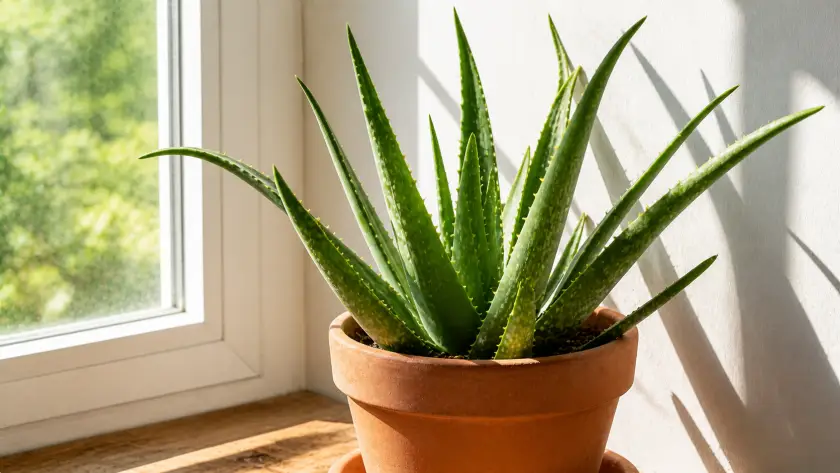
Light is the factor most people underestimate. Aloe vera is a sun plant in the wild, and NC State lists it for full sun to part shade. Indoors, place it in the brightest window you have. A south- or west-facing sill that gets a few hours of direct sun is ideal, and an unobstructed east window also works well.
Signs your aloe needs more light:
- Leaves stretch outward and flatten instead of growing upright
- Color fades to a pale, soft green
- The rosette leans or flops toward the window
- New leaves are thin and growth almost stops
Too much sudden sun can cause problems too. An aloe moved straight from a dim room to a hot summer patio may turn reddish-brown or develop bleached, scorched patches. Increase light gradually over one to two weeks. A slight bronze tint in strong sun is just stress coloring and fades when light is reduced.
If your home is dark, a full-spectrum LED makes a real difference. Our guide to grow lights for indoor plants covers distance and timing, and our complete guide to indoor light explains how to judge window strength.
How to Water Aloe Vera
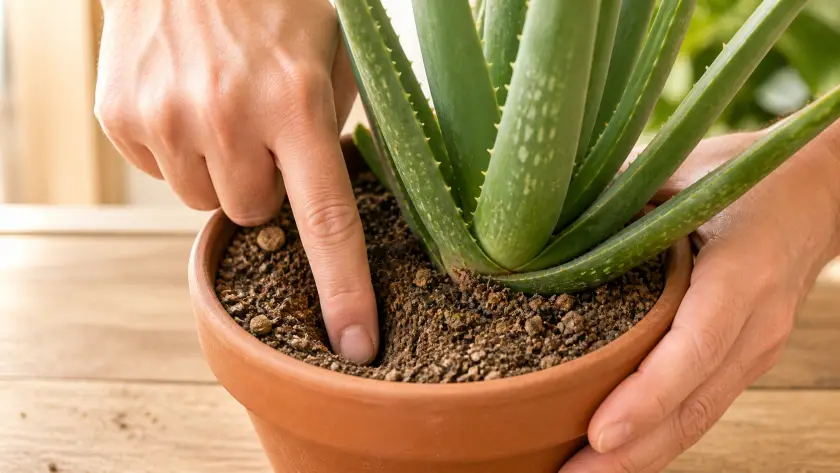
Watering is where most aloe vera care goes wrong. The rule is simple: let the soil dry out completely, then water deeply until it runs from the drainage hole, and empty the saucer. Never water on a fixed calendar.
In practice, that usually means:
- Spring and summer: roughly every two to three weeks in a bright, warm room
- Autumn and winter: every four to six weeks, sometimes less
- Small pots or hot windows: more often, because they dry faster
To check, push a finger or wooden skewer deep into the pot. If any moisture or soil sticks to it, wait. A pot that feels much lighter when lifted is another good sign it is ready. Firm, plump leaves mean the plant is well hydrated; thin, slightly curled or wrinkled leaves mean it is thirsty.
Water in the morning so the soil starts drying during the day, as explained in our article on the worst times to water your plants. For broader technique, see our complete watering guide.
Best Potting Soil and Pot for Aloe Vera
Aloe roots need air as much as water. Standard potting compost holds too much moisture and is the fastest route to rot. Use a cactus or succulent mix, then improve it further:
- About 50–60% cactus or succulent potting mix
- 40–50% coarse grit, pumice, or perlite
- Optional: a handful of coarse horticultural sand or fine bark for structure
Our article on the best soil mix for every type of plant compares succulent mixes with other blends, and the soil calculator helps you work out how much to mix for your pot.
Choose an unglazed terracotta or clay pot with at least one drainage hole. Terracotta wicks moisture out of the soil and is heavy enough to stop a top-heavy aloe tipping over. Pick a pot only slightly wider than the root ball; a large pot holds a lot of wet soil the roots cannot use.
Temperature, Humidity and Feeding
Aloe vera likes the same temperatures people do, roughly 60–80°F (16–27°C). It tolerates cooler nights around 50°F (10°C) if the soil is dry, but frost damages the leaves and can kill the plant. Keep it away from icy winter glass and from blasting heaters. Normal household humidity is fine, and aloe does not need misting.
Feed lightly. A balanced liquid fertilizer diluted to half strength, or a cactus feed, once a month in spring and summer is plenty. Do not feed in autumn and winter when growth slows. Overfeeding produces soft, weak leaves rather than bigger, healthier ones.
Outdoors, aloe can spend summer on a sunny patio in colder climates, then come back inside before night temperatures drop. It is one of the easiest plants on our list of drought-resistant plants.
Repotting an Aloe Vera Plant
Aloe grows slowly, so repot only every two to three years, or when the plant becomes top-heavy, roots push out of the drainage hole, or the pot fills with pups. Spring is the best time.
- Let the soil dry for a few days so the root ball slides out easily.
- Ease the plant out and shake off old soil. Trim any black, mushy roots with clean scissors.
- Place it in the new pot at the same depth as before. Burying the base invites rot.
- Fill around it with fresh, dry gritty mix.
- Wait about a week before the first watering so any damaged roots can heal.
Our list of repotting mistakes to avoid explains why an oversized pot or immediate heavy watering causes trouble, and our step-by-step repotting guide covers the basics for any houseplant.
How to Grow Aloe Vera from Pups
Healthy aloe produces offsets, or pups, around its base. These are the easiest way to propagate it. Leaf cuttings rarely root and usually rot, so pups are the method worth using.
- Wait until a pup is at least 3–4 inches tall with several leaves of its own.
- Remove the parent from its pot and find where the pup attaches.
- Separate it by hand or with a clean knife, keeping as many of its own roots as possible.
- Leave it somewhere dry and shaded for a few days so the cut surface calluses.
- Pot it in dry succulent mix and wait about a week before watering lightly.
- Keep it in bright, indirect light for the first few weeks, then move it to stronger light.
For more methods across different plants, see our guide on how to propagate houseplants at home.
Using Aloe Vera Gel from the Plant
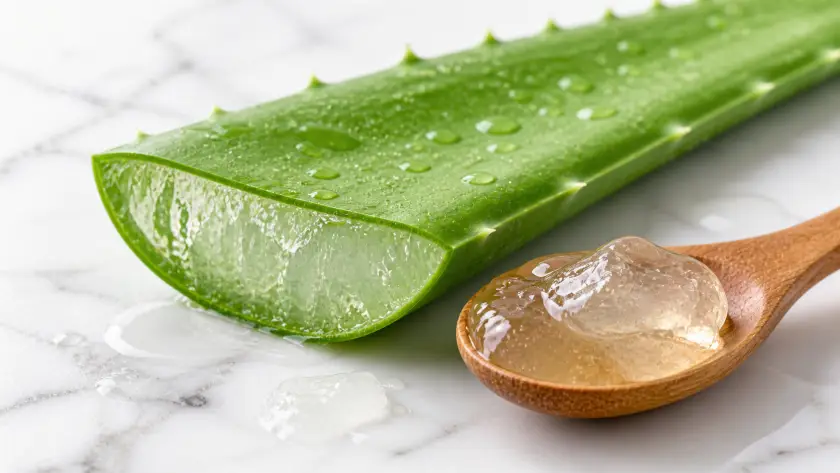
Many people grow aloe for its gel. According to the National Center for Complementary and Integrative Health, research suggests topical aloe gel may help burns heal and ease burn pain, and it is generally well tolerated on the skin, although some people get itching or a rash.
Eating aloe straight from the plant is a different matter, and we do not recommend it. The yellow latex under the skin acts as a strong laxative and can cause cramps and diarrhea. The same NCCIH page notes that whole-leaf extracts carry safety concerns and that oral aloe may be unsafe in pregnancy. Commercial food and drink products are processed to reduce aloin, which a homemade leaf is not. If you are considering aloe for any health purpose, speak to a doctor or pharmacist first.
To harvest gel for skin use:
- Cut a mature outer leaf close to the base with a clean knife.
- Stand it cut-end down in a glass for 10–15 minutes so the yellow latex drains away.
- Rinse, trim off the spiny edges, and slice away the green skin.
- Scoop out the clear gel and patch-test a small area of skin first.
Only take a leaf or two at a time from a well-established plant, and always cut from the outside of the rosette.
Is Aloe Vera Safe for Cats and Dogs?
No. Aloe vera is toxic to cats and dogs. NC State lists anthraquinone glycosides in the leaves as the toxic principle, rates the toxicity as low, with signs such as abdominal cramping, diarrhea, and red urine if a pet chews the plant. It is rarely life-threatening, but contact your vet or a pet poison helpline if your pet has eaten some.
Keep aloe on a high shelf or in a room pets cannot reach. Our guides on how to make your plants cat friendly and dog friendly list safer alternatives.
Aloe Vera Flowers
Aloe vera can flower, though it rarely does indoors. NC State notes plants usually need to be around three years old before blooming, when they send up a tall stalk of tubular yellow to orange flowers. Indoors, flowering is most likely when a mature plant gets plenty of direct sun and a cooler, drier rest in winter. Once the flowers fade, cut the stalk off at the base.
Common Aloe Vera Problems and Fixes
Soft, Mushy or Brown Leaves
This is almost always overwatering. Stop watering, check the roots, and move the plant into dry gritty mix if the soil stays wet. Our guide on the signs you’re overwatering explains the early warnings.
Root Rot
Black, smelly, collapsing roots and a wobbly base point to rot. Cut away all affected roots and tissue, let the plant callus for a few days, and repot into fresh dry mix. Compare roots using our healthy roots vs root rot guide, and read how to identify and treat root rot for the full rescue process.
Leaning or Floppy Aloe
Leaning usually means too little light, so the plant stretches toward the window. It can also mean the pot is too small and top-heavy or the roots are weak from rot. Move it to brighter light, rotate it every couple of weeks, and repot into a heavier terracotta pot if needed.
Yellow or Pale Leaves
Yellowing often comes from wet soil or low light. Brown, crispy tips on older leaves are usually thirst or a sudden jump in sun. Our guide on why plant leaves turn yellow helps narrow down the cause.
Thin, Curled Leaves
Leaves that curl inward and look wrinkled are using stored water. Give the plant a deep drink and it should plump up in a few days. If a plant looks badly damaged, our step-by-step plant rescue plan can help.
Where to Display Aloe Vera in Your Home
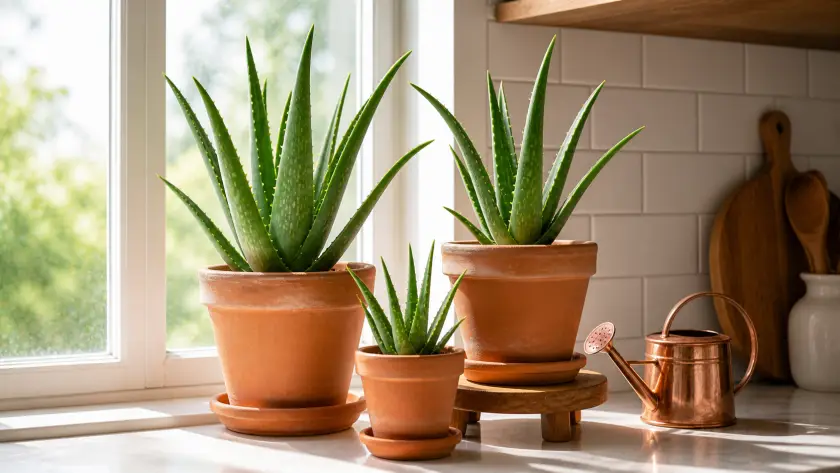
Choose a spot for light first and style second. A sunny kitchen windowsill is a classic choice, because the plant gets bright light and the gel is close at hand for minor kitchen burns. A bright home office desk by a window also works, as does a south-facing living room sill.
Bathrooms suit aloe only if they have a bright window, since the plant needs light far more than humidity. Bedrooms are fine when they are sunny, but a dim corner will make the plant stretch and lean.
Aloe pairs well with other sun-loving, low-water plants. Group it with a snake plant, cacti, or other succulents so they can share one watering schedule. A ZZ plant makes a good low-water companion for the dimmer side of the same room.
Frequently Asked Questions
How often should I water aloe vera?
Water only when the soil is completely dry. In a bright, warm room that is usually every two to three weeks in spring and summer, and every four to six weeks in winter. Always check the soil rather than following a fixed schedule.
Does aloe vera need direct sunlight?
Aloe vera grows best with bright light and a few hours of direct sun each day. A south- or west-facing window is ideal. Introduce stronger sun gradually to avoid scorching.
What is the best soil for aloe vera?
Use a cactus or succulent mix with extra perlite, pumice, or grit so water drains quickly. Avoid ordinary potting compost, which stays wet and can lead to root rot.
Is aloe vera toxic to cats and dogs?
Yes. Aloe vera leaves contain anthraquinone compounds that can cause stomach upset and diarrhea in cats and dogs. Keep the plant out of reach and contact your vet if your pet chews it.
How do I care for aloe vera in winter?
Give it the brightest spot you have, keep it above about 50°F (10°C), water much less often, and stop feeding until spring. Keep it away from cold window glass and direct heater air.
Final Thoughts
Aloe vera care is simple once you treat it like the sun-loving succulent it is. Give it bright light, a gritty mix in a terracotta pot, and water only when the soil is fully dry. Keep it away from pets, use the gel on skin rather than eating it, and pot up the pups as they appear. With that routine, one aloe vera plant can fill your windowsills for years.
Explore more beginner-friendly plants in our indoor plants collection.