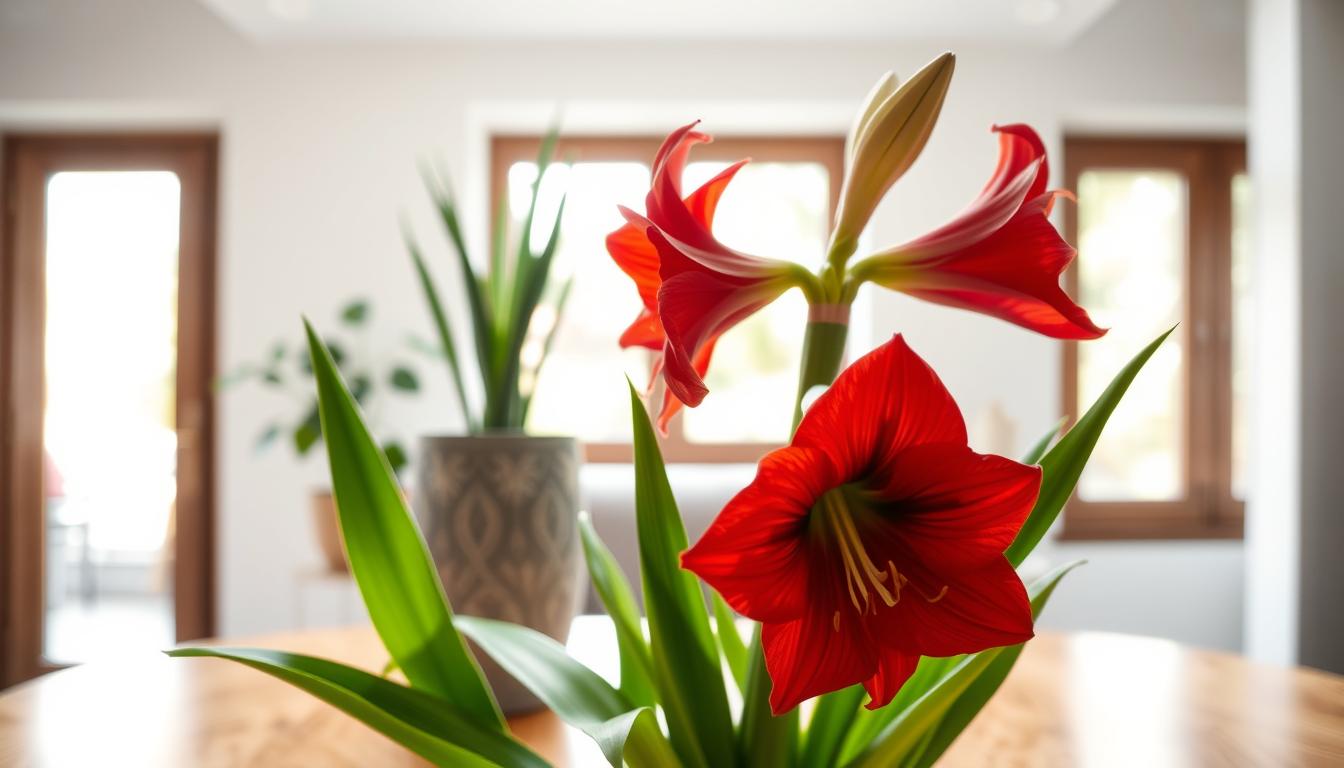
Amaryllis care is simple. Plant the bulb in a pot only about 2–3 cm (1 in) wider than the bulb, with the top third of the bulb above a free-draining potting mix. Water thoroughly once, then only when the top 5 cm (2 in) feels dry, and keep it warm (about 20–24°C, 68–75°F) in a bright window. It usually flowers within 6–10 weeks. After flowering, keep the leaves growing, then give the bulb a cool, dry rest of 8–12 weeks to help it rebloom.
The large, trumpet-shaped flowers of amaryllis are one of the easiest ways to bring colour indoors in winter, and with the right care the same bulb can flower year after year. This amaryllis care guide follows an indoor amaryllis through its whole cycle: choosing and planting the bulb, caring for it while it grows and flowers, looking after the leaves, and getting it to rebloom after dormancy.
At Patch Plants, botanist Sawera Shahid describes an amaryllis bulb as a rechargeable battery: the flowers use up stored energy, and the leaves recharge it over summer. Treat the leaves well after flowering and next winter’s flowers almost take care of themselves. Find out more about us on the About Patch Plants page.
Key Takeaways
- Plant the bulb with its top third above the mix, in a snug pot with drainage holes.
- Water sparingly until growth starts, then when the top 5 cm of mix is dry. Wet, cold mix rots bulbs.
- Bright light and warmth produce strong, straight flower stalks; turn the pot regularly.
- Cut off faded flowers but keep the stalk until it yellows, and keep the leaves growing all summer.
- For reblooming, give the bulb a cool (about 7–13°C, 45–55°F), dark, dry rest for 8–12 weeks.
- Waxed bulbs flower without water or soil but are usually discarded afterwards.
- Amaryllis is toxic to cats and dogs; keep bulbs and leaves out of reach.
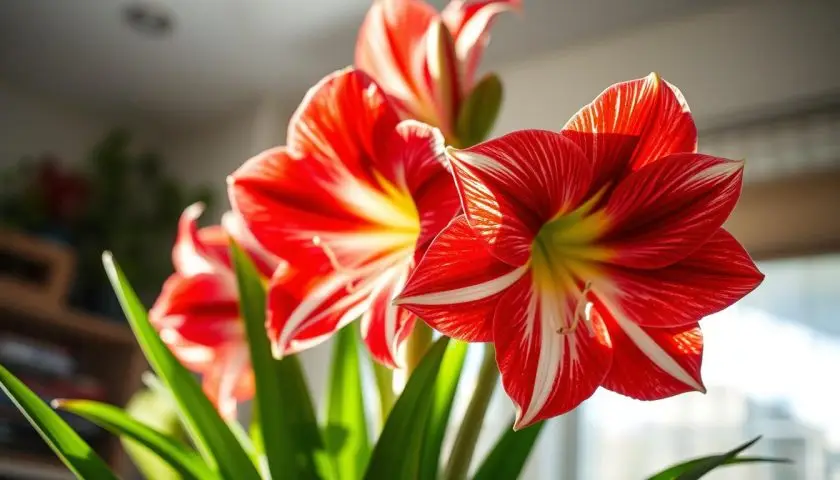
Amaryllis Care at a Glance
| Stage | Light | Water | Temperature | Feeding |
|---|---|---|---|---|
| Planting to first growth | Bright window | Water once, then very little | 20–24°C (68–75°F) | None |
| Stalk and bud growth | Bright, turn the pot often | When top 5 cm is dry | 20–24°C | None needed |
| In flower | Bright indirect, out of hot sun | When top 5 cm is dry | Slightly cooler makes flowers last longer | None |
| After flowering (leaves) | As bright as possible; outdoors in summer | Regularly | Warm | Monthly balanced feed |
| Dormancy | Dark | None | 7–13°C (45–55°F) | None |
Understanding Amaryllis Bulbs
The bulbs sold as “amaryllis” for indoor growing are actually Hippeastrum, from Central and South America. The true Amaryllis belladonna is a different plant from South Africa, usually grown outdoors in mild climates. Hippeastrum bulbs are large and store enough energy to produce one or two tall stalks, each with several big flowers, in red, white, pink, orange, salmon and striped forms.
The growth cycle works like this: stored food in the bulb powers the first flowers; after flowering, the strap-shaped leaves make new food and refill the bulb; then a rest period resets it for the next round of flowers. Big, heavy bulbs generally produce more flower stalks than small ones.
For winter flowers, plant bulbs from about October to January. Staggering planting a few weeks apart gives a longer display.
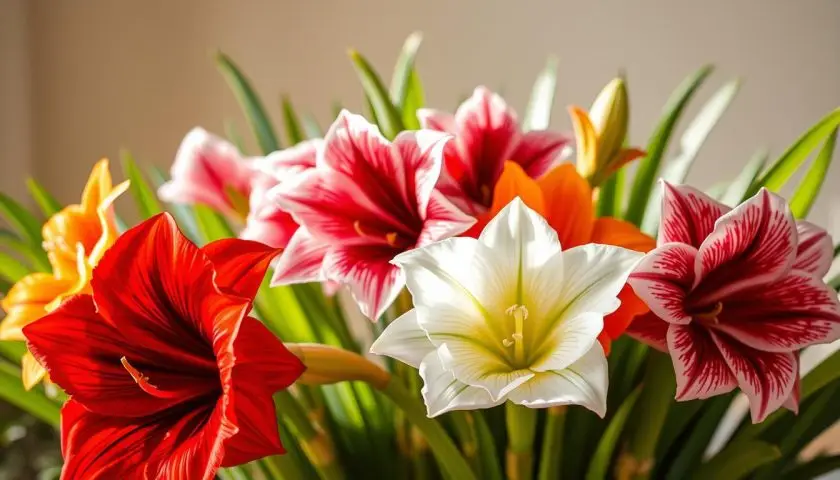
Choosing the Pot, Mix and Location
Good amaryllis care starts before planting, with the right bulb, pot and potting mix.
- Bulb: choose a large, firm bulb with dry outer skin and no soft spots, mould or mealybugs.
- Pot: amaryllis flowers best when snug. University of Illinois Extension recommends a pot with drainage holes about one inch wider than the bulb and, ideally, about twice the bulb’s height. A heavy terracotta or ceramic pot helps stop tall stalks from tipping.
- Mix: use a free-draining, soilless potting mix, for example 2 parts houseplant compost, 1 part perlite and 1 part fine bark. Never use garden soil.
- Location: a warm room with a bright, sunny window. Away from radiators and cold draughts.
Our best soil mix guide has more on free-draining mixes.
How to Plant an Amaryllis Bulb
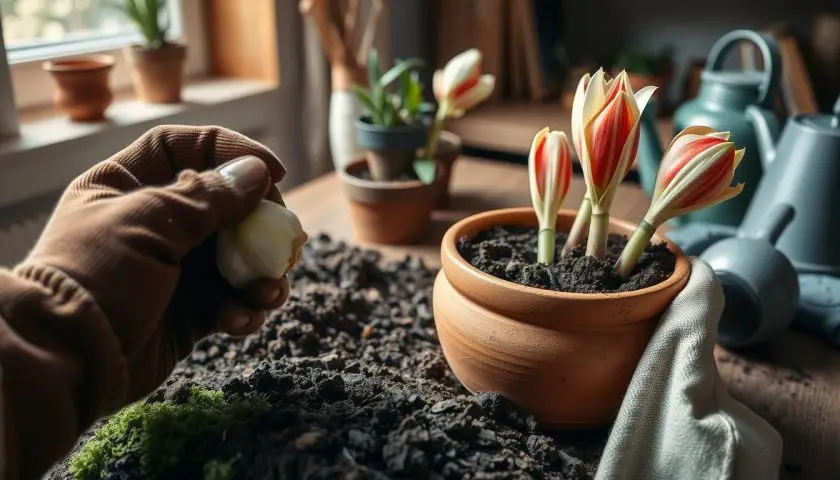
- Soak the roots (optional): stand the base of the bulb in lukewarm water for a few hours to rehydrate dry roots. Don’t let the bulb itself sit in water.
- Add mix to the pot so the bulb will sit with its top third above the surface.
- Set the bulb in place, spreading the roots, and fill around it. Firm the mix gently without packing it hard, leaving about 2–3 cm between the surface and the rim.
- Water thoroughly once and let it drain completely.
- Place in a warm, bright spot and water only sparingly until a stalk or leaves appear. Too much water before roots are active is the main cause of bulb rot.
If the bulb has few or no roots, plant it the same way; new roots will grow down into the mix as it starts to grow. If roots are dark and mushy, trim them off first. See our guide to healthy roots vs root rot.
Waxed Amaryllis Bulbs
Waxed bulbs have had their roots removed and are sealed in wax, so they flower using only their stored energy, with no soil or water. Just stand them in a bright, warm spot and turn them every few days. Illinois Extension notes they are usually discarded after flowering. If you want to try saving one, remove the wax and any wire after flowering, and if the bulb is still firm, pot it up and grow it like a normal bulb.
Amaryllis Care While It Grows
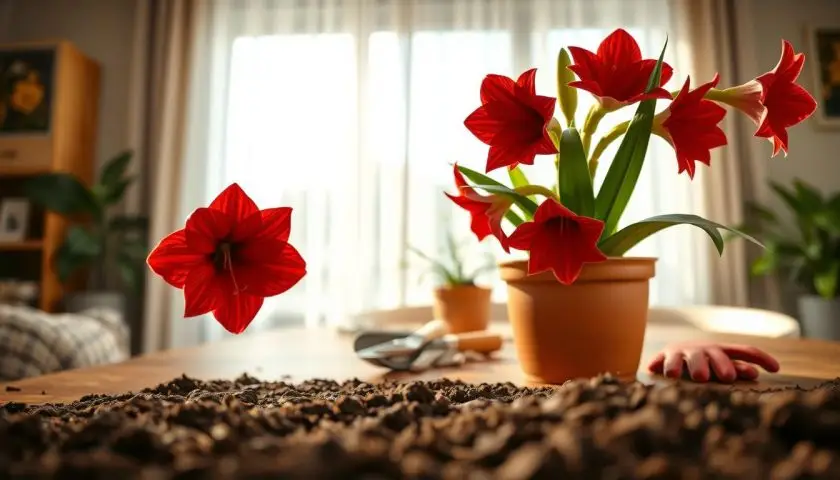
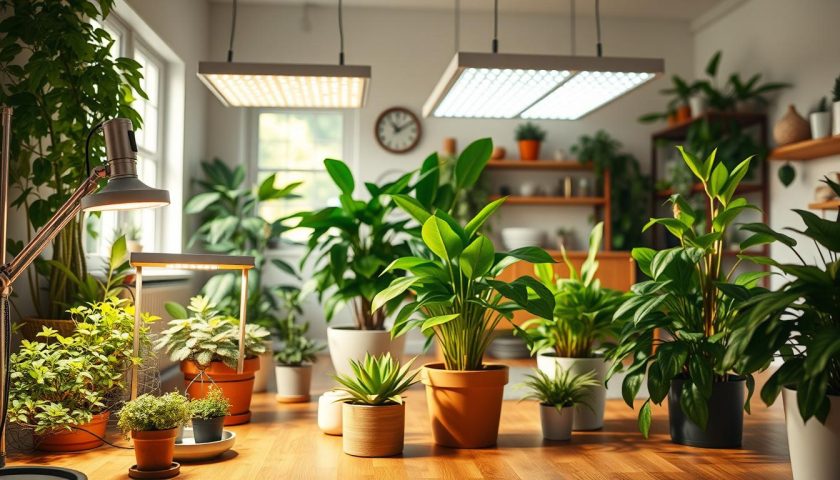
- Light: give it the brightest spot you have; a sunny window is ideal while the stalk grows. In low light, stalks stretch and flop. A grow light helps in dark homes; see our guide to grow lights for indoor plants.
- Turn the pot a quarter turn every day or two so the stalk grows straight.
- Water when the top 5 cm (2 in) of mix is dry. Pour onto the mix, not over the bulb’s neck, and empty the saucer after a few minutes.
- Temperature: about 20–24°C (68–75°F) speeds growth. Avoid cold windows and hot radiators.
- Support: push a thin stake into the mix beside the bulb, avoiding the roots, as the stalk lengthens, and tie loosely.
- Feeding: not needed before flowering, because the bulb already has the energy it needs. Feeding becomes important after flowering.
Making the Flowers Last
Once the buds start to show colour, move the plant out of direct sun to a slightly cooler spot, which helps the flowers last longer. Keep it away from heat vents, fires and draughts. Water as before.
As each flower fades, cut it off where it joins the top of the stalk. This stops seeds forming, which would use up energy. Leave the green stalk in place: it still makes food for the bulb. Cut it off about 2–5 cm above the bulb once it turns yellow or starts to shrivel.
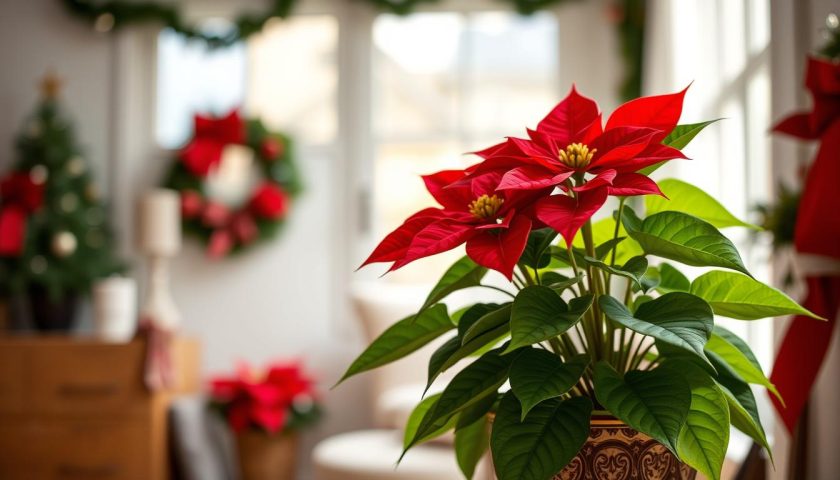
Amaryllis looks wonderful with other winter flowers; see our guides to poinsettia care, Christmas cactus care and cyclamen care, and our ideas for decorating with festive plants.
Amaryllis Care After Flowering
Amaryllis care after flowering is the most important stage for reblooming. The leaves refill the bulb with energy for next year’s flowers.
- Keep the plant in the brightest spot you have; a south-facing window is ideal.
- Water whenever the top 5 cm of mix is dry.
- Feed monthly with a balanced houseplant fertilizer, following the label.
- Don’t cut off healthy green leaves.
Summer outdoors: after the last frost, you can move the pot outside. Start in filtered shade and gradually move it to a spot with at least six hours of sun over a week or two, so the leaves don’t scorch. Bring it in before the first autumn frost.
How to Get Amaryllis to Rebloom
Illinois Extension notes that amaryllis doesn’t strictly need dormancy, but a rest period helps you control when it flowers and is the most reliable way to get winter blooms.
- Late summer to early autumn: stop feeding and gradually reduce watering.
- Let the leaves yellow, then cut them off near the top of the bulb.
- Rest the bulb: keep it in its pot, dry, in a cool, dark place at about 7–13°C (45–55°F), such as a cool cupboard, garage or basement, for 8–12 weeks. Don’t water during this time.
- Check it now and then: it should stay firm. If a bud appears early, move it into light straight away.
- Wake it up: replace the top few centimetres of mix with fresh mix (or repot every 3–4 years), water thoroughly once, and return it to a warm, bright spot. Flowers usually follow in about 4–8 weeks.
Count back from when you want flowers: for blooms around Christmas, start the rest period in late August or early September.
Troubleshooting Amaryllis Care Problems
| Problem | Likely cause | What to do |
|---|---|---|
| Leaves but no flowers | Too little light or feeding last summer; no rest period; small bulb | Grow leaves in bright light, feed monthly, give a full 8–12 week rest |
| Tall, floppy, leaning stalk | Too little light or too much heat | Brighter spot, turn the pot, stake the stalk |
| Soft, mushy or smelly bulb | Bulb rot from wet, cold mix or a buried neck | Cut away soft tissue, dry the bulb, repot in fresh mix; discard if mostly soft |
| Yellow leaves in late summer or autumn | Natural start of dormancy | Reduce watering and begin the rest period |
| Yellow leaves during active growth | Overwatering, poor drainage or low light | Let the mix dry more; check drainage and roots |
| Red streaks or spots on leaves and bulb | Red blotch (a fungal disease) | Remove affected leaves, avoid wetting the bulb, keep conditions drier |
| Tiny flies, white fluff, silvery streaks | Fungus gnats, mealybugs or thrips | Let the mix dry between waterings; wipe or treat with insecticidal soap |
For help with pests, see our guide to white spots on plant leaves, and for yellowing, yellow leaves on plants. Our guide to root rot explains how to rescue a rotting bulb.
Is Amaryllis Toxic to Pets?
Yes. The ASPCA lists amaryllis as toxic to cats and dogs. It contains lycorine and other compounds that can cause vomiting, diarrhoea, drooling, abdominal pain, loss of appetite, depression and tremors. The bulb is the most toxic part. Keep plants and stored bulbs well out of reach and contact your vet if your pet chews any part of the plant. For safer choices, see our cat-friendly plants guide and dog-friendly plants guide.
Common Amaryllis Care Mistakes
- Burying the bulb’s neck, which traps moisture and causes rot.
- Using a pot that’s too big or has no drainage holes.
- Overwatering before growth starts.
- Cutting off green leaves or the stalk too early.
- Skipping summer feeding and light, so the bulb is too weak to flower.
- Keeping the bulb warm and wet during its rest.
For other flowering houseplants, see our list of blooming indoor plants and indoor plants with red flowers.
Frequently Asked Questions
How long does it take an amaryllis to flower?
Usually about 6–10 weeks after planting a new bulb, and about 4–8 weeks after waking a bulb from its rest period. Warmth and bright light speed it up.
How deep should I plant an amaryllis bulb?
Leave the top third of the bulb above the mix. Burying the neck traps moisture and can make the bulb rot.
How often should I water an amaryllis?
Water thoroughly at planting, then sparingly until growth starts. After that, water when the top 5 cm (2 in) of mix feels dry. Stop watering during the rest period.
What do I do with an amaryllis after it flowers?
Cut off faded flowers, leave the stalk until it yellows, then cut it near the bulb. Keep the leaves growing in bright light, water regularly and feed monthly through spring and summer to build up the bulb.
How do I get my amaryllis to bloom again?
After a summer of strong leaf growth, stop watering in late summer or early autumn and store the bulb in a cool (7–13°C), dark, dry place for 8–12 weeks. Then water it and move it to a warm, bright spot; flowers usually follow within a couple of months.
Final Thoughts
Good amaryllis care comes down to a snug pot, a free-draining mix, careful watering, warmth and bright light, and above all, looking after the leaves once the flowers fade. Give the bulb a summer of growth and a cool winter rest, and it can reward you with dramatic flowers for many years. For more winter colour, explore our indoor plant guides.