Key Takeaways
- Blooming indoor plants bring colour, fragrance, and life to your home throughout the year — not just in summer
- The 23 flowering houseplants in this guide cover every light level, room type, and lifestyle — including options for beginners and busy plant owners
- Winter blooming indoor plants like holiday cactus, cyclamen, amaryllis, and jasmine provide colour when outdoor gardens are completely dormant
- Indoor plants that bloom all year round include African violet, anthurium, peace lily, kalanchoe, and lipstick plant
- Pet safety varies significantly — always check before buying: several popular blooming houseplants including peace lily, anthurium, and kalanchoe are toxic to cats and dogs
- Most blooming indoor plants need bright indirect light — insufficient light is the primary reason flowering houseplants fail to produce blooms
- Use a low-nitrogen, high-potassium bloom-boosting fertiliser during the growing season to encourage flowering in reluctant plants
- Many blooming houseplants require a rest or dormancy period to trigger their next bloom cycle — skipping this step is a common reason plants stop flowering
- Humidity matters for flowering — orchids, gardenias, and many tropical blooming plants perform noticeably better with a humidity tray or regular moisture management
- A single well-chosen blooming indoor plant can transform the atmosphere of a room — start with one, learn its rhythm, and build from there
Introduction
When the world outside feels grey and quiet, the right blooming indoor plants can change everything about how a room feels. Colour where there was none. Fragrance drifting through a hallway. The quiet satisfaction of watching a flower spike slowly unfurl over several days.
Blooming houseplants are not just decoration — they are mood management. Research consistently shows that living flowers in a space reduce stress, improve focus, and contribute meaningfully to a sense of wellbeing. And unlike cut flowers, indoor blooming plants keep giving — many for months at a time, some year after year with minimal attention.
This guide covers 23 of the best blooming indoor plants available, from the reliably easy to the spectacularly rewarding. Each entry includes light requirements, watering guidance, and pet safety information — everything you need to choose the right flowering houseplant for your home and lifestyle.
For general indoor plant care principles that apply to all flowering houseplants, our complete guide to watering tips and complete guide to indoor light are essential reading alongside this guide. For those who want fragrance as well as flowers, our indoor plants that smell amazing guide covers the most fragrant blooming options in detail.
Why Blooming Indoor Plants Are Worth the Extra Attention
Flowering houseplants do ask slightly more of you than foliage-only plants. They need the right light to trigger blooming. Many need a seasonal rest period. Humidity matters more. Feeding with the right formulation makes a real difference.
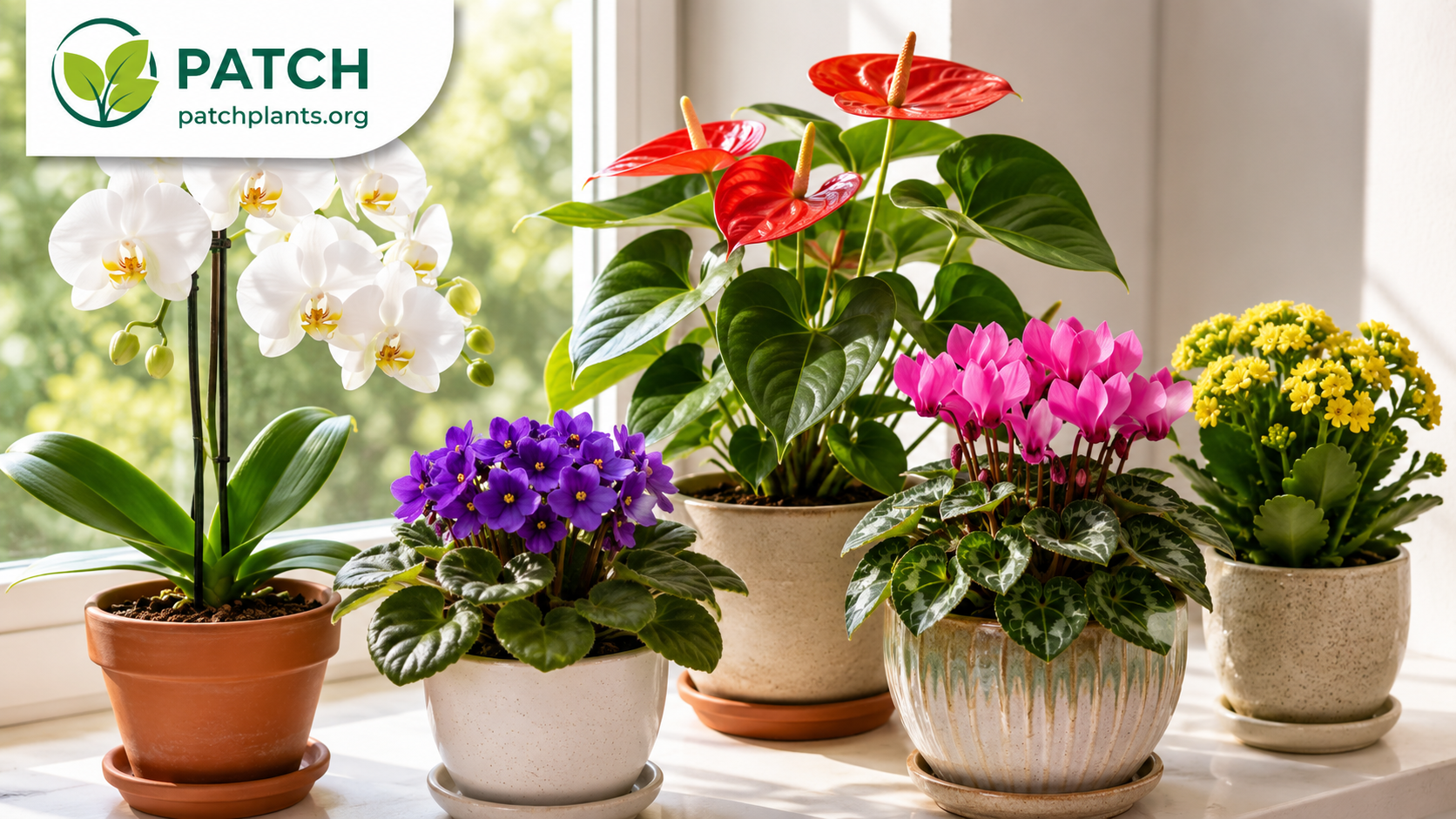
But the return on that small extra investment is significant. A moth orchid in full bloom — twelve to eighteen elegant flowers on arching spikes — lasts three months or more with no additional effort. An African violet that has settled into its spot produces flowers almost continuously. A peace lily marks the changing seasons with its clean white spathes appearing reliably spring and autumn.
Blooming indoor plants also connect you to natural seasonal rhythms in a way foliage plants cannot. Watching an amaryllis bulb push up its first thick stem in midwinter, or a holiday cactus suddenly flush with colour in November, creates a relationship with time and season that is genuinely grounding.
If you are building a collection that combines colour with easy care, our best indoor plants for beginners guide and 35 low-maintenance plants guide both include excellent flowering options alongside their foliage picks.
How to Get Blooming Indoor Plants to Flower Reliably
Before diving into the plant list, these are the universal principles that determine whether your blooming houseplants actually bloom:
Light Is the Primary Trigger
Most flowering houseplants need bright indirect light for a minimum of four to six hours daily to produce blooms reliably. A plant that looks healthy but refuses to flower is almost always in insufficient light. Move it closer to a window before trying anything else. Our complete guide to indoor light explains how to assess light levels correctly in every room.
Use the Right Fertiliser
High-nitrogen fertilisers encourage lush green growth at the direct expense of flowering. For blooming indoor plants, use a low-nitrogen, high-potassium and phosphorus bloom-boosting formula during the growing season — spring through early autumn. Reduce or stop feeding entirely in winter. Our fertilising indoor vs outdoor plants guide explains feed formulations in detail.
Respect the Rest Period
Many blooming houseplants require a distinct rest or dormancy period to reset their flowering cycle. Holiday cactus needs cooler nights. Amaryllis needs a dry dormancy after the leaves die back. Orchids need a cool autumn period to trigger new spikes. Skipping this rest period is one of the most common reasons indoor blooming plants stop flowering after their first season.
Manage Humidity
Many tropical flowering plants prefer higher humidity than standard centrally heated homes provide. Brown leaf tips, bud blast, and failure to rebloom are all symptoms of air that is too dry. A humidity tray under moisture-loving blooming plants makes a measurable difference. Our DIY humidity tray guide explains how to build one in minutes, and our humidity hacks guide covers all available methods.
The 23 Best Blooming Indoor Plants
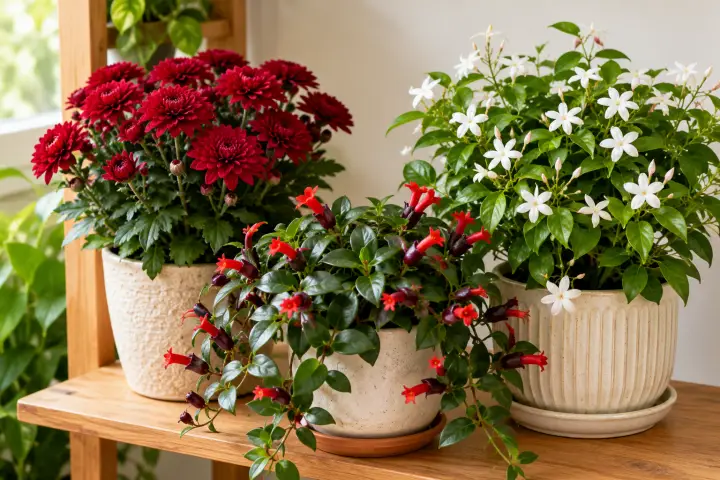
1. Chrysanthemum (Chrysanthemum morifolium)
Chrysanthemums are among the most vibrant seasonal blooming indoor plants available — purples, yellows, oranges, and reds in abundance. While encouraging a second bloom indoors takes effort, their initial show is genuinely spectacular and long-lasting. Place on a bright windowsill and keep the soil evenly moist throughout the blooming period.
- Light: Bright indirect light
- Water: Keep evenly moist
- Pet Safe: No — toxic to cats and dogs
- Blooming period: Autumn and winter
2. Lipstick Plant (Aeschynanthus radicans)
The lipstick plant earns its name from the bright red tubular flowers that emerge from deep maroon buds — like lipstick being pushed from a case. A trailing tropical flowering houseplant that can bloom multiple times a year with adequate bright light. One of the best pet-safe blooming indoor plants available.
- Light: Bright filtered light
- Water: Allow soil to dry slightly between waterings
- Pet Safe: Yes
- Blooming period: Multiple times annually
3. Jasmine (Jasminum polyanthum)
Jasmine is one of the most rewarding fragrant blooming indoor plants — clusters of star-shaped white flowers release a sweet, heady scent that fills a room. Winter jasmine varieties bloom during the coldest months, making jasmine one of the best winter blooming indoor plants for fragrance. Keep in bright light and evenly moist soil for best flowering performance. Our indoor plants that smell amazing guide covers jasmine in detail alongside other fragrant flowering options.
- Light: Bright, direct or filtered
- Water: Keep evenly moist
- Pet Safe: Yes
- Blooming period: Late winter to spring
4. Gloxinia (Sinningia speciosa)
Gloxinias are among the most dramatically beautiful blooming houseplants available — huge, bell-shaped flowers in velvet red, pink, purple, and white that make the plant look like a living bouquet. Soft, fuzzy leaves add additional texture. Bottom water to avoid spotting on the foliage and provide bright indirect light for the fullest bloom display.
- Light: Bright indirect light
- Water: Bottom water to avoid leaf spotting
- Pet Safe: Yes
- Blooming period: Spring and summer
5. Regal Geranium (Pelargonium grandiflorum)
Regal geraniums produce deeply coloured, often ruffled petals in shades of pink, red, purple, and white against lush dark green leaves. More dramatic than standard geraniums and well-suited to indoor growing in bright positions. Allow the top centimetre of soil to dry between waterings to prevent root rot.
- Light: Bright indirect light
- Water: Let top inch dry between waterings
- Pet Safe: No — toxic to cats and dogs
- Blooming period: Spring through summer
6. Ixora
Ixora produces dense clusters of small, intensely coloured flowers in red, orange, yellow, and pink. It performs particularly well in warm, humid environments — making it an excellent blooming plant for bathrooms with natural light. Our 33 best plants for your bathroom guide covers other humidity-tolerant flowering options for similar positions.
- Light: Full sun to bright indirect
- Water: Keep soil lightly moist
- Pet Safe: No
- Blooming period: Summer, intermittently year round
7. Crown of Thorns (Euphorbia milii)
Despite its dramatic name, the crown of thorns is one of the most long-blooming and low-maintenance flowering houseplants available. Its colourful bracts — red, pink, yellow, or white — last for months, and the plant actively thrives on neglect and dry conditions. An ideal blooming indoor plant for those who travel or tend to forget to water.
- Light: Direct sunlight
- Water: Let soil dry completely between waterings
- Pet Safe: No — toxic to cats and dogs
- Blooming period: Almost year round
8. Hoya Albo Carnosa
Hoya albo carnosa combines variegated leaves — sometimes tinged with cream and pink — with waxy, star-shaped flower clusters that smell subtly sweet at night. A beautiful and long-lived blooming houseplant that rewards patience with increasingly abundant annual blooms. Never remove old flower spurs. Our hoya care guide covers the full care requirements for this and other hoya varieties.
- Light: Bright indirect light
- Water: Water sparingly, let dry between waterings
- Pet Safe: Yes
- Blooming period: Spring through summer
9. Pink Anthurium (Anthurium andraeanum)
Anthuriums produce waxy, heart-shaped spathes in red, pink, white, and coral that last for months — making them among the longest-blooming indoor plants available. Each spathe can remain vibrant for six to eight weeks before fading, and a healthy plant produces new spathes continuously throughout the growing season. For comprehensive anthurium care, our anthurium care guide is coming soon.
- Light: Bright filtered light
- Water: Let soil partially dry between waterings
- Pet Safe: No — toxic to cats and dogs
- Blooming period: Year round on healthy plants
10. Desert Rose (Adenium obesum)
The desert rose is one of the most architecturally stunning blooming indoor plants — a sculptural swollen trunk reminiscent of a bonsai, topped with vibrant trumpet-shaped flowers in pink, red, and white. Give it maximum sun and minimal water and it rewards with spectacular seasonal blooms. One of the best sun-loving flowering houseplants for south-facing windowsills.
- Light: Six or more hours of direct sun daily
- Water: Every two to three weeks
- Pet Safe: No — highly toxic
- Blooming period: Spring through autumn
11. Moth Orchid (Phalaenopsis)
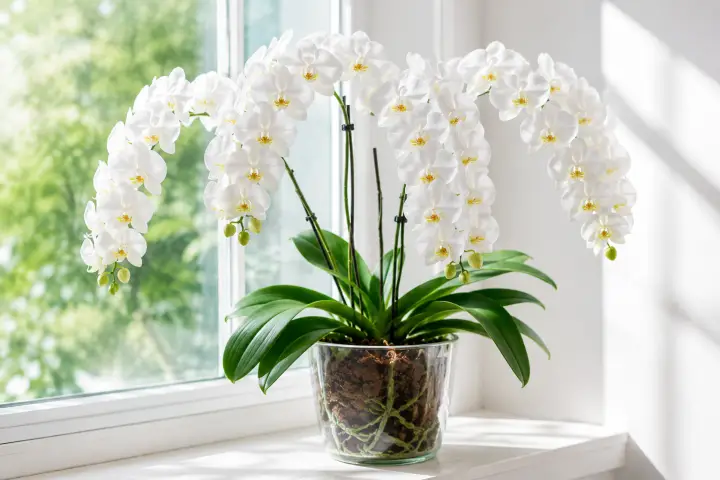
The moth orchid is the most popular blooming indoor plant in the world for good reason — elegant arching flower spikes carrying up to twenty blooms each, lasting three months or more, available in almost every colour. Far easier to care for than their reputation suggests. Our orchid care guide covers everything from watering to reblooming in full detail.
- Light: Bright indirect light, east or west window
- Water: Soak and drain once per week
- Pet Safe: Yes
- Blooming period: Up to six months, reblooms annually
12. Bromeliad (Bromeliaceae family)
Bromeliads produce a single flower spike that lasts for months — some varieties holding colour for up to six months before fading. Their tropical foliage adds colour and texture throughout the year regardless of flowering stage. Water into the central cup rather than the soil and keep in bright indirect light for the longest bloom duration.
- Light: Bright indirect light
- Water: Fill the central cup, water soil occasionally
- Pet Safe: Yes
- Blooming period: Single bloom lasting several months
13. Purple Oxalis (Oxalis triangularis)
Purple oxalis is one of the most visually distinctive blooming houseplants available — shamrock-shaped deep purple leaves that fold closed at night and reopen in daylight, accompanied by delicate white or pale pink flowers. The foliage is genuinely the star here, but the regular small blooms add additional charm throughout the growing season.
- Light: Bright indirect light
- Water: Keep slightly moist, allow natural dormancy periods
- Pet Safe: No — mildly toxic
- Blooming period: Spring through autumn
14. Cyclamen (Cyclamen persicum)
Cyclamen is one of the finest winter blooming indoor plants — butterfly-like flowers in pink, red, white, and purple hover above beautifully patterned silver-marked leaves through late autumn and winter. They need cool temperatures to perform well — avoid placing near radiators. Bottom watering prevents crown rot in this moisture-sensitive plant.
- Light: Bright indirect light
- Water: Bottom watering preferred
- Pet Safe: No — toxic to cats and dogs
- Blooming period: Autumn through early spring
15. Calamondin Orange (Citrus microcarpa)
The calamondin is one of the most extraordinary blooming indoor plants — fragrant white blossom in spring followed by miniature ornamental oranges that are genuinely edible. Both the flowers and the fruit appear simultaneously on mature plants, creating an unusual and highly decorative display. Needs full sun or a dedicated grow light to perform well indoors.
- Light: Full sun or grow light
- Water: Let dry slightly between waterings
- Pet Safe: No — citrus oils toxic to cats
- Blooming period: Spring, with fruit following
16. Holiday Cactus (Schlumbergera)
The holiday cactus — encompassing Christmas, Thanksgiving, and Easter cactus varieties — is one of the most beloved winter blooming indoor plants. With correct care it blooms reliably for decades, often being passed through generations as a family plant. Our Christmas cactus care guide covers the full care cycle including how to trigger reliable winter blooming.
- Light: Bright indirect light
- Water: Let soil dry seventy-five percent before watering
- Pet Safe: Yes
- Blooming period: Late autumn through winter
17. Kalanchoe (Kalanchoe blossfeldiana)
Kalanchoe produces clusters of small, bright flowers in red, orange, yellow, pink, and white that last for weeks with minimal care. One of the most reliable and low-fuss blooming indoor plants available — excellent for windowsills, desks, and kitchen shelves where a reliable pop of colour is wanted without high-maintenance care requirements.
- Light: Bright sun
- Water: Let soil dry fully between waterings
- Pet Safe: No — toxic to cats and dogs
- Blooming period: Winter through spring, reblooms with care
18. African Violet (Saintpaulia)
African violets are among the best year-round blooming indoor plants for beginners — compact, charming, and capable of producing flowers almost continuously when placed in the right spot. Use lukewarm water and avoid wetting the fuzzy leaves to prevent spotting. Bottom watering works best. One of the most reliably pet-safe flowering houseplants available. For full care guidance, our African violet care guide is coming soon.
- Light: Bright indirect light — north or east window ideal
- Water: Keep evenly moist, bottom water preferred
- Pet Safe: Yes
- Blooming period: Nearly year round
19. Peace Lily (Spathiphyllum)
The peace lily is one of the most elegant and reliable blooming indoor plants — clean white spathes emerging twice a year from glossy dark green leaves, combined with exceptional air-purifying qualities. One of the very few flowering houseplants that tolerates lower light levels, though brighter indirect light produces more blooms. Our peace lily care guide covers the full care routine in detail. For its air-purifying qualities, our air-purifying plants guide provides useful context.
- Light: Moderate to bright indirect light
- Water: Keep soil slightly moist
- Pet Safe: No — toxic to cats and dogs
- Blooming period: Spring and autumn
20. Flowering Maple (Abutilon)
The flowering maple produces pendant, paper lantern-like blooms in orange, red, yellow, and pink that dangle from maple-shaped leaves throughout the growing season. A striking and underused blooming indoor plant that suits bright corners and tall plant stands particularly well. Prune lightly after flowering to maintain a compact bushy shape and encourage more blooms.
- Light: Bright indirect light
- Water: Water when top centimetre of soil dries
- Pet Safe: No
- Blooming period: Spring through autumn
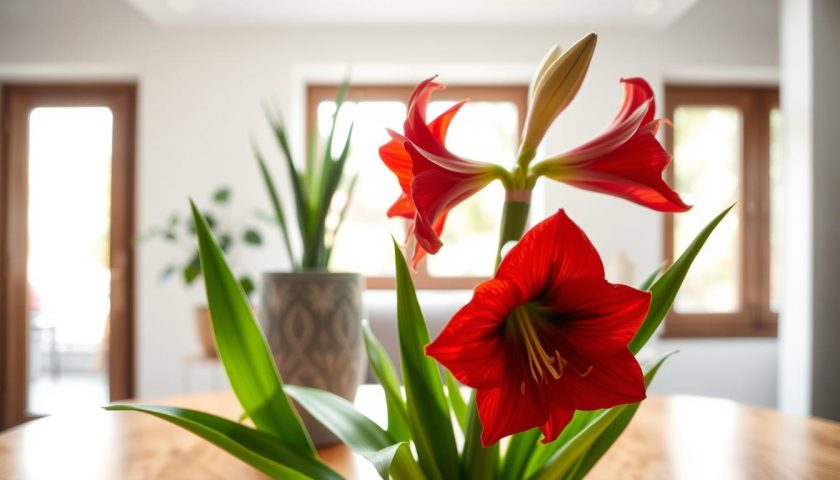
21. Amaryllis (Hippeastrum)
Amaryllis is one of the most dramatic winter blooming indoor plants available — enormous trumpet-shaped flowers in red, pink, white, and striped combinations bursting open on thick upright stems from a single bulb. A classic winter flowering houseplant that can be brought back year after year by allowing the bulb to go dormant after the leaves die back naturally.
- Light: Bright indirect light
- Water: Water when soil dries halfway
- Pet Safe: No — toxic to cats and dogs
- Blooming period: Winter through early spring
22. Clivia (Clivia miniata)
Clivia is an understated but genuinely beautiful blooming houseplant — clusters of orange, yellow, or red trumpet-shaped flowers emerging from strap-like dark green leaves in late winter and spring. It needs a cool, dry rest period in autumn to trigger reliable flowering. Tolerates lower light better than most flowering houseplants, making it one of the better blooming indoor plants for darker rooms.
- Light: Moderate to bright indirect light
- Water: Reduce water significantly during autumn dormancy
- Pet Safe: No — toxic to cats and dogs
- Blooming period: Late winter through spring
23. Rex Begonia (Begonia rex)
Rex begonias are primarily known for their extraordinary patterned foliage — swirling combinations of silver, green, red, and purple that make them among the most visually striking houseplants available. They also produce small pink or white flowers occasionally, adding a further dimension to an already remarkable plant. Bright indirect light and slightly moist soil produce the best foliage colour and most reliable flowering.
- Light: Bright indirect light
- Water: Keep soil slightly moist
- Pet Safe: No — toxic to cats and dogs
- Blooming period: Intermittent throughout the year
Pet-Safe Blooming Indoor Plants: Quick Reference

Pet safety is an important consideration when choosing blooming houseplants. Here is a quick reference guide for the 23 plants in this list:
Pet-safe flowering houseplants: Lipstick plant, jasmine, gloxinia, hoya albo carnosa, moth orchid, bromeliad, holiday cactus, African violet
Toxic to cats and dogs: Chrysanthemum, regal geranium, ixora, crown of thorns, pink anthurium, desert rose, purple oxalis, cyclamen, calamondin orange, kalanchoe, peace lily, flowering maple, amaryllis, clivia, rex begonia
For a comprehensive guide to safe plant choices for pet-owning households, our cat-friendly plants guide and dog-friendly plants guide cover safe options across all plant types and sizes.
Blooming Indoor Plants by Light Level
Choosing the right blooming houseplant for your available light is one of the most important decisions in ensuring it actually flowers. Here is a quick guide to the best options at each light level:
High Light — Direct or Very Bright Sun
Desert rose, calamondin orange, kalanchoe, crown of thorns. These blooming indoor plants need south or west-facing windows with several hours of direct sun daily. For more options that thrive in high light, our colorful foliage plants guide covers sun-loving varieties alongside flowering options.
Medium-High Light — Bright Indirect
Moth orchid, African violet, peace lily, lipstick plant, hoya, gloxinia, bromeliad, jasmine, anthurium, holiday cactus, rex begonia, cyclamen, flowering maple, amaryllis, regal geranium, ixora, chrysanthemum. The majority of blooming indoor plants fall into this category — an east or west-facing windowsill is ideal for most.
Lower Light — Moderate Indirect
Peace lily and clivia are the most reliable blooming indoor plants for lower light conditions. Both tolerate moderate indirect light and still produce flowers, though brighter light always improves bloom frequency and quality. For more low-light options including non-flowering plants, our low light hanging plants guide is worth exploring.
Blooming Indoor Plants for Every Room
Different blooming houseplants suit different rooms based on light, humidity, and temperature conditions. Here is a quick room-by-room guide to placing your flowering houseplants most effectively:
For living rooms — the primary display space in most homes — moth orchids, anthuriums, peace lilies, and amaryllis all make excellent statement blooming plants. Our how to style indoor plants by room guide covers living room plant placement in detail.
For bedrooms, jasmine, lavender, and African violet are the best blooming indoor plants — calming, fragrant, and supportive of restful sleep. Our bedroom plants guide covers flowering options for sleeping spaces specifically.
For bathrooms with natural light, ixora, bromeliad, and orchids thrive in the naturally higher humidity. Our 33 best plants for your bathroom guide includes the best humidity-loving flowering options for this environment.
For home offices, kalanchoe, African violet, and moth orchid are all excellent blooming indoor plants — long-lasting, low-maintenance, and visually uplifting during long working hours. Our office-friendly plants guide covers the best flowering options for workspace environments.
Caring for Blooming Indoor Plants: Common Problems
Even with the best-chosen blooming houseplants, problems occasionally arise. Here are the most common issues and their solutions:
Failure to bloom: Almost always caused by insufficient light, incorrect fertiliser, or a missed rest period. Move to a brighter position, switch to a bloom-boosting low-nitrogen feed, and research whether your specific plant requires a dormancy trigger.
Bud drop: Buds forming but dropping before opening is typically caused by sudden temperature change, cold draughts, very low humidity, or moving the plant while in bud. Keep blooming houseplants stable during their budding period. Our humidity hacks guide helps address humidity-related bud drop.
Yellow leaves: Overwatering is the most common cause. Check soil moisture before watering and ensure your pot has drainage holes. Our why plant leaves turn yellow guide covers full diagnosis.
Brown leaf tips: Usually caused by low humidity or inconsistent watering. A humidity tray and regular soil moisture checks resolve most cases. Our leaf curl, browning and droop guide covers full diagnosis for all leaf symptoms.
Root rot: Caused by overwatering and poor drainage — the primary cause of blooming indoor plant death. Always use pots with drainage holes and check soil moisture before watering. Our root rot guide covers identification, treatment, and prevention in full.
Article Summary
| Plant | Light | Bloom Period | Pet Safe |
|---|---|---|---|
| Chrysanthemum | Bright indirect | Autumn/winter | No |
| Lipstick Plant | Bright filtered | Multiple times yearly | Yes |
| Jasmine | Bright direct/filtered | Late winter/spring | Yes |
| Gloxinia | Bright indirect | Spring/summer | Yes |
| Regal Geranium | Bright indirect | Spring/summer | No |
| Ixora | Full sun/bright indirect | Summer/year round | No |
| Crown of Thorns | Direct sun | Near year round | No |
| Hoya Albo Carnosa | Bright indirect | Spring/summer | Yes |
| Pink Anthurium | Bright filtered | Year round | No |
| Desert Rose | 6+ hours direct sun | Spring/autumn | No |
| Moth Orchid | Bright indirect | Up to 6 months | Yes |
| Bromeliad | Bright indirect | Single long bloom | Yes |
| Purple Oxalis | Bright indirect | Spring/autumn | No |
| Cyclamen | Bright indirect | Autumn/winter | No |
| Calamondin Orange | Full sun/grow light | Spring | No |
| Holiday Cactus | Bright indirect | Autumn/winter | Yes |
| Kalanchoe | Bright sun | Winter/spring | No |
| African Violet | Bright indirect | Near year round | Yes |
| Peace Lily | Moderate/bright indirect | Spring/autumn | No |
| Flowering Maple | Bright indirect | Spring/autumn | No |
| Amaryllis | Bright indirect | Winter/spring | No |
| Clivia | Moderate/bright indirect | Late winter/spring | No |
| Rex Begonia | Bright indirect | Intermittent | No |
Related Guides
- Peace Lily Care Guide
- Orchid Care Guide
- Christmas Cactus Care Guide
- Hoya Plant Care Guide
- Succulent Care Guide
- Air-Purifying Indoor Plants
- Indoor Plants That Smell Amazing
- Cat-Friendly Plants Guide
- Dog-Friendly Plants Guide
- Best Indoor Plants for Beginners
- Complete Guide to Indoor Light
- Humidity Hacks Guide
Final Thoughts
Blooming indoor plants are one of the most rewarding investments you can make in your home environment. They ask for a little more attention than foliage-only plants — the right light, the occasional rest period, a bloom-boosting feed in season — but the return is colour, fragrance, and life that no amount of interior decoration alone can replicate.
Whether you start with a single African violet on a kitchen windowsill, a moth orchid on a desk, or an amaryllis bulb planted in midwinter and watched daily as it pushes toward the light — blooming indoor plants connect you to something that most of modern life does not: the quiet, reliable rhythm of growth and flowering.
According to the Royal Horticultural Society, flowering houseplants have been shown to have a measurable positive effect on mood, stress levels, and sense of wellbeing in indoor environments — with even a single blooming plant in a room producing a statistically significant improvement in how occupants perceive and experience that space.
Choose one plant from this list. Give it the light and care it needs. Watch it flower. Then add another.
Frequently Asked Questions
What are the easiest blooming indoor plants for beginners?
The easiest blooming indoor plants for beginners include African violets, holiday cactus, kalanchoe, and moth orchids. These flowering houseplants are forgiving, require minimal care, and bloom reliably with the right amount of bright indirect light and a consistent watering routine. Our best indoor plants for beginners guide covers these and other easy-care options in detail.
Which indoor plants bloom in winter?
The best winter blooming indoor plants include holiday cactus, cyclamen, amaryllis, peace lily, kalanchoe, and jasmine. These plants naturally produce flowers during the colder months and bring colour and fragrance to the home when outdoor gardens are dormant. Cyclamen and holiday cactus in particular are specifically triggered by the cool temperatures and shorter days of autumn and winter.
Are all blooming indoor plants safe for pets?
No — many popular blooming indoor plants are toxic to cats and dogs. Pet-safe flowering houseplants from this list include African violet, jasmine, lipstick plant, moth orchid, bromeliad, hoya, holiday cactus, and gloxinia. Always verify before buying. Our cat-friendly plants guide and dog-friendly plants guide cover safe choices in full.
Why is my blooming indoor plant not producing flowers?
Common reasons blooming indoor plants fail to flower include insufficient light, over-fertilisation with high-nitrogen feed, skipping the rest period some plants require, incorrect temperature, and low humidity. Moving to a brighter position and switching to a low-nitrogen bloom-boosting fertiliser resolves most cases. Our complete guide to indoor light helps assess whether light is the underlying issue.
Which indoor plants bloom all year round?
Indoor plants that bloom all year round or near-continuously include African violet, peace lily, anthurium, kalanchoe, and lipstick plant. With correct care and adequate bright indirect light, these flowering houseplants produce blooms repeatedly throughout the year without a strict seasonal cycle. African violet is particularly reliable — a well-positioned plant can be almost never without flowers.