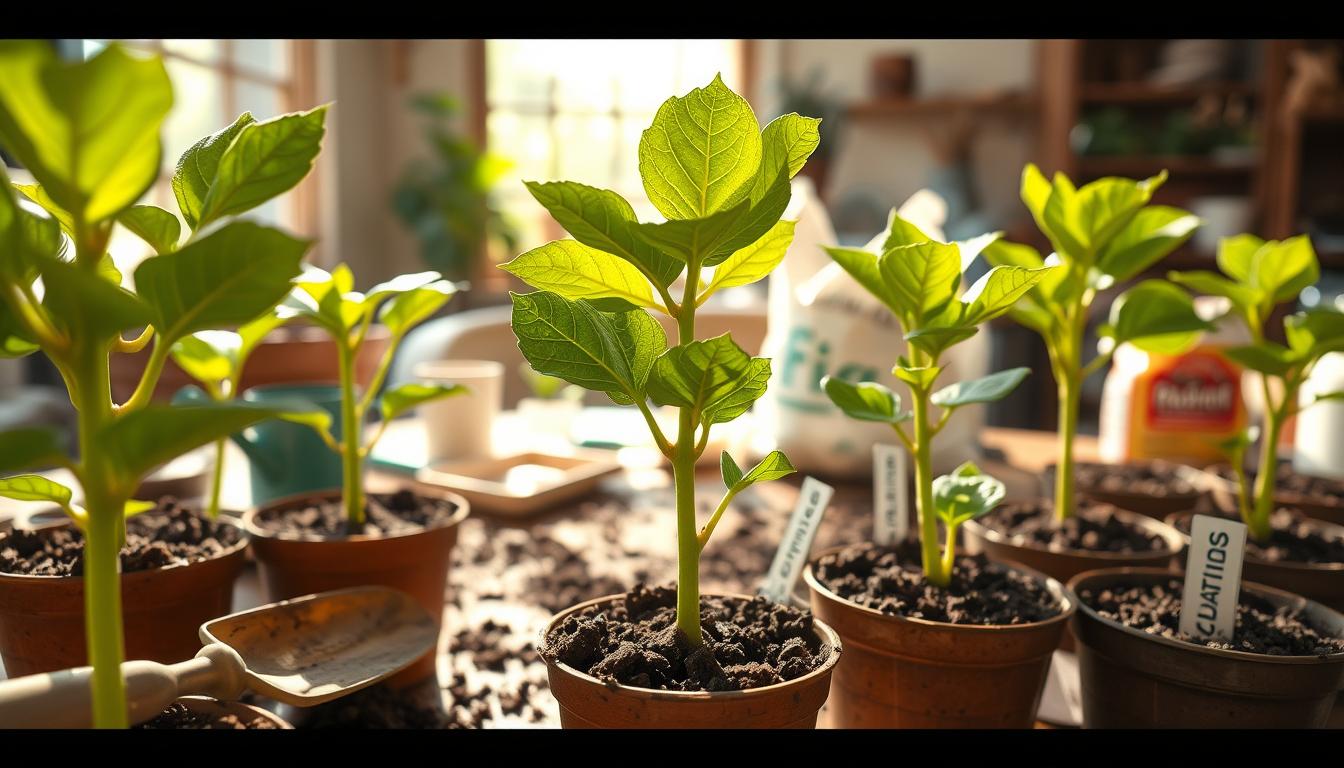
Planting fig cuttings is one of the easiest ways to grow a new fig tree that produces exactly the same fruit as the parent. Take pencil-thick, dormant cuttings in late autumn or winter, plant them in a free-draining mix with at least two buds buried, keep them warm and lightly moist, and wait 6–12 weeks for roots. Then pot up and harden off the young tree before planting it outside.
Quick Answer: 9 Steps for Planting Fig Cuttings
- Take cuttings while the tree is dormant, after the leaves fall.
- Cut healthy, pencil-thick wood 15–25 cm (6–10 in) long with at least three buds.
- Mark the top and bottom and optionally dip the base in rooting hormone.
- Fill a deep pot with a free-draining rooting mix.
- Plant the cutting base-down with at least two buds below the surface.
- Water lightly and cover loosely to hold humidity.
- Keep it warm in bright, indirect light.
- Wait for roots, not just leaves, before disturbing it.
- Pot up and harden off the rooted fig before planting outside.
Key Takeaways
- Common figs (Ficus carica) root readily from cuttings, and each new tree is an exact copy of its parent.
- Dormant hardwood cuttings, taken from mid-autumn to late winter after leaf fall, are the most reliable choice for beginners.
- Use one-year-old wood about as thick as a pencil or finger, with at least three buds.
- A free-draining mix matters more than rooting hormone. Soggy compost is the main cause of failure.
- Leaves often appear before roots. Do not pull the cutting up or pot it on until you see roots.
- Fig sap irritates skin and can cause burns in sunlight, so wear gloves.
- Rooted cuttings can fruit within one to three years, depending on the variety and care.
Why Grow Figs From Cuttings?
Cuttings are the simplest way to multiply a fig you already love. Because a cutting is a clone, it produces the same fruit, hardiness, and growth habit as the parent tree. Seed-grown figs do not come true and may never fruit well.
Cuttings also cost almost nothing, need no special equipment, and suit pots on a patio as well as garden planting.
This guide is for the common edible fig (Ficus carica). Indoor ornamental figs such as fiddle leaf fig (Ficus lyrata) and rubber plant (Ficus elastica) are tropical evergreens propagated from leafy stem cuttings in warm conditions, which is a different method.
What You Need
- A healthy fig tree with last season’s growth.
- Clean, sharp secateurs. Wipe them with rubbing alcohol before and between trees.
- Gloves. Fig sap is a skin irritant.
- Deep pots (at least 10–15 cm/4–6 in deep) with drainage holes. Clear plastic cups with holes let you see roots forming.
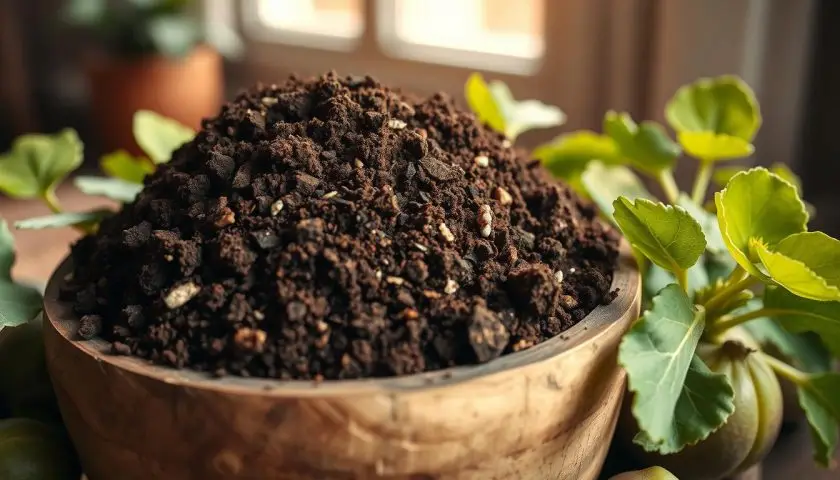
- Free-draining rooting mix (see below).
- Rooting hormone (optional).
- Clear plastic bags or a propagator lid to hold humidity.
- Labels and a pen.
Best Soil for Fig Cuttings
Fig cuttings rot quickly in heavy, wet compost. The rooting mix needs to hold a little moisture while letting plenty of air reach the base of the cutting. Good options include:
| Rooting Mix | Why It Works | Best For |
|---|---|---|
| 50:50 coarse grit or perlite and multi-purpose compost | Drains well while holding some moisture | Most home growers |
| Perlite and coco coir (about 2:1) | Very airy and light; low rot risk | Indoor rooting in cups or pots |
| Seed and cutting compost with extra perlite | Fine, clean, and sterile | Small batches |
| Garden soil | Compacts and stays wet; may carry disease | Avoid in pots |
Do not add fertilizer to the rooting mix. Unrooted cuttings cannot use it, and salts can damage new roots. For more on potting media, see our best soil mix guide.
Planting Fig Cuttings: 9 Steps to Propagate a Fig Tree
Step 1: Take Cuttings at the Right Time
The most reliable time is the dormant season, from mid-autumn to late winter, after the leaves have fallen. The wood is firm and full of stored energy, and there are no leaves losing water.
In mild climates you can also take semi-ripe cuttings in summer from the current year’s growth. These root faster but need more humidity and care, because they carry leaves.
Step 2: Choose and Cut Healthy Wood
Look for last season’s growth that is firm, smooth, and roughly the thickness of a pencil to a finger. Avoid thin, soft, damaged, or pest-affected shoots, and avoid trees with mottled, distorted leaves, which can indicate fig mosaic virus.
- Cut sections 15–25 cm (6–10 in) long, each with at least three buds (nodes).
- Make the bottom cut straight across, just below a bud.
- Make the top cut sloping, about 1 cm (½ in) above a bud, so rain runs off and you can always tell which end is up.
Wear gloves and wipe away the milky sap. Fig sap irritates skin, and sap left on skin in sunlight can cause burn-like blisters.
Step 3: Label and Prepare the Cuttings
Label each cutting with the variety and date straight away. If you are not planting immediately, wrap the cuttings in slightly damp (not wet) paper towel inside a plastic bag and store them in the fridge for a few days to a few weeks.
Rooting hormone is optional. Figs usually root well without it, but a light dip of the bottom 2–3 cm in rooting powder or gel can speed up and even out rooting. Tap off the excess and follow the product label.
Step 4: Prepare the Pot and Rooting Mix
Fill a deep pot with drainage holes with your chosen rooting mix and water it so it is evenly damp but not dripping. Several cuttings can share a larger pot if you space them a few centimetres apart.
Step 5: Plant the Cutting Base-Down
Make a hole with a pencil so the rooting hormone is not rubbed off. Insert the cutting flat end down so that at least two buds are below the surface and one or two remain above. Typically about two-thirds of the cutting goes into the mix. Firm the mix gently around the stem.
Step 6: Water and Hold in Humidity
Water lightly to settle the mix. Cover the pot loosely with a clear plastic bag or propagator lid to slow moisture loss, leaving a small gap or opening it briefly every few days for fresh air. Hardwood cuttings need less humidity than leafy summer cuttings, so a cover is helpful but not essential for them.
Step 7: Keep It Warm and Bright
Place the pot somewhere warm, ideally 21–24°C (70–75°F), in bright, indirect light. Bottom heat from a heated propagator or heat mat speeds rooting. Keep covered pots out of direct sun, which can overheat the air inside the bag.
Check the mix every few days and water only when the top 2–3 cm feel dry.
Step 8: Wait for Roots, Not Just Leaves
Fig cuttings often push out leaves within a couple of weeks using stored energy, long before they have roots. This is the most common trap: if you pull up or repot the cutting at this stage, it often wilts and dies.
Hardwood cuttings usually take around 6–12 weeks to root indoors with warmth. Signs of real roots include white roots visible through a clear cup or the drainage holes, steady new growth over several weeks, and gentle resistance when you very lightly tug the stem.
Step 9: Pot Up and Harden Off
Once roots are visible and growth is steady, move the young fig into a pot one size larger filled with a well-draining potting mix. Keep it at the same depth and handle the roots gently.
If it has been growing indoors, harden it off over one to two weeks. Start with a few hours outside in a sheltered, shady spot, then gradually increase time outdoors and exposure to sun. Plant it out or move it to its final pot once the risk of frost has passed. See how to repot a plant.
Fig Cuttings at a Glance
| Factor | Recommendation |
|---|---|
| Best time | Dormant season, mid-autumn to late winter, after leaf fall |
| Cutting size | 15–25 cm (6–10 in), pencil- to finger-thick, 3+ buds |
| Cuts | Flat cut below a bud at the base; sloping cut above a bud at the top |
| Rooting mix | 50:50 grit or perlite and compost, or perlite and coir |
| Depth | At least two buds below the surface |
| Temperature | About 21–24°C (70–75°F); bottom heat helps |
| Light | Bright, indirect; no direct sun on covered pots |
| Rooting time | About 6–12 weeks for hardwood cuttings indoors |
| Fertilizer | None until well rooted and actively growing |
Other Ways to Root Fig Cuttings
Rooting Fig Cuttings in Water
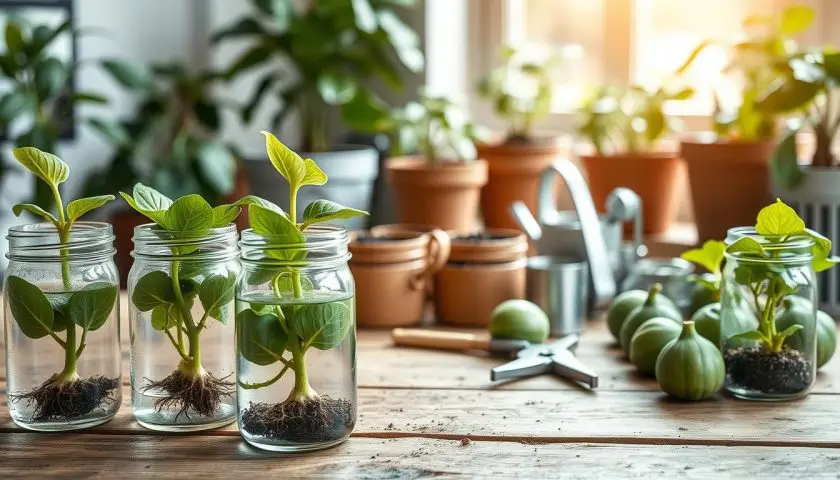
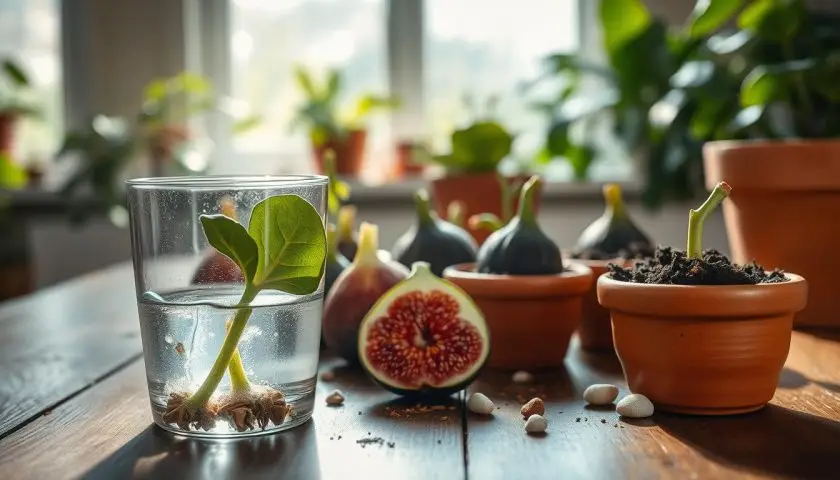
Figs can root in a jar of water. Stand the cutting base-down with the bottom 5 cm (2 in) submerged, change the water every few days, and keep it warm and bright. Pot it up once roots are about 2–5 cm (1–2 in) long.
Water roots are more fragile and must adjust to soil, so expect a short period of slower growth after potting. Many growers find rooting directly in a free-draining mix more reliable.
Rooting Cuttings Outdoors in the Ground
In mild climates, you can root hardwood cuttings outdoors without pots, the traditional way for many fruit bushes. Push cuttings into a slit trench in well-drained soil in a sheltered spot, leaving only the top bud or two above ground, and firm the soil around them. They usually root by the following autumn, when they can be lifted and planted in their final position.
Comparing Fig Propagation Methods
| Method | Difficulty | True to Parent? | Notes |
|---|---|---|---|
| Hardwood cuttings in pots | Easy | Yes | Most reliable for beginners |
| Cuttings in water | Easy | Yes | Fun to watch; roots need adjusting to soil |
| Cuttings in an outdoor trench | Easy | Yes | Needs mild winters and patience |
| Air layering | Moderate | Yes | Roots a branch while still on the tree; larger plant faster |
| Grafting | Advanced | Yes | Mostly for specialists |
| Seed | Difficult | No | Unpredictable fruit; slow to bear |
Caring for Fig Cuttings While They Root
- Water sparingly. Keep the mix just damp. Most failures come from rot, not drought. See our complete watering guide.
- Ventilate. Open covers every few days to prevent mould.
- Keep it warm. Rooting slows dramatically below about 15°C (60°F).
- Avoid moving or tugging the cuttings repeatedly.
- Skip fertilizer until the plant is potted up and growing well.
Troubleshooting Fig Cuttings
| Problem | Likely Cause | What to Do |
|---|---|---|
| Base turns soft, black, or smelly | Rot from wet mix or poor airflow | Cut above the rot to firm wood and replant in fresh, drier mix; discard if fully soft |
| White fuzzy mould on mix or stem | Too humid, not enough air | Remove cover more often; wipe off mould; let surface dry slightly |
| Leaves appear, then wilt and die | Leaves grew before roots; cutting disturbed or dried out | Keep humidity up, do not disturb, wait for roots |
| Cutting shrivels and dries | Mix too dry or air too dry | Water lightly and add a loose cover |
| Nothing happens for weeks | Too cold or slow variety | Add warmth; be patient for up to 12 weeks |
| Yellowing leaves after potting up | Overwatering or transplant stress | Let the top of the mix dry; keep in bright, indirect light |
If a cutting rots, check that the pot drains well and that you are not watering on a schedule. Our root rot guide explains the warning signs.
Common Mistakes to Avoid
- Planting upside down: Always keep the flat cut at the bottom and the sloping cut at the top.
- Using thin, soft, or diseased wood: Choose firm, healthy, one-year-old growth from a vigorous tree.
- Heavy or wet compost: Use a gritty, free-draining mix with drainage holes.
- Sealing the cover airtight: Trapped stale, wet air encourages mould.
- Mistaking leaves for roots: Wait for visible roots before potting up.
- Feeding unrooted cuttings: Fertilizer can burn emerging roots.
- Moving cuttings across borders: Plant-health rules often restrict carrying cuttings between regions or countries. Check local regulations first.
Caring for Your Young Fig Tree
- Light: Give established young figs plenty of sun, ideally six or more hours a day, in a sheltered spot.
- Water: Keep pots evenly moist in summer, and let the top few centimetres dry between waterings. Water much less in winter.
- Feeding: Feed lightly with a balanced fertilizer during active growth in the first year. Avoid heavy feeding, which encourages leaves over fruit.
- Pruning: Remove weak, damaged, or crossing shoots in late winter. See pruning basics.
- Winter protection: Young figs in pots are vulnerable to hard frost. Move them to an unheated garage, shed, or sheltered wall for winter and keep them barely moist while dormant. Our guide to outdoor plants that survive British winters has more cold-weather tips.
Figs grow well in containers, which also restrict roots and encourage fruiting. See best plants for container gardening on patios.
When Will a Fig Grown From a Cutting Produce Fruit?
Many fig trees grown from cuttings start fruiting in their second or third year, and some vigorous varieties produce a few figs even sooner. Variety, sunshine, warmth, and care all affect timing. Concentrate on building a strong, healthy young tree first.
Safety Notes
- Fig sap: The milky latex can irritate skin and, combined with sunlight, cause burn-like blisters. Wear gloves and long sleeves, and wash skin promptly after contact.
- Pets: Fig leaves and sap can upset pets that chew them. Check the ASPCA toxic and non-toxic plants list if you have curious animals.
Related Guides
- Easiest outdoor edible plants
- Planting a pawpaw tree
- Growing huckleberry plants
- Garden calendar
- Fertilizing indoor vs outdoor plants
- Outdoor Plants hub
Frequently Asked Questions
When is the best time to take fig cuttings?
The most reliable time is the dormant season, from mid-autumn to late winter after the leaves fall. Dormant hardwood cuttings are firm, full of stored energy, and easy to handle. Semi-ripe cuttings can also be taken in summer, but they carry leaves and need more humidity and care.
How long do fig cuttings take to root?
Hardwood fig cuttings usually root in about 6–12 weeks indoors with warmth around 21–24°C (70–75°F). Cooler conditions slow rooting considerably. Cuttings rooted outdoors in the ground typically form roots by the following autumn.
Can you root fig cuttings in water?
Yes. Stand the cutting with the bottom 5 cm in water, change the water every few days, and keep it warm and bright. Pot it up once roots are 2–5 cm long. Water roots are more delicate, so many growers find rooting directly in a free-draining mix more reliable.
Why does my fig cutting have leaves but no roots?
Fig cuttings use stored energy to push out leaves before roots form, so early leaves do not mean the cutting has rooted. Keep it warm, humid, and undisturbed, and wait until you can see roots through the pot or drainage holes before potting it up.
Do I need rooting hormone for fig cuttings?
No. Figs usually root well without it. Rooting hormone can speed up and even out root formation, which is helpful if you are rooting a variety that is slow to root or taking only a few cuttings. Apply a light coating to the base and follow the product label.
Final Thoughts
Planting fig cuttings is a simple, low-cost way to grow more of a fig you love. Choose healthy dormant wood, keep track of which end is up, use a gritty, free-draining mix, and give the cuttings warmth and patience. Wait for real roots before potting up, then harden off your young tree gradually.
The RHS guide to hardwood cuttings recommends taking them in the dormant season after leaf fall and, for small batches, inserting them into deep containers of gritty compost such as a 50:50 mix of coarse grit and multi-purpose compost.
With a little care, a single fig branch can become a productive tree that rewards you with fresh fruit for many years.