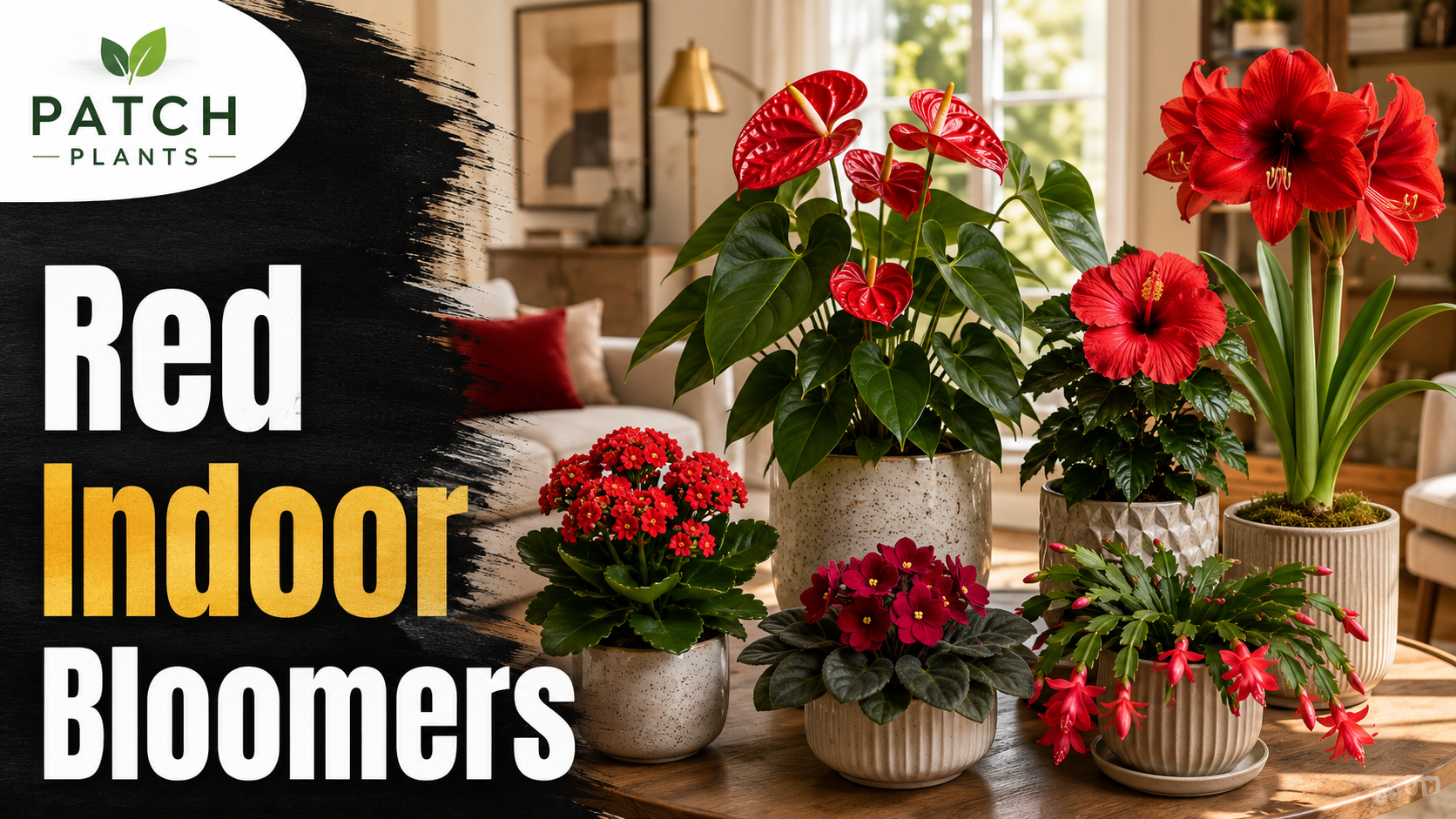
Indoor plant with red flower choices are perfect when you want a room to feel warmer, brighter, and more alive without adding loud décor. A single red bloom can lift a windowsill, soften a desk, or turn a plain corner into a real focal point.
Key Takeaways
- An indoor plant with red flower usually needs more light than a foliage-only plant, so placement matters.
- The easiest beginner choices include Anthurium, Kalanchoe, Christmas cactus, African violet, and bromeliad.
- A houseplant red bloom lasts longer when the plant has steady moisture, good drainage, stable warmth, and no cold drafts.
- Succulent bloomers like Kalanchoe and crown of thorns need brighter light and drier soil than tropical plants.
- Tropical red bloomers such as Anthurium, Hibiscus, Lipstick Plant, and Medinilla need humidity and bright indirect light.
- This article should support your main blooming indoor plants guide and related care posts.
Introduction
Red flowers indoors feel bold, but they do not have to be difficult. Some red-flowering houseplants are dramatic and seasonal, like amaryllis and poinsettia. Others are steady, long-lasting, and beginner-friendly, like anthurium, kalanchoe, bromeliad, and African violet.
The trick is choosing the right plant for your room. A sunny window can support a bright red floral houseplant like hibiscus or crown of thorns. A bright but filtered spot suits anthurium, lipstick plant, bromeliad, and medinilla. A cooler winter room can be useful for Christmas cactus or cyclamen.
This guide covers 12 of the best indoor plants that bloom red, with care tips for light, watering, humidity, potting, flowering, and styling. You can also use it alongside indoor plants with orange flowers, blooming indoor plants, colorful foliage indoor plants, and indoor plants that smell amazing.
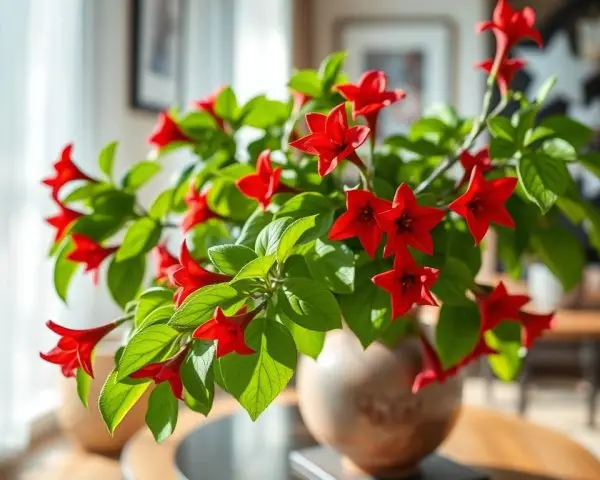
Quick Comparison: 12 Best Indoor Plants With Red Blooms
| Plant | Best For | Light | Care Level |
|---|---|---|---|
| Anthurium | Long-lasting red spathes | Bright indirect light | Easy to moderate |
| Kalanchoe | Beginner-friendly red flower clusters | Bright light | Easy |
| Christmas Cactus | Winter red blooms | Bright indirect light | Easy |
| Amaryllis | Large dramatic red flowers | Bright light | Easy to moderate |
| Hibiscus | Tropical red flowers | Very bright light | Moderate |
| Crown of Thorns | Low-water red blooms | Bright direct light | Easy |
| Bromeliad | Long-lasting red colour | Bright filtered light | Easy |
| Lipstick Plant | Trailing crimson flowers | Bright indirect light | Moderate |
| Poinsettia | Festive red bracts | Bright indirect light | Moderate |
| Medinilla Magnifica | Statement tropical blooms | Bright filtered light | Advanced |
| Cyclamen | Cool-season red flowers | Bright indirect light | Moderate |
| African Violet | Compact red flowering plant | Bright indirect light | Easy to moderate |
How to Choose the Right Red Flower Indoor Houseplant
Choosing the right red flower indoor houseplant is easier when you start with your room, not the plant. A red flowering plant can look healthy in a shop, then struggle at home if the light, humidity, or watering routine is wrong.
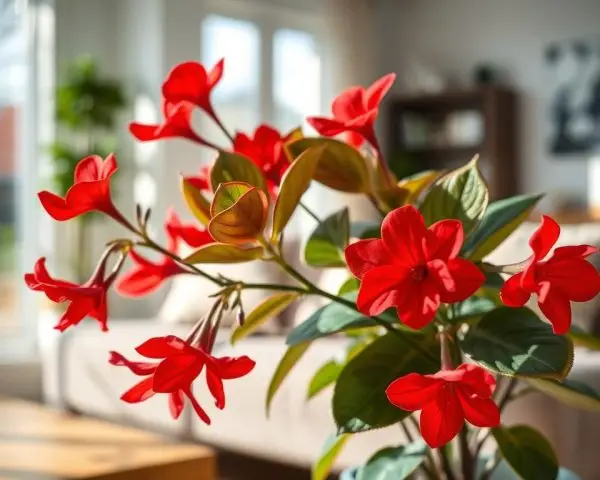
Check the light first
Most indoor flowering plants with red petals need bright light to bloom well. Bright indirect light is ideal for anthurium, Christmas cactus, lipstick plant, bromeliad, cyclamen, African violet, and medinilla. Stronger sun suits hibiscus, crown of thorns, amaryllis, and kalanchoe.
If your room is dark, start with a stronger foliage plant from low light house plants or low-light hanging plants instead of forcing a flowering plant into poor light.
Match care to your routine
Some red bloomers forgive neglect. Kalanchoe, crown of thorns, Christmas cactus, and bromeliad are easier for busy homes. Hibiscus, medinilla, and cyclamen need closer attention.
Beginners should also read best indoor plants for beginners, best indoor plants for first-time plant parents, and low-maintenance plants.
Think about pets and children
Many popular red flower houseplants are not ideal around curious pets. Anthurium, crown of thorns, poinsettia, cyclamen, and amaryllis can cause irritation or worse if chewed. Keep them out of reach, and check cat-friendly plant tips and dog-friendly plant tips before buying.
12 Best Indoor Plants With Red Flowers
1. Anthurium
Anthurium is one of the best-known choices if you want an indoor plant with red flower that looks polished and modern. Its glossy green leaves and red spathes create a strong contrast, making it perfect for living rooms, offices, entryways, and bright bedrooms.
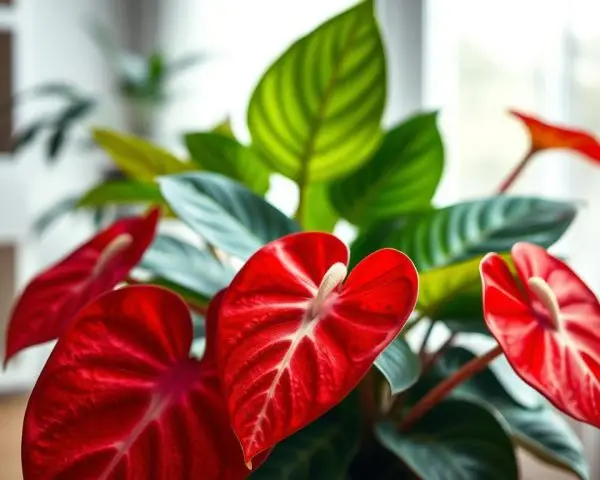
Anthurium is often treated like a red-flowering houseplant, although the red part is a spathe rather than the tiny true flowers. That does not make it less useful indoors. The display can last for weeks, and a healthy plant may rebloom through the year.
Give it bright indirect light, steady warmth, and moderate humidity. Avoid harsh direct sun, which can scorch leaves. Let the top layer of soil dry slightly before watering again.
- Best room: Living room, office, bright bedroom, or bathroom with light.
- Care level: Easy to moderate.
- Watch for: Yellow leaves from overwatering or cold drafts.
For deeper care, link this plant to your Anthurium care guide, indoor light guide, and DIY humidity tray.
2. Kalanchoe Blossfeldiana
Kalanchoe is a cheerful houseplant red bloom option for beginners. It produces clusters of small red flowers above thick succulent leaves and can stay colourful for weeks when conditions are right.
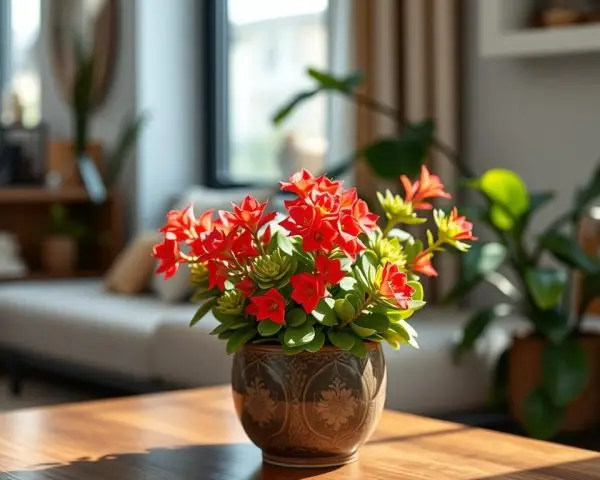
This plant likes bright light and dry-downs between watering. Because it stores water in its leaves, it does not want soggy soil. If you water too often, the roots can rot quickly.
Deadhead faded blooms to keep it tidy. After flowering, give it bright light and a rest period so it can build strength for future blooms.
- Best room: Sunny windowsill, office desk, kitchen shelf.
- Care level: Easy.
- Watch for: Mushy stems from overwatering.
Kalanchoe fits well with succulent care, root rot prevention, and worst times to water plants.
3. Christmas Cactus
Christmas cactus is a reliable flowering indoor plant for winter colour. Its segmented stems and red, pink, or white blooms make it a favourite around the holidays, but it can stay attractive long after the festive season.
It needs bright indirect light, not harsh sun. To encourage buds, give it cooler nights and longer darkness in autumn. Once buds form, avoid moving the plant too much because sudden changes can cause bud drop.
- Best room: Bright living room, cool bedroom, holiday display table.
- Care level: Easy.
- Watch for: Bud drop from sudden temperature or light changes.
Use your Christmas cactus care guide for detailed care, and connect it to festive plant ideas.
4. Amaryllis
Amaryllis is a dramatic indoor plant with scarlet flowers that grows from a bulb. Its large trumpet-shaped blooms can look almost unreal, especially in red, deep crimson, or striped varieties.
Plant the bulb in a pot that is only slightly wider than the bulb. Keep the top third of the bulb above the soil to reduce the risk of rot. Place it in bright light and water lightly until growth begins.
After flowering, cut the flower stalk but keep the leaves. The leaves recharge the bulb for next year. This is the part many people skip, which is why their amaryllis fails to rebloom.
- Best room: Bright windowsill, dining table, winter display area.
- Care level: Easy to moderate.
- Watch for: Bulb rot from planting too deeply or overwatering.
For potting support, use how to repot a plant, repotting mistakes, and best soil mix guide.
5. Hibiscus
Hibiscus is the boldest red floral houseplant on this list. It brings a tropical look indoors with large red flowers and glossy foliage. It is not the easiest option, but it is one of the most rewarding if your home has bright light.
Hibiscus needs very bright light to bloom indoors. A south or west-facing window is often best, though you may need a sheer curtain in strong summer sun. It also likes warmth, steady watering, and regular feeding during active growth.
Check for pests often. Aphids, spider mites, and whiteflies can appear if air is too still or the plant is stressed.
- Best room: Sunroom, bright living room, warm conservatory.
- Care level: Moderate.
- Watch for: Bud drop from low light, cold drafts, or dry soil.
For related help, use leaf curl and droop guide, yellow leaves guide, and how to clean plant leaves.
6. Crown of Thorns
Crown of thorns is a tough red flowered indoor plant for bright sunny homes. It belongs to the Euphorbia family and can flower for long periods when it gets enough light.
This plant is ideal for people who forget to water sometimes. It prefers a bright window, free-draining soil, and a dry-down between watering. It dislikes soggy soil far more than brief dryness.
Handle it carefully. It has thorns and milky sap that can irritate skin and eyes. Wear gloves when pruning, and keep it away from pets and children.
- Best room: Sunny windowsill, bright office, warm conservatory.
- Care level: Easy.
- Watch for: Skin irritation from sap.
Crown of thorns links naturally to cactus care, succulent care, and low-maintenance plants.
7. Bromeliad
Bromeliads are excellent if you want a long-lasting indoor botanical with red blossom or red central colour. Their architectural leaves and bright centre make them look exotic, but many are easier than they appear.
Most bromeliads prefer bright filtered light, warmth, and moderate humidity. Many types collect water in the central cup formed by their leaves. Flush that cup regularly so the water does not become stagnant.
After blooming, the main plant slowly fades, but it often produces offsets called pups. These can be separated once they are large enough.
- Best room: Bathroom with light, bright kitchen, modern living room.
- Care level: Easy to moderate.
- Watch for: Stagnant water in the central cup.
For humidity and bathroom placement, use best bathroom plants, humidity hacks, and humidity tray guide.
8. Lipstick Plant
Lipstick plant is a trailing red-flowering indoor plant with tube-shaped blooms that look like little red lipstick tubes. It is ideal for shelves, bookcases, hanging baskets, and bright corners.
It likes bright indirect light, warmth, humidity, and a light airy potting mix. Let the top of the soil dry slightly, but do not let it stay bone dry for too long during active growth.
If it is not blooming, light is usually the first thing to check. Move it closer to a bright window, but avoid hot direct afternoon sun.
- Best room: Bright bathroom, shelf, hanging basket, plant wall.
- Care level: Moderate.
- Watch for: No flowers from low light.
Use trailing plants for shelves, hanging plants guide, and indoor jungle guide for styling ideas.
9. Poinsettia
Poinsettia is the classic festive red-flowered houseplant. Its red display comes from coloured bracts rather than true flower petals, but indoors it still gives one of the strongest red looks you can get.
Place it in bright indirect light, away from cold drafts, radiators, and heat vents. Keep the soil lightly moist but not waterlogged. If the plant dries out badly, leaves may drop quickly.
To make it colour up again, poinsettia needs long nights in autumn. This means 12 to 14 hours of uninterrupted darkness each night for several weeks.
- Best room: Festive table, bright living room, entry display.
- Care level: Moderate.
- Watch for: Leaf drop from cold or dryness.
For seasonal care, connect it with festive plant décor, seasonal plant care in autumn, and garden calendar.
10. Medinilla Magnifica
Medinilla magnifica is a statement tropical indoor plant with red flowers, although many varieties lean pinkish-red. It has large glossy leaves and hanging flower clusters that look elegant and unusual.
This is not the easiest plant on the list. It prefers bright filtered light, warmth, high humidity, and a very airy potting mix. It dislikes cold drafts and soggy compost.
Use orchid bark, perlite, and a light potting mix to keep the roots breathing. A pebble tray, humidifier, or bright bathroom can help if your air is dry.
- Best room: Bright bathroom, warm plant room, humid living space.
- Care level: Advanced.
- Watch for: Brown edges from dry air or stress.
If you like rare plants, pair this with rare houseplants, unusual indoor plants, and carnivorous plant terrarium setup.
11. Cyclamen
Cyclamen is a compact indoor plant with crimson flower that gives colour in cooler months. Its red, pink, white, or purple flowers rise above heart-shaped patterned leaves.
Unlike many tropical houseplants, cyclamen prefers cooler conditions. It likes bright indirect light and evenly moist soil, but it does not want water sitting in the crown of the plant.
Water from the side or bottom when possible. After flowering, cyclamen may go dormant. Reduce watering and let the plant rest before encouraging new growth.
- Best room: Cool bright bedroom, hallway with light, winter windowsill.
- Care level: Moderate.
- Watch for: Rot from watering into the crown.
For seasonal indoor care, use watering tips, overwatering signs, and root rot guide.
12. African Violet
African violet is a small red bloom indoor plant option if you choose a red or deep burgundy cultivar. It stays compact, flowers indoors, and suits shelves, desks, and windowsills.
Give African violet bright indirect light, steady warmth, and careful watering. Avoid splashing cold water on the leaves because it can mark them. Many growers prefer bottom watering.
It does well in smaller pots and does not need frequent repotting. Too much pot space can hold excess moisture around the roots.
- Best room: Desk, shelf, kitchen window, bright bedroom.
- Care level: Easy to moderate.
- Watch for: Leaf spots from cold water or direct sun.
Use your African violet care guide for detailed help, and link it to tiny apartment plants and office-friendly plants.
Best Indoor Plant With Red Flower by Room
Best for living rooms
Anthurium, bromeliad, hibiscus, and medinilla make strong living room choices. They bring a visible red bloom indoor foliage look without needing lots of small accessories.
For styling, use how to style indoor plants by room, statement plants for minimalist interiors, and oversized indoor plants.
Best for bedrooms
Christmas cactus, African violet, cyclamen, and anthurium can work well in bedrooms with bright indirect light. Avoid placing sensitive bloomers near cold windows or heating vents.
For calm bedroom styling, read bedroom plants for style and calm and Feng Shui indoor plants.
Best for bathrooms
Bromeliad, anthurium, lipstick plant, and medinilla enjoy humidity if the bathroom gets enough light. A dark bathroom is not enough for most houseplants with red blossoms.
For more ideas, use bathroom plants and humidity hacks.
Best for offices
Kalanchoe, African violet, anthurium, and bromeliad work well in offices with bright light. They add colour without taking over the desk.
Use best office plants, improve home office with plants, and office plants for fluorescent light for more support.
Red Flower Indoor Plant Care Basics
Red flower indoor plant care starts with light, then watering, then humidity. If those three are wrong, fertilizer will not fix the plant.
Give enough light
Flowering plants usually need brighter conditions than foliage plants. If your plant grows leaves but no flowers, move it closer to a bright window or consider a grow light.
Water by plant type
Succulent red bloomers such as Kalanchoe and crown of thorns need drier soil. Tropical red bloomers such as Anthurium, Hibiscus, Medinilla, and Lipstick Plant need more consistent moisture but still hate waterlogged roots.
Use the right soil
Good drainage protects indoor bloomers from root rot. Use a lighter mix for tropical plants and a sharper mix for succulent types. Read best soil mix for every type of plant for detailed help.
Feed during active growth
Feed lightly in spring and summer when the plant is actively growing. Do not overfeed a stressed plant. Too much fertilizer can burn roots and cause weak growth.
For feeding support, read fertilizing indoor vs outdoor plants.
Deadhead and prune
Remove faded flowers when appropriate. This keeps the plant tidy and can help some varieties redirect energy into new growth. For woody or trailing plants, light pruning keeps shape neat.
Use pruning basics before cutting anything heavily.
Common Problems With Indoor Plants That Bloom Red
No flowers
The most common reason an indoor plant red blooms poorly is low light. Other causes include overwatering, no rest period, dry air, cold drafts, or lack of feeding during active growth.
Yellow leaves
Yellow leaves often come from overwatering, poor drainage, low light, or cold stress. Check the soil before watering again. For more help, use why leaves turn yellow.
Brown edges
Brown edges can happen when humidity is too low, fertilizer is too strong, or the plant has dried out badly. Tropical bloomers are especially sensitive to dry indoor air.
Bud drop
Bud drop usually happens after sudden changes. Cold drafts, moving the plant, dry soil, hot radiators, and low light can all cause buds to fall before opening.
Pests
Flowering plants can attract aphids, mealybugs, spider mites, and fungus gnats. Inspect leaves, stems, and flower buds regularly. Good airflow and clean leaves make problems easier to prevent.
For pest support, use how to revive a dying plant and how to clean plant leaves.
Helpful PATCH Guides for Red Flowering Indoor Plants
Use these internal guides to support readers who want more help with flowering plants, colour, room styling, and plant care.
Flowering and Colourful Indoor Plant Guides
- Blooming indoor plants
- Indoor plant with orange flowers
- Colorful foliage indoor plants
- Indoor plants that smell amazing
- Rare houseplants
- Unusual indoor plants
- Carnivorous plant terrarium setup guide
Indoor Plant Basics
- Indoor Plants hub
- Best indoor plants for beginners
- Best indoor plants for first-time plant parents
- Best indoor plants for tiny apartments
- Low light house plants
- Low-maintenance plants
- Air-purifying indoor plants
- Bathroom plants
Care Guides
- Plant Care hub
- Complete indoor light guide
- Complete watering guide
- Worst times to water plants
- Signs you are overwatering
- Root rot guide
- How to revive a dying plant
- Leaf curl, browning, and droop
- Yellow leaves guide
- How to clean plant leaves
- Best soil mix guide
- How to repot a plant
- Repotting mistakes
- Fertilizing indoor vs outdoor plants
- Pruning basics
- Humidity hacks
- DIY humidity tray
- Self-watering pots guide
Specific Plant Care Guides
- Anthurium care guide
- African violet care guide
- Christmas cactus care guide
- Succulent care guide
- Cactus care guide
- Orchid care guide
- Hoya plant care guide
- Peace lily care guide
- Boston fern care guide
- Bird of paradise care guide
- Pothos care guide
- Philodendron care guide
- Monstera care guide
- Rubber plant care guide
- Fiddle leaf fig care guide
- Spider plant care guide
- ZZ plant care guide
- Jade plant care guide
- Dracaena care guide
- Calathea care guide
- Snake plant care guide
- String of pearls care
- Money tree care guide
- Moss pole for plants
Indoor Styling Guides
- How to style indoor plants by room
- Decorate your bedroom with plants
- Create an indoor jungle
- Trailing plants for shelves
- Low-light hanging plants
- Statement plants for minimalist interiors
- Scandi home with plants
- Feng Shui indoor plants
- Best office plants
- Improve home office with plants
- Office-friendly plants
- Indoor gardening systems
Outdoor and Seasonal Guides Readers May Also Like
- Outdoor Plants hub
- Garden calendar
- Seasonal plant care in autumn
- Festive plants for Christmas
- Edible flowers to grow outdoors
- Outdoor garden colour themes
- How to keep outdoor plants alive
- Low-maintenance outdoor plants
- Container gardening on patios
- Hardy outdoor plants
- Shade-loving outdoor plants
- Plants that bloom at night
- Plants that keep bugs away
- Mosquito repellent plants
Frequently Asked Questions
Which indoor plant with red flower is easiest for beginners?
The easiest indoor plant with red flower options are Kalanchoe, Anthurium, Christmas cactus, African violet, and bromeliad. Kalanchoe is best if you often forget to water. Anthurium is best if you want a long-lasting tropical look.
How much light does a red-flowering houseplant need?
Most red-flowering houseplants need bright indirect light. Hibiscus, crown of thorns, amaryllis, and kalanchoe can handle brighter light, while anthurium, bromeliad, lipstick plant, and medinilla prefer bright filtered light.
Why is my indoor plant with red blossoms not blooming?
Your indoor plant with red blossoms may not bloom because of low light, overwatering, poor feeding, dry air, cold drafts, or no rest period. Start by improving light and checking the soil before changing anything else.
What is the best red flower indoor plant care tip?
The best red flower indoor plant care tip is to match watering to the plant type. Succulent bloomers need drier soil, tropical bloomers need more humidity, and bulbs need a rest period after flowering.
Are indoor plants with red blooms safe for pets?
Some are not pet-safe. Anthurium, amaryllis, cyclamen, crown of thorns, and poinsettia can cause irritation or more serious problems if chewed. Keep them away from pets and children.
Which indoor plant red blooms last the longest?
Anthurium, bromeliad, kalanchoe, and poinsettia usually give some of the longest-lasting red displays indoors. Their colour can last for weeks or even months with the right care.
Can a red flowered indoor plant grow in low light?
Most red flowered indoor plants need bright light to bloom well. Some may survive in lower light, but they usually produce fewer flowers. For darker rooms, foliage plants are usually better.
What is the best red floral houseplant for a sunny window?
Hibiscus, crown of thorns, amaryllis, and kalanchoe are good choices for brighter windows. Watch for scorching in strong summer sun and move sensitive plants back slightly if leaves burn.
What indoor botanical with red blossom is best for bathrooms?
Anthurium, bromeliad, lipstick plant, and medinilla can work well in bathrooms if there is enough bright indirect light. Humidity helps them, but they still need airflow and drainage.
Final Thoughts
An indoor plant with red flower can make a room feel warmer and more finished, whether you choose a bold hibiscus, a polished anthurium, a compact African violet, or a festive amaryllis. The best choice depends on your light, watering habits, humidity, and how much attention you want to give.
For wider houseplant care, the RHS recommends checking each plant’s growing needs before buying and placing houseplants where light, temperature, water, and humidity suit them: RHS guide to growing houseplants.
Start with one red bloomer that suits your room, then build from there. A healthy red-flowering indoor plant does not just add colour. It gives your space a living focal point that changes through the season.
Final Recap
The best indoor plants with red flowers include Anthurium, Kalanchoe, Christmas cactus, Amaryllis, Hibiscus, Crown of Thorns, Bromeliad, Lipstick Plant, Poinsettia, Medinilla Magnifica, Cyclamen, and African Violet. Choose bright indirect light for most tropical bloomers, stronger light for succulent and sun-loving plants, and cooler conditions for cyclamen and Christmas cactus. Keep this article as a support post, not pillar content, and link it to your broader flowering indoor plant and plant care guides.