Key Takeaways
- Many popular houseplants are toxic to dogs — pothos, philodendron, peace lily, aloe vera, monstera, and ZZ plant all cause symptoms ranging from mild stomach upset to serious illness
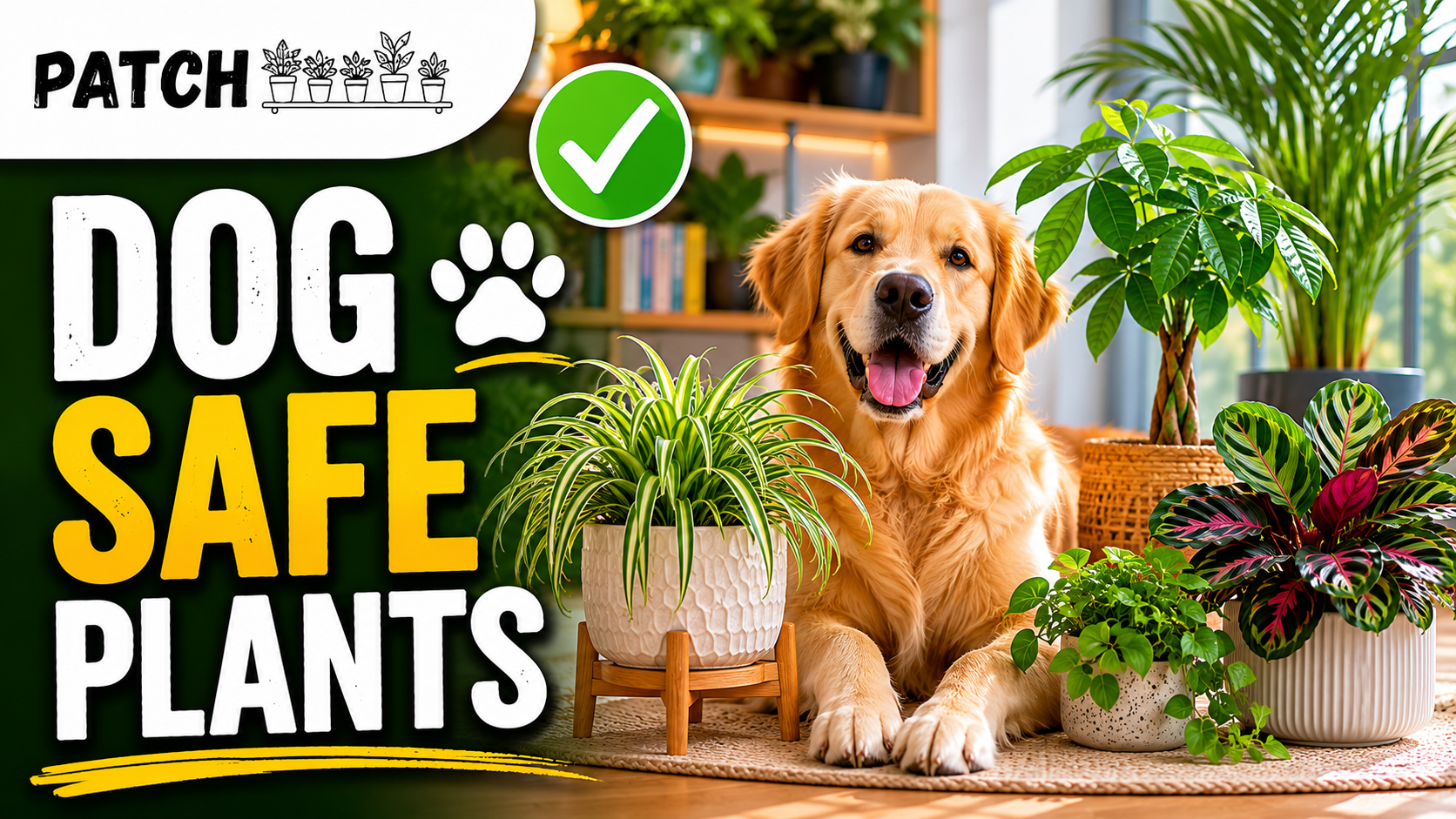
- The safest dog-friendly plants include spider plant, areca palm, calathea, Boston fern, money tree, Christmas cactus, parlour palm, and peperomia
- Dog-safe flowers include sunflowers, zinnias, roses (thorns removed), African violets, orchids, marigolds, and gerbera daisies
- Always verify plant safety against the ASPCA toxic plant database before bringing any new plant into a home with dogs
- Placement matters as much as plant selection — even non-toxic plants should be positioned thoughtfully to prevent soil digging, pot tipping, and chewing habits
- Create designated plant zones or use hanging planters, high shelves, and plant stands to keep toxic plants completely inaccessible in dog-friendly homes
- Garden plants toxic to dogs include foxglove, rhododendron, azalea, yew, wisteria, daffodil bulbs, and lily of the valley — many more than most dog owners expect
- Signs of plant poisoning in dogs include vomiting, drooling, lethargy, loss of appetite, and pawing at the mouth — contact a veterinarian immediately if symptoms appear
- Deterrent sprays (bitter apple or citrus-based) and physical barriers are effective tools for protecting plants in dog-friendly homes without removing them
- You do not have to choose between beautiful plants and a safe home for your dog — with the right plant choices and smart placement, both are entirely achievable
Introduction
If you have ever caught your dog chewing on a plant leaf and immediately rushed to Google “is this toxic to dogs?”, you are not alone. Dogs are curious, enthusiastic, and not particularly discerning about what they put in their mouths — and many of the most popular and widely available houseplants and garden plants are genuinely dangerous to them.
The good news is that creating a home full of beautiful plants that is also completely safe for your dog is entirely achievable. It requires two things: knowing which plants are safe and which are dangerous, and understanding how to place and manage plants in a dog-friendly home. This guide covers both in full.
Whether you are an established plant collector who just adopted a dog, a dog owner who wants to start building a plant collection, or simply someone who wants to verify that their current plants are safe, this guide gives you the complete, practical information you need. For the companion guide covering cat safety, our cat-friendly plants guide covers the same ground for cats — note that cat and dog toxicity often differs for the same plant.
Why Plant Safety Matters for Dog Owners
Dogs explore their environment differently from cats. They are typically more enthusiastic and less cautious — more likely to chew something completely than to take a tentative nibble and retreat. A dog that decides a plant is interesting may eat significantly more of it than a cat in the same situation, which affects the severity of any toxic reaction.
Puppies and younger dogs are at considerably higher risk than older, calmer dogs — their curiosity is at its peak and their impulse control at its lowest. But even older dogs can suddenly develop an interest in a plant they have ignored for years, particularly when bored, stressed, or experiencing a change in their environment.
The consequences of plant poisoning in dogs range from mild digestive upset to serious organ damage. Some plants — sago palm in particular — can be fatal even in small quantities. Understanding which plants carry which level of risk is the foundation of a dog-friendly home.
The most reliable reference for plant toxicity in dogs is the ASPCA Toxic and Non-Toxic Plant database — which lists thousands of plants by toxicity to dogs, cats, and horses. Bookmark it and check any plant you are uncertain about before bringing it home.
Plants Toxic to Dogs: The Most Important Plants to Avoid

These are the plants that dog-owning plant lovers most commonly keep — and most need to know about. This is not a complete list of all toxic plants, but it covers the most significant risks in typical houseplant and garden collections.
Highly Toxic — Remove from Dog-Accessible Areas Immediately
Sago Palm (Cycas revoluta) — Every part of this plant is toxic to dogs, with the seeds being most dangerous. Even a small amount can cause liver failure and death. This is one of the most dangerous plants a dog can encounter. If you keep a sago palm, it must be in a completely inaccessible location — or ideally rehomed to a pet-free household.
Foxglove (Digitalis purpurea) — Contains cardiac glycosides that can cause serious heart irregularities. All parts are toxic. A beautiful garden plant but genuinely dangerous in gardens accessed by dogs.
Lily of the Valley (Convallaria majalis) — Contains powerful cardiac toxins. Even drinking water from a vase containing lily of the valley flowers has caused poisoning in dogs. Keep entirely out of reach.
Oleander (Nerium oleander) — Extremely toxic to dogs — all parts including dried leaves and the water in which cut stems have stood. Causes serious cardiac symptoms. Not suitable for any garden or home with dogs.
Autumn Crocus (Colchicum autumnale) — Despite its innocent appearance, highly toxic to dogs and can cause organ failure. Different from the spring crocus (which is mildly toxic at worst).
Moderately Toxic — Reposition or Rehome
Pothos (Epipremnum aureum) — One of the most popular trailing houseplants and one of the most commonly kept in dog-owning homes without awareness of its toxicity. Pothos causes oral irritation, drooling, vomiting, and difficulty swallowing in dogs. Should not be at floor or low shelf level in dog-accessible rooms. Our pothos care guide covers the plant’s care needs — consider positioning it in a hanging planter well out of reach rather than removing it entirely.
Philodendron — Similar toxicity profile to pothos, causing oral irritation and gastrointestinal upset. Popular trailing and climbing houseplant that many dog owners keep unknowingly at accessible heights. Our philodendron care guide covers care — reposition to high shelves or hanging positions. Avoid completely in homes with chewing-prone dogs.
Peace Lily (Spathiphyllum) — Causes oral irritation, drooling, vomiting, and difficulty swallowing in dogs. A very widely kept houseplant that many dog owners are unaware is toxic. Our peace lily care guide covers its care — place in rooms dogs cannot access, or on high surfaces completely out of reach.
Monstera Deliciosa — Contains calcium oxalate crystals causing oral irritation, excessive drooling, vomiting, and difficulty swallowing. Widely kept as a statement plant — must be positioned completely out of reach of dogs. Our monstera care guide covers care requirements.
Aloe Vera — While useful for humans, aloe vera is toxic to dogs — causing vomiting, diarrhoea, lethargy, and tremors in some cases. Despite its health reputation, it should be kept out of reach in dog-friendly homes. Our aloe vera care guide covers care.
ZZ Plant (Zamioculcas zamiifolia) — All parts contain calcium oxalate crystals and are toxic to dogs. Despite being one of the most recommended low-maintenance houseplants, it is not suitable for low-level positions in dog-friendly homes. Our ZZ plant care guide covers care — position on high shelves only.
Dieffenbachia (Dumb Cane) — Causes intense oral irritation, drooling, and swelling. The common name “dumb cane” refers to the temporary inability to speak that results from human ingestion — the same irritant compounds affect dogs significantly.
Mildly Toxic or Uncertain — Use Caution
Snake Plant (Sansevieria/Dracaena trifasciata) — Listed as mildly toxic by the ASPCA — typically causing nausea, vomiting, and diarrhoea rather than serious harm. Most dogs would need to eat a significant quantity to experience serious symptoms. Our snake plant care guide covers care — keep at elevated positions as a precaution.
Jade Plant (Crassula ovata) — Mildly toxic, causing vomiting, lethargy, and incoordination. Our jade plant care guide covers care — position on high surfaces out of dog reach.
Dracaena — Most dracaena varieties are mildly toxic to dogs, causing vomiting, drooling, and lethargy. Our dracaena care guide covers care — avoid placing at floor level where dogs can access the leaves.
Dog-Friendly Plants: Safe Houseplants for Dogs

These plants are confirmed non-toxic to dogs by the ASPCA and are safe to keep at floor level and in dog-accessible positions in your home. They form the foundation of a genuinely dog-friendly plant collection.
Spider Plant (Chlorophytum comosum)
The spider plant is one of the best dog-friendly plants available — non-toxic, extremely easy to care for, and effective at filtering indoor air pollutants. Dogs may chew spider plant leaves due to their mild cat-nip-like compounds, which cause mild hallucinogenic effects, but ingestion of even significant quantities causes no serious harm. Our spider plant care guide covers care and propagation — spider plants produce numerous offshoots that make excellent gifts for other dog-owning plant lovers.
Areca Palm (Dypsis lutescens)
The areca palm is one of the finest dog-friendly plants for larger indoor spaces — lush, tropical, tall, and completely non-toxic. It is also among the most effective air-purifying houseplants. Our air-purifying plants guide covers the areca palm’s air quality benefits in detail. Ideal for bright living rooms and hallways where dogs spend significant time.
Calathea
Calathea is one of the most visually spectacular dog-friendly plants available — its extraordinary patterned foliage in green, purple, and silver combinations creates genuine visual drama without any toxicity risk to dogs. A beautiful and completely safe choice for any dog-friendly home. Our calathea care guide covers its specific humidity and light requirements.
Boston Fern (Nephrolepis exaltata)
Boston fern is one of the most reliably dog-safe houseplants available — confirmed non-toxic and producing lush, classic fronds that look beautiful in hanging positions or on high shelves. Our Boston fern care guide covers care. Hanging positions are ideal in dog-friendly homes — safe and positioned out of the casual reach of even the most curious dog.
Money Tree (Pachira aquatica)
The money tree is a beautiful, dog-safe houseplant — its braided trunk and umbrella of glossy leaves suit both contemporary and traditional home styles, and it is completely non-toxic to dogs. It is also considered a symbol of good luck in many cultures. Our money tree care guide covers its care requirements in detail.
Christmas Cactus (Schlumbergera)
The Christmas cactus is one of the best dog-friendly flowering houseplants — non-toxic to dogs, long-blooming, and very easy to care for. Unlike true cacti, it has no spines and presents no physical injury risk alongside its safety. Our Christmas cactus care guide covers blooming triggers and care year-round.
Parlour Palm (Chamaedorea elegans)
The parlour palm is a graceful, low-light-tolerant dog-friendly plant that suits any room in the home. Completely non-toxic, slow-growing, and virtually pest-free — it is one of the most consistently recommended dog-safe houseplants for any level of plant keeping experience.
Peperomia
Peperomia varieties are among the best compact dog-friendly plants available — non-toxic, available in dozens of forms with varied textures and colours, and very low-maintenance. They suit desk and shelf positions in dog-friendly home offices and living rooms. Our 35 low-maintenance plants guide includes peperomia among its recommendations.
Air Plants (Tillandsia)
Air plants are among the most creatively versatile dog-friendly plants — they require no soil (eliminating soil digging as a concern), are completely non-toxic, and can be displayed in hanging globes, mounted on wood, or placed in geometric holders well out of a dog’s reach. Mist two to three times weekly or soak once a week.
Bamboo Palm (Chamaedorea seifrizii)
The bamboo palm is a tall, tropical, completely dog-safe plant that suits bright living rooms and hallways. It is also an excellent air purifier — filtering formaldehyde and benzene from indoor air. Our air-purifying plants guide covers its effectiveness in detail.
African Violet (Saintpaulia)
African violet is one of the best compact dog-safe flowering houseplants — non-toxic, producing almost continuous purple, pink, or white blooms, and perfectly sized for windowsill and desk positions where it can be easily monitored. One of the very few year-round flowering plants that is completely safe for dogs.
Dog-Safe Flowers: Garden Plants Safe for Dogs
Outdoor and cut flowers present a separate challenge for dog owners — many popular garden plants and cut flowers are toxic while others are completely safe.
Flowers Safe for Dogs
These garden flowers and cut flowers are confirmed safe for dogs:
- Sunflowers (Helianthus annuus) — Non-toxic and dog-safe. The large, cheerful blooms are completely harmless even if chewed extensively
- Zinnias (Zinnia elegans) — Non-toxic, easy annual flowers that are completely safe for dogs in garden and container positions
- Roses (Rosa) — The flowers themselves are non-toxic to dogs, though thorns present a physical injury risk. A dog-friendly garden rose is best placed in a raised bed or bordered position that limits physical contact
- Snapdragons (Antirrhinum) — Non-toxic and dog-safe flowering annuals suitable for dog-friendly gardens
- Marigolds (Tagetes and Calendula) — Both marigold genera are non-toxic to dogs and have the additional benefit of naturally deterring some garden pests. Our plants that keep bugs away guide covers marigolds’ pest deterrence properties
- Gerbera Daisies (Gerbera jamesonii) — Non-toxic, cheerful, and available in a wide colour range — one of the best dog-safe cut flowers
- Camellias (Camellia japonica) — Non-toxic to dogs — their spectacular late winter flowers are safe even if nibbled
- Orchids (Phalaenopsis and most genera) — Most orchid varieties are non-toxic to dogs. Our orchid care guide covers care — orchids suit higher shelf positions naturally, keeping them away from floor-level investigation
Garden Flowers Toxic to Dogs
These commonly kept garden plants are toxic to dogs and should be excluded from or secured within any garden accessed by dogs:
- Daffodils (Narcissus) — Particularly the bulbs, which are highly toxic causing vomiting, tremors, and cardiac irregularities
- Tulips — The bulbs are most toxic, causing severe gastrointestinal upset and central nervous system symptoms
- Rhododendron and Azalea — Highly toxic to dogs — all parts cause vomiting, drooling, weakness, and potentially cardiovascular collapse
- Wisteria — Seeds and pods are toxic to dogs, causing vomiting and gastrointestinal upset
- Foxglove (Digitalis) — Contains cardiac glycosides — serious toxicity even in small quantities
- Hyacinth — Bulbs most toxic, causing severe gastrointestinal symptoms and tremors
For a complete guide to outdoor plant selection including toxicity considerations for dog-owning gardeners, our best plants for small outdoor spaces guide and 15 hardy outdoor plants guide both include safety notes.
Smart Placement Strategies for Dog-Friendly Homes
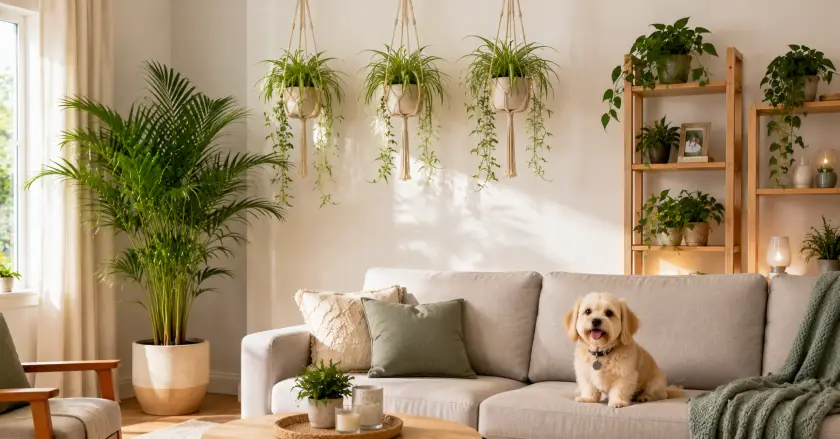
Even with the best-chosen dog-friendly plants, placement is important. And for homes that include some toxic plants alongside safe ones, placement becomes critical.
Use Height to Your Advantage
The most effective single strategy for making a plant collection dog-friendly is height. Plants on high shelves, wall-mounted brackets, tall plant stands, and hanging planters are inaccessible to most dogs regardless of their toxicity. This allows dog owners to keep visually desirable plants that may not be fully dog-safe as long as they are genuinely out of reach — above jumping height and with no adjacent furniture that could serve as a stepping stone.
For plant display ideas that work well at height, our how to style indoor plants by room guide covers shelf, wall, and hanging display approaches that suit dog-friendly homes naturally.
Designate Dog-Free Plant Zones
A spare bedroom, a home office with a closed door, a conservatory, or a bathroom can serve as a dedicated plant zone where dogs are not permitted. This allows full plant freedom in those spaces — including species that are not dog-safe — while keeping dog-accessible areas restricted to confirmed safe plants only. Our 33 best plants for your bathroom guide covers excellent bathroom plant options that are naturally kept in a room many dogs do not access.
Cover Soil to Prevent Digging
Dogs often show more interest in the soil of indoor plants than the plant itself — digging, sniffing, and occasionally eating soil is common behaviour. Cover the top layer of soil in accessible pots with decorative stones, bark chips, or large pebbles to reduce this behaviour. Ensure the covering material is itself non-toxic. This also reduces the risk of ingesting slow-release fertiliser granules in the soil surface, which can be harmful if eaten in quantity.
Use Deterrent Sprays
Pet-safe deterrent sprays — bitter apple spray and citrus-based sprays are the most widely available — can be applied to plant leaves and stems to discourage chewing without harming the plant or the dog. These are particularly useful for transitional periods while dogs are being trained or during the first weeks in a new home when dogs explore more actively.
Avoid Heavy or Unstable Pots at Floor Level
Large floor pots that can be tipped over by an enthusiastic dog present both physical safety risks (broken ceramic, spilled soil) and potentially toxic soil and plant material at floor level. Use heavy, stable pots — terracotta and concrete are better than lightweight plastic — or secure floor pots against a wall or into a plant stand that anchors them.
What to Do If Your Dog Eats a Plant
Despite all precautions, accidents happen. If you suspect your dog has eaten a plant — whether you know it to be toxic or not — act immediately rather than waiting to see if symptoms develop.
- Identify the plant if possible — take a photo or remove a leaf sample
- Check the ASPCA database immediately: aspca.org/pet-care/animal-poison-control/toxic-and-non-toxic-plants
- Call your veterinarian immediately — do not wait for symptoms to appear
- Note the time of ingestion and estimate the quantity eaten
- Do not induce vomiting unless specifically instructed to do so by a veterinarian — this can worsen some types of poisoning
- Keep a list of all plants in your home in your phone or on the fridge — this speeds up veterinary assessment significantly
Signs of plant poisoning in dogs include vomiting, diarrhoea, drooling, lethargy, pawing at the mouth, loss of appetite, tremors, and in severe cases difficulty breathing or collapse. If any of these symptoms appear after plant contact, treat it as an emergency and contact your veterinarian or an animal poison control service immediately. Knowing which plants you keep and their toxicity status is the most valuable preparation you can make.
Building a Beautiful Dog-Friendly Plant Collection
Creating a genuinely beautiful plant collection that is also completely safe for your dog is not a compromise — it is a design challenge with excellent solutions. The dog-safe plant list is extensive and includes visually spectacular options at every size and light level.
For living rooms — areca palm, calathea, spider plant in hanging planters, and African violet on windowsills create a lush, layered display that is entirely safe at floor level. For home offices — peperomia, air plants, parlour palm, and Christmas cactus provide year-round interest without toxicity risk. For bedrooms — our bedroom plants guide covers dog-safe options for sleeping spaces specifically.
For those who also keep cats, note that cat and dog toxicity often differs — some plants safe for dogs are toxic to cats and vice versa. Our cat-friendly plants guide covers safe plant selection for cats in the same format as this guide, allowing comparison between the two for households with both pets.
For low-maintenance dog-friendly plants that need minimal care — ideal for busy pet owners — our 35 low-maintenance plants guide includes many safe options. For beginners building their first dog-friendly collection, our best indoor plants for beginners guide provides excellent starting points that overlap well with dog-safe choices.
Article Summary
| Category | Key Plants |
|---|---|
| Best dog-friendly houseplants | Spider plant, areca palm, calathea, Boston fern, money tree, Christmas cactus, peperomia |
| Dog-safe flowers | Sunflowers, zinnias, roses, snapdragons, marigolds, gerbera daisies, orchids |
| Highly toxic — remove | Sago palm, foxglove, lily of the valley, oleander, autumn crocus |
| Moderately toxic — reposition | Pothos, philodendron, peace lily, monstera, aloe vera, ZZ plant, dieffenbachia |
| Mildly toxic — elevate | Snake plant, jade plant, dracaena |
| Toxic garden plants | Daffodil bulbs, tulip bulbs, rhododendron, azalea, wisteria, foxglove, hyacinth |
| Placement strategies | Height, dog-free zones, soil covering, deterrent sprays, stable pots |
| Emergency action | Identify plant, check ASPCA, call vet immediately, note time and quantity |
Related Guides
- How to Make Your Plants Cat-Friendly
- Spider Plant Care Guide
- Calathea Care Guide
- Boston Fern Care Guide
- Money Tree Care Guide
- Christmas Cactus Care Guide
- Air-Purifying Indoor Plants
- 35 Low-Maintenance Plants That Will Thrive
- Best Indoor Plants for Beginners
- How to Style Indoor Plants by Room
- Bedroom Plants Guide
- 33 Best Plants for Your Bathroom
Final Thoughts
Making your plants dog-friendly does not mean settling for a less beautiful home. The dog-safe plant list is rich with visually spectacular options — from the dramatic patterned leaves of calathea to the lush tropical fronds of the areca palm, the continuous blooms of the African violet, and the architectural elegance of the parlour palm. A dog-friendly plant collection can be genuinely stunning.
The key is knowledge: knowing which plants are safe, which are dangerous, and how to position everything thoughtfully for a household that includes both a curious dog and a growing plant collection. Once you have that knowledge, the creative freedom is yours.
According to the ASPCA, plant poisoning is among the top reasons dog owners contact animal poison control services — making awareness of plant toxicity one of the most practically important aspects of responsible dog ownership. The good news is that prevention is simple once you know what to look for.
Choose safe plants. Position everything thoughtfully. And enjoy a home that works beautifully for every member of your household — including the one with four legs.
Frequently Asked Questions
What are the safest houseplants for dogs?
The safest houseplants for dogs include spider plant, areca palm, calathea, Boston fern, money tree, Christmas cactus, parlour palm, peperomia, and air plants. These plants are confirmed non-toxic to dogs by the ASPCA and cause no significant harm even if chewed or ingested in typical quantities.
Which common houseplants are toxic to dogs?
Common houseplants toxic to dogs include pothos, philodendron, peace lily, aloe vera, monstera, dieffenbachia, sago palm, ZZ plant, and jade plant. Symptoms of plant poisoning include vomiting, drooling, lethargy, and loss of appetite. Contact your veterinarian immediately if you suspect your dog has ingested a toxic plant. Our cat-friendly plants guide covers the comparison between dog and cat toxicity for the same plants.
What flowers are safe for dogs?
Flowers safe for dogs include sunflowers, zinnias, snapdragons, roses (thorns removed), marigolds, African violets, orchids, and gerbera daisies. Always verify specific varieties as some cultivars within otherwise safe genera can differ. The ASPCA toxic plant database is the most reliable reference for dog-safe flowers and plants.
Are spider plants safe for dogs?
Yes — spider plants are confirmed non-toxic to dogs by the ASPCA. They may cause mild stomach upset if eaten in large quantities due to mild hallucinogenic compounds, but they are not considered genuinely dangerous. Spider plants are one of the best dog-friendly plants for any home. Our spider plant care guide covers care in full.
What garden plants are toxic to dogs?
Garden plants toxic to dogs include foxglove, rhododendron, azalea, wisteria, oleander, yew, lily of the valley, daffodil and tulip bulbs, hyacinth, and autumn crocus. Many common garden plants carry more risk than most dog owners realise — always check specific plants against the ASPCA database before planting in a dog-accessible garden. Our hardy outdoor plants guide notes safety considerations for common garden plants.