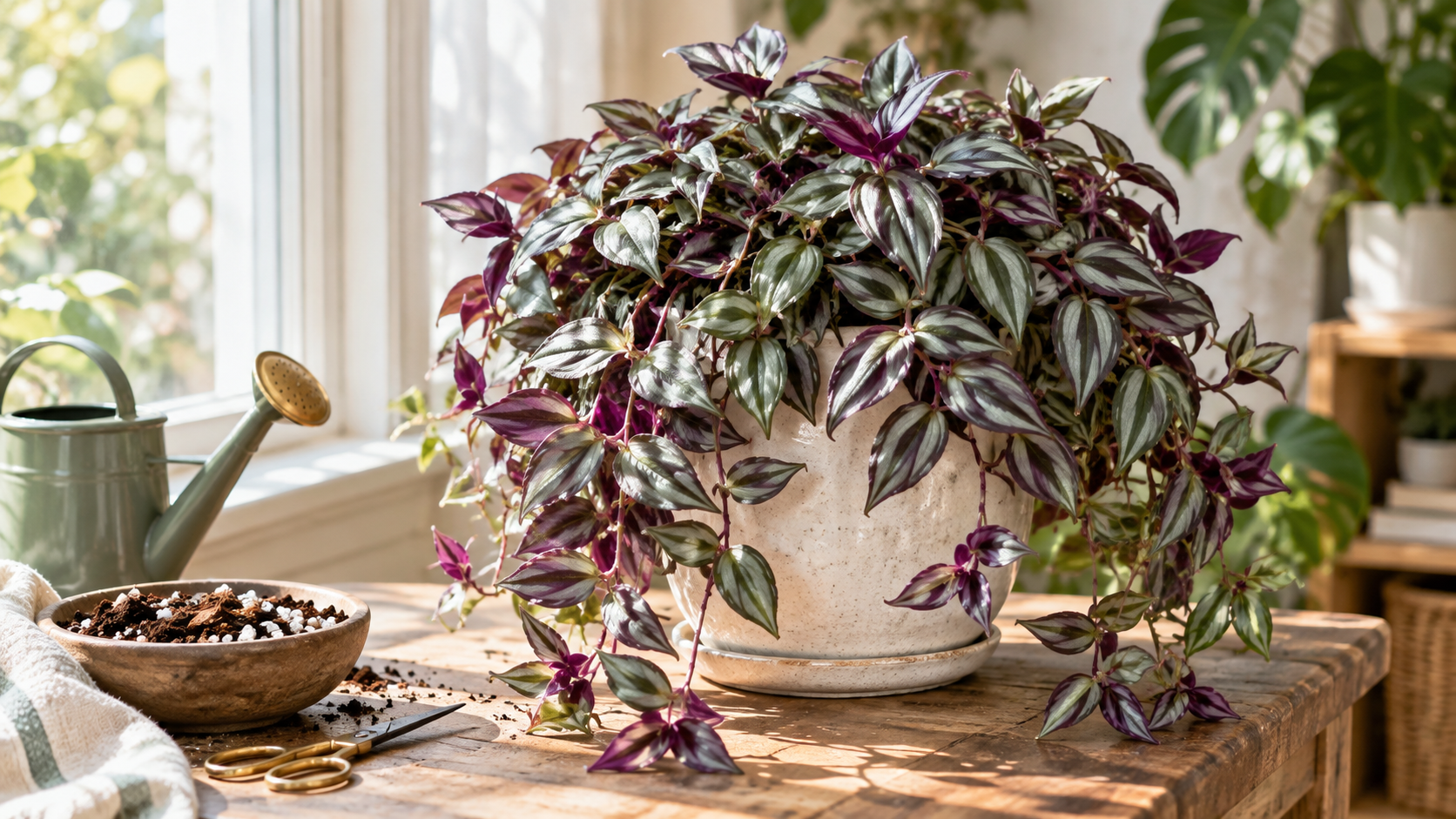
A healthy silver inch plant can transform a shelf, hanging basket, or bright windowsill with cascading stems and striking striped foliage. Better known botanically as Tradescantia zebrina, this fast-growing houseplant is loved for its green, silver, and purple leaves and its forgiving nature.
Fortunately, silver inch plant care is fairly straightforward. Give the plant plenty of bright, indirect light, use a loose and well-draining potting mix, check the soil before watering, and prune the stems regularly. Those few habits solve many of the problems people experience with this plant.
There is a little more to it, though. Light influences the strength of its silver markings, excess water can quickly cause root problems, and older stems may become leggy without pruning. Understanding these small details can make the difference between a thin plant and a dense cascade of colorful foliage.
This silver inch plant care guide covers 11 practical tips for healthy growth, including sunlight, watering, soil, fertilizer, pruning, propagation, repotting, pests, humidity, and seasonal maintenance.
If you enjoy growing houseplants, you can also explore the Indoor Plants guides and practical Plant Care guides from Patch Plants.
QUICK ANSWER
How Do You Care for a Silver Inch Plant?
For healthy silver inch plant care, grow Tradescantia zebrina in bright, indirect light and a loose potting mix that drains freely. Check the upper inch of soil before watering and water thoroughly when it feels dry rather than following a fixed schedule.
Keep the plant at comfortable indoor temperatures, prune long stems to encourage branching, and feed lightly during periods of active growth. Regularly inspect the undersides of leaves and stem joints for pests.
If your silver inch plant becomes long and sparse, increasing appropriate light and pruning the growing tips can usually help restore fuller growth.
PATCH PLANTS SUMMARY
Key Takeaways
- Grow Tradescantia zebrina in bright, indirect light for strong growth and attractive leaf markings.
- Use a container with drainage holes and a loose, well-draining potting mix.
- Check the top inch of soil before watering instead of watering on fixed calendar dates.
- Water thoroughly, then allow excess water to drain from the container.
- Prune and pinch growing tips to encourage fuller, branching growth.
- Feed moderately during active growth rather than heavily fertilizing the plant.
- Stem cuttings are an easy way to propagate a silver inch plant.
- Inspect regularly for spider mites, aphids, mealybugs, and other houseplant pests.
- Reduce watering and feeding when indoor growth slows during darker months.
- Watch the plant itself rather than relying entirely on a rigid care schedule.
What Is a Silver Inch Plant?
The plant commonly called the silver inch plant is Tradescantia zebrina, a trailing plant widely grown as a houseplant. Its foliage typically combines green or purple tones with distinctive silvery bands.
Its trailing habit makes it particularly attractive in hanging baskets, elevated planters, and containers positioned where the stems have room to cascade.
The plant also grows quickly under favorable conditions. That rapid growth is one reason regular pruning and propagation feature so prominently in good Tradescantia zebrina care.
| Care Factor | Silver Inch Plant Preference |
|---|---|
| Botanical name | Tradescantia zebrina |
| Light | Bright, indirect light |
| Soil | Loose, well-draining potting mix |
| Water | Water after upper soil begins drying |
| Growth habit | Fast-growing and trailing |
| Propagation | Stem cuttings |
Tip 1: Understand Silver Inch Plant Growth Habits
Understanding natural silver inch plant growth habits makes almost every other part of care easier. This is not a stiff, upright houseplant. Its stems naturally trail and spread as they lengthen.
Expect Fast Trailing Growth
Healthy stems can grow quickly during favorable conditions. A hanging basket gives them room to cascade naturally, while a high shelf can produce a similar effect.
If you’re building a larger indoor collection, our guide on creating an indoor jungle without overcrowding can help you arrange trailing and upright plants without making the space feel congested.
Do Not Mistake Natural Trailing Growth for Weakness
Long stems are normal. The problem begins when those stems have large gaps between leaves, weak growth, or noticeably reduced coloration.
That usually means you need to reassess light, pruning, or overall growing conditions.
Give the Plant Space to Grow
A silver inch plant placed tightly between other houseplants can become tangled and difficult to inspect. Give the foliage enough space for airflow and easy maintenance.
Tip 2: Give Your Silver Inch Plant Bright, Indirect Light
Light is one of the biggest influences on silver inch plant care indoors. Appropriate light helps maintain compact growth and attractive foliage.
What Are the Silver Inch Plant Light Requirements?
Choose a location that receives plenty of bright, indirect light. An east-facing window can work well because morning light is generally gentler than intense afternoon exposure.
Depending on the room, the plant can also grow near a bright south- or west-facing window when harsh direct sunlight is filtered or the pot is positioned farther from the glass.
If you’re unsure how window direction affects plants, see the Patch Plants guide to indoor light.
Signs Your Silver Inch Plant Needs More Light
A plant receiving inadequate light may develop longer spaces between leaves, weaker stems, smaller foliage, or less distinctive coloration.
Move it gradually toward a brighter location rather than suddenly placing a shade-adapted plant in strong direct sunlight.
Can Silver Inch Plants Get Too Much Sun?
Yes. Strong direct sunlight, particularly through hot windows, can stress foliage. Bleached areas, crispy patches, or scorched leaves can indicate excessive exposure.
A sheer curtain can soften intense sunlight without making the room excessively dark.
Tip 3: Choose a Pot With Excellent Drainage
A good container is a surprisingly important part of silver inch houseplant care. Attractive foliage above the soil depends on healthy roots below it.
Always Look for Drainage Holes
Choose a container with functional drainage holes so excess water can escape after watering.
Decorative pots without drainage may look attractive, but water collecting around the roots can create far more trouble than the appearance is worth.
Avoid an Oversized Container
Moving a small root system into a very large volume of potting mix means much more soil remains wet after watering.
When repotting, increase container size gradually rather than jumping immediately to a dramatically larger pot.
Empty Standing Water
If the pot sits on a saucer, do not leave the root zone sitting in runoff indefinitely. Allow the plant to drain and empty excess standing water.
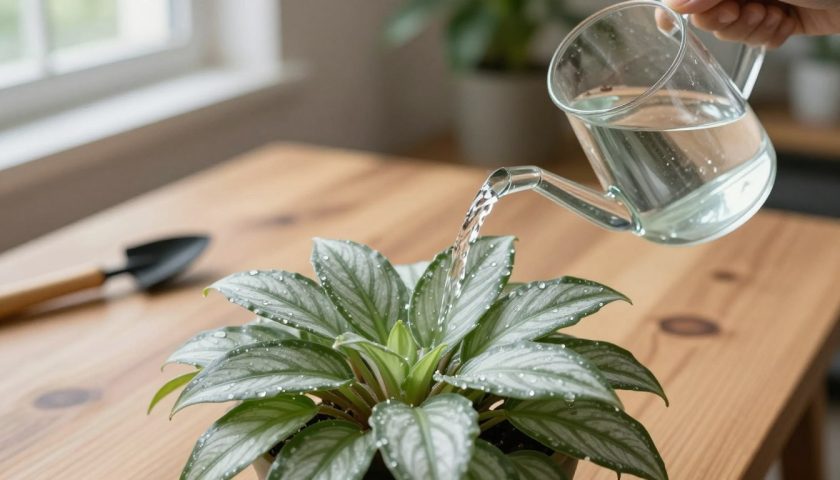
Tip 4: Master Silver Inch Plant Watering
The best silver inch plant watering routine is based on the condition of the soil, not simply the day of the week.
Indoor conditions constantly change. A plant may dry quickly during bright, warm weather and considerably more slowly when temperatures and light levels fall.
Check the Top Inch of Soil First
Insert your finger into approximately the upper inch of potting mix. If it still feels noticeably moist, the plant may not need another drink yet.
If the upper layer feels dry, it may be time to water.
Our broader plant watering guide explains why soil checks are generally more useful than blindly following a calendar.
Water the Entire Root Ball
When watering is needed, apply water evenly until excess begins draining from the bottom of the container.
This is usually better than repeatedly adding tiny amounts that only moisten part of the potting mix.
Signs of an Overwatered Silver Inch Plant
Persistently wet soil combined with yellowing foliage, soft stems, declining growth, or deteriorating roots suggests the plant may be receiving too much moisture.
Signs of an Underwatered Silver Inch Plant
Very dry soil, limp stems, curling foliage, or crispy leaves can indicate that the root ball has become excessively dry.
| Condition | Possible Signs | What to Check |
|---|---|---|
| Too dry | Wilting, curling or crispy foliage | Soil moisture and root ball |
| Too wet | Yellow leaves or soft stems | Drainage, roots and watering frequency |
| Balanced | Firm, colorful foliage and active growth | Continue monitoring rather than changing care unnecessarily |
Tip 5: Use the Best Soil for Silver Inch Plant Growth
The best soil for silver inch plant growth should balance moisture retention with drainage and root-zone aeration.
A dense mix that remains saturated for long periods makes watering much harder to manage.
Choose a Loose Indoor Potting Mix
A quality indoor potting medium can form the base of your mix. Drainage and structure can be improved with appropriate amendments such as perlite and bark.
For a broader explanation of potting media, visit our best soil mix guide.
Watch How Quickly the Soil Dries
Your potting mix should not remain waterlogged for an excessive period after every watering.
If water drains extremely slowly or the mix has become compacted, inspect the drainage holes and consider whether the plant needs fresh growing medium.
FREE PATCH PLANTS TOOL
Repotting? Calculate How Much Soil You Need
If you’re moving your silver inch plant into a new pot or filling several containers, use the free Patch Plants Soil Calculator before buying potting mix.
Enter your container measurements and the potting mix calculator will help you estimate the required soil volume.
It is particularly useful when repotting several houseplants and you want a better estimate of how much soil you need.
Tip 6: Feed Silver Inch Plants During Active Growth
Fertilizing silver inch plants can support vigorous foliage, but fertilizer should complement good light, soil, and watering rather than compensate for poor conditions.
Use a Houseplant Fertilizer Carefully
A balanced houseplant fertilizer can be used during periods of active growth according to its label instructions.
Avoid assuming that stronger fertilizer produces faster or healthier growth. Excess fertilizer salts can stress roots and accumulate in the potting medium.
Feed Less When Growth Slows
When reduced seasonal light slows indoor growth, nutrient demand also declines. Reduce or pause feeding rather than maintaining an aggressive summer schedule throughout the year.
Check Other Care Factors Before Fertilizing a Struggling Plant
Pale foliage or weak growth does not automatically indicate a nutrient deficiency.
Check the indoor light conditions, watering habits, drainage, pests, and root health first.
Tip 7: Prune Silver Inch Plants for Fuller Growth
Regular silver inch plant pruning is one of the easiest ways to maintain a dense, attractive shape.
Because Tradescantia zebrina grows quickly, older stems can eventually become long and sparse.
Cut Long Stems Near a Node
Use clean, sharp scissors and make intentional cuts around healthy nodes. New branching can develop below the cut, helping the plant become fuller rather than continuing as a single long stem.
Pinch Growing Tips
Lightly pinching growing tips is useful when you want frequent, gentle shaping rather than occasional heavy pruning.
Remove Damaged Growth
Remove badly damaged, dead, or declining foliage when necessary. This also makes it easier to inspect healthy stems for developing problems.
If you’re new to trimming plants, see our Pruning Basics guide before making major cuts.
QUICK GROWING TIP
Why Is My Silver Inch Plant Leggy?
Leggy growth commonly develops when stems stretch toward insufficient light or when an older plant has not been pruned. Improve appropriate light first, then prune or pinch long stems to encourage a fuller shape.
Tip 8: Propagate Silver Inch Plant Cuttings
Learning how to propagate silver inch plant stems is useful because pruning naturally gives you plenty of potential cuttings.
Healthy stem cuttings can be rooted in water or directly in suitable potting medium.
Take a Healthy Stem Cutting
Select a healthy stem with several nodes. Make a clean cut and remove lower leaves that would otherwise sit below water or beneath the growing medium.
How to Propagate Silver Inch Plant in Water
Place one or more bare nodes in clean water while keeping the remaining foliage above the waterline.
Position the cutting in bright, indirect light and replace or refresh the water as necessary.
How to Propagate Silver Inch Plant in Soil
Alternatively, insert a prepared stem cutting into a small container of suitable potting mix, making sure at least one viable node is positioned for rooting.
Keep the medium appropriately moist during establishment without leaving it saturated.
Which Propagation Method Is Better?
Water propagation makes root development easy to observe. Direct soil propagation avoids the later transition from water-grown roots into potting mix.
Both methods can be practical, so the better option is often whichever you can monitor most consistently.
| Method | Main Advantage | Watch For |
|---|---|---|
| Water propagation | Easy to observe roots | Submerged foliage and dirty water |
| Soil propagation | Cutting establishes directly in growing medium | Excessively wet or dry soil |
Tip 9: Prevent Silver Inch Plant Pests and Diseases
Routine inspection is an underrated part of silver inch plant maintenance. Finding a small pest population early is much easier than dealing with an infestation spread across several houseplants.
Check Common Hiding Places
Inspect leaf undersides, new growth, stem joints, and the soil surface. Possible houseplant pests include spider mites, aphids, mealybugs, and fungus gnats.
Isolate an Infested Plant
If you discover pests, move the affected plant away from the rest of your collection while you identify and manage the problem.
Use Treatments According to Their Labels
When an appropriate insecticidal soap or other houseplant treatment is required, follow the product directions carefully.
Prevent Root Rot
Root rot is closely associated with prolonged wet conditions and poor drainage. Prevention starts with the same basics discussed throughout this silver inch plant care guide: appropriate soil, drainage holes, and moisture checks before watering.
Tip 10: Repot Your Silver Inch Plant When Necessary
Repotting silver inch plant specimens should solve a real problem rather than become an automatic monthly or seasonal task.
Signs It May Be Time to Repot
Roots emerging heavily through drainage holes, a badly compacted potting medium, extremely rapid drying, or a severely crowded root system may indicate that repotting is appropriate.
Move Up Gradually in Pot Size
Choose a container only moderately larger than the existing pot. Excess unused potting mix around a small root system can remain wet for too long.
Refresh the Potting Mix
Repotting is a good opportunity to replace degraded or compacted medium with a more suitable mix.
Review our soil mix guide before choosing ingredients, then use the Soil Calculator if you need help estimating the volume required for the new container.
Tip 11: Adjust Silver Inch Plant Care Throughout the Year
The final part of successful silver inch plant care is flexibility. Indoor plants do not experience exactly the same conditions every month.
Spring and Summer Care
Longer days and brighter conditions can encourage stronger growth. Monitor soil more frequently, prune when needed, propagate healthy cuttings, and feed appropriately during active growth.
Fall and Winter Care
When light levels and growth decrease, the potting medium may remain moist longer. That often means watering should become less frequent.
Fertilizer requirements can also decrease substantially when active growth slows.
Rotate the Pot
Rotate the container periodically if one side receives considerably more light than the other. This can help maintain a more balanced appearance.
Silver Inch Plant Care by Season
| Season | Water | Feeding | Main Tasks |
|---|---|---|---|
| Spring | Check more frequently as growth increases | Resume as appropriate | Pruning and repotting |
| Summer | Monitor closely in warm, bright conditions | Feed during active growth | Pruning and propagation |
| Fall | Adjust as drying slows | Reduce as growth slows | Pest checks and cleanup |
| Winter | Usually less frequent | Reduce or pause during slow growth | Maximize useful light and monitor moisture |
Common Silver Inch Plant Problems and Solutions
Your plant’s foliage often provides the first clue that something has changed. Instead of immediately adding water or fertilizer, look at several environmental factors together.
| Problem | Possible Cause | What to Do |
|---|---|---|
| Long, leggy stems | Insufficient light or lack of pruning | Improve appropriate light and prune long stems |
| Fading leaf markings | Light may be inadequate | Move gradually to brighter indirect light |
| Brown crispy patches | Strong sun, dryness or environmental stress | Review light and soil moisture |
| Yellow leaves | Often excessive moisture, but other causes are possible | Check soil, drainage, roots and light |
| Soft stems | Possible prolonged wet conditions or decay | Inspect roots and correct moisture problems |
| Webbing or visible insects | Pest infestation | Isolate, identify and treat appropriately |
Silver Inch Plant Care: Quick Answers
Is a Silver Inch Plant Easy to Care For?
Yes. Tradescantia zebrina is generally an approachable houseplant when it receives sufficient light, well-draining soil, and appropriate watering. Regular pruning helps maintain its attractive shape.
Where Should I Put My Silver Inch Plant?
Place it somewhere with bright, indirect light and enough room for its trailing stems. Protect foliage from harsh direct sunlight and avoid locations exposed to major temperature extremes.
How Often Should I Water a Silver Inch Plant?
There is no universal number of days between waterings. Check the upper inch of soil and water when it has dried sufficiently. Light, temperature, humidity, pot size, and growing medium all influence drying speed.
Why Is My Silver Inch Plant Losing Its Color?
Reduced silver or purple coloration can occur when light conditions are inadequate. Evaluate the plant’s location and move it gradually toward brighter indirect light when necessary.
How Do I Make a Silver Inch Plant Bushier?
Provide appropriate light and regularly pinch or prune growing tips. Cutting stems around healthy nodes encourages branching and can create a denser appearance.
Can I Grow Silver Inch Plant Cuttings in Water?
Yes. Stem cuttings can root in water when bare nodes are submerged while foliage remains above the waterline. Once a healthy root system develops, the cutting can be transferred carefully into suitable potting mix.
EXPLORE PATCH PLANTS
Keep Building Your Indoor Plant Care Skills
Silver inch plants become much easier to manage when you understand the basics that apply across your entire indoor collection. Continue with these Patch Plants resources:
Final Thoughts on Silver Inch Plant Care
Good silver inch plant care does not require a complicated routine. Most healthy Tradescantia zebrina plants need the same core things: plenty of bright, indirect light, a well-draining potting mix, sensible watering, and occasional pruning.
Pay particular attention to the relationship between light and water. A plant growing quickly in bright conditions may use moisture much faster than the same plant sitting in a darker room during winter. This is why checking the soil is more useful than blindly watering every seven days.
Pruning is equally valuable. If your silver inch plant starts looking sparse or leggy, don’t be afraid to trim healthy stems around the nodes. Those cuttings can then become new plants through water or soil propagation.
Most importantly, observe the plant. Leaf color, stem spacing, soil drying speed, and new growth can tell you far more than a rigid care calendar.
For your next repotting project, try the free Patch Plants Soil Calculator to estimate how much potting mix your container needs.
Frequently Asked Questions About Silver Inch Plant Care
How often should I water my silver inch plant?
Check the upper inch of potting mix and water when it feels dry enough to need moisture. Avoid using a rigid schedule because light, temperature, humidity, pot size, and season all affect how quickly the soil dries.
What are the ideal silver inch plant sunlight requirements?
Bright, indirect light is a good target for healthy Tradescantia zebrina growth. Insufficient light can contribute to leggy growth and weaker coloration, while intense direct sunlight can damage foliage.
What is the best soil for a silver inch plant?
Use a loose, well-draining indoor potting medium that retains some moisture while allowing excess water and air to move through the root zone. Avoid dense mixes that remain saturated for extended periods.
How do I make my silver inch plant fuller?
Provide adequate bright, indirect light and prune or pinch long stems around healthy nodes. This encourages branching and can produce a denser, bushier plant.
Why is my silver inch plant getting leggy?
Leggy stems commonly develop when the plant receives insufficient light or has grown for a long period without pruning. Improve appropriate light and trim stretched stems to encourage branching.
How do you propagate a silver inch plant?
Take a healthy stem cutting containing several nodes and remove the lowest leaves. Root one or more bare nodes in water or suitable moist potting mix while keeping the cutting in bright, indirect light.
Can silver inch plant cuttings grow in water?
Yes. Place the lower nodes of a prepared stem cutting in clean water while keeping the leaves above the waterline. Transfer the cutting carefully to potting mix after it develops a useful root system.
Why are my silver inch plant leaves turning yellow?
Yellow foliage can have several causes, but persistently wet soil is an important possibility. Check soil moisture, drainage, root condition, light levels, and recent environmental changes before deciding on a treatment.
When should I repot a silver inch plant?
Consider repotting when the root system has become genuinely crowded, roots are heavily emerging from drainage holes, the growing medium has degraded, or the plant dries unusually quickly because the pot is filled with roots.
What pests attack silver inch plants?
Possible houseplant pests include spider mites, aphids, mealybugs, and fungus gnats. Inspect leaf undersides, stem joints, new growth, and the soil surface regularly so infestations can be identified early.
Should I fertilize my silver inch plant in winter?
When reduced winter light significantly slows growth, fertilizer requirements also decrease. Reduce or pause feeding rather than applying the same amount used during vigorous active growth.
Why is my silver inch plant losing its silver color?
Weak coloration can be associated with insufficient light. Evaluate the plant’s location and gradually increase bright, indirect light if the stems are also becoming stretched or the leaf markings are fading.